the history of literature is like a sound in an echo chamber growing fainter with each reiteration IAS ketti said about kfka that he's the expert of power so only if we play the game of chess or in our case the game of language does it have any significance she says that we're metaphors we always come in the color and shape of your imagination and so the experience of the reader is actually the limit of what you can convey and then there were other moments where I felt like within one or two days so much clicked
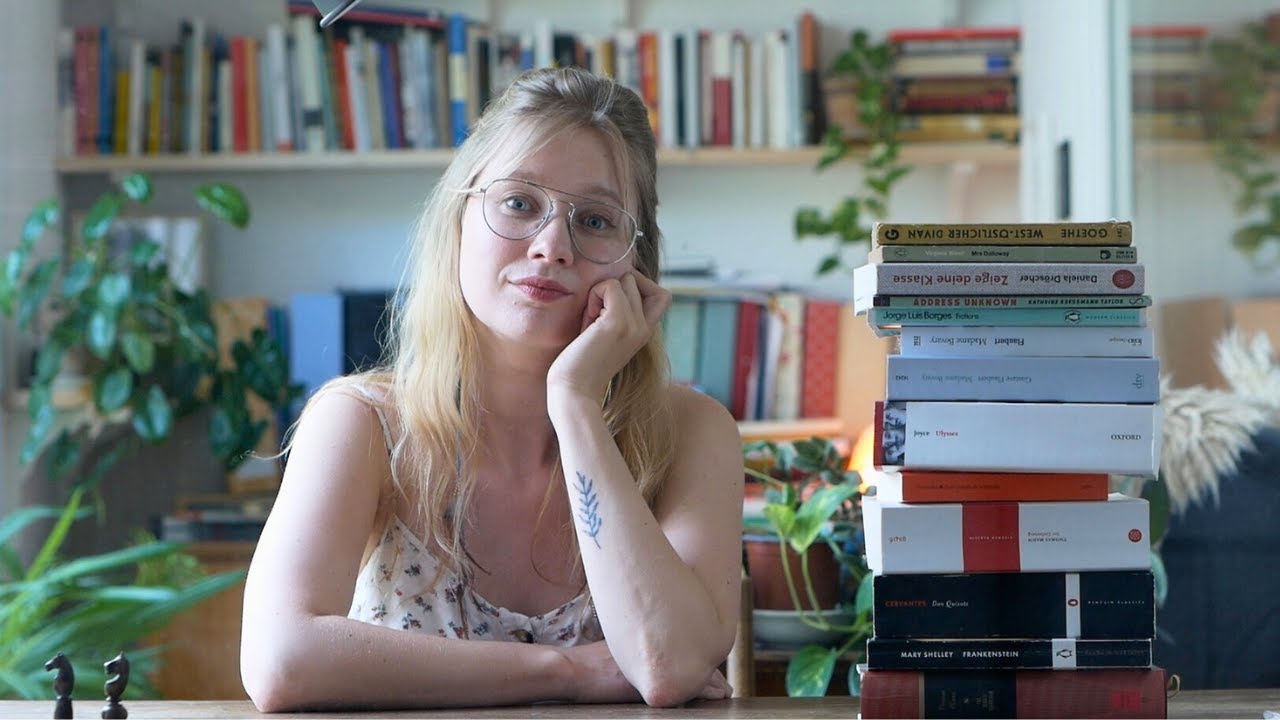
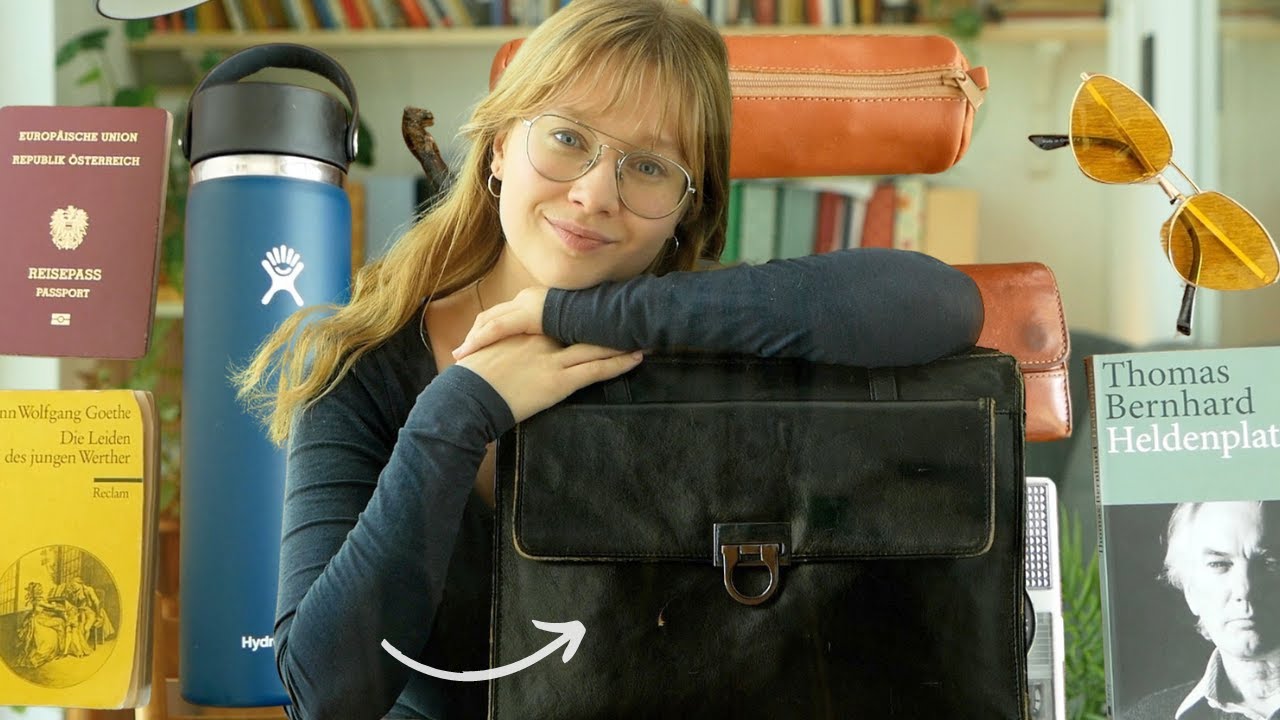
and I had a completely different command of the language hello everyone Hi so in this video we're going to talk about why Kafka didn't want to be famous how time can be conceptualized in literature the philosophy of language and many other things that I have learned during my first year of studying literature if this is the first video of mine that you're watching then hello welcome my name is Maria and I have just finished my first year of my degree of comparative literature at the University of Vienna and I'm making this video truly for my
past self because when I looked into studying literature a little bit later in life right I'm almost 30 I really wanted to know what it looks like tangibly to do a degree at University so yesterday I went through both of these folders the bottom one is from the first semester and the top one from the second one and obviously this video is not going to give you a complete picture of everything that I've learned but when I went through the folders I really asked myself what the things are that struck a cord in me um
the information that I'm really grateful that someone has explained to me and the things that I'm really taking with me going forward in my life so may this video reach through the portal of time to convince my past self to hopefully make the same decisions over and over again because let me tell you I love studying literature um the fact that my love for words and language can be at the center of my life makes me incredibly grateful and I can say with confidence that I haven't regretted my decision once so this year I took
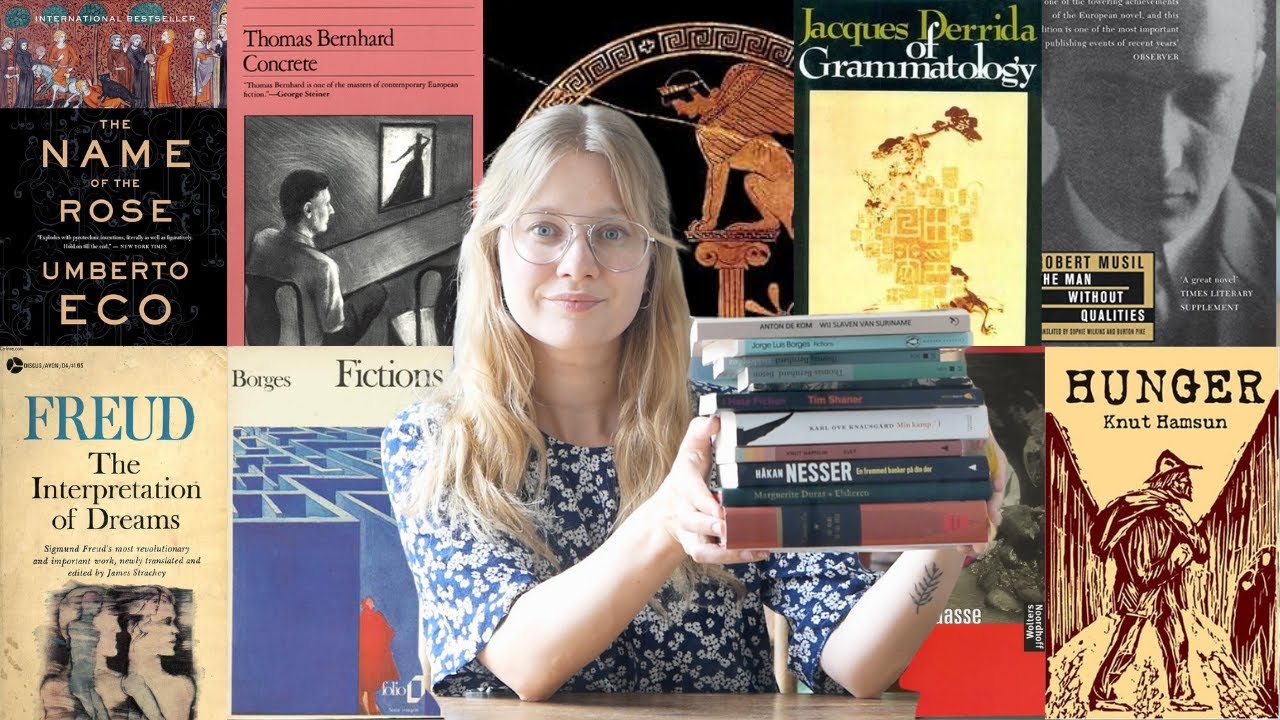
12 courses total um an introductory course to literature an introductory course to comparative literature a course on time and memory in modern literature a course that was called the provocative Spirit of literature the classics and their controversies the colonial past and postcolonial present reflected in literature of the low countries um literary research another literary research course um themy world literature um a seminar on the spects of postmodern writing the social history of the novel and Norwegian a language course so I'm gonna pull from those courses in no specific order before we get into it I
have a new microphone that I can try out today I'm really happy I can gesture a little bit more and on that note I'm also going to say if you want to support the channel financially I'm going to leave the link to my coffee account down below I really appreciate your support and it makes it possible for me to keep these videos going and to upgrade my equipment so grab a cup of tea let's get into it so the first thing I learned about the philosophy of language really still sticks with me um more precisely
we talked about structuralism and post structuralism um which is a philosophy that came up in the past let's say 100 to 150 years so let me explain structuralists and post structuralists basically say that language is a net in which we're caught and a net that our entire sense of reality relies on this net though isn't grounded in any objective truth and you can see that if You observe language long enough you know the words keep changing there's actually a quote by ferdinant suur who wrote In His course in general Linguistics that time changes all things
there is no reason why language should escape this universal law you might also notice this if you speak several languages and you realize that in some languages there isn't even a word for something that uh another language does have a word for I think there's this example that in the Swedish language there's like seven different words for rain and then in some languages from places where it barely ever Reigns they just have one or two words which I think points to the fact that the way you conceptualize reality the way you engage with reality really
depends on the words that you have available and it's very difficult for something to exist in your mind if you don't have a word for it another aspect of this that structuralists and post structuralists will point to is that for example this microphone and the word microphone really have nothing to do with each other they're not actually connected it's a completely arbitrary combination of sounds that makes a word that we then attribute to this thing but this isn't a contract that is written down anywhere right it's not law and language is not doesn't equal nature
and all that is of course very scary to admit especially for Endeavors like science where people want to be very precise and truthful so language and therefore of course literature are very nebulous and uncertain in that way but also free so Su says that language and words are like chess horses right that's why I always have those um here on my desk he argues that outside the game of chess this means nothing this little wooden thing has no words or meaning at all unless we engage in the game of chess and give it that meaning
so only if we play the game of chess or in our case the game of language does it have any significance the second thing I really enjoyed learning about was how to talk about books that I haven't read and I remember one of my professors bringing that up in one of the first lessons I ever had at Uni and he basically said that look you're your literature students now you're going to get into this situation very often where you're forced to talk about books that you haven't actually read we based this entire discussion on a
book by Pierre I wanted to say it's originally French I think um how to talk about books you haven't read and in this book Pier bad also talks about the fact that the line between reading and not reading is really very thin you know what about a book you've read 20 years ago is it still a book that you have read even if you can recall none of it um what about a book you have half read what about a book you have skimmed and he says that even in not reading you can actively participate
in the literary discourse and he takes this example of um Robert muzi is The Man Without where our protagonist goes to a library and he looks around all the books there and he calculates that if he read a book every day it would take him 10,000 years to finish all the books in the library and of course as lovers of literature we feel the same way right there's so many books and we just know we're never going to get through them all and it feels like an up uphill battle that can never be won and
then the protagonist in musil's novel gets really stressed out and he asks the librarian how do you deal with this mass of books and the librarian says well it's really easy I just don't read and then he's like what what do you mean you don't read and then he says let me show you and they go to the back room of the library where all the cataloges are where every book book that is in the library is recorded how it is connected to the other books and where to find it so the librarian instead of
close reading takes an approach of distant reading cares about um creating a net between all the works thereby being able to see connection and to engage in discourse in a very different way and pad says that this is an active approach to not reading and all that to say is that um you know we really have to find a way to get rid of our shame of not reading and to just rely on the information that we do have because if you talk about literature a lot it's not going to take a very long time
until you come across a conversation or something and um where you're forced to either talk about a book that you haven't actually read or you just you feel too shy or inferior and so you just don't engage in the discussion at all so that was a really lovely lecture to have in the beginning of my studies I mean our professor didn't say that we shouldn't read of course he just said that there is a skilled approach to those moments when you do come across this situation um and it really helped me even with the feeling
of studying literature knowing that there's so much I haven't read and constantly feeling like someone's going to expose me at any moment for not having read a particular work of literature the next thing I want to talk about has to do with translation and I've learned many fascinating things about translation in fact I've made an entire video about it I can link it up here in the cards but there was a very special moment when we looked at a Sentimental Journey Through France and Italy Italy and France and we talked about how difficult it is
to translate the nuances of his writing there are so many double meanings and irony in his words that make it a huge task if not impossible to translate to another language and I want to read you a little part of a Sentimental Journey just because it's absolutely beautiful I almost fell off the chair when I read this for first time so enjoy but also if you do speak another language other than English ask yourself how in in the world this could be translated the passage is about I think celibacy and holding back of being engaged
in the world of love right he asks himself whether he should pull himself out completely um out of any sexual desires or desires for love and companionship and he says yes and then ye whose clay cold heads and lukewarm Hearts can argue down or mask your passions tell me what trespass is it that man should have them or how his Spirit stands answerable to the father of spirits but for his conduct under them if Nature has so wo her web of kindness that some threads of Love and Desire are entangled in the peace must a
whole web be rent in drawing them out whip me such stoics great governor of nature said I to myself where wherever thy Providence shall Place me for the trials of my virtue whatever is my danger whatever is my situation let me feel the movements which rise out of it it and which belong to me as a man and if I govern them as a good one I will trust the issue to thy Justice for thou H has made us and not we ourselves what I've also really enjoyed learning about is fl's view on literature he
says that literature basically expresses that which is unheard of unconscious of what is suppressed from public Discord so literature writes from the outside in and he also says that a real piece of art should always kick off some kind of inner crisis and I'm just really fascinated with Flo Bear's Precision of the art of writing his incredible attention to finding the right word he really heightened the status of the novel by doing that so when the novel first emerged as a genre it was really brushed off as being mere entertainment it wasn't High art or
high literature by any means and he really changed that he also used some quite revolutionary techniques that are used in film now way before film even existed um it's called I think parallel editing where two scenes happen at the same time and the and The Cutting constantly goes uh back and forth between the two um that's why Madame boui reads like a movie yeah I just really enjoyed having like having some background insights so that when I actually read Madame B I knew what to look out for that's actually another thing that I've learned is
how valuable it is to just have some information about a book before going into it I find it so daunting often to read books that have a reputation of being very difficult it's hard to open it when I know nothing about it and so often even just the fact that a professor of mine mentioned it um said a couple of sentences about it has really lowered the hurdle for me to go out and buy the book and read the book yeah I remember a situation when a professor of mine said that ulyses isn't actually that
difficult it's just a very long book you just really have to take the time to read it but any it's not anything that can't be done and I think only just hearing that really helped me I don't know I think what I'm trying to say is that I recognize the value of getting some information up front and not having to go into something blind or without any help and that's the real value of of studying literature is for me that I have people that do that and make it easier for me to engage with texts
and I hope that I can somehow give that to you through these videos as well next point I wrote down is that I learned how to argue or how to craft a solid argument because let me tell you I love to vaguely philosophize and let my intuition work on things and then just spit something back out but you know if you have to work scientifically at University that doesn't work so well and I remember one instance where I had to write a scientific paper about a topic of my choice and I chose Emily Dickinson's ambivalent
relationship to to death because I thought she had an ambivalent relationship to death I love her poetry and when I read her poems I feel like she talks about death with comfort and then with Terror at the same time but now the question is how do you actually prove that or how do you at least structure your thoughts in a way that this is not just something you throw on the the table but something that actually has some some backing up you know and that's really difficult for me and I still struggle with this whole
scientific approach but my professor really pushed me to sort of go down this road of researching her more uh I looked at three of her poems there's a certain slant of light I died for beauty and because I could not stop for death and then I took some letters in that she wrote to friends of hers or acquaintances at the same time I wrote um I read some articles and I came to a much more profound understanding of her approach and I know this all sounds really basic like of course you would do that and
what's the big deal about it but I think I just I have a little bit of a I don't know it's it's not my first instinct to do that and I think I've learned to just be a little bit less afraid of it because I think what I was afraid of is that it would just you know this approach of being so scientific um would somehow destroy the Insight I originally had or the Intuition or something and I'm learning that maybe it's a false dichotomy that's what I'm trying to to say I'm actually going to
read you just a little quote that I have found in my research about Emily Dickinson a letter she wrote where she talks about death and then we can round off this point I wish it was pler low the anguish in this world I wish one could be sure that the suffering had a loving side the thought to look down someday and see the crooked steps we came from a safer Place must be a precious thing next I was really fascinated to learn the many ways in which time can be conceptualized in literature so this has
probably been now this has been my favorite course all year it was called time and memory in modern literature and this course might be the reason why started studying like I remember reading this online and I thought about a year ago and I thought okay when October rolls around I cannot not sit in this course so with my professor we looked at different novels by William Faulkner Virginia wolf James Choice Thomas man uh Hugo F Hoffman stal PR and we looked at what they did with time right how they Express time through metaphors like water
arrows spirals um stairs through symbols like the sun or libraries through symbolic numbers or dates how they made the reader feel time through slowing down or speeding up the narrative how to how they create the effect of memory reappearing right in PR's famous mandolin scene we also looked at the difference between clock time and mine time and we put a special emphasis on the works of Virginia wolf because she was truly the most creative when it comes to this in her writing basically trying all she could to conceptualize time in different ways in her novels
um from Mrs delaway to the years to the lighthouse um Orlando and so on we actually looked at a little passage in Orlando where she makes time pass in the simplest way possible yeah in chapter six of Orlando she says it was now November after November comes December then January February March and April after April comes May June July August follows next is September then October and so behold here we are back at November again with a whole year accomplished something I learned that is a little bit more personal to me because it's something very
important in my opinion and something I was a little bit afraid of when I started studying literature was how to be in a system without accepting it completely um and by that I mean the university system I'm I'm proud to say that I think I've found a way on how to engage with this whole academic system and take from it what I need and what I can get and what feeds my curiosity while at the same time staying critical and not accepting everything I get a lot of comments under my videos of people being worried
that the university system might change me or that you know University makes people think this way or I don't know and I understand those concerns because I had them too but I think it's a trap to not go after something you love because of that and here it really comes in handy that I'm a little bit older because I just don't accept everything that comes my way and finding the balance and not being indoctrinated on the one hand but also not being so overly critical that I do not accept anything that comes my way so
that is just like a personal little win or something that I'm I'm just happy that I've managed this year what I've also learned is that Plato apparently had a big problem with literature so in his ideal State Plato would have banned all poets because he says that literature is in direct conflict with with philosophy simply because literature doesn't tell the truth and philosophy is all about writing the truth and the only way that he would allow literature in his ideal state is if it would show people and characters in the best way possible so literature
should show people how they ideally would be not how they actually are um literature needs to be a good example for people and we also looked about Aristotle's answer to that and Aristotle thought that there's a lot of worth in literature that you know even if they are fictional stories they they have a sort of cathartic effect and that it is actually a wonderful tool for Learning and instilling virtues um you can read all about that in Aristotle's Poetics a very fundamental work for literature I would say and I think what fascinated me about that
is that this was so many thousands of years ago um and I feel like this battle between truth and fiction literature and philosophy it's still going on in a way and it's not only going on in between people I feel like it's also going on inside of me sometimes um so you know I always love something that is so old yet so relevant next thing I learned was just how messy it is to learn a language I think I've forgotten that because it's been a while since I've really learned the language from scratch but learning
Norwegian from zero this semester has really been just such a a linear experience like there were moments where I felt like I've really made no progress at all for three weeks at a time and then there were other moments where I felt like within one or two days so much clicked and I had a completely different command of the language and I just I tried to surround myself with the language as much as I could and at some point I I was just like I have no idea what I'm doing but let me just listen
to this podcast let me just read this and let me hope you know let me hope it all comes together and it eventually clicks and I'm a very not messy person I would say especially not in my studying you know I like to plan things and have an overview and all of that and with language learning it kind of all flies out the window I think I've also realized how easy and difficult it is at the same time to learn a language that is very similar to one that you're already speaking so you know I
thought Norwegian is going to be very easy for me because I speak German and English and Dutch and Norwegian has so many communalities with those languages and that's true you know it definitely made made it easier for me to understand the language when I hear it to learn vocabulary and grammar but it also made it a lot harder in the sense that I had to be careful to not just speak Dutch and in fact in my Norwegian course there were some people who were learning Swedish or Icelandic at the same time and they have mixed
up their languages the entire time so it's just hard to keep them apart when the languages you know are very similar and I didn't expect that like this was the first time I actually really felt this okay the next thing I want to talk about was an interesting discussion we had around the topic of myths and we looked specifically at a play by Fe oisan I hope I'm pronouncing that correctly that is called tigoni the African antigona so she did a rewriting of sophocles's myth of antigona and the Rewritten play talks a lot about uh
colonialism in Nigeria and takes a look at the present and how unstable the country is because of colonialism and in the play the actual real antigona also suddenly comes and speaks so it's a little bit of a metalsa it's called so the the character from the original play suddenly appears in this Rewritten play she says that we're metaphors we always come in the color and shape of your imagination implying that there is not one antigona and that no depending on where you are in the world and the culture you grow up with the antigona myth
can and will resonate with you but antigona might look very different in your head in your head and so these characters are malleable and I just found that such a beautiful image of those Eternal truths that are anesthetic because people make out of them what they need in the moment which yeah I'm I'm just thankful for this image that I'm taking with me on that I think everyone could benefit a lot from kind of just zooming out and seeing literary characters that way that's that's all I'm going to say about that another lovely Point professor
of mine mentioned really just quickly in class but it stuck with me was on the limits of language and literature so he gave us this example uh if you write for example you know person a gives person be a bouquet of fres that's a specific kind of flower then the reader might or might not know what these flowers look like and smell like and your experience of reading will be very different depending on your knowledge of what these flowers look and smell like right you have like you either have a very complete picture or you
have a picture that is kind of grayish and so the experience of the reader is actually the limit of what you can convey right it's like it's turning around that notion that the the writer has to give the reader everything now the reader brings to a work of literature all of his or her experience and the writer can only do so much the reader might depending on their abilities make a lot less of out of what you're writing or actually a lot more you know maybe they know things you don't even know next point was
about novels and how the origins of the novel around 1500 to 1600 really allowed people to deal with the intense opening of Life circumstances that was going on back then so you know 4 or 500 years ago people suddenly had a lot more freedom than they were used to religion was taken down from the pedestal but these circumstances also made people afraid in a way and lost um the Marxist philosopher and literary critic SHI lucak I'm hoping I'm pronouncing that right called this um or in English transcendental homelessness and he wrote a book the theory
of the novel in which he argues that writing and especially novel writing is always closely mirroring what is going on in society so our Collective development and that the novel stands for the effort of the free individual to find oneself because individualism was the fertile soil for the novel you know this free form to emerge mostly because people are not comfortable with this complete openness of things the dissolvement of rules and the loss of metaphysical meaning and novels or writing are a way to reconcile that oh as next point I have written down something I've
kind of already touched on but how much I can love a book when I just know a little bit about it and when someone else talks about it passionately I've had that experience with the Magic Mountain by Thomas man which is you know a big book a little bit of an intimidating book and I don't think I would have been able to pick it up and actually read it all the way through this year if it wasn't for my professor who talked about it a bit and don't get me wrong it was still hard to
read but even just some hints about the book that I don't have to go in blind was really perfect and there was an another book I had to read for my seminar on postmodern writing I hate fiction by Tim Shaner and something that is in the same vein different but in the same vein as you know learning to love books was my experience of reading that novel because I really hated it in the beginning I really couldn't stand it I knew I had to make a presentation about it I have to write a work about
it and I just despised the book however when I then started talking to my colleague who I had to do the presentation with we sort of started to appreciate it we also contacted the author and he explained to us his process of writing and what he has thought about when writing the novel and just all these things slowly coming together understanding what this person actually meant when they were writing it now makes me look at the book in a different way I don't know I've just had many many experiences where my initial hesitation or critique
of a book was just mellowed by something that had to do with unique and I'm really grateful for that then I learned some interesting things about Paris and that Paris actually used to be the literary Center of Europe if not the world and anything that had to do with literature sort of went through Paris and that not too long ago anyone who you know had anything to do with literature was able to speak French which is very Illuminating because French is still such a large literary language and I never quite understood why many books that
actually weren't allowed to be published somewhere else were first published in Paris like nabokov's Lolita or James Choice's ulyses the next point I want to talk about could truly be its own video and I've thought about making a separate video about it but it is that I learned to make peace with postmodern literature so if you don't know postmodernism basically describes the time of the past 100 years or so and the literary style that is very dominant in that time that we're living in and you know I don't I never liked literature from the past
100 years or something I mean it's not that I I don't like it I just don't gravitate towards it maybe it's because I love modernism I love the subjectivity of what came before postmodernism so I'm just sad that you know PR and Virginia wolf are over and that now I feel like everyone's just one uping each other with breaking the rules of writing and being deliberately anesthetic and fragmented and critiquing Society in this kind of snarky ironic way never really coming to any kind of conclusion and the sense of lost meaning you know that's all
Hallmarks of postmodern literature Thomas banard said that our greatest pleasure surely is in fragments just as we derive the most pleasure from life if we if we regard it as a fragment whereas the whole and the complete and the perfect are basically abhorent so something happened in the course of this seminar that I took where I just learned to understand the philosophy behind postmodern literature more and I made peace with it in the fact that I understand that this is the anxiety that we're currently living in and that the reason why I'm so uncomfortable with
it is because it's very relevant to me as well you know I just don't want to be confronted with it I don't want literature to make me even more uneasy about the time we're living in does that make any sense so I think what I'm trying to say is I realize there are things inside of me that I don't want to look at and post modern literature is just continuously pushing that button so I can appreciate appreciate it doing that that doesn't mean that I'm a big fan of postmodern literature now it just means that
I understand I read you a quote by pesoa before we go on about postmodern literature the history of literature is like a sound in an echo chamber growing fainter with each reiteration okay now I want to talk about Kafka and and why he never wanted to be big or famous um Kafka actually wrote a lot of novels and stories that he never published it was always recommended to him that he should you know write a novel to get some success but he stayed away from all that Fame and actually wanted his work to be destroyed
after his death and the reason why he did it was because he wanted to stay away from Power you know he always really critiques power in his novels like um his American novel is really a big critique of capitalism and power hierarchies he constantly asks himself what a just Society is and makes us question the notion that everyone gets what they deserve um actually Alias ketti said about kfka that he's the expert of power and kfka wanting to stay small makes himself small in his life as well and he also writes like that um his
stories are always about small animals like bugs and in his real life kfka would hang out on playgrounds on Sundays where poor families would be and their children would play and he was never interested in any kind of uh wealth or fame and his last story The Hunger artist is about a man who strips himself of power as well right it's about a man who just stops eating and he strips himself of power in two ways first of all he makes himself so weak by not eating that he himself cannot exert exert assume do he
cannot um I don't know he cannot exert power over others but also because he's so weak the really powerful are not interested in him and leave him alone I just find it interesting to think about what kfka would think about his Fame now uh the fact that his work was not destroyed but that he he is in fact one of the most loved and studied writers of all time which leads me to the next Point wow I'm really feeling that my voice is getting horse this must be the longest video I've ever made still have
a couple of pages to go okay just some last points I wanted to touch on um I think one thing I learned that I didn't realize was the extent of Thomas bernhard's influence I mean obviously Thomas Berard was Austrian and I know him I just didn't expect um him to have such a global influence in fact even on my videos I often have people from South America for example comment that they love thas banard and that he's huge over there and I'm like really that's weird like I mean I think I'm slowly catching on to
the virus I find him kind of annoying but I also kind of get it so yeah apparently so many people were influenced by his writing style and people really seem to get sucked into his writing and cannot put it down Adam Eric sucks says that bernhard's imitability is Infamous and it's because a truism for all of us writing in his shadow that we have to Shield ourselves against his influence close the books or walk away but I find that I can't really close the books and don't want to and I don't want to sorry okay
last point before my voice gives up we looked at the myth of Debut deputat I don't know which is an ancient Greek myth about a young woman who traced the Contour of her Lover's face on the wall with a pencil and the myth says that you know this man her lover is leaving for a trip and she wants to preserve some of his m and therefore draws the line of his face so that when he's gone she still has something that she can look at and that this might as well be the beginning of writing
and that this is such a critical moment because what this young woman does is she basically takes herself out of the present out of being with with a lover and projects into the future so she has a notion of time right and that writing could only or symbols and drawing writing whatever could only start to exist when people have a sense of time so they can anticipate what will happen in the future and they can act accordingly and the question is whether that is a good thing or not because this act of Desire can also
be a very problematic one right the Buddha said that the end of Desire is the end of sorrow and Dera actually called it the breaking of immediacy right so this sort of progress that we can write and project into the future and the past um comes from a sense of discontent and that art comes out of limitation or at least that is you know some things that were thrown on the table in this discussion and I'm not entirely sure yet what I think about it but I thought that was fascinating fascinating to think about Jesus
Christ okay wow I really have to end the video now it's going to be 2 hours of footage at least thank you so much for watching if you enjoyed it leave me a comment um send me an email if you want to I always leave everything in the description down below if you have benefited from listening to this please consider supporting the channel financially I appreciate you so much for doing that and other than that I'll see you again in the next video bye-bye