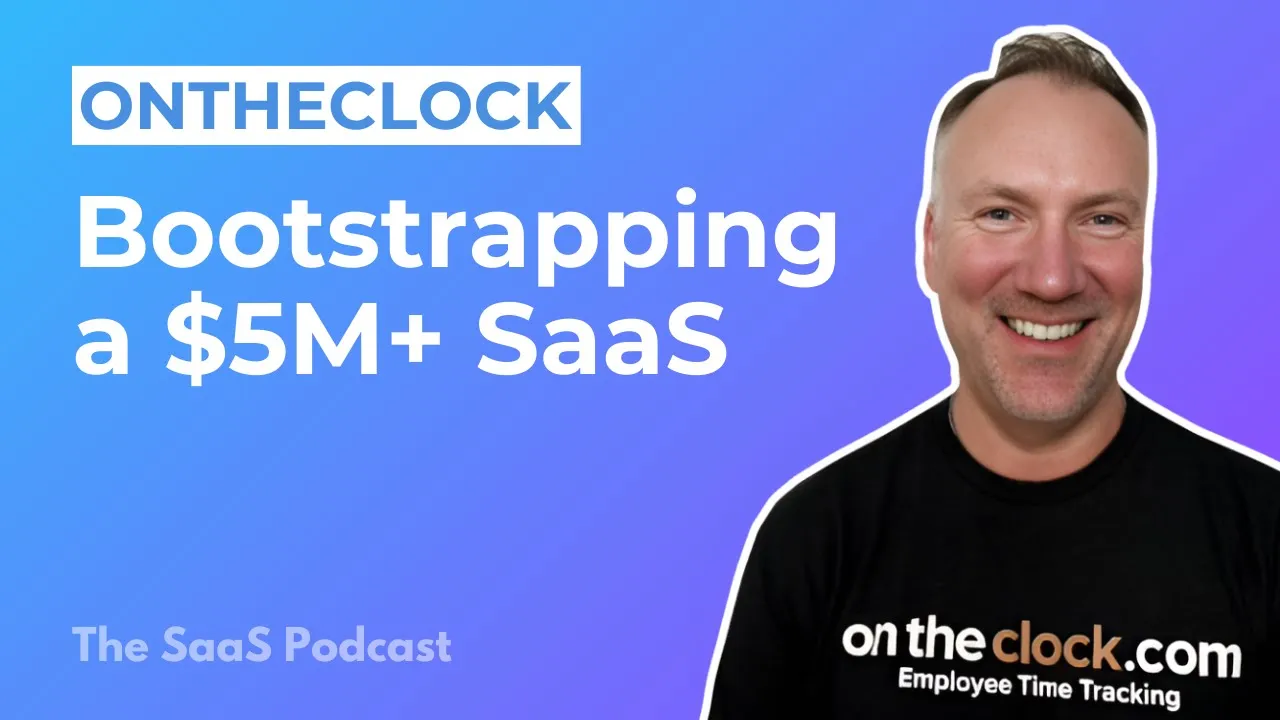
Dean welcome to the show uh thank you om for having me um and I wanted to say it's uh I've been a longtime listener uh I actually looked at my podcast uh just a couple weeks ago when we set this up and it took a lot of scrolling but I got to the got towards the bottom and it was 2016 was the first episode that I listened to you uh it was uh episode 119 so and I also want to say congrats uh I looked today and I saw you had 400 episodes that's a big
deal so congrats thank you awesome so so you're you're uh you've been around for a while and and I think 2016 was about the time that you went like that's when you shifted right that went all into business just a little before that like that 15ish era um so and and that's when I started to have to learn right so uh so I've started watching you and a few other podcasts and um so you have really helped uh you and your guests have really helped shape uh my career on the clock and uh in our
trajectory so thank you for that awesome you made my day thank you no you're very welcome do you have a favorite quote something that inspires or motivates you that you can share with us I do I do um I I was actually looking the other night uh for the source of this I couldn't find it uh but it's if you want to go fast uh go alone if you want to go far go together so that's something I've really learned over the years I used to think about it the inverse but I really think about
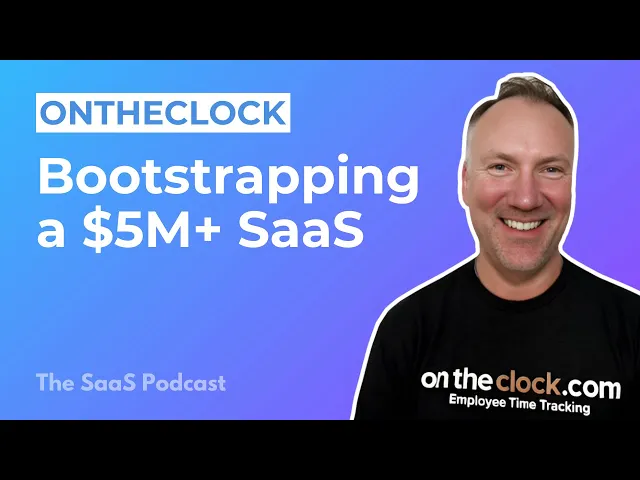
it that way now yeah I think that's interesting part of your story that uh will probably make more sense by the end of this episode when uh people know what you uh the journey you've taken so tell us about on the clock what does the product do who's it for and what's the main problem you're helping to solve so on the clock is uh we we do employee time tracking uh end result is for payroll so um uh it is online app phone app based uh so an employer manager can open an account with us
uh it's self-service so it's very easy to use uh they add their employees uh employees clock in and out uh and then the end result is uh on the user phone uh or the website we do have GPS controls and Geo fencing uh and it's very modern um and the end result is uh time cards that could be sent over to your payroll provider so so your employees can get paid um we do have some additional features uh like I mentioned the go GPS and Geo fencing uh we also have uh uh PTO management so
employees can request PTO and manager can approve it and then it ends up on time cards uh you can also set up allotments and acement for the employees as well uh quite a few options there uh we do automatic overtime calculations as well so that's a really great feature for especially if somebody's doing it manually you know that's a lot of work and a lot of errors as well so typically like what how big are the your your what's how big is your average customer sure we service smbs mostly the s's it's in that uh
below 2025 range is really our sweet spot 25 employees uh or less um but that's we definitely have accounts that have hundreds and even some of some accounts that have I think the highest account uh is right around 3 to 4,000 employees and uh give us a sense of the size of the business where you in terms of Revenue number of customers size of team and that stuff sure so we are uh 22 team members right now so 22 of us run on the clock um revenue is we don't disclose the exact number but it's
between 5 and 10 uh million and uh as far as customer count we're at right around 18,000 customers uh and those are mostly here in the United States great and the business is bootstrapped you've never raised money correct yes yeah bootstrapped um I was a consultant back when we started it was more of a passion project in the beginning so I had a source of income so I could work on this as much as I wanted to and uh it was bootstrapped uh by by me really you know so it was funded but by by
by myself so I think you launched the product on the clock um I think it was like 2004 but it it sort of continued to be a passion project for like another 10 or 11 years so you didn't go all in with the business until till about 2016 is that right correct yeah right in that 156 era um it got to the point to where it was at that point it was profitable um it it had uh it it was to the point to where I really couldn't ignore it anymore so really just decided like
you said to go all in and I had a consulting company here in the Metro Detroit area uh computer Consulting so I would uh go and and write various uh software for customers Uh custom software and right about that time it was just like you know if we're going to do something with this Now's the Time and I rehomed all my customers uh there was a couple other small businesses that I was working with that I I went ahead and moved those off and really put uh 99% of my effort into on the clock great
okay so first of all let's let's go back to 2003 2004 where did the idea for this product come from yeah so I'm kind of a nerd so I still remember the moment actually I was sitting at my kitchen table uh with my laptop and I was reading through some small business and accounting forums um you remember those uh they're still around actually a lot uh uh but and I was noticing this TR Trend uh they were all complaining they couldn't find a reliable uh and easy to use time tracking system for for their company
or for their you know their their clients if they were the accountants and I was like you know I I can build that for them and I was software developer by trade you know consultant um entrepreneurial Spirit as well so I literally the next day uh started doing my research and within a few months uh had the the first version out so that would have been we actually just celebrated our our 20th anniversary here just last month so that would have been rated around June of 2004 okay so most developers uh if they get excited
about an idea they uh often jump to building the product and uh defer talking to customers later how did you approach this did you do the same pretty much did the same thing I I did validate though um uh I surveyed competition to to see what the competition was out there um or potential competition because I didn't have a product uh definitely looked and found that there was definitely a few players out there so that there was some validation there that there's a market uh also did a lot more research uh in the forums and
other areas and found that there was a need so I didn't talk to actual customers but you also just using logic right so small businesses that have hourly employees have to track time time so it it those three elements really went into it and even back then you know I said it was it is a or was a passion project it was almost like if it didn't work it wasn't the end of the world I wasn't going to dump millions of dollars into it um it was my time which you know is valuable but it
would have only been my time okay so a few months uh you got the product built how long did it take you to find the first customer so first customer uh came in uh we had to do a little uh paid at the time and paid search PBC uh Google AdWords mostly I'd say within a couple days we had a couple signups but the funny funny story frell hair is uh they signed up with us in within the first month uh they are still with us uh so they they do hair replacement I believe they're
down in Florida uh so so and they're still with us so they've been paying us for 20 years is pretty awesome wow you said we had to do some PPC was was there a Wii or was it just you at that point there was an I I I've morphed into the Wii uh scenario because there's there is a Wii there's been a Wii now for a lot of years uh so it was I all right and then so first customer in the first month what about the first 10 so we were receiving at that point
uh I would say two to three signups per day you know not a whole lot um at least compared to now um and the first 10 actual customers meaning that they chose us right signups are different than somebody adopting or converting over to a paying customer uh that would have happened roughly within the first probably two months we had the first 10 and where were these people coming from was this was this the little PPC so we did PPC for about a month uh and then SEO started kicking in so so they started just doing
Google searches or or you know uh whatever search engine they used back then yeah two two 2004 when SEO was a little bit different to to today yes very different it was a lot simpler back then yeah okay great so you've got you've got some uh SEO traffic some organic search traffic you're getting these signups and um getting to that first 10 didn't take that long yeah 2 3 months maybe at more so for many Founders that's a you know great sign that you know basically strangers are coming along and they are signing up and
you were charging people right there was this wasn't like a free plan or something like that people are actually coming in Pay we did have a free free plan for two employees or less so and we still have that plan today so you know it's really designed to help really small businesses uh and the idea is is that as your business grows you use this for you know a year or two and when you hit that third employee then you start paying um so but those first 10 customers I would have called the paying customers
so again so I think that's a great sign right I mean for for many Founders you can take them much longer to get those first 10 customers so great signal it almost feels like okay you you've validated the idea found problem solution fit got the first 10 customers that we all you know talk about great Let's uh let's just focus on this business double down but that's where it it just continued to be you know as you said a passion project for for many years you were still doing the Consulting work and you started building
other products as well so just just tell me what was going through your head at the time and why you you sort of left it as this passion project for a while so yeah I I'm I'm a builder so I like to build things um there's nothing nicer than just sitting down with a clean slate um and building something um so that entrepreneurial Spirit really fuels that right it it really you know so on the clock was probably the second or third product that I had built uh the one but right before that was a
check drafting solution like a payment solution um uh it involves it's it's not electronic it's it was a little more old old school uh where you end up with a paper check draft that was one uh that that is actually still in existence today and and still actually somewhat profitable um uh I don't run it anymore uh we built a I built uh a database uh kind of a glorified Excel database type product uh where customers could uh go ahead and create these database tables with different field types you know maybe phone number name that
type of stuff and they might use it for like a contact list or something like that um uh that didn't go too far uh so I I ended up shutting that one down for after a year a couple years um and then we did a survey uh uh very similar to like a Survey Monkey simpler though than it is now at least so you could uh survey people for various things um that was actually up until around five or six years ago um and it was I had given it away for free so expected at
some point to just charge for it uh but it really uh that one I just kind of let stay free for a while and it Without Really proper SEO and proper maintenance if you will it it it just kind of faded off yeah okay so let's uh let's kind of fast forward to 2014 or 2015 which is around the time time that I think you said you hit your first million in ARR so you know pretty long time we're talking about a decade to get to that first million but even at that point it was
still a passion project you were still doing consulting and and other stuff right so uh you're seeing this business grow but you know it's it you know it almost sounds like you were reluctant to kind of jump in with both feet on this on this business yeah I don't know if it was reluctance so much um you know I I tend to have my my hands in three four or five different things at a time so it was really just I saw that uh it was one of one of my projects that I had um
but I saw that it started to really accelerate right the the growth um and it was probably the not probably it was the the what would you say I put my most attention on that particular project So that obviously that's probably why I grew right um so it got to the point to right around that 145 time where I just had to make a decision okay I can I can you know let this kind of stay accelerating at its current rate um or I could really focus on one thing and try to make it awesome
so so that's really the decision and I was at a point in my career where I just really wanted to focus on one thing I just wanted to like make one thing really big and uh and that's that's why we focused that's why I focused on done that at that point yeah and and I think especially once you get to the point where you you've hit a million in AR with small businesses we're talking about a a good number of customers who are going to need help with onboarding who going to need help with support
there might be bugs there's you know you know requests for new features and stuff like that so just letting it just kind of exist or organically and it becomes harder and harder and I think maybe that's probably the situation you were in was there a Wii at that point or was it still just you so right around 15 um my brother Mark who was also a who is also a software developer and entrepreneur uh he was looking to to build apps and we didn't have an app at the time on the clock didn't have an
app at the time and so you know at that point I had really started to Pivot towards going all in on it and he wanted to build apps uh and he was kind of looking to go in all in on something too I says so I said well why don't you come on board we can both focus on this and you can you can build the app and and I'll continue just focusing on on the website and so he came in um and he actually did the same thing I did he had a consulting company
as well so he he rehomed all of his clients I rehomed all of my clients and we really just went all in uh and about a year or so after that we hired uh we brought on Samantha uh she's still with us today uh so she's she's awesome she's um now moved up to customer success manager so that's that's a really cool thing to see and from there we just um you know as we scaled we we as we grew we just kept scaling we we hired uh brought on more people and really continued to
build out the product and that's that's where we're sitting on now with 22 people and about 18,000 customers when you and I were talking earlier you said that you didn't really want to hire people it just seemed like you just had a whole bunch of you know negative you know kind of thoughts about what that would mean for the business for you your time and all that stuff so just just tell me what what was going on there and and why you wanted to just go alone sure absolutely so I a people person you so
it's not anything against people in general but in the Consulting world I worked with people in the in the front you know the sometimes the CEOs the owners and such and then I would also work out work with people out in the back uh if it was like a shop environment and I'm friendly so I got to know everybody and there was always this like war going on between management and people you know the you know the the um you like hourly employees um and I was I was like you know I don't want that
I don't it you I do not all work in B like that but all of a lot of the ones that I saw were so I really had to make a decision that when when we did expand and as we did scale that I was going to do my absolute best to not have that environment so um yeah I am a people person uh people first you know I love to see people move up and to the right in in any Dimension that they're looking to move that uh move in that direction uh it always
happen but uh really just had to adjust my I hint the quote earlier uh really had to adjust my business philosophy on bringing on a team and uh made that decision and uh so far we've been really good we have an extremely low turnover rate at on the clock um and we we view our support people we call them our Specialists uh weew that as an incubator so you can come in there and and like I said with Samantha earlier she started in product support and now she's uh moved up to customer success so we've
had a few of those instances over the years and that's really awesome to see great so one of the things I I want to clarify is this journey to the first million in AR it you know people might be listening to this and thinking okay Dean built this product did a bit of PPC for a month then SEO kicked in and you know yes it took 10 years to get to the first million but it almost sounded like you weren't really doing that much like people coming in signing up and you know kind of becoming
customers and stuff like that was it was it a a difficult thing or or did you just get lucky and and um you know the thing started just growing on its own without you know a huge amount of effort no I did put a lot of effort into it um but it wasn't full-time and it was only me uh for that first 10 or so years um you know being a consultant I definitely had customers uh that uh required my time right so if I had to estimate I'd say I probably spent um you know
maybe 20 hours a week uh on on the clock and that was uh continuing to build out the product right so uh you know talking to customers listening to their needs um and learning SEO learning marketing uh and just learning every other part about uh running a SAS company that uh you have to learn and and really just continued to build it so yeah it wasn't a hands off by any means uh but it it wasn't a full-time either so you might call it like a halftime so that was probably but I'm I also work
really fast right so it it's you know even though though it was only 20 hours you know it was still you know be when you're just hence the quote again uh I was moving fast uh because I was alone right um and I could just Veer off and and and do these things really quickly how easy or hard was it to to sell the product I mean you know we talked about the first 10 weren't first 10 customers weren't that hard but you know it's still a relatively new product it probably didn't have all the
features it does today and I'm sure there were already incumbents there in the market that maybe um you know these businesses were more familiar with so what were you doing to to differentiate yourself and um you know make that decision for people to choose you an easier one sure so a lot of it I would attribute to learning marketing and learning SEO uh and talking to customers right so talking to customers uh reviewing the their their requests you know what they're asking for um and then taking that uh and building it into the product for
one uh but also listening to their pain points and then bringing that into marketing um and really just showing them that uh you know they have if they're doing the search for you know online time tracking or whatever it is so as soon as they hit the homepage uh the idea is for them to say oh yeah that that is something I'm struggling with um and if I try this product uh I should I should that struggle should be alleviated so and then they would try right it was free it was a free trial typical
uh SAS type at least a uh a VAR type SAS product and uh they would try it and if you could get them to uh an aha moment quickly meaning they could quickly see in our case it's seen time cards calculated uh that was a no-brainer for them right so they're like you know back then there wasn't a whole lot of online time tracking systems and anything that was in place was a software based right so you a servers and wires and you know punch clocks all over um and they didn't do a very good
job at it either and there was a lot of manual calculation where we did it all automatically so as soon as I kind of got to that aha moment they it sold itself basically I I think it's interesting that you point out the the talking about customer pains on the homepage when people arrive there you know most of the times uh you'll see websites and they'll talk about benefits and features and all that stuff and sometimes the pain gets lost in this I it was not even mentioned anywhere why why did you do that why
was that important to you to you know it almost feels like um you know there was some level of like educ you know education going on there that or or was it about like I again just kind of take take us through the thought process in terms of why why you took that approach yeah so I mean it's definitely it's for sure bringing the pain points to the surface um so generally it it you may be able to affirm this as well if you are searching the web for something or the app store or talking
to a friend or whatever whatever it is um in particular like a product a software product you probably hit an event in your in your day or your life uh where you're like you know I I I've had too many in our case say time cards um I had had too many bad payroll runs you know I'm this is a pain point right um my employees are getting underpaid overpaid so I'm going to search for an automated solution um or I'm spending too much time doing this right it we calculated it's several minutes per employee
per pay period so you could spend hours a week uh calculating uh time cards um so that's a that's an event that happened and you're just fed up with it so if you can bring that to the surface from a marketing perspective you you tell the customer or potential customer that this product solves your problem so if you make that direct connection that's really important um the other thing that's really important too is letting them letting them know like what your product is um we were searching for this is a few years back uh to
replace our project management software and uh I was just helping doing some searching and I found you know you type in project management you know online or whatever it is you app store and um and I was Finding so many non project management softwares it was just amazing you know there's there were these softwares that weren't even close to project management that we're we're doing not only SEO but um paid PPC as well uh that were showing up at the list so it's also really important to identify what your product is and and what it
does like for us it's employee time tracking right so so that's the other element along with the pain points that that I would definitely have uh uh have people look at uh you also told me earlier that uh wood of mouth has has been a a you know a decent driver of of leads and and new business uh most of it coming from from SEO but but word of bouth is also important and you also mentioned this idea of like the purple cow right that uh Seth gon talks about so maybe just expl for people
who don't know what the Purple Cow thing is just explain in very simple terms what that means and then I want to try to understand like how you went about trying to be a purple car with product sure so the purple cow is a concept uh by Seth Goden so uh he is uh this is marketing is one of his books um so the concept is is that and I will probably uh butcher this but it the concept will get out uh the concept is is that you know if you're driving up and down a
road by a farm every day of your life there's cows you stop you you don't notice them any anymore as you're driving by every day um and then when you see a purple cow you stop you get out of the car your kids get out of the car you're taking pictures you're taking selfies with it with the purple cow you're sending it to your friends you're putting it on social so the concept is is how do you stand out right and I would I would just add to that that in the in the context of
you know SAS startup it's really about how do you make your product outstanding how do you make it unique right and that is often a very difficult question to answer right so how did you do that I mean was it about focusing on unique aspects of the product or features or was it about we're going to we're going to just have outstanding you know customer service or whatever what was the first thing you picked to to kind of become remarkable in this in this market so the first thing actually goes back to that original story
when I was sitting at the table um where they were asking for two things the pattern I saw was they were looking for an easy and reliable online time tracking system um I'm really good at making things easy that's what I did as a consultant um I could take somebody's idea and make it as easy as is possible so that was one of the one of the founding principles that we built and two on the clock was it it has to be easy right so and we actually funny thing we did a we took all
of our customer reviews uh thousands of them and we put them in a wordcloud generator in right in the middle was easy because everybody was saying easy um so I thought that was really cool but really just making it easy so so when you get in there you just know what to do it's it's self-directing to the best of your ability you don't have things hidden you know underneath menu and behind tabs and such at least the main features um so for us it was making it easy that was that's really our probably biggest Purple
Cow and and how did you do that was this did you interview customers was it looking at usage data was it just using your own hunch on how to make software easier like how did you figure out how to make it the product easier to use I think it really goes back to my Consulting background um you know I I uh I'm a Problem Solver by but just the way I am so you know it's really about the things that you're that are important to you putting them in a place that is easy for you
to get at so you know for instance um uh even just earlier today uh my product owner Steve and I were looking at a form and uh there was a checkbox there and and I was like but 99% of the people won't need that checkbox so why are we putting it right there um or you know what if we moved it over here where the 1% do need it um or button clicks right uh a fight over one button click um and you know if you do that 100 times you've you've gotten rid of 100
button clicks right so it's it's things like that and just intuition really um just placement of things on a on elements on a form or on the app um you know making uh your navigation uh like in your website or your app uh the top level P top level items like the main things that people want to do uh I've seen so many products where one of the main things I want to do is bury two or three menus deep and it's like really I mean think about it for a minute yeah okay so so
it was mainly just about your experience of designing software and just you know constantly looking at how to make the product easier to use correct and just a lot of intuition you know and I use I'm I'm I use technology a lot so you know I'm always scrutinizing products when I'm using them so I think all that just builds into that intuition did you do anything to to measure this or get feedback from customers like how did you how did you check the box that say yeah we made it easier to use over the last
month because we did XYZ yeah I mean talking to customers definitely uh helps um one classic example uh we used some analytics tools uh heat mapping tools in our tool in our in our website and we started noticing this um this one really big uh red spot you know he people were clicking there a lot and it turns out that if they were clicking on their employee list you know we have a concept of an employee list in our system we're employee time tracking but this was early on we had the employee list uh underneath
a configure menu right so you had to click configure and then click employees and you know I looked at it and I'm like well that's two clicks so we moved the employee to the top level and we eliminated one click um and all of a sudden the heat map went there right I me that's naturally what would happen so that's one form of you know using uh a tool uh to do that a heat mapping tool um you know the other things we do uh currently we're using some uh tools like hot jar you know
screen recordings just to watch user Behavior it's hard to do that at scale but you can definitely uh sit there and watch you know a few dozen videos and and get a mental image uh as to where you know if they're sitting there and and there's a pain point and a lot of those tools will actually tell you um where they are detecting pain points uh one of them I thought was very interesting they call it rage clicking so if you're click click click uh so you don't want that right so if you see that
you want to figure out what's going on and fix it so the tools help a lot and a lot of it's just like you know said just using your product and you know using it as a customer use it not as a developer would use it we talked about getting to the first million in ARR and SEO being the biggest driver and then you know couple with Word of Mouth today you're you you said you were doing between 5 and 10 million in ARR and uh is it still SEO and Word of Mouth driving growth
yeah you know it really is I mean we definitely have partner relationships uh with some of the payroll providers um and so when you have a partnership uh and if you're in there Marketplace you will get customers from there but the reality is is that SEO and Word of Mouth are are are are still are two uh too big App Store ASO as well uh as well you those those are really starting to rise up um but those are really our three different or three three drivers of of new signups and and business is is
your bu business uh like sensitive to Google changes like you know we we hear about people doing SEO Google rolls out Panda or whatever the you know the update ISS and suddenly next day you know traffic has disappeared overnight uh what what what's have you seen those kinds of fluctuations and and you know do you do you worry that you know having just such a dependence on on SEO um kind of gives it like a single point of you know potential failure yeah so I think so the whole reason that Google uh being whomever releases
these updates is because one of the reasons at least is because people have learned to kind of game the system right um you know you hear about the black hats the gray hats um you know we never tried to really game the system we just really tried to put out good content um and educate our customers uh so whether it's blogs marketing Pages um so the we I to my knowledge and we monitor it pretty well we have never been dinged by any Google updates um uh I think simply because we just focus on producing
good content for people you you mentioned PPC at the beginning like the first month you said hey you know did that for a month got my first customer or or a handful before uh SEO kicked in what's been your experience since then with using Pay DS we've we struggled um so we uh we we experimented a little bit on our own probably four or five years ago um you not being experts by any means but the tools are relatively easy to use um and that failed pretty pretty bad and then we decided uh a few
years ago to hire a firm a firm that actually we knew some of their customers and that they served their customers really well and the customer is vouged for them um and that that agency uh came in and you know there was several people involved and uh a bit of setup time but uh and we spent a pretty good chunk of money and I I'm not kidding you almost got nothing back uh it was it was amazing to the point to where we kind of went into research mode and we're trying to figure out is
is this fraud not fraud from the agency but click click fraud you know or something like that um and it just it just failed really bad um I don't think it was the agency's fault but we we just kind of left that one be uh and then we went out on our own a little bit too again this was uh probably a few years before that one or two years before that and really just said okay no it was actually after that I'm sorry I'm getting mixed up and uh we tried to do it on
our own a smaller scale and again same result so you know we it just didn't work for us um I think if we threw enough money at it it would but for our for our price point it doesn't make sense got it so was it you weren't was the problem that you weren't getting enough leads or it was too expensive to get the leads or kind of a bit of both so so what was happening is we we could see the you know in um in Google's um portal uh we could see that the clicks
happening um but the clicks weren't translating to leads or signups for us um that's that's what we what we were seeing so it really it was very difficult we spent we had several really smart people that work with us looking at this and we could not make heads or tailes out of it was it was we had to had to chalk and I've actually talked to a few people since then uh over the last year or two that have uh indicated that there are there is there is some fraud going on out there uh it's
not not Google or the agencies it's it's something else and we're not even sure what drives it it's always money that drives something right but um we're not sure exactly what's driving that um competitors I we don't know yeah it's kind of interesting because on on the one I mean it's the Ser right so you've got you've got the results page and for some reason organic traffic going there is clicking the link and you're getting healthy lead there but for some reason the other links on the page which happen to be paid don't seem to
to convert for you and we know our keywords we know we know what marketing text to put in there um you we've been doing it with SEO the Ser for years um but you do the same thing in paid and it's like the quality of lead is almost zero like you know they click but they don't do anything they don't sign up um so it's it's it's the strangest thing we literally spent days trying to figure it out yeah you know often I talk to Founders who will say you know we tried paid ads and
it didn't work and it was like well how long did you try it for and it was like yeah a few months or something but you've tried repeatedly this wasn't just like a one-off thing that we tried for a month and it didn't work and you've tried with your own team and external and yeah it's kind of fascinating yeah yeah it's and I've heard the story before uh from other people as well okay so when we out we said you know you you ran the business or or build this product and you were reluctant to
hire people and today you have got a you know a team of what 22 odd people working on the business how how has your perspective changed about hiring people team building being a leader yeah so it's it's really from a business perspective it's really flipped right so uh it you need that team to go far right so um I'm in a in a position now to where I I don't code anymore it's been four or five years since I've written code um but uh I I have a team of developers now um and they're amazing
you know they get us so much done um you know to have the key people in place is how you go go far right so if it was still me just trying to do this we would not be anywhere where we're at today it it it wouldn't even be close um so you there's a synergestic effect with bringing the people on and I really like surrounding myself with people that are smarter than me at their craft so you know marketing uh you know we we want somebody there smarter than than myself or or leadership team
at the craft uh customer success uh development heads um CTO uh you know those those are people that we're putting into place strategically that are really just going to escalate it and I just really love watching them you know do their work and it's and then building their teams up too right so always escalating people and and looking to just better their careers better their better their home life to whatever extent we can and and culture is a big thing for me uh so uh back probably just a little bit after we really started building
our team uh I had set our values and it it took about six months um because you know your values are you don't so much come up with them you have them right it's just a matter of getting them out on paper um and the first one is passion for people so it's really just uh building those people up um and and one of the other ones is that your work should be meaningful right you should go home at the end of the day knowing you made a difference um and and feeling good about it
so you you put those values together and that really builds our culture at work so you know we have like I said people describe our our office like a family like atmosphere where you know we get along we we have a uh a little cliche but we have a Thursday lunch every uh today we had our Thursday lunch and uh we order uh food today we had barbecue it was great and um uh it was also uh Ken's birthday one of my star software developers so he got to choose um so he um or we
we have the lunch so that's that that lunch isn't really part of the culture but it's just something we do because we want to sit and eat together um but you know building the the Val you know setting the values building the culture uh embodying the culture and watching people grow uh that is is helping people grow as well is really a passion of mine and I go home at the end of the day feeling really really good about that yeah that's a that's a complete 180 isn't it from where you started oh 100% yes
okay uh we should uh wrap up let's get on to the lightning round I've got seven quick fire questions for you what's one of the best pieces of business advice you've received so the best advice that I've received and I probably would give is that have a vision for whatever it is you're trying to do like literally form it in your head and then once you have that Vision just go after it and don't stop what book would you recommend to our audience and why so a more recent book I just read um I actually
had a book club at work with Nicole on this is uh scaling people um and it's uh Claire Hughes she was the coo coo of stripe um and she she really giv Like A playbook of how stripe grew and scaled uh over the last 10 years or so so that was really awesome so you get to kind of see inside the company uh it it was entertaining and also very informative what's one attribute or characteristic in your mind of a successful founder sure it probably goes back to the first question and that's Vision so if
you can't see what you're trying to build um and articulate that uh especially if you have a team like if you can't articulate to your team what you're trying to do uh you will it won't happen so you know think about it like all the time create a vision in your head and and that will drive you so far what's your favorite personal productivity tool or habit sure so there's probably four or five favorites but one of them uh that I use every day is Inbox zero so it's it's kind of an older one but
you know it really helps me to not have 10,000 emails unread and missing things and it really helps me to make sure that every email gets answered um or at least read um so that's really one of my big ones what's a new or crazy business idea you'd love to pursue if you had the time yeah so project management uh at work now we do a lot of projects and we've tried several tools like I mentioned earlier was uh searching for project management and finding all these tools that weren't project management um but uh we
have actually had some kind of semi- joking conversations that do you want to go out and build a project management software because we know how to build it now because we've seen we've literally used all the all of the other ones and um and found all the flaws so we think we could build one what's an interesting or fun fact about you that most people don't know yeah so it probably depends on who you ask but uh I am fairly outgoing person you know I'll walk up and talk to anybody but uh I'm I really
have an introverted side too so you know a lot of people might think I'm extroverted or leaning towards that way uh but I you know I definitely like that alone time as well and finally what's one of your most important passions outside of your work yeah so it's probably the same as work uh it's really just building up family friends helping them out uh I have three kids uh love watching them grow and um uh they're still around so that's that's fun so we get to still hang out with them uh so really that that
that would be the same pretty much building people up awesome so Dean thank you so much for uh joining me and sharing your story building the business if people want to check out on the clock they can go to ontheclock.com and if folks want to get in touch with you what's the best way for them to do that so for me probably LinkedIn uh if you just search for my name Dean Matthews 1T um uh that is the best way for anybody in the public to get a hold of me great we'll put a link
to your uh LinkedIn profile in the show notes great awesome great it's been great to chat uh thanks again for making the time and uh I wish you and the team the best of success thank you Omar it's been a pleasure thank you for the uh for having me on my pleasure all the best Cheers
![5 Things Successful People Do Before 8AM [FULL MESSAGE] | Terri Savelle Foy](https://img.youtube.com/vi/z0D6sgPnPh0/maxresdefault.jpg)