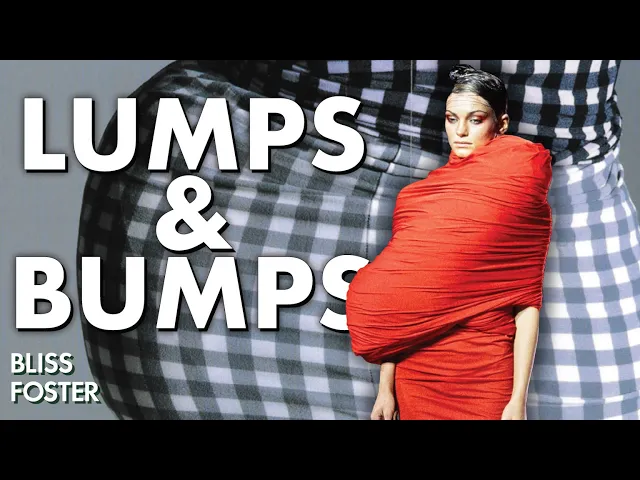
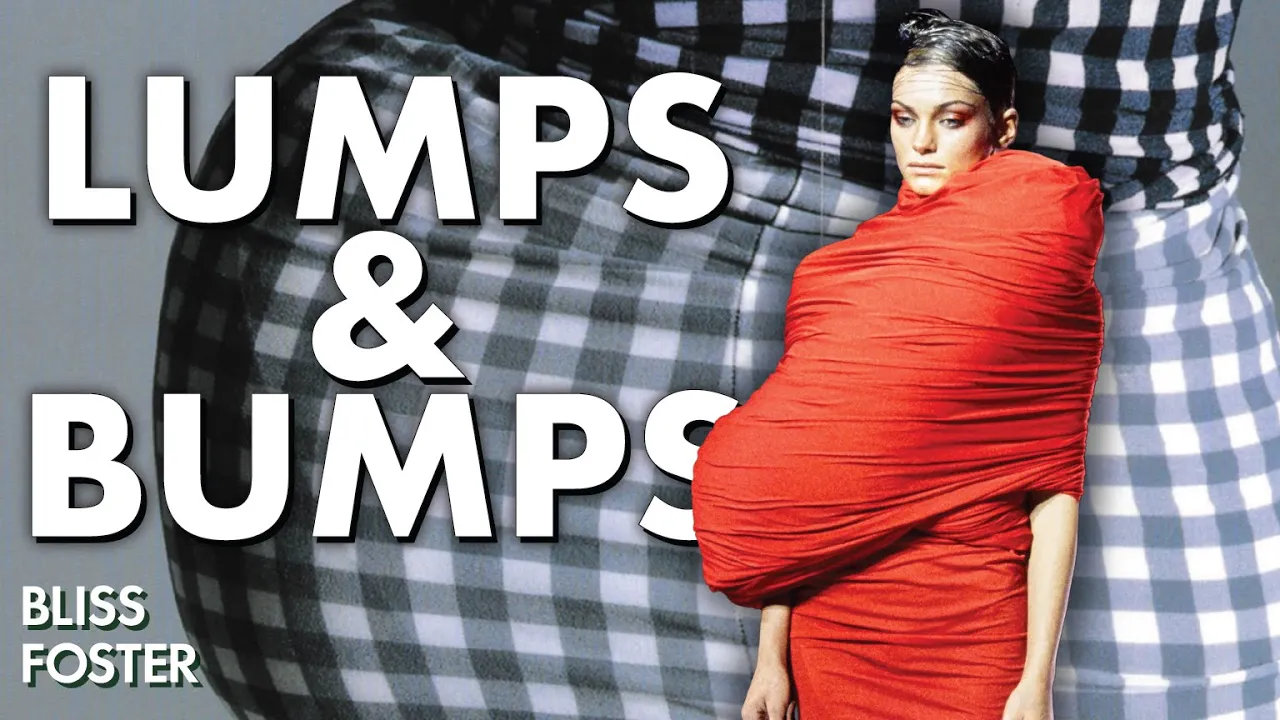
In September of 1996 com de garal presented their worst selling collection to date the clothes were mocked by the press and became an unflattering meme among 1990s media Outlets earning the nickname the lumps and bumps show 30 years later the show is universally hailed as a masterpiece the bizarre shapes of the collection are spoken about in low tones of reverence by fashion designers it's honored in Exhibitions around the world and it is fervently sought after by collectors calling anything the greatest of all time is impossible to defend so I'll be a little bit more objective
in my speech com de garon's spring 97 collection which is called body meets dress dress Meets Body is Fashion's most influential collection of all time there had been conceptual fashion shows before this but none had gone as hard as this one we had never traveled so far off the shore so Yeah fine something was super unpopular when it came out and now it's a classic that happens all the the time it's the same story with Star Wars The Black Parade Rocky Horror Picture Show the difference with this show is that no one still seems to
understand what actually happened with it even people who claim to love it probably haven't even seen all of the looks from the show today we are going in deep we are going to consider every angle every look every Possible everything in order to uncover what this show is doing on a mechanical level we are going to finally try to understand what Ray kaoko was actually doing with these looks no more gatekeeping we are going all the way with this one I feel an enormous amount of pressure in this episode to give you a tidy crystallized
molten answer to the question what does this show mean and I I just don't think I can give that to you but I think that might be the wrong Question what we should be asking for spring 97 is how does this show make me mean we can only answer that question by exploding The Collection apart zooming the lens in further and further until we can see each little piece and how it connects to the other little pieces but first chapter zero the basics we are going to be jumping around so much during this part com
de garon has many diffusion lines there are lots of designers and lots of even different Brands that are all under their umbrella you've seen many of them before the important thing that we need to understand that when we just see the name garon by itself that's the main event all the other things are in service to this Vision com de garon has existed as a Japanese fashion brand since 1969 the name is French of course and translates to like the boys importantly when this show took place spring 97 col had been in business for 30
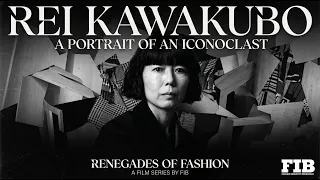
years they had been showing in Paris for more than 15 years as well so this this was not like some crazy art school kid showing up and just doing something wacky on a Paris Runway this was a 54-year-old fashion designer showing up yet again to a place where she is established and respected and she's flexing her muscles most people still refer to this as the lumps and bumps show it's I'm I'm saying it here officially this is called body meets Dress dress Meets Body first challenging note incoming it would not be possible to talk about
this show unless we also discuss a 1986 collection by British designer Georgina Godley that was called lump and bump to be specific U there are two different Scholars who say it has two different names Andrew Bolton says it's called hump and bump Franchesca Granada says it is called bump and lump a lot of you who knew about Georgina godley's collection before you started This video are probably waiting on me to make some kind of statement about whether or not this is theft I I personally do not think that there is actual theft here Georgina Godley
was making a really profound conceptual fashion statement in the 1980s considering that most of the conceptual fashion that we all know and talk about occurred during the Cambrian explosion of conceptual fashion in the 1990s and early 2000s to to do something like this In the 1980s was a really Brave thing to do like I can only imagine that every human being that came into contact with this collection whether they were buyers or Georgina's mom or just anybody clutched their pearls and went but Georgina who will buy this so I want to give huge props to
Georgina Godly for being brave enough to make a statement like this at the time that she did but we also need to give flowers to Ray kawakubo for making a somewhat similar But artistically separate statement having personally looked at these two collections at this point for years I really don't think it's difficult to differentiate what these two women were doing and for someone to claim that Ray kawakubo was stealing from Georgina Godly I think is intellectually dishonest for the specifics of that we'll be unwinding Ray's collection for the rest of this episode obviously but the
the simplest way to put it is that Georgina godley's collection very closely resembles actual human anatomy this all looks like a exaggerated and unrealistic version of an actual human body whereas Ray kaok kubo's work just doesn't even really resemble a human form at all it's worth noting here via Granada that Ray did not like her work being compared to Georgina godley's work there was a there was one exhibition where they were going to display Ray's spring 99 collection not spring 97 it Was spring 99 they were going to display Ray's spring 99 collection along with
pieces from Georgina Godley and Ray just said no we're not going to do that if you want to know more about Georgina Godley Franchesca Granada the genius did a wonderful interview with her and a lot more details in this book experimental fashion it's super cheap you should check it out back to com so the the core inspiration the very Genesis of this collection according to a quote from Adrien Joff Raya kubo's husband is quote raise anger at seeing a gap shop window filled with Bal black clothes end quote two Ray's credit this was absolutely a
time when the Gap was kind of changing the game in fashion by saying that your clothes should never be making a statement your clothes should only point to your own personality so the close must be as simple as possible you can see maybe how that idea might anger Reay and she does emphasize in quotes all Over the place like in the many times that she's been interviewed she emphasizes a lot that she is just angry all the time and specifically angry with all her own collections but she did note to Vogue Japan one time that
she was the least dissatisfied with this collection spring 97 okay so let's reflect a little bit on what we're looking at we're not getting into the really heavy interpretation yet we're just saying what we see the show contained no music And it opened on a plain blank Square Runway the first look emerges and there's actually a really clever trick that's being done here so what we see is a model walking out in a voluminous skirt and a mostly sheer top we've of course had to edit it here so that we don't get demonetized but rest
assured you can fully see her breast since this show took place in 1996 we are in an era that fashion Scholars refer to as the sexy VAV Voom era of fashion this is Like when Tom Ford was at Gucci when Giani Versace was crushing it at the height of his career fashion is extremely sexy right now if you're looking at this first look dead on Ray kind of tricks us into thinking that she is participating in fashion sexual Revolution then the model turns and we see the lumps okay importantly the sheer top has already switched
the audience's brains to thinking more about the model's body like we're thinking more About her breasts than we're thinking about the skirt for example if the first thing we saw was this for example we might just say wow why is the shirt like that but because we opened with so much emphasis on nudity the question question switches from why is the shirt like that and the question becomes oh no what happened to her kawakubo son sets us up to mistake her designs for the body of the model herself the most common interpretation of this show
is way too Simplistic it's it just usually chalks it up to oh this show is simply kawakubo rejecting Norms about the body like as if she's saying oh you think this is beautiful well I'm going to put this on my Runway and while this is a rejection of norms there is so much more here that rewards a closer examination let's talk about garment construction here a little bit what journalists referred to as the lumps were down goose feather filled pads most Of them looked like this but importantly the first look had deu down featherfill pads
that looked like this they're knitted there's this wonderful myth among non-fashion people that like oh this stuff is never actually made no one actually buys or sells this stuff these were produced and they were sold they they technically were sold as separate pieces you could buy the pieces without the pads inside of them and if you wanted to buy the pads they cost $200 Which in 223 money is about $350 the patterns for the garments themselves had little openings where you were able to slip the pads in or take them out that can be seen
most clearly in the transparent version of this Motif and really most of these garments didn't even look all that strange if you just took the pads out again via Dr Granada the uh the clothes were sent to vogan L to photograph for their editorials with the pads sewn in but L and Vogue both Went to lengths to remove the pads so they could just photograph them in the most inoffensive way possible I'm bringing that up to say this collection actively made people uncomfortable look two is when Ray kokubo throws the gauntlet down and assures you
that [ __ ] is going to continue to get weird let's talk about materials most of the looks used a fabric that was a combination of 70% stretch nylon and 30% polyurethane that just meant that the final result Was just super duper stretchy stretch material was actually one of the only things that Ry herself knew in her own private brain that she wanted to use before The Collection started I'm paraphrasing here from an interview with Sarah mower for Vogue Japan in 2001 but Ry essentially said that she wanted to create something that didn't resemble anything
else she wanted to design clothes not bodies sorry bodies not clothes and she also wanted to use Really stretchy Fabrics many of the looks feature this print which is called a gingham gingham is complicated and it's used in all different kinds of context but the most popular context is the stay-at-home Super Mom armed with an apron perfect hair and lipstick moms have sported this Leave it to Beaver looking ass fabric since the 1950s Jokes Aside there is this heavy connotation of American Domesticity and we can even see that theme reflected in some editorials That were
done by people outside of the com organization here showing a woman at home U life using the tools of her own Domesticity if you were unfamiliar with this collection before now or even un familiar with con before now the ultimate goal of Ray kaok Kubo is to create something new and not new as in like wow I've never seen pants like that before new as in like I have gone past the notion of challenging what pants are she wants to go past all of that later On in this video we're going to discuss how she
creates newness through her process but for now all we need to know is that the ultimate goal here is new moving on we have a ton of variations on this same idea some are in this gingham some are in a single color others are in this wild colorful print there's a number of these that are in this super bright red that's a whole section of this show and it may have been easy for some of the audience members who are Viewing this live to kind of take this as a joke and you know some of
them were going to laugh and crack jokes no matter what happened but the tone of this show is held in a dark place primarily through the makeup and the hair of the models this is of course the 1990s so the the grungy makeup thing is a wider theme in these years but this makeup for this show goes much farther with the idea to to the point where the redness around the eyes looks like the type of Facial bruising that comes after a face lift further unsettling are these strings that seem to be tied around the
forehead and the hair just tied enough to cause more bulging and redness something else to note here is that the pads are not consistent in their placement on the body from look to look it's always in different places and really at no point in the whole show does it make it look like it's an exaggerated human body it's always in The wrong place for example this is clearly not supposed to be the model's actual butt like it's it's offc center it's misshapen in a couple of ways to the okay I think we're far enough in
the video at this point for me to just say this is clearly not supposed to be someone's ass my butt is real it runs in the p I can't swear for the first couple of minutes of YouTube videos and so I have to like wait a little bit another example if the padding is anywhere close To the model's chest it's too high to for anyone to think that it is the actual breasts of the person and and the padding is even placed so lumpy that it causes this Split near the sternum so that you can
see through to the model's body and know for a fact these are not breasts this is something else there's also an enormous amount of asymmetry in almost every single look the right shoulder is high higher than the left shoulder there's some kind of Bulge that Goes from the left hip down to the right ankle everything is asymmetrical and here I mean like the the dainty S curve of a straight upright woman is interrupted here by this big old lumbar pillow all forms of balance that humans strive for in their body are being interrupted by these
Goose feather filled down pads okay so usually these Lumpy looks are the only ones that get discussed regarding this collection but there is a second category of looks that Are kind of these nonhuman organic type looks these are looks that again are made of polyester but which feel visually like they just kind of grew naturally and could be pulled off the branches of a tree or retrieved after they detached from a group of Sean enemies and washed up on the beach we even have footage to show us that this look in particular was meant to
be a little Runway performance where the model emerges out of the flower petal Like dress we actually get a pretty solid clue about this second category from the first look wherein the model is wearing a skirt that's more often seen in that second category than in the lump looks we can see here that the skirt is just safety pinned on it's actually like really loudly safety pinned on now for most Runway shows this would be massively embarrassing there's like whole Tik Tok accounts dedicated to doing takedowns of designers that like Have to safety pin things
on the runway but here it is purposeful on the secondhand Market there have been a number of sales of the skirts from this collection and all of them them have included a giant safety pin like the one that we saw on the runway those safety pins were manufactured as part of the skirts because they are part of the purposeful design of the skirts Ray backs this up in a quote to American Vogue from 1992 you'll notice that this Quote comes from before this collection came out but it's still very relevant here she says quote too
much importance has been placed on slick polished images I show clothes that aren't finished and expose their construction to indicate the value of things that are primitive and imperfect end quote Ry is one of the early founders of the deconstruction movement in fashion I don't know if she would admit to that but it's just kind of true so the safety pin thing like Showing the process showing the the imperfect parts of the clothes on the outside of the clothes that is a very typical thing for the deconstruction tradition but also all of the kind of
nonhuman organic looks seem as if they were not constructed by human hands but rather just sort of whisk together naturally whereas like you know they they didn't actually have to to get dressed in the morning the clothes just naturally hover on them as if a fairy Godmother just kind of poofed their clothes onto them these skirts needed to be safety pinned in order to achieve that desired effect we're not really going to spend much more time on the organic shapes looks from this show because frankly the history of interpretation for this show does emphasize the
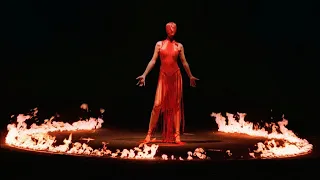
lump looks more and Raya Kuba herself even emphasized the lump looks in her collaboration with M Cunningham on their scenario piece and Also it's just more fun to talk about the lump look so that's where we're going to stay speaking of separate segments of the collection you have probably seen pictures or videos of this like I just said this piece is called scenario it's a collaboration between Rey and the choreographer M Cunningham this piece is unbelievably important to understanding the overall collection and we will definitely be getting to it later please Be patient final note
on the general overview of this collection these all red looks are really unusual because I believe they make reference to the traditional practice of baby wearing which is where you um you uh you wear a baby here it is depicted as if the baby is fully cocooned in the mother sort of a kind of like strange almost parasitic reimagining of pregnancy okay wait does the thing that I just said the parasitic reimagining of pregnancy does that sound Like a stretch to you that might be a stretch I mean it's really easy to stretch the symbolism
of this show I mean for example I could go off on some wild interpretation about this look where you know she uses this look to sort of begin a theme of The Circle of Life throughout the entire collection I could say that this look is the foundation of that Circle of Life theme by saying that it is showing a woman here in the act of Love Making the Dress creates two legs these are her legs the woman's legs they are open and the literal legs on the model's body are the legs of her lover we
here see that his face is even buried in her neck this look is the act of sex itself and then there's other looks that are this kind of bizarre Twist on pregnancy and then this look is the begrudging angry Mother after she's given birth she regrets having the child maybe this show is about the rare infectious disease Elephantiasis wherein certain limbs on the body grow to many times their normal size there are so many interpretations of this show and there's so many plausible statements that com could would be making how do we even sort them
let alone prioritize which interpretations are more helpful Ray kawakubo actually helps us out with that chapter one binaries we begin this interpretation with a ruthless fact spring 97 resists interpretation and we Don't really think of Art in those terms usually usually art is completely subjective to each their own opinion but there's Sometimes some very few times where an artist can set up defense mechanisms against certain types of of interpretation so that those interpretations are objectively incorrect how is that even possible the light has shifted and I have to block it hang on okay we have
to discuss something That has the potential to [ __ ] up your whole life it probably won't but it could are you ready binaries okay I promise the entire video isn't going to be like this but we have to get into a little bit of cultural Theory here the whole idea of B Aries and Ray kaak kubo's work has been explored very very well by Andrew Bolton in his book for the Met Gala exhibition on Ray kaak kubo's body of work we're going to expound that out a great deal here but If you want to
get this book and read it it's one of the best fashion books ever written Andrew Bolton is a genius everyone's brain is different but a commonality with our brain is that the way that we process information is largely shaped through language like it or not the way that we speak and the way that we write has a massive effect effect on the way that we understand the world around us a huge part of language is just binaries and the easiest way to Understand this is that it's just opposites so stuff like hot cold presence absence
sitting standing all of these are binaries this is a complete coincidence but there are two major things that we're going to be talking about involving binaries the first one is straightforward both sides of the binary help to Define each other one cannot exist without the other it is not possible for me to understand light without having experienced Darkness Binaries are not just matched up for fun the way that we created the definitions one cannot exist without the other one the second thing to know about binaries is that usually one of the words is dominant in
the relationship a lot of this has become political like man woman black white abled disabled there is unfortunately one of these things that culturally tends to be more dominant and that causes a lot of issues but even if you ignore examples like that there are Huge Universal ones that everyone absolutely agrees on is prioritized over the other like life death everyone prioritizes life over death right like it would be insane to prioritize death so that's binaries com is extremely interested in binaries Bolton posits in this book that Ray's career can be understood by looking at
it through the lens of binaries and even even Beyond like going to a super academic place for it it's not really hard to see that like The brand means like the boys but it's known for its women's wear they have a unisex fragrance that is called girl like they they make it very clear that they're kind of trying to manipulate break down or sort of complicate binaries in some way but there's one binary in particular that we need to discuss for pretty much the rest of this episode and that is subject and object and to
put that simply it just means a person and their clothes let's look at This binary based on the standards that we just said a moment ago subject and object do they help Define each other absolutely there has never been a person alive who has not been at least somewhat defined by the clothes that they wear additionally clothes are ultimately defined by the people who wear them like if I show you a picture of vestments even if there's not a person wearing the vestments you have very specific thoughts and associations with this Garment in particular it
is not neutral same with like eagles jerseys this jersey does not just say I am a fan of the Philadelphia Eagles this jersey says if you Google which NFL fans are the meanest I am the first thing that comes up on Google Images the football people will love that joke they're such a niche subculture this is not merely a sneaker model by Nike that was discontinued in the 9s this was part of the uniform for the cult heavensgate people are defined By the clothes that they wear clothes are defined by the people who often wear
them it's a NeverEnding chicken and egg cycle okay so the second part of binaries which one is dominant subject is dominant I am dominant over my clothes my clothes the object those exist to serve me I am always the one in charge back to comb this show is titled body meets dress dress Meets Body this show destroys the subject object binary it destroys it but how Would you even do that how would you destroy a binary do you just like cut the little line between them nope as we said you cannot just cut the line
between them subject and object both ends of the binary they need each other in order to exist The Collection is called body meets dress dress Meets Body in order to destroy the binary com combined them you becomes the dress the dress becomes you and now you are one new primordial soup the sun is still Being weird I got to move back but why there wasn't any Injustice going on here like we're talking about me and my clothes my clothes are not conscious there's no oppression going on here my clothes do exist to serve me so
what's the problem chapter two changing bodies there is no shortage of body shaming in fashion like whether or not we're intending to the industry reinforces a lot of shitty standards about the human body that gets discussed a lot Especially today but we usually don't talk about how our relationship to our own bodies and the bodies of others changes as time progresses now the corny way for me to talk about this would be for me to start like waving around images of fertility icons and be like hey dummy body standards change you know or I could
like pull up some paintings of women from the 15th century and show how they really preferred for their hair to start mid Dome back then I don't Think those examples are particularly helpful though because I think somewhere in all of our brains whether this is correct or not we all believe that if you go back far enough people preferred and did all kinds of weird crazy stuff and that doesn't really apply to the modern world but beauty standards change a lot more than you would think like you could take ass shape for example and never
in my whole life did I think that I would be saying the sentence take ass Shape for example in front of tens of thousands of strangers but here we are take ass shape for example for proof I am going to turn you over for the first time on this channel to Michael Core there isn't a woman on the planet who would say oh I want people to think I have a fat butt and big hips like she just doesn't exist folks that is season 7 of Project Runway that is from 2010 the amount of change
that our body expectation standards changed in just a Few years is unbelievable body standards changed super quickly that's that's our big takeaway so the 1980s were a huge shift for body standards the this was an exciting time for women for the most part they were joining the workplace in droves Powers shoulders technically came in in the 70s but they were really going through like a Powers shoulder moment in the 1980s and along with all of these changes came body standard changes but specifically they were body standard Changes through technology humans have always used technology to
improve our lives textiles were one of the first technologies that humans ever invented cotton cashmere wool none of this stuff comes out of the ground or comes off of an animal as a bolt of fabric it has to be processed and coaxed into cloth if you're stubborn and don't want to think of textiles as a technology glasses are a great example of something that we wear on our bodies to improve our lives So the 1960s the 70s the 80s this was all a whirlwind time when our relationship to technology was rapidly changing specifically through the
way that we thought about that technology in terms of our bodies we take all of this for granted now but cont I'm literally wearing contacts right now contacts are a product that you augment Your Body by stuffing it inside of your body and it makes your life better bodybuilding is a sport where you precisely track your Calorie intake along with your exercise routine so that you can be as huge as possible Arnold Schwarzenegger widely popularized this sport throughout the 70s and 80s and along with that and all the changing roles of women female bodybuilding became
big as well medical Tech changed drastically as well plastic surgery was originally created to help veterans with their life altering injuries that they sustained during wartime but one day in the 1960s the Horniest doctor said guys what if we made boobs bigger and then bam The Body Mods kicked off lipos suction bbls rhinoplasty forehead lifts chemical peels [ __ ] Botox baby labia plasty laser hair removal laser eye surgery tummy tuck all forms of filler many of the people watching this [ __ ] right here this very video are 25 or younger which means that
all of you are digital natives you grew up around all this body modification stuff so much that it Doesn't even register with you but there really was a time in the 60s the 70s and the 80s where people saw so much radical change happening that they thought we were evolving as a species like with all of these alterations these alterations that were not just happening to us naturally that we were gleefully partaking in surely with all of this we've reached some kind of like evolutionary Benchmark right the single best interpretation that I have ever Read
of this show comes from the brilliant Caroline Evans through her seminal fashion book fashion at the edge if this is too expensive for you it recently got reprinted it's a lot cheaper now you should get it Caroline Evans argues that quote they meaning CDG they began to sketch new possibilities of subject Hood a subject Hood which was not concerned with containing the body but with extending it via new networks and new Communications end quote so good Ry was born in 1942 she had grown up in and spent several decades in a world where celebrities weren't
getting a new body she knew a world where extreme bodybuilding wasn't part of the public conversation and a world where phones could not just travel with you for convenience considering all of the recent societal changes that Ray kokuba was seeing in the 60s the 70s the 80s and the first half of the 9s it wasn't surprising that she saw the topic of new Bodies not just as a possibility but is an urgent matter that needed to be discussed right now remember binaries subject object combining them the conversation around binaries starts to get really fuzzy leading
up to the '90s like we talked about my contacts earlier my vision is bad enough that I honestly am not me without my glasses or contacts like if if I don't have my contacts in I definitely can't drive and I would have to be guided around in public By Hand by My wife if my world becomes that small without my contacts are they a part of me if you spend tons of time and money getting gains those gains are their literal physical Part of You For Better or For Worse and if you were to get
a lipos suction a small BBL rhinoplasty some lip filler and some Botox For Better or For Worse your life is going to look very different after those procedures are those procedures part of you it's really easy here to start Getting into value assessments like oh lip filler is terrible for society or like actually lip filler is a good thing that is not what I am trying to do my only Point here is that the subject object binary me and the object lip filler just things start getting really fuzzy in this conversation like if you ask
me Bliss what does me mean I would say I don't know probably like my brain I guess but me without my contacts that will AB absolutely not be the same me When you look at this show when you see these models it's not a coincidence that many people's first thought is deformed bodies never mind that these models clearly do not have any visible disabilities like I'm not undermining the visual Brilliance of this collection but the shape is clearly coming from the clothes yet everyone's brain automatically conflates the disproportioned goose down pads and the model's actual
body this conflating is Something that our brains do automatically we've been trained to let clothes tell us what bodies underneath them look like push-up bras pet corsets a little bit of shoulder padding waist trainers elevator shoes weaves wigs and makeup these are just a few ways that we augment our bodies and nobody bats an eye about it K de garon uses this automatic response in our brains to play a trick on us when the model emerges and we look at her and we say oh no what Happened that's Ray breaking the subject object binary by
combining them the clothes and the model's body became one thing if you remember a long time ago we were talking about the show resisting interpretation and so far it seems like a lot of interpretation has come out you're welcome but this show does resist interpretation in a really specific way and we're now going to walk that out chapter three resisting interpretation the title to this show has guided Interpretation of this show since day one body meets dress dress Meets Body from day one all the fashion critics were saying that this show was about society's poor
treatment of disabled folks or about the hegemony of men over women and while both of those things are true and there has been a lot of great art that's been made about them those wouldn't have been such popular interpretations if those fashion critics hadn't heard the title because C de Garon makes abstract art we hang on every clue that they'll give us for understanding that art if they provide us with a title we got gobble the title up and that becomes our Guiding Light for understanding the art but this show is built to resist interpretation
the way it's able to do so is the process through which it was made we're going to look now at that process guided To Us by various quotes that Andrew Bolton pulled from Ray and different pattern Cutters On our team that's a process that I have later confirmed with a former pattern cutter at com de garon the com de garon design studio is made up of two job titles pattern cutter and Ray kawakubo each season Ray kawakubo starts off with a single word to spark inspiration usually it's just literally a single word she started with
the word anger before for another season we know that she started with the word energy she's even started collections with a simple Abstract drawing one time she literally crumpled up a piece of paper handed it to her pattern Cutters and said make it like this the pattern makers then all go out and separately work to try to uncover what that inspiration is meant to look like they're not working as a team sharing ideas with each other my understanding is that each pattern cutter goes out and works separately so once one pattern designer comes to Ry
and shows them her idea she then is able To say yes or no and if it's yes she then shows it to the other pattern Cutters and says make your work now more like this and then the process starts all over again after many revisions one pattern cutter will bring an idea to Ry Ry will say this feels right and then she'll show it to the other pattern Cutters and say make your idea more like this and then the process keeps going more and more edits until finally they have a whole collection okay crucially The
most important part of this process the title of the show and the inspiration that started it are not the same thing Ry did not tell her designers body meets dress dress Meets Body strangely enough the starting word for this show was Renaissance we know this because the hair stylist for this show and many other shows Julian dies I think I think that's pronounced dies I'm not sure he has a sketch That Was preparing for this show where there is the word Renaissance written on the paper in Julian script it should be noted here that that
technically isn't Renaissance it's like renesance he misspelled it I I think it's pretty clear that the word intention here is Renaissance this doesn't mean anything different in French it's just the word renaissance don't worry Julian I also cannot spell renaissance Julian is brought into the artistic process similar to how the Pattern Cutters are brought in by being given a keyword presumably the same keyword and you can kind of see that played out in other C de garon shows where the hair and the makeup and then the clothes they don't look like they were considered together
at all yet they work well when they do come together even if we bounce around to different seasons that are even decades apart it looks like two separate groups of people interpreting the same prompt totally Differently so yeah I don't think we the audience Were Meant to know what the prompt was that they started with but Ray gave it to Julian Julian wrote it on a sketch that sketch was published in Andrew Bolton's book and now I know about it so pretty cool I feel obligated to tell you that it's possible that there could have
been a separate keyword for Julian than with the pattern Cutters but I I really think it was the same one after all different people interpreting The same word in their own way is what Rey is allowing all of her pattern Cutters to do individually our big takeaway here is that colm's process is very very radical Ray isn't setting a theme as much as she's giving a prompt that will be interpreted radically different by many different people and for any smartasses that are like oh Renaissance wouldn't you just make everything look like the 14th century no
you wouldn't you smartass Ray hates Historic cloth she doesn't like using them Andrew talks about that a good bit in his book but the most radical thing about the process of creating a comb show is that the central artist Ray kawakubo is involved in the whole process yet the process naturally removes her from creating anything it's no coincidence that the company isn't called Ray kawakubo if there's any industry that wants you to name something after yourself it's fashion That like pretty much all of our brands are just the names of people but this company isn't
called Ray kawakubo it's called K de garon she removed herself both in name and in practice back to the process Ray kawakubo is the starting point for everything it's her damn company she bought the work room she hired all of those pattern cutters supplied them with a workroom she even supplied them with a prompt yet all elements of design are out of her hands Is it becoming clear how [ __ ] radical this is it's like rayak Kubo is is using human mid Journey where you're only able to give a one-word prompt to start and
then your only input is yes or no no no no no no how would you even get one dress made like this let alone a 57 look collection this would be impossible possible and this process does seem contrived and just Mega inefficient compared with all other ways you could design something but you have to Consider that Rey's goals are different she is only focused on making something new newness is hard to find there's no traditional way of working that will help you find that newness so Rey removed herself from the process in search of that
newness okay so if all of that is true then it seems that we have reached a pretty pivotal place in our interpretive Journey here if we consider that artistic process for the creation of this com show then a lot of Interpretations of this show just aren't possible the art by again the nature of that process it just resists those interpretations now there's one fairly popular interpretation of this show that puts it side by side with the 1969 Japanese film horrors of malformed men now as a side by side that is a compelling interpretation of this
show and to the author of that interpretation bethan your rose Lamont you're an interpretive Titan great work absolutely Stunning I can't believe you found that but unfortunately that interpretation isn't possible if we consider colm's process there isn't a part of the process where Rey shows her team a movie in fact the process is set up so that even if Ry did have that Vision in her head of the horrors of malformed men there would be no way for her to realistically bring that into reality even this then it doesn't work because the whole purpose of
this kind of mood Board style of interpretation is to assign intention to the artist even if the art doesn't mean this it's at least based off of this and I think everybody likes finding these little interpretive nuggets because it gives us some semblance of control like if you feel like you found the source then you feel like you better understand the art as a result and to be honest that's usually fine Martin Marell was inspired to make tabby boots when he saw what Japanese Construction workers wore on their feet Craig green did see those weird
t-shirt folding things and thought oh man that pattern looks crazy Rick Owens did look at Peter bal's Tower of battle and then managed to turn it into a dress this happens constantly in fashion and there is nothing wrong with this type of interpretation but it just doesn't work for this runway show because the way that this and every other CDG show comes about is through radically different Means if there is Artistic intention here it's either imagined or it's so watered down that it's barely relevant if it's relevant at all and that's how this show the
art itself is able to resist interpretation it takes your moodboard idea it feeds it into the process machine and just grinds it up until there's nothing left chapter four destroying binaries okay yeah I feel great I feel so good B based on this process that Ray Kawakubo has laid out for us the destruction of binaries is something that the CDG team discovered not something that they set out to do okay so the destruction of binaries at its core is about destroying generalizations we need to walk that out a little bit there's nothing wrong with categorizing
things into simple boxes but binaries kind of encourage us to divide everything into a two- siiz fits-all system an example would be something Like apples our apples good or bad for you healthy or unhealthy that's a really straightforward question if you only think about it for two seconds apples are very healthy they're good for you unless you only wanted to eat just Apples because that might make you throw up and probably would destroy your stomach lining okay so but that's insane no one is thinking about only eating apples apples are healthy for you unless you
have like an apple allergy or Something but I mean so few people have apple allergies that's really not relevant to this discussion apples are healthy for you unless you are trying to maintain a low FODMAP diet because you happen to have IBS and a lot of people do have IBS oh it also doesn't work if you're diabetic you probably can't have apples all the time if you're diabetic also there are some skin rashes that are actually exacter so a doctor might tell you that healthy unhealthy is not a Helpful or productive binary through which to
talk about apples back to subject object the the subject us and our bodies that was changing dramatically around the time that this show came out based on that it makes so much sense that Ry would start with this idea of oh I'm going to destroy the binary between body and not body but I don't think she did I mean the whole point of extreme processes is to just keep trying something that's so wild That maybe at the end of it you will discover something new that's kind of the weird thing about binaries is that we
all just sort of made them up for simplicity's sake they very rarely accurately reflect the reality around us I think Ry saw that Andrew Bolton observes that Raya Kubo compares her own process to that of a Zen cone Andrew goes on to compare many of the titles of Comb shows to Zen cones as well like body meets dress dress Meets Body Andrew Defines a Zen cone as quote a riddle Zen Masters employed to evaluate a student's progress towards attaining Enlightenment end quote and actually there's an unbelievable quot I know two quotes in a row sorry
but there's an unbelievable quote from Victor soen hori in his text that's called con and kensho in the renai Zen curriculum where he says quote con after con explores the theme of nality this scholar is not talking about this comb show this is just true of Zen Cones which Ry compared her own process to back to the quote he then quotes a well-known Zen con saying two hands clap and there is a sound what is the sound of one hand is clearly about two and one the cone asks you know what Duality is now what
is non-duality there is a tension when you break down a binary when you examine and you interrogate that tension that results from combining a binary or destroying it completely that has enriched every scientific Academic and artistic discipline known to man and here reay's employing the same strategy you break down the binary so we can explore a hypothetical future of human bodies chapter 5 five the artists my goal here is not to pass off this video as some kind of definitive interpretation for this show as we've seen I don't even think that a definitive interpretation is
possible so my ultimate goal here is to provide a few different perspectives for you to Look at this show through and one of those perspectives is to look at this show through the lens of the art that Ray kawakubo chose to place her art next to Ray kawakubo for this show in particular chose to put her spring 997 show in conversation with some artists that you and I are extremely familiar with like Martin Marella and other artists that are a little bit more of a deep cut like M Cunningham placing one thing next to another
thing so it can be Informed by the second thing is an incredibly old technique it's essentially just context an ice pick at a party is just a useful little tool a bloody ice pick on an Evidence table is a little bit of a different story we will largely be using a magazine called visionaire for this visionaire is an experimental publication that focuses on F fion for their 20th issue visionaire let Ray kawakubo guest edit the whole issue so ultimately this magazine is a Piece of art by Ray kawakubo and the most captivating part of this
magazine is the binaries that are created here we have left Page right page which is raise work and then the work of somebody else now I realized that this is not a binary the same way that like hot and cold is a binary but the model that Ray sets up here is a great tool for learning to break out of that dual system that we've now learned is completely useless I look at the left Page I look at the right Page and my brain starts automatically finding ways to conflate them to bring them together let's
look closer first through the example of kishen shinyama Mr shinyama helps us understand how the body and the dress come together as one kishen is a Japanese photographer whose life has been full of all kinds of crazy projects He took this incredible portrait of Japanese novelist Yukio Mishima he also documented the most awkward kiss of all time he was also Found guilty by the Japanese government for quote public indecency and defiling a place of worship kishen himself wasn't indecent he was uh shooting models in the nude shini ama's work is unusual for him in this
magazine close-up photographs of fish crustations we have a few photos where I can't even clock what the subject is those photos are paired in the magazine adjacent to close-up photos of the collection on mannequins we need to look at shyama's Wider work though for the context that we need here even though these photographs are awesome I especially like this one this is a really cool picture shinyama shot a lot of nudes of both women and men some of these I take to just be tasteful softcore porn but we see some really interesting tricks in other
photographs like this one this is part of a full series but I can't show you the rest of it because I would get demonetized there's a lot of nudity in These if we look at these two women they're framed by the rock that they're laying on it looks like their torsos are just inhumanly long if you didn't notice that when I first showed it to you don't beat yourself up our brains naturally will correct this warped perception just automatically without us even thinking about it like in this photo no one is looking at this thinking
like oh my gosh why is that metal rod jutting out of bliss's head you just sort of know that It was a sloppily taken photograph there is no metal rod in my head and I think that's what we're meant to infer here something about this automatic correction that our brain does our brain see something like this and immediately start writing its own story about physical deformation that our conscious brains know ultimately is not true separately there could be something here about the Cubist idea of seeing the human body from multiple perspectives All at the same
time maybe these dresses are meant to depict the same human form in different physical positions simultaneously if we already know that the body and the dress are now one we shouldn't eliminate the possibility that Ray cower could ubo has created the first fashion collection composed entirely of Cubist portraits like did you catch that like this look here could be like the model simultaneously standing up straight and doing this with Her arms this look or at least this one part of the look could be like the most unflattering position that you can like work your stomach
into to like make it bulge in a weird way the way Ry chose to lay all this out are a new kind of binary one where we're automatically accepting that the two things are meant to be taken together as a single thing thing moving on to familiar territory it is time to talk about Martin Marella folks let's go if we crack open the Pages of visionaire magazine number 20 again we find a section where Rey is being interviewed in a pretty unusual way the magazine asks her a pretty simple question Ry usually answers with images
for example at one point they ask Ry how old are you and she responds with an image of a model wearing rayed clothes and the model is holding her own daughter in another section they ask her what do you wear to bed at night and she answered with a picture of the com garon Perfume which sort of implies that it's like aha I sleep naked okay so later on in the interview they ask her does this go and Ry responds with two separate images like I said two images but the one that I want to
emphasize is one where the model is wearing an all red lump look along with this tiny little just sliver of barely a piece of clothing at all that is by Martin Marella that has a really specific story to it quickest of quick rundowns for Those who are not aware Martin marello is a retired fashion designer who spent his career both questioning the fashion system and setting Trends inside of it similar to Ray kawakubo Martin marello was exploring the body's relationship to clothes in his spring 97 collection through What's called the Stockman show the Mainstay piece
was this jacket it was modeled after the core of every fashion collection which is the dress form Marella's point was that clothes Are objects that are meant to serve the women who choose them yet women are are caught in this system wherein they go to a store they buy an object a dress that was never even modeled on a human the object was modeled on a different object which is the mannequin Martin's Point that if the the body rather than this lifeless object was the starting point then we would all be in a much better
place once he had established his new mannequin the human body Martin began The process a new the process of making clothes and in the final collection the idea was that the the new work had only Just Begun we can see here that the the new work just beginning is what Ry chose to put onto her new idea for a body when placing her work in the same editorial with Martin Marella Rey is answering the question does this go with more questions a few that come to mind are are we heading in the same direction are
Martin and I even talking about the same Thing Martin and Ray saw a very similar problem but came up with wildly different solutions for it I have been waiting so long to talk about this let's talk about M Cunningham in the same way that Ry places her work next to other artists in the visionaire magazine the same comparative analysis can be done for other mediums of art as well in this case dance when the body is the subject and also the subject of the art LOL it points to an obvious relationship with Dance M Cunningham
is I'm told the most important choreographer of the 20th century if you don't know anything about this man you got to go watch his work in more detail later m is a creative Titan whose work should be studied regardless of what your vocation is I don't care if you're in fashion if you're just generally a creative person honestly I don't care if you're an engineer M Cunningham's work is for everybody here is the short version of what we'll be Discussing concerning M and Ray Cunningham and kokubo collaborated on an art piece that involved choreography and
this fashion collection the name of that art piece is scenario we can't count scenario as part of the runway show in particular but history has all but tied them up together photos from this piece are often mistakenly labeled as just part of the original runway show scenario premiered a year after the original runway show at the Brooklyn Academy of Music in the credits Ray kawakubo is listed as being responsible for the set the lighting and of course the costumes scenario is a crucial part of understanding body meets dress dress Meets Body because it is such
an excellent example of Rey using the work of others to highlight what she wants us to understand about her own work there aren't a lot of pieces like this in Ray's catalog the only other one that I could Really we have other little examples like the work that she did with Cindy Sherman but I honestly couldn't find anything else in her UA that's on the same scale as scenario M coningham loved collaborating with other artists some of the biggest names being his life partner and also regular collaborator the composer John Cage he also worked with
Brian Eno Andy Warhol Jasper Johns the man loved working with other people I have a feeling that this is why the two Wanted to work together in the first place when speaking about scenario Ry said quote we both believe in accident experiment and risk end quote there are some delicious comparisons between their processes when choreographing for his dancers M would regularly choreograph legs separate from choreographing torso separate from choreographing the arms he would fill pages and pages of notes for just simple movements moreover his dances often were randomized humans are Obviously horrible at coming up
with real Randomness so M trailblazed and began using a piece of software it's called life forms to help Generate random movements for his dancers he'd bring his notes to his troop and start giving instruction further he would use what he called chance operations where a movement would be determined by the flip of a coin or some other chance system that he had put into place sometime get this sometimes the order of the steps in A sequence would not be known until the performance where it would then be determined by a chance operations dancers would need
to learn the moves so completely that they could comply with the result of the chance operations and look you you don't have to have had any experience dancing to understand how [ __ ] brutal this was look closely at the way their bodies are moving individually I know this seems like the dancers are just doing whatever but this Is all precisely mapped if someone didn't execute their specific right leg movement correctly M would know he would stop the rehearsal and he would call them out on it this was the most purposefully discordant use of body
movements in popular dance history are you starting to see some similarities between M and Ray like maybe understanding a bit about why they got along so well both artists needed to make fully unique work they only wanted Their name on something that was new so instead of being the image of the lone tortured artist both Cunningham and kawakubo created in environments where a team of pattern Cutters must struggle to create and a piece of software spits out movements that dancers must then obey even when it's almost physically impossible MSE and Ray guided their respective Arts
directly and indirectly M actually had some fascinating precedent for costuming that would Inhibit the dancer's movements rather than help it in his piece called antic meat from 1958 there's a um there's a there's a chair strapped to his back in this one similarly the pieces from body Meats dress provoke our brains to make all kinds of symbolic tie-ins on a Runway but when met on a stage they seem to be designed specifically to inhibit the dance movements from happening one of the original troop members confessed in an interview that he got so Frustrated with the
the skirt that was built into his costume that he hiked it up at one point and just said [ __ ] it and just did his leg movements normally we unfortunately do not have footage of that one final miscellaneous note is that the original Runway and this performance share a lot of similar ities in their staging it's largely just a blank white Cube Ry loves blank spaces she even originally planned for scenario to take place in a fully enclosed white Box with a that's that's actually it she just said we're going to do it in
a completely enclosed white box and then M I'm sure respectfully said we can't do an enclosed white box because the dancers need to enter the staging area to which I'm sure Ray said GH fine and then they just did it M's way scenario and the inclusion of M cunning him gives us something that could be mistaken for a conclusion here their processes aren't the same but M has just this incredible Quote about his process that illuminates body meat stress he said quote the use of chance operations opened out my way of working the body tends
to be habitual the use of chance allows us to find new ways to move and to put movements together that would not otherwise have been available to us it revealed possibilities that were always there except that my mind hadn't seen them end quote Ray kawakubo did not seek to reveal some Grand truth about human Bodies and our binary relationship with clothes when she started designing this collection like MSE Ry trusted the process that had been set up that process was meant to help her discover something new the process wasn't meant to do anything else the
comb process doesn't guarantee some incredible new collection every time but it can and off often does produce one when you depend on Flipping coins and randomized software to make your choreography you Can't also embed symbolism into the dance when you split a group of pattern makers into a closed loop system you can't ensure that the viewers of the final show will learn a lesson about their bodies but during her quest to find new clothes Ry did find a lesson about humans in our bodies she didn't put that lesson into her art she trusted Ed the
process and then when the process reached a conclusion she was as surprised by that thunderous realization As we all are today we have to remember that while we're interpreting this show Rey was its first interpreter she gave the collection a name and then sent it out into the world where that interpretation would belong to everyone there's a great story that Rose from an interview between Ray kawakubo and Susanna Frankle for the guardian directly after this show took place Miss Frankle asked Ray R to please explain her new collection and Rey in one of the Hardest
moments of fashion history grabbed a piece of paper a black pen she drew a circle on the paper rose from her seat and left the room silently I want to read you a section of Andrew Bolton's interview with Ray kawakubo from his met Galla book in this section they're talking about Andrew's curation for the Metropolitan Museum's exhibition on com Andrew begins quote to a great extent though the role of a curator is defined by interpretation Ry responds it's your Job I know and I understand it fundamentally you set yourself an impossible task from the beginning
I've never liked my clothes being interpreted so I was never going to be comfortable with your interpretation irrespective of its perspective nothing you could have come up with would have made me happy basically I've never wanted my work to be understandable hey if you're watching this right now then you are in the top Five percentile of attention spans that watch this channel congratulations I worked on this episode off and on for about 3 years usually the off time was me being freaked out about completing the episode because I didn't want to put it out cuz
then it would be done and then I might have messed it up only time we'll tell if that has actually happened or not I feel really proud of the work that Danielle and I have done on this one but the on time was spent buying a Lot of expensive books doing an enormous amount of reading doing a lot of writing doing a lot of rewriting and spending honestly a lot of time just sitting and thinking about the work the only way that Danielle and I are able to make episodes like this one or the recent
Prada episode which required a ton of research or the margel series or future series that we can't tell you about yet is because of the patreon we're able to make this our full-time focus our income Does not depend on us chasing down the most views possible for every single video I'm guessing that if you look at the results from this this one this is not breaking any records on the views but it doesn't have to because the people who are on our patreon want us to be able to pursue the things that maybe everyone on
Earth doesn't want to see but are important for us to talk about all that to say if you get value out of the content that you see on this channel We only ask that you put that value back into the channel we have a student tier if you're super broke but honestly if you get $9 of value out of this Channel please put $9 back into it if you get $15 join the $9 tier and bump it up all that we ask is that whatever you're getting from this content you put back into it the
goal someday is for us to be able to put out work that pretty much only looks like this where we're able to just spend as much time and go as deep As the work will allow us to go and a huge thank you to everybody who already supports us you really are making this channel run from the bottom of our heart thank you I also want to give a huge shout out to all of the folks who have done an enormous amount of work on this show in the past we have a complete list of
work cited in the description and the work cited thing is is pretty important and I really would like for you to go look at it what we do here I do not want For Daniela and I to be some of the only people that tackle this level of work I want you to go look at the work cited in the description of this video so that you can start reading fashion Theory academic work I want you to engage with that also you can engage with it it's really difficult stuff to read you can't read it
like you read a novel you have to really sit down you have to take notes you have to really focus while you're at it but that stuff is so worth Digging into because it helps you to appreciate what you already love in Fashion on a on a much deeper level also most of the folks that wrote books and essays that contributed to this video are uh my actual real life Heroes so shout out to all of you I won't name Everybody by name but um yeah you all know who you are and I think you
know you are my heroes finally something I think everybody should know this is going to seem like a meme but I promise I'm being sincere Ray kawakubo does not want interpretation of her work to be performed at all and certainly not interpretation that's being pushed out into the world in a public way um she kind of just wants you to sit with the work and wrestle with it on your own terms and I have gone completely against her wishes with that I felt that this work and what we can learn from it is so incredibly
important that it would be wrong for me not to do this if I'm able To do it so I I truly mean it full sincerity I'm sorry Ray I hope you understand thank you so much for joining me everybody have a good one I'll see you soon