[Music] [Music] Okay, action. [Music] Okay, and cut. Can we do just one final shot?
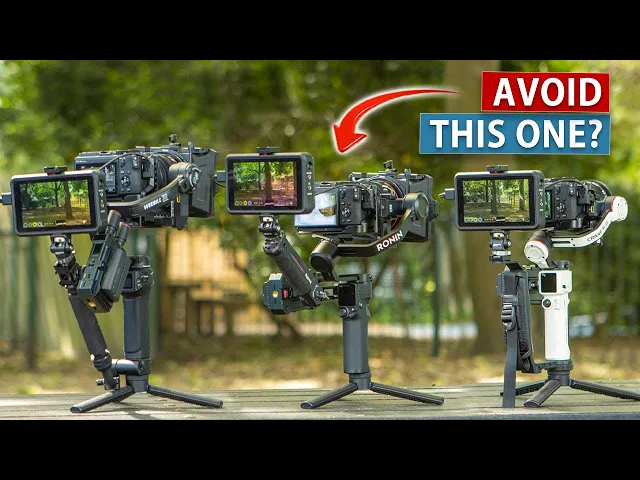
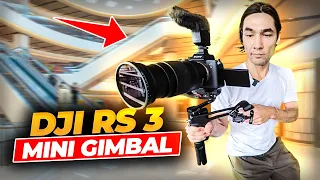
A couple of days ago, a friend of mine called me to say that they need to reshoot the fight sequence, but they don't know yet where they're gonna do it or when because they're still finalizing the details. All they know is that they need the shots on a gimbal. So I'm gonna be testing three different gimbals for three different payloads.
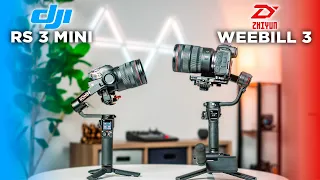
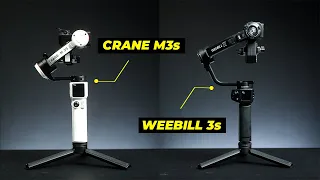
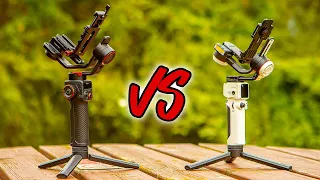
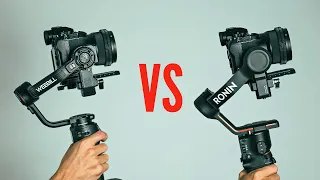
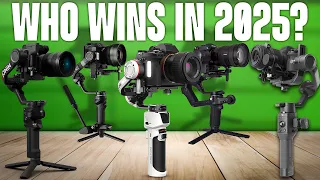
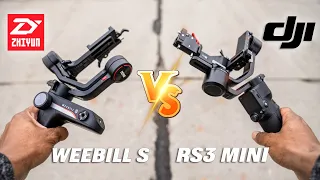
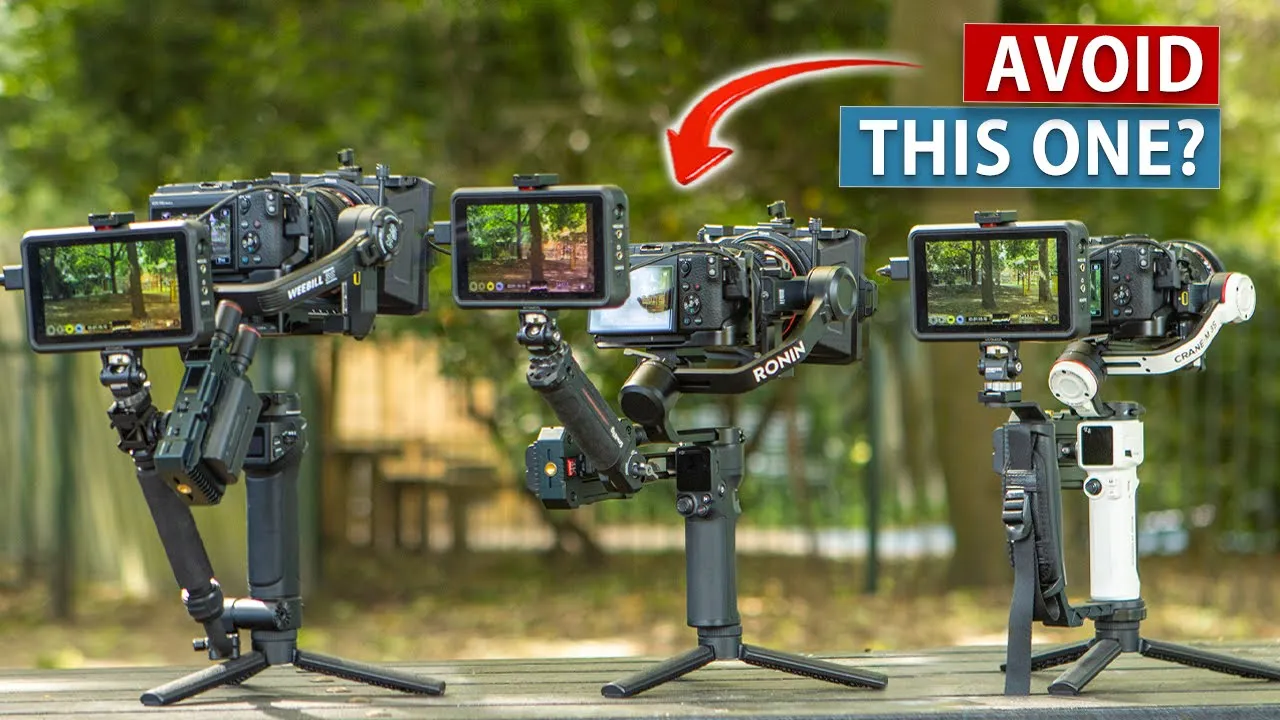
The Zhiyun Weebill 3S, the DJI RS3 Mini, and the new Zhiyun Crane M3S, because even though it's a smaller gimbal, I don't fancy tracking up a mountain, if that's what I decide to do, with a heavy payload. So I'm gonna be showing you how these three gimbals work in a real life environment, filming a fight sequence, so that you can then decide which one is the best for you. And why these three gimbals, you may ask.
Well, these three gimbals are very similar priced. The RS3 Mini is around $369, the Weebill 3S is around 319, and the Crane M3S is $299. Now, in my test I had a small Canon M6 MK 2 APS-C camera with a speed booster and an EF 16-35 L series lens from Canon, as well as a matte box.
When I was balancing these gimbals, The one thing that I always notice with gimbals, especially as you try to push the load that you mounting on, is that balancing becomes a bit of a sticky situation. Now, let me explain. With the RS3 Mini and the Zhiyun Crane M3S, I was literally pushing the gimbal almost to the limit of what they can handle.
And the sliding of the axis to balance them correctly became really, really difficult. And many times I had to actually lift the payload so that I could slide it. And that meant that, you know, I wasn't really able to be very accurate and I had to go back and forth all the time.
The Weebill 3S on the other hand was an absolute joy. I didn't have to fight any of the axis. Everything slid really nice, no matter whatever payload I put in that gimbal, because of the way it's designed with the base plates and the adjustment.
So in that regard, to me, that's a big plus for the Weebill 3S. Another thing that I found particularly annoying with the RS3 Mini is the actual locks of the gimbal because as you balance the gimbal, especially if you go on heavier payloads, they become really stiff and very hard to open and close. Like truly really hard.
Like sometimes I actually had to really ram the lock in order to open it because it just wouldn't budge and that to me is a real problem. The Crane M3S has a much more improved design and I don't have to fight this. The locks are really easy to open and close because they're not on the actual motors themselves, but on the bars.
With the Weebill 3S, they're really easy to engage because they are completely away from the motors or the bars, they're behind on the actual body. And staying on the locking and balancing of the gimbal, this is something really important that can literally cause an accident and damage your equipment, okay? It's the bottom plate of the RS3 Mini.
It can slide down without you realizing. And this is especially obvious when you have a higher payload because you need to balance that axis and you need to bring the plate all the way down. And the position of the release latch to stop that plate going down is at the very bottom and it's so easy to keep trying, pushing it down and accidentally press it.
And that plate will slam down to the ground, taking your camera lenses and everything along with it. So in my opinion, this is a really serious design flaw. That is an accident waiting to happen.
You don't have that problem with the Crane M3S because of the design that release latch simply it's not there. And with the Weebill 3S, that's just impossible because there is no release latch whatsoever in that area? This is really dangerous.
And in my opinion, it's enough to send the gimbal back, really. With the RS3 Mini and the Zhiyun Crane M3S, you cannot just fold the gimbal from whatever position you have it balanced on. You have to remove the camera and then slide in the roll axis gimbal so that they can fold nicely and then you can lock them.
This is something that you don't have to worry with the Weebill 3S. There is enough clearance for the gimbal to fold in whatever position that you have your gimbal balanced on, so that it's very easy to move around locations, unlock it and then off you go. You are ready to go in a matter of seconds because ultimately you don't want to be fluffing about and you want to have a gimbal that you can operate easily and pack quickly.
Even though all these three gimbals have really nice and easy to operate base plates and sliding plates I think the RS3 Mini has a bit of a room for improvement. I felt with the RS3 Mini that every now and then the camera would actually shift and I had to readjust it which is insane because that should not happen. With this smaller Crane M3S you don't have that problem because even though it handles a lesser payload, theoretically.
The base plate is solid, is metal, is not moving. And with the Weebill 3S, well that's just not going to happen because that solid metal, very lightweight and once you tighten the screws the camera is not moving anywhere. If there is one thing that I really like about the RS3 Mini is the screen because it's a really nice color screen that you can actually see on a bright sunny day.
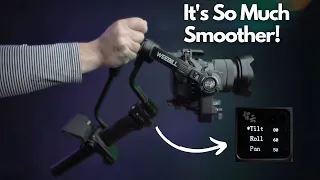
So I think that's a big plus and the same goes for the Zhiyun Crane M3S because the screen is also really nice, very bright, and I particularly love the info display that both the Crane M3S and the RS3 Mini have, that shows you the balancing and whether you have any axis that is incorrectly balanced or that there is too much pressure. I think that's a fantastic feature that is actually really useful. The screen on the Weebill 3S is not as nice, even though it actually does what it's supposed to do, things are easy to find and easy to adjust and it actually gives you a lot more options in terms of settings and adjustments.
This is where it all comes to a very personal decision because to me if you give me the option between a fancy LCD screen with limited adjustment of settings or an screen that is no so fancy but it gives you a lot more depth in terms of adjustment of settings and options. I would probably use the second one rather than the first one. The most important thing that you need to be aware of is that if you plan to use any of these gimbals for client work, they're going to ask you for a video feed.
It's the most logical expectation for someone that is paying some money. They will want to see what is that you're filming. If you're a director and you have a fight and you have someone in the gimbal, what is the first thing that you're going to ask?
Can I see? Yeah. Like if I'm gonna be directing the fight, I want to see what's going on.
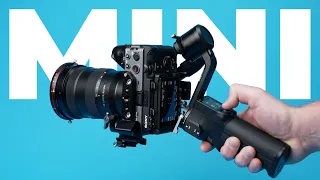
I think as an accessory, this should be one of the first things that you need to consider if you're doing client work. Another thing that you're gonna need is a handle grip or second grip point. Okay now with the RS3 mini you have this nato rail handle, which is very solid.
I give you that, but you cannot move it sideways and there are times that depending on the shot that you're going to do you want to have a two grip point side by side. I could go like this for underslang and there is not a lot of clearance. I could change the grip to something like this but that's not much.
But still it's okay. It is what it is That's what filmmaking is all about, you know, you adapt to the situation Okay, you know, it just it kind of feels like you wish I could have it a bit more like here You know, but because you cannot adjust the angle sometimes I feel this handle grip It's almost like right up in your nose. With the Weebill 3S combo package you get this both handle and rest point for your wrist, which personally, I have found the resting mount doesn't work for me.
This is why I always say accessories are a very personal decision because something that may work for me may not necessarily work for you or vice versa. But this handle grip that you get with the Weebill Combo, it's really nice because you can slide it sideways and easily lock it in position and this is going nowhere. You can slide it right behind the gimbal itself and lock it there and it's going nowhere.
you can mount a cold-shoe mount or a 1/4" thread accessory there. So this is very functional. I just wish the adjustment for the angle of this handle would be a wing nut rather than an Allen key.
It would be a lot easier if I could just loosen up the wing nut, adjust the angle, lock it back in position and it would be a lot quicker. With the Crane M3S, you have to buy yourself a Zhiyun side handle or grip handle. You are locked to this angle, you cannot adjust the angle as you can with the Weebill 3S, but you can move it sideways to suit your film style.
So that's really good and it's very easy to do. You don't have to do too much of a fluffing about. It gives you that extra solid grip point and it allows you to do underslang very, very easily.
When it comes to connectivity, all these three gimbals allow you to connect to the camera via Bluetooth. Both RS3 Mini and Weebill 3S have it really well implemented. The Crane M3S, it's a little bit of a hit and miss.
All these three gimbals allow you to connect via USB-C to the cameras, and they do it really well and it's very reliable. You plug the cable and straight away, you can control the ISO, the shutter, the aperture, and even focus from within the gimbal itself. It's done really nice and it's actually very reliable.
On the RS3 Mini and the Crane M3S it's a joy. But on the Weebill 3S it's a bit of a pain in terms of implementation because you can only change one of those settings before the gimbal kicks you out of that menu section and then you have to enter back in in order to do the adjustments to something else. And those one or two seconds that you need to do all of that, as you're operating in the gimbal, it's enough to throw you off.
So in that regard the RS3 Mini and the Crane M3S have it much better implemented. Now the question you need to ask yourself is, are you ever going to need to use several adjustments on the fly or not? Because most likely you won't but like everything it would be nice if the Weebill 3S can implement it just as good as the Crane M3S or the RS3 Mini.
Both the RS3 Mini and the Weebill 3S give you a very quick way to do it And I can't really say that one is much better than the other one. They both operate similarly, you remove the base plate and you can easily fit it vertically. And it works really nice, very easy, very simple, very small adjustments.
So in that regard both are very similar. The Crane M3S on the other hand doesn't have a vertical switch base plate as the other two do, you could mount a camera vertically on the actual base plate with a small lightweight lens. and in that regard you could get away with it, but if you want a proper native functionality, it's either the RS3 Mini or the Weebill 3s.
Now how about this stabilization you may ask, because this is the whole point of a gimbal and all these features and fancy details can literally go out the window if the stabilization is not good. You saw earlier in the video that I filmed these fight sequence and you'll be able to see how these 3 gimbals compare against each other in a fast moving environment Stunning sweetheart, Well, I'll come up, the flats are incredible, as in the view everything is beautiful, absolutely stunning area. Really really nice.
I told you. . .
. Relax, relax, relax. (dramatic music) Inaudible Inaudible Yeah.
[MUSIC PLAYING] [INAUDIBLE] We're done. [MUSIC PLAYING] Leave it. .
Really? [MUSIC PLAYING] (dramatic music) Inaudible Inaudible Inaudible (dramatic music) - Hey, don't be serious. You're too far gone.
(dramatic music) (dramatic music) - Just. . .
Oh Hell. . (dramatic music) - So which gimbal will I be taking and which one I feel offers better value for me?
The clear winner for me is the Weebill 3S because it was able to hold the payload without any problem. And I know for a fact that if my client was to ask me for the longer lens like a 24 to 70, which is a heavier lens, it could handle it without any problem whatsoever. So much so that look, this is a full frame camera.
It has a 24 to 70 L series lens, it has a matte box, it has a set of Freewell magnetic VNDs it has a monitor and a wireless transmitter. And it handles the payload really well, no problem whatsoever. This is something that the RS3 Mini cannot do.
You try to balance a full frame camera on the RS3 Mini and it's just not gonna be able to handle it because the roll axis is not long enough. And in general terms, the gimbal just cannot handle that payload. And yes, the RS3 Mini has a nicer screen and the browsing menus is really nice and simple, but the Weebill 3S gives you much better in-depth settings so you can actually adjust different motors depending on what it is that you want to do.
And this is in my opinion where the riddle lies, because would you buy the RS3 Mini for similar price as the Weebill 3S, but clearly cannot handle nowhere near the same amount of payload? Or would you buy the smaller Crane M3S if you film with the smaller payloads that can handle almost as much weight but on a much more smaller size? And I want to give a massive thank you to my friends Mike and Paul from Surrey Stunts for featuring in this video.
They are an amazing crew of stunt actors and fighters supplying the film and television industry, not just in the UK but worldwide. And I hope you enjoyed this video and find it helpful. I will be posting very soon my review of the Zhiyun Weebil 3S.
So if you want to watch it as soon as it comes up, don't forget to subscribe. I recently reviewed the Crane M3S. So if that's a gimbal that is more suitable to your needs, I leave a link down here and I think you're gonna find it really helpful and entertaining.
So click on it and I'll see you there.