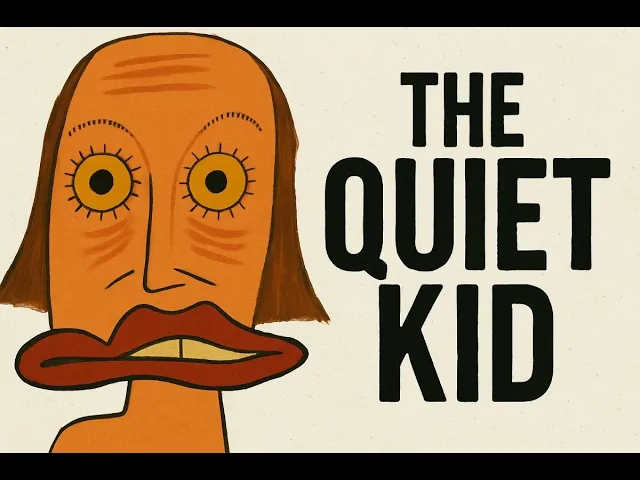
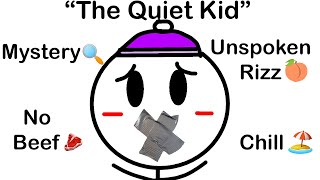
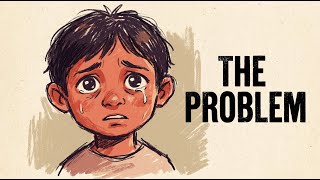
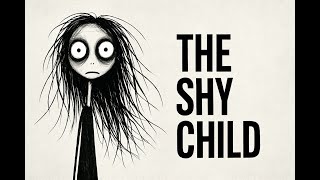
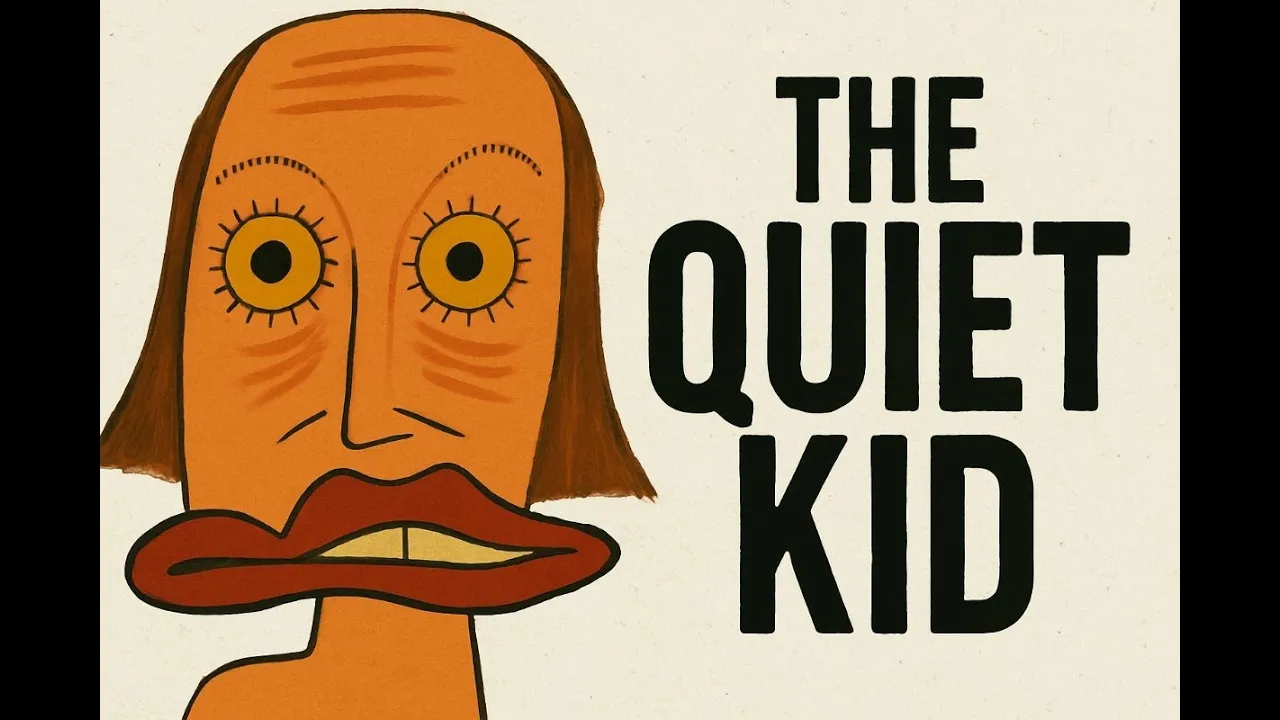
[Music] He sits on the edge of the playground, not because he is lonely, but because something else is happening inside him. The swings blur in the background like slowmoving planets. Voices rise and fall.
The world is loud and busy. And he is listening, not in order to reply, but to understand. There is a whole life existing behind his quiet.
It is an interior life rich with observation, small rituals, private experiments, and long solemn questions that no one has asked him. People confuse quiet with absence. They measure presence by volume, by the speed of replies, by how fast someone can perform on demand.
But the quiet child is not empty. They are deep. They are a reservoir.
From the outside, silence looks like distance. From the inside, it is careful cultivation. And that difference between how it looks and how it feels is the beginning of everything we misunderstand about being quiet.
[Music] Why does a child choose silence? Sometimes it is temperament. Some children are born with nervous systems that prefer low stimulation.
They find stillness restful. Other times, silence grows as a defense. In households where speaking up brought criticism, where emotion was inconvenient, a young mind learned to self soothe by withdrawing.
In classrooms that reward speed and participation, quietness is treated like a defect rather than a gift. Yet neither temperament nor survival strategy tells the whole story. The quiet child often contains a paradox.
Intensely social in their way, but cautious in the ways the rest of the world demands social engagement. The quiet child sees patterns. While others rush to be heard, they notice who is left out.
The micro moments of hurt. The way a teacher's smile changes when someone misses a question. Listening is their craft.
They collect impressions like stones. Later those stones become metaphors, sentences, inventions, music, the untouched material of creativity. Think of the poets and the scientists who began as watchers rather than talkers.
In silence, they learned to accumulate nuance. In silence, they tested the textures of the world before making a move. And yet, silence is fragile.
It lives in a social economy that prizes performance and immediacy. The quiet child frequently internalizes a single corrosive message. You must be louder to be loved.
So they adapt. Some mask, learning to mimic the extroverted scripts they see on stage or in life. Masking is energy draining.
It makes the inside grow colder. Others react by withdrawing further, convinced that the world will never slow down enough to meet them. What begins as a strategy for safety becomes a lifelong negotiation between self and expectation.
There is also a moral subtlety here. Quiet children are often assumed to be well- behaved, obedient, easy. Adults relax, but easy is not the same as nurtured.
A child who does not demand attention may not be getting it. In schools and families, attention is sometimes allocated not by need, but by volume. The child who shouts their need gets it first.
The child who whispers waits. Those long waits accumulate. They are small debits on the heart's ledger that over time compound into a certain entitlement of silence.
Expecting less, asking less, believing that one's needs are optional. This is where the psychology curls inward. Quietness can be a chapel and a prison.
The chapel is where reflection breeds insight. The prison is where self erasia becomes habit. The quiet child learns to interpret their own voice as risky.
They rehearse the sentences they wish they could say and then decide not to say them. They become fluent in apology as a form of preemptive protection. Sorry, I don't mean to bother.
Before they've even spoken. Over time, the apology becomes an identity, a way to survive under the assumption that their presence is an imposition. And yet, there is a power in that apology.
Quiet people, when they finally speak, tend to be heard. Their words are like dated coins. They spend carefully and because they are rare, they are noticed.
But being noticed does not automatically translate to being understood. The quiet person's language is often indirect, symbolic, or slow. Modern conversation favors the immediate retort, the zippy comment.
When someone offers a slow, considered thought, the group may fail to catch the thread. The quiet child then learns to compress themselves to make their words smaller, to fit into the group's tempo. What might help us rethink this dynamic is to consider silence as not a problem to be fixed, but a quality to be respected.
Silence is a different mode of engagement. It is not passive. It is patient.
It holds back the rush of judgment. It allows complexity to breathe. Imagine a world in which we value the slow responder as much as the quick one.
Imagine meetings where the first 10 seconds were intentionally left unfilled to give the quiet mind to articulate something original. Most of our social architectures, classrooms, open plan offices, team meetings are designed for immediiacy, not depth. The quiet child is often living in a world constructed against their most natural rhythm.
There is another dimension we must address. The pain of misfring. The quiet child who internalizes messages becomes as hard on themselves as the world is silent toward them.
They measure their value against the noise around them and find themselves wanting. They may assume that their introspection is a defect that their long silences are a symptom of brokenness. In adolescence, as peers form identity around visibility, social media profiles, likes, shoutouts, the quiet teen can feel increasingly out of step.
The interiority that once felt rich now appears like a liability. The covert self begins to seek permission to be seen. An unspoken, aching request that says, "You may look, but do you know what to see?
" Sometimes the quiet child becomes an adult who exploits their own invisibility. They work in the background, take on supporting roles, and keep their ambition small. Not because they lack capability, but because they were never taught to take up space.
And yet, in other cases, the quiet child's interior life becomes a fuel for leadership of a different kind. There is a leadership born of observation. A leader who listens first, who models patience, who sees the shy person in the room and makes space for them.
The quiet person's capacity to hold complexity can become a profound resource in any community that learns to appreciate it. How then do we care for the quiet child? The first step is to validate without demanding performance.
To welcome the child's slow replies instead of filling the silence on their behalf. To ask open-ended questions that allow them to explore rather than interrogate. to give them roles that require contemplation rather than spectacle.
The recorder of ideas, the curator of projects, the observer who draws maps of group dynamics. These roles do not corner them into being less social. They honor their modality and give them pathways to contribute meaningfully.
We also need to teach the quiet child skills for translation, how to turn their rich inner life into accessible expressions when needed. This is not about forcing extraversion. It is about giving tools, small rehearsals before social events, templates for starting conversations, signals they can use when they need time to formulate a response.
Imagine teaching a child to say, "I'm processing. Give me 5 minutes. " as a normal part of social interaction.
That 5-minut rule would transform how we regard the rhythm of thought and speech. There is a philosophical lesson here too. In an era that confuses speed for wisdom, quietness is a corrective.
It reminds us that thought is not speech and listening is not silence. The quiet child is an invitation to slow down, to consider, to notice. Their presence asks a deeper question.
What does it mean to be fully present without dominating? How do we design societies that reward depth rather than spectacle? Yet, none of this eliminates the real vulnerabilities.
The quiet child is more likely to be overlooked in evaluations, to be bypassed for leadership roles, to be misdiagnosed as disengaged. The stakes are high. Without conscious intervention, the quiet child can adopt a narrative of invisibility, a belief that their voice is not necessary, and that belief, once in place, can shape a life.
At the edge of this conversation is a kind of quiet revolution waiting to happen. What if we reimagined classrooms, workplaces, and families so that the quiet voice had both protection and projection? What if the slow thinker was given the first chance to speak precisely because they need it most?
What would happen if our cultural default were to assume depth instead of drama? These are not theoretical questions. They are practical ones and the answers shape destinies.
The child under the maple tree, the one who watches the swings and listens for the slow drum of meaning, can be guided into adulthood that recognizes their gift rather than punishes it. They can be taught to translate, to assert gently, to find companions who prefer conversation that unfolds, and to inhabit space without shouting. There is a paradox that returns like a tide.
The quieter you are, the more room you make for others to be loud. But the louder the world becomes, the more essential the quiet becomes. So the question is not how to make the quiet louder.
It is how to make the world listen. And that has everything to do with rethinking value, attention, and the very architecture of our shared spaces. If you find yourself in this quiet, know this.
Your silence is not a deficit. It is a malleable strength. It can be armor, prison, or sanctuary, depending on how you treat it.
The path forward is not to erase the quiet, but to learn how to steward it, to let it be both refuge and instrument, both safe harbor and loudspeaker when necessary. There is a way for the quiet to teach the loud how to listen, and for the loud to teach the quiet how to be seen. The bridge between these modes is practice, patience, and the willingness to reshape the expectations we inherit.
Stay with that thought for a moment. There is more to uncover. How the quiet translate into different adult archetypes, how silence intersects with creativity and leadership, and the practical rituals a quiet person can adopt to thrive without becoming someone they are not.
Still, there's a hidden struggle in being the quiet one. He is constantly underestimated. Teachers overlook him for leadership roles.
Friends forget to invite him to plans because they assume he wouldn't want to come. In group conversations, his ideas are ignored until someone else says the same thing louder. And suddenly, it's brilliant.
It's a strange kind of invisibility, one that can make you feel like you're both present and absent at the same time. And yet, in that invisibility, there is freedom. The quiet kid can move through life without the constant performance others feel trapped in.
He can observe without being observed. He can learn without the pressure to constantly prove himself. This is why so many quiet kids develop rich inner lives.
They have the space to think deeply, to feel deeply, to dream without interruption. But here's the paradox. The same silence that protects him can also isolate him.
People can mistake his stillness for disinterest, his shyness for arrogance, his boundaries for walls. This misreading can cut deep, especially when you want to connect but don't know how to bridge the gap between your inner world and the noise outside. And so many quiet kids live with a quiet ache, a longing for someone to understand without them having to explain.
There's also a reason why so many quiet kids grow into thinkers, writers, artists, and innovators. They've spent years watching the world without constantly participating in it, which means they've had time to actually understand it. They know how people move when they think no one's watching.
They see the flaws in the systems everyone else takes for granted. They recognize patterns before they become obvious. And in their own way, they begin to shape the world, not through noise, but through precision.
Still, the quiet kid's journey isn't without danger. Silence can turn into self eraser if it's born from fear instead of choice. If you've been told your voice doesn't matter enough times, you might start to believe it.
If you've been dismissed every time you try to speak, you might stop trying altogether. And over time, the quiet kid might start to hide not just his voice, but parts of himself. But the truth is, quietness isn't about being less.
It's about being more. More observant, more thoughtful, more deliberate. The quiet kid doesn't need to shout to make an impact.
He doesn't need to be the center of attention to influence the room. Sometimes the most powerful person in the room is the one who doesn't fight to be heard because he knows that true influence isn't about volume. It's about presence.
And perhaps that's the quiet kid's greatest gift. While the rest of the world is busy reacting, he's busy understanding. While others are speaking just to fill the silence, he's holding his words until they matter.
And in a world drowning in noise, the one who can sit in stillness and listen is the one who sees the clearest. Because sometimes the quiet kid isn't just watching the world, he's studying it. And one day, when the moment is right, he will speak.
And the world will wish it had listened sooner.