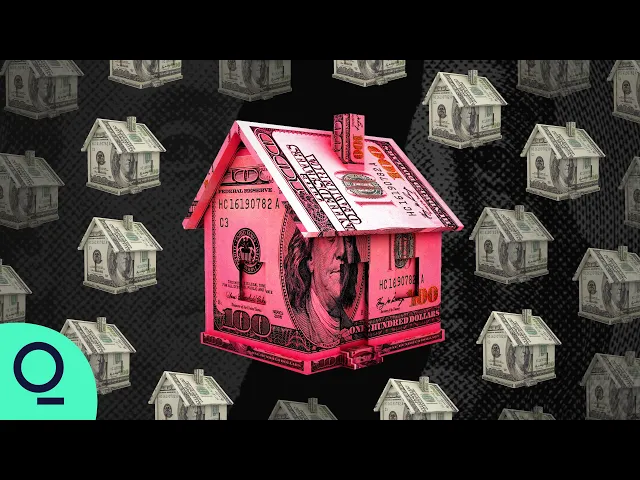
the first time i saw this house was probably about march of 2005 i was thinking it was the perfect house to raise a family in it had four bedrooms it had a yard but what sold me the most was the kitchen the kitchen was so nice and spacious after spending years saving up to buy a home by 2005 delicia scott you know had saved up enough money to buy a modest two-story english tutor for about 63 000 after losing her job in the great recession she fell behind on her property taxes and her home was
foreclosed on by the county and sold at auction for about forty six hundred dollars [Music] but here's the thing dilecia scott never should have lost her home and the reason is the city of detroit for years was overvaluing her property so that she paid thousands of dollars more in taxes than what she owed and it's not just dylecia and it's not just detroit this is a pattern that we're seeing all over the country county by county city by city where black homeowners their properties being overvalued and thus over taxed and in the most extreme cases
many of those people end up losing their homes i know i'm not the only person in the city in detroit that's living in the house that they used to own that they're still running because they just don't want to leave their house or they don't want to miss the opportunity of purchasing their house back i feel it's a travesty the property tax is the largest source of local revenue for cities counties school districts it raises more than 500 billion dollars a year across the country paying for you know public safety sanitation schools all of the
basic services that local governments provide it's the foundation of our local systems so the property tax is actually a pretty complicated tax because unlike say a sales tax or an income tax where we have data for each individual sale or each individual person's income and with respect to the property tax only maybe two or three percent of homes will sell in a year and that means for the vast majority of homes there's no real time indication of their value and that's the job of the assessor is to figure out the value for all the homes
including the many that didn't sell and the way that's done is by looking at the homes that have sold trying to build a statistical model that relates the price of those homes to their features and characteristics and applying it to all the homes in order to get prices for the homes that haven't sold and essentially what they do is they they take the prices of these properties and figure out well how much per square foot how how much per bathroom and they have some other variables like location and other things they do but it's all
sort of observable characteristics of the homes from the outside the problem comes up with what assessors cannot see some people may have redone their kitchen or upgraded their bathroom other people may have a leaky roof or a porch that's falling down or a missing window these are characteristics of the house that assessors cannot see and what research is shown is that it adds variability at the lower end of the price scale and so makes those homes particularly difficult to value and so if the valuations if that is skewed in some way then you're going to
have the same kind of issues with the bills themselves it's sort of you know garbage in garbage out the biggest problem that i've been focused on is this issue that we call regressivity and this is the phenomenon that homes that have a low price tend to be assessed at a higher level relative to their true price than our homes that sell at high prices which is just to say low priced homes tend to have an assessment level of usually over 100 of their value in other words they're being assessed at more than what they're actually
worth whereas high-priced homes are often assessed at less than what they're actually worth and what that means is that low-valued homes are paying more than they should in taxes and high-valued homes are paying less than they should in taxes because the assessment is the basis for determining the tax and what that means is because black people own the lowest valued homes disproportionately and because the lowest valued homes are overtaxed this problem of regressivity actually becomes a structural or institutional racism problem because it's disproportionately impacting black people and disproportionately helping white people contributing to the racial
wealth gap it's a very important piece of the systemic racism puzzle and just to give you a kind of a measurement of how bad this can be in chicago alone there's been a study that showed in just five years 2.2 billion dollars in property taxes and the burden of property taxes was shifted from the highest valued homes to the lowest [Music] i first saw this in chicago and anyone from chicago will tell you i mean chicago is just kind of a special place my first reaction was well this is you know one of those only
in chicago sort of things it really only began to dawn on me after that chicago work began to get attention i started hearing from people in other places and ultimately that led me to want to know are there just some peculiar places where this is a problem or is this really fundamental and the more data i got and the more places i looked the more i could see that this is just baked in deeply to the property tax and it is very pervasive it's not only in chicago it's not only in detroit it's virtually everywhere
that i've looked a recent study by the university of chicago looked at 2600 counties across the united states and found this pattern was pervasive more than nine out of ten of these jurisdictions had this regressivity problem and there's no place where this tragedy isn't playing out more than in detroit one in four properties in detroit have been foreclosed on because they fell behind on their taxes [Music] for the person that owned this house it's a tool to make money i want to take you on a journey of what it's like for me when i have
to pay my rent every month if i drop it off myself i drive here i know i get here so no one can say well we didn't get your payment or whatever for me it's where i raised my kids at this is the the stability that i was able to give them that i didn't really have as a child so here's the process so you see there's no dropbox outside no mail slot in the doorway so what i usually do this nice little welcome back usually slide it from the side make sure they go further
enough into the building so nobody has the opportunity to try to fish it out so when i had kids i wanted to make in my mission that they didn't have to have those experiences i didn't want them to have to worry about where we have to lay our head or or is it going to be safe for us that is my meal and i feel like that may be further enough somebody try to fish it out they don't have to work for it i want to leave my children something they've seen their mother work all
their lives yeah i got insurance policies but you know that's not nothing like having a home i want to leave them something that i worked hard for that i earned and i put my blood sweat and tears into hopefully it's as you know it's they finna get to where it needs to go i don't want the threat of somebody can come in and displace me even if i pay my rent on time somebody can come in and say like you know what thanks but no thanks in america owning property is the you know if not
the one of the most um significant drivers of wealth i mean they don't call it the american dream for nothing and part of the american dream is owning a home it doesn't just benefit your current economic situation it really has an impact over generations the way the rubber meets the road here is that families that are trying to accumulate and build wealth with property which is how you build wealth in america are being over taxed because the homes that they buy are on the lower end of the price scale some would argue that they also
suffer from lack of services police schools aren't as good all of these other things and so it's not just a matter of how much in taxes people pay but what they're paying for it it sort of skews the entire system in a way that that's just deeply unfair this pattern of unfairness it doesn't happen in a vacuum there's a long history in the u.s of of racial segregation redlining whereby black families were kept out of the highest valued neighborhoods in my view this is a textbook example of institutional racism because you know institutional racism i
think of that as a system in which the outcomes are disproportionately unfavorable to a minority group even though no actor in the system may necessarily be motivated by racial animus and i'm certainly not claiming that assessors are individually racist that's not the takeaway at all but rather the system produces racially disparate outcomes even though or even if no individual person involved in it intends it to be that way this falls in a category of hardships that i think are in the everyday experience of african americans that aren't always recognized until they are documented with data
because the people in power would not like to recognize them the truth is even with that sort of evidence the system is not quick to respond either i'm familiar with professor barry and his colleagues and i have a fundamental disagreement with with that statement we have reviewed every single sale in the city over 65 000 over a 24-month period so that you know there seems to be a pattern among local officials when these issues are pointed out to them so for example in chicago the assessors attacked professor barry personally they attacked me personally when chris
did similar studies in detroit the same thing happened they said you know he's a right-wing provocateur who doesn't want high taxes they said he can't value the property from chicago that it's not all about spreadsheets that somehow these very statistically driven processes are an art form and not you know based on numbers a very smart person once told me this it's an art not a science you have the facts but you also have to understand the market detroit is a unique market and you can't you can't get those nuances simply from a sales study you
have to live here and you have to understand what's going on here to understand evaluation the real tragedy in cases like delicia's is that there are other people who are benefiting off the system in detroit for example delecia's home was one of thousands that was put up for auction uh in 2014 and so that sort of flooded the market with very you know foreclosed homes which are very cheap that investors you know come in and and scoop up and then rent back to people or just hold his assets on their balance sheet in addition to
that the county government for detroit wayne county takes these delinquent taxes and is able to roll them up into bonds so it's sort of i call it a perpetual money machine where some people wealth is destroyed and there's others who the wealth is created to fix this problem is going to require a lot more resources and assessment offices just don't have that so it's better to stick your head in the ground and and try to act like there's nothing there of course you can't fix the problem if you don't admit that you have a problem
i think the hardest question here is how do you fix the system or at least how do you improve it my thinking is that the system can be improved but i'm not sure it can be completely fixed and the reason i say that is because this problem of those unobservable features of homes those things that buyers and sellers get to see but the assessor doesn't get to see that's a pretty fundamental problem the assessor can improve things by using better statistical models by getting better data but i think there's there's just fundamentally an upper bound
towards how fair the system can be and so we should really be asking ourselves is you know how much unfairness are we willing to tolerate as a society it's hard to get more personal than someone's home and so these taxes on on people's homes it touches everyone's life it seems like this arcane sort of boring corner of municipal finance but in fact it's it's really how people live their lives and how people gain wealth and provide for their families i'm not on the lease so now you know it's scary because again they could come in
and say you you gotta leave so the roof has been leaking there's mold in the basement we just live around it because at the end of the day this is my home even though somebody profits for it even though this home is going to give somebody else's children financial wealth my kids are not going to benefit for from my hard labor my hard work and the money that we put into it it's still my home at the end of the day [Music] [Music] you