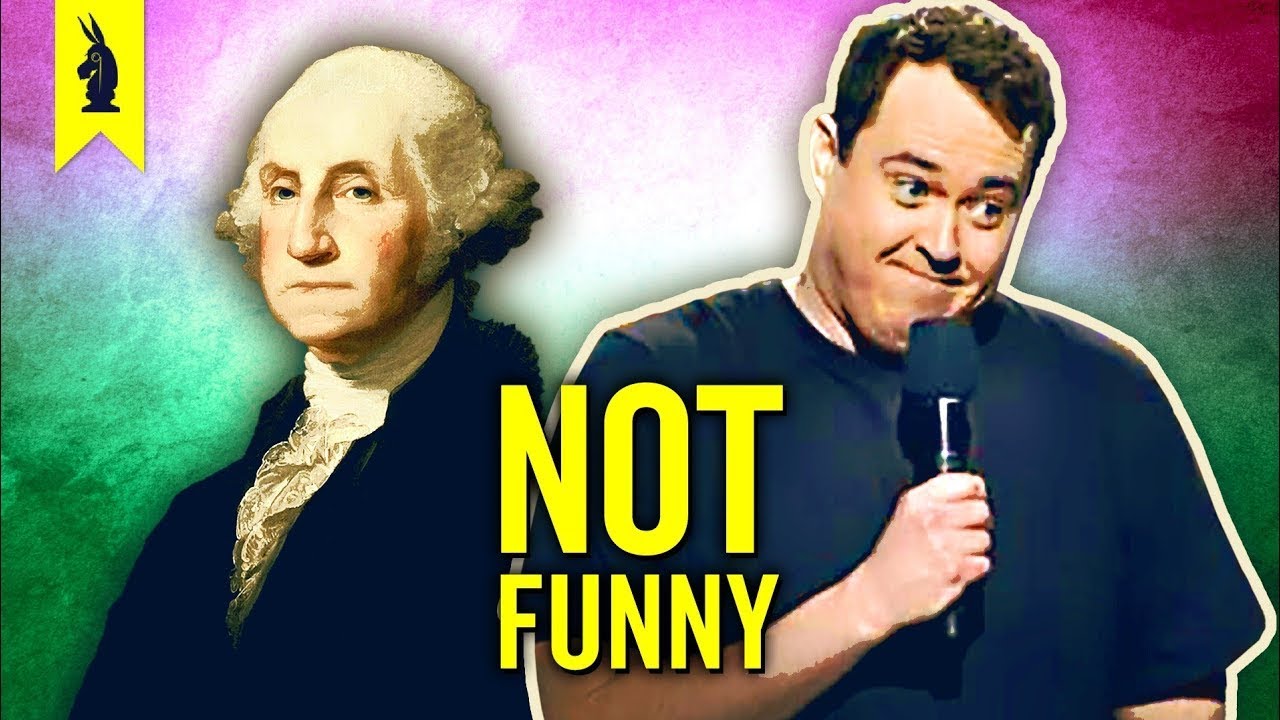
this video is brought to you by better help two things have dominated my adult life uh besides a losing fight against male pattern baldness and high cholesterol comedy and philosophy nothing brings me joy like uh figuring out what Hegel was saying about the dialectical unfolding of Consciousness or watching Melissa McCarthy take a dump in a sink no don't make it no no walk away and it was these twin passions that actually brought me to wise crack back in 2017 when I was introduced to the team as a philosophy PhD who also does weird improv and
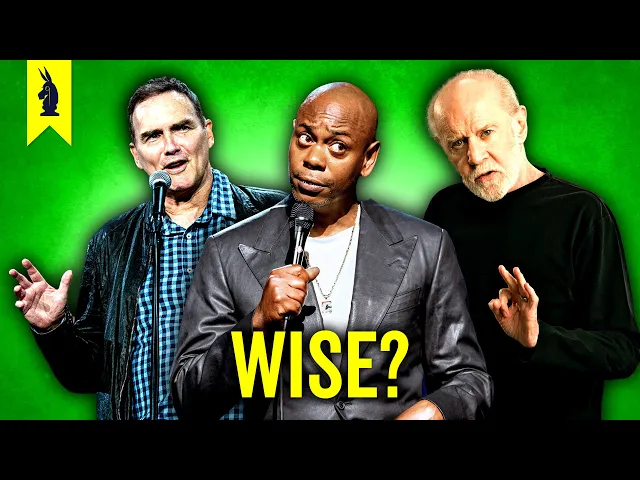
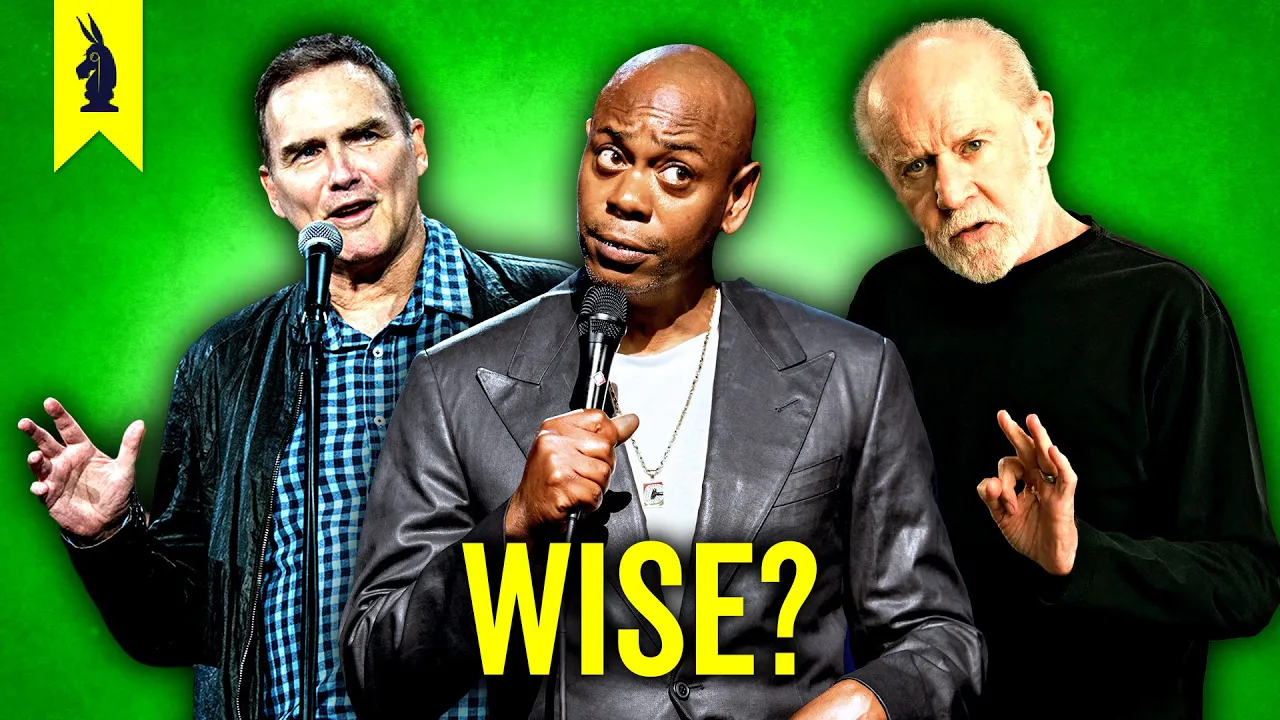
you know I might be on to something here because in recent years it's become almost cliche to declare that comedians are the new philosophers um TJ Miller was one of the first prominent comedians to say so and he even called one of his most recent tours the philosophy circus um he's also done or been accused of lots of weird and bad things so maybe who cares what he thinks and for a while there was even a podcast called modern-day philosophers that featured comedians chatting about philosophers meanwhile stand-up specials have started to feel more and more
like high production value college lectures where we value the performers argument rather than their comedy chops we think reputation is more important than anything else including Humanity uh some people refer to these specials as producing clapter rather than laughter and comedians regularly remind us their job is to push boundaries and offend our sensibilities and overtly confront social and political issues if you're watching Seinfeld right now on Comedians and Cars Getting Coffee I think in 50 years we'll look back and say he was a philosopher not a comedian oh I understand I fully think and he's
a Craftsman now you might think that I would love this as it would allow me to easily Rebrand myself as a philosopher comedian a professional title that would feel way more impressive than hey are you that guy from wise crack that happens sometimes people say hey hey it's wise crack guy hey are you wise crack guy it's like I have a name but in reality I'm skeptical of the idea that comedians function like philosophers and I even worry that there's something dangerous about equating folks meant to seek truth justice and the good life with people
who at the end of the day just really want to make us laugh like in your head your is from your dad's jizz like how can something so dumb make something so smart you know so why do we want our comedians to be philosophers is this asking way too much of them are comedians simply filling a void left by a lack of true public philosophers or do they actually aspire to be Aristotle but with a vicious satirical Edge let's find out in this video where we try to figure out if comedians are our new philosophers
okay guys before I keep going I want to stop and thank this video sponsor better help if you've experienced anxiety depression or just felt a little bit overwhelmed lately better help is a resource that can help you feel feel better I'm as someone who has struggled uh with depression I know that going to therapy can be a really big help uh can allow you to work through stuff be a happier person live a better life so you know your friend Michael says two thumbs up to therapy better helps network of more than 30,000 therapists are
ready to listen to and help you after taking a brief questionnaire you'll be matched with a therapist whose expertise fits your unique needs and thanks to better helps from remote model you can work with a therapist whose skills might not otherwise be available in your area you can message your therapist any time and you'll receive timely and thoughtful responses plus you can schedule your choice of phone or video sessions to receive Counseling in real time and any event that you and your therapists aren't a perfect match it's totally fine because you can easily switch to
a new one for no additional charge so join the more than 2 million people who have taken charge of their mental health of betterhelp by visiting betterhelp.com wisecrack or you can just click the link in the video description when you do you're going to get 10% off your first month that's better hp.com eyes crack and now back to the show now before we decide if Bill Burr should be Oxford's next chair of metaphysics it helps to see what some notable philosophers have thought about comedy because while comedians might be excited to become the philosophers of
late stage capitalism it's so funny a comic's brain is so different than than a pedestrian's brain and like what you know like I can't help I went pedestrian is so funny by the way like saying I said I said to a woman I said to a woman the other day it's better than civilian that drives me crazy it's like we're not in the Armed Force let's re relax historically a lot of philosophers haven't wanted much to do with them for Plato philosophy's First Alpha comedy could at times be evil he thought that far too often
when people laugh they're doing it at the expense of those they look down upon sort of like B Coastal comedians who make hack jokes about how Southerners are all Hicks who kiss their cousins or something like that the grandma horrible but it's still beautiful it's no cuz the sentences don't really make sense to be like y'all ain't never done going seen none of them out and it's like that's that's that's not English your auto correct is broken I don't know what that but it's but it's beautiful in Plato's ideal State comedy would not be encouraged
as it would lead to ignorant and untrue representations of society Aristotle had a similar take warning that laughter can often be the product of mockery for both these philosophers comedy was too often a matter of punching down and a quick note here most early philosophers Define their field as the pursuit of wisdom with the aim of becoming more virtuous creating a just society and understanding truth and goodness um we did a whole video on this last year so if you want to pause here and check it out more clicks for us so no complaints later
notable colonialism apologist Hobs and lock agreed that comedy was largely condescending endorsing what would become known in the 20th century as the superiority theory of Comedy so for many philosophy heavyweights comedy was both an excuse for mockery and cruelty and a way to obscure important aspects of reality um to return to our Big City Comic mocking Rural America we could see how this belittles people for laughs and also obscures the social and material conditions of Rural America producing a representation that is fundamentally untrue now one of the first philosophers to take humor seriously was my
guy saurin Kart who thought that there were three existential stages to life the first was the aesthetic stage where we find meaning in pleasure then we have the ethical stage where we find meaning in having a strict logical ethical code and then finally the religious stage where we take a leap of faith and sort of take responsibility for ourselves he also believed that between each stage um lies a particular transition or mood now between the aesthetic and the ethical we have Irony and between the ethical and the religious we get humor now as kard sees
it the absurdity experienced by the person who tries to live life wholly by strict ethical guidelines basically trying to treat existence like ethical math leads them to see humor after they realize existence isn't designed like a video game much like the structure of a good joke this is the type of humor that emerges when what we expect to happen is different from what happens sort of like when I expect a character on a show to leave the dating reality program he's on but instead he fights to stay there so he can keep using the zipline
all you do all day is go on the zipline [Music] lots of kard inspired contemporary philosophers went on to take jokes more seriously now we touched on this in our video on right-wing comedy where I also talked about Todd McGowan's work now for my money he's the most interesting philosopher currently writing about comedy in his book only a joke can save us mcgallen uses the language of psychoanalysis to update Kier guard's take on the comic now McGowan writes that comedy occurs when we are surprised by a conjunction of lack and excess an excessive response to
lack or the emergence of lack occasioned by excess reveals how every lack is excessive and every excess is lacking when The Coincidence of lack and excess surprises us this is the comic event and take one of kir guard's famous examples involving the odd humor between the ethical and religious than the biblical story of Abraham and Isaac now while a story about God telling a father to kill his son might not make you type LOL we can see this as an example of lack ju supposed with excess now the excess is the dramatic tale of a
father commanded by God to do the most unimaginable thing Slaughter his son and the lack is the dubious reasoning of this horrible act you know like I don't know God said so and spoiler alert if you've never read the Bible um God eventually says psych and he doesn't kill his son you want to tell me what the that was let me know in the comments what you think the funniest part of the Bible is a similar psychoanalytic approach is also taken by Alena zupanic in her book the odd one in now she argues that comedy
is less about pointing at an external thing and laughing you know like we look at those people doing that dumb thing and we laugh at them but rather realizing that the supposedly external thing is actually internal so like we look at those dumb people doing the dumb thing and realize we are those dumb people a lot of people drink and like wine but let's be honest at least 90% of us are not experts in the field of wine but we go to restaurants we all play this sort of production she writes in other words the
real exposed by comedy is usually not the real of what happened but the structural real or impass the suppression of which constitutes the very coherence of our reality By ignoring the real of what happened comedy succeeds in displaying the crack in the midst of of our most familiar realities and this is the real core of Comedy yeah we're all trying to find the guy who did this and give him a spanking to simplify this a bit she's saying that comedy isn't pointing out weird or incoherent things that happen against our otherwise stable reality but rather
that the logic that structures our reality itself is weird or incoherent there's a backup at the factory and that blows my mind because it's the Aderall Factory I just can't process it like I could understand if it was the Xanax Factory but the Aderall Factory I feel like the only issue should be over production and because we usually ignore the contradictions and incoherencies in our reality so that we can just function in the day-to-day those moments of realization make us laugh this connects to kir guard's read on things as the ethical stage of existence involves
us trying to make sense of reality with a strict set of logical guidelines where the transition to the religious stage involves realiz realizing that this reality actually just makes no sense sometimes you have to have flowers at your wedding because what better way to symbolize marriage than by having something beautiful slowly dying on every table now plenty of writers and philosophers have seen this connection as JP Pereira writes there is a tight kinship between comedy and philosophy when they operate at the highest level they are both critical destabilizing activities that seek to speak the truth
that lies hidden in the falsehood of received opinion in fact The Comedy Club is one of the cultural places where the spirit of philosophy is most alive today perhaps More Alive than in the universities now while the comedy club as the new Athenian Academy feels like a stretch um he's not wrong that comedy clubs can be spaces of Truth speaking and political critique in fact just recently I was telling some colleagues about seeing the first sketch show that the Second City in Chicago put on after 911 and how my 17-year-old brain was just blown away
that you could do comedy about such a major tragedy and somehow make it both really funny and really smart honestly seeing that at the time I did might be the reason I am this way and this brings to mind the early Greek philosophers who would just walk the streets teaching anybody who would listen all the while antagonizing politicians in the wealthy and critiquing dominant social and religious values now the OG wandering philosopher Socrates did such a good job at corrupting the youth uh that they killed him and a bunch of well-off kids following around a
old dude who spouts off critiques of their parents' beliefs isn't all that different from me returning from that second City show to inform my dad that the disgruntled comedians told me that America's response to 9/11 uh was really islamophobic and that our president was currently a cowboy idiot dad didn't love it and it's just like sorry you hate comedy dad following this we might reasonably conclude that if one of the primary aims of philosophy is making us aware of and exploring contradictions between the way we think the world is and the way the world actually
is and if comedy is structurally set up to do that in an accessible and entertaining way then maybe comedians can to some extent be considered philosophers so next time I'm tempted to pick up a book by Judith Butler or Richard Ry I'm just going to put that thing down and instead go to Conor Al's YouTube channel because uh it's basically the same thing right you must create a new branch of the military called the positivity for I bill your person Army deciding to J off like they just got divorced okay not quite because to act
as if the early 2000s mainstage cast at Second City was was somehow the equivalent of Socrates risks a false conflation that misunderstands the social functions of both comedy and philosophy Pereira helps outline the importance of this distinction by using the example of the jester whose ability to use humor to critique the powerful and the rich right in front of their faces arguably towed the line between comedy and philosophy but it's a bit more complicated at as perea writes the king wants some of the discontent of the people to be expressed openly releasing builtup tension and
ensuring that said discontent will not burst in actions that could really undermine his position the jester is his means of doing that when we the public laugh at the king our laughter is also an expression of his power he wants us to laugh so as not to act it is then his laughter grafted onto our faces when we laugh at the king it is actually the king laughing at us now this isn't to say that the jester is willingly serving the purposes of the king but he's filling a social function that does ultimately affirm the
king's power it's like one of the more brutal White House correspondence dinners where someone like Steven colar uses satire to just eviscerate President George W bush and we can't believe that he got away with it but of course no amount of top level comedic barbs could get the troops out of Afghanistan Bush remained president and coar went on to become a well-paid and respected late night host and all we got was to blow off a little bit of steam and this is the false sense of subversion that the figure of the jester creates when we
laugh at their jokes we feel like we're occupying a critical space and that for once someone is telling us the truth but this is a feeling of subversion and not much more this helps us see why the jester is ultimately distinct from the socratic figure while the jester gets his laughs and then enjoys his seat at the king's table Socrates overstayed his welcome after his provocations sto being entertaining while the jester is invited back to perform the same function at the next Royal event Socrates is invited to his trial and sentenced to death um and
I want to be totally clear here uh in a contemporary context universities can also have a sort of Royal function in so much as philosophers have to appeal to funding bodies and administrators to get their jobs I andan this is something I used to have to do when I was a professor you apply for funding grants but you have to think how does this apply to the business sector to the private sector how will it make administrators happy so even while you can I guess teach whatever you want there is that element of pleasing the
king to keep your job we can see the sort of Distinction at play in the very structure of many excellent philosophically inclined jokes like this one from the Lucas Brothers we study philosophy mhm you know and it wasn't many black people studying philosophy it was three of us the other dude was Troy now they bring up a super important debate between rationalism and empiricism setting up a moment where their classmate Troy stands up and asks one of the most profound questions I think we've ever heard he was like what the am I going to do
with this now because they're good comedians they use philosophy to lure Us in and surprise us by pointing out the potential uselessness of the entire discourse now to again use McGowan's language they describe the excessive nature of philosophical debates in this case empiricism versus rationalism and then use a punchline to point out the lack contained within that excess you know like what's the point of knowing any of this and in doing so they're of course playing with philosophical ideas but as comedians the aim is to make us laugh the real danger comes when we start
looking to comedians as philosophers because each even more philosophical and political comedians are just trying to make a living telling and writing Jokes which is what they should be doing but when we lay this expectation on them it's like we're trying to learn astrophysics by watching The Big Bang Theory we can see that Ma equals mg and what do we know from this the laughter we get through comedy can offer both releas and catharsis and we walk away feeling a little lighter however when encountering big philosophical ideas were're often left with more questions and existential
concerns than we are joyful Chuckles but if we acknowledge and understand the difference between comedy and philosophy we can gain a better appreciation for what comedy does and now at times it really does overlap with the aims of philosophy if I kill Hitler will there even be reggae did I create a Time Paradox now it's a mistake to think of comedians as philosophers because comedy which is a form of Art and philosophy form of intellectual inquiry have different aims right comedians are artists using humor to entertain audiences and explore ideas and emotions philosophers are teachers
and writers seeking out wisdom and Truth often for the sake of transforming themselves and the world well comedy clubs and improv theaters can be spaces for Collective catharsis where performers use humor to point to ugly and absurd truths allowing us to turn to our neighbor and say oh my God she's so right that's what true love is it's not safe sexual jealousy or shared Facebook profiles who are those Psychopaths it's just looking into someone's sleeping face and thinking I hope I die before you this is different than a philosopher using those same contradictions as a
starting point to explore ideological structures and their deeper meanings psychoanalyst madin delar argues that laughter is a condition of ideology provides us with the distance the very space in which ideology can take its full swing it is only with laughter that we become ideological subjects it is only when we laugh and breathe freely that ideology truly has a hold on us as Zar explains this ideological laughter can end up eliminating the need for the non ideological means of outside constraint in more simple terms comedy creates a space for us to laugh at the absurdity and
horror of our reality without pushing us to challenge the very ideological structures that sustain this reality this then allows us to participate in a space of collective critique but the space is ephemeral when we leave the club we go right back to existing by the logic of dominant ideology inside the space of Comedy I laugh at the comedian pointing out the soless dehumanization we all experience under neoliberalism but once I get home I go back to my role as a passively compliant neoliberal subject and to be clear here it's not the job of the comedian
to start the revolution right we are the ones making the mistake when we expect them to be our philosophers they didn't ask for this except for the couple that did but they all suck so it doesn't matter but what comedy can do and which all good artist capable of doing is helping to shift our Consciousness to being more aware of things going on in the world I've been going all over the UK doing that going the world is pretty much unanimously people are like uh it's and then uh I was in America I did a
show in America and I went the world is silence and then one woman just went ending and realizing that the ironies and contradictions we laugh at might be features of reality rather than bugs feminism for man yeah sorry ladies you know but like for real sorry and this shift in Consciousness might stick with us even when the Netflix special ends you might get home from seeing Sarah Sherman do a ripping set best trust fun kid posturing as artists ruining predominantly black neighborhoods with artistan cucha shops and then just keep thinking about how weird our culture
has gotten and then and then you pick up a book by Julia Crista to better understand it this is why for kard humor wasn't an end in itself but was a transition between the ethical and the religious stage comedy helps us realize the absurdity of seemingly consistent logical systems so we can move on to a stage of life where we take responsibility for our existence a kard calls this transition a leap of faith because it involves subjective action or risk when philosophy or comedy are done at the highest level they both involve a serious element
of risk the risk of upsetting powerful institutions and those who sustain them the risk of offending or alienating an audience the risk of losing favor in a community and the risk of pissing off the very folks that fund your profession and while they might not share the exact same end goal both philosophers and comedians engage in this type of risk Behavior so even if comedians aren't technically philosophers and philosophers usually aren't very funny they can still share this common conceptual structure so it turns out that TJ Miller famous for beating up an Uber driver and
getting fired from sweet gig voicing anthropomorphic mucus was wrong all along about everything but especially the comedians need to be our new philosophers but if your favorite comedian can help push you to think philosophically and if your favorite philosopher can help you think deeper about comedy well then it looks like I still have a job but hey what do you guys think our comedians our new philosopher Kings should we trade in our books for comedic podcast or is there still space in our society for crusty old philosophers let me know what you think in the
comments um a huge shout out to all of you for being here I know there's so many good videos on YouTube these days guys so many and the fact that you chose to be here with us means a lot and thank you for commenting subscribing ringing Bells all those things they really do help us a lot um and and extra special shout out to our patrons um now there's a link in the description to our patreon page our patrons support us directly it helps us a lot they get videos early without ads uh they get
on our Discord server and this year we're rolling out a lot of new features and tons of extra content on our patreon so if you're interested in more of that and especially if you're interested in both more of the deep philosophy stuff and more of the Casual funny stuff a lot of that will be on our patreon so I encourage you to check it out if you can um if you really want to be there and you can't afford it let me know and I'll sponsor a couple of you only a couple cuz I'm pretty
broke too but I'll do it so check out the link right there in the description in the meantime you know sometimes just turn your brain off and just laugh guys it's fun it's fun to laugh sometimes I'll see you [Music] later [Music] he