hopefully an intelligent, warm-hearted civilization. [laughter] I definitely think there is something out there. There's no pressure in my mind.
I definitely think there's extraterrestrials. There's something else out there. >> I don't know.
I think it's too early to tell. >> Uh good and evil. >> As above, so below.
That it is an infinite source of uh consciousness and that we do uh have an opportunity to explore it or we can be considered crackpots. Hi, I'm Dennis Prager. Welcome to the show.
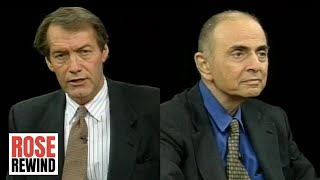
Is there anybody out there? Well, I'm going to discuss that question with the world's best known astronomer. Please welcome Carl Sean.
[music] Good to have you. >> [music] >> You know, I'm I have to say to you, Carl, that what I was thinking of, you know, you are the best known astronomer in the world, but I was just thinking who's the second best known astronomer in the world. You know, it it is true, but it's not it's a funny time.
It's like now the best known chemist. It's just you you've just made something, you know, unique out of your life truly because astronomers are not wellknown. >> Thank you.
I I never intended to do it. I all I wanted to do was research to sort of immerse myself in the magnificence of the universe and all this other stuff just sort of knocked on my door. >> You well believe that there's uh there are people out there, don't you?
>> People no chance because people are the result of a particular evolutionary pathway in the earth that could not possibly recur elsewhere. >> Believe is a very I'm sorry to catch you up on words. >> No, I like that.
That's fine. I believe is a very strong matter for scientists and belief in the absence of evidence maybe exists in religion but it shouldn't exist in science. >> Okay.
>> And since we do not have >> strong evidence for extraterrestrial life I neither believe nor disbelieve. What I do say is that it's an extremely important question. We have the tools to find out.
Let's look. >> Why is it important? >> It's important because first of all it characterizes who we are.
For the longest time, um, people have thought that they were the center and point of the universe, the reason there is a universe. And that, of course, is connected with there not being anybody else. >> Right.
>> If there is somebody else, then that we're not that we're not quite as important. >> We're not quite as important. But, uh, there's other evidence that we're not quite as important.
>> You said that we were unique. You you laughed at the suggestion that there were people out there, absolute unique sequence of events made human beings. and every other animal and plant.
>> Okay. Does that not argue for a god for a design? >> I can't imagine.
Why would you say that the existence of a slime mold argues for God? >> Yes. >> Why would you say that?
>> Because the the existence of something that that is designed implies to me a designer. >> Uh you have not met Mr Charles Darwin. I can tell >> I have met Mr Darwin and Mr Darwin believed in God.
>> Mr Darwin? >> Yes. I asked him, he believed.
But he did not believe that the argument you presented holds water. What Mr Darwin said is that the slime mold and humans and everybody else have evolved by a set of natural processes and no hand of a creator is evident or needed. That's the whole point of evolution by natural selection.
>> So you feel that the pancreas and the liver and the intestines and the brain arrange themselves by natural pure fluky chance. >> Uh a caricature. >> Why?
Why is it a caricature? You're walking along the beach. You look down.
There's something shiny. You pick it up. It's a pocket watch.
You say, "My goodness, look how beautifully this is put together. >> Look how well form matches function. Is it possible that the various gears and wheels fell together by accident?
Ridiculous idea. A watch maker means a watch means a watch maker. >> Right >> now, you go and you look at a pancreas maker, >> right?
And that's the step where you've made a mistake because I'll tell you I'll tell you. >> Now let us look at the variety of dogs in the world. >> Okay?
>> Ranging from let's say daxons to great DS. Okay? Different forms, different functions, wildly different.
How did they get to be so different? The answer is humans made them different. I know you think this is still watchmaker, but wait a minute.
Humans made them different by interfering with who mates with whom. You want a dog that goes into uh into holes in the ground and ferrets out moles or something. Then make sure that this lowslung guy mates with that lowslung female and probably you're going to get more lowslung dogs.
Now what you are doing is what Darwin called artificial selection. the imposing of restrictions on what kind of offspring they're going to be by an external force. And if humans in a mere 10,000 years or so can produce the entire variety of dogs cannot nature which reaches into the inards of organisms >> but nature doesn't have a brain >> having doesn't need a brain doesn't need a brain having four billion years of biological evolution create all the diversity and beauty in the natural world.
Having said all that, I will ask when we get back whether you do believe in God and what God means to you cuz it's it's a question people like to ask scientists, especially a Carl Sean. We'll be back in a moment with that question [applause] [music] [music] would be I have no evidence that there is. And if I was to guess, I'd say I doubt there's life on another planet.
>> Well, I definitely think that we are not the only form of life. >> We really don't know where we come from, where we're going, or what our purpose is. [applause] >> Okay, welcome back.
With me is Carl Sean, the the worldrenowned astronomer. I I I hasten to add that his new book is out, A Vision of the Human Future in Space. Uh, and it's called Pale Blue Dot, and I strongly recommend it.
Uh the uh we're going to talk about that in a moment, but we were having a little debate here. You you asked me uh do I believe that the pancreas suggests a god? And I do ask you if the stone suggests a god.
>> Yes. And I said that not quite as much as the pancreas. >> That's probably because you're not a stone.
If you were a stone, you'd probably think it the other way around. >> As you're from Brooklyn, as we established, there was a statement that that we used to say then about those ifs. If my grandmother had wheels, she'd be a trolley car.
>> Whereas people, you know. Yeah. Or people not in Brooklyn say if I had eggs I'd have ham and eggs if I >> Yes, that's right.
But right all right. So therefore the ifs if I were a stone I wouldn't be you know I would well on television anything would actually [laughter] but maybe if I were a stone I would be here right now actually sometimes I watch TV and I think I am watching the stone. Be now be that as it may uh you look at all this I I have to ask you a question then are you an atheist?
>> What do you mean by atheist? >> One who believes that there is no god. What do you mean by God?
>> Uh a uh I'll tell you exactly. Uh a uh a creator uh who uh with intelligence who is aware of his creation. >> But uh there are religions that believe in no god of that sort and still are religions.
>> I didn't I didn't ask you if you were religious. I know. I understand that.
>> This is a scientific question. Was the universe created or was it always here? >> Mhm.
>> And the only way to answer this is through science. We don't have the answer yet. Why?
>> Suggested answer. The big bang suggests that it wasn't always here. >> Not at all.
Not at all. >> Not at all. The big bang here are two alternative.
Let me let me think about three possibilities or three of the possibilities. One is that 10 or 15 billion years ago or whatever it is, the universe was made from nothing. Right?
Number two, that 10 or 15 billion years ago, the latest in an infinite sequence of expansions and contractions of the universe occurred. Mhm. >> Third possibility that 15 billion years ago, our universe was created from nothing, one of an infinite number of universes that are spontaneously forming and destroying.
>> Right? Okay. Now, let me ask you something.
Does the idea I admit that the idea of God is mind-boggling, but do you not admit that the idea of infinity is more mind-boggling? >> Not more. >> There is no limit to the number of universes.
What does that mean? >> What does God mean? What does it mean to make something from >> I I I gave it's mindboggling either way.
Let's admit it. >> Okay, let's admit it. >> So, where do you think the evidence leads?
You look at a baby born and you say, "Ah, mother nature is amazing. " Or, you know, there might be a god. Which is the more >> that your more spontaneous response?
>> Which is the more superficial and sentimental answer? Which is the deeper answer? >> There a lot of questions.
The the sentimental and deeper may be the same. >> They may not be. >> That's correct.
that sentimental is a danger. >> Sentimental can lead you into other direction. But anyway, we don't decide on where the baby comes from by how it feels to have a baby.
I've had five. I mean, not in that sense, but in that sense, >> I've had five and I think it's great. And I never had for a moment the thought God intervened to make this baby.
Let me ask you a question about that. By the way, if God is omnipotent and omnisient, >> yes, >> why is it necessary for God to be meddling in the universe after he made it? Why didn't he make it right in the first place so it would go in the direction he wanted?
>> Because there would be no need for us then. If the world were perfect, then we could not exist because we couldn't have no freedom of choice to do bad. >> We couldn't choose anything imperfect.
>> This is a very egocentric that the point of the world is so that we will do good or bad. >> That's right. Let me tell you a fact.
of humanity. I don't think there's a point to the universe. >> Let me now argue about that.
[applause] >> A lot of people like that idea, right? It's satisfying. >> No, no way.
Let me make a remark. >> It's satisfying. We're at the center.
We're important. We're the reason the universe was made. Feels good.
Right now, let's think of where we are. We live on a tiny world in a solar system which has about 70 or 80 big worlds going around the sun, which is an obscure star in an obscure spiral arm of a humdrum galaxy that contains 400 billion stars. And this Milky Way galaxy is one of about a 100 billion galaxies.
Now imagine that number of places. And in this obscure galaxy, in that tiny star, that little planet, those guys think they're the center of the universe. It's hilarious.
>> It's not hilarious. It just shows size isn't important. We'll be back in a minute with more after multiplicity.
>> I don't care. Um, my family. >> Yeah, I'm from Sirius.
The star Sirius. >> Things we don't know about yet. Things that Carl Sean will tell us about.
>> Why is it that man is still not evolving into a more perfect race? Why does it seem like we're actually declining instead of inclining? [applause] >> You have to bear in mind, I don't understand why that question received applause.
You have to bear in mind >> people are pessimistic about humanity. Really, that is the reason. And it's sad.
>> You have to bear in mind this time scale of evolution. The the average lifetime of a mamalian species is a few million years. We live in our personal lives only a few decades.
There's a discordance between what we see personally and what the history of our species are. And by the way, by the way, evolution is not always in an upward direction. Evolution goes in all sorts of directions, including species that become less fit and become extinct.
Most species that have ever lived on Earth are now extinct. Extinction. >> What is your answer?
What is your answer to those who say we have so many needs on Earth and specifically in our society? We shouldn't spend billions and billions on on scientific research. >> I would say that there are short-term problems and there are long-term problems.
And if you eat the seed corn, you're just as dead as if you shot yourself. Fair enough. Yes, please.
>> Dr Sean, how do you how would you explain the large markings in the fields and do you think maybe those were caused by spaceships? >> You're talking about crop circles? >> Yeah, >> this is well understood.
>> Crop circles are a hoax. There were two guys in a pub in Wiltshire in southern England who said, "I've had enough of this UFO stuff. Let's really show them up.
Let's make a big circle in the wheat and see what happens. And what happened, let me spend just a second on this. What happened is people said, "Oh, UFOs have landed.
" So then they they thought, "Okay, this is too too easy. Let's make something more complicated. " And they did that.
And then not only did people say UFOs have landed, they said, "This is too complex for human beings ever to have made. This must be extraterrestrials for sure. " >> And for 15 years, no one caught on.
And then they confessed. And you see, you have heard about it being extraterrestrials. You never heard about the two guys who did it, who confessed.
And that says something about the way the media work. >> Hey, I just did a show on that. You're absolutely right.