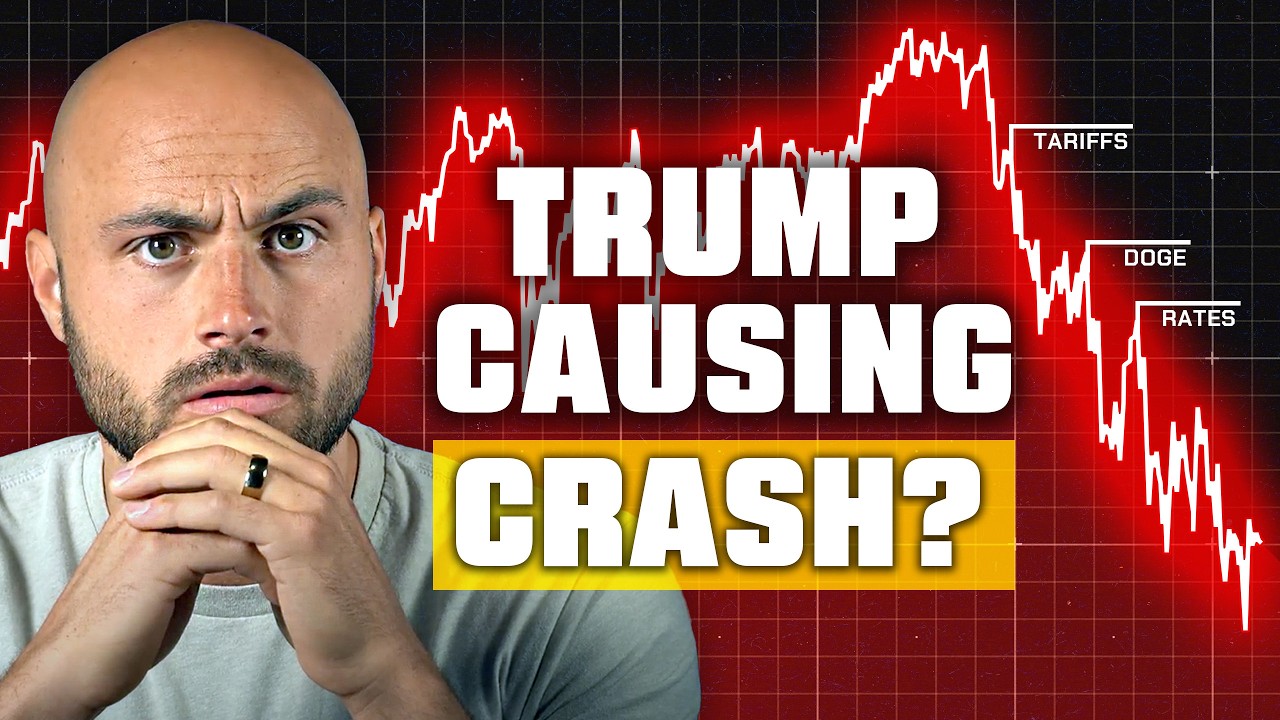
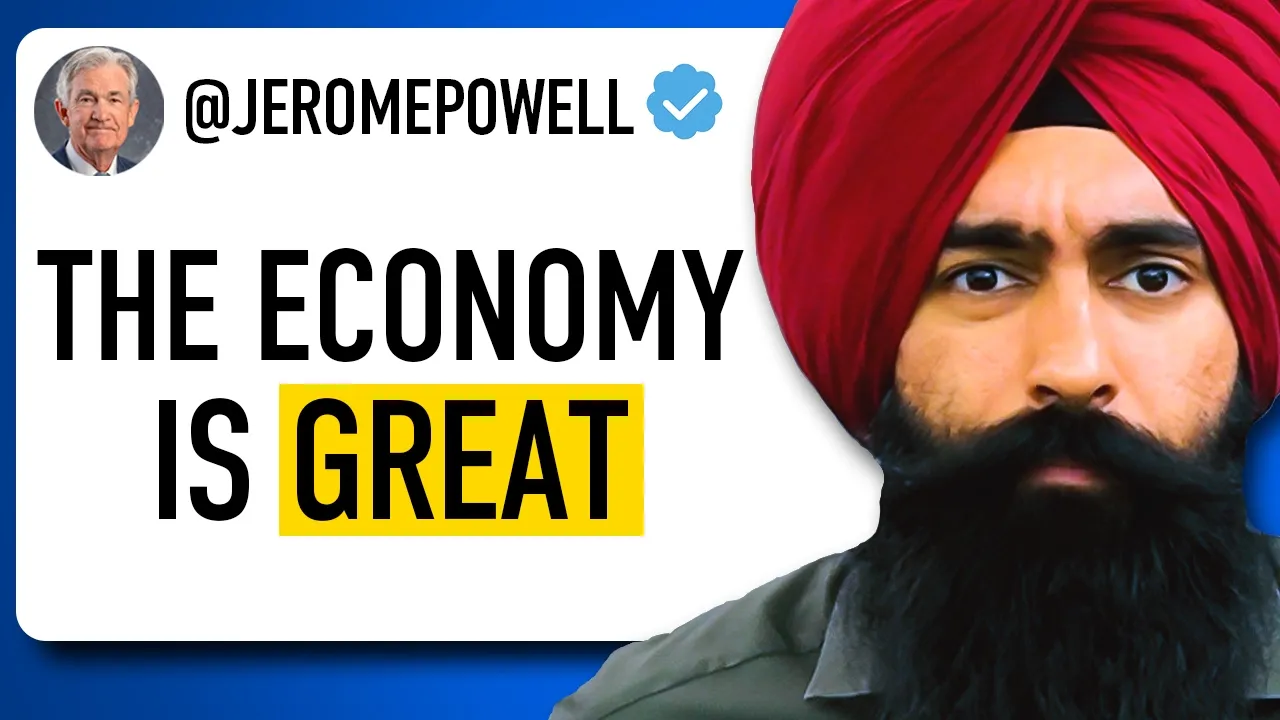
we just got the latest job market data which says that the unemployment rate in America has gone up from 4% to 4. 1% which really isn't that big of a deal but there are three things that you want to pay attention to here that a lot of people are overlooking number one our economy added Less jobs than expected and we're starting to see a trend where it looks like the job market is slowing down number two as soon as this job market data came out the Federal Reserve Bank led by Jerome Powell gave a state statement where he said that investors don't need to worry because the economy is doing fine with some insights as to what he is expecting with interest rates and then number three has to do with tariffs president Trump just put another one-month pause on tariffs on Mexico and Canada on specific Goods which fall under a trade agreement that was signed in 2020 and that covers a lot of goods so all of this creates a lot of confusion we've been seeing a lot of volatility in the markets and that's why in this video I want to break down what's going on that way again you can be a smarter investor not somebody who's being driven one way or the other by emotions let me start with what's going on in the job market we saw Less jobs than expected added last month and we saw the unemployment rate rise from 4% to 4. 1% and we are seeing a shift in the job market what I mean by that isn't just the federal layoffs that we're seeing happen we're seeing number one employers are just generally hiring a little bit less aggressively number two we are seeing companies do a little bit more layoffs and number three we're seeing companies pushing for more productivity we've seen more companies push return to office we've seen more companies try to figure out how they can become more efficient in the workforce and the most interesting part of this is that we're seeing more companies slow down their investment into their business or research and development which might have to do with the fact that consumer confidence in America has been falling consumer confidence is a metric that a lot of people on Wall Street and Economist like to track it's a measure that shows how confident consumers regular people are in the economy in plain English it means how confident are you that you're going to get a paycheck next month and so when people feel confident in the economy they feel strong that hey my job is safe my income is safe so I can keep spending money when consumer confidence Falls like we are seeing happen right now it creates more concerns because when people are worried about their job when people are worried about the economy they're less likely to go out and spend and buy that extra guac because if I buy that extra guac today and put it on my credit card I might not be able to pay it back now I don't recommend you buy that extra guac especially when you can't afford it but the reason why this is important is because our entire economy runs on spending the more money you spend the more money somebody else makes and in this economy people spend based off of what emotions ha or to love it that's the way the world works it is unfortunate I want you to spend based off of reality but that's not how our economy Works people spend on emotions and when people feel confident they spend more when people spend more businesses make more when businesses make more well that also helps the stock market and so when people are worried about consumer confidence the real reason why that matters is because it can impact spending which can impact the economy which can also impact the stock market and what we're seeing happen right now is businesses are also slowing some of their M because they're seeing what's going on with consumer confidence and they're also concerned about tariffs and they're not sure what's going to happen in the economy and because of that some businesses are saying instead of investing all of our money let's be a little bit more cautious let's not take on too much debt let's not get too aggressive because we don't know exactly what's going to happen so let's just put a little slowdown on investment which means that businesses might not see as much growth but that also impacts the economy because that means if they're not investing in more growth they might not be hiring as aggressively as well so we're seeing a lot of changes in the job market 2021 2022 it was a very good market for employees because all the employers were looking for employees and employees could be very picky and very well demanding now we're starting to see that shift we're starting to see that evening of balance so that's what's going on in the job market but what's going on with the Federal Reserve Bank and I know there's a lot of changes happening which is why on March 11th again I'm hosting a free Workshop where I'll be going over number one the changes that are happening in the economy number two how you can build wealth and find the investment opportunity with all these changes because the reality is volatility changes Doge tariffs all these things create investment opportunity for those that are financially Savvy this is what Wall Street understands and the average person gets left behind but that's what I'm going to be going over on my workshop I'm doing it twice on March 11th once in the morning at 10:30 a.
m. eastern standard time and again in the evening at 8:00 p. m.