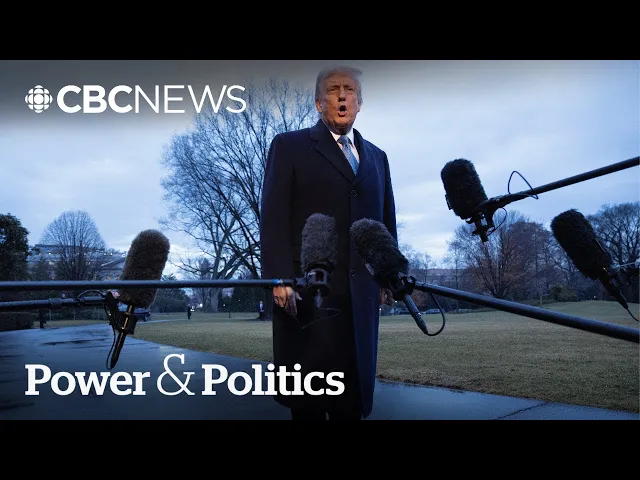
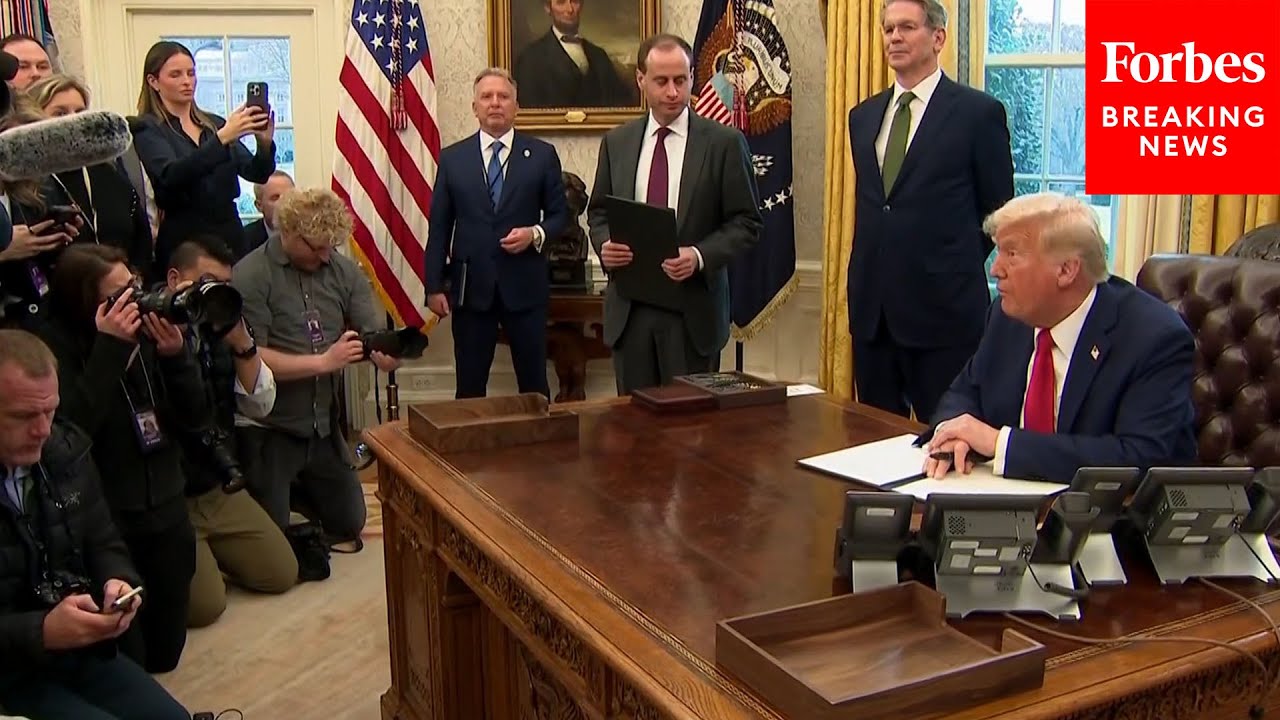
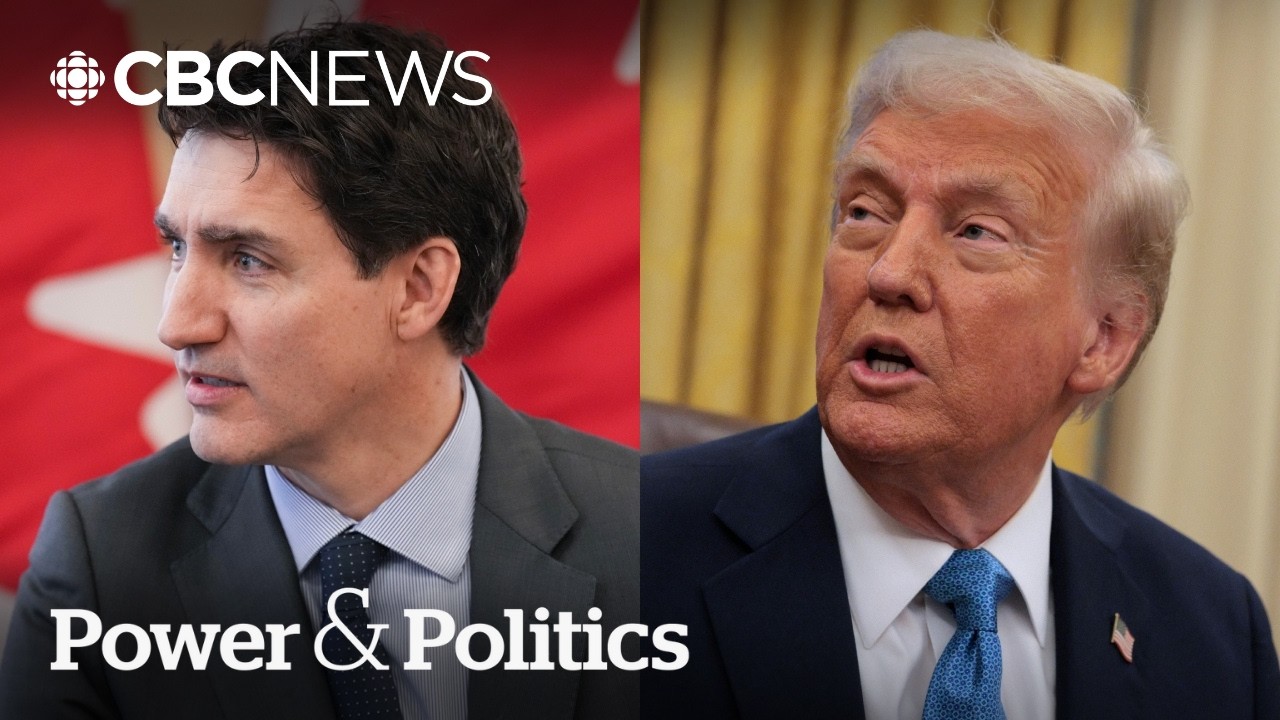
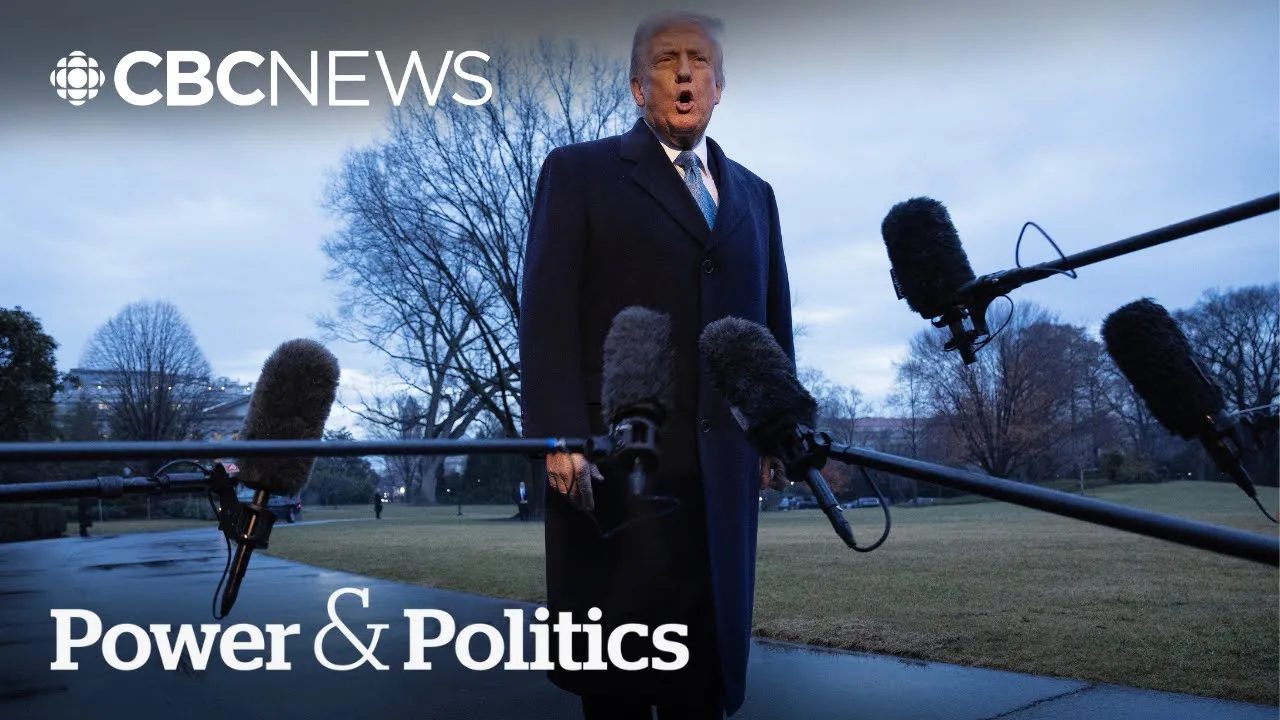
the White House has confirmed terrorists are coming for Canada and Mexico and nothing can be done to stop them according to US president Donald Trump trump has just spoken from the Oval Office we're waiting for that video to come into our Newsroom but speaking earlier today press secretary Caroline levit said Trump will implement the 25% duties tomorrow the president will be implementing tomorrow a 25% tariffs on Mexico 25% tariffs on Canada and a 10% tariff on China the president and CEO of the Canadian Chamber of Commerce Candace Lang uh who is kind enough to join
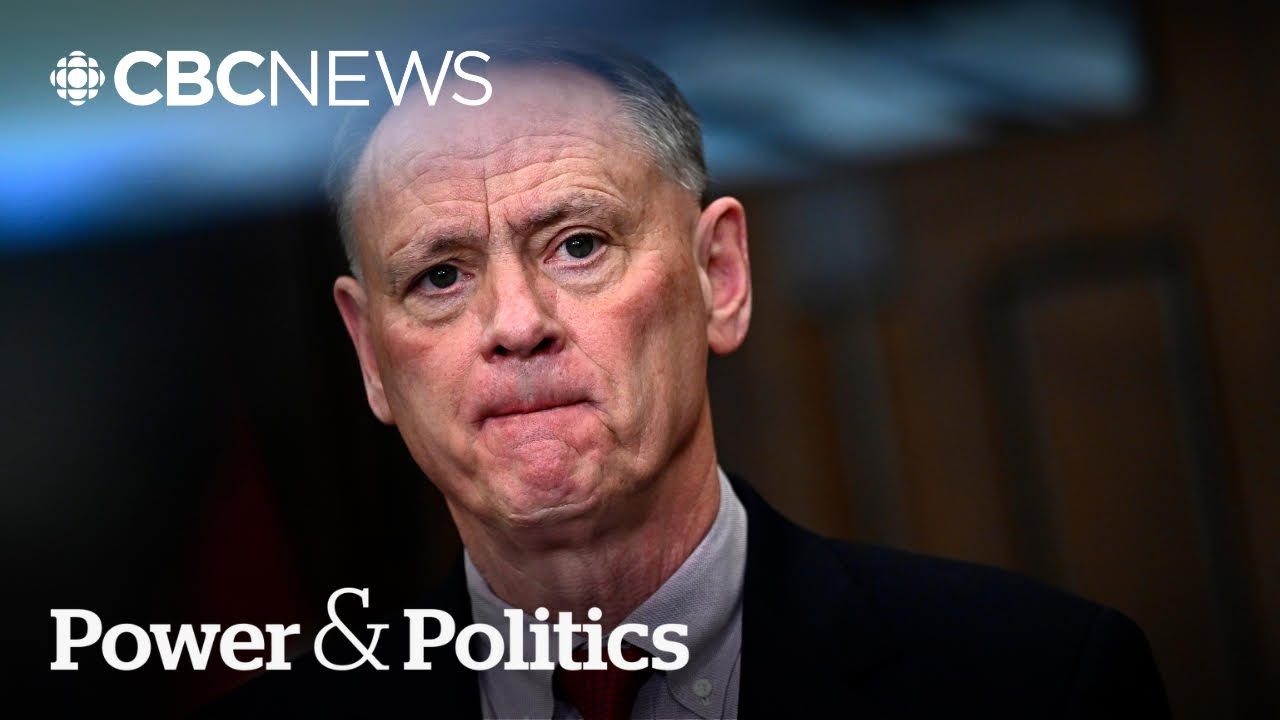
us now in this breaking news environment uh Candace langing I I know it's impossible to react with total certainty but based on the threats um being reinforced by the press secretary and by the president himself 10% on on oil and gas presumably 25% on everything else I mean what does this mean for Canadian business well thanks for having me um when it's a breaking news day and everyone is just trying to I think hold it together um it's just an incredibly torturous time I think um for all of us not just business but all Canadians
but I think where um where we've been really focused through all this um you know whether the the gloves are coming off tomorrow uh today um we are in this for the Long Haul because I think what we know with the tariffs is you know whether they're used as a big stick for non-trade related concessions there's a broader agenda here um to really reshape uh many relationships and of course we're very concerned about our own with the US and and this broader plan to really um shift business South of the Border and um and what
that means for us yeah we just got another uh bulletin on The Wire Donald Trump says tariffs may cause short-term disruption I think that is an understatement uh from the president there but you know Candace Lang as we look at this some of the data I've seen in the analysis is that there's about 2.4 million jobs in the Canadian economy that are considered to be trade exposed uh this is analysis done by Trevor Tomb at the University of Calgary 6% of all jobs in Canada and those are pretty much split evenly between companies that export
and then their suppliers and and service providers um the order of magnitude of what the president calls a short-term disruption for those workers we've seen projections of a 20082 2009 sty recession maybe unemployment rate as high as 10% I mean is that what you're expecting at the chamber I know youve done your own analysis there yes uh yes we've modeled this and in a full you know 25% uh tariff reti like retaliatory measures taken scenario I mean Canada is looking at you know being in a recession by mid year now having said that um and
your your comments about what just came out I think the um the thing that gives me uh a bit of I guess relief or hope is that uh like we know what tariffs do to the econ eony on both sides of the Border but when you really look at the amount of our exports to the us that are actually inputs to their manufacturing you mentioned the jobs on our side of the Border uh over 2 million 1.4 million jobs are supported from our trade and the business we do every day in the United States and
if the agenda here really is to redomicile some of those businesses in the manufacturing that in fact is going to take time which is why we are doubling down in this moment on leveraging that time starting yesterday on what we have to focus internally to strengthen our position and we think it's absolutely the right time to address our own internal tariff likee barriers on internal trade well there's some more developments and I apologize for springing this on you in real time but we're all learning this together C Lang uh Donald Trump says he's not worried
about the market reaction to his tariffs this is a lot of people thought he's very worried about the stock market reaction as a you know when it's up it's a sign of the strength of the economy but he also says um we'll be doing something very substantial on tariffs with the European Union uh so this suggests uh that this is really a broader agenda to rebalance global trade and his belief that Western democracies in particular have taken advantage of the US economic might and the liberalization of trade has led to manufacturing jobs and other Industries
flourishing in in countries outside of the United States and if we presume that uh Howard lutnick was was speaking the truth the other day as as his um his confirmation hearing uh this is about getting those Industries back he suggested this about pharmaceuticals we know a lot of those are made in Europe but the idea that it's not just a Canada Mexico thing this is Europe this this turns into a global economic challenge now not just a continental one yeah I think that agenda has been brewing and and dripping out um over the last while
but I think um and we know I think there's uh um a lot we disagree with on Trump's positioning around uh trade deficits and how he sees that and and even some of the false narratives we believe he puts out there about those trade relationships but I think it goes deep into um the the lack of understanding how integrated Supply chains are within all those trade relationships and in fact I think what will be very interesting although unfortunately probably the painful way to go about this is that the American economy and American workers and people
will have to experience you know what it takes to now unwind those integrated and efficient Supply chains that actually support manufacturing within the United States and and that you know depending on which sector and and uh supply chain you take they are complex and they are built that way because they work well for business today Candace Lang just as a final Point uh the government is watching this in real time too and trying to figure out how to respond and and and to calibrate a response in such a way that it hits back in a
way that Americans feel the pain and politically sensitive areas to maybe put pressure on the president but without you know compounding the misery of Canadian businesses and Canadian citizens and workers I mean what what would your advice to Justin Trudeau and the people advising him and the premier uh be in terms of what we're hearing from the president in this last little while yeah I think as we've talked about um you know we want to avoid tariffs and un escal at all costs but if we need to respond you know that work is being done
and I think measured calculated surgical precise to be strategically um oriented with the impact we want to have that is best and then I think more broadly when we look at you know the fiscal policy maybe bracing for the impact and supporting businesses you know especially small and mediumsized businesses that can absorb such shock and impact it's important to be timely very targeted um and you know try try to make sure that we are looking at uh temporary measures and that we don't actually lock ourselves in um to fiscal costs and uh because we we
have to be measured in in our response on that front as well so timely targeted and temporary Candace Lang president and CEO of the Canadian Chamber of Commerce thank you so much for your time today thank you well if you're just joining us this is a special extended edition of power and politics responding to um escalated threats from the US president the tariffs are coming tomorrow and by February 18th on Canada's oil and gas sector 25% on everything tomorrow is the latest we have from the White House 10% on oil and gas by the 18th
of February uh is what we're seeing on the wires we'll have tape of Donald Trump soon and we will bring that to you the minute it is available in its entirety so Rosie uh since we started our chief political correspondent Ros by the way she's here she's always here um look since we started it was you know Canada it was it was oil and gas now it's the European Union Donald Trump was talking about this is not just a continental thing this is a larger Global tariff as a as a cudel agenda yeah as a
cudel but also I think and you've been talking about this as an as an attempt to um return the American economy to previous Glory that it had uh when manufacturing was based in the United States before so much of it um was offshore to to China that that is fundamentally what this is about it's about trying to get um industry and Manufacturing back into the United States and create more jobs and opportunity for the US I I the the European Union piece is interesting to me because it does then I think open up um some
possibility as of bigger allies for Canada right we have a free trade agreement with the European Union what what then could we do if we align ourselves with allies to take this on I'm not going to I'm not saying it's going to blunt what is what is going about to happen to us certainly it will be damaging but if you can find someone that you can sit beside and stand up to the president I think that that there's there's an interesting position there for me but it also shows that that to his point that we
will hear eventually when he speaks is that there is nothing we can do um there if there is no negotiating tactic well then what are we willing to do and who can we align ourselves with in order to make sure that this has um as little effect as possible or in order to reshape our economy entirely as well so we are no longer dependent on the United States the way we are I mean this is I would imagine devastating for the people that were uh behind uh NAFTA the first NAFTA and behind the renegotiation of
kusma which which really was supposed to uh further further entwine these relationships that people believe are so important and the president is indicating that they no longer are right I'm also curious to see that some of the Canadians who stood up and cheered on Donald Trump how they're feeling uh in the wake of this today okay look if this is part of a plan to move manufacturing inside the US border then people like Drew dilkin are obviously very worried about that he's the mayor of Windsor Ontario and also the chair of the new border mayor
allowance uh Drew dilkin more than $300 million of goods cross that bridge right there the Ambassador Bridge and Windsor every single day what's your reaction to these latest bulletins coming out of the White House I I my grandmother once said don't get stressed about the things you can't control and this this seems to be a moving Target of course we're getting very close to February the 1st so there's a lot of concern about what may or may not happen but I think we just need to to see at this particular point in time we need
to be ready uh we need to be ready in a very deliberate way and a strategic way and a very surgical way to apply pressure back uh on the pain points that we have and The Leverage that we have in certain industries and I think you know my own City uh David you talked about the amount of trade we're home to the busiest commercial border crossing between the US and Canada with the Ambassador Bridge full 25% of that trade crosses here each and every day and of course the auto Industries on both sides of the
Border whether it's Windsor being the auto capital of Canada or Detroit being the Motor City we know the tight integration of the supply chains and that anything that Donald Trump does in the nature of 10% or 25% will have an immediate impact on my community but also the folks in Detroit as well I it's always good to follow your grandmother's advice and not get stressed about things you can't control but I I don't how you doing with that I mean this this is this seems fairly stressful because the stakes are just enormous oh listen 25%
uh tariff could be catastrophic in many cases if it went on for any period of time uh and so you know the Border Mayors Alliance what we've done is try and Link Mayors in border cities like mine from coast to coast so all the way out and Siri all the way out to New Brunswick with many stops in between because we know communities like ours are going to be hit first we're going to be hit the hardest and there's going to be an immediate impact here that will be felt in our community but it's also
going to be felt in the United States so the border of mayor's Alliance is about connecting us in our own country but then being able to reach across the border to the mayor of Detroit in my case and other Mayors and surrounding areas to say guys we really got to be singing from the same sh song sheet here and be part of the same chorus because the impact in our communities although it seems to be aimed at Canada it's going to be it's going to be devastating for all of our communities because of the integration
of the supply chains uh and so that's the work that we're doing we want to feed into the the national dialogue and discussion that's going on and be ready to be activated at moment's notice you your American counterparts get that though right I I mean we've talked before about the healthcare workers who go across the bridge every day or through the tunnel every day to to work in the health system you know in Detroit and throughout Michigan they they must know the effect all of this would have I mean why do you think that message
is if it's making it to the White House it's just being ignored by the White House at this point I I you know I think there's still a sense that folks are trying to figure out what the end goal is they're being careful not to cross the president in any material way in the early days here they want to see what the goal is uh and we're not sure I mean this started off as a a goal to rightsize trade then it switched to border security and drugs where we have a shared interest I think
between the United States and Canada wanting to control those things uh and it seems to be a moving Target uh and so as long as it's a moving Target we're not going to be able to get to the bottom of it if it's about an early renegotiation of the former NAFTA kma then then let's get to the table and figure out what the friction points are and move forward uh but at this point in time it just seems to be a moving Target no one's quite sure where this is going to land or when it
will land uh and at the end of the day we're just going to have to be prepared to uh to deal with what comes our way and we will be prepared I look I I agree it is a moving Target and it's impossible to say things with absolute precision and uncertainty so but but I had to ask you about the latest thing he said right because uh on the wires right now uh Mr Mayor is Trump saying nothing can be done by China Mexico and Canada to forall tariffs we have big deficits and tariffs are
something we're doing we may increase those tariffs and we are not looking for concessions I mean what does that say to you about the ability of people acting in good faith in this country to try to avoid this hit well I I I've taken a few economics courses in my time and and uh I think if one looked uh back in history about the effects of trade or or tariffs rather on trade and and on the impact on the United States as an example you'll find that it'll stand to increase the dollar uh United States
just like Canada is a trading nation and so the higher their dollar goes the less attractive their goods are to be to be purchased from other places around the world less attractive it will be to purchase for Canada to purchase their goods and so I think to your earlier point just before I came on David I I think you're going to have if this goes on for any length of time you will start getting a rewiring of Supply chains where Canada will start looking more closely uh what options we have in Europe and in other
parts of the world to make sure that we can still sell our goods and keep our economy going the the the acute vulnerability of the Canadian economy is on Full display right in this moment when when you talk about what he is trying to do presumably and the way he is trying to do it I mean what do you think the federal government can do what do you think the the response should be and we just heard from Candace Lang who said you know uh targeted and Tim limited uh tariffs uh what do you think
the the calibration should be when the Prime Minister and the government does eventually respond to whatever Donald Trump does well I I I agree that these these supports are going to be absolutely mandatory especially if we're talking about 25% tariffs and uh one asked me not too long ago what it would mean and I said I I think this could be of the magnitude of what you've seen in terms of covid relief if this went on for any period of time but I I would suggest that we really need to work to get clarity on
what the ultimate objective objective is here uh by the president and then find out what the off-ramps are uh at the end of the day we don't want to get into a position where you know this he feels obliged to keep this going just because he made a pronunciation at a microphone once or twice let's figure out what those off ramps are let's hope it doesn't happen in the first place and try and do all we can and I think folks have been doing that uh but the extent it does happen what are the off
ramps that we can take that he can take uh where we can all move forward and find a pathway that allows us to continue developing and building our economies together what what if the off ramps just is a final Point Drew dilin are the catastrophic outcomes that the president himself has said that we don't need Canadian cars they they can all move to Michigan those factories can be South of the Border I I mean for your town and for all the towns around Windsor your city sorry um that that's that's Devastation I mean what if
that is the end goal and he's prepared to fight all the way for it for four years I I think just the nature of the integration of the supply chains it would take a long time for folks to be able to move entire Supply chains and operations to the other side of the Border I just think it's so impractical uh that at the end of the day even if he does that he's just going to increase the value of his own dollar which is going to have a negative impact on all of the other trade
uh that they hope to do around the world and so I I I think simple math here might make a sensible person make a right decision uh and I like to think that in the in the former renegotiation of NAFTA you know the the president was making strong pronunciations at the microphone but the the level two and the level three folks who really had to get the rubber you know make the rubber hit the road uh were smart and sensible and actually found Pathways and understood what the implications were of what they were doing and
so let's hope that that's the case uh this time around as well that okay the president needs to make some move because he's he's locked in a position but let's hope smart people are are doing smart things behind the scenes yeah it's a different presidency and a different Administration this time and a lot of those people just aren't there but uh yes uh it's good to have hope Drew dilin mayor of Windsor Ontario thank you for joining us I think we're going to speak a lot uh in the weeks ahead thanks for being here sir
thanks David [Music]