The most famous and known Trader in Italy partnering up with a nine-time world champion when an ICT Trader I've seen some reals recently and they say liquidity is the driver of markets so everything is about liquidity and I'm so agreeing with that but then they start saying what is liquidity so above a high there's stops below or high there is stops so they are sweeping no absolutely [ __ ] not liquidity is everywhere Andrea is known for his worldclass expertise when it comes to order flow in this episode we explore at length the realities of
what order block is the realities of what a sweep is how to use order flow in your strategy when price goes above a high let's say there is stops in most of the cases I've seen from order I've seen thousands of stop runs what happens during a stop run is very interesting price would maybe the term smart money is very old we're Talking about the 20th centuries at least all the concept of fair value are way older than that we're talking about St Meer for example he's the first creator of the auction market theory model
and Market profile involving profile he was the one that came up with all the analysis of fair value for example this stuff has been around for the last 50 years to 60 years so it's nothing new really when I see for example head and shoulder pattern I'm Not a big believer in it there a correlation not a causation do you believe these ways of wov theory and others they are core Essences of the market that's the reason the market moves in smart money ways or do you think they're nice reflections of something deeper this is
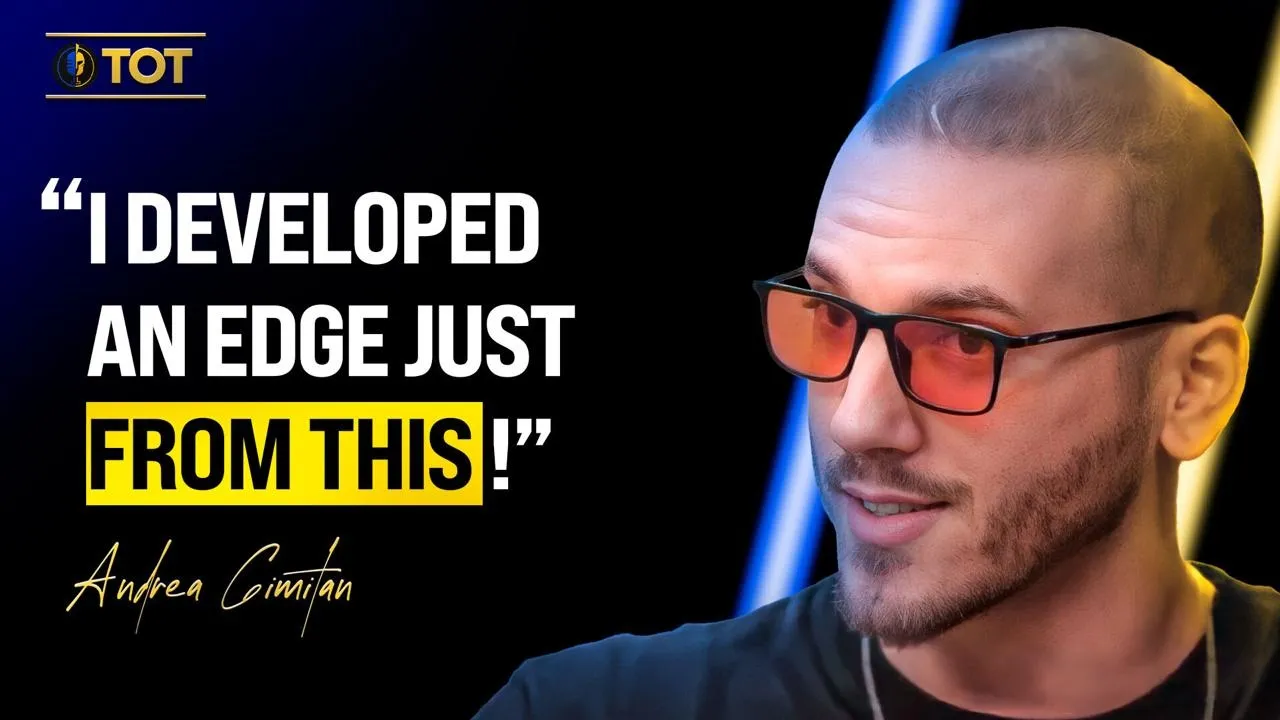
crazy sauce I'm not sure why I'm giving it away like this but hello ladies and gents welcome back to another episode I'm joined by a Famous Italian man I guess in the English Market Market not too many people know you but you're doing English content now and I'm loving it uh bring a fresh taste to the industry but you have a very interesting story too and well Andrea thank you for joining uh a little bit of things that I know about you and then we'll explore your life but um what I remember is you were
typical FX Trader in in Italy you have a a huge audience a huge brand a huge reputation but beyond That there's some interesting things that happened where you pivoted to focus on order flow which a lot of people maybe are not even aware of I've spoken to a few Traders but I haven't got a full grasp on it myself but that means you ended up in Futures so FX The Futures transition and now with the the life decisions you made and and your entrepreneurship and so forth pivoting from scalping and intercession all the way to
swing training to have more time These kind of things a lot of people think about of like okay I want to be a Trader but I can't be on the charts all day long and focus just on M1 and I want to be living a life and doing other things so I do want to explore how you pivoted and more just getting into depth of of the technical of order flowing exactly your strategy but before we get into all that fun stuff tell me a bit about yourself yeah well hi everyone uh thank you for
having me On the podcast it's amazing I've been following it for a while now and uh this is the legendary setup I've always seen in the videos even more legendary is these orange sunglasses yeah right or not even blue light blockers yeah they're blue light blockers but they're more part of the let's say the brand to make me more recognizable I would say fair enough um so yeah I've started uh trading and getting into trading like learning the first stuff about it in Late 2018 and then I started acting more actively trading and having my
mentor which is Fabio uh which is my business partner in my Ventures now uh around 2019 uh then I've started mainly in Forex and cfds especially because you know Forex is just an asset class so if I'm defining what do I trade I trade an asset class and one type of contract so it's cfds Forex this is what I used to trade mostly with what people nowadays Are calling smart money Concepts okay Fabio was um uh my mentor and he taught me um something similar to what now is smart money Concepts uh he learned from
Chris Lori which was also the original source of smart money Concepts as many people may know is he there's a few names that I hear that I is obviously the big name right now but there's a i is standing on other people's shoulders it seems there are forefathers to him and it makes sense like he he's he's now Big in the last let's say decade or two but oh yeah those Nam before him who would they be is this one of them Chris Lor is definitely one of them uh if we go really back you
would go to Richard wov because he was the one the first one theorizing you know everything about distributions accumulation manipulation uh the what people call now the turtle soup or you know the liquidity grab he used to call it the spring or the up thrust these kind of Things but we can get into perspective yes we can get into that later uh on the podcast but so I started studying from Fabio and he was a great Trader and he taught me everything not only about trading but also about the industry he was the first one
who you know I started with kind of like everyone else you know we're watching gurus on YouTube with Lambos and I was like yo I need to get into this you know but um he made me understand the need of studying of hard Work of discipline the fact that it's not as easy as they tell you it is you have to find an edge you have to maybe back test it a little bit and then forward test it keep it monitored blah blah blah so I started getting more like actually profitable in started trading with
PL prop firms uh I started with ftmo with a 25k account I did a couple payouts then lost it uh then I improved more as a Trader um then I started going with different Prof Firs like my Forex Funds uh true Forex funds the prop trading the funded Trader all prop firms in which I was able to reach 200k in each one of these PL from as a funded account and gradually one by one each and every one of them defaulted or you know failed or was closed by some Authority yes and uh so in
that period I started starting Futures more and more starting orderflow more and more because I want to get a deeper grasp of also what ultimately smart money concepts are Trying to figure out which is orderflow because even if you hear ICT speaking he's talking about bullish orderflow or about order blocks so it's very interesting to me because I'm on the same side where I'm trading these liquidity grabs and I'm looking for rejection points and I've always wished and I've I've gone down the rabit hole in effects of like you know the volume profile the volume
indicator just to see okay is this this Wick that I'm seeing Is it with momentum with volume or without and you start to realize okay the volume indicator is just based on the broker or the price feed so there's no real volume and effect so we have to use reflections of order flow like a displacement or a break of structure these kind of I think that's a great way like for people but there is a need for for all this yes definitely we will we will definitely go go deep into that um jump uh the
SMC and what you see today As ICT would you say they are the same thing or or not really honestly I'm not u a huge expert on the terminology on the definitions but uh smart money Concepts like the the term smart money is very old uh it's very old we're talking about the N the 20th centuries at least uh all the concept of fair value are way older than that uh we're talking about uh stal Meer for example he's the first creator of the auction market theory model and Market profile In volume profile he was
the one that came up with all the analysis of fair value for example you know so now the fair value Gap it's a gap in Fair Value which is when Market basically agree on a price uh so a fair value Gap would be the exit from the fair value the imbalance compared to the balanced Market this stuff has been around has been uh preached for the last 50 years to 60 years so it's nothing new really um I don't don't remember where we Started so yeah comparing that to like let's say the Legacy Way of
smart money compared to the Modern Way of the ICT variants where I guess the traditional SMC didn't have total soup as a thing at all maybe there's a derivative of it and he's relabeled it or reworded it do do you see much difference in your way of trading initially which was SMC by the forefathers let's call it and the modern way that people trade SMC that is it would be similar it would be similar in Some ways definitely I mean uh I wouldn't say that the uh names we were giving or the strategies or the
entry model we were using are exactly the same but they were revolving around the same type of understanding on financial markets and do you think that Evolution makes sense when when you say these terms and these ways of looking at the markets are 50 years old plus I also think everything in the world has changed in those last 50 years technology wise and phones and everything internet related so I would have imagine people's behaviors have changed accessibility to the market has changed and therefore the market has changed in its format would you agree with that
100% if you think about wov he was using daily candles and writing candles down physically on a pieces of paper so it's like we're completely different world he understood the concept behind it the logic behind it But what happened now is trading got way faster also before you used to call a phone to make a trade yeah you know um so nowadays I think you can find the same pattern that wov was preaching in the daily or the weekly time frame in the lower time frames because the speed of trading has gone so much up
but the physiological needs of big operators to fill their orders are still the same so uh nowadays it's like you're having this microscopic version of The W of Accumulation and distribution patterns that now people call uh turtl soup or you know MH you know two liquidity grabs one liquidity grabs after another SMC traps these are all things that um after we can go deep into the orderflow mechanics behind it of course but uh yeah definitely I would say that um there is some signs of these modernized version of things that already existed so I got
two questions here so one thing is a lot of Traders get caught up in the Labeling game and and trying to just Mark things correctly and not realizing that maybe they're all the same thing and what I mean by that is when I'm comparing a head and shoulder pattern which is just left head right that can look like a distribution from a wickoff three perspective just a bit more detailed and then you can probably have an ICT variation of that with its own Turtle name and then I can justify it in another way because I'll
be looking at Something else more sweep related and rejection related point being we can all see the same price action and one person marks it his head and shoulder another person marks it something else this labeling game do you think when people do the labeling game down on the lower time frames um where you're using a wickoff distribution which was daily candle prints in its origination now being done on the M15 M5 and these kind of things do you think it's just people Labeling things or and it just coincidentally is aligning or is it trth
in it so that it is a accumulation Distribution on a lower time frame that's a nice question I wouldn't say that we're talking about the same thing CU you know wov was talking about accumulation and distribution of shares of stocks so it was literally accumulating as in buying and Distributing as in selling you're Distributing you're selling those stocks so it was a long term let's say pattern a longer term pattern so I wouldn't say nowadays the um the same thing is going on the same thing that wov uh was mentioning or explaining I would say
that it it it's somewhat similar in the way it shows itself but the reasons are different um and they are not Necessarily manipulative I would say so that was actually part two of my question which is people get into the labeling game and sometimes they label it and then price does what they expected so they're like ah I figured it out my labels were correct when a lot of times it's more coincidental or what I usually call is correlated so when I see for example a head and shoulder pattern I'm not a big believer in
it so when these people see the right shoulder and Then it goes bearish not only the idea of these hedge funds are not selling because of the right shoulder they have other reasons and your right shoulder was a nice reflection of that so it's a correlation not a causation do you believe these Genesis ways of uh wof Theory and and others they are core Essences of the market that's the reason the market moves in smart money ways or do you think they're nice reflections of something deeper So these are very complex questions to answer in
in a brief and concise way I think the best way to um figure this out is understanding who is in the market understanding how Market Mechanics Work and understanding the reason why price may move and as you've said there's hedge funds there's Banks there's Pension funds there's sing funds there's University endowments there's actively managed certificates there's Community pools operators commodity pools operators commodity trading advisers there's retail Traders the amount of types of participants that are in the market makes you understand that first of all the finalistic view of the market uh where something happens because
of someone else's benefit the whole time doesn't hold I think that makes a lot of sense because what you've listed is a long list of speculative participants corre There's also people just genuinely using the currency for international trade the market is a sum of so many behaviors and we've see that reflection in price but this macro like one party controlling it doesn't make too much sense when when you look at it from that lens definitely and and that makes you also understand that the kind of needs of every different Market participant are completely different so
out of the dozens and Dozens of prop firms that exist in the whole Space who can we really trust whether they use slippage whether they Ed types of draw down unrealistic trading conditions every single prop firm has hidden tricks so after thorough research and speaking to a lot of Traders Alpha capital is definitely the best prop firm in the space so apart from there no commissions low spread no slippage great reputation never denying a payout because you are a Titans of Tomorrow viewer you get a special discount on every evaluation just using the link or
using the Cod to for Titans of tomorrow because there's a difference between big money and smart money for example in the way I view markets because a big money participant like a pension fund is not going to try and get the best feel out of all of every contracts they are trying to put on the market while maybe an hft firm or a bank will if they are more they're trying to Be smart as in let's try to get the best feel possible while a pension fund maybe might get a big chunk of order of
billions of dollars in the same Market all at once maybe trying to fill it below the the vwb if they're really I highly doubt so the point being Pension funds has a way longer time frame of holding their position they're more investing than actively trading so maybe some of the pattern we are seeing are some types of Market participant trying To influence the market and engineer some level of liquidity which I don't believe is retails by the way they're not they're not hunting for retails for sure but um but definitely physiological needs are different based
on what kind of Market participant you are so this is a topic I don't have an answer for myself and I always try to explore it with a guest and I don't think anybody truly knows cuz I get different answers from everyone but when we're kind of Referencing wickoff Theory and let's use the example of accumulation accumulation in the true sense from a wov perspective is your over time the market is shifting from from bearish to bullish and we're entering a new market cycle for a transition of of of meaning to happen like that on
a such a large time frame like the daily it requires a lot of money to transact and the reason I think that happens is because one person can't come in and just say I want to buy at This price at this time all of this amount of currency so they have to slowly ladder it in when liquidity becomes available so that display we see of accumulation is the behavior of the market changing so when I see on a lower time frame which was the earlier question I'm seeing that as okay why is M15 accumulating and
it looks exactly like the w version and I can label it out and and I think to myself am I doing the labeling game or is there true Essence in this and I fall back on logic I'm like well maybe so because okay we're not talking trillions or tens of hundreds of billions of dollars but on M15 we're still talking a lot of money and that guy can't come in and just say I need to buy at this time at this price all of this so I have to wait for the liquidity to become available
so I can pair off my order so I was just seeing them as like mini versions of it on a smaller time frame meaning smaller Dollar amount uh transaction but then I come back to the same point of who is it because when you're talking about these major participants they're probably not microscopically on the M15 they're putting in a big position taking a few weeks for it to fill and then waiting 10 years correct like the the point is here we're talking we're not talking about practical implementations as much of opinions I would say because
right now we're in the realm of opinions we're in The realm of trying to understand why things happen which is not always helpful in trading I would say like I would say that for a rational and logical mind knowing what's going on and why is it going on is very helpful to understand the logic but if you're a pattern-based Trader you're not going to give a [ __ ] about what why is it happening as long as it's happening with a statistical Edge which is enough to be Honest I end up there I'm like okay
I I don't know why but I have enough Ed evidence I can build an edge so I'll keep doing it I do the behavior and not truly understand when I see a run of liquidity and then a rejection and you probably see the order flow behind it so you can see the evidence there but the of it I guess we leave it to a mystery but that leaves a big void for ICT to come in and say it's the algo it's the algo I coded and then you're left Confused because you can't deny it because
you don't know the truth yourself or explanation you can deny it because and and I would uh I would argue that the there is a level of depth in which you can go with understanding Market mechanics the more you understand the truth of how Market works you understand that it's a very complex mechanism and you start embracing uncertainty in understanding you start understanding that you're not going to Understand and that's okay and if the more labels you try to give the more you're based on opinions and this this is the whole thing about the ICT
space I've heard a lot of ICT not a lot honestly but um some ICT Traders not ICT himself uh talking in some podcasts about uh the algo and how there is central banks so it's supposed to be a central bank one but also it's the banks that doesn't have access to it so it's like above Banks But below Central Bank that is like a a very creative work I have to say Okay like so it's a web even the banking system when when you're using Swift let's say you're doing an international transfer it's not like
if I want to send money from myself in Dubai to yourself in Italy I can't just send it to you it has to go through a chain and the Swift is a chain of like it goes from my bank to then a central bank to then a cross there are mechanics A lot of banks even like let's say we're doing inter Dubai transactions let's say I send you to your bank account in Dubai it's not a case of I send you $1,000 and then you receive $1,000 what will happen is the banks will sit and
say okay what are the transactions between both of these accounts let's What cancels out and what's the left okay this Bank owes $10 million to this one so they transfer the Deb and they balance the books and you're using Bank Reserves for this yeah Exactly and then you introduce fractional reserves and you see how they they leverage it up let's say the banking system is super complicated super weird and so kind hierarchies ofal b b whatever and then all of these are liquidity providers whatever the web I don't know what goes on but what does
make sense to me in theory at least is when I see the idea of a participants don't know who wants to buy a large Amount of a certain currency they cannot just dump that into the market we can as cfd first of all we have insignificant amount but second of all we have a contract for difference there's no live execution but when there is lies live execution it's a it's a bid it's a bid you got to have a buyer and seller you got to match them up so I can imagine that that transaction that
happens to say I want to buy x amount of this at today the I'll put that order into the Liquidity provider the liquidity providers do their thing with the web of Banks and they'll slowly give you the amounts that you need talk cfds right now right no I'm talking about real like cfds is just a it's a simulation mostly mostly it's broker acting as a liquidity provider as a market maker in if if you want to get deep into how these kind of Market mechanics goes uh you have to and people at home has to
understand the difference of kinds of liquidity that You have in the market so you have two kinds of liquidity it's not buyers and sellers it's passive and aggressive M so you have the menu of the market the the catalog the the you know the offer of orders buy and sell so we're not uh we're not making a difference right now between buy and sell orders so you have you have to see the market as an auction that's why we're talking about auction Market Theory there's the goods sold at the auctions the paintings and the Statues
and everything and then there's the auctioneer which is the exchange and all the biders which are you know pushing price higher every time they make a new offer for and they make a new bid for the the products that are offered so buy and sell orders would be in the order book and those are the supply of orders of liquidity then there's aggressive Market participants which is people pushing the Buy and sell button so buying market right now or stop orders stop orders are part of Market orders because order book is made of buy limits
buy limits Below sell limits so those are limits and you basically when you buy you buy from the ask when you sell you sell to the bid so what moves the market is people accepting to be filled at lower or higher worse price anyway m in order to get filled so it's not about there's more buyers or sellers in a Candle in a buy candle or sell candle there's always the same amounts of buyers and sellers in a buy candle compared to a sell candle the only difference is who was ready to accept worst prices
to get filled because they wanted to get filled and you're talking about cfds right now I'm talking about Futures regulated market that moves okay so when when you when you explain the the difference between the the bid and the I as the commission of The Brokerage and that's kind of how they make their spread that's their m in the mid market makers having are having the same business model they quote the bid they quote the ask and whenever there's a transaction that goes sideways they're earning a lot of money because of the bid ask spread
even if it's very small and in in this sense you're kind of differentiating participants of buyers and sellers between active executions Versus pending ORD saying I'm willing correct and that willingness is also graded not just on size of the contract it's also the willingness to pay a worse price correct the willingness to pay a worst price is actually in the aggressors because okay if this is the Best Buy best uh level there is a buy liquidity and this is the best level where there's a sell liquidity if you're going to buy you're going to buy
from a slightly higher price if you're going to Sell you're going to have to sell to a slightly lower price if you're buying Market or selling Market if you want you can place your bid there your buy limit there but you're not guaranteed to get filled so you're going to get filled only if there's someone who is acting as a counterpart to your trade and who is aggressively selling on you so you are saying okay here's there someone who's going to sell on my order then I get filled so this is the the main Difference
and the cool thing is for example with news with news trading people think there must be a lot of volume there might a lot of volatility a lot of liquidity that's partly true what happens is in most markets and you can see in the CME website you can everyone can go to the CME website and look at matching algorithms if you get deep into Market mechanics it's very fascinating because you will see there's different kinds of Ways they match aggressors and passive participants one of them is the lead Market maker model and how that works
is one or more Market participants are they have the right to get filled before because when you put an order in the bid or in the ask you go in a que mhm which works with a fifo model so first in first out if you put the order first you get executed first so it's a it's a it's a chronological way of getting filled but with a lead Market maker model at Least 40% of the volume that is entered is going to be executed for a specific liquidity provider for a specific Market participant who is
acting as a market maker for that market and quoting all the price so there's like a privilege there's a a privilege of getting filled first because I always provide liquidity and the exchange loves that what happens is the only time in the agreement between the exchanges and the liquidity provider They are allowed to take off liquidity from the market is one or I don't remember how many seconds before a news release so what happens during news release actually is the book is empty is completely empty and it requires just one contract to be clicked bu
and the first order might be jumps and jumps so quickly that's why if you look at the orderflow version of a CPI candle yes you will see 0000000000 0000001 and then it start going up and the trading activity starts happening again but lead market makers are taking out their orders during news release because there's High volatility and market makers only earn from consolidation period the more there's volatility the less they like to be on the market I got so many questions first of all um when you described this News Gap I want to call it
where there's a void between the last orders pre- news And the first order right after news that gap which some Brokers just put a put a body in there or a wick in there others would actually put a physical Gap either way you can call it an imbalance or a gap in the markets one of the first things I think every Trader learns is like the gaps always fill and therefore Sunday market open trade the Gap fill or XY Z when you look at it from an order flow perspective does that void in orders Mean
anything not really um that's the definition of a liquidity void so when there is no liquidity it's not that there's just one side and there's just sellers I've heard this say from a lot of ICT Traders it's not like that it's definitely not like that there is a part of the candle which has zero liquidity because the market makers market makers pull their ass out of the market and then at the end of the candle usually you start having more Volume and more contracts being executed so that Gap in liquidity is not necessarily going to
be filled it depends on what long-term Traders are doing for example if you look about cpis or nfps or FC data coming out most of the time uh it's not directional like most of the is just pointless liquidity not most of the times but I would say at least a 60 70% of the time but there's a very good percentage of time as well considerable And statistically relevant where there is a push in price duwing news especially maybe in indices and price keep going higher and higher and higher this has happened all throughout November 2023
you would see data after data after data the price was keep going up and keep going up because of positive inflation data same during 2021 when inflation or 2022 where inflation was really high and really prob atic for the market so you also have to understand The macro concept but the the macro context but the if they're going to get refilled or not only depends on what Market will eventually agree is the fair price of the day so if price goes and then go down again and refill the Gap long-term Traders didn't take any decision
today we still at the same time we started today so only speculators because at the end of the day a daily candle will tell you the net Market positioning net of Short-term Traders because all day Traders are gone all Edge oft Traders are gone so now you're just left with what are long-term trading doing that's how they're positioned okay so if during a trading day for example during a news day the daily candle is closing with a full body that's a very good um indication of what long-term Traders are doing for example okay I'm going
to I'm going to pin that because I want to come back to when we talk about swing trading But that that that actually makes a lot of sense and I never even considered it of like a daily candle is the behavior of long-term thinkers because the short-term thinkers are out but I think that would be very nice for a swing Traders mentality definitely I want to get into this topic that we're talking about of of orders and before we get into how to utilize it from technicals in Futures I want to understand one thing so
we're talking about the Behaviors of aggressive and passive orders and then you have the first in first out kind of basis of how they executed and then you have the exchanges and the liquidity providers kind of matchmaking and kind of orchestrating what people's desires are they're doing the matchmaking corre so when I when I'm thinking of that obviously they're not doing that manually that there is some algorithmic behavior for them to reflect their exchanges requests and when I do Look at let's say EUR USD if I look at a single week's price action I can
find no jokes 50 plus examples in a single week on M1 M5 lower time frame in general of this idea of a a small consolidation and then a sweep of some direction uh let's say a sweep up and then price will go down and actually break structure there for significance and I can see that pattern let's call it for now repeat again and again now when I'm to think why that pattern happens what was the Purpose of a small consolidation and a sweep and then then the real move happening as opposed to consolidation then move
the reason I see that is because these people that were willing to pay worse prices they're like hey I'm waiting for this order the exchange is like okay you're ready let's shoot the price up to fill you in and they're orchestrating that and and to get kind of get the last orders in before a move happens so that kind of lgorithm Behavior do you think that reflects to anything true especially from ICT lens yeah so being clarified that there's no that retail Traders don't play a role in this MH and it's not my opinion it's
numbers uh the bank of international settlements uh in the Forex Market retails are like they said around four to 5% so it's like insignificant levels of liquidity for the the kind of players we're talking about y but if we're talking about intraday okay if we're Talking about a range and then down we're talking I'm I'm hearing a lot of liquidity sweep uh what do you think is being swept so I think liquidity sweep is a is not the my choice of term yeah but the way I'm kind of seeing it is that there is a
block of orders not order block but actually just a block of orders and the market it doesn't make full sense for the market to just go without filling as Many as possible especially there's people willing to exchange so once that matchmaking is done and every buyer and seller is satisfied in that moment then price is ready to move so I'm seeing that consolidative phase as um people agreeing on a price and then I'm seeing that kind of like the auction says going once going twice that sweep is to catch those last people in that's how
I justify it and then I go off the pattern without explanation because I just see Price I see price action and I see the behavior I trade that and I don't truly know what happens definitely definitely that's why it's interesting to expand in these topics I guess uh and again on the realm not of statistical Edge yet we're just in the realm of understanding Market mechanics so at the end of the day for Traders that are watching the most important thing for you is finding an edge so now we're we're in the realm of understanding
and knowledge and you Know that's that need the reason I'm hanging around on this topic longer than usual because I always ask a guest just to feel for it yeah usually no one has a but you do so I want to actually take the time because I've been searching for someone that I can kind of have definit definitely but that that I love going into this you know it's uh it's been the the my field of expertise for the last years so it's also because we're selling orderflow software between other things So I I really
deeply know Market mechanics because I had to understand it really deeply um so back to the liquidity sweep idea there is a liquidity sweep I can guarantee there is actually what most people would say are being swept is stop orders okay like okay you most a sell stop buy stop you mean like a stop loss like a exit exit stop orders so we're talking sorry we're talking about can be a stop- loss or a Breakout trade like a buy stop or sell stop yes exactly in the C only in the cfd space stop- loss and
sell stop are two different things in normal World in normal markets those are the same so you're going to buy market for example and put a sell stop as your stop loss in Futures Market yep and in any Market or you can put a sell stop that's going to you know break out it depends on your net position but anyways when price goes above a High let's say there is stops and most in most of the cases I've seen from orderflow I've seen thousands of stop runs and I've have a strategy specifically on stop runs
that has a the last stress test I did in the prop firm was around a 52% win rate with a 2.2 profit Factor so it has an edge it's a proven Edge what happens during a stop run is very interesting price would maybe go right above a high Or very close to a high and usually up there there is stop orders it can be stop- loss from sellers so exit liquidity or new buyers that are trying to come in sorry this is a buy stop sorry above a high as buy stop but in order book
they look the same there's no stop orders in the order book that's the point in the order book above a high you would have sell limits M and buy stops but buy stops are not in the book The Exchange cannot see them buy stops are Only in the broker so you would tell your broker what a buy stop basically means is you're telling the broker the broker not the exchange uh fill this order when price moves up at the best price you can get so it's a trigger to the broker and then the broker acts
when time is ready and sends the order market so it's basically like clicking by M literally and so what you're going to do is you're going to your buy stop is going to take a level from the ask from The the sell limit part so what happens is what people call a liquidity sweep because stops are being swept actually stops are the one sweeping the ask liquidity because there's so many maybe stops there it can be one big order it can be multiple small order you can understand it with level three data and they are
entering market and clean up every level of liquidity in the book and since there's a lot of them being fill at worse and worse and worse And worse and worse and worse prices because they all come in the Market at the same time so there is a huge Spike of volatility only from buyer aggressors that are eating all the levels in the book just to clarify so let's say you have a supply Zone and people are selling and then right above the supply Zone they have their stop losses meaning buy stop positions the sellers turn
into buyers when they exit the position correct so when prices cross that stop Loss Zone and you're entering that territory of where stop losses could be as people exit the market they're actually placing buy orders and those buy orders that are coming into the market now are shoving price up correct hence the sweep they are beating they are accepting worse and worse prices so they're beating the price up and then what happens is something very interesting and that's the edge that I found also thanks to one of my mentor His name is ero stuki he's
a amazing Trader um and what happens is there there's an imbalance now because we had a very quick movement that has swept the book in the orderflow space what it's called a liquidity sweep or a stop loss hunting or whatever we call it book sweeping so we are sweeping sell limits not buy stops so what is created is a candle which is full of buy Delta buy side Delta and a full imbalance because now we've swept The book so all those levels doesn't have liquidity anymore so now the path of least resistance is to reabsorb
the stop run as a Trader it's very simple you have to find an edge and then you have to have a mind so you can follow that edge but how do you know if you're performing correctly or not you have to know your data and trade Zeller is going to show you everything that you need beyond the surface level win rates and performance and Equity curve it's going To show you detailed reports it's going to be your back testing tool strategy testing tool playbooks notes and it's going to be a full Journal it makes your
journaling easier faster and more meaningful whereas if you were just documenting on Excel spreadsheet or taking screenshots on your iPhone you wouldn't be able to pull out the data that you need the correlations that the AI within Trad Zella is pulling out for you there's so much variety and utility Within the software that I think it's essential for any Trader so the link somewhere below is going to take you directly to the trade Zella website I'm not getting paid this is for you if you want it if you like it go ahead and explore it
and probably you'll be using it for years to come so what what I see is when you've had all these buyers and prices gone up now there's no there's no more activity let's say because the book has been swept meaning the sellers have Said there's no more sellers left price went higher and higher to see who's willing to sell reach point where the buyers were satisfied the sellers were like these are all done so you have an equilibrium temporarily let's say with a void below correct there's a void below exactly so we find a balance
above and there's a void below of now below there should be buy new buy limits starting to refill the book now okay because we're higher in price and Below price you only Have buy limits in the book and and that would be people that are trading buy stop off breaks of structure and these kind of buy limits talking about buy Li oh yes they pending buy limits based on breakouts maybe yes or maybe market makers for example because we we you have to start shifting away from what would a retail twwiter do with a breakout
structure I would put a by limit that's most of the market participants are not doing that way They're mostly algorithm all almost algorithms and market makers so market makers will refill that levels of the book that have been swept from the sell side and now there's a bunch of by limits but there are way less so the path of list resistance now is that one so so Market will most likely rebalance this first move up and move down at least back into the range where we started with that's why there's a spike but you know
when price jumps down to Fill that void does that naturally mean sellers came in to move the market down yes now sellers kicked in and moved the market down so when when one of the ways I look at the market let's call it an M15 for now I'll see a structural resistance or an Asia high or some form that I will call liquidity pool and then when I see price sweep up it goes up quite aggressively comes down just as aggressively corre now you're justifying it through voids and and Orders but what I also coincidentally
find is I don't I don't I don't look for this I more retroactively see what happened and I usually see that sweep that happened and then price came down when I see where was the peak of that sweep and I look left I'm like oh it just happened to be a form of Supply um and then I can kind of see well now we justify and say price is going up and up cuz buyers are entering they're entering until when the sellers are ready to take I'm ready and then the sellers take over yes that's
that's also so can you can you pair this uh order flow read to traditional Market structure Supply zones and demand areas so I've been using this strategy on stop run on the es contract on the one minute time frame so it's a completely like this is book scalping this is order book scalping so I would say in the 15 minute environment plus if you're talking about Forex MH I have no Idea about Forex why because there's no volume in Forex you don't have orderflow in in Forex you can have the order flow of Forex Futures
contracts but they are like 1% of the total volume of Forex most Forex is Forex swaps and uh spot Market again just to clarify So when you say there's no volume in Forex you're meaning there's no volume visible to us correct yes the same mechanics that we've just described is going on behind the scenes corre naturally cor correct Uh that's why usually in if you if you want to analyze volume activity in Forex you rely on tick volume which is slightly different um about it and the correlation between cfd volume profiles and futur volume profile
are around like 80 85% so they're basically same yeah the point with volume profile with order flow then it's a completely different game like you can see a footprint in Forex that you can but it makes really not a lot of sense In my opinion another thing that you mentioned was in in the markets in order flow you cannot actually see um pending orders you just see active aggressors or passive orders you can only see passive order like the only limit orders you see or you know pending orders is limits buy limits and sell limits
buy limits below the price sell limits above the price so when when people talk about spoofing and this idea of like there's a pool of orders waiting above so the market is Attracted towards that that is going to be buy and sell limits not the buy stop sell stop correct it's a bunch of buy limits or sell limits but they're generally not put to attract liquidity they're trying to put a wall of fake orders there or ghost orders that are going to be taken out of the market as soon as the market reach it because
they're trying to feel something below so what you usually do when you want to trade a spoofing is you're also Looking for a so-called absorption so in the cell limit there's a bunch of orders and then below there's very few orders that are in the book but here there's not a lot of orders actually executed no one is really buying into them and if someone tries to buy they disappear so they are fake order this is spoof orders or layered orders and then you would see downstairs all these sell orders are trying to make the
market believe that We're going down and there there's someone big saying we're going down today guys and what's happening really in the lower part is in the B limit side they're putting a so calleded iceberg order and an iceberg order is they're not show the opposite of a of a spoofing so they're showing just maybe 10 contracts but they have ready around 100 or 1,000 contracts every time they get executed they put a little bit it's a domino effect so it's a domino effect And they get filled by not showing that they have an order
but absorbing all the selling pressure that they are artificially creating with the spoof orders up so you would have spoofers here that trades into a trap which is an iceberg okay and uh the is this a strategy are the big players utilizing spoofing and icebergs as a way of confusing and if they are confusing who so before ninder SRA allegedly um caused the the flash crash In 2010 spoofing was illegal but was very widely used by institutional Traders on hft firms um that was a really great case study of how as long as the big
market makers are doing something it's okay no one's going to say anything but if you're a poor Indian guy from hanso uh and you make $50 million out of it then you're going to get problems but anyway such as life uh such as life yeah um and so The the whole point of this is Market manipulation it's pure Market manipulation spoof spoofing is illegal Iceberg orders are not actually Iceberg orders if you want to hide your order because you don't want to show it to people because you don't want to impact prices then for the
exchange and for The Regulators is okay there's also different kinds of icebergs so why would any institution ever not do icebergs like why what advant is there any Advantage of saying hey guys I'm willing to buy so much right now hell no you want to be kind of secretive of course most of the orders that are executed you don't see them in the book makes sense that's also why the Aur book is if you want to become a book scalper The First thing you have to understand is what you see is not what is not
reality okay because most of the stuff that's put in the book is fake so you have to understand how is it fake and compare it With actual traded volume and then you will understand how to use the book that's how all all because you know people say h but you know uh there's a lot of spoofing everything it's fake so it's not usable no it's just you have to understand to clean the DAT you have to clean the data and understand what's being executed because book is just buy limits and sell limits it's not executed
yet it's just intentional liquidity but it can be easily faked so with Iceberg The cool thing is Iceberg orders have two types there's two types of Iceberg order the first one is a native Iceberg so the exchange is allowing you to have an iceberg and they handle it they handle the execution of the iceberg and they have a specific order ID that with level three data you can identify with 100% absolute certainty so the so-called MBO data basically allows you to see Iceberg orders with 100% certainty because the exchange is putting this Order for a
big Market participant and fractioning it into very small orders so you can see where is it is it moving is it staying in the same place is it filled is it finished there's a bunch of information there then there is um Native these are native icebergs and then there's synthetic icebergs so icebergs which are created by the broker or by the firm and they kind of created themselves um with the advantage of they're not really seen because it's Anonymous so it doesn't have the same order ID every single part of the order is a different
order um there's some other advantages but you know it's mostly disadvantageous but um yeah there's a lot of stuff there's a lot of stuff in orderflow that is really interesting but we're talking mainly about scalping mechanics okay so there's there's another question that so what I what I find is the most important part of the market is usually reversal points And usually where that happens is let's call it Market structure supply and demand zones just for the sake of Simplicity let's focus on a supply Zone when price is entering that Supply Zone and we're talking
about the idea of price came to supply Zone hit the stop losses of people which is actually just pending buy orders buy stops once those were executed now the sellers are out of the market there was a gap left and then the sellers came in to fill the Gap and Then the market went lower so when you look at that in price action you see okay Wicked above a supply Zone shot lower and made the lower low manipulation yeah first of all I want to see that manipulation is that an accurate word and second of
all when price is um when price shoots down that makes complete sense to me you're feeling a gap and the sellers are taking over and the buyers are out there's an imbalance sellers there's more sellers Than buyers but that portion of moving the market up and actually doing the sweep let's call it who would do it and why would they do it because from a Speculator it makes no sense to buy in a supply on just to grab that liquidity and then be out moments later so is that the exchange maneuvering price or who is
who is doing it and why is it happening that portion up it's really hard to say okay it's really hard to say even understanding The depth of Market mechanics you can't be explaining every single market movement that happens but if you were to say okay we're getting into a supply Zone and we're trying to understand if we're going to go down or not so what happens is a high of the supply zone is being swept I don't think that whoever is moving the market if let's consider it as being one big entity would go as
far as pushing the price all the way up To the supply Zone and then even up just to see if maybe there is some stops out there it makes no sense cuz the amount of money you would have to put in place to see if there is actual what of it yes is and you can't be sure there's orders there so I wouldn't say they are they are going up with that intention but maybe if price has rebalanced a phase of very very harsh Market Direction and now it's rebalancing towards fair value again Which is
where price started so the origin point of the impulse then I would say if we're maybe staying again it depends on the time frame but if we're staying some time on the supply Zone and then the last up thrust before going down that could be that you could see that as some sort of manipulation but I wouldn't say is the main driver of The Next Movement it's more because if you also see volume wise the least amount of Volume is played in spikes most amount of volume is played in the distribution phase so there's a
lot of volume going on in consolidation the up thrust I would see it like as a little as a little fart you know to just let's see but you know whatever like it it's not crucial for me for uh directional bias on the meaning aspect of it but statistically which is what people should be interested in mostly for their trading Process there can be a good statistical Edge to a high being swept and following uh opposite direction that makes sense so the one of your strategies was just actually selling after the sweep to fill the
book correct it's a very shortterm and that in Pips let's say I know it's Futures but it could be 10 Pips 15 Pips Max very quick move the average was the minimum I would take was seven ticks okay to usually a maximum of 15 because it's it's rare that it will Go way higher than that if that happens I'm you know uh you know putting like my house on it whatever like it's like I'm going to sell my house and put all of the money into that trade if it goes more because I know the
statistical Edge the more volume there is in a stop run the higher the likelihood that it's going to to uh rebalance it out it's like a up if you're going up to the this is crazy sauce I'm not I'm not like I'm not sure why I'm giving it away like This but uh after 1. 5,000 contracts in a one minute candle he's like the probabil get really increasingly higher like 80% that it's going to reverse and rebalance that how interesting yeah yeah yeah last kind of question I want to ask on this topic of order
flow when price is arriving to a significant level again let's just call it supply for now uh you can have a lot of momentum coming into it and there could be a difference between absorption And uh exhaustion correct how can you read that because that's going to be indicative of what's going to happen next is it going to blow through that Supply level or is going to respect how can you see that mechanics not only in consolidation and price action and therefore movement after but actually in the order flow as well I mean Umar Ashraf
has done so many great examples about this he's a great orderflow understander he understands The if you listen to all of his video this is this is the kind of [ __ ] he talks he talks about and a lot of professionals are talking about by the way most professionals I've known from the professional side of the world that are not born and raised in the retail space use these kind of charts and understanding of Market mechanics uh which is one of the reasons why I've shifted eventually but what happens in a supply Zone usually
Or in a place where there's more liquidity because you have to understand the idea that markets are driven by liquidity is correct what when I when an ICT Traders I've seen some reals recently and they say liquidity is the driver of markets so everything is about liquidity and I'm so agreeing with that but then they start saying what is liquidity so above a high there is stops below a high there is stops so they are sweeping no Absolutely [ __ ] not liquidity is everywhere it's not below it's not below a low it's not above
a high liquidity is absolutely everywhere the lowest amount of liquidity is above highs and Below lows so that's why I think that's not the reason why price is moving to go above or below a high to get some stops or to get some liquidity because the amount of liquidity there is in the middle is way higher if by liquidity we mean all kind of orders because Liquidity is orders so if we're get into a supply Zone most likely what what's going on is we are starting from somewhere where there was a balance okay where Market
was agreeing on a price and then something happened in the perception of the market or in the perception of the fundamentals of the asset or simple and really basic portfolio rebalancing of huge operators so we're rebalancing back to a previous level or we're just finding a previous Level on our way up why are we going up is the question first first question we should ask why are we going up we're going up because we want to find liquidity M liquidity is the definition of liquidity is ease easy ease of transactions it has to be easy
for us big participant to trade without impacting price that's all of the market is that's auction market theory in one sentence so what these big participants Will do is find a place where it's easy to and usually in a supply Zone they will find that a place where it's easy to trade so the first thing that they will find if they're aggressive buyers because aggressive buyers are moving price up they will find a wall of passive Sellers and sellers which are going to absorb all the buying pressure all the buying inertia doesn't mean that in
this period there's more buyers than sellers there's just more aggressive Buyers than aggressive sellers aggressive buyers were accepting worse prices so here you would probably see in the foot prints a lot of absorptions in the higher parts of the range so these are all sell limit orders that are being put in the market gradually with uh fractional orders and icebergs and blah blah blah what we talked about and they're going to form some level of walls which usually if you're in an M5 time frame is going to be I would say a Range of five
to 10 ticks MH where you will see a lot of buyers trying to push up but they can't because there's all these aggress passive sellers blocking the price from going up so that's the first thing I would look for if I want to look for a reversal on a supply zone is there passive sellers putting the shields there you know and pushing back all these buy inertia the second thing I would look for is are Aggressive sellers coming in so not just passive sellers that are holding the price but aggressive sellers which are willing to
pay lower and lower prices to all these new buyers and when I see that maybe during a breakout or after a sweep mhm there is a candle with a very high sell Delta which is the mathematical measure of Market pressure then I would say Okay aggressive sellers are pushing down if the Delta of the candle is above 10% of 25% that ranges the aggressive Candle kind of typical um amount then that's a really good sign way better than an engulfing candle and when you let's say that what you just describe exactly happened what would price
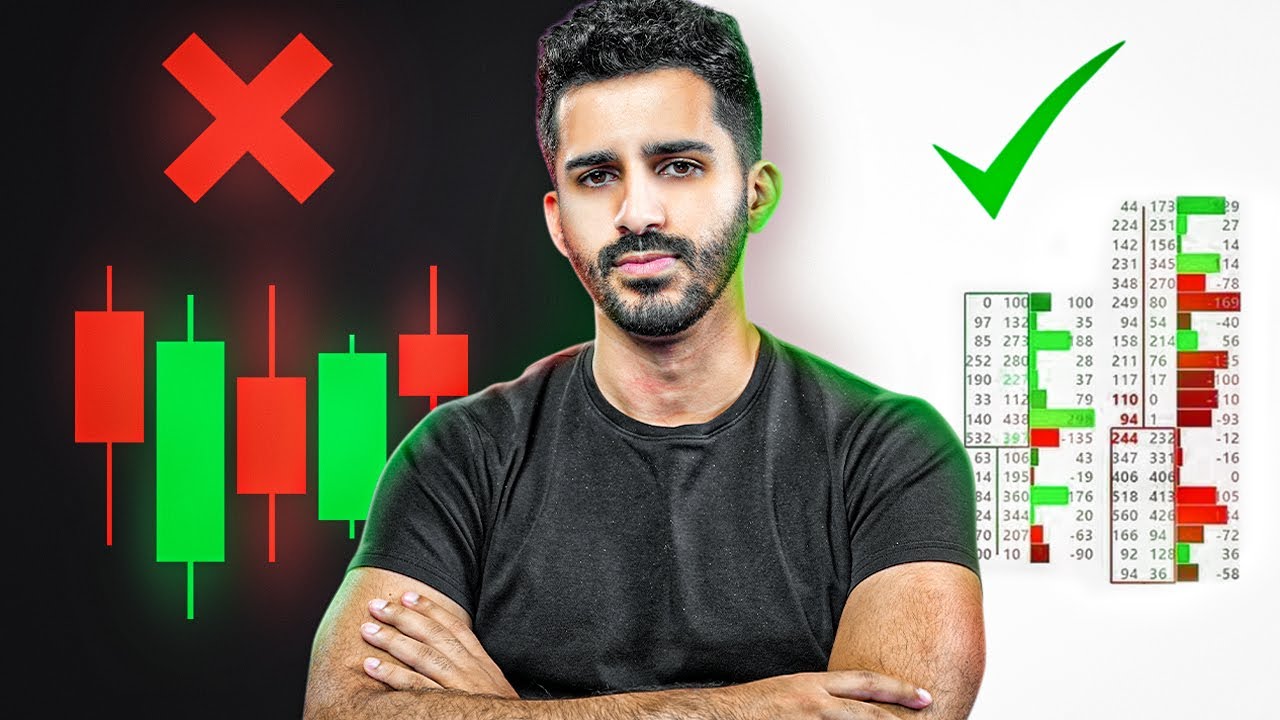
action look like just in candles uh an engulfing an engulfing candle okay definitely you would see price going slower maybe having a spike not necessarily but maybe maybe having a spike up if there's a stop run and then you would see an engulfing candle so What orderflow would give you in this situation is absolute let's say 90% certainty on what's actually going on because that's the that's the main point if if if if I want the Traders were watching us to take something out of this on orderflow and level two data is the stuff you're
trying to figure out is the same you're just getting more objective about it MH you're just getting 100% certainty that in that big Sell candles sellers are dominating because it's not always like that buyers may be dominating in a sell candle and you cannot see it it's not extremely highly likely that that will happen but there's some instances in which it does and what order flu is is giving you what you know level two data or Footprints is giving you is you're seeing what the market is doing you're actually seeing it yeah I can see
how important or imperative it is last question before we We wrap up because this has been an orderflow Master Class yeah by the way and wasn't expecting but I'm glad actually cuz it's super useful and I'm sure people are just with the just taking notes uh last question I have is obviously we did the podcast with Patrick nil who's the trading world champion on on Robins world cup two time on the leaderboard so the podcast I did with him I regret not asking it but I can ask you cuz I know you guys are Associated
and and work together um he mentioned that he's trading cfd Forex but obviously in cfd Forex there's not the order book as as we discussed so he's using order flow in Futures and then taking a decision in FX as opposed to what you're describing which is seeing the order flow in Futures and then trading the Futures why is he choosing as a world champion to trade FX still commissions purely decision this Decision is Pur base out of commission because if you're a day trader or as he defined himself intraday swing Traders so he's taking big
movement intraday okay um Commissions in Futures Robins World Cup trading championships yearly are not worth it at all zero simply because of that simply because of that in his professional world in his professional trading because he's a uh he's a portfolio manager they're managing an Actively managed certificate in remember if it's Switz or something they the trade ideas they have are executed in Futures markets because it's it's the best it's just the best there's no there's no spread markup there's a spread of course the price you pay between difference in bid and ask the best
bid and the best ask but what's the point with cfds is there's a markup on the spread so there's more spread that's why also I chose to shift From cfds to orderflow in the first place um and people should also know that right now I'm not focusing on on uh day trading anymore I'm focusing more on uh swing trading so uh my main source of cash flow isn't day trading anymore as it used to be it's more uh software uh education uh YouTube and I'm you know shifting more to the entrepreneurial side of trading or
let's say entrepreneurial side of life in the trading space and using then Microeconomics and more swing trading so all this orderflow stuff unfortunately that I was uh you know I'm it's I'm not implementing it anymore as as much well I think you're here for a couple weeks or a bit of time so I think we got to run a part twoo I I really enjoyed this episode and I know there's so much more to unpack with macroeconomics and then obviously just life in general entrepreneurship Etc so we're on a part two but epic episode bro
and I hope this One goes crazy views wise and I hope people learned a lot about Andrea thank you for joining thank you very much thank you good stuff bro that was sick man that was sick I really enjoyed that