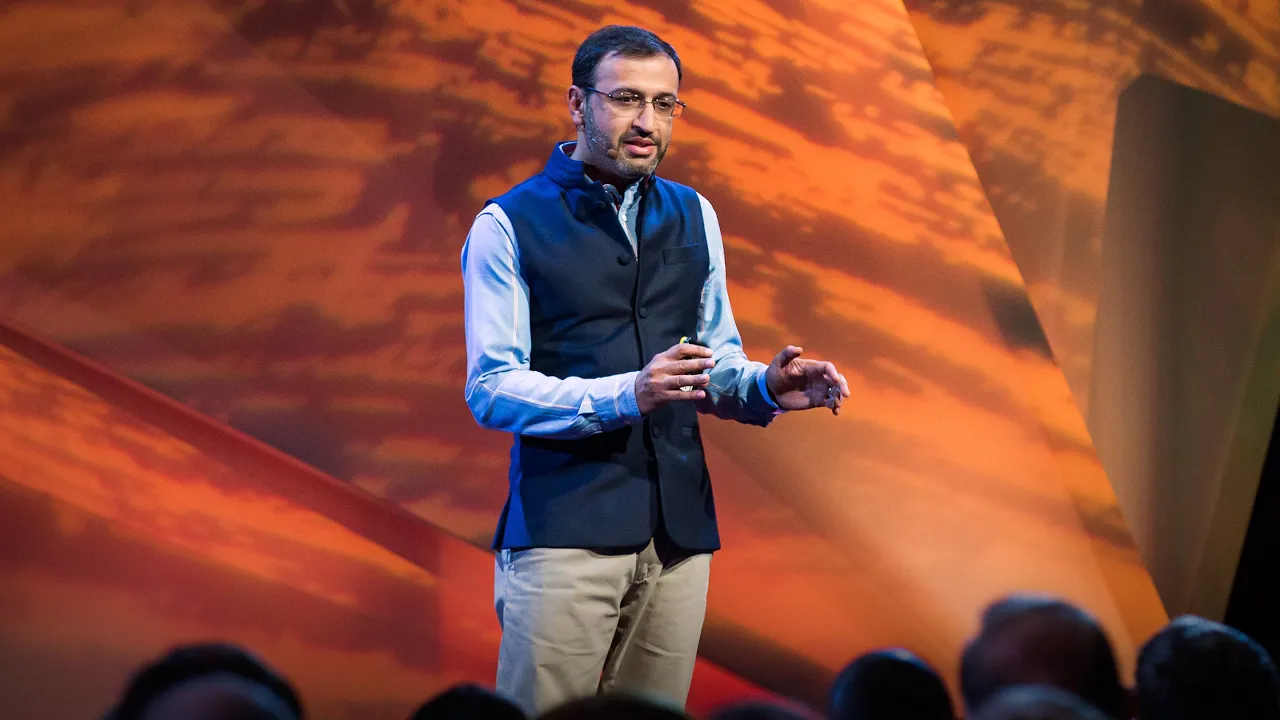
so one of the best things about my job is that I get to meet some really interesting people in fantastic locations around the world and he liked to talk to me about things really close to their heart case in point a few years ago I was having dinner with my friend Prakash now Prakash is the head of a family business when he inherited this business it was about 100 million dollars and since then he's grown it to a three billion dollar business so we were sitting in the Taj Hotel in Mumbai overlooking the Arabian Sea
having some great food some great wine it was the perfect setting for a great conversation but that day something was wrong Prakash was visibly upset so I asked him what was wrong and he said Vikram you know I've spent my life building this company it's part of my identity I have given it my all but I think the time has come for me to give it up the time has come for me to bring a professional manager to lead this company and I could tell he was really upset with this decision so I asked him
why why do you think this is the right thing to do and Prakash was well prepared for that question he said I've spent a lot of time thinking about it I've met a lot of people I've sought a lot of advice I think it's inevitable my company's become too big and my family has become too complicated it's inevitable and when I have looked at examples of family businesses from the developed world this is what they do they bring in professional managers it's inevitable I remember ending that dinner with a sense of unease I had completely
succeeded in confusing Prakash about the way forward and he had succeeded in triggering in me an interest in family businesses that has consumed me the last few years now if you think of family businesses you might be tempted to think that they are the small mom-and-pop firms but you would be mistaken in fact family businesses represent some of the largest companies in the world in the developed world thirty percent of the large companies are family businesses companies like Walmart Koch Industries Mars Cargill NewsCorp these are all family businesses and when you look at the emerging
markets between 50 and 80 percent of the large companies are family businesses family businesses are a very relevant part of the corporate landscape now there's a lot of very good research on family businesses and research from analysts from gurus from business schools and these research talks about many different things but let me highlight two that might interest you the first thing of the research talks about is the performance of family businesses okay so it talks about how family businesses focus a lot more on resilience rather than break out growth on stability rather than break out
growth so when you compare the performance of a family business with non family businesses you find that they grow slower than non family businesses they tend to be more profitable they take less debt and they do smaller mergers and acquisitions now if you think about it if you own the family business this is probably what you would do you wouldn't want to bet everything in your business on some one or two big decisions so really a focus on resilience rather than break out growth the second thing that this research talks about is the role of
the family in the family business now most families start with the family being the owner manager but then over time the role of the family comes down so they've dumped the owner manager then they become owner investors and then they become pure investors again it would seem quite logical if you had a family business and your family became really complicated and the business became really big you might be tempted to bring in professional managers to take it forward but something has always made me quite uncomfortable with this research quite often this research is an extrapolation
of the developed world being applied to the entire globe there is a class of family businesses those from the emerging markets that haven't been studied in their own light and they come from a very different context in the emerging markets rules and regulations are still evolving even the families are very different they are much larger they include the in-laws the include cousins they include multiple generations often all living in the same house and even culturally these families can be quite different in families the sense of hierarchy is much higher you don't talk back to your
parents we don't discuss many things you might talk about in other places in the world we don't talk about mortality and many topics are really not up for discussion so the context is very different so in the last few years I decided to study family businesses I took a thousand family businesses from Brazil India Southeast Asia and Eastern Europe and I asked the same two questions how do family businesses perform and how does the role of family change over time and here's what I found family businesses from the emerging markets perform and evolve exactly the
opposite exactly the opposite on every dimension that we saw from the developed world let me repeat that exactly the opposite on every dimension now I was really relieved to find that imagine doing the years of research and you come up with nothing right so now let me tell you a bit more about this family businesses from the emerging markets are the fastest growing large corporate entity in the world they grow faster than non family businesses they grow faster in good times and they grow faster in bad times the trade of profitability for growth they take
on more debt and they do significantly larger mergers and acquisitions they are pursuing breakout growth exactly the opposite and then I shifted my attention to the role of the family in the emerging markets ninety percent of family businesses are run by family members and then I say let's look at this question over the last 200 years so I went back a time and I studied the evolution of family businesses over 200 years in the developed world the role of the family in family businesses has come down with different generations but in the emerging markets the
role of the family actually even goes up in many families and in many countries exactly the opposite so now if the context is different if the performance is different and if the role of the family is different why do lessons from the developed world why would benchmarks from the developed world apply to these companies from emerging markets I don't think they do so when I meet my friend Prakash and others like him from the family businesses I asked them to chart out their own course I asked him to do many things differently but let me
highlight three that are really important the first thing I tell them is stay don't leave I don't think it's essential that every family leader of a family business should leave their business quite often you bring something distinctive to that company one of the companies I work with is in the construction industry so I asked them what is it that you bring to your company that is distinctive and gives you the right to stay here and here's what he said the victim people trust me and my family we been around for generations and this trust matters
a lot especially in emerging markets banks are willing to lend to us customers are willing to talk to us governments are willing to meet us the trust really matters he also said I know this business like it's in my DNA we talked about this business at breakfast at lunch at dinner I sleep thinking about this business we've been doing this for generations I know it so well it's a comparative advantage he also said and I can take fast decisions for the long term I don't have to worry about pleasing the analysts every quarter so if
you bring those kind of advantages to your business you should stay not leave the second thing I talked to my family business friends is to define not copy family businesses are growing really fast in the emerging markets and very soon you hit a stage where it becomes impossible for the Superman or the superwoman entrepreneur to manage the business purely on the basis of hard work and charm and charisma you have to put in place some systems and processes but quite often what happens at this stage is again we look to the large multinational corporations from
the west and we bring in place all the systems and processes and the KPIs and the committees and the meetings and the you know IT systems and you get a mess all you get is a mess you don't get the entrepreneurship that you had and you don't get this discipline that you wanted you would just get the mess what companies and family businesses need to do at this stage is really define their own ways of working when you can combine the Entrepreneurship that you need in some places and the discipline you need in some others
one of the families I work with is in the shipping industry and that family has an instinct for when and where and how to buy ships it's a big decision and they know how to get it right now imagine putting a committee on that decision with 12 people sitting around who have not done it before and are learning on the job that is going to create a mess you know someone actually said a donkey is a horse designed by a committee right so in this family you want to let them be entrepreneurial on these decisions
and bring the discipline somewhere else define your own ways of working the third thing that I think about and this is probably the most important to me is stewardship not greed leading a family business is hard work you have to deal with the emotions of the family and the complexity of the business it requires a special quality of leadership apart from the core instances of leadership and entrepreneurship you need this quality that I like to call stewardship it's the quality of patience of generosity of equanimity it's the quality of putting a sense of purpose before
the sense of pure greed and money and wealth creation family businesses faced a lot of turmoil specially around succession and transition now most families put in place governance rules and family constitutions and you certainly need them and they are certainly useful but they are not sufficient what you need in addition to that is this quality of stewardship and a sense of values that says we are building something for the future we are trustees for the future we are doing this for a purpose not just for our wallets stewardship I continue to meet Prakash Prakash his
business continues to grow and thrive he is doing exceedingly well still at the helm of his business I strongly believe family businesses are going to be the growth champions of the future in industry after industry you see family businesses from the emerging markets becoming market leaders they're taking over the world they're here to survive they're here to thrive but only but only if they recognize their distinctiveness but only if they choose the right benchmarks but only if they chart their own course thank you


![Someone paid an equivalent of $2000 for this in 1914 [Restoration]](https://img.youtube.com/vi/rw_8FWJuSho/maxresdefault.jpg)