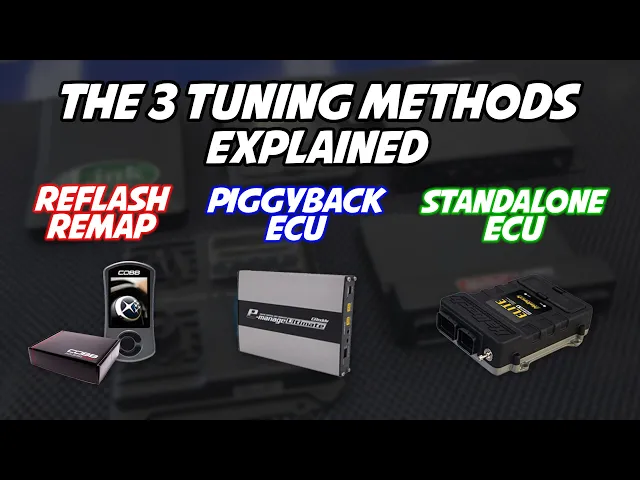
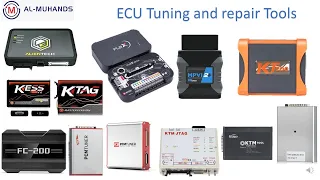
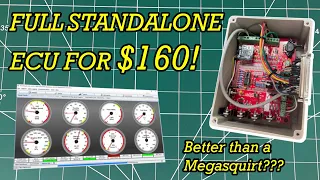
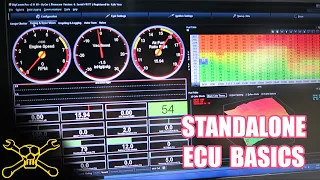
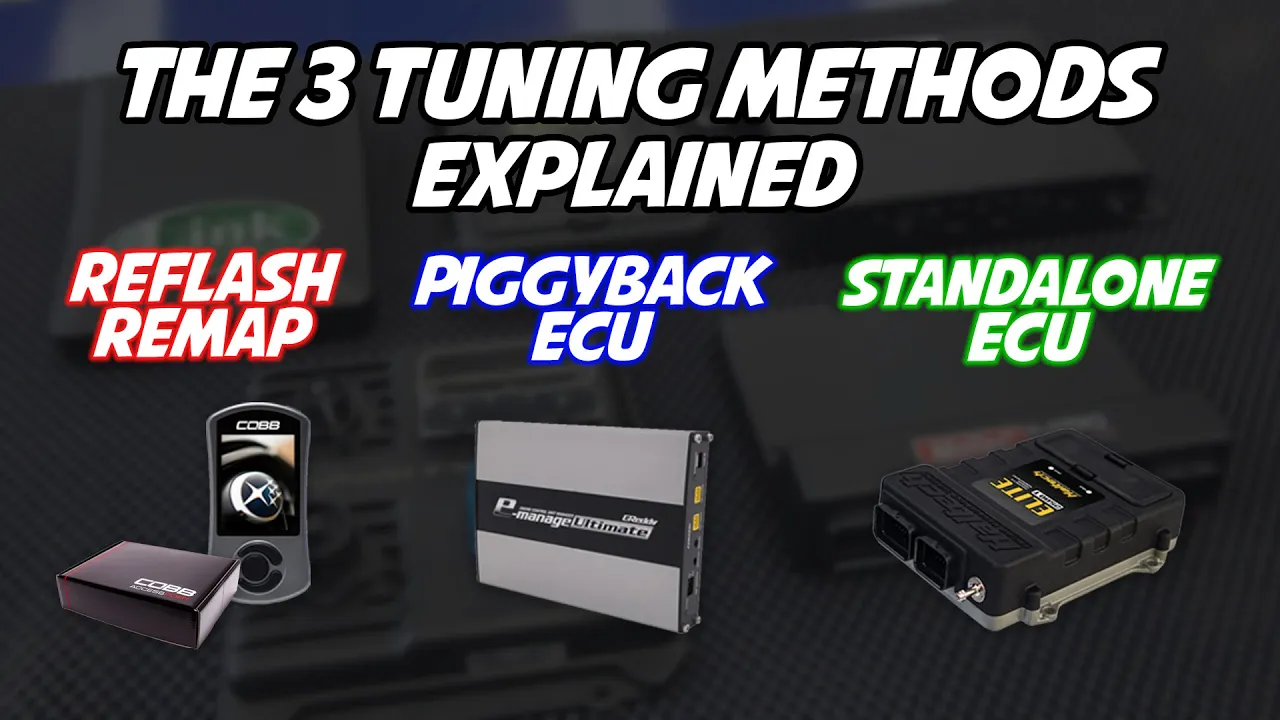
hey guys welcome back to the channel Jason here in this video we'll be going over what are the differences between flashing your ECU installing a piggyback ECU and a standalone ECU as well as their pros and cons let's get right into it so before we can dive into their differences we need to First catch up on what exactly an ECU is the ECU or engine control unit is a computer that basically reads data from a bunch of different sensors and uses that data to control different components on the engine like the fuel injectors throttle body
spark plug timing and Etc in order to make sure that it is running as optimally as possible it does this by using a lookup table which is essentially an array of data arranged in a table that Maps an input value to a corresponding output value for example if the input is let's say 10 pounds of boost the output will be to inject a specific amount of fuel for a given RPM these lookup tables or maps are what basically determine how your engine will run and is the main thing tuners will try to manipulate in order
to extract the best performance out of your vehicle of course I am massively oversimplifying and it's so much more complicated than that but that's generally how an ECU Works leave a comment down below if you want a more detailed explanation of how they work before we dive into the three methods I should leave the disclaimer that this is a very general explanation as the case differs from vehicle to vehicle as well as the brand and age of the ECU as per usual always do your own research for your own specific vehicle and what goal you
have in mind with it anyways back on topic from the factory a lot of engines tend to be detuned by the manufacturer in order to maximize the reliability of the engine as well as to increase fuel efficiency and possibly leave room for a higher performance model so that not many changes would need to be made aside from a different tune this detuned state leaves room for aftermarket tuners to maximize the engine's capability especially on boosted engines and in order to maximize that capability they need to be able to modify the parameters on the map or
lookup table of the ECU there are three main methods of doing this reflashes or remaps piggyback ecus and Standalone ecu's let's dive into what each one of them are so what is reflashing exactly when you flash or remap an ECU you're basically editing the map tables or the parameters of the ECU and this is usually a permanent job unless you have a backup of the original stock map aside from that the gains from this usually depend on the capabilities of your stock ECU ecu's made today are quicker and much more advanced in comparison to ecos
from the early 2000s or even the early 2010s additionally not every car can be flashed especially if it is an older car if you have a modern car however there are plenty of platforms you could use ranging from ECU Tech cop HP tuners hondata and many more open source tuning platforms like ROM Raider these platforms usually Flash the ECU through the OBD2 diagnostic port meaning that cars before 1996 to 1997 aren't compatible with this method alternatively some tuners are able to alter the stock maps by taking out the stock ECU and manually reflashing the ECU
by connecting specific pins on the support this is also known as bench flashing and it takes a significantly longer amount of time than the OBD2 method however it is the only option available for some exotic or European cars despite that though this is still the cheapest method when compared with the other two we'll be discussing next some very modern OEM ecu's are very powerful and aftermarket tuning companies can unlock Extra features such as anti-lag searchable field maps and Driver adjustable launch control like with cop's access port and burger Motorsports jp4 tool these features used to
only be available on Standalone ecus but now they're becoming more and more readily available on OEM ecu's causing piggyback issues to become a little more irrelevant foreign speaking of which piggyback issues are basically easiest that run in tandem with the stock ECU and it Alters the tune by modifying the sensor data received by the stock ECU modifying the sensor data causes the ECU to make adjustments which then allows tuners to squeeze as much performance out of the engine for example let's say the stock ECU targets 10 psi of boost so it tells the boost solenoid
to run at 20 duty cycle this creates about 10 psi of boost which the ECU then reads through a manifold absolute pressure sensor or map sensor the ECU receives this 10 psi signal from the map sensor and adjusts the fuel and timing accordingly when the piggyback ECU is installed the map sensor is connected to the piggyback ECU before the stock ECU the piggyback ECU changes that 10 psi signal into an 8 PSI signal the stock EC reached that the pressure is only 8 PSI instead of the targeted 10 psi so it tells the boost solenoid
to increase the duty cycle the actual boost then increases to 12 PSI and this data is sent to the piggy bank ECU which turns it into a 10 psi signal for the stock ECU to interpret the ECU reached that it is requesting and receiving 10 psi of boost despite it actually receiving 12. this is also how the fuel timing and other parameters are adjusted nowadays piggyback is used aren't as common as the ones were thanks to the advancement in reflashing as well as Standalone ecus but certain products like the greedy emanage ultimate are making a
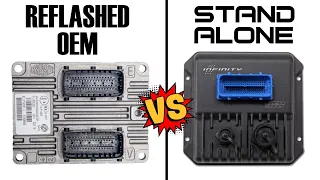
Resurgence thanks to its ability to add additional injectors if necessary however piggyback ecos only have so much parameters that they can adjust and a limited resolution and often they aren't able to communicate with the can bus system on most vehicles additionally this method requires splicing to stop harness meaning that this is also irreversible this is where Standalone ecu's come in Standalone is used completely replace the stock ECU for an aftermarket computer that usually has more inputs and outputs a faster processing speed and Etc when Standalone ecu's first came to the aftermarket scene they were often
Universal not plug and play nowadays many Brands offer plug-and-play Standalone ecu's that hook right up to the stock ECU harness while also allowing can bus communication this allows us to use the buttons on the car to adjust mapping boost levels and etc for example we could use the drive mode selector if available to adjust which tune we want to run with Standalone easy use the sky and your wallet are pretty much the limit as there are incredibly Advanced units out there on the market with tons of features that you might not even really use when
building a regular streetcar or daily as such Standalone issues are often reserved for high horsepower builds unique one-off conversions and racing applications as they are also incredibly costly with that being said let's go over the general pros and cons of each tuning method so reflashing on ECU is the easiest out of the three to perform as it can be done directly through the OBD2 port or by flashing the ECU chip it also retains full functionality of the factory gauges sensors buttons OBD2 port and Etc while also being the cheapest option however it is also the
most Limited in terms of adjustability and features as it greatly depends on your stock ecu's technology you're pretty much capped by your own ecu's limitations and not all issues are compatible with a piggyback ECU it is easier to set up than a standalone ECU but harder than doing a simple reflash as it requires splicing of the ECU harness which is of course an irreversible procedure unless if you get an entirely new wiring harness however running a piggyback ECU in tandem with your stock ECU means you get to keep all of the functionality and features of
your stock ECU which may be important to some this option is obviously more expensive than a reflash but not as expensive as a standalone ECU thus making it the happy medium between the three options while also offering more adjustability and features than the reflash but not as many as that of a standalone unit moving on to Standalone ecu's they are the most complicated to install with the exception of Plug and Play ecu's since they plug right in if you get a universal one you'll have to reverse engineer the harness and figure out which pins go
to which pin out which is time consuming and tricky if you don't know what you're doing additionally they may have issues communicating with the factory gauges buttons OBD2 port NX cetera although there are acceptance to this as usual do your own research and check if a specific unit will be compatible with all of your car's features before purchasing one as it is also the most expensive option by a long shot often raging in the thousands of dollars with this cost however comes a near infinite range of options and features that you might not even end
up using stuff like boost by gear Advanced traction control as well as a higher resolution when tuning the map tables on the ECU this is the sole reason why so many enthusiasts choose them despite them appearing to have more downsides compared to the rest if you look at this table again and I cannot stress this enough always do your own research and have a clear goal with your car if you just want to increase your daily driver's performance on a budget a refresh should be more than plenty but once you start having goals of four
digit horsepower or 7 second quarter mile times you may start having to consider a standalone ECU with that being said hope you guys found this video helpful if you did please do leave a like as it helps me out a lot and leave a comment down below which one you're running or planning on running in your car lastly do subscribe to keep up to date with more content like this as that helps me out a lot thanks for watching and I'll see you guys in the next video stay safe foreign