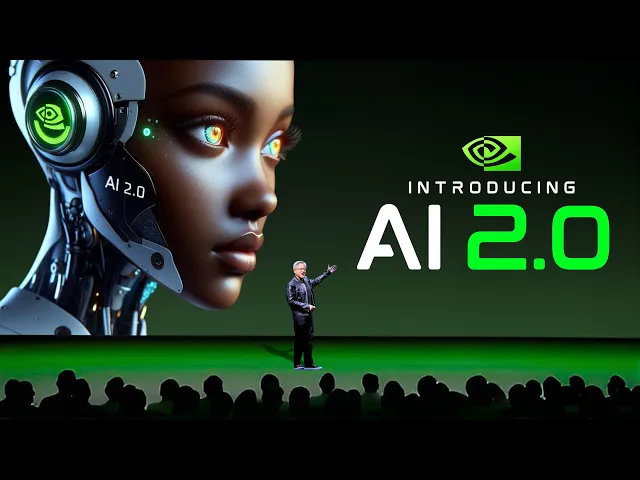
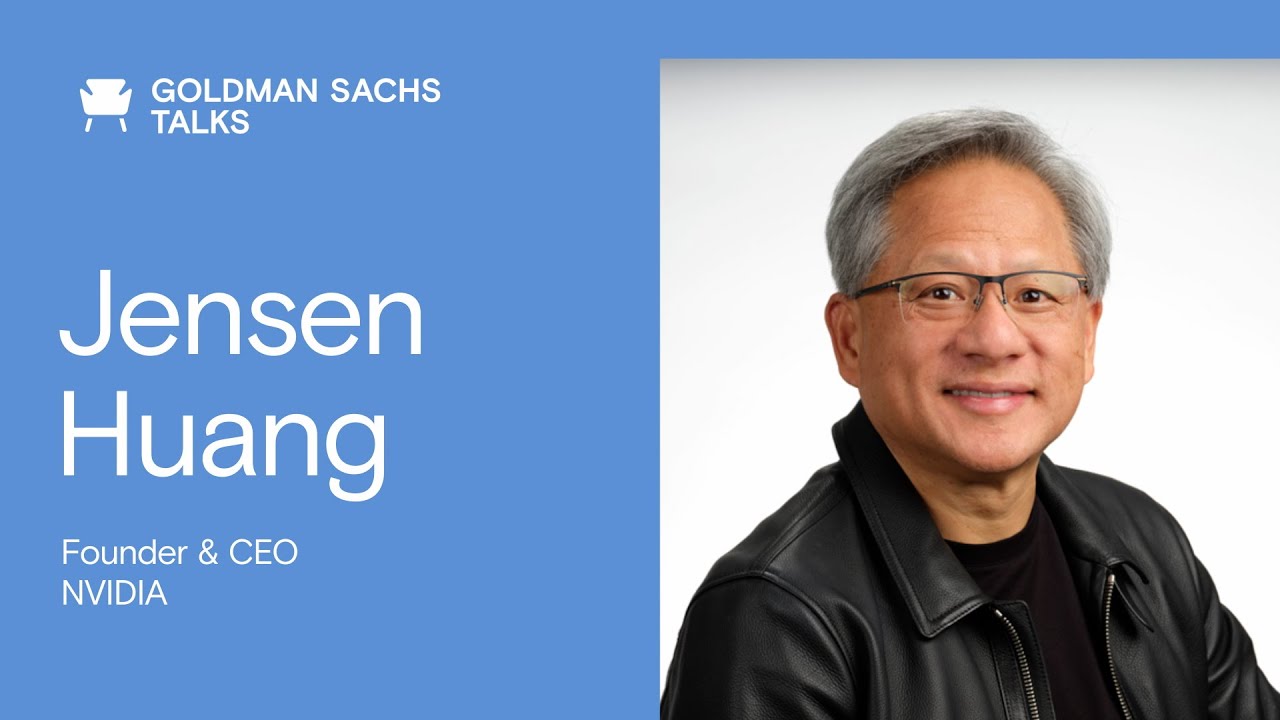
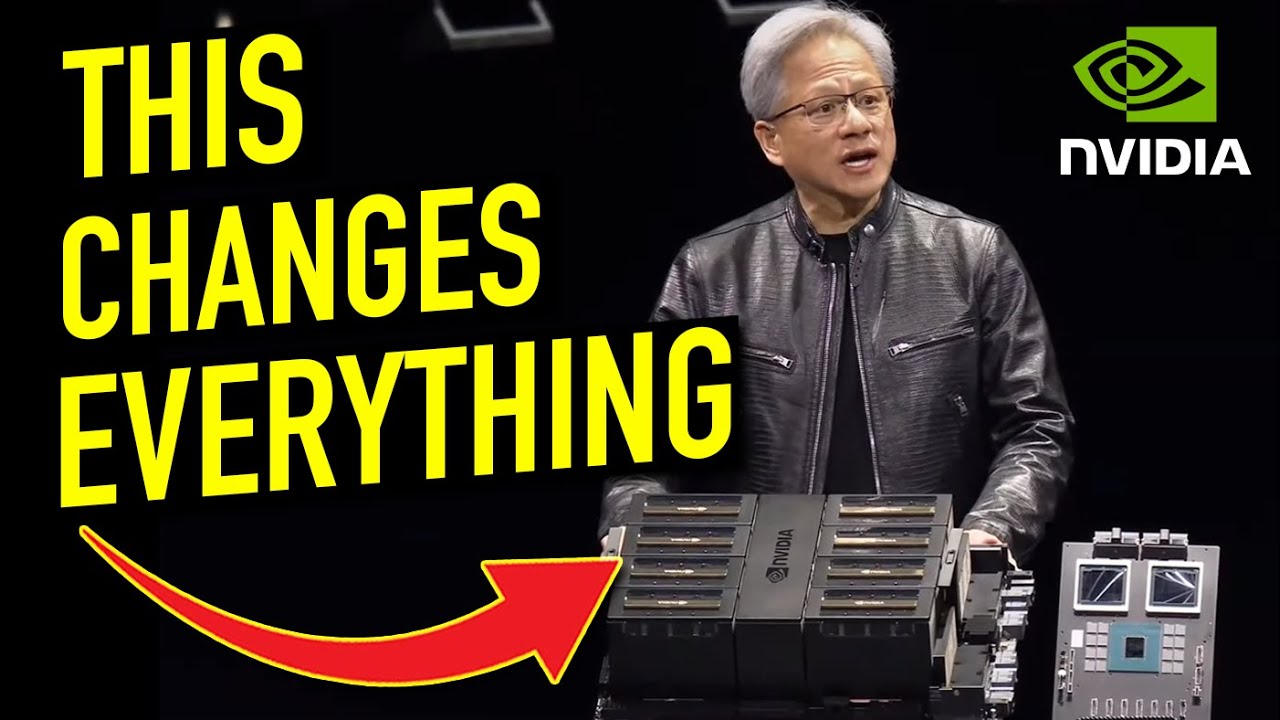
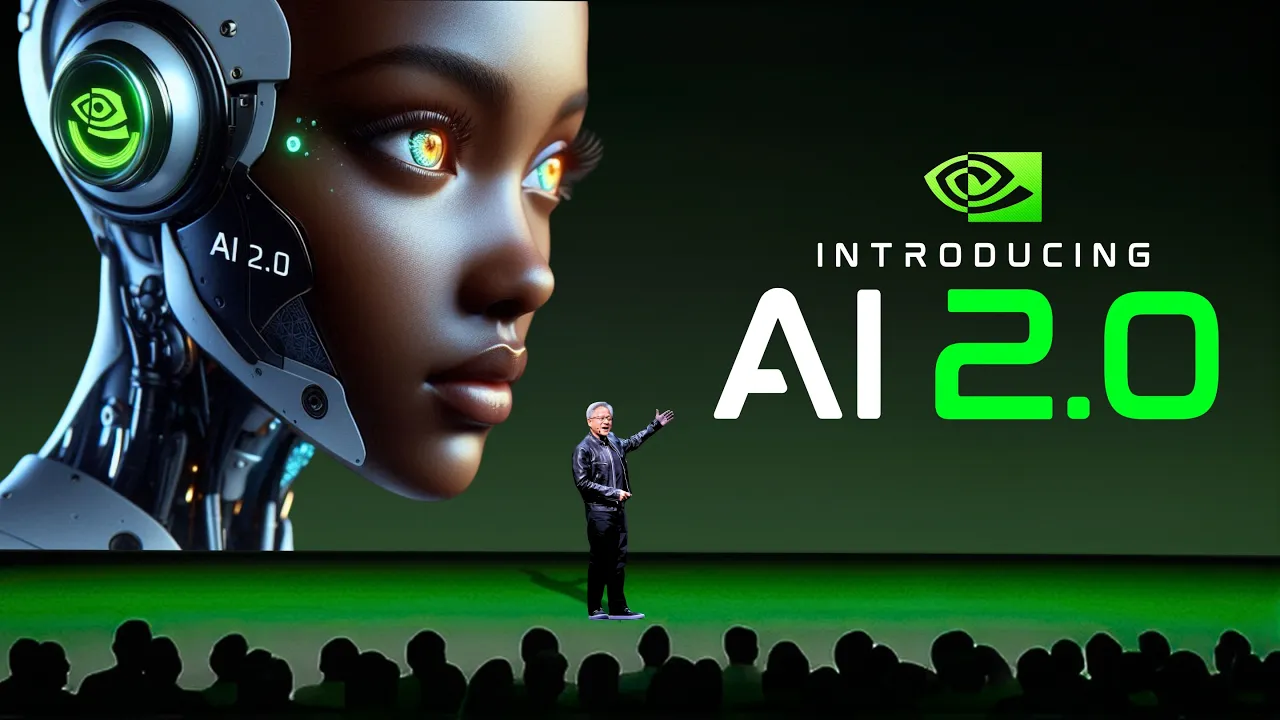
what if AI didn't just respond automatically but could actually think things through that's the future Nvidia CEO Jensen hang recently outlined at an AI Summit in India and it's packed with potential game changers intelligence is not just one shot but intelligence requires thinking and thinking is reasoning and maybe you're doing path planning and maybe you're doing some simulations in your mind Nvidia is already a leader in AI technology but the Innovations hang revealed are set to push the boundaries even further by 2025 these breakthroughs could redefine how AI functions in our daily lives the workplace and Beyond in this video we'll dive into nvidia's vision for the future exploring how autonomous agents physical Ai and advanced decision-making capabilities are set to reshape everything we know about AI let's get into it one of the most interesting parts of hang's address focused on something called inference time we've now discovered a second scaling law and this is a SCA scaling law at a time of inference which might sound technical but it's actually how AI thinks before it speaks this is not illogical this is very very intuitive to all of us nvidia's new AI models are being designed with two levels of processing that work together which Wang calls system 1 and system 2 Thinking system one thinking is immediate and automatic like when you answer simple questions without needing much thought if you were to ask me what's my favorite uh Indian food I would tell you chicken briani okay and I don't have to think about that very much and I don't have to reason about that in cases like these the AI doesn't need to process a complex answer it simply retrieves known information in seconds this reflective response system keeps things fast and snappy for straightforward questions and tasks system 2 Thinking on the other hand is all about taking time to process and reason and I give it all kinds of constraints about what time I'm willing to leave and able to leave what hotels I like to stay so on so forth uh the people I have to meet the number of permutations of that of course uh quite high and so the planning of that process coming up with an optimal plan is very very complicated this is where AI begins to handle more complex tasks requiring it to weigh options and consider multiple steps before providing an answer for instance let's say you're planning a multi-stop trip from Mumbai to California with specific timing and budget preferences you know for example if I had to travel from Mumbai to California the AI would analyze different routes assess layover times and find flights within budget to create the best itinerary it's like Consulting a travel agent who's considering all the factors you've provided instead of just giving a basic answer so what does this dual processing approach really mean for us essentially it allows AI to adapt its response style based on the task at hand reflexive answers are fast while more complex answers are richer and more detailed this enhanced inference model could have a huge impact in areas like customer service Logistics and Healthcare where the quality of the answer often matters more than its speed it's a fundamental shift from how AI interacts making it adaptable to different situations and more useful across various Fields but this approach also raises a few challenges system 2 Thinking can take extra time which may not suit every application what hotels I like to stay at so on so forth uh the people have to meet the number of permutations of that of course uh quite high and so the planning of that process coming up with a optimal plan is very very complicated for tasks that require immediate responses like highfrequency trading or certain customer service scenarios this deliberative approach might be too slow nvidia's enhanced inference model has impressive potential but finding the right balance between quick responses and complex reasoning will be critical for its success hang also shared a bold prediction that autonomous AI agents will be commonplace by 2025 transforming how we work and interact with technology this is a time now where the large language models and the fundamental AI capabilities have reached a level of capabilities we're able to now create what is called agents but what exactly are these AI agents in simple terms they're self-operating AI programs that can handle complex tasks without needing human supervision every step of the way imagine having an AI co-worker who can assist with data analysis manage customer support or even create marketing campaigns on its own Nvidia is developing a foundation for these agents through two major platforms but on top there are two very important platforms that working on one of them is called Nvidia AI Enterprise and the other is called Nvidia Omniverse Nvidia AI Enterprise allows companies to train and customize these agents for specific roles while Omniverse acts as a virtual environment where these agents can learn and test their skills in realistic simulated settings Wong refers to this entire process as the agent life cycle enable agents to be created onboarded deployed improved into a life cycle of Agents which covers everything from training these agents to deploying them within a company but that's not all Nvidia has developed Nemo and so this is what we call Nvidia Nemo we have um on the one hand the libraries on the other hand what comes out at the output of it is a API inference microservice we call Nims a suite designed to manage and control these AI agents just like any employee with Nemo companies can train agents on particular tasks set guard rails to keep them focused and even evaluate their performance for instance if a company wants an AI agent dedicated to customer service Nemo can ensure it doesn't accidentally cross over into tasks meant for a finance agent this structured approach not only not only keeps the AI agents on track but also allows companies to fine-tune them for specialized roles so what could this look like in action imagine a logistics company using AI agents to manage their entire supply chain from tracking shipments to optimizing delivery routes or consider an e-commerce site where autonomous agents handle customer queries recommend products and even write promotional content these agents can be molded to suit various roles providing companies with flexible and reli Digital support that saves both time and resources but while the possibilities are exciting there are some potential downsides autonomous agents may be efficient but they lack human empathy and context which can be crucial in certain roles especially those involving sensitive customer interactions additionally there are concerns around data privacy as these agents will need to access vast amounts of information to operate effectively if not properly managed these agents could misinterpret data or make impersonal decisions which could harm a company's reputation as promising as these autonomous agents are the transition to a workplace populated by digital co-workers comes with challenges that companies will need to consider nvidia's vision for AI doesn't stop at digital tools and software those that next generation of AI needs to understand the physical world we call it physical AI Wang sees a future where AI has a physical presence in the form of humanoid robots and other physical devices this shift towards physical AI is about creating machines that can interact with and impact the real world whether it's a robotic arm in a factory or a humanoid robot capable of handling more complex tasks to make this vision of physical AI a reality in order to create physical AI we need three computers and we created three computers to do so Nvidia has developed a three-part infrastructure to support it the dgx computer Omniverse and Jetson agx the dgx computer is where the heavy lifting happens training AI models with vast amounts of data to help them learn once trained these models move into Omniverse nvidia's virtual simulation space where they can test and practice their skills in a controlled environment that mirrors real world physics here the AI models learn how to handle physical interactions safely and effectively after completing their training in Omniverse these AI models are then deployed into physical robots or devices via Jetson agx this final stage is where things get really interesting as the AI can now be used in everything from self-driving cars to robotic arms on an assembly line to even humanoid robots that interact with customers in stores the goal is to bring AI into the physical world in a way that allows it to handle real tasks and make practical impacts on Industries ranging from Logistics to retail but of course this shift isn't without its own issues the idea of physical AI raises questions about Job displacement especially in sectors where robots could take over manual roles and while robots offer incredible Precision errors could still occur leading to costly or even dangerous consequences in environments like factories nvidia's vision for physical AI is ambitious aiming to redefine what's possible with robotics but it also emphasizes the need for careful implementation to avoid unintended risks nvidia's vision for physical AI isn't just about robots working in isolation it's about transforming entire industries that rely on large-scale production with AI empowered robots Industries like manufacturing transportation and warehousing stand to see major changes these robots trained in nidia's Omniverse virtual world are taught to perform complex tasks in realistic simulated environments once ready they're deployed to real world settings like warehouses where they can sort and transport Goods or assembly lines where they can handle in intricate production processes with precision and speed autonomous vehicles too could benefit from this training with self-driving techniques gaining Real World experience in a risk-free virtual space the use of digital twins is another breakthrough Nvidia offers to these industries by creating exact digital replicas of factories or Supply chains companies can simulate and test changes before implementing them physically this approach optimizes operations reduces potential downtime and improves overall efficiency digital twins allow companies to run scenarios to identify bottlenecks or areas for improvement Saving Time reducing errors and ultimately cutting costs in short nvidia's physical AI has the potential to reshape how Industries operate blending digital Precision with real world impact Jensen hang often describes nvidia's Journey as a shift from software 1. 0 to 2. 0 for 60 years software 1.
0 code written by programmers ran on general purpose CPUs then software 2. 0 arrived machine learning neural networks running on gpus this led to the Big Bang of generative AI models that learn and generate anything the term software 1. 0 refers to traditional code written by programmers and run on CPUs software 2.