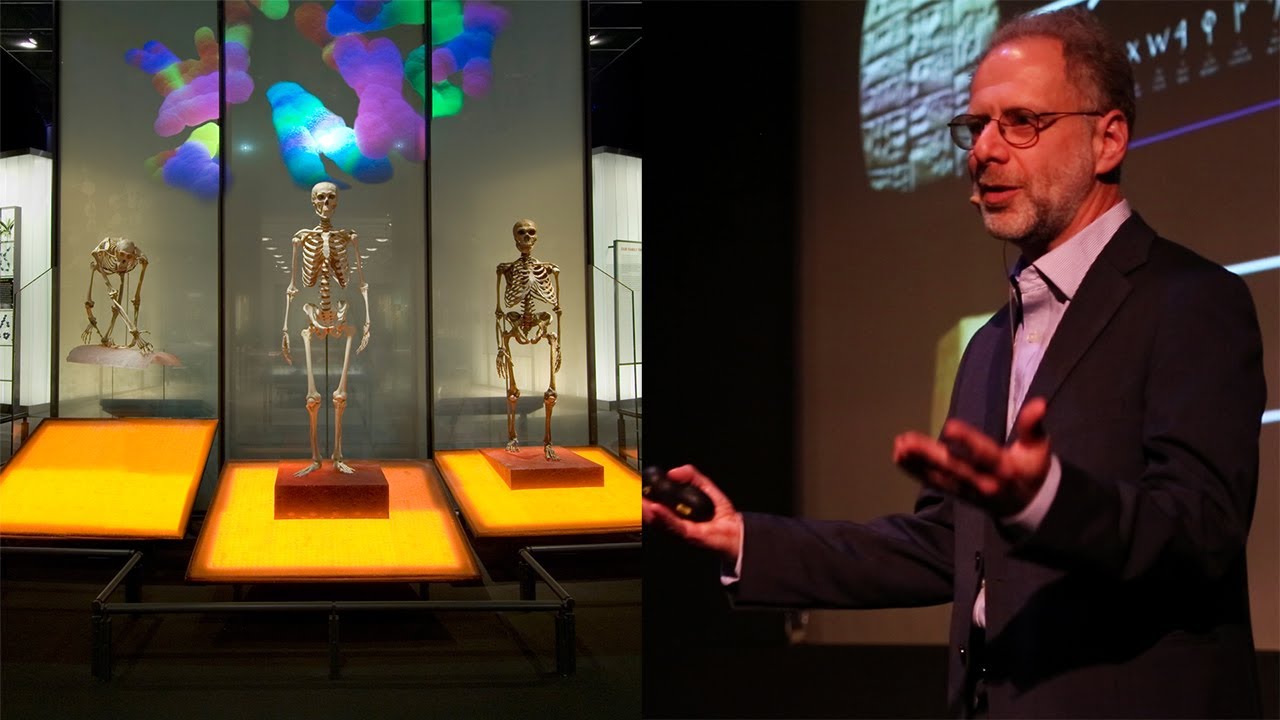
Each year Microsoft Research helps hundreds of influential speakers from around the world including leading scientists renowned experts in technology book authors and leading academics and makes videos of these lectures freely available thank you for coming my name is Kevin Koontz and I'm here to welcome Daniel Lieberman to the Microsoft Research visiting speaker series Daniel is here Today to discuss his book the story of the human body evolution health and disease the human body is undergone numerous changes over millions of years while all this evolution certainly brings benefits such as greater longevity it has also helped
create conditions our bodies can't handle like obesity and type 2 diabetes Daniel Lieberman is professor of human evolutionary biology and the Lerner professor of biological sciences at Harvard he is well known for his research on the evolution of the human head and on running especially barefoot running his research and discoveries have been highlighted widely in the media please join me in giving him a warm welcome thank you so much it's a real pleasure to be here now if I stand here will I be able to is okay okay and can you okay I guess I'm
liked okay so first of all thank you for inviting me it's a kind of an honor a pleasure and Kind of I find it a little bit bizarre to be here at Microsoft a sort of fabled place I spend a lot of place where a lot of time working in parts of the world where computers don't even exist so it's fun to come to the other extreme in fact we try to bring computers every summer to the places we work at in in Africa so it's fun to experience this amazing amazing place so I'd like
to talk about a question or actually a pair of questions that have evolved over the Last 2000 years since I've been teaching human evolution when I when I first started teaching human evolution I was pretty much fascinated with and and focused on telling the story of the human body in terms of the family tree you know who begat whom you know teaching students about Australopithecus afarensis and africanus and Homo habilis and Homo erectus and all that kind of stuff and the dates and who found them and over the years I've become more and More interested
not so much in in that story but it rather the story of how the body itself has changed and also why that's relevant and and a large extent to a large extent that's because of the questions that my students asked after all most of them don't become like me professors most of them go on to become doctors or or software engineers or whatever and they're they're not going to remember the minut differences Between one species or another species but they all have bodies and they all use their bodies and they all care about how other
people's bodies are functioning and so so my book really is an attempt to try to answer two questions which have sort of risen over the years in my and my teaching and one is and my research which is why is the human body the way it is and the second is why is that relevant today why should we care about that evolutionary history I'm going to try to very briefly summarize some of my thoughts and the first 150 or so pages of the book actually tells the the evolutionary story of the body and obviously there's
no way I can do that in a 35 40 minute lecture let me just briefly summarize that there I've see at five major transformations that really allowed that really caused our bodies to to diverge from us simply essentially I sort of chimpanzee like creature around 6 Million years ago after the bodies that we have today and the first one was the origins of bipedalism so our very first ancestors appear to have been bipeds but but Apes Apes that basically walked on on two legs and then excuse me another major shift occurred around 4 million years
ago with the genus Australopithecus so some of you have heard of Lucy for example she was a very famous australopith excuse me and she was adapted to more open habitats into Eating diets other than just fruit all day long because chimps for example that basically all they do eat is eat fruit 90% of their diet is fruit then around two two-and-a-half maybe even three million years ago it starts there is a shift to hunting and gathering right with the origins of the genus Homo brains get bigger people start cooperating they start processing their food they
start running they start throwing modern bodies more or less Evolved then but that wasn't the end of evolutionary bodies because the descendants of Homo erectus got grew even bigger brains and even larger bodies and slowed down their rate of reproduction and and probably became fatter and all kinds of other transformations and the final major shift was actually just a small one from an evolutionary perspective it's the origins of our own species right Homo Sapiens and we're basically very much like Neanderthals and other archaic human cousins except we differ primarily above the neck but of course
what happened above the neck in in humans especially in our brains and our ability to communicate through language had major effects on of course the entire world and still is today so those are that's like a five-second you know and maybe a five-minute intro to everything that happened in human evolution but now Let's move on because let's just assume we've read all those chapters you understand it all and let's think about the consequences of those shifts and the important point is that you stand back from all those five transformations each of which was an improbable
event prompt many of them driven by climate change if you stand back what we end up with is a creature like us that was evolved to be bipedal slightly fat so typical chimpanzee or typical ape has about five Or six percent body fat but even lean human beings so hunter-gatherers or supermodels have maybe 10 or 15 maybe even 20% body fat so we're very fat species compared to most most mammals were furless we're sweaty we're big brained were dependent on tools but of course the other factors that we're very interested in today is our diet
and activity adaptations right so we're adapted to eat a diet that's very high in fiber and low in Carbohydrates but we're also adapted to crave energy right so we love sugar we love fat we love starch we're also adapted to be highly physically active I'll show you some data that in a second but we also adapted to enjoy comfort and to enjoy rest whenever possible and it's these transformations of course that are very important in today's world so humans didn't stop evolving when we evolved when our species evolved around 200 250 Thousand years ago evolution
has been continuing and it's even going on today after all natural selection is the outcome is the emergent property of heritable variation so variations that you inherit from your parents and differential reproductive success that's related to those variations so individuals with with variations that cause them to have fewer offspring or more offspring then result in change from one generation to the next in terms Of the percentage of those jeans and so it's still going on there's actually evidence for natural selection going on today like one of the biggest studies I was talking to somebody here
from Framingham one of the biggest uh DS going on today is the Framingham study where people are actually documenting selection that's occurring right now in our in our lifetime but so although natural selection is still going on anybody with who you know space aliens Came to the earth and were to observe us for a while what they what they most notice about us is our culture right our cultural behaviors and and there's another form of evolution that's going on that's also incredibly important it's cultural evolution right so cultures essentially what we learn you also inherit
culture from your parents but you learn it from each other or from the internet or reading a book or going to a lecture and cultures change over time They change very rapidly just think about the last 5,000 years or so of changes in texts and script right it's it's been amazing transformation and a lot of it going on right here and Microsoft is is still still still being transformed in fact you know probably what makes this such an important companies its its role in cultural evolution if you really think about the what's with the Internet
age so it's a very important force and but if you Stand back from the details of what's gone on since our species have evolved I would say there's two really big transformations that so stand out again this is very broad brush right the first of course is the origins of farming the Agricultural Revolution which actually happened seven times independently the first first incidences of Agriculture about 10,000 years ago in the Middle East also at the same time in China but elsewhere in different parts of the World and of course that transformed the world in terms
of the food that we eat right we get a lot more food so we have much larger population sizes but also people start living in in cities and towns and and surrounding themselves with their own waste products and and interacting with animals and getting diseases so along with more food and more people also came a lot more infectious diseases then the other sort of huge transformation was the origins Of the Agri conduct really evolution as well as modern science right those happened hand-in-hand they were they're interrelated and through industry we've been able to generate more
food of course there's been incredible population explosion and at first as cities started to swell infectious disease rates went up even more but then with the invention of sanitation and antibiotics and and various other aspects of modern medicine we've now Become able to combat many of those infectious diseases that were unleashed initially by the Agricultural Revolution and then and then became even more important during the industrial revolution so arguably today is the healthiest era in human history and let me give you a few bits of information to try to convince you of just how how
good good it is today so one important fact is or measure of health is infant mortality so today in developed Countries such as the United States infant mortality rates are less than 1% but that's actually very unusual for most of the human evolutionary history we know that during the Paleolithic infant mortality rates were pretty high we can measure them in hunter-gatherer populations we can estimate them from population size estimates from the fossil record and when farming evolved although people had more offspring because they were able to have them more Rapidly infant mortality rates were still
extremely high about 30 to 40 percent is a reasonable average of course there's a lot of variation around these numbers and it's only been very recently again as I said really since the invention of penicillin antibiotics that infant mortality rates have plunged to the rates we have today adult mortality has also changed so if you survive childhood it turns out that many people think hunter-gatherers live Horrible nasty brutish lives it's not true if they survive childhood actually they live to be pretty old they live to be into their 60s to their 80s and it was
with the origins of farming that mortality rates started to plunge precipitously as people then started dying from all kinds of infectious diseases and malnutrition and famine and all those things that that that affect farmers and it's only again since invention of modern medicine and Sanitation and various other wonderful things that again mortality rates have climbed back up again and actually we're not too different from our politicans esters again if you discount in mortality that occurs during childhood so the end result of this of course is growth in world population right so the world was pretty
unpopulated until the origins of farming then it started increased very slowly this is billions here by the way and of course with the Industrial Revolution there's been an incredible accelerated increase in population today the world has more than seven billion people and I guess the best estimates are for by the end of the century you should have more than nine billion people on the planet so so all this of course is as a result of lots of people having lots of babies who survive but there are other ways of measuring health a good one is
stature so all of us have A certain genetic potential to grow to idea there's many many genes which influence how tall you're going to be but not of all so all of us reach that height because of usually insults to our growth right so if you have infections or malnutrition or other problems you don't actually reach your your your your your genetic potential so height actually turns out to be a really useful measure of overall health and so this is a graph of height of males in Europe I've actually taken French male since the Napoleon
and this guy over here and these are European Paleolithic males and you can see that during the Ice Age during the during the Paleolithic people were about 5 foot 8 inches in Europe then during farming again health declined precipitously around the world people shrank down to about 5 foot 4 and here's Napoleon and we all know a famous shrimp and then and then height started to increase again with the Industrial Revolution and now actually we've not only caught up with but we they can slightly exceed it even in France their Paleolithic ancestors so the average
Frenchman is now 5 foot 10 Homo erectus varied a lot in height depending upon where they were so that Homo erectus is a species that evolved around 2 million years ago and served and died out well when extinct in different parts of the world there are ancestors in Africa for example Homo Erectus was pretty tall but there are examples of homo erectus populations in some parts of the world that really worth much shorter like for example in the Caucasus they were quite short so there's a lot of variation height in the Paleolithic just as there
is today a lot of that of course driven by selection but the important point is that although health is doing really well today by many markers we could also clearly be doing a lot better and the way of the Best way the caps encapsulating this is what's called the epidemiological transition and some of you may have heard of this but if you just stand back from the last few hundred years and look at what has happened recently we know that there's been a incredible decline in in death and illness that comes from infectious diseases as
well as malnutrition right so our ancestors were much more likely to die of plague and smallpox and tuberculosis and infectious Diseases such as that so those those diseases now most of us don't even worry about that anymore right but but what's but what's risen in concert with that is is non infectious diseases so today we die from cancer and from heart disease and osteoporosis and type 2 diabetes and various autoimmune disorders these are all on the rise and there's actually a lot of evidence that they're on the rise and some of you have seen these
famous graphs I mean this one Is is plastered all over the place it's very hard to go anywhere without seeing graphs about the the shift in in obesity around the world but suffice it to say that during my lifetime the percentage of people in the United States who are obese has more than doubled along with that has been a rise in a whole series of other diseases such as type 2 diabetes which is going up in the US and also going up and it even faster rates in many developing countries such as China or India
where where diabetes rates are climbing at at really alarming rates breast cancer the list goes on of non-infectious diseases whose incidence is going up I'm not talking bout death from these disease I'm talking about the incidence of these diseases and there's a whole series of other diseases that people are getting to like myopia and cavities and lower back pain and flat feet and various mental health issues and acid reflux we don't have a Huge amount of data on some of them like Alzheimer's from the Paleolithic but there's a good good bet that most of these
diseases are becoming much more prevalent today and I'll show you some of the evidence for that in a second so is this just the price of progress many people would think well of course you know if you're not going to die young from smallpox or the plague you know we're actually lucky to be able to live to be old and die from cancer or heart Disease right this is actually a trade-off right if you're living longer and to some extent that's actually true for example think of cancer cancer is a disease caused by by mutations
right in mutations accrue with time so as you live longer you're more likely to acquire mutations to some extent but it turns out that if you look at the at the evidence that's only a partial explanation because and for and one of the major reasons for that is that it's Very important not to confuse diseases that are more common as you age with diseases that are actually caused by aging and so and it and the the hypothesis and from the field of evolutionary medicine and evolutionary medicine is the field of essentially applying evolutionary theory Darwinian
biology to medicine and disease so the evolutionary medicine hypothesis and you know this wonderful book by Nessie and Williams why we get sick it's really Serve students that people encounter today these non infectious diseases and actually many infectious diseases as well are what we call mismatch diseases it's important term if there's any term you remember from this lecture I hope it's mismatch disease and those are defined as diseases that are more common or more severe because our bodies are inadequately or poorly adapted to novel environmental conditions in which which they experience right and so I
actually As an experiment try to list all the mismatched diseases that I think are common today in our culture and it was a pretty unpleasant task let me tell you and I should mention that this is I use the word hypothesize for a reason because we lack a lot of good data on hunter-gatherers so we don't know for example about you know ulcer rates or or preeclampsia among hunter-gatherers but there's a compelling arguments to believe that many of these diseases are Either more common or sometimes even a novel because of the environmental conditions in which
we live in and by the way this is just these are just the non infectious diseases how do I put in the infectious diseases that have arisen since the origins of Agriculture this would be a really truly scary and horrible list and I've left those out okay and you think these diseases are important the chances are that most of us in this room are Actually going to die from mismatch diseases so the number one cause of death in the United States today is coronary heart disease kills about a third of Americans the evidence shows that
coronary heart disease used to be extremely rare to the point essentially non-existent among hunter-gatherers cancers are ancient they you know dinosaurs have cancer dogs get cancer etc cancer is certainly not a novel disease but the evidence Clearly is that cancer rates have been rising particularly many kinds of cancer around the world so that's another mismatch disease and you know cirrhosis type two diabetes metabolic syndrome hypertension osteoporosis these are all common diseases today that are costing us billions but which are which are which are mismatched diseases in fact if you think about the United States today
we're having this big debate about health care we spend about two and a Half trillion dollars per year in healthcare the estimates are that about 70 percent of the disease that we treat the United States is preventable and I would argue that almost all of those are mismatched diseases so we are really confronting an epidemiological transition that's costing us an enormous amount not only in terms of it money but also in terms of misery so I'm the origin so why we get sick from these diseases is important but I think an Equally important perspective is
what do we do when we get sick from these diseases and here is where I think the importance of cultural evolution comes in because because how we respond to these diseases is setting up an interesting new dynamic so many of you may know that I'm interested in running and in barefoot running and in feet and so I have a bit of a foot fetish so I'm going to use a foot example to kind of explain this right so we obviously Evolved to be barefoot until recently shoes didn't exist anywhere on the planet and when shoes
were invented they were very minimal right so our bodies were adapted to be either barefoot or wearing very minimal shoes okay so what happens well we invented all kinds of novel shoes and looking around the room I see quite an interesting variety of shoes here and many of the shoes we invent are cushioned and they're comfortable or They're sexy and they have all kinds of features that we like about them right but there's also no question that those chooses cause a variety of problems including flat feet so I work with barefoot populations around the world
I can tell you that barefoot people don't get flat feet it's almost completely non-existent right and we can make a very compelling case that flat feet are caused by shoes which cause your feet to become weak so you don't develop an arch Or your arch collapses right so that's a mismatch disease not a very serious one but nonetheless a mismatch disease so what do we do well we go see a podiatrist who gives us an orthotic and there's nothing wrong with that the orthotic basically replaces the natural arch of the foot it's fine you can
live with a flat foot affect probably about a third of the people in this room have flat feet and are wearing orthotics maybe because it's Microsoft maybe it's Bit more than a third I don't know anyway but the point is sorry that was a cheap dig the point is though that what happens is that sets up a vicious circle right because it because we can get away with flat seat right we can then continue to have the shoes that call their feet to be flat and keep the cycle going so we don't pass on flat
feet to our children although there was a genetic base there there's some genetic proclivity towards flat feet but but Those genes aren't novel genes that have swept through our you know the United States and the last few generations causing an epidemic of flat feet what's happened is those are ancient genes that are interacting with modern environments and then we're basically continuing the cycle and I think this cycle is so important so so vital to think about that I think it deserves a term now I'm not the first person to come up with this idea of
this vicious cycle but I But I would propose that we call it this evolution disk for bad in evolution for change over time so another example would be something I work on I work on heads as well is that if you if you eat very soft processed food you don't chew very much chewing is necessary to grow a proper sized jaw if you don't grow up proper size jaw your third molars your wisdom teeth can't go in so they become impacted so you have to go to an oral surgeon to have them removed which Enables
us to continue to eat food all day long that doesn't require much chewing which keeps the cycle going and my hypothesis is that this vicious circle this dynamic dis evolution is a really important cause of the underlying underlying the epidemiological transition that we're experiencing and let me try to try to give you a few bits of criteria by which to judge this so characteristics of mismatch diseases that generate this Kind of feedback loop are first that they're caused by gene environment interactions pretty much all diseases have a genetic basis to some extent to them right
but what's happened what's changed there's not the genes it's the environments that have changed okay I think that's not a pretty non-controversial statement secondly for most of these diseases the environmental causes of them are very hard to perceive they're incremental make happen step by Step and there's no obvious relationship between cause and effect like all of you folks are sitting very comfortably in these chairs and it probably all of you are aware of the data that sitting in chair is ain't good for you right but we do it nonetheless and sitting in a chair for
an hour is not going to cause you to die instantly right but you keep doing it over and over and over again hour after hour day after day year after year decade after Decade that the problems caused by sitting in chairs accrues very slowly third I don't think anybody's died from sitting in chairs right most of the diseases that we get from this mismatch don't don't affect reproductive success they don't tend to occur to us until we've had not only our children often our grandchildren so we're already quite old and so they don't really affect
how many offspring you leave and then survive and have offspring and finally All of them are based in in causes that have trade-offs right their benefits to chairs for example they help you sit at a computer for example I'm sure people in this room are very interested in that right so there's always trade-offs everything involves trade-offs so let's look at three different kinds of examples of this of this of this vicious circle and I'll first start with environmental changes that involve too much of a stimulus and we'll talk about Environmental changes that involve too little
of a normal stimulus and then finally environmental changes that create two novelist stimulus so let's start with too much because that's on everybody's mind today right so one of my major arguments is that we evolved to be sort of gas guzzlers of the primate world we're very energy intensive species even even hunter-gatherers right and that actually that transformation really started around to two and a half Million years ago with the origins of the genus Homo it's when brain size for example started really increasing rapidly and brains are very expensive tissues if you're sitting here listening
to me you're using about 20% of your body's resting metabolism just to pay for you brain and if you're dozing off you're still using about 20% of your metabolism to pay for your brain brains are costly tissues guzzling vast amounts of energy All the time so big brains are very expensive you have to pay for them big brains are costly but an even more costly aspect of our biology is our reproductive strategy so we evolved from creatures that were sort of ape-like well they were Apes actually and they they probably reproduced about every six years
so a chimpanzee for example has offspring every six years but hunter-gatherers are able to have offspring every three years so basically They can double the rate at which they pump out babies and not only do we pump them out faster which takes a lot of energy right because each baby costs a lot of energy we also we also grow them more slowly so here's Prince Prince William for example at the age of 13 and you can see that that he's still not even shaving but if he had been a chimpanzee he would be an adult
ready to ready to have you know starting to breathe right and have offspring right We have extended our our period of the trajectory of development slowed it down incredibly by about 50% adding an enormous amount of cost to the to raising to raising a child to become reproductive so we slowed it down made them more costly with bigger brains and bigger bodies pump them out faster which takes a lot of energy this is a very energy intensive system and how did we get the energy to have this kind of biology right and the answer is
I Mentioned it before hunting and gathering now hunting and gathering didn't occur some all at once like two million years ago like somebody sort of invented it like like like the computer right it involved probably very slowly but it involves the combination of a number of important human behaviors making tools for example which really takes off around 2 and 1/2 million years ago food processing hunting which didn't really start until around then endurance Running one of my passions begins around then the ability to throw Spears for example in order hunt starts around then did we
also know there must have been an important division of labor and intense cooperation all these things combined together to create a novel way of life that enables hunter-gatherers get more energy than their ancestors probably were able to do and importantly the food that provides that energy we're foods that were high in carbohydrates Hi and fat hunting and gathering things like tubers or or honey so we're very dependent and we crave as a species carbohydrates and fat but and and for for millions of years our ancestors got them through hunting and gathering but the origins of
Agriculture transformed our ability to get these resources right we started to grow them right we around around you know the oldest farming is from the Middle East and from China and it's only been around for about 600 Generations that's the number of generations of dogs that have come and gone since the time of Christ right not a lot of generations and we've transformed what we eat pretty much everything we ate today I had a nice lunch in the cafeteria here at Microsoft and all the food I ate was domesticated in fact public FISC for a
few sources and of course in the last few generations we even created industrialization of food right we grow We grow meat like like we like we build cars right we're able to turn corn into sugar and that's of course further transformed our ability to get carbohydrates and fat in just a few generations so important examples of this are for example how much sugar and fiber we eat right so hunter-gatherers don't get a lot of sugar the most of the wild fruits that you get out in say Africa are about as sweet as a carrot I
can tell you this from a personal Experience they're they're not that sweet right and they come loaded with a lot of fiber and the only cerhaygurl ood that hunter-gatherers can get is honey they don't get as much of it as they would like so estimates are that pale ethic hunter-gatherers probably got about 4 to 8 pounds of sugar a year and we all know that today Americans well we grow it by the drugs we turn our corn into sugar and the average American gets about a Hundred pounds of sugar a year importantly that sugar we
get today is not is it's been had it's from the sources of sugar have had its fiber removed so a typical hunter-gatherer it's about 80 pounds of fiber a year that's normal typical American eats about 12 pounds of fiber a year right and we think that's normal today but it isn't and the reason it's a problem is because of food processing and how that affects the way We metabolize foods so carbohydrates are broken down into sugars or we just have the sugar raw and and it enters our body you and it gets converted either into
glucose or fructose and glucose go straight into your bloodstream and that causes an insulin response and foods that are high in glucose but also low in fiber go very rapidly into the bloodstream causing rapid spike in blood sugar levels which causes then a rapid Spike in insulin levels which then caused a crash in blood sugar levels which leads to more eating and also leads to various problems fructose has to go to your liver your liver can't handle that much sugar that fast because so in the absence of fiber because fiber slows the rate at which
again the sugar gets into the bloodstream so so foods that are very high in sugar and low in carbohydrate but it's basically presented kind of double whammy to our Bodies and they create what's called metabolic syndrome an increase in belly fat and cholesterol and blood pressure and blood sugar rates and any of you want to read the the there's a wonderful recent book about this called fat chance by Robert Lustig which explains a lot of the biology so this leads to a variety of diseases one of them being type-2 diabetes right so it's a it's
a gene that's caused by interactions between our genes in our environment there are Genes which predispose some people towards being more likely to get type type-2 diabetes than others but it's the environment that really causes these diseases to become much more common and that until the end so for example high amounts of central adiposity belly fat essentially is a major risk factor which leads to insulin resistance which is when the cells in your body no longer able to resent insulin which then which then which into which acts to basically Take blood sugar sugar from out
of your blood and basically into your cells so what happens is you set this vicious circle we get high levels of blood sugar your insulin levels spike because they're trying to get the blood sugar out of your body blood sugar by the way it's very toxic and overly high levels eventually your pancreas essentially wears out which means that blood sugar levels remain high and insulin levels remain high and eventually the whole System crashes so what do we do about type-2 diabetes well we have two major responses right one is through medication right there's lots of
drugs out there which help treat that that system I just showed you earlier but of course the other thing we prescribe is is exercise and good old-fashioned sensible diets and both of these are important ways to treat type two diabetics the important point to remember and it's Not a it's very insightful point is that medication of course doesn't cure anybody of diabetes it helps mitigate the system symptoms it allows people to live with the disease but exercise and diet actually can prevent diabetes and in fact in extreme cases it can cause the disease to go
into remission you can actually reverse diabetes with serious exercise and very very good diet and of course there's lots of other benefits from exercise so I would argue that Because of this feedback loop when people don't use exercise and diet as much as medication to treat diabetes it's become a disease of dissolution right where we have a gene-environment interaction in which yes there are some genes which predispose some people more to diabetes than to others but those genes haven't just suddenly swept through human populations its environmental shifts that are causing diabetes to become more common
then the The causes of diabetes are very incremental and non-obvious you know when you have the orange juice for breakfast you know you don't you don't feel the diabetes coming on you know just from drinking that orange juice right or not going for a run the disease has little or no effect on reproduction because most people don't get the disease until after they've reproduced often when their grandparents and of course there's a trade-off Between the costs and benefits of the environmental shifts that have led to diabetes in the first place so there are many other
examples of diseases of too much but let's move on to another example of diseases of too little right and it's axiomatic in biology that almost every system of our body requires stress to grow properly and by stress I don't mean like social stress like you know getting it from people and them not laughing at your jokes for example That's very stressful right um what I mean by stresses is environmental stimuli that require your body to have to work harder right and there are many examples and one example of course is your muscles muscular system we
all know that for example if you want to grow you know bigger biceps you have to lift heavy weights which causes essentially a muscle damage which then so elicits a response to the muscle then hypertrophy then grows right so no strain no gain or Sometimes people say no pain no gain is a real phenomenon it's necessary to allow capacity to match demand but also muscles are very expensive about 40% of most people's metabolism is used to pay just for the muscle in your body so if you're not going to be using it and you're an
environment where energy was Limited which is what was the case for most of human evolution it's best to get rid of it when you don't need it right so if we don't use our muscles as our Former governor of California experienced you lose that muscle mass right that's a natural tendency right and that's a that prevents over capacity it's it's evolutions way of a gift of matching capacity to demand properly well there's lots of examples of stress that are important and perhaps none are more important today to talk about than physical activity which is well
known to have a variety of effects on many systems in the body through stress your Cardiovascular system your muscles your your your digestive system your immune system physical activities turns out and the stress it causes is incredibly important for neural your neurobiological health as well and related to Alzheimer's in and depression and anxiety and even the ability to learn and remember things but and but the important point is that the importance of physical activity in human health is not a coincidence I would Actually argue it's because of evolutionary history because part of hunting and gathering
involves being an athlete our ancestors who are Apes probably didn't walk very much typical chimpanzee walks about two to three kilometres a day and maybe climbs about 100 meters a day on trees in fact if you go watch chimpanzees they kind of spend half the day just putting food in their mouths that's basically all they do and then they digest it and they fill their Guts again they actually spend 50% of their day eating again that's also what used to be normal gorillas actually spend even less time moving about they actually traveled about a kilometer
a day but your average hunter-gatherer is a worldwide average average female hunter-gatherer travels a nine kilometres a day the average male hunter-gatherer clot travels 15 commerce today so so five to ten miles a day to put that into perspective Your average hunter-gatherer goes at least from LA to Washington walking every year right and they work every day they do physical activity dancing walking running climbing digging throwing there are no bank holidays there are no weekends there's no retirement this is this is what life was like until extremely recently and one way to measure that is
there are many ways to measure physical activity a very simple way is called a physical activity Level or a pal physical activity level is just the energy you spend every day divided by the amount of energy that you need to maintain your body so basically how much energy you spend if you're in bed basically doing nothing in a perfectly climate-controlled room right so most hunter-gatherers have physical activity levels there's a lot of variation I'm simplifying horribly here right but the average is about 1.9 So that means they spend about as much energy using their bodies
as they spend maintaining their bodies so it's oh all right subsistence farmers we're just a little bit harder working than hunter-gatherers so they have averaged about two and again there's a huge amount of variation around these numbers but people who live sedentary office lives like me right have physical activity levels of about 1.5 to 1.6 that's an enormous reduction that's a Greater than 15 percent reduction right and there are many examples and one example that I kind of like is sewing machines right there so of course back in the Paleolithic when people so they sewed
by hand right and then in the with the Industrial Revolution people invented this you know singer invented the sewing machine which had this pedal my grandmother actually used one of these right as a pedal that moves the motor and and now of course we Have electric sewing machines and there is actually a bunch of folks who have actually measured they put oxygen masks on people using different kinds of sewing machines and actually doing just about everything else you can imagine and it turns out that a pedal sewing machine cost you about 98 kilocalories an hour
an electric sewing machine here used by the mayor of London actually I'm not sure if he's really sewing but anyway here's about seventy three Kilocalories that how you think okay 15 calories an hour that's like nothing right well imagine these folks are unionized right so only working five days a week eight hour days 50 weeks a year that adds up to 52 thousand calories a year which by the way is enough energy to run 18 marathons right and just that's just putting an electric motor on a sewing machine now add in you know escalators and
elevators and shopping carts and and and all the other Conveniences in our lives we have transformed a human work in the last few generations like we've never transformed it before and has incredible effects so just think about it we actually their estimates are we spend about 300 to 500 calories less per day doing physical activity than or ants that are great than our grandparents that's an amazing astonishing transformation in human biology and there are many effects of That physical inactivity I'm just going to pick out of the hat one of them that I'm very interested
in it's osteoporosis so this is a disease that's basically unknown among hunter-gatherers or substance subsistence farmers but it's rising around the world at very alarming rates in the United States now about 30% of women over the age of 50 in about 10% of men over the age of 50 are now diagnosed with osteoporosis and this is rising everywhere this is a very Alarming disease and it's because by forces affecting growth so here's a here's the guy won the US Open this year right Rafael Nadal and you can see that his uh his left arm is
much thicker than his right arm because it's the army uses to play tennis with he holds the racquet right now the jeans and his left and right arm are obviously the same right I don't think he's a chimera and he's got a lot more muscle mass in his left arm and he's also got thicker bones because The bones actually respond to loading we know that bones again experienced that trade-off just like muscles right you will if you're using your bones a lot you want them to grow thicker so that they they can handle the loads
and if you're not using them very much you actually they'll waste away they grow thinner and so astronauts for example go off into space essentially get osteoporosis because their bones just waste away in microgravity so this this Relationship between physical activity and bone growth however comes up against a very ancient constraint and that constraint is that we grow our skeletons when we're young and we lose skeletal mass as we age that's just the way mammals are sorry there's nothing we can do about it so most of us hit hit peak bone mass between about the
ages of 20 and 30 and as we've discussed before people are more active when they're young acquire higher peak bone mass they Build better skeletons then we all lose it as we age and if you're a woman you lose it in a faster rate once you go through menopause because of estrogen estrogen plays a very protective role for bone health so individuals who are inactive grow less peak bone mass and they can also lose their bone in a faster rate than people are active and the end result is that inactive people are much more likely
to fall below the bone mass Threshold that osteoporosis and so that's why osteoporosis on the rise so it's another example of dis evolution right it's a disease that's caused by an interaction interaction between genes in our environment and it's not like genes for osteoporosis have certainly swept through our culture or population it's our environmental changes caused by electric sewing machines and cars and shopping carts and all kinds of other Things right every time you use a shopping cart you don't think oh my gosh it's contributing to my osteoporosis you can't even feel its effects on
your bones right but the incremental effects add up slowly slowly bit by bit over the years it has no effect on reproduction because most people don't get the disease until their grandparents and obviously there are many benefits to cards cars and shopping carts and elevators so there's a trade-off for all These things right I'm not saying that we should get rid of cars or shopping carts but we have to understand that everything involves costs and benefits that get traded off finally diseases caused by things that are tuned you we're all very aware of the fact
that our environments are filled with with novel stimuli that we never experienced when we were in the old days like bungee jumping cars cigarettes various kinds of pollutants in our environment you could Add computers for example and there's there's no question that we're not always well adapted to those aspects or environments so here's an example here's a here's a gentleman who looks like a perfectly respectable person but we all like to be like this guy right here he is he's reading he's sitting in a nice comfy chair he's wearing shoes well in actual fact all
these things are basically killers right well I mean I'm exaggerating a little bit they're not Killers but they all cause health problems right and I'll just pick as an example reading right because it's something that we all care about profoundly right so reading is obviously a very recent phenomenon right we we we you know we started around 3000 BC and it's only in the 19th century that Universal literacy really started to explode right and so now most people read in least in developed nations right and it's actually around that time that People began to notice
something was going on so here's a quote from James ware who was a physician to the queensguard and he noticed quote among the Queen's Guard officers many were myopic so that these are these are from the upper classes right while of the 10,000 foot guards who come from lower classes less than half a dozen we're myopic we're nearsighted right and we've now know that this is actually well documented all around the world Less than 3% of hunter-gatherers and subsistence farmers have myopia this is a very very recent phenomenon in our environment in some countries like
in Asia for example some countries have about 50% rates of myopia and it's caused by having an overly long eyeball right so what happens is that light from like photons from me hit your eye you focus them on your retina but if your eyeball is too long you can't focus them even more you're your lens and your Cornea can only focus them so much and so things that are distant are blurry and there are two interesting mechanisms that cause myopia and there's a big debate that's going on but one of them is close work right
when you stare at something that's up close right if you're myopic you're always doing that all the time right even glasses make everything still up close you're firing these muscles in your eyes called the ciliary muscles They attach these little filaments that hold your lens up in fact they're those filaments have a wonderful name they're called those annuals of Zen I just happen to love their name it's irrelevant but the point is that those muscles are always contracting and that contraction of course generates force which actually increases the pressure and they in that in the
main cavity of the eyeball which causes the eyeball to stretch and it's thought that that's one Of the factors that causes overly long eyeballs and that's why people who spend a lot of time standing their microscopes are doing close work are likely to have their their vision worsen however it also turns out that that doesn't explain all of myopia so there's these gruesome experiments that we're done and back in the old days when they would stitch the eyes lids of animals shut not to study myopia but they discovered that these animals who clearly we're not
reading or Doing close work right these eyes we're not being used at all developed myopia and they developed overly long eyeballs and it turns out that there are stimuli there clearly necessary from vision that actually regulate eyeball growth and if you have you lacked appropriate visual stimuli your eyeball grows too long so there were some kind of repressive repressor mechanism going on and and they're actually a lot of data to support this hypothesis it turns out That for example children who spend more time outdoors regardless how much reading they do are less likely to develop
myopia so the bottom line is that myopia is a complex disease it's nope there's no question it's caused by gene-environment interactions there are people whose genes make them more likely to get the disease but obviously it's caused by environmental factors that interact with those genes every time you read a book or don't go Outside doesn't you know you don't feel the effects on your eyeball length right so it's very hard to figure out what actually even causes myopia obviously it has little or no effect on reproduction thank God right and there's no question that the
benefits of reading outweigh the cost right I mean most of us are not going to ban books because it causes myopia right or for that matter computers or all those other wonderful inventions we're willing to tolerate Them but nonetheless it's example of dis evolution so what are our solutions well one is let's make our kids play outside more and that's I think a no-brainer and maybe we can develop ebooks and other visual stimuli that are more dynamic that are less likely to to to cause that problem in the retina so finally in the last few
minutes I just want to end with some thoughts about how an evolutionary medicine approach and evolutionary perspective can help us think about About the future of the human body because there's a very famous expression by the great geneticist theodosius dobzhansky that nothing in biology makes sense except in the light of evolution and in the field of evolution medicine we would argue that includes medicine so what's the perspective that we can get about this epidemiological transition that can help us think about how we can decrease the burden of non-infectious diseases as the burden of infectious Diseases
is declining right well if you stand back from the details I would say there's four basic options that are available to us as a species right the first option is to do nothing let's just let natural selection solve the problem right a second and is to invest more in treatment you know basically send NIH more money which is kind of difficult when the government shuts down but anyway that's another story we can certainly educate people more so They better understand how their bodies work so they can make two informed choices and finally we can change
your environments and I would argue that of all of these we should do everything except that do nothing right that I don't think is an option for one even if natural selection could solve these problems which is very debatable it would take too long for it to be of any practical use to any of the people that we care about it would take hundreds if Not thousands of generations furthermore there's a lot of reasons why there's no necessary reason to believe that natural selection is going to adapt us to high-fructose diets right because it only
works if there are heritable variations which actually affect reproductive success so it's it's a very iffy statement I could spend hours talking about two and three and there's no question we should do that I think we don't spend enough on on treatment we Don't spend enough on education but from an evolutionary biological perspective there's reasons to be skeptical that we can do so much through either right one is that a lot of the genes that are important in the gene environment interactions that we that were used for pharma pharmaceuticals for example those genes tend to
be a very small effect and they're very numerous and they're also turned out to be very uncommon so the gene that I may have inherited that make Me more susceptible diabetes would make are not the genes that for example would make you more susceptible to diabetes and even that in those jeans turns out don't even have a very strong effect there's no there's not going to be these are these are diseases that have multiple complex causes and there's not going to be a pass door for these diseases which is why progress in solving many of
these non infectious disease is going to be very slow and Incremental as it has been and it's going to remain and slow and incremental I hope I'm prove drawn for some of these diseases but but that's your buddy's best guess education is also very important but there's many reasons and many studies which show that education is only so effective for one even public service announcements are drowned out by about 27 to one by advertisements for for foods that are very unhealthy for example but even more importantly even Though we may know what's good for us
it's very hard for us to actually make decisions about that's what's good for us for example when people are you know when there's a stairway next to an escalator do you know what percentage of people take the stairway as opposed to the escalator five percent god you guys are good right yeah it turns out the worldwide average I think is three percent and when you put a sign up saying please take the stairway it Doubles to about six percent and you know that's just human nature if you were to put an escalator in the Kalahari
Desert the Bushmen there would do the same thing it's it's normal because if you're on the threshold of energy balance it makes sense not to waste energy climbing the stairs right because you can use that energy to reproduce and to hunt to do something that's going to bend fit you the same thing is true over you If you put a piece of cake in front of me and a piece of celery of course I'm going to eat the cake I'm evolved to prefer the cake it makes sense there's nothing wrong with that right so overcoming
those urges those instincts those primal urges is going to be very difficult and those of you who are interested in behavioral economics you may know like Daniel Kahneman's book thinking fast thinking slow there's a Lot of research on this on this problem now and and it there these are very hard to overcome so education I think is only going to do so much which leaves finally the final shift is changing our environments right if you think about it as I said before you know we have all to be bipedal and fat and fur lists and
and tool-using and but importantly we evolved to eat high fiber diets that are low in carbohydrates but to crave sugar starch And fat we evolved to be very physically active right but to enjoy taking it easy when it's possible so the problem is that we never evolved to make the choices that we now confront in our lives right so you know if you were able to travel back in a time machine to this homo erectus family you would not hear that mother or father telling their kid okay you know a little you know you don't
forget to eat the healthy food today and don't forget to exercise right Little had no choice but to exercise and eat healthy food there was nothing else for her to do right that was called life and if you didn't do what you died right but today we have to nag our children to to make the right choices because we're surrounded by by by by labor-saving devices and by by by calorie rich food especially without fiber and filled with sugar that make us sick so we have this mismatch again between these ancient genes which we're Not
gonna be able to change and novel environments which we can't change and so that's where I think our big debate ought to be instead of having the debate we're having today about about about health care which is really about who's going to pay I think we should also be having a debate about how we can change our environments and that's missing from the current debate and there's really two extremes right one view is to coerce people right then Trans-fats and you know ban smoking and then fast food from children's cafeterias and require coercively physical education
right that's one that's one approach the other approach is to respect people's choices but to kind of help them make the choices that they would make that are in their own self best interest that's nudging right and I and that would be include things like sugar taxes and and you know signs encouraging People to use the stairs and Mayor Bloomberg's big gulp and actually I would classify as a nudge it's interesting how people were so reacted so vigorously against the big gulp ban he wasn't banning soda he just made it if you wanted to get
I think it was a thirty six ounces if you want to get thirty six hours you have to buy two 16-ounce so does right I mean it wasn't he wasn't banning soda he was just making it harder to get those large Quantities anyway the point is that we have we need to have a more informed debate about it and I think we're where that debate really is probably most obvious is for children because children really can't make rational decisions on their own we we long ago agreed that we have to make decisions on their behalf
right so we nobody debates anymore that we should require seatbelts for children or require them to go to school or require immunizations well maybe there Are a few people who debate immunizations but they shouldn't right so so what about physical activity right my in Massachusetts where I'm from we just we I can tell you it's a miserable state in terms of physical activity we do you know the American College of Sports Medicine in the Surgeon General both agree that children need about an hour of vigorous activity every day to have a healthy body how many
schools give their kids an hour of physical Activity a day right we view it as a trade-off so you know they don't have enough physical activity because they need time to study for their exams but of course it's a false trade-off because physical education actually improves mental health as well we are doing our children a terrible unconscionable disservice by not requiring more rigorous and vigorous physical physical activity in schools and we also have cook bans and coercion right we I mean Who disagrees that children should be banned from smoking or drinking right so if that's
the case how is junk food any different maybe we should ban junk food from schools as well so I hope that 10 years from now we look back on this debate and think oh yeah the junk food tax and the physical education laws those were no brain that he enacted in the 2000 the second generation decade of the 2000s so you know those were no brainers just like we think about Seatbelts and smoking the bottom line though is that we are not going to get out of this problem without thinking about evolution evolution still matters
right it helps explain why we are the way we are explains why we get sick and I also think it helps us evaluate the opportunities available to us to make the human body better off in the future and so with that I'd like to thank you very much and answer any questions thank you yes in your research Has all has culture played into all these environmental choices is that a difference for example between Eastern culture and what is acceptable what's not acceptable behavior does that play a role in choices you have and how can be
worse so that's not actually something I work on too much so the question is how much do different cultures stress behaviors that have outcomes on health differently and the answer of course is enormous Lee and and and we see the Differences in in in health outcomes from one culture to another but of course one thing is interesting is how fast cultures are changing around the planet right as as industrialization spreads and as fast food spreads and processed food spreads and and urban urbanization and mechanization spreads those cultures are changing really rapidly much more rapidly than
ancient cultural traditions I mean most cultures you know what your grandmother taught You right about what's you know a healthy lifestyle is pretty much universal I would argue you know get enough sleep eat lots of vegetables you get lots of exercise these are these are kind of no-brainers around the world people know this but changes our is our ability to continue to do these yes I got confused with the one with genetics all diseases so you might win my doctor asked me if my color actually had high blood pressure that doesn't mean that Even we
go further somebody in the gym didn't have high blood pressure so what developing the genes during the Holland Center so so the genes that make people for example more susceptible to things like high blood pressure or diabetes right they're not novel genes their ancient genes but so so so maybe your grandfather or your father also had high blood pressure but if you went back 30 40 generations they didn't have high blood pressure but they had the same Genes so those genes haven't changed the environments that caught that that that that interact with the genes that
trigger the disease have changed and furthermore the genes that may make you susceptible to high blood pressure are not the genes that may make the person sitting next you susceptible to high blood pressure because there are lots of genes and they tend to have all very small effects and so that makes it very hard to find a gene that causes high Blood pressure there is no gene that causes high blood pressure and they're not common genes and they're not genes of large effect yes so you said it life expectancy now and um the Palaeolithic was
more or less the same but that the disease that we have now are very different so what was worse the college of death then if you if you know it so what caused people to die in the para that great questions so so infant mortality of course was high In the pillow the connect was from diarrhea and infectious diseases things like that so what people died from in the pale with ik was violence and they died from respiratory diseases and they probably died from accidents but they didn't desire from diabetes or heart disease so so
so we you know we've done pretty well in many respects but but but not not completely yes able to reduce those non-infectious diseases like the diabetes and the part What would we die off we'd die of old age I'm just thinking about we all know people who I mean eventually your body does you do everybody who's very old gets hypertension right everybody's very old does succumb to authentic just slow cardiovascular problems etc but but we wouldn't be dying from but also the other itching that's interesting about people who die don't die from many of these
mismatch diseases they also have they tend to die more rapidly it's a It's a it's it's called the the compression of morbidity or rather what's what's happening is what we call the extension of morbidity so people today are sick for longer at the end of their lives and they go to very very long declines we all know what I'm talking about right but if you look for people who are very healthy for example there's a very famous study by guy named Jim freezers at Stanford very he's done a number of studies on this but he's
Shown that people who basically exercise and eat a healthy diet tend to have tend to become sick later in life considerably later in life and when they do get sick they get sick for less long and then they and they basically die better deaths if I lack of a better term so so we're essentially we've extended morbidity illness and may made the process of dying much more much more costly and much more suffering yes compared to memos or so About human disease very long life and so given that a population has extended so much and
essentially you're not talking about extinction level scenario right out of it what does having a much longer life do for us as a species and people don't live routine 77080 and are like what how does it count it so what's the advantages of living longer right well there are many so one of them is actually it's a it's a wonderful hypothesis called the grandmother effect Right so hunter-gatherers remember hundred gathers are gathering food every day undergone mother can't get enough food actually to pay for her energetic needs on her own right and it but plus
her offspring it's very hard and it's in a day out there in the Kalahari Desert or you know somewhere else for a mother to get enough food done I'd pay for her own body but for her infant who's nursing and her children and her toddlers etc who who are now post Nursing but she still has to feed them so mothers need help they get help from father's right but also they get help from grandparents grandfathers and grandmothers both provide important surpluses which help pay for their offspring and it's again only recently that we stop the
system of life right so so grandparents in the Paleolithic played very important roles in in their own reproductive success and today in a strange way we kind of inverted that Right because now grandparents no longer feed their kids right or their grandchildren I mean my grandmother brought me cookies and stuff like that and wasn't always great but but for that wasn't necessary my parents didn't need my grandparents to bring cookies from New York to keep me alive and you can actually even argue that grandparents now because of health care costs for the age that are
actually sucking up the resources that could go to their Grandchildren there's kind of macabre thought you could even make the prediction that that there's actually gonna be selection against against living long just because of economic conditions and the cost of health care I mean I'm not that's a facetious argument I'm not sure if that's really true and I hope it's not but but so really longevity evolved a long time ago for for the purposes of improving reproduction again natural Selection really only acts when it benefits how many offspring you have who then survive to have
offspring yes you mentioned the effect of reading them on myopia and no no we must have some statistic or night I gloss for very long I know and of course we know about Gutenberg who have got both cheap so mortals could reach them without going bankrupt so he'll tell them when he tries what happen when printing spread around you or sure when printing spread Myopia increased but of course at first it was just among just among the educated I mean when Gutenberg was praying his Bibles most people couldn't read so as I said before the
evidence is that prior to the universal literacy it was really only the very wealthy be very educated who got myopia and now it's everywhere right yes knowledge and insight what are the things that you've adopted in your personal life and your you know maybe family practice to avoid This problem gosh so uh so how do I avoid being a hypocrite um well I I mean I'm you know I'm no saint I'm subject to the same cravings as everybody else but I try to run a lot I love running I try to promote physical activity I
try to force my daughter to be physically active and you know poor thing and I'm careful about my diet pretty much like most people uh or many people you know look this thing about about diet and exercise is that you know they're not They're not magic bullets you know eating a healthy diet and exercising does not guarantee long life but not exercising and eating a poor diet certainly increases your risk of being ill and being and having you know increases your risk of morbidity and and we're all susceptible to the same problems and I think
you know trick us to help each other make the right choices and so uh so I try to use forms of self coercion like for one the Reasons I like marathons is not because I love the marathon so much but because it forces me to exercise right because I know I'm a I'm a race coming up I forces me to get there and a horrible you know I come from Boston you know it's horrible weather most of the year right and you know I'd rather not get out of bed and do a long run but
I have a race coming up and I promised some friends I'm going to meet them and I have to go out there and do the run and I usually Enjoy it afterwards but I don't love it at first no it's it's it's it's self coercion I think I'm not going to answer that on camera i back in the back yeah well we're we're perpetrating I mean there's there's there's there's a dog obesity epidemic canal going on absolutely you know yes so I've seen the latest training shoes these running shoes that look like a foot you
know there's minimalist cushion so then what how does a body who's been wearing other Types of shoes for 40 years what's the impact of now switching to something great question so the question is what's the what's what happens if you've been wearing conventional shoes for most of your life and all of a sudden you switch to minimal shoes the answer is you get injured probably we think unless you do it lets you transition carefully because to where you know minimal shoe requires more foot strength probably requires More calf strength now you can develop that strength
but you're not going to get it overnight right and so so most of the time when you buy these shoes if you buy a minimal shoe it actually comes with with with warning saying you know don't train your transition gradually transition slowly build up carefully don't don't do it all at once and I think that's very good advice because then because you can't suddenly just change from one kind of body to the next And I think if you do try to use minimal shoes you know do so cautiously and carefully and mindfully and something hurts
don't do it you know pain is it is an ancient adaptation to tell you you're doing something wrong right when you ignore pain you're ignoring your biology yes yeah take the mystery done about that WH returning on a minimalist running as Q's with takes over so the question is is there any evidence that barefoot Running is better phew well I would argue that there never will be such a study because I don't think barefoot running is necessarily better for you I think that what we can learn about barefoot running is what I think is important
about running is how you run and not what's on your feet and you can run well in conventional shoes and you can run poorly when you're barefoot the advantage of being barefoot however and by barefoot I mean actually barefoot not A minimal shoe I hate the term barefoot shoe it's an oxymoron it shouldn't be allowed to be used but a minimal shoe when you hit the ground and it and if you hit the ground very hard it hurts right so so one of the advantages of you know incorporating a little bit of barefoot running into
your running is that it teaches you not to slam into the ground which is probably not a good idea however simply taking off your shoes doesn't make you a great runner Necessarily you know people rate who you read Chris MacDougall's book Born to Run which is yeah a lot of people read that book and I thought oh my gosh I'm going to throw in my shoes and I'm going to become perfect right and like you know everybody will love me right and and I'll suddenly be able to run ultra marathons and of course that's not
true you takes time and not everybody can do it and not certainly not easily and you can still run poorly barefoot so I think We have a lot to learn about running from barefoot running but I think what matters about barefoot running just like with with other aspects of evolution is it teaches something about how our bodies were evolved and so that we can figure out intelligently how to make decisions about how to use their body so you don't have to be barefoot to get the benefits of what we're learning from barefoot running I think
it's kind of fun and I think people should I think It's fun to try most people are afraid to take their shoes off and go running I think they're going to hurt themselves and actually if you run barefoot on a hard surface you sir your body often switches to you know forefoot striking and you learn to run in a gentle way but this means you're going to run perfectly and you can still enjoy yourself so you have to be very careful and that's why that's why I'm skeptical a lot of you know the Paleo diet
and these primal Movements is just just going back to an old way of life doesn't necessarily guarantee health after all hunter-gatherers do not evolve to be healthy they evolve to have to be healthy only insofar as it help them survive to have more offspring right they didn't we didn't evolve to be happy either or to be or you know we've ought to be anxious and be nervous and to be depressed sometimes these are all adaptations It's just that in our world today they sometimes get out of control and I think we can learn a lot
from from biology about our biology from studying things like barefoot running or the effects of physical activity but doesn't mean we have to just simply analogize our life back to two such simple you know to back ancient ways of living yes are there is scientific proof Oh connection between all organic the kind of uses day so the question is a Relation between organic food and disease I'm not an expert on that so I'm going to I study body as I'm not I'm not I'm not an expert on that so I wouldn't presume to answer one
last question it was Neil's Gutenberg he did a jelly under any relation Europe but it hits a Jewish procreate with Europe it was ready and to Eve and in 1968 it's a jewel of the Yemen right but my book books being important but Yemen emigrate able to look at that I have not looked At those those purposes ago it's a great study population to look at absolutely good idea all right well thank you so much