- Yes, dad. I know, but the mortgage rates are crazy right now. And the shampoo I use for my luscious new locks has gone up a whole dollar.
What do you mean who cares? Ugh, I gotta go. - What was that about?
- I was just on the phone with my dad. I'm trying to find some economic sympathy. He said, well, back in my day, I had to pay 8000% on my mortgage.
Doesn't he see that lots of terrible things are happening? - Well, he lived through a pretty tough economy between the 70s and 80s. High inflation, supply chain issues, tension with the Soviet Union, shocking gas prices and ballooning interest rates, which would eventually lead to the worst downturn since the Great Depression.
- So I am right. We should be freaking out. - Hold on there, Henny Penny.
The sky is not necessarily falling. There's a lot that's different, but to be fair, getting out an umbrella might not be the worst idea. (upbeat music) - It's 1965, London, England.
The right honorable gentleman Iain Norman Macleod is giving a speech to the House of Commons. In it, he would introduce what would become famous economic portmanteau. "We now have the worst of both worlds, "not just inflation on the one side "or stagnation on the other, but both of them together.
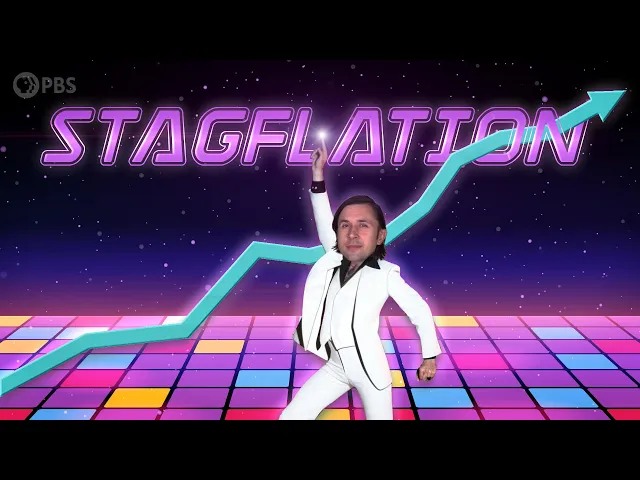
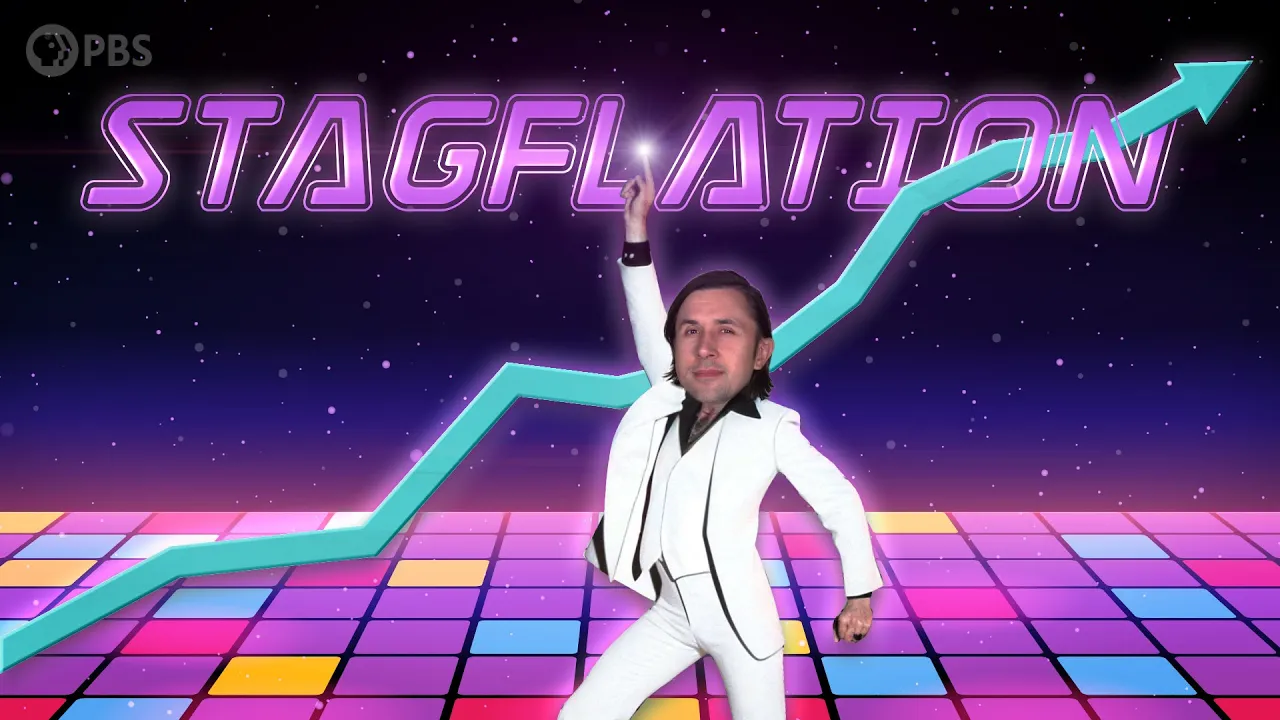
"We have a sort of stagflation situation, "and history in modern terms is indeed being made. " - Stagflation as it came to be known is when an economy experiences a nasty blend of two things: inflation, the overall raising of prices and economic stagnation usually indicated by high unemployment rate and decreased economic growth. Now, at the time, this combo was considered to be an economic Yeti.
Prevailing economic theory at the time was dominated by the work of John Maynard Keynes. After watching the devastation caused by the Great Depression, he argued that governments needed to get more involved during economic downturns in order to effectively cushion the blow for its citizens. This would in turn helped stimulate the economy back to health.
- Keynesians generally saw inflation as a result of economic growth and believed it to be directly correlated to lower unemployment. There's even a fancy graph to show this called the Phillips Curve, a fabulous name if I may say so myself. However, the events of the mid 70s would seemingly break this somewhat reassuring pattern.
Many are worried that economic indicators in this post-COVID shocked world are neatly aligned for a similar meltdown that we saw in the early 80s, a time before most of the people watching this video were even born. - It's true that there are a good amount of similarities. In October of 1973, war broke out between Israel and a group of Arab countries.
The US and the Soviet Union tried to bolster their respective allies, which led to a rather terrifying buildup of tensions between two nuclear powers. Sound familiar? In response to the US's support of the Israelis, the Organization of Arab Petroleum Exporting Countries proclaimed an oil embargo.
Within three months, the price of oil nearly quadrupled. - However, COVID and the resulting energy hikes hit a really strong and growing economy. This wasn't the case in the 70s.
The oil crisis poured salt on an already bleeding wound of a bear market. In 1971, President Richard Nixon clumsily broke away from the Bretton Woods Agreement, an international monetary system put in place in the summer of 1944, and the dollar tanked. The toxic mix of events would cause the market to lose around 48% of its value.
It would take another 21 months to recover. This became known as the Nixon Shock. - Today, the war in Ukraine is creating a similar effect of nudging elevated post-COVID energy prices even higher, with European nations really bearing the brunt of the hit.
These energy costs shocks are also coming on the heels of historically low interest rates and rising debt loads. The same was true in the 70s. However, it's important to point out that the magnitude of the price shocks, at least as of now have not been nearly as drastic.
Things did improve following the crash of 1973 as they did post 2020, but not for that long. - The Iranian revolution kick started another oil crisis in 1979, more than doubling the price in one year. Unemployment was also on the rise, and inflation was hovering around 7%.
By this point, people were tired, and the economic ground was ripe for a new approach. Enter Paul Volcker as the Chairman of the Fed. Volcker was pretty convinced the issue of inflation had been caused by the government pumping money into the system.
By raising rates and making money more expensive to borrow, he hoped demand would fall and ease pressure on supply, hopefully resulting in stabilization and eventually reduction of prices. So down came the interest rate hammer. By 1981, the average rate on a 30-year mortgage was an eye watering 18.
45%. Yikes! No wonder I couldn't get sympathy from my dad.
- In some ways it did the trick. Inflation plummeted by the end of 1982, but that victory came at a huge cost. Unemployment at the time hit an overall peak of 10.
8%, but 90% of the unemployed were in blue collar goods production like manufacturing and construction. This left a lasting impact on large swaths of the country, now known as the Rust Belt that heavily relied on these industries. Entire communities were routed, and many have never recovered.
There's still a lot of debate as to whether the cure was worse than the disease. - Now it seems the Fed has decided to take a somewhat similar approach and is raising rates. Their hope is that they can effectively walk an economic tightrope, raising rates while keeping unemployment in check.
Thankfully, inflation has started to drift downward since its peak of around 9% this past summer. And while that sounds good, it's not all rainbows and unicorns. Think about what this represents in real life terms.
Many people who had dreams of finally taking their hard-earned savings to buy a home or start a business or grow their family are deciding that the cost just isn't worth it. Individuals and communities feel this in a way that can't be captured in some economic chart. - So is a terrible recession on the way or not?
No one really knows. It is true that many of the ingredients going into this economic recipe look the same, but the oven they're getting cooked in is very different. In general, our global economy is far more flexible than it was back then.
Most central banks have mandates for things like price stability and inflationary targets and pay super close attention to this stuff. Even though COVID was a shock, the inflation that came after really wasn't. Unlike in the 70s, we actually had historic precedent for this, and most governments were somewhat prepared.
It also helps that unemployment is currently really low. In fact, as of filming, it's only 0. 2% higher than it was in February of 2020.
- However, we are in the midst of a big economic transition. COVID made the economy sick, so we pumped it with meds that caused other problems that we're now dealing with as we globally continue to heal. - The best thing you can do to prepare for times like this is to make sure you've got a proper emergency fund and that your investments are diversified.
There's a reason that professionals like us sound like a broken record about this during the good times. The deeper and wider your financial roots, the less likely you are to fall when the wind inevitably changes direction. - [Both] And that's our two cents - Thanks to our patrons for keeping "Two Cents" financially healthy.
Click the link in the description to become a Two Cents patron. (upbeat music) Wanna learn more about pandemic inflation? Check out our episode "Why are prices going up?