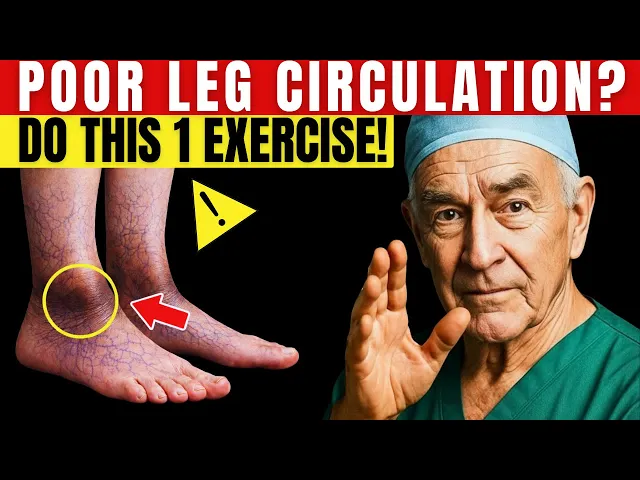
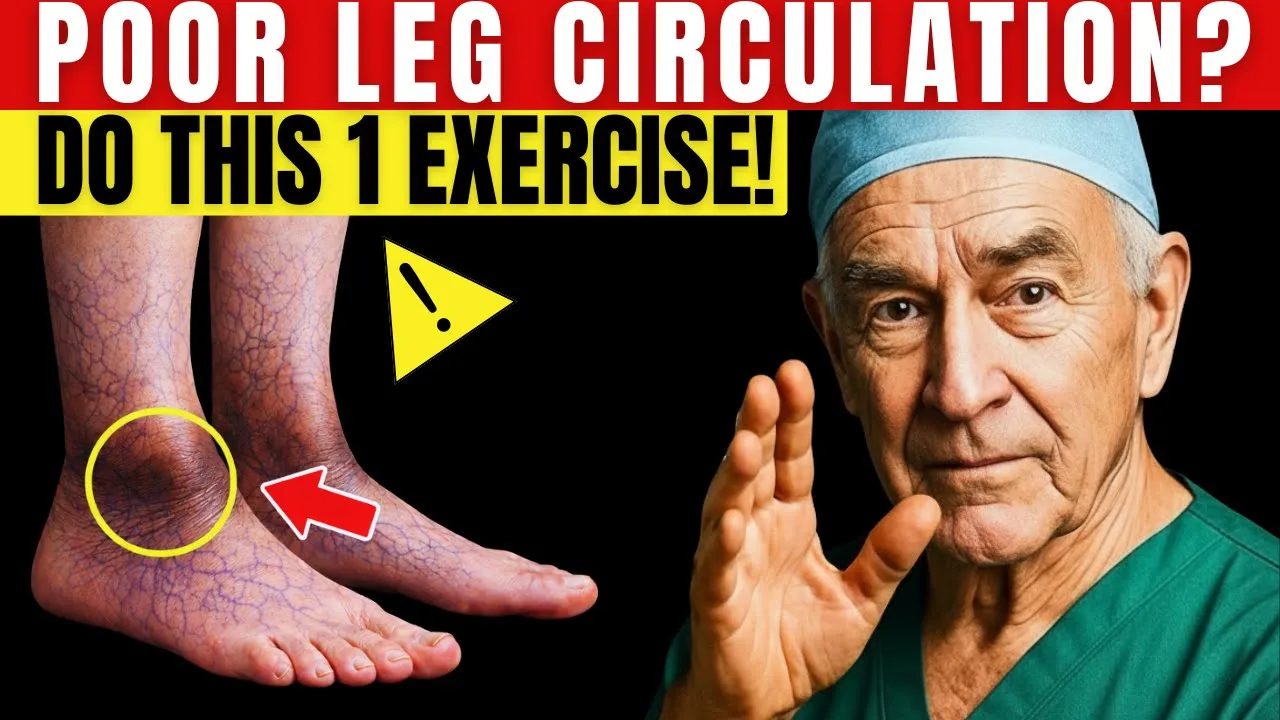
If your legs feel heavy, swollen, or tired by the afternoon, especially after you turn 70, many people assume that this is just how aging works. They think poor circulation is something you have to accept, like gray hair or slower mornings. But here is what often surprises older patients when a surgeon explains it to them in plain language.
In many cases, the problem is not your heart and it is not your arteries alone. It is a small group of muscles in your lower legs that have quietly stopped doing their job. One orthopedic and vascular principle has been discussed for decades in medical training.
Your calf muscles act like a second heart for your legs. Every time they contract, they help push blood back up toward your heart. When they weaken, blood tends to pull around the ankles and lower legs.
This is why swelling, aching, and that heavy feeling often show up together. In a study published in the Journal of Applied Physiology in 2021, researchers followed older adults with mild circulation problems and found that targeted calf muscle activation significantly improved venus blood return over just a few weeks. The participants were not running and they were not doing intense workouts.
They were performing one very simple movement that most people overlook because it looks too easy to matter. This does not mean walking is bad for you. Walking is excellent for overall health, but walking alone does not always give these muscles the clear signal they need, especially after 70.
That is why many surgeons quietly recommend adding one specific exercise to support leg circulation and reduce daily discomfort. In this video, I will walk you through that single exercise starting gently and safely exactly as it is often taught to older adults. If you stay with me, you will see why this one movement can make your legs feel lighter and more comfortable again without equipment and without strain.
Before we begin, let me know your age and where you are watching from. And remember to like, share, and subscribe so more seniors can find this information. Exercise number five, gentle seated calf activation.
This is the exercise many surgeons start with when an older patient complains about heavy legs, ankle swelling, or that tired feeling that shows up by the end of the day. It looks almost too simple, which is why most people never think it could matter. But this small movement targets a muscle system that plays a critical role in leg circulation after 70.
This exercise is done sitting in a chair with your feet flat on the floor. There is no standing, no balance challenge and no strain on your knees or hips. What you are doing is gently lifting your heels while keeping the balls of your feet on the ground.
When you do this, the calf muscles tighten and relax in a controlled way. These muscles are sometimes called the Venus pump of the legs because their contraction helps push blood upward against gravity. In everyday life, this matters more than most people realize.
When the calf muscles are weak or inactive, blood can pull in the lower legs. This contributes to swelling, pressure, aching, and that heavy sensation many seniors describe. Strengthening and reactivating these muscles helps support circulation during long periods of sitting, watching television, or riding in a car.
A study published in the Journal of Applied Physiology followed older adults with mild circulation problems and found that targeted calf muscle activation significantly improved Venus blood return over several weeks. The participants were not doing intense exercise. They were using simple seated movements that sent a clear signal to the muscles responsible for assisting blood flow.
To practice this safely, sit tall in a sturdy chair. Place both feet flat on the floor about hipwidth apart. Slowly lift your heels as high as you comfortably can while keeping your toes down.
Pause for a moment at the top. Then lower your heels back to the floor with control. Move slowly and breathe normally.
If you feel any cramping, reduce the height of the lift or take a short break. A common mistake is rushing through the movement. Speed is not the goal here.
Gentle, controlled repetitions are far more effective for circulation than fast bouncing. Another mistake is holding your breath, which can reduce the benefit and make you feel lightaded. For older adults, this exercise supports comfort, confidence, and independence.
It can be done daily, even multiple times a day without fatigue. Many people notice that their legs feel lighter and less tight within a few weeks of consistent practice. This gentle activation prepares your legs for the next step where we begin to add stability and strength in a safe, supported way.
Exercise number four, supported ankle to knee flow. After the calf muscles begin waking up, the next step is to help blood move more freely through the joints that sit just above them. This gentle movement focuses on the ankles and knees working together, which is essential for smoother circulation in the lower legs as we age.
This exercise is still done seated, which keeps it safe and approachable. You sit in a chair with your feet flat on the floor. One leg at a time, you slowly slide your foot back toward the chair, bending the knee.
Then gently slide it forward again until the leg is almost straight. The movement is slow and controlled, more like guiding the joint than forcing it. As the knee bends and straightens, the surrounding muscles softly contract and relax, helping blood continue its upward journey.
In daily life, this matters because many older adults spend long periods with their knees barely moving, especially when sitting. Limited knee motion can slow circulation and contribute to stiffness and swelling below the joint. By restoring this natural bending and straightening pattern, you help keep fluid from settling in the lower legs.
Research summarized by the Cleveland Clinic has shown that gentle repeated joint movement improves Venus return and reduces stiffness in older adults, especially when combined with muscle activation below the knee. The key is not intensity, but regular, comfortable motion that keeps the joints and surrounding tissues active. To practice, sit upright and place both hands on the sides of the chair for support.
Slowly slide one foot back, bending the knee as far as feels comfortable. Pause briefly, then slide the foot forward again. Switch legs and repeat.
Breathe normally and keep the movement smooth. If you feel knee discomfort, reduce the range and focus on a smaller, pain-free motion. A common mistake is pushing the knee too far or moving too quickly.
This exercise should feel soothing, not challenging. Think of it as oiling a hinge rather than testing its strength. For seniors, this movement supports comfort and confidence when standing up, walking, or climbing steps.
It builds on the circulation benefits of the first exercise and prepares your legs for the next stage where balance and stability begin to play a bigger role. Exercise number three, supported standing weight shift. Once circulation has been gently encouraged through the calves, ankles, and knees, the next step is to help your legs relearn how to manage body weight safely.
This movement introduces standing in a controlled way without forcing balance or strength beyond what feels comfortable. For this exercise, you stand behind a sturdy chair or near a kitchen counter, keeping your hands lightly resting on the support. Your feet stay about hipwidth apart.
Slowly you shift your weight slightly onto one leg, then gently back toward the center and then toward the other leg. The movement is subtle and calm. You are not lifting your feet or testing how long you can balance.
You are simply teaching your legs and hips to share the load smoothly. In everyday life, this weight shifting ability is essential. Every step you take, every time you turn or adjust your stance, your body must transfer weight from one leg to the other.
When this process becomes hesitant or uneven, circulation can slow and the risk of stiffness or discomfort increases, especially after long periods of sitting. Guidance from the Mayo Clinic emphasizes that supported standing movements improve lower limb circulation and neuromuscular coordination in older adults, particularly when balance confidence has declined. These gentle shifts help muscles contract rhythmically, encouraging blood flow without the strain of full exercise routines.
To practice, stand tall with your chest relaxed and your gaze forward. Shift your weight slightly to the right, feeling the pressure through your foot. Then return to center.
Shift to the left and return again. Keep the movement slow and steady, breathing naturally. If you ever feel unsteady, reduce the size of the shift or bring more weight back through your hands.
A common mistake is locking the knees or leaning the upper body too far. The goal is quiet control, not range or speed. Think of your weight moving like a pendulum, smooth and predictable.
For older adults, this exercise supports balance, circulation, and confidence while standing. It builds on the earlier seated movements and helps your legs get ready for more functional real life movements in the next step. Exercise number two, chair assisted sitto stand.
After your legs have been gently reactivated and your balance has been reintroduced, the next step is to strengthen circulation through a movement that closely matches real life. This exercise focuses on standing up from a chair with control, which is one of the most important actions for both leg strength and healthy blood flow after 70. This movement begins seated in a sturdy chair.
Your feet are flat on the floor, slightly behind your knees. From here, you lean forward just enough to bring your weight over your feet. Then slowly rise to a standing position.
Once standing, you pause briefly, then sit back down with the same calm control. Your hands can rest on the armrests or on your thighs if you need extra support. In daily life, standing up from a chair happens dozens of times a day.
Each time you do it, large muscles in your thighs, hips, and calves contract together. This coordinated contraction is powerful for circulation because it pushes blood upward through the legs while also building functional strength. When this movement becomes difficult, people tend to avoid it, which can worsen both weakness and circulation problems.
Information shared by the Harvard Health Publishing explains that sittost stand movements improve lower body muscle activation and support venus blood flow in older adults when performed slowly and consistently. The emphasis is on control rather than speed, especially for those with joint concerns. To practice safely, start with just a few repetitions.
Stand up slowly, taking about 3 seconds to rise. Then sit down even more slowly. Breathe normally and avoid holding your breath.
If your knees feel uncomfortable, reduce the depth or use your hands more for support until strength improves. A common mistake is dropping quickly back into the chair. This removes much of the benefit and can strain the joints.
Moving slowly keeps the muscles engaged longer, which is better for circulation and confidence. For seniors, this exercise supports independence, reduces reliance on assistance, and helps legs feel more active throughout the day. It prepares your body for the final exercise where circulation, strength, and daily movement come together in the most meaningful way.
Exercise number one, controlled heel to stand flow. This is the exercise many clinicians quietly consider the most valuable for leg circulation after 70. Not because it is hard, but because it combines everything your legs need in daily life.
It brings together calf activation, weight transfer, and standing strength in one smooth, practical movement. This exercise starts from a standing position with your hands lightly resting on a chair or counter for safety. Your feet are hipwidth apart.
You begin by slowly lifting your heels just a little, feeling the calves engage, then gently lowering them back down. From there, you bend your knees slightly and straighten again, as if beginning to sit, but choosing to stand tall instead. The movement flows calmly from heel lift to gentle stand, then back to a relaxed standing position.
In everyday life, this pattern is incredibly important. When you rise from a chair, step forward, or adjust your stance, your calves, thighs, and hips must work together. This coordinated action helps push blood upward through the legs while also reinforcing the strength needed to stay independent.
Many circulation problems worsen simply because these muscles stop working together. Guidance from the National Institutes of Health highlights that combined lower body muscle activation improves Venus return and functional mobility in older adults more effectively than isolated movements alone. When multiple leg muscles contract in a controlled sequence, circulation support becomes stronger and more consistent throughout the day.
To practice, stand tall and relaxed. Lift your heels slowly. Pause briefly, then lower them.
Next, bend your knees just a little and straighten again. Keep the movement smooth and unhurried, breathing naturally. Start with a small range of motion and increase only if it feels comfortable.
If you ever feel unsteady, rely more on your hands or reduce the depth of the bend. A common mistake is rushing or turning this into a squat. This is not about pushing yourself.
It is about steady, confident movement that your body recognizes and can repeat daily. For older adults, this exercise supports circulation, balance, and independence all at once. If you were to choose only one movement to help your legs feel lighter and stronger after 70, this is the one many professionals recommend building into your routine.
It naturally leads into the closing message about maintaining comfort, confidence, and mobility over time. Over the last few minutes, you have seen how leg circulation after 70 does not depend on pushing harder or doing complicated workouts. It begins with gently waking up the muscles that help blood move.
Then slowly restoring motion through the joints, learning to share body weight with confidence, and finally bringing everything together in a calm, practical standing movement. Each step builds on the one before it, just like the body prefers. When these movements are practiced consistently day after day, many older adults notice that their legs feel lighter, less tight, and more reliable.
Standing up becomes easier. Sitting for long periods feels less uncomfortable. Walking feels more confident, not because you forced your body, but because you reminded it how to work as a whole.
Again, circulation improves not through intensity, but through clarity and repetition. The long-term benefit goes beyond comfort. Supporting leg circulation helps protect balance, reduces the fear of falling, and preserves the ability to move independently.
These are not small things. They are what allow you to stay active in your own home, enjoy time with family, and move through daily life without constantly worrying about your legs holding you back. Aging does not mean giving up control.
It means choosing movements that respect where your body is today while still encouraging it to adapt. Small, thoughtful practices like these can quietly support your health for years to come. Now I would love to hear from you.
Which part of leg discomfort affects you the most right now? Heaviness, swelling, or fatigue. Leave a comment with your age and where you are watching from.
If this video was helpful, please like it, share it with someone who might need it, and subscribe for more guidance designed specifically for older adults.