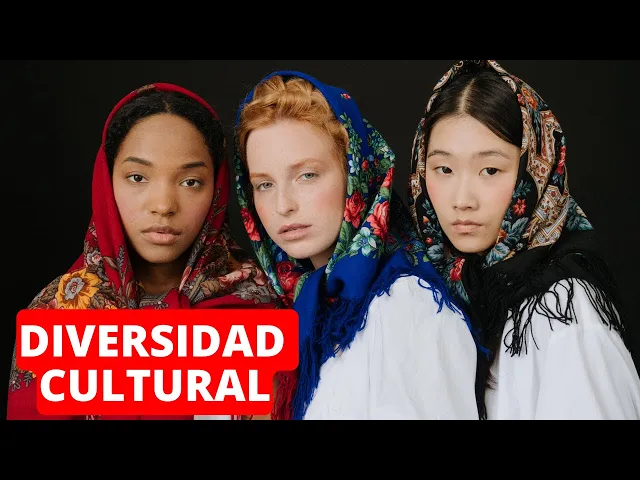
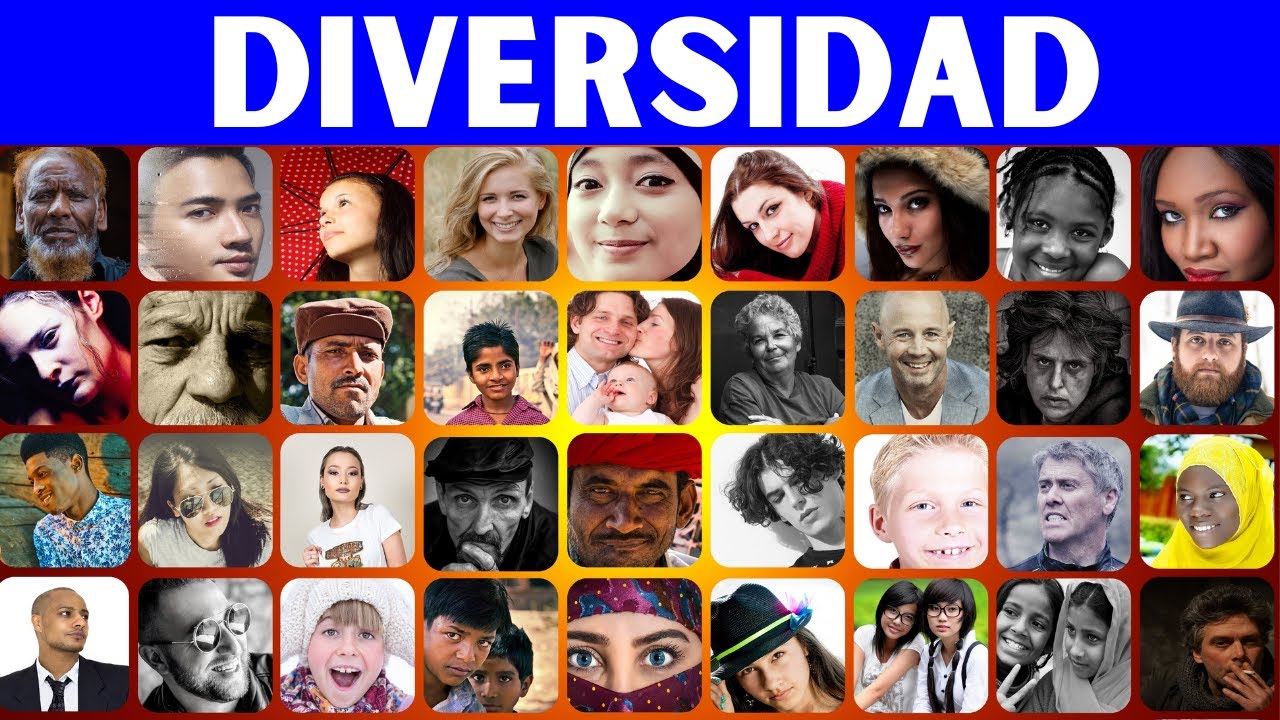
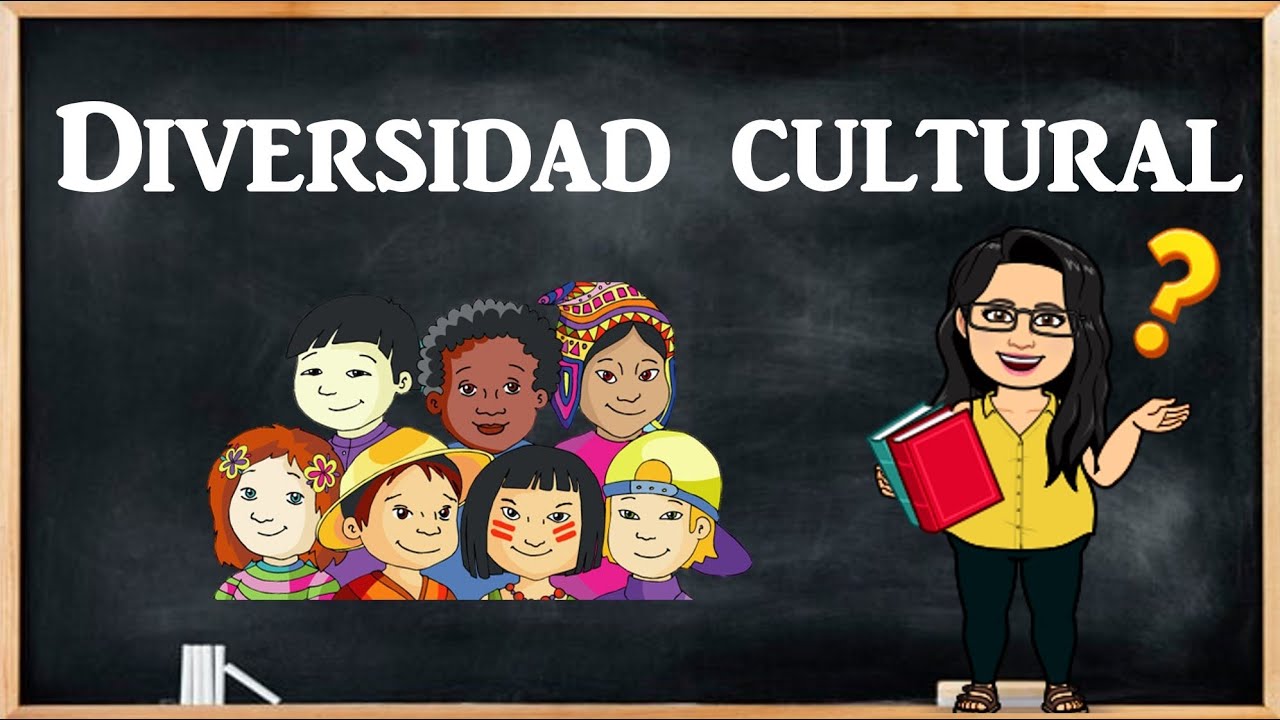
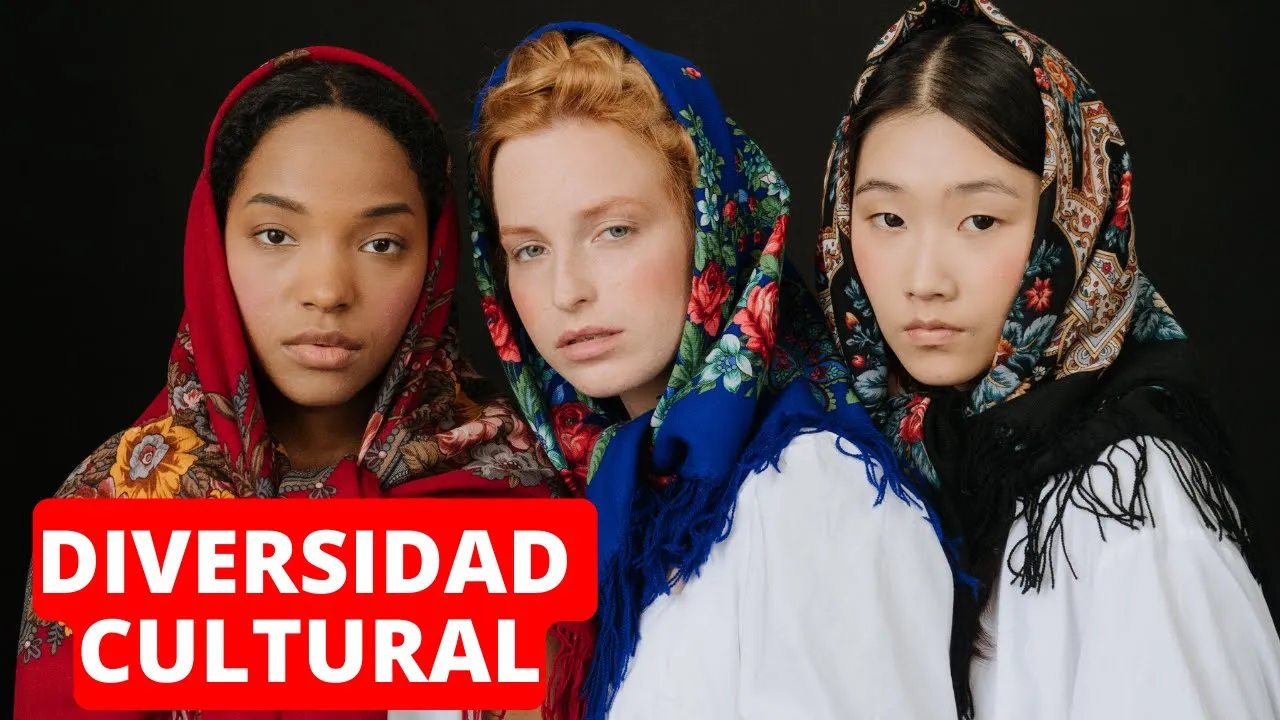
Hello! Good to see you here. Today I am going to explain to you what cultural diversity is, its characteristics, the types that exist, and I will give you many examples.
Give a like with desire to send you strength to learn and subscribe to the channel. Cultural diversity is the variety of cultures that exists in the same country. This concept has become very important: since 2001 it is considered a common heritage of humanity by UNESCO.
When in a geographical space that enjoys a specific and extended cultural identity it is in direct contact with other currents and manifestations, cultural diversity is present. A very clear example of the manifestation of cultural diversity dates back to colonial times. The territories conquered by the Spanish Crown took for themselves elements of their daily life, such as language and gastronomy, among others.
In this way, the inhabitants of those lands combined their own expressions with those observed in the settlers. Characteristics of cultural diversity Multiple cultures In cultural diversity there are multiple cultures, since this is a strictly necessary particularity. For there to be diversity, several cultures must be present, each one developed by different groups.
It is possible that these cultures have interrelated in past times or are doing so today. In any case, as long as cultures with different characteristics coexist at a given time, cultural diversity can take place. Distinctive features Each culture must have unique specificities, such as ethnicity, gender, race, language, religion, history, art, music, among others.
The original elements of each culture are what will guarantee that they can interrelate while maintaining their essence, while receiving the influences of the other cultures involved. Cultural difference Within a dynamic framed in cultural diversity, it is possible to experience clashes of conceptions and ways of seeing life that are typical of one culture or another. The differences that arise between one group and another are an inherent consequence of cultural diversity.
Preservation This is the conservation of knowledge to prevent myths, languages, religions and other peculiarities from being lost over time and through contact with other stronger cultures. To the extent that there is greater preservation, there will be cultural diversity with better sustenance. Interculturality Within a context of cultural diversity, giving greater prominence to one society or culture over another should be avoided.
In these scenarios, the ideal is for the different cultures to coexist and base their interaction on dialogue, communication and respect for their expressions. Types of cultural diversity There are different ways in which cultural differences are expressed. Religious diversity Refers to the peaceful coexistence of different religions in the same country.
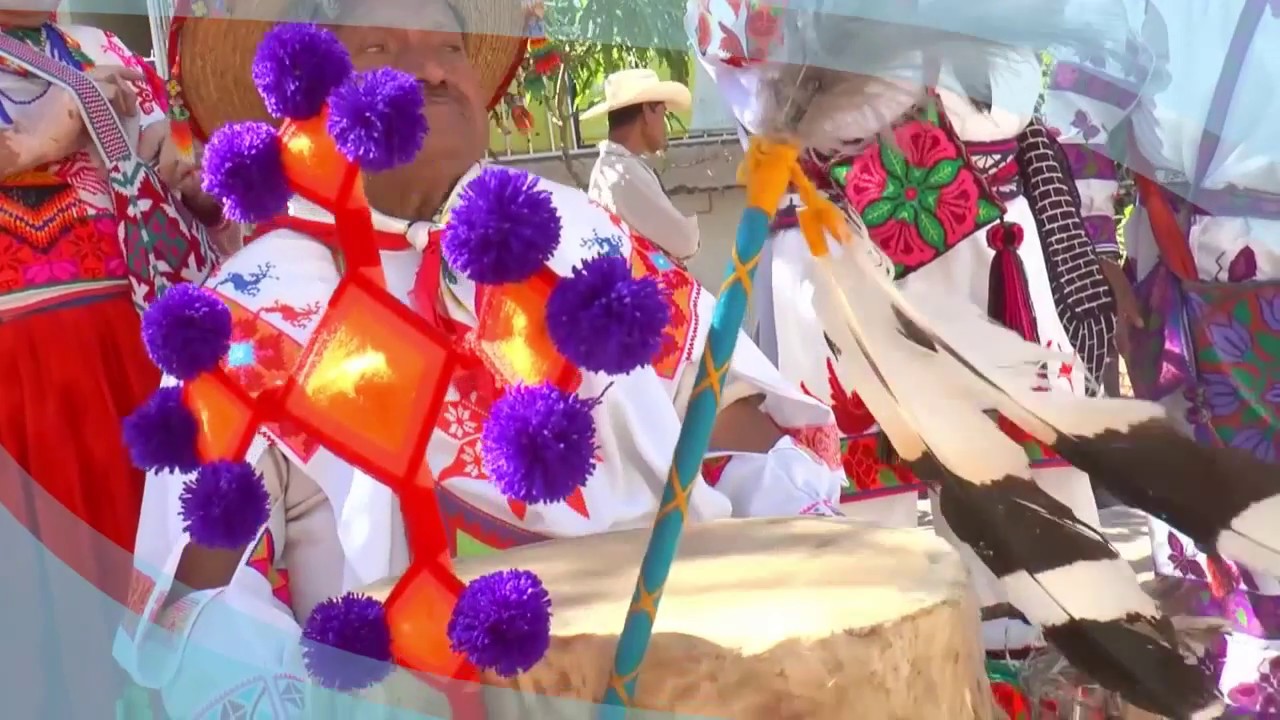
Linguistic diversity Refers to the different languages spoken in the same region or nation. Ethnic diversity It is one where there is a presence of different ethnic groups in the same country. Examples of cultural diversity In Mexico Mexico is one of the countries with the greatest cultural diversity.
This nation is recognized for having a very culturally rich society thanks to its indigenous heritage and the European influence it received at various important moments in its history. Its origins date back to the Mexica Empire, and over time this country has modernized and has acquired other elements of contemporary cultures, such as European or North American. Mexican gastronomy mixes ingredients that come from very different eras and representatives.
Chili, corn, avocado, wheat, tequila and mezcal are essential elements in this meal. In Spain Spain represents the union of influences from Europe, Africa and the Mediterranean, which is why it is a clear example of cultural diversity. In this territory, Greeks, Romans, Phoenicians, Muslims and Iberians, among other individuals with very varied roots, have lived together for centuries.
This mixture is the reason why, in addition to Spanish, other languages such as Galician, Valencian, Catalan, Basque, etc. are spoken. In Argentina Argentina, and especially its capital, Buenos Aires, is considered by many people to be the most European nation and city in the Americas.
During the First and Second World Wars, many foreigners made this South American country their home, bringing with them many of the customs and traditions of their countries of origin. In Peru The culture of Peru is a product of its ancestors. The Inca civilization was so important and so advanced for its time that many of today's customs, traditions and festivities come from that time.
The influence that this civilization had on society is undeniable. It is a mixture of indigenous origin that was adapted to other cultures, such as African and Asian. In addition, it adapted to a geographical location full of jungle and humidity.
Proof of its diversity is the presence of 11 ecoregions and 84 of the 117 life zones that exist on the planet. In China In the Asian giant, 235 different languages are spoken, corresponding to 235 cultures. There they coexist and express themselves, although under the domination of Mandarin Chinese and its cultural customs.
In India In India there are 22 official languages, along with English. In addition, there are 393 non-official languages that, as in the case of China, correspond to cultures. On the other hand, there are several religions: Hinduism, which is the most numerous, Islam, of which there is also a large number, and Christianity, to a lesser extent.
In Bolivia Proportionally, this country has the largest number of original inhabitants. Their culture is a mixture of indigenous and European. Its official languages are Aymara, Quechua, Guarani and Spanish.
In England The Asian presence in England, especially from Pakistan and India, but also from other African, American and European regions, is notable, to the point that today many public officials, ministers and influential politicians are of Asian origin. Foreign. It is said that London is a city where more than 300 languages are spoken, due to the number of foreigners who live there.
In Australia Australia is an ethnically and culturally rich country. In fact, Canberra celebrates Australia's Cultural Diversity Day in February, but throughout the year there are many festivals corresponding to the cultures that live there. On the other hand, 1 in 4 Australians was born in another country.
We have already reached the end. As an exercise to see if you have understood the topic well, leave an example of cultural diversity in the comments. Give a like if you liked the video, share it with your friends and subscribe to receive other videos as interesting as this one.
Happy day, see you soon!