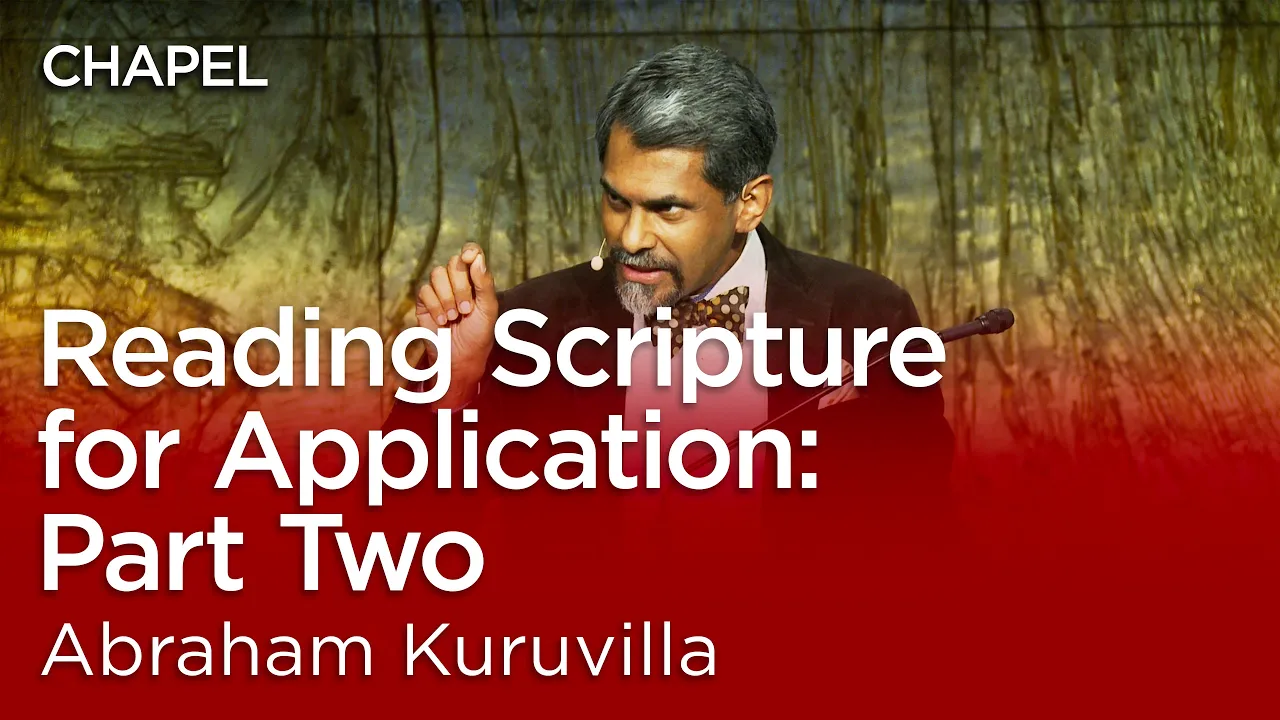
so here is the important scheme when we read scripture for application text the theology of the piripi or its thrust or what the author is doing and then application we also saw that saw that each teraCopy which is simply a fancy word for a chunk of scripture projects a segment of the canonical world in front of the text and taken together the integrated composite of all such segments make up God's ideal world in front of the text a plenary full canonical world so each pair copy then in a sense is God's gracious invitation to mankind
to come and live in his ideal world by abiding by the thrust of that para copy ie the requirements of God's world as called for in that para copies world segment so one para copy at a time the various aspects of Christian life are gradually being brought into alignment with the will of God for the glory of God so God's Word is being applied and in a sense God's world is becoming reality as we instantiate or actualize that world into our lives and this is the goal of reading scripture for application for application so para
koppel theology as I described that shows us how God desires to relate with his creation so every time we read scripture for application we must discern the theology of the para copy under consideration elucidating what that specific text affirms about God and his desired relationship with mankind and I submit that biblical interpretation that does not discern this intermediary predicable theology is de-facto incomplete because without discerning this entity we cannot move on - valid application and that's where we left off last time today we will look in depth at a single text as well as address
another particularly important concept of my proposal for reading scripture for application a few years ago at one of the annual meetings of the evangelical theological Society I had the privilege of presenting in a session that dealt with the David and Goliath story from First Samuel 17 and in that session the same story was discussed by four different people from multiple hermeneutical viewpoints one of my co-presenters addressed a Christocentric interpretation of that narrative Christocentric interpretation is the interpretation of a biblical text in such a way that it is in some way directly related to the second
person of the Trinity and his atoning work on the cross so that with that philosophical approach every pericope in scripture is somehow connected with the redemptive work of Christ all kinds of Christocentric interpretations of First Samuel 17 have abounded in church history typically seeing David as Jesus in Goliath as Satan because you know a small unknown Shepherd defeating a big bad giant naturally tends to lend itself to Jesus Christ defeating Satan according to the 6th century bishops a serious of all jesse david's father sending david with food an ephah of grain and ten loaves for
his brothers in for samuel 1717 becomes the Trinitarian God because an ephah is a measure is a quantity of three measures and sending Jesus with the ten loaves is the 10 commandments to free his people from the power of the devil that's what the David and Goliath story is all about though that's an extreme example this reflects the tendency to find Christ and redemption in every Perry copy of Scripture now I'll be the first to admit that every Christian has an innate sense that this book our Christian scripture is all about Jesus yes it is
all about Jesus scripture is crystal logical the question is how is it crystal logical how is it all about Jesus is it by finding Jesus under every bush in every rocker making the David versus Goliath story one about Jesus versus Satan if Christ is not found in every text in every per copy Christocentric interpreters accuse such other non Christocentric interpretation as being more or less some if they dare make applicational lessons from the lives of David or Abraham or Caleb or Joshua but biblical evidence actually shows such evaluations to be wrong the Bible itself consistently
makes moral examples positive or negative of its characters James - for instance provides abraham and rehab as examples of good works James 5 speaks of the prophets and of job and of Elisha who prayed moreover Jesus himself frequently exhorted listeners to imitate characters in his teaching the wise builder in Matthew 7 David himself in mark 2 and the Good Samaritan in Luke 10 which actually concludes with the Express injunction go and do likewise but according to Spurgeon one should preach Jesus and the cross in every sermon no matter what the text I have never yet
found the texts that have not got a road to Christ in it and if I ever do find one that has not a road to Christ in it I will make one at this point you might ask well listen the New Testament support the idea of finding Christ in every Perry copy what about Luke 24 27 and beginning with Moses and all the prophets he Jesus explained to them the disciples from Emmaus the things concerning himself in all the scriptures notice the last part the things concerning himself in all the scriptures does that mean that
all the Scriptures explicitly talk about Jesus a couple of years ago Dallas theological seminaries catalog mentioned me in four different places now say that I explained those references to you my audience here at Biola those four scant references in the catalog if Jesus similar explanation meant that all the Scriptures therefore talk explicitly about him when I say to you beginning with the cover and the rest of the material approval I explained to his Biola audience the things concerning himself in all the DTS catalog that's got to mean that the entire DTS catalog talks about me
notice that in 24 27 Jesus mentions only those things concerning himself so also in twenty four forty for all things which were written about me must be awful Jesus is not finding himself in all the texts of Scripture he is finding just those texts that concern himself the potential problem with a Christocentric approach to finding Christ in every paragraph is that the specific trusts of individual Old Testament text gets neglected making the value of preaching or even studying the Old Testament somewhat doubtful at best so I looked at the David and Goliath story that day
a little bit more carefully to see what its specific trust it Spira couple theology was so for Samuel 17 let me show you what I saw the actual battle action between the giant and the shepherd is described in a mere three verses but the narrative of First Samuel 17 takes all of 58 verses in the Hebrew text to tell us this one thing David killed Goliath there is no doubt that this dilatation of 58 verses is with purpose the author is doing something with what he's saying as is always the case with narrative and for
Samuel 17 is no exception we're going to see that the story points to three elements the status the resources and the experience of each of the protagonists and there are three of them the giant the king and the youth so stature resources experience of the giant of the king and of the youth and so let's examine each one in turn stature resources experience of each of those three the Giants stature is fearsome 17 4 in the Masoretic text tells us he was six cubits and a span 9 and a half feet tall and there's a
list of his resources in 17 5 through 7 the longest description of military terms in the Old Testament is helmet he has armor he has Greaves likely leg protectors a scimitar a spear and a sword this huge enemy is well Baudette overwhelmingly so but not only was Goliath stature and resources that were threatening his considerable experience also rendered him a lethal enemy to tangle with in fact King Saul acknowledged that Goliath had been a man of war from his youth and of course seeing the stature resources and experiences of this giant saul and his army
could do only one thing and that is flee in palek and we're told that twice in 1711 and 1724 so that's the giant with his stature resources and experience then there is King Saul if Goliath was sizable so was Saul literally head and shoulders above his compatriots we are told that twice - in chapter nine verse two and chapter 10 verse 23 this is quite surprising to think that giant was not unique this King Saul himself was of considerable stature in other words Saul had the requisite stature to take on this giant besides if Goliath
had intimidating weapons so also dead saw his forces his resources were considerable to Saul's weapons were likely to have been the best in the land only he and his royal household possessed such weapons as foursome all 13 in an earlier battle tells us neither sword nor spear was found in the arms of any of the people but they were found with Saul and his son Jonathan and ironically the Philistine Giants ideology of weapons seems to have been shared by Saul - when King Saul as you know tries to close this little shepherd boy David in
his own royal armaments the description of that royal gear is uncannily similar to the inventory of Goliath's own weapons both giant and King deploy helmets on their heads armor and sword because you see solace figuring that victory can only be achieved by matching helmet for helmet armor for armor sewed for sword weapons you see have to be countered with more weapons Goliath has all his stuff and the only way that we can defeat him is well being equally armed the only way we stand a chance is to fight fire with fire bronze with bronze we
need stature we need resources we need experience muscle and might guts and degrees in titles and capitals and assets and resources and names and reputations guns and swords and uniforms that's the only way we're going to win that folks is the ideology of power victory with status resources and experience it's the fetishism of weapons the reliance on force an obsession with might the world is full of conflict Israel versus Palestine Mac versus PC Facebook vs. Google but let's get to the biggest battle of them all shall we Batman vs. spider-man stupid even to wonder right
because the Dark Knight would wank wish the web crawler without breaking a sweat which hero do you think has the R&D budget to stay on the cutting edge of crime-fighting the one with a secret hideout under his mansion or the other guy trying to pay off his college loans spider-man disarms is forced with witty banter Batman disarms them with batarangs bat grenades bat tasers and other sundry bat weapons not to mention the Batmobile bat boat batsub and there's even a bat-cycle the man clearly understands the importance of branding spider-man doesn't stand a chance because the
one with the most toys wins that's the fascination with tools and toys the obsession with stature resources and experience reliance on competencies portfolios achievements big companies big churches big reputations fame and fortune wealth and influence the ideology of power that was sawed and that is I submit most of us all that to say in stature and resources saw was up to the task of fighting Goliath and the Kings military experience was nothing to be sniffed at either catch this in 1710 the Philistine giant explicitly defies the army of Israel curiously enough the last time the
word defiance had shown up here before first Samuel 17 was in for sam'l 11 to their nephesh and other enemy King threatened to make a reproach defiance related word upon all Israel by gouging out every Israelites right eye in response it was King Saul who stepped up and led the Israelites to victory against this evil King in fact it was after this very demonstration of valor that Saul is crowned king in the same chapter so should anyone have been picked for the task of fighting the current enemy Goliath who is again defying the army it
ought to have been King Saul who already had had a successful experience against other kinds of defiance's from enemy Kings so in some solves bio-data his accouterments and his resume a fitted the bill exactly he had it all status resources experience to match the status resources experience of the Giant and then after these two we now have David when the prophet Sam wall came to anoint the next king of Israel in 1st Samuel 16 it was David's older brother Elliot who had the height of stature that impressed the prophet Samuel who thought on those grounds
that that individual Elliot was David's Yahweh's choice to become Israel's King but God expressly asked Samuel to disregard his appearance and the height of his stature and instead pointed out David for samo to anoint that implies one thing they it lacked the respectable stature that his elder sibling possessed so for all appearances david has no stature not only is david lacking in stature he's deficient in resources - his inadequacy was explicitly diagnosed by King Saul who told David you are not able to fight Goliath you've got nothing no resources in fact I have to loan
you my armor and my weapons so for all appearances David has no resources either and his experience this gets very interesting I want us to notice in this account the extended focus on the word men in for sam'l 17 and presumably the experience of these men take a look while David was talking to his brothers in the battlefield the man of the in-between which is an idiom that means champion and it refers to Goliath appears then the men of the Israel see the man Goliath and flee then the men of Israel discuss about this man
Goliath and is coming up to defy Israel and how the King will enrich the man who defeats him David speaks to the men and about the rewards for the man who kills the Philistine to which the people respond describing what will be done for the man who slays Goliath David's older brother overhears David's conversation with the men goliath himself a man challenged a man to come and fight with the men men men men men with know-how with skill but savvy with experience with expertise wow look at all of these testosterone drenched y-chromosome carrying Paragons of
masculinity with ostensively loads and loads of experience and David David is merely a juvenile son of a man and not a man self just a youth s all points out and Goliath agreed the giant is later peeved to see that the one who accepted is there is nothing more than a youth so all of this makes the dispatching of the giant a task apparently only fit for a very experienced man not a raw adolescent like our Shepherd boy and so David for all appearances has no experience everyone in this narrative seems to be swearing by
the equation that only stature plus resources plus experience will equal success without stature without resources without experience there is only failure or so everyone thinks but David he was different he proved that it was absolutely wrong to assume that victory comes with the reliance upon stature resources and experience as the world of reckon set instead David no youth but a real man possessed stature resources and experience founded on God and the rest is history let's take a look at David's real stature real resources and real experience as we noticed earlier Sam well when he went
to anoint as well as next king in for Samuel 16 was taken by the stature of Jesse's oldest son Elia David's older sibling at which point God intervened declaring that while man looks at the outside Yahweh looks at the heart and then he pointed out David here then was a candidate one who stature was not visible on the outside David's was an eminence that was an inside reality a character that was internal a solidity that was inward a stature of the heart only such a person who has ever been described in Scripture as having as
being a man after God's own heart and that was the stature of David a heart that God saw and approved the part of God himself so there's David taking food for his older brothers in the battlefield as he David was stalking with them his brothers behold the champion the Philistine from Gath named Goliath was coming up from the army of the Philistines and he spoke these same words his defiant challenge and David heard them while all the men of Israel saw the man they fled from him and were greatly afraid these people are terrified about
the potential disaster that is tearing them in the face they think about the danger to their lives and everything falls apart the men of Israel said have you seen this man who is coming up surely he's coming up to defy Israel then David spoke to the men who were standing by who is this uncircumcised Philistine that he should defy the armies of the Living God this is the first time David speaks in Scripture here in 1726 the silence is broken David speaks and what does he say he introduces a new worldview into this picture until
this verse God has not been mentioned in the story at all in 1st Samuel 17 until now and the first time David speaks God appears and God is injected by him into the situation of hopelessness David asked that's it believing in a living God make a difference in all of this he centers the event to the potential catastrophe on God not on the army or Israel God is at the center this is not about military or national honor this is about God who is this uncircumcised Philistine that he should defy the armies of the Living
God so there he is David fighting for God's glory willing to risk ridicule willing to risk life willing to risk all to fight for God's glory you know the other thing here is that Goliath is named only twice in this end story in verse 17 for and 1723 otherwise goliath has just called the Philistine 26 times in this chapter he is label the Philistine and in 1726 David adds another label calling him an uncircumcised Philistine in Israel's eyes the Philistine was undefeatable in David's eyes the Philistine is only uncircumcised well come to think about it
that's not all very surprising Goliath is about nine feet tall David's eye level is probably at the level of his grow and so that's about all he can uncircumcised philistine this is being recorded in any case the fact is that a living God gives one a whole different view of things who is this uncircumcised Philistine that he should defy the armies of the Living God that was steel centric thinking God at the center of it all and that was David stature a man with a heart for God and David's resources at the start of the
story as we saw the narrator was careful to describe Goliath's armaments five in number helmet armor Greaves scimitar and spear David rejecting Saul's donation of similar equipment instead ops for the Shepherd's paraphernalia count with me those items to stick stones bag pouch and sling one two three four five not five soldierly contraptions but five shepherd lis implements one has helmet armor jeeves Greaves scimitar spear this puny dumb zero comes to fight with sticks stones back pouch and slang it's an ironic rejection and reversal of the catalog of weapons possessed by Goliath so this narrative thereby
pillories makes fun of the world's ideology of resources the world thinks one needs stat of resources and experience to fight fire with fire but for David it wouldn't be the standard kingly resources that would down the giant indeed instead it would be the God yahveh sabaoth the lord of the armies of the heavens in whose name david came who would provide victory for David God himself was the youths resource the shepherd boy is showing plenty of moxie why not his resource is the true resource God himself and his experienced Saul had accused David of being
inexperienced no man among the macho men men men men men but one wonders that Saul had not heard or if he had heard had he forgotten that David himself was a man of war this Israelite youth the youngest of the brood was no little boy he was a man and a substantial one at that how so where had his experience come from what had made this shepherd boy a man of experience the answer is found in David's testimony to Saul about his sheep herding past in 1st Samuel 17 34 to 37 let me show you
some striking verbal parallels between David's deliverance from ferocious beasts in the past and his expectation of divine deliverance from the fearsome giant in the future he testified to Saul that he had gone out after the lion and the bear in his shepherding days and now he would go out same verb after Goliath David smote the lion and the bear the past he promises to smite same word collide in the present and he soon does so the lion and the bear rose against David Goliath rose to attack David David to cover the Beast David prevails the
same Hebrew verb over Goliath David kills the animals and he kills Goliath truly the uncircumcised Philistine would be just like one of those beasts the comparison between animal and human foe is made abundantly clear in 1736 37 which is called a chiastic unit that goes in the structure a b c b a notice the equation of animals and humans enemies a lion baron Philistine in both a and a prime beasts and humans are deemed equivalent because Goliath would be like one of those beasts utterly defeated and how would David defeat Goliath he explicitly labels the
elimination of both those dangerous beasts in the past and human in the present as deliverances from Yahweh it was Yahweh who had delivered him from the hand of the lion and the hand of the bear and it would be Yahweh who would likewise deliver him from the hand of this Philistine this was the crux of his experience it was Yahweh who had given his enemies into his hands and with that kind of experience of divine power what else does one need david's well-placed trust in god is very cleverly demonstrated for us readers by the narrator
in that chiastic structure while David is literarily notice what I said literarily ie in the text while he is surrounded by his enemies in a and a prime he in the middle is protected from the enemies by a divine cocoon in B and B Prime David's confidence is rightly directed his experience was the deliverance of God so notice the contrast throughout this story between the worlds idea of stature of resources experience embodied by the Giant and King versus God's idea of true status through resources through experience embodied by the shepherd daily so in sum this
is not a story of King Jesus slaying the devil but this is a remarkable example of authors doing things with what they are saying the theological trust or the peer couple theology deals with an abiding trust in God manifest in the abandonment of reliance upon worldly stature resources and experience as the Christian engages in battle for God and his reputation and this story tells us that God doesn't need the one with the most toys God doesn't need the one with the greatest stature the vastest resources the most experienced God's people instead are to develop a
stature of a heart for God they are to exercise faith against enemies in the name of God the ultimate resource and going to battle with the experience of the power and deliverance of God and all of that interpretation is obtained by a theological exegesis that privileges the text carefully looking for clues in the writing to what the author is doing only then can we start to think about application which in our limited time we won't be dealing with today so again here are the two steps of reading scripture for application that I espouse the Sun
per couple theology and develop application and these couple of days we've been focusing solely on the first move their discernment of pericope on theology and once again I I propose to you that interpretation for application that does not discern this intermediary is incomplete for without discerning this entity valid application cannot be arrived at but coming back to where we started what about Christ what should we do with Christ particularly from the Old Testament and especially from its narrative if every child of God has the innate sense that this book Scripture is crystal logical what do
we do the Christocentric approach seems to be the wrong way to do it running roughshod over the text as I've shown it for Samuel 17 which is about the statue of resource and experience that the believer needs to engage in any battle for guards reputation so is there an alternative to find Christ in every prayer copy in every book in both Testaments and let me show you and let me tell you that there is an alternative let me show you how the goal of reading for scriptures goal of reading scripture for application of course is
to align ourselves God's people with God's requirements in each Perry copy of Scripture pericope of theology and as we saw on Tuesday each pericope is a is a gracious invitation from God to live with him in his ideal world abiding by the call of each para copy so para copy by para copy we apply the theologies into our lives now since only one man capital M the Lord Jesus Christ perfectly met all of God's requirements being without sin one can say that this person and this person alone has fully met every theological trust of every
per copy he alone has comprehensively abided by the theology of every para copy in other words with regard to the world in front of the text which is simply a synonym for very couple theology God alone has perfectly Christ alone has perfectly inhabited the world in front of the text living by God's requirements or deported in yet another way each per copy of the Bible is actually depicting a characteristic of Christ a facet of the image of Christ or a pixel of the image of Christ each para copy is showing what it means to be
the perfect man showing us what it means to perfectly accomplished as Jesus did the particular call of that para copy so the Bible as a whole the collection of all of its spare copies thus portrays what a perfect human looks like exemplified by Jesus Christ God incarnate the perfect man my him alone is God's world come perfectly inhabited and by him alone are God's requirements perfectly met ie scripture portrays Christ's image and on our part by living by the theology of the per copy per copy by per copy we become progressively more christ-like as we
align ourselves to the image of Christ displayed in the theology of each pair copy so reading scripture for application in this manner facilitates the confirmation of the people of God into the image of the Son of God after all God's ultimate goal for his children is that they look like His Son Jesus Christ in his humanity conformed to the icon of his son so I call this model of reading scripture for application a Crist iconic hermeneutic so even from 1st Samuel 15 that we looked at a couple days ago one facet of what it means
to be christ-like is to listen exclusively to the voice of God shunning all other voices or from first Samuel 17 that we just saw another facet of what it means to be christ-like is to abandon reliance on the world's idea of stature resources and experience but instead to have a stature of the heart of God a trust in the resources of God and the experience of the power and deliverance of God and so on and on Perico payback period ok this is the purpose of reading scripture for application I liken this sort of reading scripture
for application to hypothetical multiple visits to a doctor say you were visiting your dermatologist this week and I might tell you how to take care of your dry skin next week if you return I might advise you on how to take precautions and the son the week after that you might be given some recommendations regarding your moles and after that I'd offer you some tips for your hair and for your nails skin here nails are the domain of a dermatologist so as you follow my recommendations your dermatological status is being improved week by week and
you're well on your way to developing perfect skin some of us may need a little liposuction and Botox to button after several weeks of seeing me you may decide to visit your cardiologist the first week she might tell you how to control your blood pressure this week after that how to maintain an exercise regimen the third week she might give you a statin to lower your cholesterol and so on and on until now your cardiovascular status is now perfectly than you meant move on to the profits the endocrinologist or the gastroenterologist or the anesthesiology or
nephrologist in fact slowly and steadily you're being perfected in health so also for reading scripture for application week by week as we align ourselves to the divine will in each of these spare copies to the requirement of their world segments per couple theology will be molded slowly and steadily into the image of Christ the only one who fully kept divine will and who perfectly inhabits the world in front of the text so it is through this entire corpus of Scripture sixty-six books that will learn what Christ looks like it is through such a reading that
we understand what it means for us to be christ-like and that is God's goal and this I venture to propose is the primary function of Scripture the means by which we become christ-like and not only this and I'm going to close with this this kind of Crist iconic interpretation also becomes fully Trinitarian which is to say the Holy Spirit's words of the text of Scripture portray the image of Christ and when God's people become increasingly christ-like as we apply the theology of the various para copies into our lives in a sense the kingdom of the
father God's ideal world is coming to in reading scripture in this fashion with this Christie Connick hermeneutic the text inspired by the Holy Spirit depicts Jesus Christ and will have become life in the people of God the will of the Father will have been done his kingdom will have come all for the glory of God so yes Christ is present in every teraCopy in every book in both Testaments but in a Crist iconic way once again so each per copy of scriptures God's gracious invitation to mankind to come and live in his world abiding by
the theology of the per copy thereby becoming in one more facet or pixel more christ-like this is the goal of reading scripture for application for the glory of God and for the furtherance of his kingdom and on that doxological note I'll call it quits it's been an immense pleasure to be with you all this week thank you all very much and God bless your reading of scripture for application discover who you're called to be at Biola University a leading Christ centered University in Los Angeles with programs on campus and online subscribe for more of our
videos and learn more at biola.edu you
![Abraham Kuruvilla: Reading Scripture for Application (Part 1) [Talbot Chapel]](https://img.youtube.com/vi/wbzh7oerphc/maxresdefault.jpg)

![Brandon Cash: Don't Forget the Gospel [Talbot Chapel]](https://img.youtube.com/vi/eKPeha0fFls/maxresdefault.jpg)


![Being God's Image (with Carmen Imes) [Think Biblically Podcast]](https://img.youtube.com/vi/ecQ587Rot4M/maxresdefault.jpg)




![A Biblical View of Mental Health (with Chris Adams) [Think Biblically Podcast]](https://img.youtube.com/vi/Xd0DoddNSCs/maxresdefault.jpg)