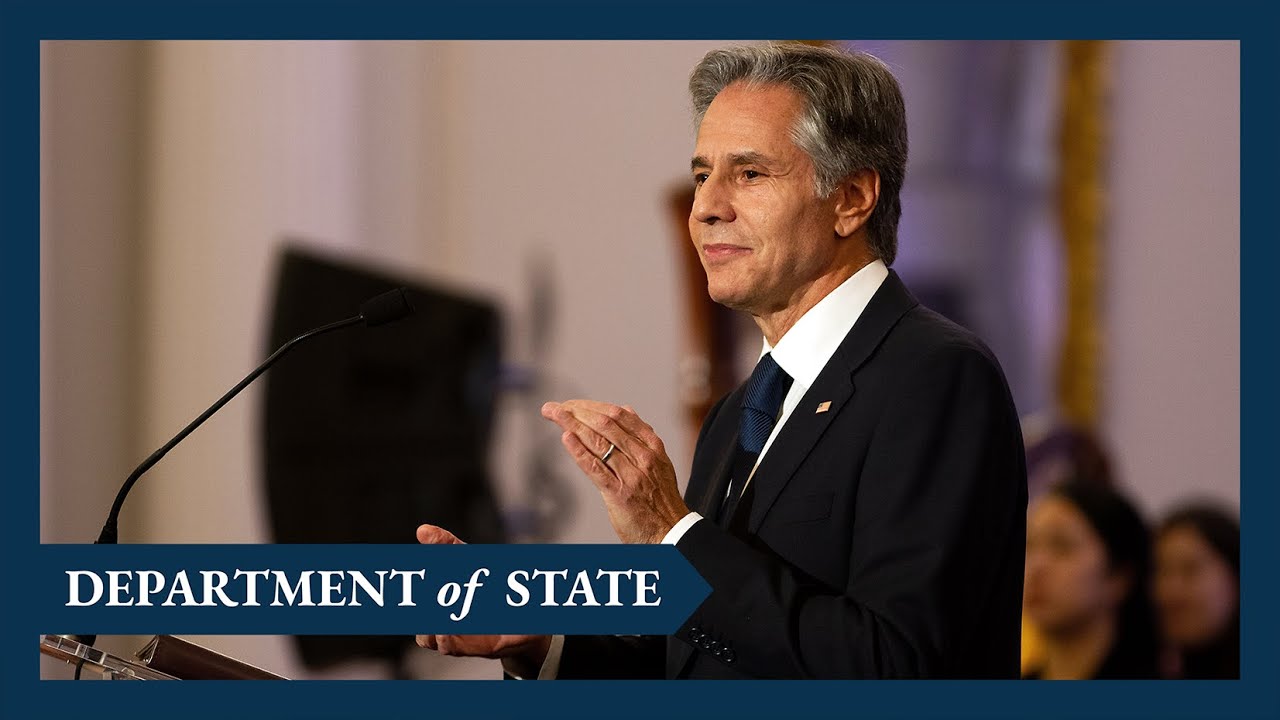
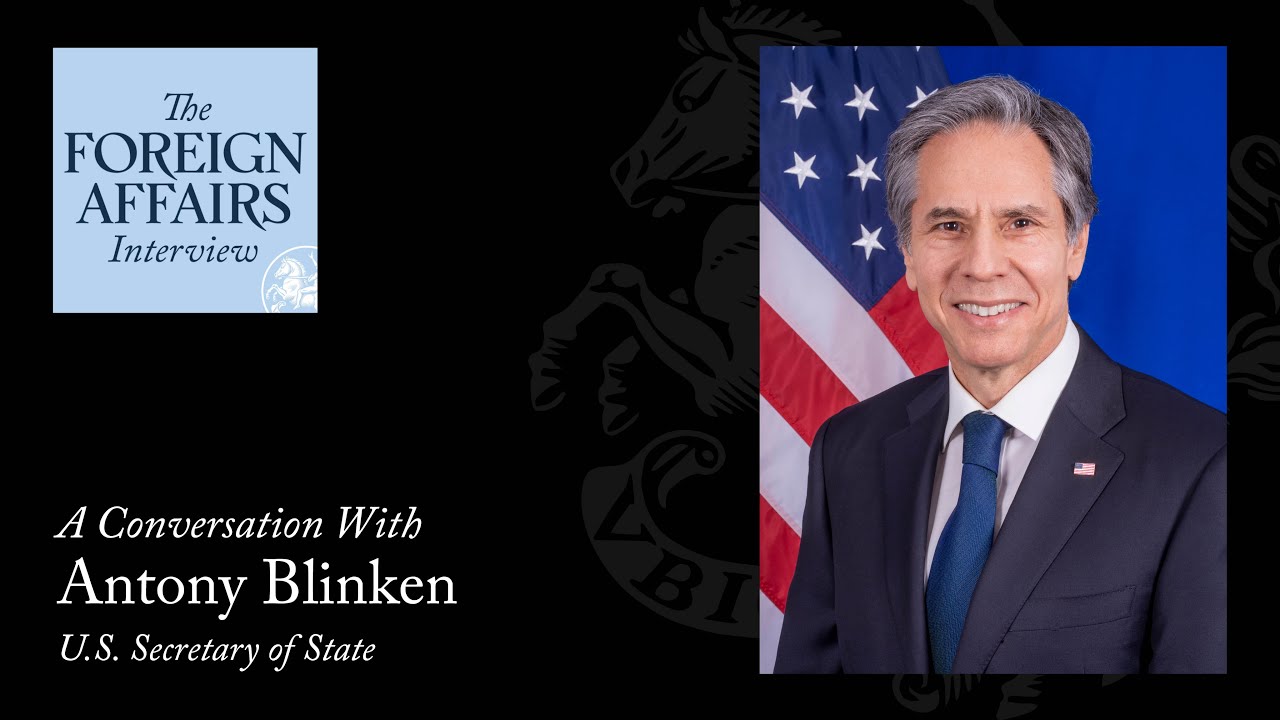
they're engaged for example right now in an extensive expansion of their nuclear program the highest end chips we want to make sure that China is not able to acquire those and then feed them directly into its military program wed sat down with US Secretary of State Anthony blinkin to talk about emerging technology and cyber security this is the big [Music] interview Mr secretary thanks so much for sitting with us today great to be with you I want to ask you a little bit about the way that you have prioritized cyber security at the department here
last July of course the state department uh was the one that actually discovered the Chinese intrusion of Microsoft systems which for those of us who cover cyber security uh was shocking that the state department would be the originator of uh discovering and event it was it was uh a little surprising uh for me too both a pleasant surprise because I was very proud of the fact that we have remarkable people in place uh who were able to do that but of course uh when you have any kind of uh cyber intrusion it's a deep concern
and it's an ongoing concern for the government it's exactly why we tried to make this department among other things fit for purpose when it comes to cyber security one of the things that you have done is create this new Cyber Security Bureau with Ambassador Nate Fick I wonder if you could talk a little bit about the effort to build not digital sovereignty but digital solidar look what we've seen what I've seen since uh coming back to the state department three and a half years ago is that everything happening uh in the technological world and in
in cyber space is increasingly Central to our foreign policy it's Central because we see extraordinary possibility and actually making a difference on critical issues that matter to people around the world matter to our own people whether it's Health whether it's education whether it's climate we also see the vulnerabilities and the dangers we know that what's happening at home and what's happening around the world are increasingly connected so we wanted to make sure that we're taking account of that in the way we set ourselves up um the way we attract Talent um and the way we
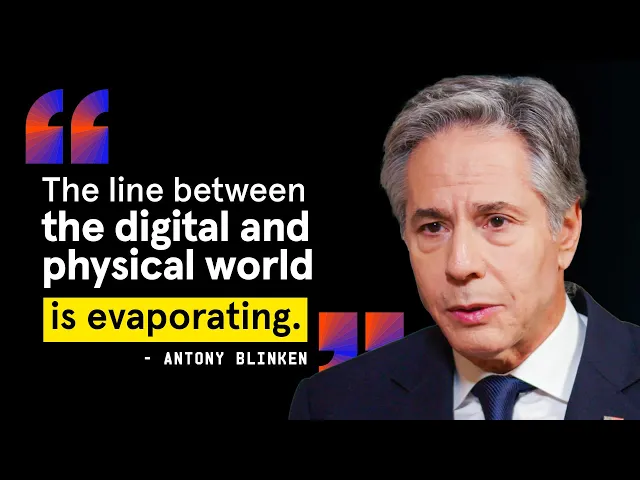
conduct our our diplomacy there's almost a perfect storm several major developments that have really brought this to the Forefront of what we're doing and what we we need to do first we have a new generation of foundational technologies that are literally changing the world all at the same time so whether it's AI whether it's Quantum whether it's microelectronics biotech telecoms they're having a profound impact and increasingly uh their conversion and feeding off of each other second we're seeing that the line between the the digital and physical worlds is evaporating er Racing We have Cars we
have ports we have hospitals that are huge and affect data centers with so much information being generated or coming in big vulnerabilities and at the same time we have increasingly rare um materials that are critical to be able to advance technology and fragile Supply chains in each of these areas is uh the state department is taking action and then finally we have to look at everything in terms of of stacks the uh the hardware the software the talent and the Norms the rules the standards by which this technology used all of this is coming together
and the bottom line is our country has to be uh at the height of competitiveness if we're going to make sure that we're covering all these areas and making sure that we're maximizing the good and minimizing the bad this Administration has made extraordinary Investments as you know in our Tech techology the chips and science act the uh so-called inflation reduction act which is the biggest investment in climate technology in history and between the public and the private we've generated $3.5 trillion dollar of investment it's an incredibly powerful thing because countries see the Investments we made
in ourselves in our own competitiveness and they want to work with us so I want to make sure that we have the diplomats who are trained uh and able not only to engage but to lead all of these conversations ations around the world we've now trained more than 200 cyber security and digital officers people who are genuinely expert and that means every one of our embassies around the world will have at least one person who is truly fluent in Tech and in digital policy my goal is to make sure that across the entire department uh
we have basic literacy ideally fluency and even eventually mastered your tenure here at F bottom has coincided with what feels like the fracturing of the dream of the global internet and we've begun to see the splintering into you know a European regulatory web authoritarian regimes using the internet as a surveillance tool overseas of course we've seen this played out in US policy on Huawei and Tik Tok I wonder if you could talk a little bit about your view of the future of the internet ideally we don't have that fracturing and certainly that would be the
preference and we've done a number of things actually to try to move in another direction to try to build broad consensus on the way technology is used because these rules these Norms these standards that's absolutely critical and the conversations about this often happen in windowless rooms um maybe at the UN maybe halfway around the world not only are we at the table we want to be at the at the head of table let me give you an example on AI we had incredible work done by the white house uh to um develop basic principles with
the foundational companies that were engaged in this the voluntary commitments they made State Department went out and has worked to basically internationalize uh those um those commitments those principles we have a G7 code of conduct the leading uh Democratic economies in the world all agreeing to basic principles with the focus on on safety we managed to get the very first resolution ever on artificial intelligence through the United Nations General Assembly 192 countries also signing up to basic principles on safety and a focus of using AI to advance sustain aable development goals these are the goals
that the entire world has set to try to move the world forward on things like health education uh climate and we also have more than 50 countries that have signed on to basic principles on the responsible military use of AI so the goal here is not to have a world that is bifurcated in any way it's to try to bring everyone together having said that you're right there are areas where of course we're in intense competition with other countries and if we can't come together on rules that make sure that we're elevating the good and
minimizing the bad well we have to make sure we're protecting our values and protecting our for example when it comes to the highest end technology say the highest end chips that we have we want to make sure that country like China is not able to acquire those and then feed them directly into its military program they're engaged for example right now uh at an extensive expansion of their nuclear program very opaque it's not an our interest to have the highest end technology we have go right into that also Technologies is unfortunately used to repress people
surveillance repress their human rights we want to make sure our technolog is not used for that but as we've said we want to make sure that as we're protecting as opposed to promoting technology we're doing it in a way that has a the smallest possible yard along with the highest possible fence because broadly speaking we want technology to get out there we see it profoundly as a a source for good for Progress we want to make sure it's shared uh widely and broadly and this is this notion of solidarity we want to be collaborating cooperating
working with other countries building capacity sharing knowledge helping everyone solve these common problems but for a discrete parts of the the ecosystem we have to make sure we're we're protected we have to have Supply chains that are not only resilient but are Diversified so we're not dependent on any one place for any critical input we went through covid we saw where where that can lead we don't want to see the same thing uh on critical technology so the goal the hope is to develop the broadest possible consensus but in certain areas if we have to
uh yes we're going to make sure that we're uh we're well protected let me ask you also about Russia and ransomware the another issue that has defined your tenure and the Biden administration's National Security agenda over the last couple of years is there more that the United States and the Western Alliance could be doing to push Russia to be a better actor online or do you see this as an intractable problem going forward look it's a it's an ongoing Challenge and the invasion of Ukraine happened uh it's obviously made the entire relationship much more difficult
than it than it already was uh and so I think unfortunately they're probably uh limits as to what we uh we can achieve having said that we're also working increasingly uh collaboratively not only with the private sector but also with other countries to develop common strategies uh to develop common approaches to build solidarity there because so many companies so many countries are afflicted with the scourge of ransomware we're sharing information we're sharing best practices and we're looking at what kind of collective action can be taken to deter uh and disincentivize those who might be engaged
in rat someware or those who are supporting Mr secretary thanks so much for sitting with wired for the big interview great to be with you Gary thank you [Music]