If you think a $3,000 espresso machine is going to fix all your problems, you are absolutely wrong. It is not the missing piece of your puzzle. Here's the hard truth that I've learned after roasting thousands of batches of coffee and pulling tens of thousands of shots of espresso.
Espresso machines are workflow tools and not flavor tools. This video is going to explain why that is and also help you stop wasting money and fix the actual problems because real flavor comes from somewhere else entirely. And that place is before you ever even pick up your PA filter.
It is your beans and your grinder. Though today we're really going to talk about the grinder. I don't really want to address how to dial in.
What I do want to address is the what and the why behind what we do because if you understand that, the flavor world will open up to you. And if you're building your dream setup, whether at home or in a coffee shop, make sure you sign up at the email link below. 60 seconds of espresso insights.
Whether you want to be a better espresso maker or technician, no fluff. That's it. And now to the whiteboard.
Here's the thing. Espresso machines really only have three jobs. One, move water.
Two, apply pressure. And three is be hot. That's it.
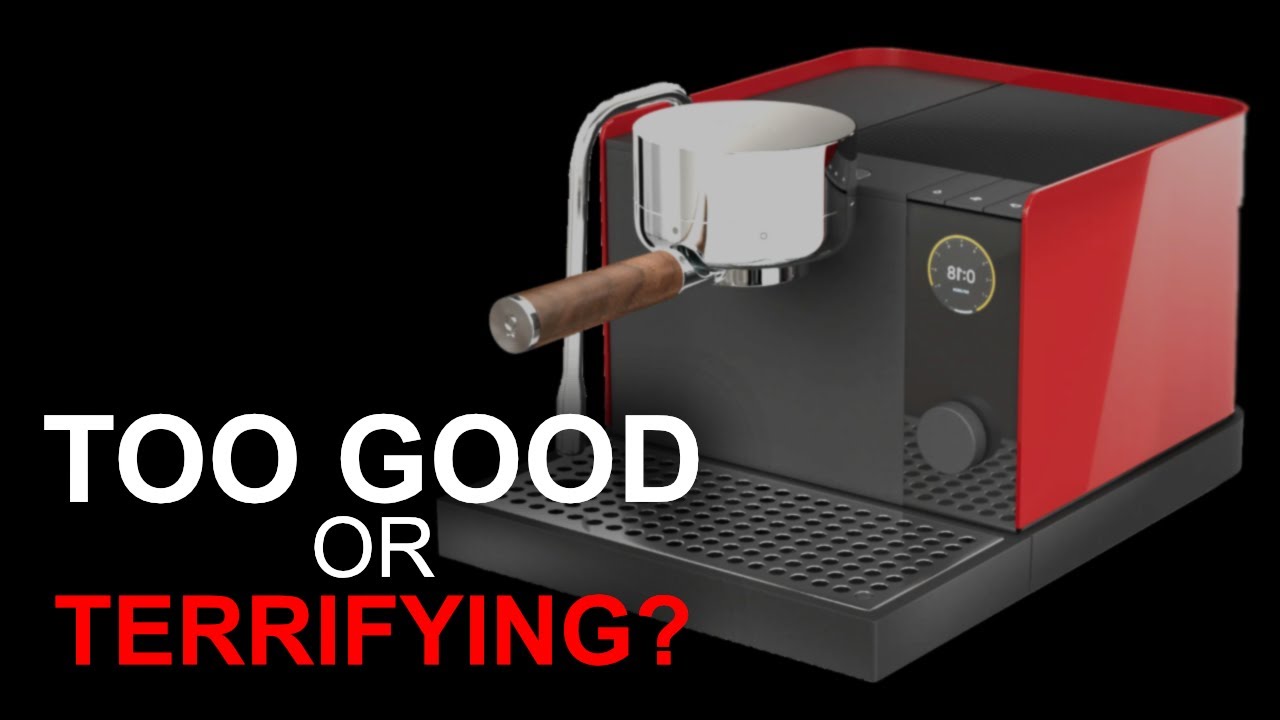
This is an entire espresso machine in its essence. And if you notice, I didn't put make tasty coffee cuz believe it or not, that is not the actual goal of an espresso machine. It's to do these three with great consistency.
These three items don't actually change anything to do with the beans you're using. All they are doing is systematically and precisely. That's why it's expensive.
Applying pressure to water through a pump, making sure it's at the right temperature, and then distributing that across your puck with a great great deal of complexity and consistency and all other things like that. Your espresso machine is not the engine to your car. It's much more like the chassis.
It's what holds everything together. It's what allows the engine to actually put power down to the road. It's why you can even accomplish anything to begin with.
But it is not the power itself. It is instead the vessel by which you extract that power and apply it to whatever application you want. And obviously in this instance that is turning water into coffee water.
Now I know I'm being a little facicious. We have to do this with a couple of parameters. We need to move water through a heating system.
We need to apply that pressure that needs to be exact and without variation unless you intentionally do that. And then that be hot exactly hot calibrated to whatever temperature you want. So I'm not I'm not trying to minimize the role of the espresso machine.
One thing that I did learn like crazy in studying engineering is that precision is expensive. Extremely expensive. So let's say I'm talking about coffee burrs for a second.
If I want to make sure that this diameter here is exactly 80 mm, the difference in cost between an 80 mm and an 80. 00 0000 mm burst set is astronomical because this level of precision requires entirely new machining. Often it requires entirely new processes and quality checks.
And if I need exactly 0 or let's say exactly 198. 8 Fahrenheit or exactly 9. 12 bar and that's what I want.
That's not cheap to do. That level of precision requires incredibly complex and precise instruments to measure and then adjust on top of now. Moving water, that's just a big pump.
Um, but instead, what you're looking for is pump longevity. And also, rotary pumps are a lot quieter. They last a lot longer, and they're usually considered a bit more precise cuz it's adding water pressure more continuously rather than fluctuating.
11 one. So, I mean, I don't think you'd ever taste that, but rotary pumps are a little quieter and tend to last a little bit longer, though they are a lot more expensive. So, all that to say, yeah, the espresso machine does do a lot.
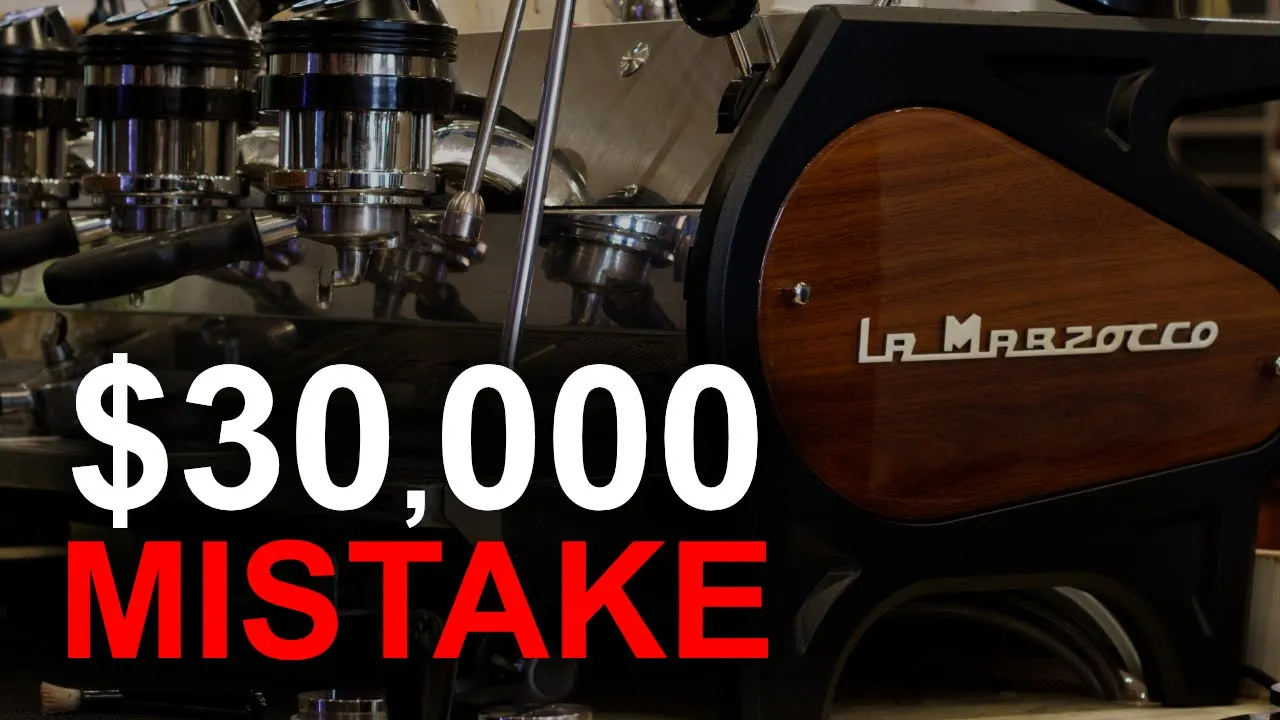
And a $30,000 espresso machine does all of these extremely well and makes the quality of life very easy on the actual shot pulling with volumetrics or gram scales or just memory on the buttons or whatever that is. It's supposed to do all this with great ease for the user. low training and then never do it incorrectly.
Never doing it incorrectly is hard. If you have a single boiler at home like a Gajia or a Ranchilio Sylvia, you know exactly what I'm talking about. Even HX machines like an E61 have to temperature surf.
You know the pain of that. You know how annoying it is. And it ends up feeling very inexact.
198. 8 is not inexact. If I want 9.
12 bars of pressure, that's not inexact. Though admittedly you have to set that more manually, but you get the idea. The precision at which it does it consistently is the expensive part.
This is the great gatekeeper to making espresso. So, you do need an espresso machine cuz you need nine bars. You need it to be hot and you need water to move through the puck.
If you don't have that, you don't have espresso. Now, the astute observer among you will notice that everything I said had very little to do with flavor, but instead had everything to do with consistency and workflow. Again, I will caveat this later.
There are a couple of things that an espresso machine can do to improve our flavor, but for the most part, the goal of your espresso machine is to make espresso consistently without compromising flavor from the machine's own error. So, I want to talk about where does the flavor actually come from. Well, I've got a couple of props here.
So, here are the five elements I have laid out here on what actually goes into producing flavor in a shot. And you'll notice that it's beans goes to grind, which goes to prep goes to your pull, and that equals your shot. So, if I want a good shot, I'm focused on these four elements right here.
specifically prep normally. And again, I'm there's a lot of nuance to this, but I want to oversimplify and we can build up later as we go into more videos. Your prep is error mitigation.
Your poll is one, your ability to produce espresso and consistency. honorable mention. It is also your workflow because a very easy to use machine is an easier workflow.
Now, that is kind of the second half of our flavor equation. So, this if we're getting a little more technical, I'm going to call this workflow. I'm gonna call this over here flavor because your beans and your grind are usually what dictate your flavor.
Your workflow on the other hand is about your error mitigation as well as just your ability to produce a shot. And if this were a pourover, it's kind of the same thing. You have your beans, your grind, your prep, and your pull, but instead of it being a pull instead of brew, right?
Taking this, your beans set the foundation for everything. This is your trajectory. It is your launch.
It is your initial velocity. It's where you're going. You put directions into the GPS.
And now you're driving somewhere. Your beans set every single thing about what you are doing. Your flavor identity, your flavor ceiling.
This is the great cap. What beans are you using and where are you trying to go with it? Then your grind is your barista skill.
Of course, you need a good grinder itself, but you also need a good barista to dial in said grinder. Without your beans, your grinder, and a barista who is competent to use it, you don't have any of this. This shot is now terrible.
You need step one and two. And yet, most of the espresso workflow and most of the espresso community is obsessed with prep and your pull. So, the espresso machine you're using and then the way you're preparing it's like, "Oh, I need to use the blind shaker.
" It's great. It helps. I think it makes it taste good, but it only tastes as good as these two inputs here on the left.
I would significantly prefer that we have bad prep and a bad pole. So, a bad espresso machine, but have monstrously good beans and a monstrously good grinder. A Ranchilio Sylvia improperly temperature served and with kind of crappy prep will still produce great results.
Maybe not the best results if you have awesome beans and an awesome grinder that's perfectly dialed in. Over here, your flavor side is what depicts your flavor ceiling. Meanwhile, your workflow and your espresso machine make sure that you actually achieve the maximum potential that are your inputs.
Your inputs decide how high you can go in terms of flavor and your workflow here says if you're actually going to hit that maximum potential and that ceiling on the flavor you're aiming for. I want you to think of it like this. Your beans and your grind write the code.
They are the flavor coding for your entire shot. This is what tells you what you are attempting to accomplish, how good you can accomplish it. It is not the hardware.
It is not a cell phone. A cell phone can have great hardware and crap software and it's still going to be bad. You need the software.
You need to tell it what it's trying to do in order to get the best shot possible. And you do that with your beans and your burrs. And this is your flavor ceiling.
Your flavor ceiling is dictated. So how high out of 10 that shot can be by those inputs because this has four primary things that it decides. First is simply your flavor input, which is what are those beans trying to taste like?
Are they good? Are they bad? If you have bad beans and you do everything else right, still going to taste bad.
If you have good beans and you do everything wrong, it still can taste bad. But if you did it right, it would have been great. And that's kind of your entire bean equation is just the flavor input.
That's awesome. This it did it did this one thing. This is beans.
Yet your grinder does something else a little bit different. Let's talk solely about the grind for a second. So, it does a couple of things.
One, it sets your particle size distribution, aka your grind size. This particle size distribution ends up leading to a flow resistance in the puck. So, your particle distribution from your grind actually is what dictates your flow resistance in the puck.
It also dictates your solubility. So, we have these beans here, but if I cannot take these beans and properly pull out all the good flavors, I've missed the mark. Having a good grinder with a good bur set is what allows for good solubility of the right flavors.
And then lastly, it is even extraction. So, you can use a grinder with an extremely poor particle distribution to create great flow resistance and that will increase the solubility. But this evenness of extraction here is kind of the big key.
And the way you get even extraction is through some kind of uniformity with the particle distribution. So let me doodle out for you what we are trying to achieve. Okay.
So we're going to call this our PA filter basket. And just for the fun of it, I'm going to say it's an 18 g VST cuz that's what I like to use. You don't have to use that.
If we have a very even grind size, and because it's all the same color, we're going to call that an even grind, then you are hopefully accomplishing the goal of an even extraction. But now, uh-oh, I'm going to introduce new color to indicate a big boulder here. And we're going to use, we're going to say that this purple is now our flow.
Okay, I hope it pops up. I'm going to come down. This is water.
Okay. And normally it was kind of, you know, weaving and dodging between all those grinds, but you got a big chunk here and now it's splitting this flow out sideways. You are not getting any flow underneath here.
So you kind of I mean you will saturate, but you're missing some underneath, but then it's trying to come back around and that water pathway is now not clean. All of the stuff there on the inside of that boulder that we introduced is not getting good extraction. It's causing excess extraction on the outside because all the water there above is now being forced to channel right around the outside.
So, we're pulling too much out of the grounds on this side and too little on the grounds at this side. Now, you could imagine this is one boulder I introduced. Imagine I introduce a boulder here, a bowler here, a boulder here, and a bowler here.
You could see a world where all of the sudden this water and it should be coming, you know, all the way down like this. All the water coming down this way now either has to come gushing out this side and around or run through the center of these two causing extremely uneven extraction. And this is what's causing all your bitterness and your badness and all such things.
On top of that, instead of boulders, let's say you have green fines, you have way too much fines that ended up, you know, popping in there. These are going to extract everything good out of them very, very fast and then start pulling out bitters. So, the mix of boulders and fines is now creating every adverse flavor that you do not want.
So, as good as these beans were, because our grinder sucks, we are getting this happening all throughout the inside of the basket. So, instead of it being an even bet, think of it like even particle size sand, perfect sand. Instead of it flowing through very specifically, we added gravel and we added talcum powder to that mix.
Now everything is off and the flow is no longer good. So with your grind specifically, you are creating a bed that behaves in a specific way. The point of a good grinder is that it's very uniform every single time.
And you know, we're not saying that you completely get rid of fines or you completely get rid of boulders. There is such some such thing as a high uniformity grinder like an EK43, which is attempting to have every single particle size be the exact same. But instead, we're trying to work with the solubility curve.
Because a lot of times, what you'll end up finding is a graph that looks like this. And this is usually, I believe, in the nanometers. Don't quote me.
Could be not nanometers. And this is your quantity per volume. Okay?
So, let's say we're analyzing one gram of coffee through a grinder. what you end up having and you want it to be right here at I don't know what this is 200 nmters. Every single grinder is going to produce a bell curve that looks something like this.
Now the consistency of this bell curve is what dictates how or what we get in this. If this bell curve instead of it being a sharp curve like that looked more like this, this here means you have a very wide particle distribution. While our green curve, which is what you might want more, is a narrow distribution.
The idea is the closer the grouping is within some standard deviation, the more uniform that basket is going to act because you have less random chance. You have less unevenness of the basket. So, I personally tend to prefer uniform particles or at least something where it's extremely consistent every single time.
There's a lot of science and a lot of disagreement and you know there's high uniformity, low uniformity, producing fines, not producing fines, how RPMs affect it, all that good stuff. I am not getting into that here. What instead I'm trying to do is tell you how good or how well your grinder accomplishes the ability to create even particle distribution that is predictable and desirable is what you are paying for in a good grinder.
It's the whole point of it. It's to make this basket down here act consistently and not introduce a bunch of hidden problems like our bad channeling right here. We want it to be uniform, largely regular extraction through this basket and some kind of consistent distribution so that we can dial it in because if we are consistently getting the same distribution whenever I go to that grinder and I change the setting, I know I just bumped this over a little bit in either direction, but that bell curve is still going to act the same regardless of where I put that with, you know, with some degree of variance obviously, but you get the idea.
And all of this right here that I'm now erasing is the great psychological trap that all home baristas seem to fall into. Let me explain what I mean. Because we all have Velociraptor brains.
And Velociraptor brain says shiny good. Espresso machines are kind of works of art, especially levers. They look awesome.
They're big. They look nice. They're shiny.
They make you feel good. I didn't mean to sound like Jordan. They make you feel good.
everything about it is great. No, we have Velociraptor brains that says shiny is good. And instead of spending the money on the thing that I just explained actually dictates your flavor, you say shiny good.
I want shiny. I don't want the grinder. The grinder it it's there.
It's a It's a tool, but it doesn't do what I want it to do. It does everything you wanted it to do. That is the point of the coffee grinder.
And the point of the espresso machine is simply your workflow. It is a tool. It is what I explained earlier.
Why do we get this backwards? If you change your espresso machine because shiny good and you're like, man, I didn't get that big of a flavor bump. I wonder why.
It's your grinder. This is the whole point of this video and the title of the video. I don't know if you've ever been to a coffee shop that has like a slayer on the bar.
I have. And the shot, uh, not going to name the shop. It was terrible.
It was really, really bad. And the reason for that is they missed with their grind and they missed with their beans. Their grind I again I not too much shade.
They had a very poorly serviced Malcone K30 on the bar. And just from the sound of the motor kind of struggling, I think the burrs were probably really dull. And then their beans were I mean they're fine.
They're fine, you know, until you have dull burrs that don't grind well. Now your particle distribution is off. So yeah, you're you're using a slayer.
It's awesome. The shot sucked because the grind was bad. That's it.
Your slayer doesn't fix that. Your grind and your beans dictate how good of results you could potentially get. You can mess it up.
You can have a bad machine or you can have a bad prep. But those two things are actually prerequisite to a good shot of espresso because the again I know I've said this before, the main goals for an espresso machine is one repeatability which is just another word for consistency. It is workflow and it is reliability.
Now as a quick caveat cuz I said I would do this. When do espresso machines actually improve flavor? I am not going to say that temperature changes is going to improve your flavor.
I think it produces different flavor and you're welcome to disagree with me. And we really haven't explored temperature profiling much. Hope to see that in the future.
But the big two, one is your pressure profiling or flow profiling if you're more technical. And the other is pre-infusions. Now, for a pressure profile, the reason why I say it can improve the flavor is let's let's do a little doodle here.
Okay, this is your start to the end of the shot. You've got maybe what you would call bloom like in a pourover and then you've got the nice stuff for the first half of the shot or whatever and then you have the not nice stuff, but kind of you still need it because it it does balance out the shot. So the thought process with pressure profiling is maybe for this bloom we're going to keep and this is now a pressure line.
Okay, you ready for this graph? This is time. So the idea with a with a pressure profiling if let's put this at three bar and we're going to put this at nine bar.
We might start down low for this first bloom phase up until just for the fun of it. We're going to say that that's going to be 3 seconds. So, we're keeping it low pressure at first.
And now we're kind of entering into the nice stuff category. And I want more pressure because mo flavor. I want to ramp that up all the way toward nine bar for this pressure profiling.
And I want to kind of hold on to that. And you know, as you start approaching from nice stuff to not nice stuff, you do get a little bit of quality diminishment. So, I'm going to lower that pressure a little bit.
And now we're really going to tail off towards the end until we hit our full, let's say, a 30-se secondond shot or our full volume or whatever that looks like. So, this kind of flavor profile or this kind of pressure profile should produce a more acidic shot. Now, acidic does not mean acidy, just more flavor.
Uh, a lot of times it's a little bit more balanced and it's a lot sweeter. So, this might be your classic slayer shot, the fabled slayer. So hopefully that kind of tells you I know I was slightly out of frame with this board here.
Um but this this is the whole point and a pre-infusion is just you know you're kind of thinking of it like a bloom and you are allowing that bed to expand with water. So whenever you first add the water that puck starts to expand as it saturates before you slam it with nine bars of pressure which is like 130 PSI. You're gently wetting it, allowing it to kind of get ready, and then you pop it with pressure, and that does help with channeling.
It is, it is a good thing. We actually do that at our shop. But going back up top here, this is the goal of the machine.
And you'll notice this does not include your grind, does not include your beans, does not include your prep, and it does not include your barista skill. Specifically, your grind, your beans, and your barista skills are all of your inputs that dictate your flavor. Your prep is an error mitigation.
And then these three things are also error mitigation and workflow. If you want better espresso, the place you need to start first is with your grind in your beans. And then also make sure that your barista skill is up to snuff.
But it's very hard to get your barista skills better if you're consistently using bad grind or bad beans. You need to first get better beans. Once you've done that, learn how to dial in and that is your barista skill.
But if your grinder itself is quite bad, there's not a ton you can do. You do need a good grinder. I'm not saying go spend the moon on this.
I'm saying don't use a bad grinder. Let's think about this like a system for a second. Your espresso machine is your delivery system.
It is taking what you put in, converting it into a new output, which is your espresso shot. Meanwhile, your beans and your grinder are your flavor conductor. Learning how to dial in, again, we can talk about that later, but learning how to dial in is what actually fixes the system.
It is not your new fancy espresso machine. This is the why and the what behind what we're doing. You need to understand the way different particle distribution affects your basket and your pole and all of those such things.
So, I would ask you to stop thinking in terms of of upgrades and upgrade itis and start thinking in terms of systems and system balance. Most of the time what ends up happening is you end up being like those dudes that do arm wrestling that have a giant bicep and everywhere else is small. Your espresso machine often will outclass your grinder unless you get this right.
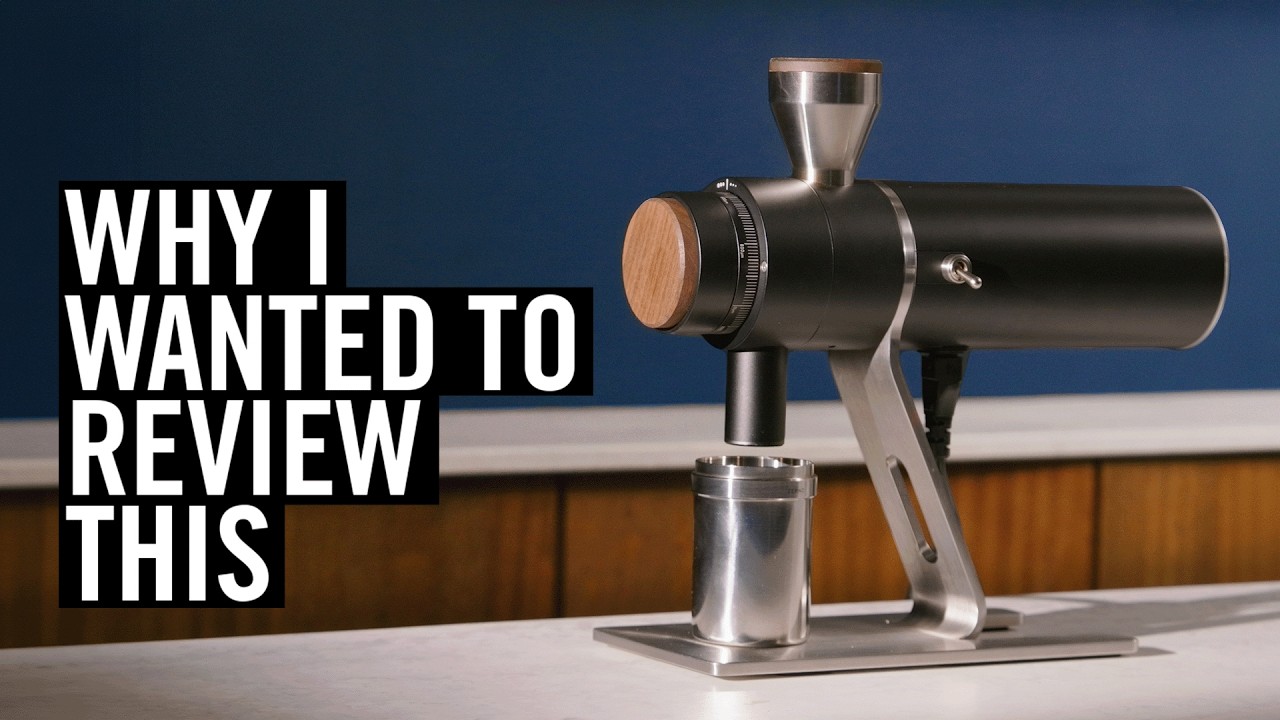
I would so significantly prefer to have a Weber EG1 with an unmoded Ranchilio Sylvia instead of having a base model Baratza Encore. No shade to that, but using that with a GS3. I'm gonna get way better flavor, though it's going to be more annoying to do because it's bad workflow like we talked about.
I'm gonna get way better flavor from my Weber with good beans than my Baratza with good beans and a great machine. Again, you can disagree with me. This has just been my experience.
I think if you are trying to budget out and you are an espresso fanatic and you don't much care about your milk drinks, I would spend more money on your grinder than your machine. If you want to make milk drinks, that's fine. No shade.
I love a good latte. Then I would go 5050 on the price tag. So if I'm spending $1,000 on a machine, I'm going to spend $1,000 on a grinder.
And obviously there's diminishing returns. You can buy a Slayer for 9,000 bucks or something silly like that. And then they don't sell $9,000 grinders to the public.
So that does end up changing up a little bit. But once you start getting to that,000 to,500 range on a grinder, you're really getting to diminishing returns and you need to be a fanatic to go higher than that. But up until about that point, I might say, you know, $1,500.
If I'm spending $2,000 or $2,500 on an espresso machine, I'm really considering at least a,000 to 1500 on a grinder. below that like a Ranchelio Sylvia or a Bambino or something like that. I'm going dollar for dollar if not higher on the grinder side of things and then upgrading my espresso machine over time because the great limiter on your flavor is your beans and your grinder.
I need to get that through. Your system is built on those two. And then your espresso machine, excluding pressure profiling and pre-infusion, which you can mod your espresso machine is generally just dictating consistency of workflow.
And a lot of times very high levels of barista skill can work around those limitations from your machine. Now that you understand where your flavor limit is, let's get into the actual framework that I use in my own shop and at home to dictate where we are going with flavor, how we are accomplishing that, and then also the trade-offs that you end up facing whenever you're trying to build your own coffee shop system or coffee bar at home. And it will help you build your system backwards by seeing how shops do it, how you can do it at home.