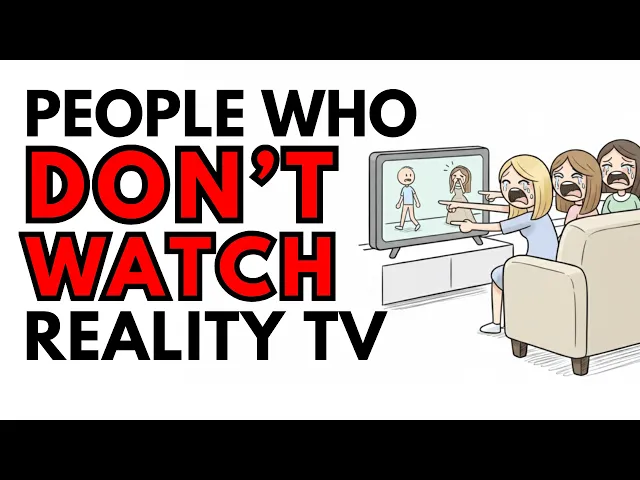
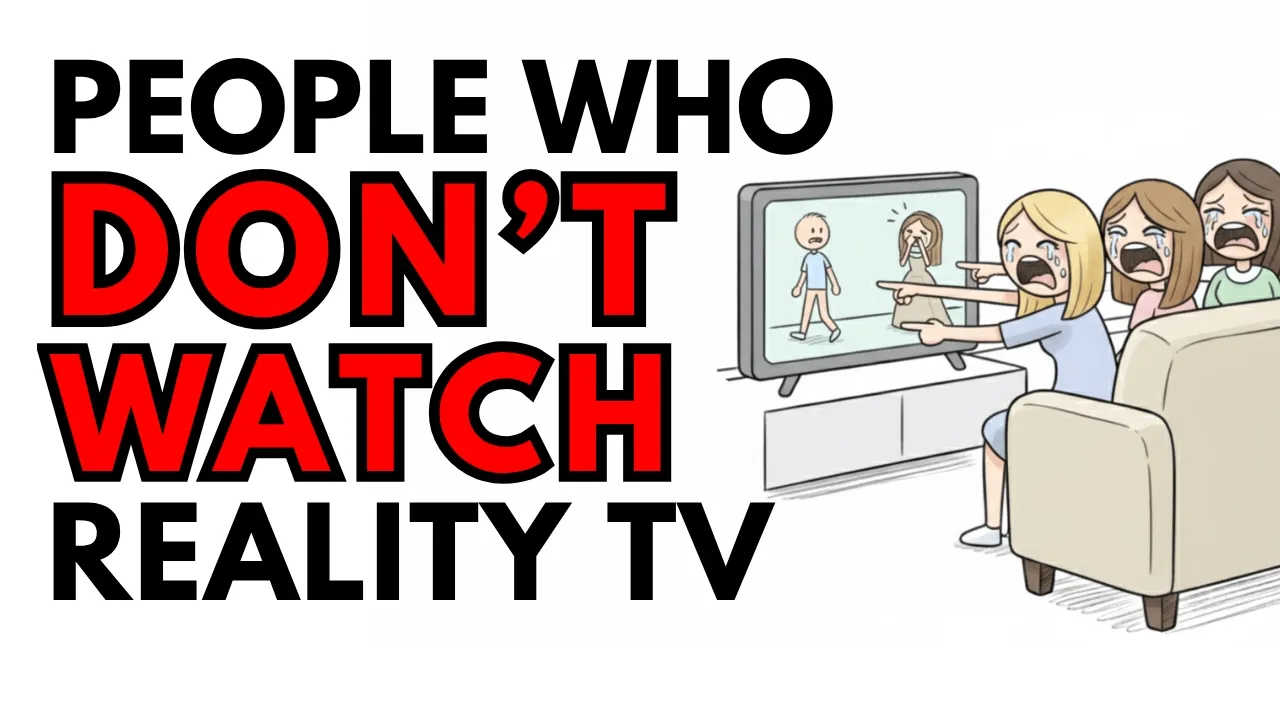
Have you ever noticed that certain people refuse to watch reality TV? While everyone else is binge watching dating competitions and survival shows, they're doing something else. But psychology shows that avoidance of reality TV isn't random.
It actually reveals something significant about how their minds work, what they value, and how they protect their mental health. Let's break down the real psychology behind people who don't watch reality TV. One, they have a high need for cognition.
Psychologists have discovered that people who avoid reality television often score higher in what's called a need for cognition. This is a psychological trait that describes how much a person wants to be challenged to process complex stories and ideas. When you have a high need for cognition, your brain craves intellectual stimulation and analytical engagement.
Reality shows typically are unable to offer this analytical demand. They rely on emotional reactivity to staged or semi-staged interpersonal conflicts rather than narrative complexity. These cognitive people prefer television dramas with intricate plotting, films with complex narratives or documentaries that demand active mental engagement.
When their brains are seeking that challenge, reality TV feels empty by comparison. They need to actively track character arcs, predict developments, and engage with philosophical questions. The difference is fundamental.
Their brains are wired to find meaning through intellectual challenge rather than spectacle. Two, they recognize the deception and value authenticity. Research reveals that reality television is far from real.
Participants present calculated versions of themselves, and producers manipulate events to manufacture conflict. People who avoid reality TV recognize this fundamental deception and make a values-based choice to opt out. They're aware that what they're watching isn't authentic human interaction, but a carefully constructed narrative designed to maximize engagement.
This awareness isn't snobbery. It's a reflection of what they value. When someone actively avoids reality television, they're making a statement about authenticity and truthfulness.
They refuse to treat manufactured conflict as equivalent to real connection. This moral framework shapes how they consume all media. They want content that respects them as viewers and doesn't rely on distortion.
Three, they prefer plot-driven narrative over relationship-based drama. Research in media psychology shows that people have different preferences for how stories unfold. Some gravitate toward spontaneous social dynamics and interpersonal conflicts like reality television.
Others prefer highly structured narratives with event-based complexities and careful character development. Non-reality TV watchers typically prefer the latter. They want protagonists to struggle through meaningful obstacles where resolutions feel earned.
Reality shows create conflict artificially to keep viewers engaged. But for people who avoid reality TV, this feels hollow. They'd rather watch genuine moral complexity in a scripted drama than watch strangers fabricate problems.
Those who watch reality TV typically are drawn to observing social dynamics. Whereas those who don't find satisfaction in how events connect and characters grow through plot development. Four, they're aware of how these shows manipulate behavior and psychology.
People who consciously avoid reality television often understand the psychological mechanisms at work. They know about social comparison theory where people constantly measure their worth against others highlight reels. They understand observational learning where viewers imitate behaviors they see on screen.
They recognize that reality shows distort people's perception of normal social interaction and can normalize behaviors that would be unacceptable in real contexts. When someone becomes aware of these mechanisms, consuming reality television starts to feel like voluntary participation in psychological manipulation. Research shows that people who watched reality television had above average trait motivation to feel self-important and vindicated.
Non-reality TV watchers likely have lower motivation toward those gratification-seeking impulses. They've recognized that comparing themselves to constructed personas and artificial drama isn't a path to genuine confidence or satisfaction. Their awareness acts as a protective filter.
They see the machinery behind the curtain and choose not to engage with it. Five, they prioritize mental health and self-esteem protection. The final piece of this psychology is about protection.
People who avoid reality television often make that choice explicitly to safeguard their mental well-being and self-esteem. Watching reality shows can harm confidence as viewers compare themselves to more successful or attractive individuals on screen. While there's some research suggesting it can boost confidence through downward comparison, the net effect for many people is psychological strain.
Non-reality TV watchers recognize this dynamic and choose to avoid it. They understand that their mental health is worth protecting and that constant exposure to manufactured drama and comparison triggers isn't beneficial. This isn't about being weak or sensitive.
It's about being intentional with how they spend their mental energy and what they expose their minds to. They recognize that entertainment should enrich their lives, not drain them. [clears throat] This protective stance reflects emotional intelligence and self-awareness.
They know their vulnerabilities and they take steps to manage them proactively rather than passively consuming content that exploits those vulnerabilities. So the next time you notice someone who doesn't watch reality TV, don't assume they're avoiding entertainment or that they're being judgmental about what others watch. They might just be more aware of the psychological dynamics at play.
Recognize their own cognitive preferences and have structured their media consumption accordingly. They're not disconnected from culture. They've simply chosen to engage with it differently.
Drp a comment and share your story. And if this resonated with you, hit like and subscribe because we dive deep into psychology that actually explains how your mind works. See you next time.