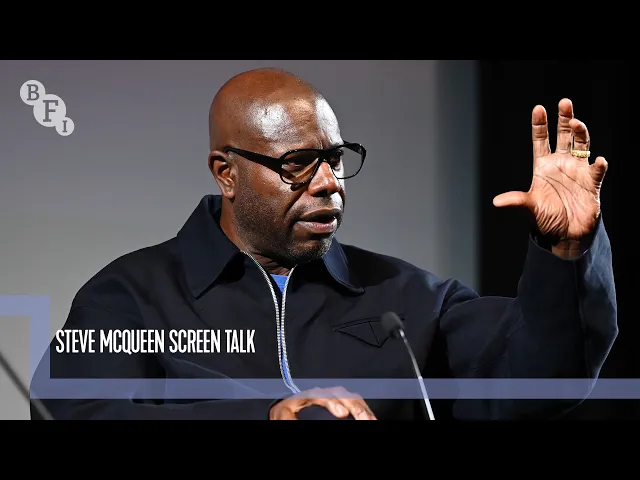
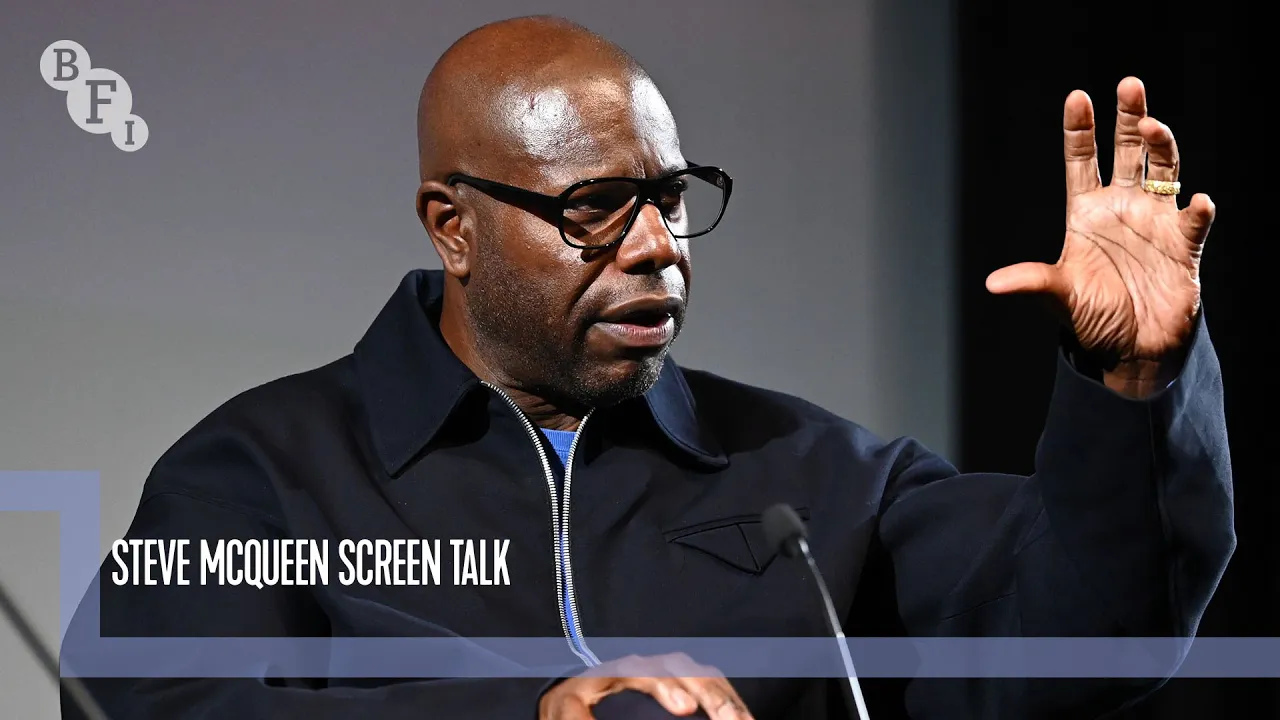
You've been in Amsterdam now living for a lot of years so I mean is London still home does this still feel like coming home I'm a Londoner I mean that's that's who I am that's what I am I'm a Londoner you know wherever I go I'm a Londoner that's it um yeah I mean yeah I'm in Amsterdam but you know um 40 minutes away on a plane and you know my mom give me grief and yeah I'm back I'm back home we don't want your mom to give you grief At all I me me too
seriously let's talk about Blitz we're gonna come back to Blitz which the world premier of which is is tonight uh it feels like a London film to its bones uh very much and it's set obviously in 1940 but when I saw the film I have been lucky enough to see it already you will see it later uh it also felt like a product of a a 1970s London childhood when like at that point the war and the effects of the war and the blitz were Still actually a physical reality for londoners very much a physical
reality I mean I I I grew up you know uh in Westland in sh bsh first androv and eing I mean you know again yeah represent um you know I grew up in adventure playgrounds you know with this alternative playgrounds you know run by hippies which were very dangerous if you can remember if anyone's here you know who grew up you know goodness gracious tires swinging across this you know These were sites were they were bomb bombed out sites which were never sort of U you know they were just left as they were um you
know walking home past terrorist Terrace houses and it being interrupted by a 50s build and continuing on of course that is where a bomb fell so the blitz you know again was surrounding you know my childhood and I imagine most of our childhood who were people who live here um in the 70s and 80s um and Not and benounced to me that was a part of the landscape um a sort of Silent uh uh sort of History which was around us you know was Ghost which was which was present very very present but not sort
of evident in in a way of labeling what what was what before we get tooo deeply into the films you've obviously had this kind of this career in this life before and parallel to your life as a filmmaker an artist and I wonder how those different identities speak to each other Steve McQueen the artist Steve McQueen the filmmaker are they are they colleagues are they friends are they Rivals you know what how can I say I I never think of myself anything other than uh me as it were I mean I never think when I
when I say that I never think of artist filmmaker or I just do stuff I just do stuff and I'm lucky to do stuff and I I never differentiate that uh those two sort of practices um you know Sometimes something wants need needs to be a film and other times something needs to be an artwork and that's about it um and I think you know what's great about this generation is they don't label themselves I mean you know maybe certain people were for forerunners of that and you could do what the hell you want to
do as long as it's half decent you know what I mean let's look at one of the films to begin with though we have hunger from 2008 which which your First feature so it's it's a film for people who haven't seen hunger first of all go and see Hunger belatedly it's a film about the Irish Republican hunger Strikers uh in 2008 Wonder at that point to make a British film about Irish republicanism where the the Republicans weren't these balled up terrorist villains uh that felt bold I mean we will come back to this theme with
blitz but did it feel like a risk did it feel like a gamble you know what I just Thought it'd be my first film and my last film so I thought you know what go out with two guns blazing you know what I think I you know I I I came across a subject look I grew up in an environment where you know there was this activity going on in you know in in in in in Northern Island and Ireland in in the UK and it was part of my everyday it was part of my
of of my living existence as as a Londoner as a as you know as being British and you know the fact of this Gentleman called Bobby sanss and you know what was going on then I just thought you know I I I needed to make a picture about it it was again I was an artist working as artist I thought no this needs to be a feature film so it was the subject that maybe want to make this into a feature film and it demanded it demanded to be in an narrative why is it demand
to be a narrative because it was a story that wasn't really told I mean I grew up in a situation putting The TV on and there's a gentleman's photograph with a number above his above it and thinking is that his age and my mother saying to me you know that's how many days this person be on hunger strike and me identifying with that because again as a child the only Power you have is to refrain from eating you know that's the only Power you have yeah yeah and then your your mother or your father sends
you upstairs without any food or whatever imagine that's the only Power you have is to stop anything that's that's the only Power you have and it's pretty powerful and I'm and then doing my research I remember that Paul and kale had a interview with Godard and he was talking about the manof and he was talking about Bobby Sans and he was talking about childish thing about childishness about it and it kind of actually just referred back to me as a child and having the only Power I needed the only Power I had was to refrain
from eating so therefore immediately I had this link and I thought okay let let's let's let's let's dig into this and the film is so vivid and it's so fully formed I remember seeing it for the first time and you sit down and obviously you did already have this reputation as an artist so you're curious as to what you've delivered with a feature film and then it's kind of mind-blowing I don't want to talk too much we actually have a Clip from hunger and there's a lot to talk about so let's let's watch the clip
and then pick the conversation up afterwards this is the dirty protest and the blanket protest which has been going on for years all in support of the same demand political status that is to say different treatment for people who commit crimes hideous crimes for what they claim to be a political motive and that is what the government will not Grant so I should I should have said I mean that's very very early in the film and when I rewatched the film what struck me among the many things was how much confidence you have obviously in
your own filmm but also in the audience in the people watching because that scene comes in we're not introduced to this character we don't know who he is you see that scene unfold it plays on beyond that as well there's very little context But you have total faith that the audience and filmmakers don't always treat audiences as as smart individuals but you take us for being smart and smart enough to follow the film yeah um I mean I I had never been on the movie before until I made hunger never been I didn't want to
in fact I never I had an opportunity to be on the film said oh I went on my own um and um I was just I I I I I had a conversation with this gentleman called sha bobbit and Shan had Done a movie um uh which I I loved um which was uh uh what was that Bloody movie I it will come in a second and it was I think it was short in super 16 um um and I loveed the movie and I I had a conversation with him and again we were we
were working I gave him the script that he wanted to do and that was great I suppose what it was was you know I yeah I I grew up in in an environment like yourself and a lot of people like the BBC or the TV where things were way Above my head when I'm watching like what the hell's going but at a certain point you get into it at a certain point you're sort of it's not they're not talking down to you they're talking up to you so you have to rise to the sort of
subject matter and somehow it sort of it elevated your interest it sort of for me it was just something which was sort of you wanted to know more and again I audiences are smart they're smart people and again if they don't get it they get It later ah and to reward on our audience for their attention and to reward the the audience for their sort of thinking back in time on on a narrative is is for me it sort of it could only sort of be stimulating It could only be sort of uh you know
rewarding to sit there and watch something unfold um I mean the other thing you're doing in that sequence obviously is in a film about Bobby Sans and the hunger strike cuz you're taking Us almost almost was backstage it's like the staff room in school you're you're introducing us to the guards I was int I what was very much interested in is routine know ritual ritual you know again you know when you get up you get up in the morning you know you get up when you wipe sleep from your eyes you sort of stay you
have five minutes of you know dazing whatever maybe someone reaches for their phone now anyway and then you know get up and you brush your Teeth and all these things that you you take for granted you don't think about I thought oh let's let's let's let's study that what is that you know you never take it for granted I remember sort of interviewing uh you know the a lot of people who actually were on the hunger strike and said okay was it raining well what kind of rain it's all about the things in between the
the spaces in between the words of history books because that's why I was interested what Made so motivations what made actions it was also the environment and this ritual of this prison officer you know this was actually there were prison officers who who lived on that street and it was this ritual of obviously a Car Bomb which they would doing I I I sort of I love the idea of the sort of you know this idea of ritual um yeah and just look and just looking looking looking looking and how precisely you are you mapping
in advance because like with that sequence For instance you know it starts and it's kind of an excert from within a scene you have the keys and then you follow the sequence through and then we're moving through spaces so we move from Freedom into captivity into pris and then there's another set of keys and it's got the Union Jack there on and you don't labor that point but it's it's there I mean is that something which comes together later or is that something where actually you know on the Day you're shooting exactly what you're trying
to achieve that comes together often on the day we're shooting because I love it the fact that you know scripts could only take you so far and it's the magic of movie making magic of film making things I'm I'm an interest for me what's important is from the catering to hair and makeup to electricians the Sparks the gathers everybody is on together it's our moving so once you have a situation with everyone's Together one's field it's their movie they're they're involved you know you know I I take a good idea from anybody you know I'm
not you know I think a director is not about an not being an a director is about listening you know and and and and and and feeling and smelling tasting and finding and then Ah that's interesting well look at that okay's that okay yeah interesting because it's our movie and then once that is that that is apparent the Foundations of of are set then when the actor comes on board actors are like you know they're like they're highly sensitive individuals they could they could feel what if something's up and if they feel they're in a
safe space they feel they're in a space where it's there's a certain kind of structure where they they feel that there is there support and there's certain kind of togetherness then they'll go for it because it take space for them to Explore and not to be judged it's beautiful and then things happen you know again I think you know it's it's about you know it's about being alive in the moment you know it's I'm not I'm not a I'm not a a cartoonist you know I don't do storyboards so it's about about what can happen
in the moment it's very important that a director shouldn't be an is definitely the quote of the quote of the morning so far literally there's too many Trust me I'll take your word so I've heard right right after hunger you you don't come back to England you actually move on you you take that that that Journey over to America you make what ends up becoming like a Trilogy of American films and it starts in New York with shame New York's another city that you actually have a connection with right yes yes yes I I have
a lot of relatives there um and I went to NYU the first I went To the states in New York uh it was 1977 you know Elvis died and there was a blackout I remember that clearly when I was there with my with my uncle um but honestly I didn't want to make shame originally in New York I wanted to make it in London um but what happened that point there was things two things happened that point there was a sort of situation where in a Tiger Woods happened it was myself and I Morgan that
wrote the script and uh when Tiger Woods Happened and there was the Murdoch there's a lot of things with Murdoch happening at that time as far as I think there was scandals or things going on that time um people just didn't want to talk everything just shut down we couldn't get anyone to talk about you know the subject matter so then I thought to myself okay well let's go you know you the city never sleeps New York and it was the best decision I ever made because there it was it was it was there And
we spoke to therapists and you know sex therapists and so forth who work with people like that and also people who are sex addicts and it was like the bloody Matrix like oh my we walked out a certain we walked out these sort of conversations was like the world was totally different it was amazing and there me and Abby it was like it was like Columbo and IR inside we just like we just you know we just make our notes and so I know I know cafes and make pay But it really was investigative reporting
and we just got together and then yeah it was it was beautiful was fun it was fun to do it feels like there's two things going on at once at least two things because you have New York and the Cinematic Splendor of New York and it feels like you're kind of you know enjoying that and yeah obviously the film as you say it's about sex addiction it's also without laboring the point and doing that journalist Thing of of drawing out themes it's another film about confinement it's a film about someone confined within an addiction yeah
it's about again it's about trauma and and how it sort of um you know you know um how it how it sort of manifests you know it's about it's about Brandon it's about the these two you know this brother and sister it's a family drama in a way with but within within an epic sort of uh within a city you know this epic City because Often I would be in newor York in in you know in a highrise sort of hotel room or whatever and I would look out I would look out look out I
look out because know we're londoners we don't we don't have that view we don't have that view at all and you would look at and I say okay it would be like the the the telescope turning around as a micro a microscope go okay who am I in within this you know having that perspective really puts you in sort of some sort of State of who am I within this world what what is my place who am I really it's quite confronting actually um and therefore that's that's how you know Brandon and who he was
within that situation and and so forth but yeah has to do with how trauma sort of you know again sort of you know you know sort of um manifests itself in in in adulthood you know as children I remember reading an interview with you at the time saying that that point it Was the first contemporary film you'd made 2011 and that you wanted to make a film which was in some senses about 2011 and and you wanted I remember the quote was I want in 20 years time I want people to look back and say
that was that year so 13 years kind of into that process now and I I still think it holds up it's that idea I guess of being like a historian of the now like you're pinning down what the now is is that for sake well I think you know again it's Interesting how you know again the generations now the young people now are talking about things that we as I grew up never talked about you know again you know trauma things like that was it's like you know you know like it was like like walk
it off you know like you know what I mean you never you never talk about anything or like I'm I'm hurting he like shout up get on with it what's the matter with here come on shut it and now you know this is what you know this Is what this things are be people are unraveling now things is I mean I such a great relationship with my daughter thank Jesus or thank God or thank Allah whoever that she could talk to me in a way that I could open up myself and think okay yeah okay
yeah because i' I've been taught as a black man as a black person get on with it and I thank God I got on with it because I wouldn't be sitting here now I can't I can't you know I don't have the privilege of of Sort of as a black man to sort of sort of sometimes to think okay oh I'm hurt and upset because I got to get the on with it I got to get the on I don't have that privilege to sort of have that sort of that situation sometimes but I know
I have to because for my mental health I have to but it was interesting to sort of think about Brandon and in that way have you know playing out their trauma within their their lives and and and and in in Ways which are sort of unhealthy so yeah you could look back at that and and and have those kind of conversations as as as as as as you said and they're doing the best they can with what what it is but the intimacy that Brandon obviously is is scared of is is is very much um
you um and oversharing of it's heavy it's heavy stuff let's talk about 12 Years a Slave because as you say because because hunger stands kind of alone I think and and then shame is a Film I think in some ways about whiteness you talked about it as a film about entitlement in some ways at the time and then 12 years of slay comes along obviously at this point you are moving back in history the 1840s and to a story of Solomon North up a Freed Man Who is sold into slavery within America I mean that
always seemed like a very crucial part of the story this was this was such a definitively American story it's a Monumental piece of work now even Now uh I want to again watch a clip and then let's pick up the conversation it feels like 12 years of slave is is another pulling back of the curtain I mean in that sequence particularly there's you know the gentility and Civility and then you pull back the curtain to what's really going on then heavy oh my goodness went back there um 12 Years a Slave okay right so I
go to Hollywood yeah what happens when you Go to Hollywood you know you do one movie and then again I end up at certain Studios and they think you know it's hunger you know Make Some Noise blah blah can all that business there's long story about Hunger one day I'll tell everybody it be fascinating one day I'll tell I'm going to come back to that you realize that it's a very fascinating story anyway moving on I might just I might SPO the beans why not when publicist say no right moving on How the world really
works moving on um so um I went to Studios and I think people thought I was white of course I don't know of course I say because I did hunger and I was like oh I remember sort of see them sort looking at me and you have these meetings these meetings lead nowhere but everybody just meeting about a meeting there's time to SP time to sort of waste in the day and all would exact this is back in the day this is back in the day so we're talking so 2009 2008 but whatever and it
was It was kind of apparent to me that um it was almost like slavery that when I to these meetings like it's like slavery happened here this this this is something that actually happened here this is you know this is something that actually happened here and I thought to myself you know what Som it brought it it it was s of riled me in a way and I thought you know what I want to make a movie about slavery and I remember Bringing my agent and said you know what I want to make a movie
about slavery you know because at that time it something like it felt the debate of of slavery or the evidence of what of slavy was everywhere in the states everywhere everywhere Europe as well obviously but it was almost like there was this deafening silence and I thought you know what I want to make a movie about slavery and that was it and you know I just sort of started off get to to to Find this and to find the sort of idea of it and then you know came across this book called 12 Years a
Slave and it's interesting you say that because again lots and lots of different things going on in 12 Years a Slave but we saw a little glimpse of it there in the restaurant scene and then it it runs throughout the film is this this the look of a Hollywood movie and it felt very deliberate and very pointed that this this was a Hollywood film and even When you are dealing as you as you do very very full frontally confrontationally with the horror and the barbarism this is an American Film you're making for sure it had
to be American Film you know because you know you want to serve it back here we go there you go that's yours but but you know in the most elegant way I mean again you know I am not new to no this I'm not new because you think of American movies you think of you know German filmmakers German filmmakers one model made America I mean that made American pictures I mean that the foundations a lot of classic American and of course Hitchcock so I'm not I'm not an alien you know so I'm very much ingrained
in the history of Hollywood as a European going over there making American pictures and then there's this definitively Hollywood moment when the film wins best picture first best picture directed by black filmmaker uh Hollywood feels very pleased with itself at that point What's going through your mind on Oscar night I met Prince that was great really good back Prince met my mom he took these Shades off met my mom oh my God Prince man oh my God was that was really unbelievable um yeah Prince um um what's going through my mind look um it was
it was heavy man it was Heavy you know again the narrative that look We won that thing what 11 years ago now and it still comes up it's still it it gets you know it gets the response to that picture there's articles written about it you know just not few more than a few articles written about it now and it's just it it it holds and honestly I I know for a fact that if President Obama wasn't president that movie would not be made I I I I I I you know I R do believe
that if he wasn't president that movie would would not have been made it Was it was an in um and I don't know it's you know I'm just happy because before this is before Oscar so white this before loads of things were being spoken about and and I think my my the proudest thing I have I think came out of 12 Years slave was that after that a lot of black filmers black filmm got opportunity to make their movie because you know it was a blockbuster it made loads of money from a very small budget
so I think mayone okay though a lot of Movies got made because of that movie and also the conversation about slavery I think was reunited re ignited because of of of that movie so I'm grateful for that for for for that that it could have some kind of like ever Everlasting situation where people are still well it re resurrected the sort of the sort of popular debate about slavery a popular debate about slavery I mean the timing is so interesting though because yeah 2014 at that point and and 12 years of Slav and everything that
achieved is part of this there are some voices generally and in Hollywood particularly who think well actually now we're here we're we're wherever we were going Obama's in the White House 12 years of slavers one an Oscar nobody's heard of trump as a politician at that point nobody's thought of the word brexit there were some voices that in 2014 they were saying we've arrived this is like it yes and I think the next year there Was not one black nomination and that's when ask so happened so you know what I mean you know it's it
is what it is I I I don't even know what how to add to that um Danny mate tell us what happens afterwards because I think you do something professionally brilliant which is that you there there is such gravity and there such heft around 12 years of slave and then you make widows which is this actually this spectacular Thriller it's like a just a beautiful Crowd-pleasing movie but tell us how you get from A to B oh goodness uh well how did I get a to B um I I just wanted I love again this
again growing up in the 7s 80s I remember that I remember with us as a TV show and how how impactful that that that that that that uh that drama was I mean it was it bet I remember the headline that it beat sort of Coronation Street off of off the top off the top sort of viewed viewed uh program for lot know where however long It was but what I loved about it was these women these women who were deemed as not capable and the fact that they came together as from different sort of
Dees and different sort of backgrounds to come together as a collective to and found each other and created a group in order to sort of do this Heist I thought it was kind of interesting to sort of to to reinvestigate now and also to reinvestigate in Chicago because Chicago for me as a landscape it had everything Because you know Chicago is you know is broken up into eth ethletic sorry ethnical areas religious areas Pol politics you you had race you had politics and you had religion it was amazing you know it's like oh it's all
here so it's like this the landscape the environment was all here to play with and of course the first time I ever went to Chicago was I that art exhibition but also my wife was my girlfriend at the time um was going to the Democratic Convention so I just love the idea of this this sort of Art and politics kind of com colliding I thought this could be a wonderful fertile ground to sort of look at at at all the all these Dynamics as a filmmaker I mean it really widows feels like you're having a
lot of fun it is and also at the same time me too came out as we were making the picture me too was happening that was interesting because I had a lot of debates with people in when we were making that film It was beautiful because film sets are uh uh uh for me at least are you know it's beautiful to meet people to have these kind of bat have these convers and also people are are are safe to have those conversations because you know I like create an environment where we everyone can have a
voice so as well as us making the picture we're having these debates about me too and whatnot and what we're doing and so forth so it was great to sort of you know have Viola and And and and Elizabeth and and and and every and everybody on on the in the picture together having these wonderful inde depth debates about the actual time we're living in and actually making this picture it's fantastic exciting you can comment me at this stage but I wonder with widows do you feel like given that you have just won an Oscar
with your previous movie do you feel like you got enough support from the film industry from the American film industry with That film enough of a push you know you know what you know what you know what yeah well all I could say about widows is that look at the movie widows is brilliant look at look at the movie and again sometimes again it's timing because if I made that movie now it would be a different thing you know again and and the people behind the machine would do something different you know so it's all
about timing and I Think with those we were we were head ahead of the curb on that one hugely hugely and it's just one of those things where you know I you know I make movies to make movies and uh you know I'm I'm I'm very I'm very lucky to do that so you know I can't complain but at that time I I I knew at that time I mean just look at the poster you know all I say just look at the poster it should have been the four women on that poster and I
said it should be the for on that poster And I was sort of I was so oh no Steve it should be this should be that so what you have on the poster for example is you have you know everybody on the poster all thect so it's like if it's not if it's for everybody it's for no one I wanted the Four Women on the post it's a widows it's these four widows and we had you know it's all you know it was so I want to say it was you know I was um how
can I say um people weren't ready yet people didn't understand they Weren't ready yet they just weren't ready yet but that film will be rediscovered right I have every confidence with the right poster as [Laughter] well let's talk about small AXS cuz it feels like at that point like you come I was going to when I was making my notes I was going to say you come back to London but of course as a filmmaker small X is actually the first work that you've made in London and it's the first Film you've made or series
of films about the black British experience as well so again I'm going to ask you an a Tob question how how widows turns into small acts creatively when I was doing when I was doing small acts uh Grenville happen I remember Grenville happening and I was like what the hell and I was in Chicago shooting and I just I saw this thing happening um you know you know I remember just thinking what the Hell um and at that time you know how old am I I don't know I'm sort of at a certain age where
you sort of start you start to look back and who am I what am I what am I bloody doing here and I just wanted to come home and I wanted to investigate um you know a certain a a past a recent past you know and therefore knowing understanding the building blocks that got me to where I am you know I I I stand on people's you know on people's Shoulders you know the only reason I'm here is because there's been a pyramid of people who have made sacrifices and done certain things to get me
sitting here talking to Danny fact that's it no one gave us anything but there were sacrifices that that that that were made that was made and I never forget that and I never could forget that and as a Londoner I wanted to come home I really wanted to come home I really wanted to come home and to be on a movie set with With with with with with you know people who you know maybe had a shared experience as such anyway moving on swiftly um and uh yeah I just wanted to come home and and
and and and focus and study that a certain period in time that got us to this point that was it and it was the late very late 70s early early early 80s uh early to the early 80s to the mid late ' 80s if you never watched small acts back then you said you didn't watch your films back very much God no I Can't I don't you're missing a trick you know what one thing I like one thing I like was but I like hearing I like hearing very much about um what was it a
movie um what was it love is Rock I like hear about love people like thinking like it's like a Record Man people just put that movie on and just look at it again because it's like people put that record on I mean that and it's like a record people love watching that over and over again I was Like oh wow okay thanks I you know I never I haven't watched it over but people like it like a record okay I swear swear Dan we didn't rehearse this but we have a clip of of Rock uh
that I would very much like to play and talk about so let's do that such a long time oh my God I wish we had an hour just to talk about like I wish we had an hour just to talk about that scene no man I feel good God blind me okay good cuz like my next question was there's such Joy that just comes you because it come from so much pain and hurt and upset you understand when my mom and dad used to come home you know you know I didn't I have no idea
what my mom and dad had to go through you know I don't you know I you know just to sort of you know the M can you imine the humiliation could you imagine the sort of upset that had to go through so you know and I will receive it I would Receive it with with a belt sometimes you know because their frustration you know I would see I get beaten like you know most West Indian children black children in ger get beaten because and also I didn't know at the time time I didn't know the
Suffering The upset the humiliation at work or how they would go come about things they would things would come out things would come out things would come out um you know and the whole idea of when people went to a Dance okay when they going to dance day for a week my mom would have a pattern and she would make this is she would make be making that get the material in the market and for a whole week preparing to for that make that dress for the dance and then the dance would come out and
the guys with their shirts and their Pur their perfume aftershave and their beautiful shirts and they would go to the D it was a release the sexuality the Sort of the the the camaraderie that moment that night that those Blues those Blues were just um it was it was it was church that was the release and um you know it was beautiful it was Joy Beyond Joy you know Bey you know a c over because what you know what else what else is that to do you know I wanted to ask about your frame of
mind actually shooting like small a and General can I tell you a story of you of course you can I'll tell you a story About my father just before he died my father told me a story I did an artwork about it recently called Sunshine State my father used to pick fruits oranges in Florida and what happened I used to gather a lot of people in the west IND this you know young men to pick fruits in in in in Florida and my dad would be one of them and they went to Florida to Big
fruit this is late late 50s late 50s and then you couldn't go out you know of the camp You go out out and pick fruits and you come back to the camp you could never go out so one night these two Jamaican guys said to my dad my dad was called Phil goes Phil Phil Phil come on let's go out let's go over the wall let's go let's go get a drink so my dad and these two Jamaican guys went you know out into the night and found this town and went to have a drink
in this bar so as they walked into the drink as they walked into the bar Excuse me it was like a western you know like these white people their mouths would sort of leave their glasses and G as these three men to the bar and then one of the Jamaican guys with my father says can I give a drink please and the bar man said we don't serve so the Jamaican guy go you don't serve well then we serve byself he took a bottle and smashed over the b in his head and all three of
them ran out into the night they ran and ran And ran and ran and ran and ran into the night it was Pitch Black R into night so my dad told me that just before he died ran ran ran ran into that and then there were dogs and they were being chased and the pitch pitch pitch pitch Pitch Black and then my dad hid in a in a ditch and then my dad heard these two loud bangs silent he said he didn't move a millimeter not an Inch he couldn't see left from right right from
left pitch black somehow he made his way back to the camp he never saw those two men again so you can imagine my dad carrying that with him for you know Forever Until before he died he told me that before he died so therefore sometimes with my dad there issues with my dad you know you know I had so many issues with my dad sometime I didn't know that he you I thought he was sort of holding me back sometimes but you know I didn't realized until that story he was holding me tight he was
holding me tight so when you see things like that on the screen you know you see black music you see this is this is this is this is this is this is this is the joyness joyous of life you know you know we don't take it for granted you know um yeah it's heavy this is this this this is the evidence Of this and also the precariousness of a black male I mean I might not be alive to talk to you Daddy mate that's me that's my history I have to carry that with me too
I mean you know I not alive how how much of that pain is is there with you like front and center when you're shooting or when you're shooting is it a different corner of your psyche is it is it like we're getting the work done emotion always there we don't care we're Having a great time I mean you know look look you know what was great about that there were there black people behind the camera in front of the camera people were being themselves it was absolutely beautiful that that that scene was absolutely beautiful sometimes
you're very lucky and also like in Blitz we were so lucky in certain things as well with CA and and Elliot and Paul you know this love between these three people there was real love it was real it was So all I had to do often is to say action my job as a director sometimes just get out the way create the atmosphere and get out the way you know it's not about dictating it's about creating it's very important what if you're young director out here create don't dictate create because there's people who got better
ideas and you can get help your vision in fact see things you'll never even think about which would elevate it to to a place where you Don't know what would happen and this is it this is this is what's happened and these young black people were portraying their Aunts Uncles fathers their mothers you know Grand grandfathers grandmothers they they knew and they felt comfortable with each other the sexuality physicality uh uh joy to sing to sing in front of to see you and to sing you see you mean sing and you singing There's the yeah
black people it was beautiful you couldn't make that up you can't Make that up you can't write that you got to create that and part of the genius of small acts is that it ends up going out on BBC 1 at a time a little quir of Fate means that like entire country sitting there under lockdown like watching telly at that point they told the commentator at the beginning of the B turn the volume up that was great and widows we talked about widows it's a multiplex film Blitz isn't epic it always feels like part
of what you're Doing is you want you're not you're not putting this stuff in a niche you want this to put these stories in front of as many people as possible that always feel really Central what you're doing absolutely you know what can I say about that you know but also yeah I I want to create I want to give to as many people as possible of course but not to sort of talk down but to talk up you know you don't have to be in a situation where You talk down to to to to
a large audience who knew 12 years SL who who knew no one knew but I didn't make no money out of that picture people made loads of money out of that picture I make nothing I just but no they made load of money the DVD sells low I mean people made people people are happy boy that's why black people got to make movies out there trust me unbelievable you know let me ask you about cuz I want to make that People get a chance to answer questions as well so I'm going to Rattle through a
couple of things I want to mention occupied city which is which played here at the London Film Festival last year which is a different kind of movie it's it's a 4our film for people who didn't see it it juxtaposes kind of images of contemporary Amsterdam and that was actually all through covid and then the invasion of Ukraine with a voice over explaining what actually happened to Occupied Nazi occupied Amsterdam during the second world war very very different film to Blitz but is there a rhyme going on there it feels like on one level there's like
in terms of time in terms of of the thematics of it there's there's a major rhyme I think in all them is Illuminating ghosts you know I Illuminating ghosts you know things that what what made our the foundation of Our Lives even I told that story about my father Illuminating ghosts Illuminating You know the actual reason why things are have occurred and which often get lost in between the gaps of History it's very important to illuminate that so you have an idea of why who how and what you know and as an artist it's exciting
because your bringing images that never been seen before why why has there never been a scene with women you know in a factory you know making B there were the emotional backbone and the emotional uh physical situ you know the the emotional Backbone but also the the emotional work emotional but the workforce of of of of of the UK where those bombs coming from from somewhere but often when you see a movie with a woman in the second world war she's giving someone a cup of tea you know stop that these These are the images
these are things which actually happened you know how were bombs in the front it's it's crazy it's like it's it's it's so rich you know looking at the the history of the Blitz and and doing the research it was like this is amazing this is you know you know um you know um we have a character in in in Blitz called Mickey Davis you know a small guy called Mickey Davis who basically one of the architects of of of the NHS I mean how do we know not who that guy is it's it's incredible and
it's so amazing these stories and so visual these stories and it's actually what you know it's it's it's a as a filmmaker I'm I'm I'm you Know I'm wow I'm swimming in it look at this look at this but also is what has made us who we are today it's not sort of anything other than giving sort of the sort of uh how can I say giving people the voice and giving people the sort of how I say giving people visibility not people giving a situation visibility that has helped to create where we are now
it's very important very very important Blitz is so good I'll tell you that now we're going to Look at a clip and then pick the conversation up what is your name CH so how the hell did you end up here my mom sent me away she did it to keep you safe your son did not arrive at his destination you're responsible for his safety why can't you tell me where's my boy this is for all the parents whose children have been evacuated and for My Boy George [Music] M wish one wish [Music] just before we
go to questions from you guys that kid in the playground that you talked about at the start of this does that kid understand London a little bit more now having made Blitz yes and I understood London the best one of the best things about London is being dragged about by your mother Cuz I I was a donkey I used to I used to miss Football Focus because I used to go around to all these different markets in London because you know my mother you know called Mary but you know every West indan person has a
nickname mother's called Agatha so Agata you know there's there's there's planting you know for know 15 cents a pound and in in Hackney market so all of a sudden i' be say come and get your bag I was like why am I going because I was I was carrying these Shopping bags so I'd be going to Hackney I'd be going to sort of floody you know West I be going to was it was a market in Soo I would go there for material there was dude that ber was so amazing there was all these Jewish
flipping tailor and they they all dealing with the celebrities and you would go know they right like G Crooks I be because that I was small b g then you go to sort of uh my land then you go to West L you go to North London market so You got an idea of London that I never uh would have got without being the donkey carrying these bags behind your mother um and this gent yeah I I got I've I've I've I I I you know I just I just love this you know we I
again I'll speak very quick I was very fortunate to go to school with Greek uh polish Pakistani Iranian Jamaican Nigerian French uh uh uh Turkish I mean I mean I went I went to school with so many Different kind of people I didn't even you know that was the the only thing was important to us guys and the girls it was football and girls and with the girls it was I it was I don't know what style or fashion or whatever whatever it was but we were so it was amazing we didn't know I didn't
know who who was from the only reason the only thing oh only know okay oh Raza razza was from Pakistan and Raza was from Iran okay I was so lucky living in this city because Unfortunately things aren't as as as as they were then growing up in mad it was like fun man and we didn't know anyway everyone was some from somewhere of course the IR Ireland or you know England or you know whatever Wales or all of that business it was amazing amazing so at this point in time in in the world when everyone's
so divided it's just it's kind of unfortunate but um you've asked me I went off on I went off on one didn't I a Beautiful I went I went I went off on one but you know I was very lucky as a London I'm so this city was it's just so it was just incredible you know Pericles me it was I you think about when I went to school is beautiful it was so marvelous to Danny M Jewish everything everything when house when people's houses for dinner what's this what's that you're eating oh that's interesting
it was beautiful it was so amazing but you know hey life goes on There it is a case of for me at least you just have to FOC that go for it get on with it that's I I know it's brutal I know there's bumps there's going to be hurt there's going to be thing but sometimes you got to put that aside and just get on with it yeah you can't you have to carry it with you take it with you okay that okay I'll bring it with me and deal with it at a certain
point but it's a case of get on with it keep going don't you know i' Have to stop and think about how many nonsense is going on and on I wouldn't I wouldn't be I don't know where I'd be but just focus and keep going on just move it move it move it move it move it focus on what you need to do and that will also answer some of those questions that you have or that or that sort of pain that You' sort of unfortunately sort of received over over the journey it would answer
that question so just focus on getting it Done get it done all what we need is evidence black people we need evidence there's no evidence we didn't exist there's no evidence you have no importance evidence um these are life questions baby I mean yeah you know you're not easy on me oh uh again I'm going to be corny I apologize this be corny I be you know dude I be you know is love me there l i mean that that's what I I mean just love I mean it's just beautiful I mean again it sounds
corny again I feel embarrassed even saying it but the love you know you know it's it's it's beautiful when you could talk to people and have a love and you feel people and things creatively come out it's it's about creativity and in in a good healthy environment great stuff happen so I would say that I mean I didn't it's I just love learning from other people because you know I want to be a better person and as corny Apologize sounds that much therapy but when you're making when you're dealing with art It could only give
you so much great stuff and again even the dark stuff what is it you know to to I want to obliterate all Shadows you know that's what it's about obliterating all shadows and it's very healthy in in that way and it's hard and it's confrontational and all that business but that's what I would say and if I learned that from I I want to you do That and and with you and others you know it's very important I I have no idea yeah possibly I I have no idea I I I you know what I
didn't have a choice that that my choice I had to be I mean only only thing I could do was draw I could draw that's what I could do I was dislexic it was the guy with you you know that guy with the person with the patch over one in the class that that was me and and I Couldn't see the Blackboard but I could draw so drawing was was was my art was my salvation so I had to be an artist there's no I couldn't do anything else uh I love film I love art
and you know I just love film I just love making I'm making stuff I love uh you know I love being in the crew and I just love art love film I mean film is so exciting in I mean I grew up you know in London and I fell in love I was in love with this girl you know I was in love with This Swiss girl and I didn't know Cinema I was more like in the back row of the seat kissing girls or trying to kiss girls in the back row the seat rather
than watching movie theater the cinema and after a while you get one eye open and think oh what's what's that then you get interested and I was you know I was in a situation where I fell in love with this woman and at the same time fell in love with Cinema it was the most exhilarating I get gooseb but feel like Imagine imagine you do okay maybe you're a young man maybe you are in love or you will be in love but when you love someone and they love return their love for you as a
as a teenager is pretty amazing because you never had those feelings before and you're discovering Cinema it was absolutely mindblowing so that fact again the Lov word comes in all the time D I feel very I feel very corny very corny is nice I know but it's the truth we all need it right now and I Think that was me and that motivates me I would say love and art that's what I would say it's it's it's it's it's it's the truth I mean there's nothing else nothing else to live for Nothing To Die For
is life that's it so the fact that that that Cinema was my passion and you could talk about so many things through through through through this medium and deal with all the difficult stuff you know again no Shadows no Shadows that's what it's about in focusing like I said This lady go for it you know I often you know like I I said before I I didn't as a black man have the privilege I don't think I I didn't have that privilege of you know trauma get on get the on with it and then deal
with it like I because if I had stopped or had again it's difficult but my dealing with a certain kind of trauma was to do stuff I work a lot and I work very hard and I love it maybe I work too much but I love working I love it so Keep on working just work w r k and l [Applause]