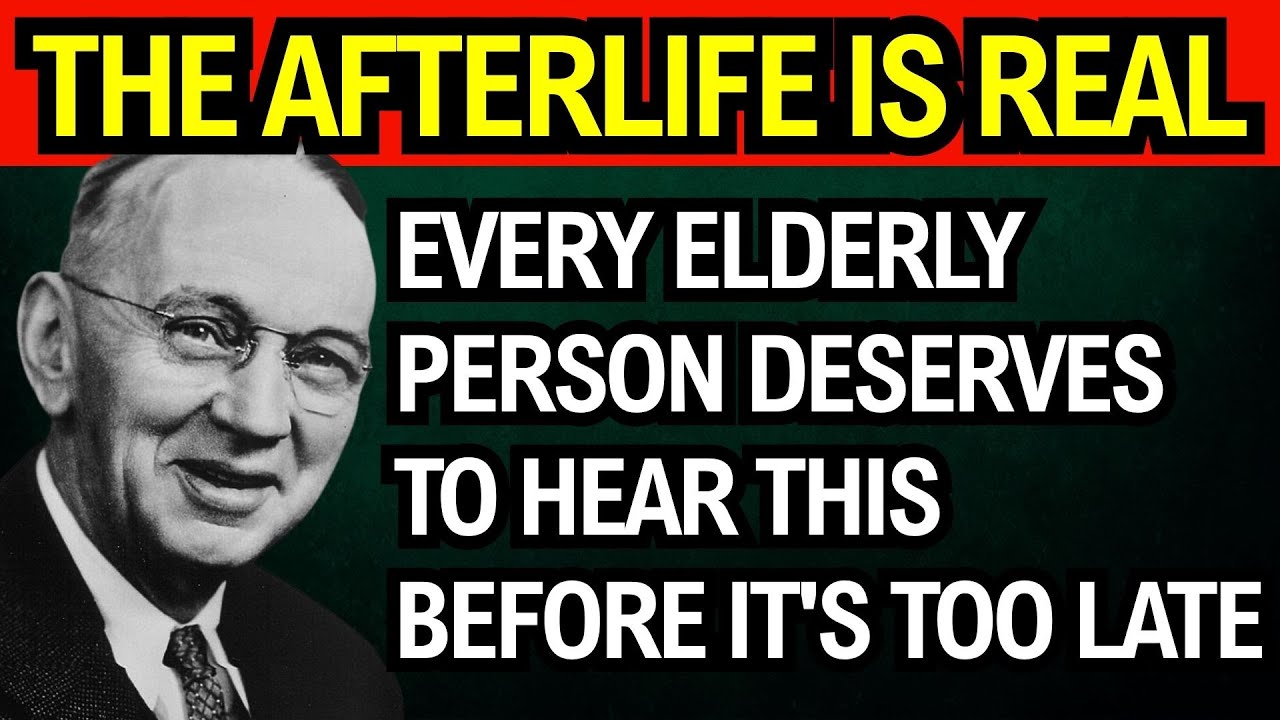
What happens to the soul on the anniversary of death? This question troubles not only those who have lost loved ones, but also those who seek the meaning of their own existence. Perhaps it is on this very date when time makes a full circle that something opens, something that cannot be measured by instruments, something that Edgar Casey knew.
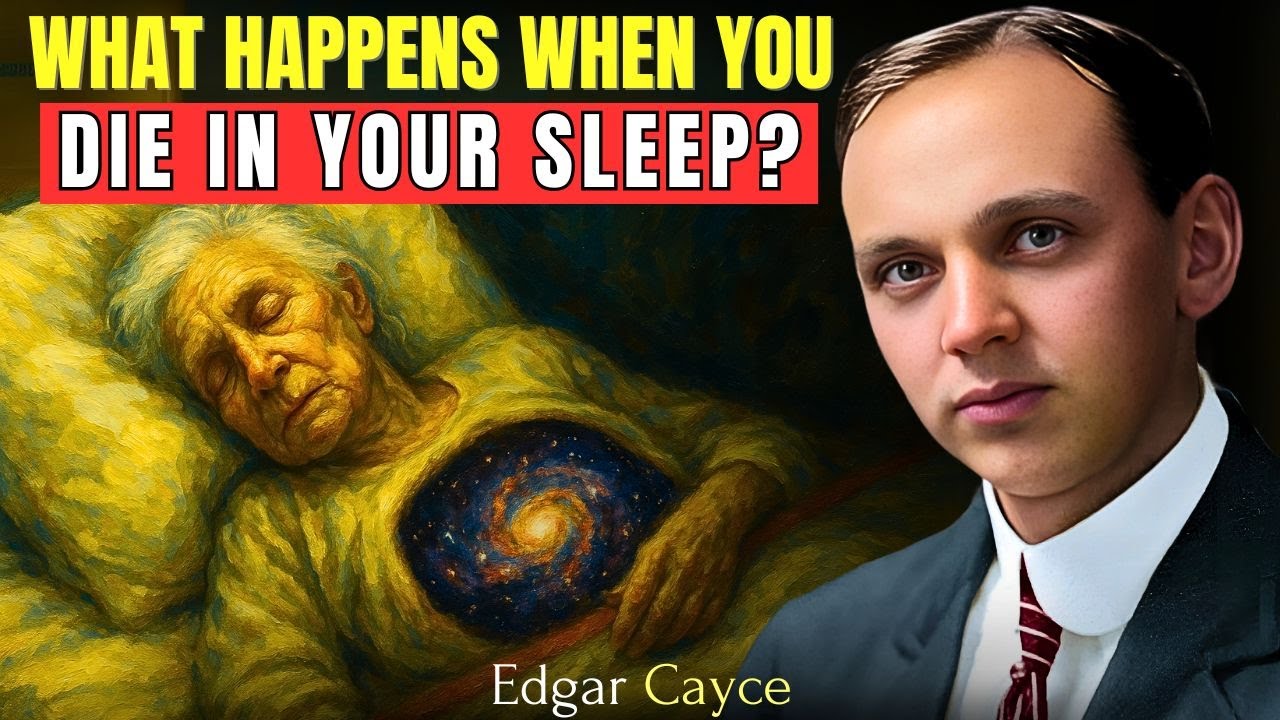
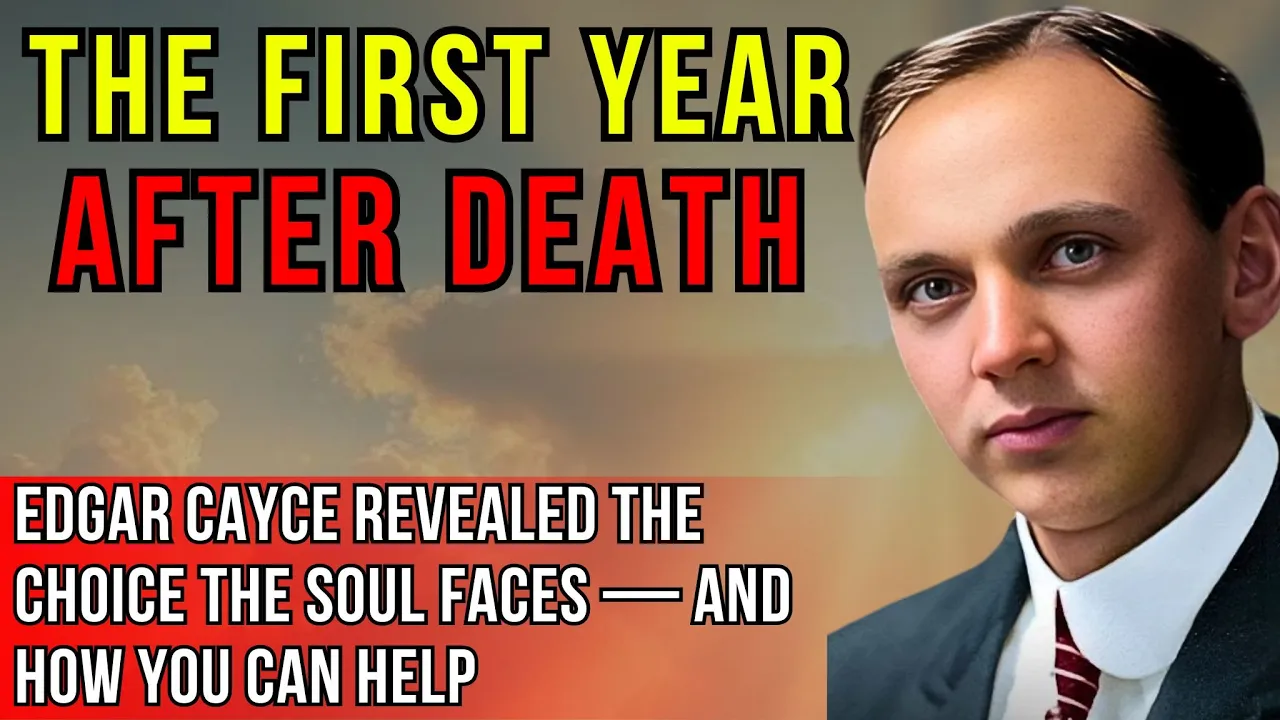
He was called the sleeping prophet, although he himself claimed he was merely a channel, a channel between our world and what awaits us on the other side. Casey did not guess. He did not put on a show.
He entered a trance, and from there, as if from the depths of the ocean, he brought knowledge that was decades ahead of modern science. And among his revelations, the subject of the soul after death held a special place. According to Casey, death is not the end.
It is rather like a change of scenery. The play continues, but in another act on a different stage. But on the anniversary of death, he said, the veil between worlds becomes especially thin.
Why? Because the soul having completed a full rotation in the circle of time once again approaches the point where the transition occurred. It is on this date one year later that the soul may once again touch the earthly plane.
Not physically but through dreams, through memories, through sudden emotions in those who remain. You walk down the street and suddenly, for no reason, remember the voice of the departed or see someone long gone in a dream. This is not a coincidence.
This is a call, the echo of a soul that has completed one cycle in the subtle world and is now as if knocking from afar. I am here. I remember.
I live. Casey asserted that the soul continues to develop after death. It does not freeze, does not turn into a shadow.
It learns just as it did here. And on the anniversary of death, if the loved ones remember if thoughts, prayers, memories are voiced, a bridge arises between them and the soul. Not eternal, but strong enough to convey a feeling, a thought, light.
This is a moment when according to Casey, the soul can transmit something important, a hint, an answer, or simply a sign. I am all right and you need to go on living. But if forgotten, if the day passes like any other, that chance may be lost because memory is energy and energy pulls along a thread that connects worlds.
Some of Casey's students said that even the weather could change on this day. A sudden wind, a shadow on the sun, or on the contrary, an unusual silence. All of this is a response as if the world pauses for a moment listening.
Will the call return? Will those who remain respond? And if you have felt strange anxiety on such days for no apparent reason, perhaps it was not the fruit of imagination.
Perhaps in that moment the soul truly was near, simply unseen. But does that make it any less real? When Edgar Casey spoke about the soul, he avoided religious cliches.
His descriptions were not merely consolation for the grieving. They were blueprints, maps of the other world built on the experience of hundreds of readings conducted while he was in trance. And among them, one central image stood out.
The soul as a traveler passing through layers of being as if through the floors of an invisible world. Immediately after death, according to Casey, the soul enters a state of rest. But it is not heaven in the conventional sense.
It is more like a waiting room. There it digests the life it just lived. It looks at it from the outside without judgment, without drama.
It simply sees where it loved and where it turned away. Where it moved toward the light and where it retreated into shadow. Time passes, earthly time.
It might be one year or it might be 10. The count is different there. But as Casey claimed, on the anniversary of death, the soul returns to the moment of departure, not for sorrow, but for understanding.
It's like a marker, like a point in the calendar when you open an old notebook and reread a page written exactly one year ago. He said, "If on this day the relatives are silent, if no one remembers, the soul feels it. Not as a fence, more like silence, like a closed door that no one approached.
But if someone lights a candle, whispers words, opens a photo album, a beam of light is born between them and the soul, invisible but powerful. Some people wrote to Casey, "I felt my mother's presence exactly one year after her death. It was unimaginable, as if she was standing right beside me.
And he replied, "Yes, it's possible. This is not fantasy. This is the truth which science has not yet recognized.
" He stated, "On the anniversary of death, the soul may try to complete what was left unfinished, to send a signal, to reconcile, or even to warn because time on that level is not linear. And if the soul sees that someone here is in danger, it will look for a way to help. But for that there must be readiness on our side.
The heart must be open without cynicism, without fear. And in this lies the mystery that Casey called the golden hour of memory. Within 24 hours of the anniversary of the transition, especially in the evening, the soul can tune in to our reality like a radio wave.
And we are the receiver. And if in that moment you catch a melody from the past, a scent, a phrase, a line from a letter you haven't read in years, don't rush to dismiss it. Perhaps it is a response.
Casey said, "Death is not the end. It's like translating a book into another language. The content remains.
Only the form changes. But on the day it all began, the day of departure, the translation can become reversible, even if only briefly. Some people are afraid of the anniversary of death.
They try not to remember. They bury themselves in task so that the day slips by as if it never happened. But Casey said otherwise.
To be afraid is to close the path. For the soul does not come on this day to cause pain. It comes to remind us of love or today to let go.
One man, Casey recalled, came to him broken. It's been 1 year since my brother died. I can't forget.
I keep thinking, could I have saved him? And then during the reading, Casey suddenly said, still in trance, your brother says you are not to blame. His time had come, but your pain is holding him here.
Let him go peacefully. This shook the man to his core. He wept, and the next day on the anniversary, he felt a strange lightness, as if a burden had been lifted.
And at sunset, he thought he heard his brother's voice just once, quietly, but clearly enough to understand. He is forgiven. and he forgives as well.
This is how the connection between worlds works. Casey emphasized, "The emotions we experience are threads that tie us to those who have passed. And the stronger the emotion, the stronger the connection, but it can be light or dark.
If you hold on to guilt, to anger, to resentment, you prevent the soul from moving on. But if you remember with gratitude, with acceptance, you help it rise. That is why the anniversary of death is not just a moment of sorrow.
It is a moment of choice. We can turn it into a day of pain or into a day of light. A day when the sky opens for a moment and you seem to hear, "It's all right.
I am with you. " And you are not alone. Casey taught that the soul is like a ray of light passing through a prism.
In the physical world, we see only one facet, one life. But on the other side, the whole spectrum, and on the anniversary of death, especially the first, the soul seems to return to the facet through which it entered, not to stay, but to say goodbye truly, or even to help us endure what is now clear to it. Some told Casey that on such dates they experienced strange coincidences.
Clock stopped at the moment of death. The radio turned on by itself. A bird landed on the windowsill where the departed used to sit.
All of this little things. But there are no little things. In these signs is the language of the soul.
And sometimes, Casey said, the soul may appear in a dream, not as a ghost, but as a friend, as a guide. And often it says nothing, just looks. And that look is enough for you to wake up with the feeling everything will be all right.
Everything already is. What does the soul feel on the anniversary of its death? Casey considered this question no less important than what the living experience because the soul is not a forgetful smoke drifting into eternity.
It remembers especially in the beginning especially during the first year and the day when the earthly journey ended is also a threshold for it. Casey said in that moment the soul seems to gaze into its past. It remembers what it went through, whom it loved, whom it hurt, what it accomplished and what it didn't.
It's like an exam, but without grades, without judgment, just clarity. And on the anniversary of death, the soul seems to draw a line under its first circle, the circle of adaptation to a new existence. Some souls according to him feel a kind of longing on this day.
But not for the body, for the unfinished, for what was left unsaid. And if those who remain mentally say, "I understand, I forgive, I remember," then relief comes, not only to the living, to the soul as well. Sometimes according to Casey on the anniversary the soul has the chance to return to the place of departure especially if it was sudden war accident illness.
The soul may walk that path again now without pain but for the sake of understanding to comprehend what happened why it happened that way. It's like walking a familiar street again, but now in a different state, without fear, without haste. Casey said that children are especially sensitive to such phenomena.
They have no filter. One child, only 5 years old on the day of his grandmother's death suddenly approached his mother and said, "Grandma says, you don't need to cry. She's fine.
There are many birds and it's full of light. " No one told him that. He simply felt it.
This confirmed Casey's words. On the anniversary, death stops being the end. It becomes a moment of connection, a bridge that appears only when both sides are ready, the soul and the living.
But the soul itself also has a choice. Casey emphasized, "Nothing happens by force. The soul is not obliged to return.
It may choose peace or to work on other plains. But if there is something unfinished, if pain remains, then the soul seeks a way back to speak, to make things right, to complete. Sometimes this manifests as an inner voice.
You suddenly hear a thought in your head that seems given to you, or your eyes fall on a book, a photograph, a recording you haven't thought of in many years. This is not just a coincidence. It is possibly the quiet touch of a soul that wants you to know, "I have not left forever.
I am near. As long as you remember, I live. " Casey said, "Love does not die.
Not in that world, nor in this one. And if on the anniversary of death you are capable of loving, sincerely without fear, you create light. And in that light souls recognize each other even through time, even through death.
There is an ancient idea that Edgar Casey confirmed again and again. The soul returns, but not always and not immediately. Everything depends on maturity, on awareness, on the lessons that were or were not learned.
And here in the context of the anniversary of death lies another layer of understanding because it is on this date that the soul may make one of its most important decisions to move on and or to return. Casey said that during the first year after death the soul seems to accumulate experience not earthly experience but the experience of being outside the body in what he called astral dimensions. This space has no defined shape, but within it are layers.
Some are closer to the earthly, others to the light. And after a year, the soul may for the first time view its existence as a whole. Not in fragments, not in episodes, but completely and make a choice.
Some choose to move upward. This is not heaven in the Christian sense. It is levels of harmony, clarity, love.
There is no pain there, no time. There the soul learns to be part of something greater. Others, especially those who left suddenly with anger, with fear, remain closer to the earth, not because they are punished, but because they are not yet ready.
But there is a third path. The soul may decide to return, not right away. But the anniversary of death, according to Casey, is the moment when this possibility first truly presents itself.
He said, "It's like a crossroads. The soul looks back at life, down at the earth, and forward into the light, and it chooses. This decision depends not only on the soul itself.
It is connected to what is happening here, to how it is remembered, to what energies continue to reach for it. If relatives do not let go, if they live in pain and sorrow, the soul feels this and perhaps out of a desire to help, to save, to support, it chooses to incarnate again. sometimes even in the same family as a child, a grandchild or a sudden person who seems somehow already familiar.
But if the soul has been released with love, if it has been told mentally, you did all you could go with God, then its choice may be different. Then it may rise higher, become a guide accompanying others, or merge with what Casey called the universal soul, with what the ancients called the spirit. And here the importance of the anniversary of death becomes especially powerful.
It is not just a memorial date. It is a doorway. And if on this day the soul feels that it is remembered but not held on to, loved but not clung to, it gains freedom.
Freedom to move, freedom to complete, freedom to choose. Casey stated, "In such moments, even the universe holds its breath. It waits.
" Because the soul's choice is not just a transition. It is an act of creation. And if the soul chooses light, that light adds to the collective field.
And if it returns, it brings with it knowledge, experience, and a chance to set things right. One day, Edgar Casey was asked, "What happens if on the anniversary of death, no one remembers? Not a single candle, not a word, not even a thought.
" His answer was quiet. but carried great strength. Then the soul will depart in silence but not into oblivion because in creation not a single feeling, not a single memory, not a single love is ever lost.
And still on this day it is especially important to remember because the soul does not require ritual. It doesn't need wreaths, grand speeches or morning posts. It needs a response.
Sincere, genuine, even if silent. It is like a message through the veil. I remember.
I thank you. I release you. At this final point of the circle, on the first anniversary, the soul seems to stand on the threshold of a new stage.
It has lived one earthly year on the other side. It's like the first year in a new school. And if it was allowed to go in peace, not held back by resentment or pain, it is ready to move on.
But we too are not the same. Those who have lived through this year without a loved one go through their own test. The anniversary is like a mirror.
It shows what have we taken from it. Have we become stronger or more bitter? Have we forgiven or are we still suffering?
And here is where the hidden power of this date is revealed. It connects two worlds with a single question. What now?
Kaisy said when we remember the departed, we don't just revive memory. We activate a flow. A flow of connection, understanding, healing, and sometimes premonition.
It is on such days that insights, decisions, encounters happen that cannot be explained by logic because the soul having completed its first circle may send an impulse, a hint or maybe begin a new story. There were cases when a person on the eve of the anniversary felt a strange calling and decided to change their life, quit their job, started writing a book, returned to faith. And only later realized that was the day someone there whispered, "Live.
Everything is ahead of you. " Because death is not only about those who have gone. It is about those who remain and on the anniversary it asks a question not to the soul but to us.
Have you understood what matters? Have you changed? Do you love truly?
Casey said true awakening is not when you see the light. It's when you become it. And if the soul that departed a year ago helped you become kinder, more patient, deeper, then it did not die.
It continues to live in you. And in this lies the true meaning of the date we usually call a time of mourning. In truth, it is a portal, not into death, but into continuation.
In the silence of this date, one of the oldest whispers of the universe is heard. Love does not die. It changes form, but never.
Essence. So when the anniversary comes, do not be afraid. Remember, give thanks, speak even if no one hears, because perhaps at that very moment, someone is listening and smiling.
If this story made you reflect, support its light. Leave a like so it may reach those who are now searching for answers. Write in the comments what did you feel on the anniversary of your loss.
Was there a sign? Was there a presence? We read every word you write and cherish these revelations.
And if you want to hear more, subscribe to the channel. There are many topics ahead that are not spoken of aloud, but that must be heard because truth doesn't always shout. Sometimes it simply whispers.
The key is to be ready to listen.