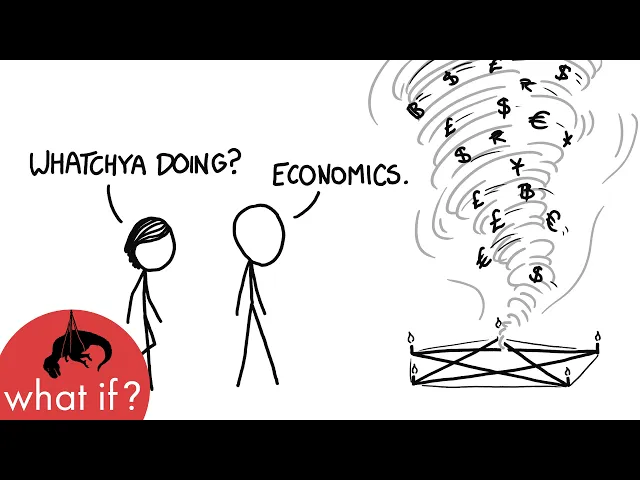
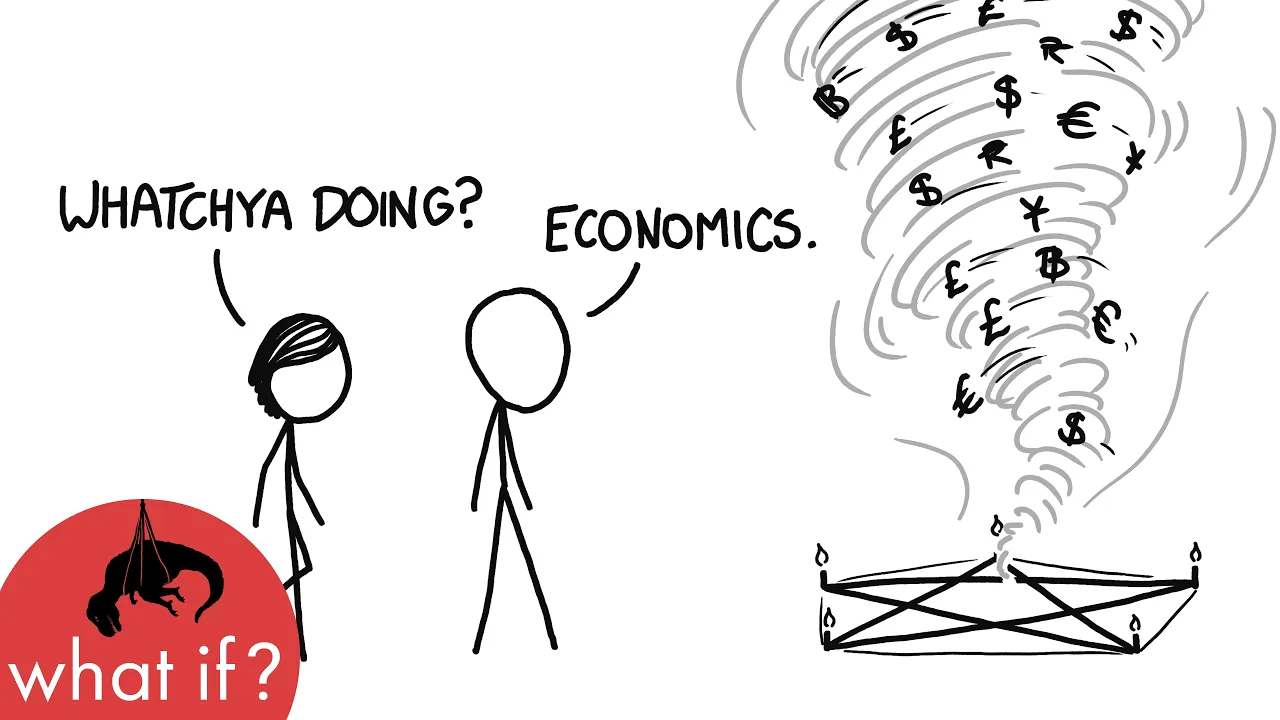
This question comes from Daniel who notes that people sometimes say, "If I had all the money in the world," in order to discuss what they'd do if they had no financial constraints. Of course, it's natural to then ask, "What would happen if you literally had all the world's money? " I don't know how you would actually gather all the world's money.
So, let's just assume that you invented some kind of a money summoning magic spell. Most of the world's wealth isn't physical money. It's land and houses, bank accounts, businesses, intellectual property, cryptocurrency, and so on.
In theory, you could edit all the property records on Earth to say you own all the stuff and edit all the banking records to say you own all the money, but everyone else would disagree with those records and they would edit them back or ignore them. Money is an idea and you can't make the entire world agree with your version of the idea. Getting all the world's cash, on the other hand, is much more straightforward.
At any given time, there is a certain amount in the world. Right now, it's somewhere north of 10 trillion, and you want it all. It won't necessarily do anything for you since without the cooperation of the outside world, you probably won't be able to spend it.
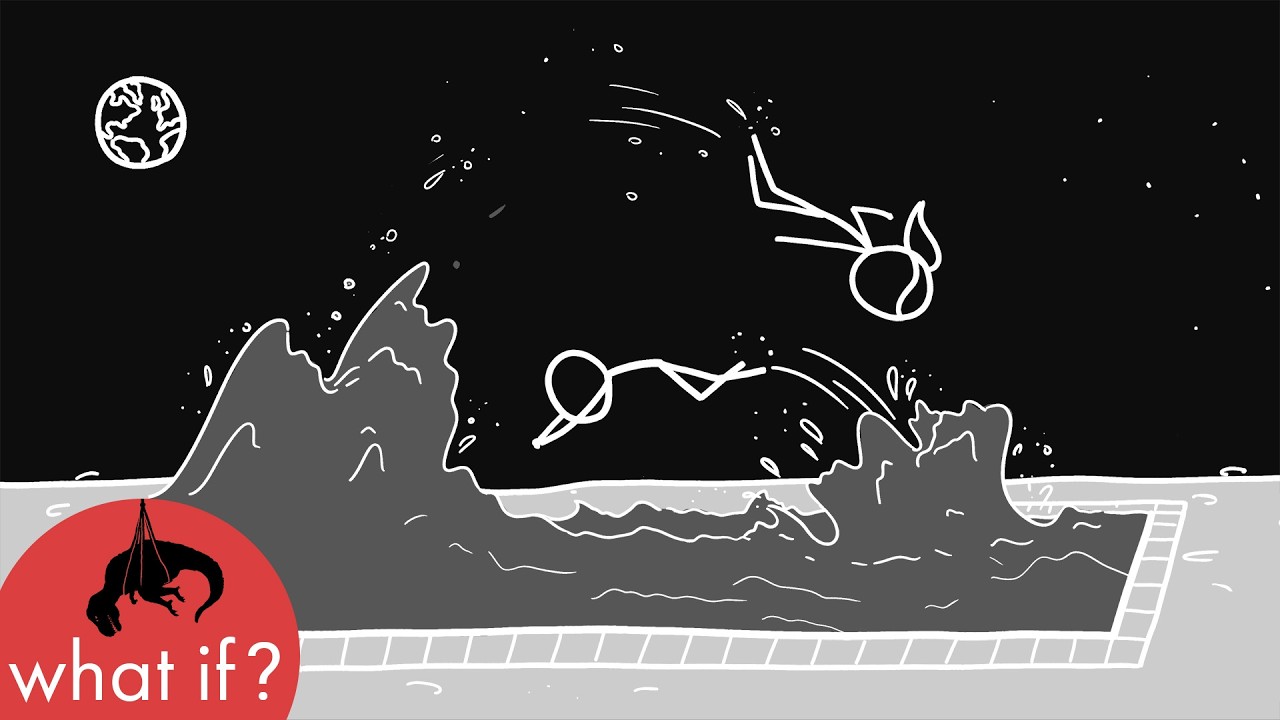
But maybe you can swim around in it like Scrooge McDuck in his giant room full of gold. So, you cast your magic spell and summon all the money. The pile of cash is taller than the Statue of Liberty and heavier than the Empire State Building.
You probably don't want to be standing under it, so let's assume that you're standing over here off to the side. The vast majority of the weight in the pile is coins, and the biggest single contributor is the US penny. There are probably more than 200 billion pennies in circulation for a total weight of over 500,000 tons.
Although circulation is maybe overly generous since most pennies sit around in drawers and jars and are rarely used for actual financial transactions. Canada even recently eliminated the penny completely and a lot of people barely noticed. In total, US coins and bills are responsible for about 20% of the pile's weight, while the European Union contributes roughly 25%.
Unfortunately for you, the pile doesn't stay a pile for long, and what seems like a safe distance isn't so safe. In Boston in 1919, a large molasses storage tank collapsed. Molasses is thick, so you might think it would flow out slowly, but it didn't.
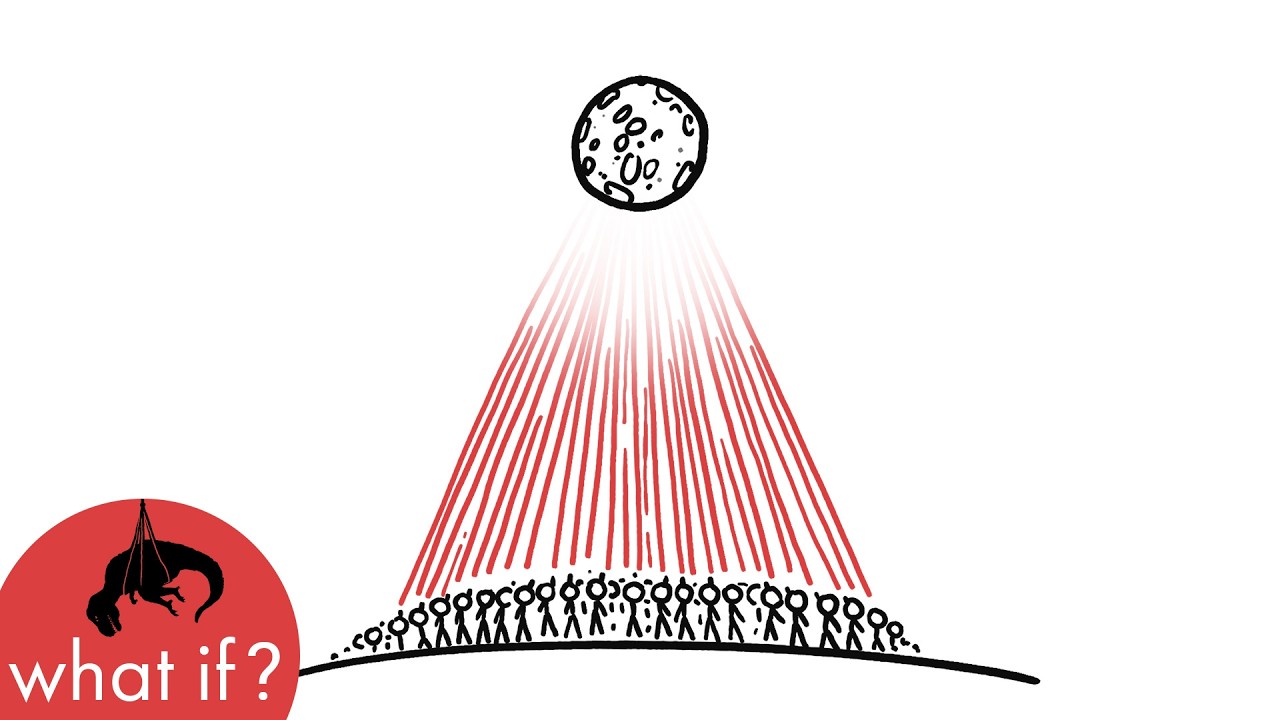
The wave of molasses swept down the streets too fast to outrun, demolishing buildings and killing 21 people. Something similar happens with the pile of coins. As it collapses, the pile spreads outward.
A wave of money carrying a staggering amount of momentum. The pennies, quarters, loonies, and euros scour the landscape in an expanding ring. Within seconds, the wave of coins engulfs you, and you die.
There are ways to avoid this. You could say, "Build a wall to contain the coins and then summon them. " Unfortunately, you might now face a problem worse than death.
Building code violations. Places with large skyscrapers, like those in Manhattan, need ground sturdy enough to hold them up. A search through this giant document of New York City building codes suggests that if we went ahead with this plan, we would be in serious danger of violating section 1806, allowable loadbearing values of soils and rocks.
Which makes me wonder, how much did Scrooge McDuck bribe city officials to get his pool built?