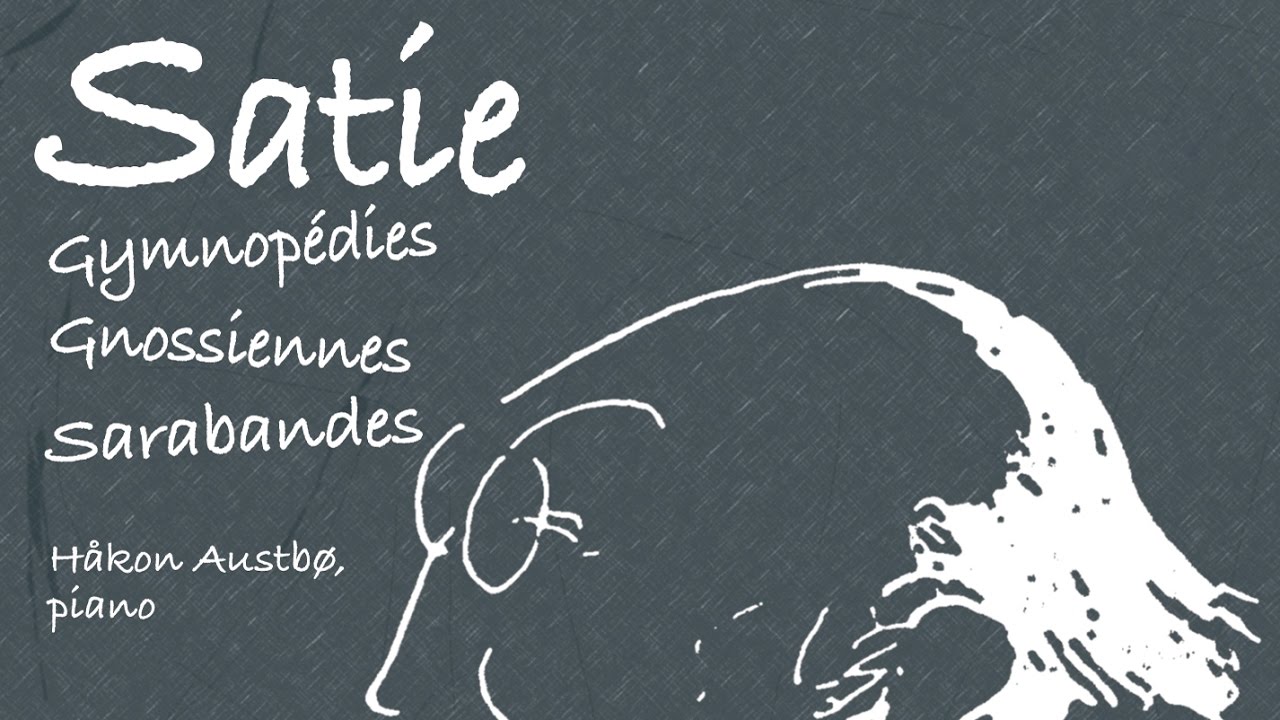
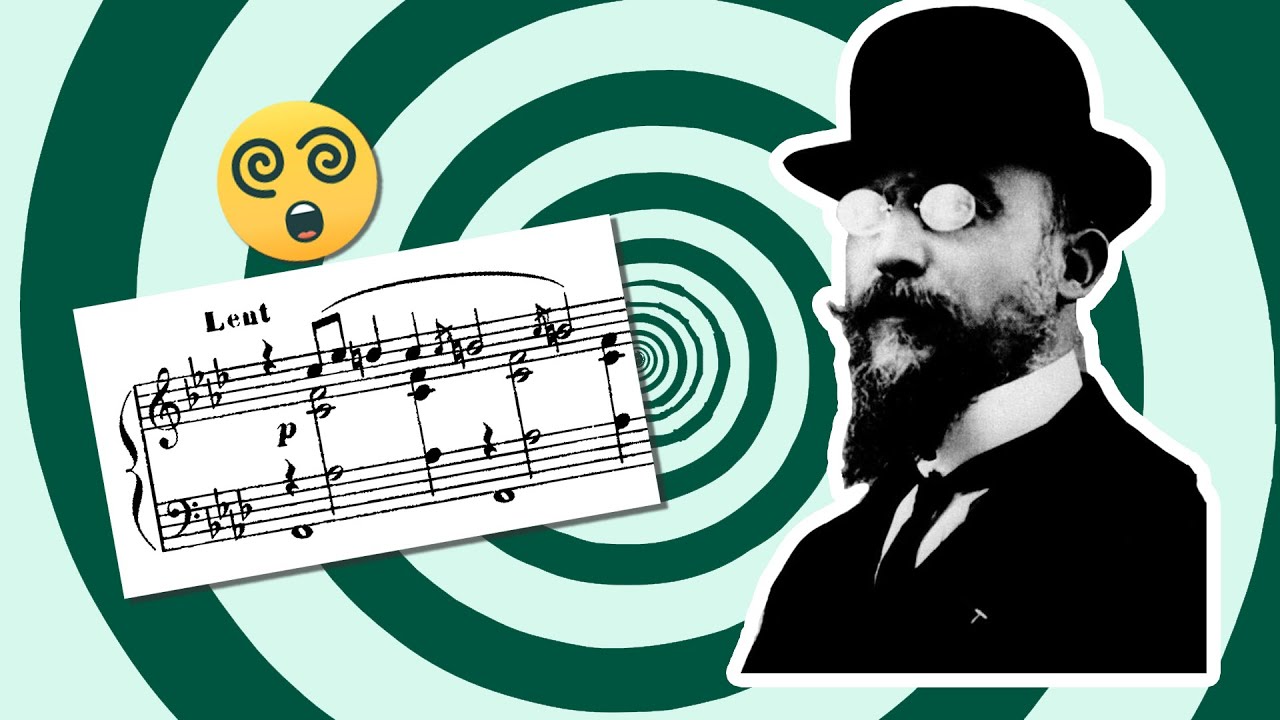
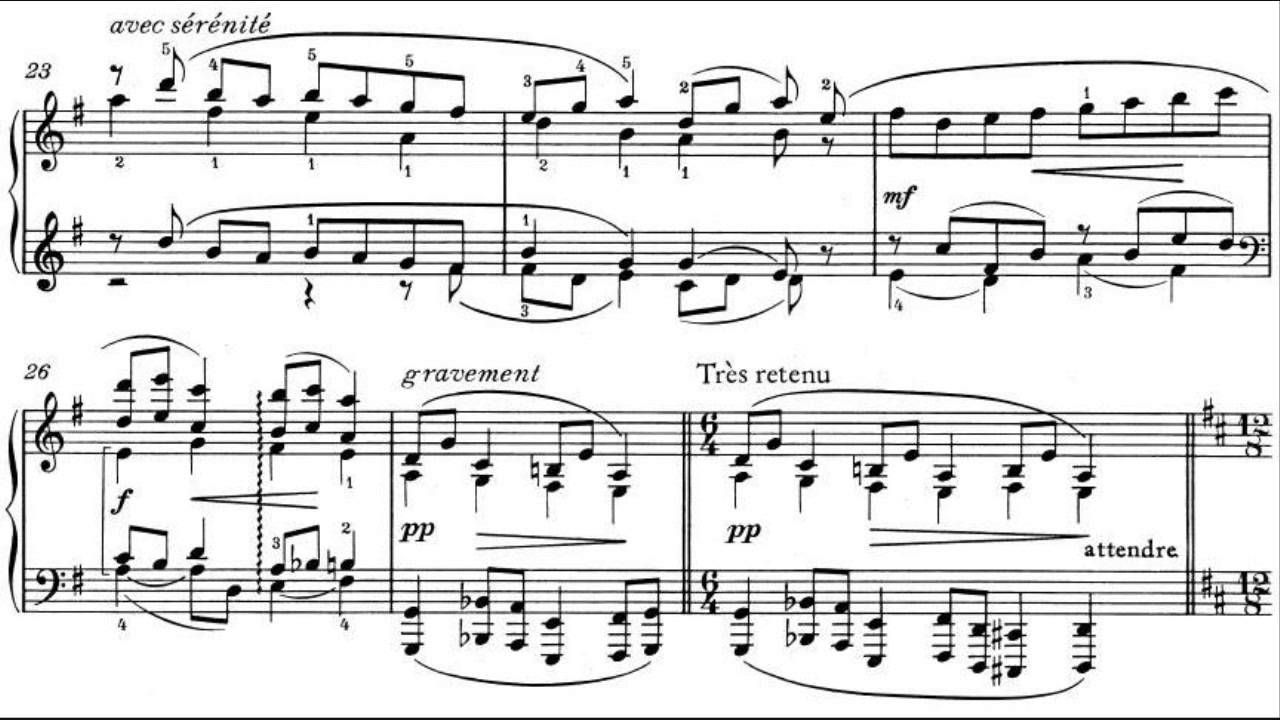
If you watched movies, TV or just been around on earth, you've probably heard this song. That's from French composer and pianist Erik Satie. And by all accounts, he was thought of as a crazed and talentless musician in his formative years.
But Satie's work set the tone for experimentation for the next century musicians, such as Kraftwerk, Aphex Twin, and jazz legend Bill Evans. Today, we're going to take a look at the life of Eric Satie and find out why many consider him the most eccentric musician in the world. But before we get started, be sure to subscribe to the Weird History Channel.
Leave a comment. And let us know what music stories you would like to hear about. When you think of eccentric musicians, several names come to mind.
Brian Wilson who wrote Smile in a sandpit and forced his orchestra to wear toy fire helmets while recording the song he never released. Axl Rose who famously spent 10 years recording Chinese Democracy and frequently makes his audiences wait for hours before taking the stage. Roky Erickson, he thought he was inhabited by a martian.
He was jailed for stealing his neighbor's mail. And he wrote letters to dead celebrities. But Erik Satie makes those guys seem positively normal.
Satie was part of the Kabbalistic Order of Rosicrucian, a cult founded by Josephin Peladan for writers, painters, and musicians. By all accounts, Satie was a member in good standing. He was the church's official musician.
And he saw the organization as a good place to introduce other artists to his music. He even composed a song for the church, Sonneries de la Rose Croix. After a falling out with Peladan, Satie bailed on Rosicrucian and founded his own sect in 1893.
He called it the Metropolitan Church of Art of Jesus the Conductor. Of course, he was the only member. Most of Satie's activity with his religion consisted of writing pamphlets and articles, which acted as a way to direct vitriolic attacks against various music critics.
The most noteworthy among Satie's critics was Henry Gauthier-Villars, better known as his nom de plume Willy. The two men were so at odds with each other that they actually got into a bare knuckle scrap in 1984. Naturally, these strange actions convinced Satie's closest friend that he had gone mad.
Satie had some odd beliefs about how an artist should live their life. This passage was taken from his book Memoirs of an Amnesiac, "an artist must organize his life. Here's an exact timetable of my daily activities.
I rise at 7:18. I'm inspired from 10:23 to 11:47. I lunch at 12:11 and leave the table at 12:14.
A healthy ride on horseback around my domain follows from 1:19 to 2:53 PM. Another bout of inspiration from 3:12 to 4:07 PM. From 4:27 to 6:47, various occupations, fencing, reflection, immobility, visits, contemplation, dexterity, swimming, et cetera.
Dinner is served at 7:16 and finished at 7:20 PM. From 8:09 to 9:50 PM, symphonic readings out loud. I go to bed regularly at 10:37 PM.
Once a week, I wake up and start at 3:19 Tuesdays. " Whether he was serious or not is not the point. What's clear is that these are the musings of a true avant garde eccentric.
To put it mildly, Satie had unusual eating habits. He once made an omelet made of 50 eggs. In another instance, he ate 150 oysters in one sitting.
And if you don't think that's odd, this is how he described what his diet consisted of in an aforementioned autobiography. "My only nourishment consists of food that is white, eggs, sugar, grated bones, the fat of dead animals, veal, salt, coconuts, chicken cooked in white water, fruit mold, rice, turnips, camphorated sausages, pastry, cheese, white varieties, cotton salad, and certain kinds of fish without their skin. I boil my wine and drink it cold mixed with the juice of fuchsia.
I'm a healthy eater but never speak while eating for fear of strangling. " One of the many mysteries of Satie was his clothing. After composing Messe des Pauvres in 1895, he inherited a nice sum of money.
With this money, he bought seven identical gray Velvet corduroy suits. One for each day of the week and wore them with no variation for 10 straight years. During this phase in his life, Satie called himself the Velvet gentleman.
When he died at age 59 on July 1st, 1925 from cirrhosis of the liver, lost and forgotten scraps of paper were found in pockets of these suits. These scraps of paper included notes and drafts of some of Satie's better known works, including Genevieve de Brabant, The Dramy Fish, piano lessons he was studying, lots of unpublished and unfinished works, and handwritten charts for his most infamous piece of music Vexations. Speaking of Vexations, he never published or performed Vexations in public.
But there's probably a good reason for that. The single handwritten page of sheet music instructs the performer to repeat the piece 840 times, which times out to roughly 28 hours. It's said that Satie composed the song sometime between 1893 and 1894 shortly after a brief but intense affair with his next door neighbor, Suzanne Valadon, the nearest he ever got to a relationship with a woman.
The reasons behind Vexation varies depending on what music historian you talk to. Some say the 28-hour long song is Satie's ironic act of defiance. Others say the lengthy piece was written and theoretically performed to help him get over the breakup with Valadon.
And some art historians say it was a piece of conceptual Dadaist work. As for why Satie he chose the piece to be played exactly 840 times, well that might have something to do with his fascination with numerology. Vexations was written around the time he formed his religion, which was influenced by the occult and numerology.
We'll never know the exact meaning behind Vexations. But one thing's for sure. It takes quite a provocateur with an artist's temperament to write a song that lasts 28 hours and still expects to be taken seriously.
If you have an entire day to spare, you can listen to several versions of the song on YouTube and Spotify. Satie invented a genre of music in 1917, which he called Musique D'Ameublement. The literal translation being furnishing music.
This was music that was designed to be heard, but not listened to. Today, we call it ambient music. But no one was writing music as a backdrop in the early 1900s.
It just wasn't a thing. While a lot of Satie's music could be considered furnishing music or furniture music due to its minimalism and repetitive structure, he composed five specific pieces, which were written for the sole purpose of ambience. And each song had a purpose.
One was written for the arrival of guests. One was to be performed during lunch or civil marriage. One was specifically written for bistros.
And the other was to be played in drawing rooms. The fifth piece was commissioned by an American who lived in Washington DC. It was to be atmospheric music for the CEO's office.
Ultimately, Satie grew frustrated with his furniture music due to the fact that when it was played, people tend to focus in on his compositions rather than ignore them and go about their business. Parade was one of Satie's great works. It was a one-act ballet released in 1917 and designed to incite scandal.
It was a combined effort between Satie, John Cocteau, and Pablo Picasso. Cocteau was the guy in charge of the production. He wrote the scene.
Satie composed the music. And Picasso created the set and costume design. Cocteau wanted to shake up the art world.
He wanted controversy. And he wanted to disrupt the status quo. Well, Cocteau got what he wanted.
French audiences and critics loathed Parade. Picasso's Cuba set design and costumes made of cardboard were clunky and prohibited the dancers from moving. Satie's music didn't go over well either.
The musicians that Cocteau hired to play Satie's composition used unorthodox noise-making items like typewriters, a fog horn, a pistol, and clinking glass bottles. Music critic Jean Poueigh gave the ballet a scathing review, playing into Cocteau's plan. was is counting on that this scandal would give him some notoriety.
After all bad press is still good press, even in 1917. Following the negative review, Satie wrote a personal postcard to Poueigh, which read, "sir and dear friend, you are an arse, an arse without music. " Signed Erik Satie.
Poueigh sued Satie. And at the trial, Cocteau was arrested and beaten for repeatedly yelling arse in the courtroom. Satie was also arrested.
He received an 8-day prison sentence for his postcard. Man, imagine the damage that he would do on Twitter today. To put it mildly, Satie used to give his songs some weird titles.
Here are just a handful of some of his songs and movements translated from French to English of course, Two Preludes for a Dog, Sketches and Annoyances of a Big Man in Wood, Muscular Fantasy, Do Not Put Your Head Under Your Arm, Rat Air, and Things Seem Right and Left Without Glasses. There are a couple of theories on why Satie gave his songs such odd titles. One is that he's a true absurdist, who fully subscribed to the Dadaist movement.
In other words, he sort of like being a jerk just to get a rise out of his audiences and critics. Another theory is that some of his compositions were throwaway songs. And he just gave them flipping titles.
Because he wasn't all that thrilled with the music. Satie performed as a house pianist for several bars in the red light districts filled with prostitutes and drunks. While he seemed to appreciate the fact that he was able to earn money playing the piano, he also felt like he was a little bit more refined than his boozy audiences.
The cheeky titles he gave the songs he wrote during these years reflected the state of his mood. To top off all of his bizarre behavior and eccentricities, Satie lived like a squatter in a filthy one-room apartment. He didn't always live like a hobo though.
In his 20s, he used to live in Montmartre, a charming artist village once inhabited by Picasso and Salvador Dali. Then in his 30s, he moved into a tiny room on a commune located in the southern suburbs of Paris. He proceeded to live there until his death in 1925.
Yet in the 27 years he was there, he never allowed anyone to visit. When friends entered after his death, they witnessed indescribable squalor. It was like an episode of Hoarders.
Some of the items found in his cramped hovel were over 100 umbrellas, 84 identical handkerchiefs, stacks of newspaper clippings, and two grand pianos stacked on top of each other. He composed music on the bottom piano, while the top piano was used to store unsent letters and unopened packages. And of course, they discovered hundreds of compositions that were either thought to have been lost or totally unknown.
If Satie were alive today, would he be up there with Bjork, Kanye West, and the George Clintons of the world? What do you think? How does Erik Satie compare to some of our modern musicians in terms of eccentricity and unconventional nature?
Let us know in the comments below. And while you're at it, check out some of these other music stories from our Weird History.