[Music] The Eden series argues that many of the stories of Yahweh and the Elohim in the Hebrew Scriptures are really ancestral memories of ET contact. But how did Jesus regard these ancient stories? Did he believe that Yahweh was an ET?
What Jesus thought about Yahweh, or to put it another way, the relationship of Christianity to Judaism, was really the central controversy of Christianity from the very beginning. The reason there was a tussle, which you can see playing out in the Gospels, the Book of Acts, and all through the New Testament, is that the Gospel writers—those who wrote for Jesus—were really seeking to do two contrary things. All the Gospel writers wanted to present Jesus as the successor to and replacement of Moses, as someone who would come with teachings that would, in effect, delete and replace the teachings of Moses and the laws of Yahweh.
So, they had to do these two contrary things: on the one hand, affirming that tradition and the laws of Yahweh, while at the same time saying they would now be dispensed with. That is why you've got, for instance, on the one hand, Jesus saying, "Not one jot or titl will pass from the laws of Yahweh until everything is fulfilled," while on the other hand you've got Scriptures like Colossians 2:14 saying that Theos (God) had cancelled the written code, wiped it out when he nailed it to the cross. On the one hand, you've got Jesus saying that your righteousness must exceed that of the scribes and Pharisees, while at the same time he pitches himself against those teachers of the law and tells them, "You do not know me, nor do you know my Father.
" He says that their father is a devil, a liar, a murderer—the father of lies, a liar from the beginning, in whom there is no truth. Who could he possibly be speaking about when he addresses the teachers of the laws of Yahweh in that way and describes their father in those terms? In John 8, he says this: "If Theos were your father, you would love me, for I came from Theos and am now here.
I have not come on my own, but he sent me. Why is my language not clear to you? Because you are unable to hear what I say.
You belong to your father, the devil, and you want to carry out your father's desire. He was a murderer from the beginning, not holding to the truth, for there is no truth in him. When he lies, he speaks his native language, for he is a liar and the father of lies.
" He who belongs to Theos hears what Theos says. The reason you do not hear is that you do not belong to Theos. Jesus is making it very clear that he doesn't equate his Theos, his Father, with the father of the teachers of the laws of Yahweh.
So, you might say, "Well, who is this Theos? " It is the Greek word for God, which is used throughout the Gospels and New Testament in the teaching of Jesus and those who teach for him. Now, the Apostle Paul actually defines what that word means in Acts 17.
He's speaking to a non-religious audience, and he says, "By Theos I mean the source of the cosmos and everything in it, that in which we all live and move and have our being, of which we are all offspring. " That really was the Greek understanding of God; it is the word that Jesus uses. He does not equate that God with the Yahweh, the father of the teachers of the laws of Yahweh.
Furthermore, the word Yahweh doesn't appear anywhere in the Gospels and New Testament, which were written in Greek. Now, there was no controversy around using that word; it's peppered throughout the Hebrew Scriptures, but it's not used once in the Gospels and New Testament, even in passages which are clearly invoking moments and texts from the law of Yahweh. There's no mention of that name; total silence.
Yet other words were included that were associated with Jesus's teaching. There are four key Aramaic phrases that have been retained: "Amen, amen, I’m about to tell you something important," "deaf ears open," "talitha cum," "little child, arise," "Abba. " This was Jesus's word for addressing God as sir or daddy.
Really, in those four words—"I'm going to tell you something important," "open deaf ears," "arise," and "address God as Daddy"—that really could be seen as the core of Jesus's message. He says it’s nothing like anything you've heard before: "I am proclaiming something unknown to you. He says you know neither me nor my Father.
" So, Jesus is disequating Theos (God), the source of the cosmos, from this Yahweh figure, and at times he makes that point in a very pejorative way. So, how did he regard Yahweh? Well, in the Hebrew Scriptures, Yahweh is one of a number of powerful beings, Elohim.
They are referred to as the "sa hashamaim," the airborne armies, the sky armies. They're referred to as the "El badat," the council of power. If we go to Psalm 82 and Deuteronomy 32, we discover that Yahweh is a junior member of that council, having arrived and taken over the lands.
The Elohim are each apportioned land along with the resources under that land and the people living on the land, but Yahweh gets short shrift. He gets a people group with no land and no resources, and so his first action is to go to the land of another Elohim, the Elohim of Egypt, extract his people group, the tribes of Israel, and then go to war. With other Elohim to get land and resources for his people group, all those stories which play out through the Hebrew Scriptures are framed by this explanation: that El Elon, the superior Elohim, has handed out lands to all these entities, and Yahweh has gotten short shrift.
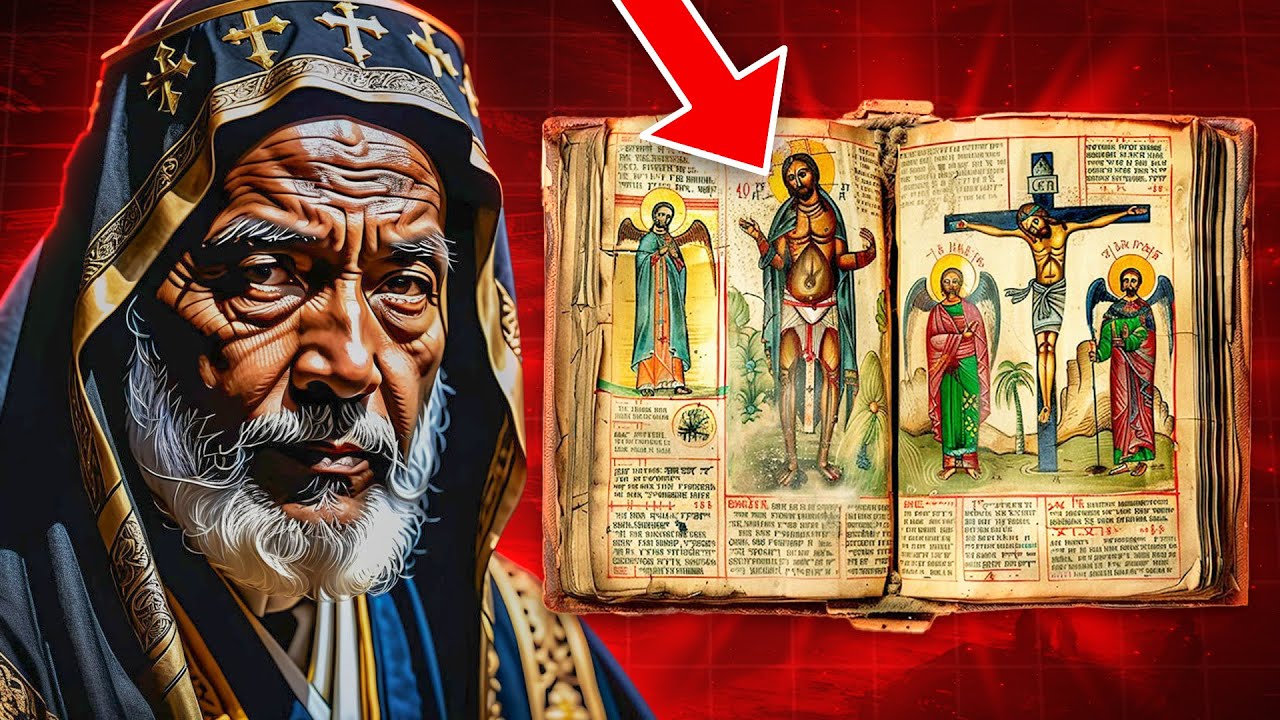
I believe Jesus is referring to those Elohim stories when he says, "All those who came before me were thieves and robbers. The thief comes only to steal and kill and destroy; but I am the Good Shepherd who lays down his life for the sheep. " Who else could he be talking about?
All those who came before me— all those teachers, all those saviors, all those shepherds— I am the true Shepherd, the one who lays down his life for the sheep. So I think there Jesus is making reference to these very violent stories of Elohim who did come and steal the land and kill and destroy, in whom there was no truth, who were liars and murderers from the beginning. There's no place where he pins down what he thinks these Elohim are.
I might look at those stories and say, "I recognize these stories of invasion; I recognize these stories where the land is divided among nonhuman powerful entities," because they repeat an indigenous story all around the world. And I look at that and I say, "We have language for that in the 21st century. We would talk about extraterrestrials; we would talk about alien invasions.
" Jesus didn't have that language, but it's clear that he's referencing stories about advanced beings who are not human, who governed over our ancestors in the deep past. And then it's up for us to do the math and work out what we think that means. [Music] How does a believer in paleo contact pray?
I’ve been a follower of the teachings of Jesus for 42 years, and prayer has always been an important part of my life; it still is today. I love that definition of God that the Apostle Paul gives in Acts 17. Speaking to a non-religious audience, he says, "By God, I mean the source of the cosmos and everything in it; that in which we all live and move and have our being, of which we are all offspring.
" I love how cosmic a picture that is, and the fact that there's no separation in that vision of God. There's no separation anxiety; we couldn't be any closer to Source than we are. My consciousness is a participation in the consciousness of the cosmos; my intelligence is an emanation of the intelligence of the universe.
And so I should fully expect to think divine thoughts and have divine experiences. I find that religion often trades on separation anxiety: you are separated from God, and we, the priests or the teachers, would tell you how to claw your way back into God's good books or back into the Lord's presence. There's no separation anxiety in that beautiful vision of God from Acts 17.
And as I've thought through the implications of my research in paleo contact, yes, it has reframed my ideas of God and reframed my ideas of prayer. I had to come to terms with the fact that my vision of God had for a long time been very infantile. It really was like a Santa Claus in the sky or a puppet master who might pull a string here and there in my favor, and I had to realize that I had built this idea of God on the notion that we were alone in the universe— God's special creation.
Once I opened up to the idea of a populated cosmos, it made me think of God in a more cosmic way. But then Paul's words here, which are very Platonic in their understanding of God, invite me to discover intimacy with God in a new way. In a way, it's only an expression of logic to say that my intelligence is a participation in a property of the cosmos, and my consciousness is a participation in a property of the cosmos.
What that's meant for me is that my life of prayer is simplified, because I expect to think divine thoughts or have divine experiences. Because I believe that God is and has a whole universe of resources with which to respond to me, my prayers are simplified to asking questions like, "God, how can I? Father, can you help me?
" And I expect a response, because either it's going to be an internal thought, or it'll be something my young son says to me, something one of my animals does, something that happens in the natural environment, something a neighbor says, or something I hear on the radio. There is a universe of resources waiting to respond to my curiosity and my questions. When I look to the universe with that kind of hope and expectancy, I find my prayers are responded to very quickly.
I like that vision, because it enables us, I think, to move through life in a far more confident and courageous kind of way, instead of being turned into passive or dependent beings always waiting for permission and help before they can do anything. The Eden series refers to the work of Robert Kirk, an Episcopal Galian minister in Abil in Scotland in the 1600s, and to Plato, the philosopher-scientist of Athens, from two and a half millennia ago. But did either of them actually believe in aliens?
Robert Kirk was a scholar of the Bible and of the indigenous law of the GIC people living in Abil, and he collated their stories of contact and close encounter counts in his local district and further afield. He came to the conclusion that we live in a soup of company; he referred to the Sith, which is a word derived from a Celtic word, sheay. Although it's.
. . Written Sith, or cther, refers to the realm of elves, THS, and fairies, but he didn't believe those stories were like bedtime stories or fables.
He listened to people who were very concerned about the phenomena they were describing—things they had experienced for generations—and he believed that those entities were not fictional characters but were nonhuman entities who lived close to human beings but were not usually perceived in our normal waking state. He believed that some of these entities were involved in abducting human beings, some for hybridization. As I listened to those stories from Robert Kirk, I recognized that this is a story told all around the world.
You can hear it in the Mami water stories from Ghana, West Africa; you can hear it in the stories of the encantos and the dendi from the Philippines; you can hear it in stories out of Kenya. It really is a global story. Go to the Caribbean, and you'll hear about yoya and abductions by yoya.
But Robert Kirk does not use the word "extraterrestrials. " These beings are aliens in the sense that they are nonhuman, but he believed that they operated out of subterranean bases and that they had been a presence on planet Earth for a very, very long time. That point is echoed by those other narratives I’ve mentioned from around the world.
And yet, if I talk about the activity of abduction, hybridization, and heightening the cognition of human beings who experience them in close encounters, these are very familiar themes to anyone who makes a study of close encounters as we’ve experienced them in the 20th and 21st centuries. I might associate those experiences with extraterrestrial phenomena, but strictly speaking, Robert Kirk doesn’t have that explanation. I don’t know if he had the cosmology to support it, but his idea was that they were ancient presences on planet Earth.
Plato is one of the sources that Robert Kirk quotes, along with Pythagoras and Socrates. Plato, like Robert Kirk, believed that we live in a soup of company. He spoke about interdimensional entities that we don’t usually perceive in our normal waking state, but we might begin to have contact experiences and communication—lucid communication—in altered states of consciousness.
He believed that we might have contact with beings he would call spirits, possibly ancestral spirits, possibly another kind of entity very concerned with human beings on an individual level. He spoke about another kind of entity, the demiurgos, the craftsman—a powerful kind of entity with the ability to do terraforming on a planetary level. He spoke about other kinds of beings that lived on islands in the sky who were able to generate the power and the speed to get them beyond the Earth's atmosphere so that they could understand deep space in a way that we can't.
He said they are like us, but they are longer-lived, healthier, and more intelligent. Well, if they're living on islands in the sky, they are not living on Earth, so technically those are extraterrestrials. Then he talks about gods—what the Greeks call the gods.
He said to clarify what he means by gods: it can either be, he said, the personification of a celestial body (so that means a star or a planet), or it can mean an advanced being. He makes very clear he means a flesh-and-bone being. At one point in his writings, he talks about the different places that beings live: under the sea, on the land, in the air, and in space.
I’m very intrigued by this double meaning of a celestial body or an advanced being because you can find that same double meaning anchored in the eight-armed star as a Sumerian C-form—a celestial body, an advanced being. In many of the stories, it makes clear we’re listening to advanced beings invading, colonizing, governing over our ancestors. That same dual meaning is there in Hebrew; we have the word "Lucifer," which refers to a celestial body (the planet Venus, the Morning Star, the Evening Star), but it also refers to one of the Elohim who gets banished to planet Earth.
He gets into a rebellion with his boss. That’s actually a repeat of the Sumerian story of Enlil and Enki—stories of advanced beings. The dual meaning is there in English as well: a star can mean a celestial body or a celebrated person.
So I find it very interesting that Plato had that understanding of the word "God" in the Greek usage. He identified all those beings—gods, the demiurgos, the extraterrestrials who live on islands in the sky, the spirits, and the interdimensional beings. In the case of Plato, I think we’re only adding two and two together and getting 4.
1 before we’re using the language of aliens and extraterrestrials. But I think if you just allow Plato to say what he is saying and then ask what language we have today, you can do the math. People ask me how I made the break from mainstream orthodoxy to paleo contact, and how did my church respond.
Well, I was very lucky that when I did the research that led me into the world of paleo contact, I was not leading a congregation at that time, and so I had the freedom to follow some white rabbits. The white rabbits I followed were to do with Bible translation, anomalies in our translations of the Hebrew in particular, and anomalies in the stories that we’ve told from the Bible. So questions like: why does God say, "Let us make humans to physically look like one of us"?
Why in Genesis 3 is God falling over himself and making mistakes and making decisions that are morally indefensible? Why is he enacting a Geno in…? Genesis 6: Why is He bringing a civilization into a pre-Stone Age condition?
In Genesis 11, it's because they've breached building codes. Anomalies like that I realized were translation issues, and when I started drilling down into the root meaning of the key words, that's when the Paleo contact story really emerged. Eric Von Daniken has famously said that there are perhaps ten words in the Hebrew scriptures that, if you use the root meanings instead of the conventional translations, the Paleo contact story becomes unmissable, and I found that to be so.
Now, if I had been leading a congregation at that time, it would have been very difficult because Paleo contact is something that would really split most churches. A lot of pastors might be surprised to find out that about half their congregations agree with the interpretations I'm bringing. They have seen these anomalies; they do believe there's something other than God's story going on in the Bible, but it's just not part of the syllabus in their churches.
If I had been writing these books and had published "Escaping from Eden" while leading a congregation, I think it would have been very divisive because half would be saying, "Oh, I've long suspected this," and the other half would be shouting, "Blasphemy! This strikes at the very heart of our faith," which I don't believe it does. I think Christians actually should have a head start because they've got some of the most finessed stories of Paleo contact curated wonderfully by the Hebrew scriptures.
We have made mistakes in interpretation; we have made mistakes in translation, but the scriptures themselves have accurately carried the memories of our ancestors to inform our cosmology today. As I say, I was very fortunate that I didn't have to resolve all my thinking by each successive Sunday because I had the freedom to research for that period. When I published "Escaping from Eden," I was blown away by the number of academic theologians who were in conversation with me and who totally understood the credibility of what I was saying.
I was very surprised by the number of retired pastors who, within months of retiring, were saying, "I've gone back to the scriptures, and I've looked again, and I think Paul, what you're saying is along the right lines. " I've been blown away by the number of pastors of mega churches who understand what I'm talking about but who just aren't in a position to come clean publicly that they agree because, as I was just saying, it would be very divisive in a congregation. That's not in any way to criticize those pastors because they have to calculate, "How much can I share with the people before the teaching relationship breaks and anything else I say becomes irrelevant?
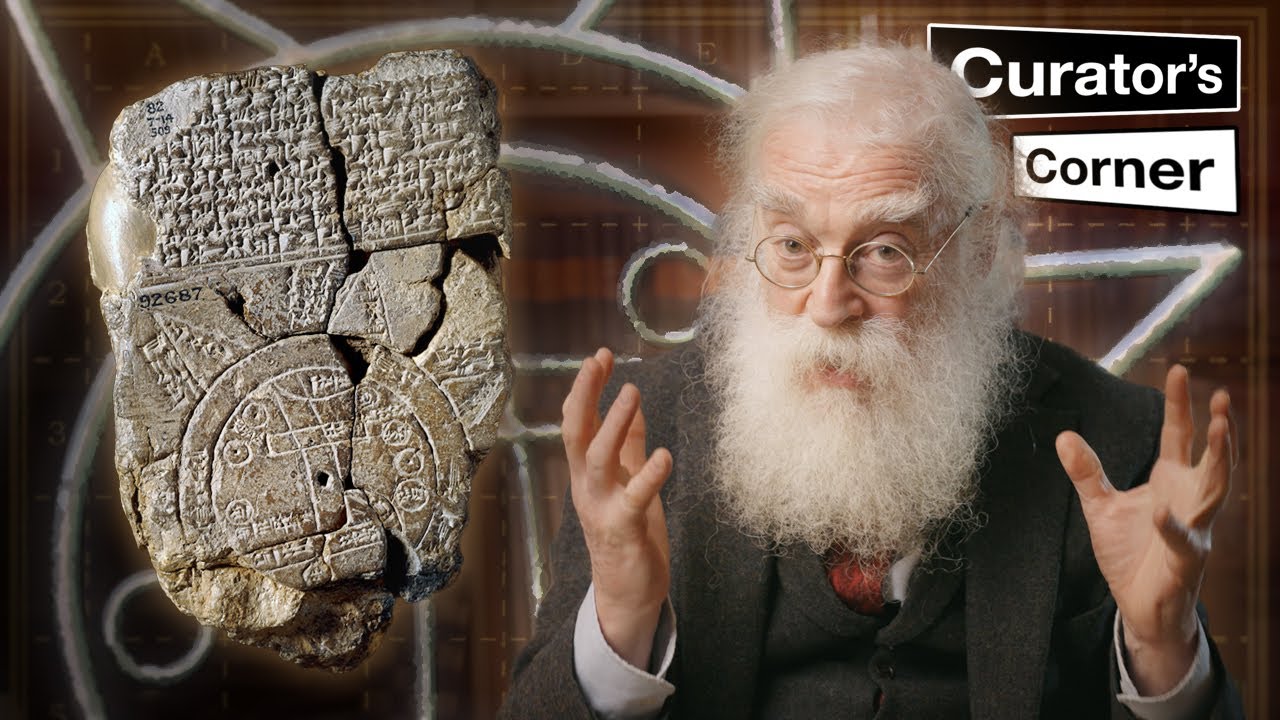
" I think it's very tricky; I think churches need to permit their pastors to reveal what their studies have shown them. A lot of priests come out of college knowing a lot of the things I know and finding there's no freedom to speak these things, and I think that's scandalous really because, at an academic level, we've known that many of the Bible's God stories are based on the stories of sky people in the Sumerian, Babylonian, Akkadian, and Assyrian corpus. We've known that for 150 years, but somehow it hasn't filtered its way into the rank and file of the churches.
So, from the rank and file of the churches, I do get a lot of pushback, and some of it is very ugly. I get threats made to me on a weekly basis from people who are offended because I am making them question aspects of their faith. I am not wanting to de-faith anyone; in fact, as I say, I've been a follower of Jesus's teachings for 42 years.
But I think we need to look at the information we have in the Bible with a fresh eye and be willing to question whether we've got the translations right and whether we might have other language in the 21st century to describe the experiences our ancestors have bequeathed to us in those scriptures. Now that the Pentagon in the USA has acknowledged possession of UAPs and non-human biologics, do you think the churches are now ready for an official disclosure that we are in contact? No, they're not ready.
In fact, I know there are departments in the Church of England in the UK which are devoted to what's called paranormal ministry, which usually means entity removal, and they're very aware of my work. I know that they're constantly being asked about my work—if there's any credibility to it and what is the church's official response to stories of close encounters or interpretations of the scriptures in this way. How does the church respond to the Pentagon's revelations?
It's with silence, and I think that's deplorable because there are people who have experienced close encounters in all our churches. There are people who studied the scriptures well enough to know there are nonhuman entities in human memory in those scriptures, and yet they're not allowed to discuss it in their small groups, their Bible study groups, or even in gatherings of specialist clergy. It's just not on the syllabus, and I think the churches are completely letting people down who have had these experiences, had these insights, or who have even been following the news and know that the Pentagon has acknowledged UAPs and possession of non-human biologics.
Where is the church's response? So, I do hope that my books—"Escaping from Eden," "The Scars of Eden," "Echoes of Eden," "The Eden Conspiracy," "The Invasion of Eden," and an upcoming title—will be a little bit of a spur to encourage the churches forward in this conversation because up until now, it really has been a taboo. It seems to me a great shame because, as I've said before.
I think some of the most insightful information about contact in the past is to be found in the Bible when we read it with an open eye. It would be a shame for the church to be silent when people in their own rank and file need answers to these questions, because it is now in the news cycle in a way it hasn't been for more than 70 years. On Fifth Kind TV, I mentioned that, on my recent expedition to Turkey with Matt McRoy, we discovered crosses which predate Christianity.
What did the cross mean before it became the symbol for the Christian faith, and what does it mean in Christianity? If we go back to the symbology used at the time of ancient Sumeria, a horizontal vertical cross—if I were to write that in front of you, that would be a declaration that you owe me some tax—and if I did a diagonal cross, it would mean I'm the preeminent one; I'm in charge of you. If I put them together, I'm the preeminent taxer; I'm at the top of the tree.
Interestingly, that eight-armed cross also doubles as a symbol for the sky or a celestial body, and it trebles as the symbol for an advanced person. So, all that overlap is really very interesting: an advanced person, a sky person who's at the top of the tree—the one who's in charge of us, the one to whom we pay our taxes—kind of summarizes the depiction of the world in the ancient Sumerian writings. So, that's a cross that comes from six and a half to seven thousand years before present.
Those associations have persisted. If you think about it, the Christian cross refers to the preeminent one; the cross of Christianity refers to the one to whom I must pay my tithes; the cross of Christianity refers to a heavenly being. It's interesting that those associations were there before the cross became the central symbol of Christianity.
It was also, of course, a symbol of the sun—a four-equal-armed cross with curved edges—that was the kind we were finding on our expedition in Turkey. It implies a cross within a circle; that's a symbol of the sun predating Christianity. So, when the emperor Constantine made the cross the central symbol of Christianity, he was, in fact, importing a symbol from a religion he was already involved in before he rebranded himself as a Christian—or, rebranded Jesus, I should say, as a supporter of the Empire.
It's very interesting that, prior to that, the cross had not been the central symbol of Christianity. In fact, in the earliest written testaments to Christianity, which are the Gospels of Thomas and Q, the story of the cross, the resurrection, and the ascension are not present. So, in Christianity's earliest written form, it's not even part of the story.
Even after the canonical story of the death and resurrection of Jesus, the cross was not the central image. When Christians wanted to gather and mark their places of meeting, it was the fish that they used as their sign. But when Constantine read a history written by Eus, he liked what Eus had to say when he described the Battle of the Milvian Bridge because he had used a phrase suggesting that God must have favored Constantine since Constantine won.
So, he made friends with this bishop and his story, and he said, "I'd love you to write a new history. In fact, I'd like to commission you to write my life story, and I'd like you to emphasize that idea in the Battle of the Milvian Bridge to show that Jesus was the reason I won, to show that Jesus was supporting my efforts as emperor. ” So, Eus obliged, and we now have the story of the cross appearing in the sky and the words saying, "Conquer by this symbol.
" Constantine was effectively saying, "Look, we're the top empire, and I'm the emperor because Jesus wills it. " His soldiers marched under the banner of that cross—the equal-armed cross, the symbol of sun worship from the religion that Constantine was already practicing—and the cross became the central symbol of Christianity. So much so that when Jesus and the saints were portrayed, there was always a sun cross behind them—a circle with a cross in it—and it was there, established by the 6th century of the Common Era, that that is how you portray a saint; that is how you portray Jesus.
So that when you bow down to Jesus, you're bowing down to Constantine's sun cross. If you go to the Roman Catholic ceremony of benediction, you will be bowing down to a gold ornament that depicts the sun, and in the middle of that ornament is a wafer with a sun cross embossed into it. This is all religion that predates Christianity, that was brought into Christian ceremonial.
The little silver ciborium that holds the people's wafers contains wafers with the sun cross, and there's a sun cross on the top of that ciborium. This language and symbology are very long-lasting, and it can change its meaning from generation to generation. Yet some of these meanings really do persist for a very long time.
So, if you're involved in those rituals, well, that's a form of sun worship. Your church will face east, the place where the sun rises. On Easter Day, you will go outside, and you will face the sun as it rises in the east—all these aspects of pre-Christian religion that were adopted by Christianity as the Empire adopted Christianity as its Department of Religion.
So, the cross means all those things; of course, it means something else for devout Christians too, because it encapsulates. . .
The story of Jesus: a God who gives Himself for us, a God who gives up His own life for us. It becomes an image of love, of divine love towards us, layered on top of all these other pre-existing layers. Because I talk about the need to reframe our understanding of our God's stories from the Bible, a lot of people ask me, “Paul, are you still a Christian?
” My simple answer is yes. I have been a follower of Jesus' teachings for 42 years. I was in church-based ministry for 33 years.
This year, it's 33 years since I was ordained as a priest in the Church of England. So yes, I call myself a Christian. At the same time, though, I am wary of all that language because I think as soon as you say the word "God," it's very easy to invoke ideas that have really been formed through forms of religion that have been really very distorting and psychologically abusive—the idea of this fierce, violent, implacable puppet master who, if you displease or fail to get into His good books, you're going to be tortured forever.
I think that has been so psychologically damaging to human beings through the ages that I would rather not use the word "God" if that's what it means to people. I’d rather use some other phrase like "Source" or "Divine Intelligence," and depending on who I’m talking to, I might prefer that language. I don't think it's worth arguing about the word, and sometimes it's better to say what you mean than use a word that might be misunderstood.
I also am very conscious that Christianity, as an institutional force in the world, has done a lot of harm in terms of the treatment of children, the treatment of women, the treatment of foreign nations, and indigenous people groups. I'm sorry to say that Christianity has a very close relationship with some of the worst aspects of colonization through the ages. Again, I think it's important to say what you mean and clarify rather than hope that we mean the same thing when we use certain labels.
As soon as you take the Bible out of its bubble and read it alongside other narratives from cultures all around the world, from different periods of history, from different continents, you will realize that at a folkloric level, there is a memory of contact in the deep past that spans the globe. I think we will not understand who we are and how we've got to where we are until we begin to recognize the nonhuman layer to the story of planet Earth. When we open ourselves up to the spectrum of stories of contact from our ancestors, I think it’s very empowering because suddenly we realize that we have always had company; we have always had helpers.
We do not need to be looking to the skies and seeing UAPs in them in a spirit of absolute terror. I think our ancestors wanted us to know there is a better way forward once we understand who we really are and what we're really capable of. Contact at various points in the human story has been vital in advancing human progress.
Our great leap forward in intelligence, our great leap forward as an agricultural presence on planet Earth, and various great leaps forward in technology have all come about because, as Plato said, we have had helpers present, very interested in advancing the wisdom and intelligence of human beings.