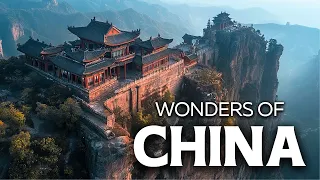
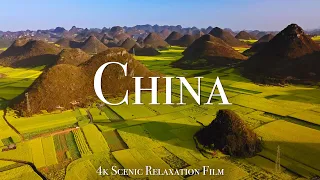
Not all journeys begin with a destination. Some begin with a feeling, a quiet pull toward something vast, ancient, and unknown. Follow that feeling and it may just lead you here to a land where mountains remember the sky, rivers whisper in forgotten tongues, and every stone tells a story carved by centuries.
Welcome to China, a realm not merely of borders and cities, but of memory, myth, and elemental wonder. High in the clouds of Hang Shan, the yellow mountains stretch like sleeping dragons under a sea of mist. Pines grow from sheer cliffs, their twisted trunks shaped by wind and time.
Poets have wandered here for centuries, seeking something they could not name, only feel. And when the sun breaks through the fog, it's not light you see, it's revelation. In the ancient water town of Wuan, time flows like the canals that weave through its soul.
Stone bridges arch over quiet waters while lanterns flicker beside weathered wooden houses. Here the modern world fades behind the hush of rippling reflections and the sound of a single ore breaking silence. Deep in the Jangji forest, sandstone pillars rise like nature's cathedrals, tall, silent, eternal.
These are the very peaks that inspired the floating mountains of Avatar, but their magic is real. Walk among them and you feel it. The stillness, the scale, the sense that you are standing inside a legend still being told.
In the remote west, Shinjang stretches like a dream of deserts, snow peaks, and nomadic sky. Here, Kakul Lake reflects the heavens, while Qashqar's ancient market bustles with spice, silk, and stories. Uager melodies drift through narrow alleys where tradition meets resilience and every face has a thousand years behind it.
Down in Fujian, the Tulo rise from the earth. Massive round houses built of clay, built for clans, for community, for survival. Step inside and you're in a living time capsule where laughter echoes through shared courtyards and the past lives beside the present.
Some lands speak not in words but in echoes of drums of waterfalls of wind weaving through wooden homes. Tucked away in the mountains of southwest China. Guo is one such land.
Quietly powerful, deeply soulful, and rich with stories that never needed to be told to be remembered. This is not a place you stumble upon. It's a place you are invited into.
Where villages cling to misty hillsides and rivers run beneath bridges worn smooth by centuries of footsteps. In Xiaoqing Dong village, the rhythm of life beats slowly in the wooden drum towers that rise like totems. In the songs of the Dong people sung in haunting polifany without a single instrument.
Here voices are music and tradition is alive in every carved beam and folded cloth. Beyond the villages, Hangoshu waterfall roars with ancient force. One of the largest waterfalls in Asia.
It doesn't just fall. It thunders, cutting through stone and silence alike. Stand behind its shimmering curtain and feel the mountain breathe through mist and spray.
And in the remote heights of Xi Jang, the Meow people's terrace villages seem to grow from the earth itself. At night, hundreds of lanterns glow like stars fallen to the hillside. The women still wear silver crowns and sing of love, war, and harvest, not for tourists, but for the sky, the ancestors, the mountains.
Then there's the land itself, green, steep, and untamed. In places like Libo Jang Jiang, where carsted peaks rise over jade rivers and hidden caves, the wild becomes cathedral. Or in Chingan, ancient town, where stone paved streets and ancient gates tell of a past that never truly left.
Everywhere you go, Guiju reveals a different melody. In its sour, spicy cuisine, in its indigo dyed fabrics, in the sound of hammers shaping silver. It is not a loud melody, but once you hear it, you carry it with you.
Some places seem painted not with color but with breath. Soft, slow, timeless, as if nature exhaled and mountains rose. Rivers curved, clouds paused.
One such place lies quietly in southern China between memory and myth. Guin. It's not just a destination.
It's a dream made real where peaks stand like ancient sentinels and water moves not with speed but with grace. telling stories in reflection. Here, the Lee River doesn't just flow, it whispers.
Past limestone giants that look sculpted by the gods, their green cloaked shapes mirrored so perfectly you lose track of earth and sky. At dawn, fishermen on bamboo rafts drift by in silhouette, corarances waiting by their sides like ink strokes in an old painting. The journey from Gilin to Yanguo is more than travel.
It's a slow motion poem. Each bend in the river reveals another masterpiece. mist swathed peaks, quiet hamlets tucked into the folds, rice patties that shimmer in the light like silk laid over stone.
In Yanguo, time thins. You cycle down winding roads past water buffalo and stone bridges as the countryside hums with a quiet rhythm of wind through bamboo of cooking fires rising into dusk. It's not nostalgia, it's a kind of clarity, a return to what matters.
Climb the Moon Hill, a natural arch carved by eternity, where wind and sky meet. Or step into the luminous heart of the Reed Flute Cave, where stelactites glow in dreamlike hues, ancient and surreal. Farther out in the terrace highlands of Leng, rice fields stack into the clouds like nature's staircase.
These green curves carved by generations are not just agriculture. They are artistry in motion. Some landscapes aren't made, they're composed.
Like music you can walk through, like a painting that never dries. And in the south of China, cradled by rivers and carved by time, one such composition lives and breathes. In the land of Guangshi, this is not a place that shouts.
It hums gently, eternally in limestone peaks and emerald rice fields, in rivers that twist like calligraphy and caves lit like dreams. Here, the Lee River doesn't flow. It glides between sheer carsted mountains that rise like mythical beasts.
Its waters mirror the sky so clearly it's hard to know which way is up. Fishermen float by on bamboo rafts, corance perched like silent guardians, casting ancient shadows against the dawn mist. The journey from Guilin to Yanguo is not a route.
It's a revery. Mountains wear green like a poet wears thought. Villages nestle in the folds of the hills.
Their rooftops rising like whispers between earth and sky. In Yanguo, life dances slowly. Cycling through the countryside.
You pass rice patties that shimmer with skylight, buffalo lounging in the fields, and children waving from behind stone walls. This is not nostalgia. It's presence, the kind that fills your chest until you forget what time means.
Climb Moon Hill, where a perfect crescent carves through the mountain and the wind sings through the stone. or explore Reed Flute Cave, where colored lights spill across ancient formations, illuminating chambers that have listened to the Earth's slow breath for millions of years. In the quieter corners, like Long Shang, rice terraces stack into the clouds, green waves frozen mid-motion.
Built by hand over generations, they are both a marvel of nature and of culture. Sculpted by patience and purpose. Some places don't rise from the earth.
They float between dreams and sky. Welcome to Jangja, a land where gravity seems optional and stone becomes story. Tucked in the heart of Hunan Province, Jang Jia is not just a destination.
It's another dimension. This is where sandstone pillars pierce the clouds like ancient guardians. Their mistwrapped forms whispering legends as old as the Earth itself.
It's no wonder these surreal spires inspired the floating mountains of Avatar. But long before the movies, this land told its own tale. The Djang Jajay National Forest Park is its crown jewel, China's first national forest park and a UNESCO World Heritage site.
Here, over 3,000 vertical peaks tower into the mist, draped in emerald forests and crowned with clouds. Hike through narrow passes and the world begins to change. Each turn revealing vistas that look painted by a dreamer's brush.
At the heart of this skyward labyrinth stands the Avatar Hallelujah Mountain, a pillar so iconic it seems carved by gods, not time. Ride the Balong Elevator, the world's highest outdoor lift, and ascend through rock and fog to reach the heavens. Up here, silence becomes sacred.
The wind whistles ancient tunes, and the mountains seem to breathe. Beyond the stone giants lies the Tienmen Mountain known as Heaven's Gate. A natural arch carved by Millennia.
It towers above a snaking road of 99 bends, one for each step closer to eternity. Climb the 999 stairs and you'll stand beneath the open gate between Earth and sky. On clear days, the glass skywalk offers a view so vertigoinducing it blurs the line between awe and fear.
But Jang Jia isn't only vertical. Beneath the surface, the yellow dragon cave stretches with limestone corridors, crystalclear rivers, and cathedral-like chambers. Stelactites sparkle like stars caught underground, echoing the wonder above.
Some mountains don't just rise, they remember. Welcome to Yulong, the Jade Drgon Snow Mountain. A place where clouds linger like forgotten dreams and peaks whisper stories older than time.
Standing proud above the ancient town of Li Jiang, Yulong isn't just a mountain. It's a myth sculpted in snow and stone. At over 5,500 m high, it pierces the Yunan sky like a celestial guardian watching over the lands below.
Locals believe it's the resting place of a slain warrior god. And when the winds howl across its glaciers, they say it's his spirit calling home. The glacier park, reached by one of the world's highest cable cars, brings you face to face with the mountains eternal ice.
At this altitude, breath is short, but wonder runs deep. Snow sparkles under the sun like crushed crystal, and silence hangs so thick you can almost hear your heart. Further down, the yak meadow stretches like a painters's dream.
Rolling green pastures framed by snow draped peaks. Here, herders still live as their ancestors did, moving with the seasons and listening to the rhythms of the earth. Walk through the meadow and you'll find serenity.
Not the kind made by silence, but by presence. On the mountains eastern face, the blue moon valley winds its way in shimmering turquoise streams. The water here glows beneath the sky, reflecting the peaks above like a prayer answered in color.
White terraces and waterfalls cut through the stone, giving the valley an otherworldly feel. Part river, part revery. Some lands don't just stretch across deserts and mountains.
They stretch across time itself. Welcome to Shinj Jang, the vast and untamed heart of western China, where every grain of sand and every snowcapped peak carries the echo of ancient journeys. Shinjiang is not one place.
It's many worlds, a crossroad of civilizations, a tapestry of cultures, a frontier where nature reigns wild and history runs deep. From the wind sculpted dunes of the Taclamakan desert to the icy spires of the Tien Shan mountains. This is a land of extremes and extraordinary beauty.
Start in Qashqar, an ancient Silk Road city where the past still walks the streets. Its old town is a labyrinth of mudbrick homes and bustling bazaars. Here, wigu craftsmen carve wood by hand, and the scent of cumin and lamb drifts through alleys lit by desert sun.
The Idka mosque with its golden facade and timeless prayers remains one of the largest in China and one of the most spiritually alive. To the north, the Tianan mountains rise like a celestial wall crowned with glaciers and laced with alpine lakes. Among them lies heavenly lake Tiani, a mirror of blue beneath towering peaks.
In the stillness, only wind and water speak. Nomads still graze their flocks here, living in yurts as they have for generations, following the rhythm of seasons and stars. Venture west and the Carakul Lake reflects not just mountains but dreams.
Surrounded by the Pomeir range, this is where Marco Polo once passed and where snow leopards still roam. The lake surface changes with the sky. Sapphire at dawn, obsidian by dusk.
In the south, the Taklamakan desert unfolds, vast, golden, and silent. Its name means go in and never return. But even here, life persists.
Ancient ruins like Nia and Miran hide beneath the sands. Remnants of once thriving kingdoms lost to time. And along the edges, oasis towns bloom like miracles.
Turpin, Hotan, Cuka. Each with its own story etched in earth and memory. Some places are not defined by their borders, but by the silence between sky and earth.
Welcome to Ching Hai, a vast sacred plateau where the land stretches endlessly and the spirit feels light enough to float. Perched high on the northeastern edge of the Tibetan plateau, Ching Hai is China's gateway to the heavens, a realm of open skies, snowcapped peaks, turquoise lakes, and whispers of ancient prayer. This is a place where geography becomes philosophy, and the horizon is not an end, but a beginning.
At the heart of it all lies Chingghai Lake, the largest saltwater lake in China. On a still day, it becomes a perfect mirror reflecting the everchanging sky. Pilgrims circle its shores for days, walking in meditation as prayer flags flutter in the breeze.
In July, the lake is wrapped in a sea of golden rape seed flowers, a fleeting bloom that feels like the land itself exhaling in color. Further west, the Chaka Salt Lake shines like a piece of the sky fallen to earth. Walk its glassy surface, and it's hard to tell where land ends and heaven begins.
The stillness here is complete. broken only by the sound of wind brushing across crystal flats and the crunch of salt beneath your feet. But Chingghai is more than scenery.
It is soul. In Tongran, monasteries cling to mountain slopes and tanka painters sit cross-legged in quiet rooms, their brushes weaving centuries of devotion into silk. The air smells of juniper smoke and butter lamps.
Each alleyway is a living thread in a cultural tapestry where Tibetan, Mongol, Hui, and Han traditions meet, not in conflict, but in reverent harmony. To the south in the Amniasheen range, jagged peaks pierce the sky. Sacred mountains worshiped by generations of nomads.
Yaks graze beneath glaciers. Prayer stones rest beside rivers, and every gust of wind carries with it a sense of something timeless, something holy. Not all temples are built on flat ground.
Some are carved into the sky. Welcome to Majashan, a place where cliffs become cathedrals and where devotion clings to stone like vines to a sacred tree. Rising like an earthen monument in the hills of Gansu province, Maiishi Shan, the wheat stack mountain, is not vast in size, but vast in spirit.
From afar, it resembles a lone hay stack rising from the forest. But step closer, and its surface reveals a wonder unlike any other. Over 7,000 Buddhist sculptures and more than a,000 square m of murals carved directly into the vertical cliff face.
This is no ordinary mountain. It is a sanctuary suspended between heaven and earth. Along the sheer walls, a network of wooden walkways hugs the rock-like veins threading through over 200 caves carved by monks more than 1,500 years ago.
Walk these paths and you'll pass serene stone Buddhas, quiet bodhicattvas, and painted walls that still breathe with color. Images that have withstood centuries of wind, rain, and reverence. The higher you climb, the more surreal it becomes.
The figures seem to watch you. The mountain seems to listen. Each sculpture tells a story of dynasties past, of pilgrims who once journeyed here on foot through silk road forests, of faith etched in rock when tools were few, but spirit was limitless.
And as mist rolls in from the valley below, myishan disappears into cloud. In those moments, it becomes not just a mountain, but a myth. A bridge between worlds where prayers drift like incense into the sky.
Some places feel like the sky forgot to take them back. Suspended between cloud and reflection, they shimmer. Not from noise, but from stillness.
And when you arrive, it doesn't feel like travel. It feels like returning to a dream. Foxy Lake in the heart of Yunan is such a place, crystalline and deep beyond imagination.
This is not just a lake. It is a mirror of time. Its waters are so clear that even the mountains lean in to admire their own reflection.
And beneath the surface, legend says, lies an ancient sunken city. A whisper from a civilization lost but not forgotten. The locals call it China's deepest lake, but numbers don't do it justice.
What matters is the feeling. When you stand on its edge and the horizon vanishes into blue. When the wind carries nothing but silence and the sun moves slowly as if careful not to disturb the stillness.
In the early hours, Foxian Lake is silver, a sheet of calm, wrapped in mist, waiting for the first paddle of a fishing boat to ripple its memory. Villagers cast nets with practiced grace. Their movements part of a rhythm older than history, older than names.
The small towns nearby like Changang live gently with lives cradled by water and mountain. There people still dry fish under the sun, tell stories of the lake gods, and gather by the docks to trade laughter more often than goods. High above, terraces of tea wrap around the hillsides.
Pickers move through the rows like brush strokes, harvesting not just leaves, but tradition. Every sip carries the fragrance of this land. Crisp air, clean water, quiet heart.
In Luch Chong scenic area, boardwalks curl along the shore like poetry in wood. Families picnic under ancient trees. Lovers walk hand in hand.
And elders play chess as if nothing in the world matters more than the next move. Some towns don't grow, they remember. They sit quietly by the river, not aging, just watching time pass.
And if you listen closely, you'll hear their wooden walls whisper. Fing Hang is one of those towns, cradled in the arms of Hunan Province, wrapped in mist and myth. It doesn't call attention to itself.
It simply endures like an old melody the world forgot how to play, but still hums in dreams. Perched along the Tujiang River, Fun Huang glows with lantern light and stories. Its stilted wooden houses rise above green waters, their reflections rippling like memories too sacred to touch.
Bridges curve gently over the current as if built not just to cross but to honor the journey. In the early morning, the river wears a robe of mist. Boats drift silently like brush strokes on rice paper.
The air carries the scent of steamed buns, incense, and old pine. And something else, too. Something older than words.
something that lingers. The cobbled streets wind through the town like veins of history. They echo with the footsteps of poets, soldiers, scholars, and the soft footfalls of those who simply loved this place enough to stay.
Walk through them and you'll pass ancient city walls, archways etched with time, and quiet tea houses where silence is its own kind of conversation. This is where the Meow and Tuia people live. Guardians of a heritage woven with silver threads, vibrant embroidery, and deeprooted legend.
Their festivals are not performances. They are prayers dressed in color, in music, in motion. Step inside a traditional home and the scent of woodsm smoke and history welcomes you.
Here, life isn't rushed. It flows like the river outside. Slow, graceful, and true.
Above the rooftops, the Phoenix ancient city wall still stands. Its stones worn by centuries. Its towers overlooking both the past and the now.
Climb it and you'll see more than rooftops and riverbends. You'll see the rhythm of a place that refuses to forget. Some landscapes don't just impress, they astonish.
Like nature suddenly remembering how to speak in poetry. Welcome to Jang Lang Mountain, where gravitydeying cliffs rise like the pages of an ancient book. Each fold written in red stone and silence.
Here in the heart of Jang, time doesn't move in a straight line. It spirals around the Dangia peaks, through bamboo forests, and across mistlaced ridges that feel closer to the clouds than to the earth below. The three iconic rock peaks of Jang Lang, sharp, vertical, and majestic, stand like giant stone scrolls left open to sky and wind.
Known as the three stacks of books, these cliffs are more than geological wonders. They are chapters in China's deep narrative, shaped by rain, sun, and story. As you ascend the ancient stone paths, each turn unveils a new perspective.
A sea of green valleys, the ripple of red cliffs, the hush of breeze brushing past prayer flags at lonely pavilions. The higher you go, the quieter it gets. Not because sound disappears, but because stillness takes its place.
In the early morning, the mountains are bathed in fog and the world feels half dream, half memory. And when the sunlight spills across the red stone, it's as if the earth itself has caught fire, glowing, breathing, alive. Down below, hidden streams trace their way through the folds of forest, and rustic villages nestle in the shadows of peaks.
Life here is slow, measured in tea leaves and laughter, in temple bells and footsteps across weathered bridges. Beyond the spectacle, Jang Lang is sacred ground. Locals believe its cliffs hold spiritual energy.
A place where sky and stone meet. Where the soul finds paws. Even the air feels different here, carrying the echo of ancient footsteps and whispered prayers.
As the sun sets, the mountains fade to ink, and shadows stretch long over the valley. Lanterns flicker to life in nearby hamlets, and the stars begin their quiet vigil overhead. Some mountains don't rise, they emerge slowly like thoughts from the mind of the earth.
Wrapped in clouds carved by wind and time, hang or the yellow mountains of China is one such place. A sacred dream made of stone, mist, and light. This is not a destination.
It's an awakening. A place where you don't just look at the world. You feel it breathing around you.
Here, granite peaks pierce the sky like silent monks in meditation. They stand tall, draped in veils of drifting fog, shaped by centuries of wind and wonder. Each crag has a name, a legend, a story whispered by pine trees that grow from cliffs as if suspended by magic.
At sunrise, Hangan transforms. The sky ignites in gold and rose, and sea after sea of clouds roll beneath your feet. It's as if you've stepped beyond the edge of reality into a painting where silence speaks louder than sound.
Hiking through the West Sea Canyon is not just a journey. It's a descent into the soul of the mountain. Stone steps wind through narrow chasms where light falls in shards and the world narrows to wind, stone, and breath.
And when you reach the viewpoints like Bright Summit Peak or flying over rock, you realize the climb was always inward. Tucked along the trails, weathered pavilions and lone pine trees such as the legendary welcoming guest pine stand like guardians of ancient truths. They've watched poets, monks, and travelers pass through for centuries, leaving behind nothing but footprints and verses.
Beyond the peaks, the surrounding villages like Hongkun and Ziti offer another kind of stillness. Water reflections of whitewalled houses, moon bridges over canals, and courtyards that echo with the lives of dynasties past. It's not a step back in time.
It's time holding still for you. In every bowl of local tofu, in every stroke of inkwash art inspired by Hangan's surreal peaks, you feel the mountains influence. It's a muse, timeless and yet constantly changing.
They say the earth hides its most sacred places in silence, not behind walls, but beneath veils of mist and myth. Where the mountains rise like stories waiting to be told, and the wind carries echoes too ancient to name. This is one of those places, a forgotten sanctuary of stone and spirit, where nature carves temples and time walks barefoot across the land.
Welcome to Bajao Shan, the mountain of eight horns, a dream folded into the red cliffs of southern China. Here in Guangshi, where clouds drift low and rivers carve through silence, Baja Shan rises like a painted scroll come to life, its eight towering peaks curve like ancient horns, not of beasts, but of earth itself, singing its oldest song. The mountains don't just stand, they reach, they remember.
Formed from red sandstone and rain, they wear time like an old robe. Weathered but sacred. Between the cliffs, the Zun River meanders slowly as if unwilling to disturb the silence.
Caves and gorges hide along its bends, places where monks once meditated, and where now only birds and echoes remain. Stand here at sunrise and light moves gently across the rock revealing not just color but age. Not just beauty but memory.
Some landscapes don't just take your breath. They return you to something older, quieter, and deeper than memory. They don't shout to be seen.
They wait to be felt. Kangan in the heart of Eunan is one of those places. A mountain range that rises like a spine of stone between heaven and lake, where the sky rests low and the earth seems to listen.
Standing above the ancient city of Dali, Kong does not simply tower, it watches. Its 13 peaks stretch across the clouds like ancient guardians cloaked in mist, brushed by the wind. Some say the mountain breathes.
Others say it remembers.