How was life here Minneapolis? >> Alhamdulillah. Mallah ya Allah.
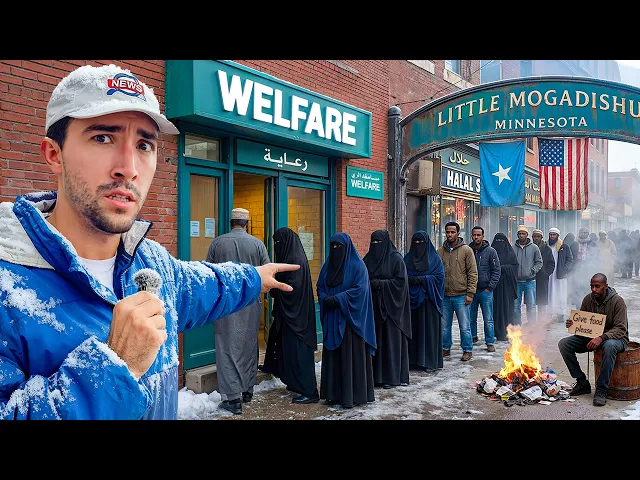
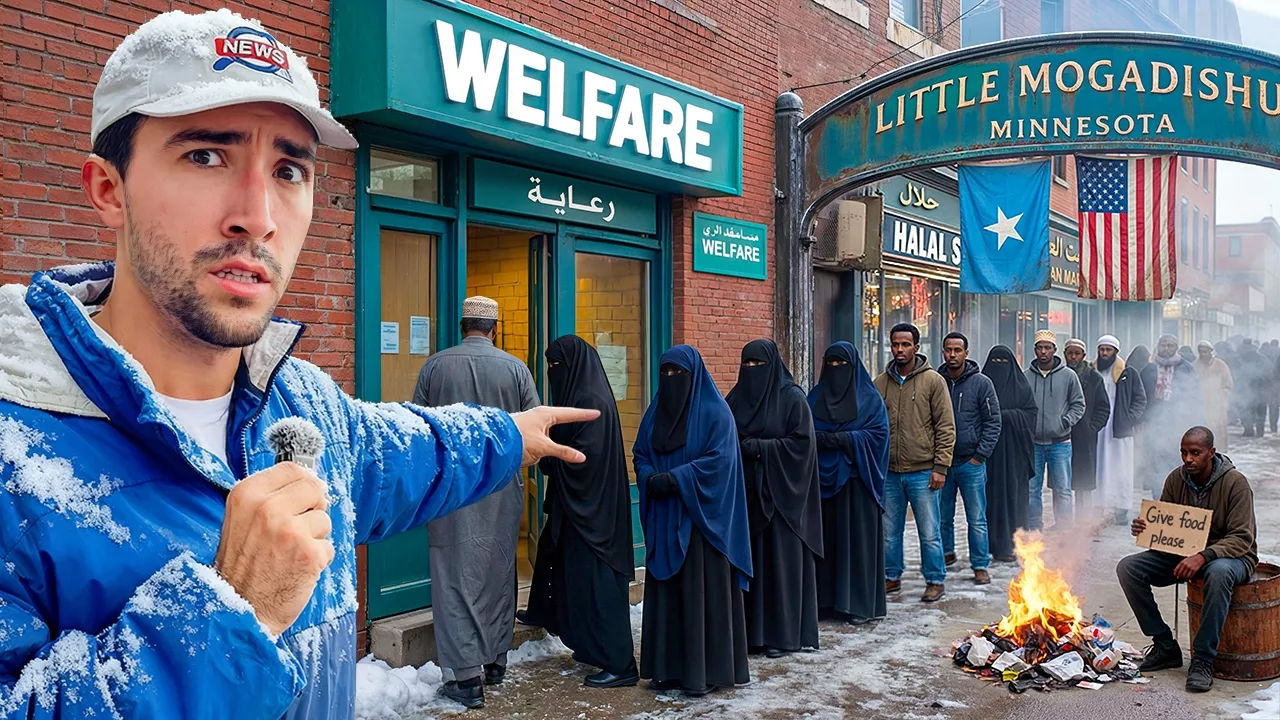
>> This is Little Moadishu, Minneapolis. The unofficial capital of the 100,000 plus Somali that have made Minnesota their home. Fleeing the war torn Somalia since the '9s and attracted by Minnesota's refugee programs, job opportunities, a generous welfare system, pre-existing Somali community, and the welcoming, hospitable motan spirit.
But not everyone wants them here. Somalians ripped off that state for billions of dollars. Their country stakes.
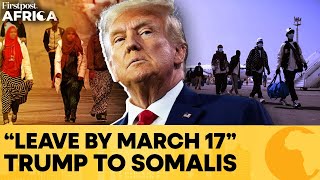
>> The president says he doesn't want any Somali living in the US after a few dozen were implicated in a [music] COVID relief fraud case. >> I got nothing to do personally. I've been working all my life hard.
>> They believe the fraud could extend beyond $6. 5 billion just in the time period where Tim Walls has taken office. 78 people have been charged at this point.
77 of them are small >> with an estimated 1 billion plus dollars stolen from welfare programs designed to feed the hungry housing stabilization and treat autistic kids. Is this the result of a few evil fraudsters who happen to mostly be Somali? Or is it the work of a city and state's leadership, bending the knee to an increasingly growing community of tribally loyal refugees that have refused to assimilate, have worked together as a community to exploit generous welfare programs, and have not been held accountable due to the fear of spineless politicians being called racist and potentially losing the votes of the Somali community they know they'll need to get reelected.
>> Somali people have been an extraordinary benefit. >> They contribute nothing. They contribute nothing.
I don't want them in our country. I'll be honest with you. >> Anyone who looks like me are scared right now.
>> The fear comes as the Somali community here is bracing for a surge of ICE agents cracking down on migrants who've been issued final deportation orders. >> So, I pulled up to little Mogadishu to talk to the Somali community and figure out what's really going on here. So, this sign is in full Somali.
I don't see a variant of it in English. That's fascinating. Let's see if it's English on the back.
No, Somali only. I guess uh why even learn English if you can just read the signs in Somali? If you don't force the people who move here to learn English, they never will or will never have the need to learn English.
And my point proved itself immediately. >> Could I interview you? Okay.
Sorry. Okay. Uh this will be fascinating.
Do you speak English? >> Um do you speak English? >> I do speak in English.
>> French. >> French. Um, Somali French.
>> Uh, okay. Okay. Can't I interview you um in French?
Hey, >> what are you doing? >> Doing news report. >> Huh?
>> No. >> What do you mean? No.
It's America. No. Chris Vu interviewer in France.
>> He doesn't speak French. >> Okay. Okay.
Thank you. This is a unique place. My name's Tyler.
>> Yes. In Rwanda, >> uh, we're trying to talk to members of Somali community. >> Yeah.
>> Because the Trump thing, temporary protected status over, I wanted to talk to people that live here. >> Would you be open to giving any thoughts for a little news piece we're doing? >> Okay.
Good. >> Good. >> Yeah, it's good.
It's good. >> Okay. Okay.
See you. Nice people. Nice people.
But keep in mind, it says it's not safe right there. It's not safe. Whisper on the wall, Dark Souls style.
Well, we're trying to talk to members of the Somali community. >> And no. Okay.
Okay. And then I headed towards the Riverside Plaza apartment complex known for its large Somali population to see if I could find anyone here that spoke English. Speak English.
>> Speak Spanish. >> Bonjour. Uh, can I interview in French?
>> I'm sorry. >> Intervo in France. >> Okay.
Bye-bye. Yeah. Once you start speaking French, they don't speak French.
English. Franis. >> Hello.
You speak English? >> Yes. Uh, could I uh ask you a few questions for interview?
>> Why? >> Uh, news interview. >> News interview.
>> News interview. >> For what? >> Uh, oh, news.
>> Oh, news. >> My name is Ali. No, >> he can't speak for himself.
>> No. >> Huh? >> Okay.
>> Oh, okay. >> Okay. >> What's >> My name is Tyler.
>> Okay. Tyler, what are you looking for? >> Uh, to speak to people in Somali community.
I want to ask people in Somali community in Minneapolis about Trump trying to revoke the temporary protected status. >> He doesn't have authority. So I think it's a rhetoric.
It's not the actual policy. >> Do you believe the Somali community is being targeted unfairly? >> Yeah, sure.
Why not? >> I don't understand why he's targeting Somalis. Somalis like everyone, they are Americans and they have the whole right that each American has.
If Mr Trump wanted my advice. I would tell him let alone all Americans, especially the Somalis. >> I see.
>> They came here to get a refuge and they got one. They are contributing to the countries. >> Good to meet you.
>> How's it going? >> It's going. How are you?
>> I actually watched your video. I was like, wait, no. >> That's me.
You got any thoughts, >> man? It's it's uh it's it's it's there's a lot more to it honestly what I believe than you know what the like headlines the news sensation is >> well so like majority of us aren't under that protective status cuz we really don't migrate here illegally you know us being on the other side of the world is really not that much of an option right here I think it was around like 5 to 700 people and that group of people aren't even the ones really you know engaged in anything, you know. So, I don't know what it really would solve for.
>> Do most people here in um this community speak English? >> Yeah, why not? What I'm speaking now?
Am I speaking for Am I speaking for Greek? >> No. >> Why are you so uh revved up right now?
>> Because of I >> We came in here pretty civily and you're you're telling him to walk away and he can't speak and he's a grown man, right? >> He's a mentally ill guy. >> Okay.
I didn't know that. I didn't know. Yeah, that's fair.
That's fair. Good call. >> Yeah.
>> Um here's what I want to ask. Um, have you heard about the statewide uh welfare fraud? >> I heard but I >> estimated billion plus dollars.
>> I think that one is fake. >> You think it's all fake? >> Yeah.
No, that maybe the small portion is so accurate. >> Sure. >> But uh I don't think he that's not the accurate description for the whole community.
>> If someone does an wrongdoing, >> I I agree that he be punished by law. the publicizing and fingerpointing with Somali is not what we like. >> A lot of people that work here send a lot of money back home to support the family.
>> Absolutely. Absolutely. Makes >> sense.
I know a big portion of uh Somalia's like GDP comes from remittance, you know, because you know there's no economy back there. There's no opportunities. >> A lot of the ladies specifically um they say they speak French, then we start speaking French and then they don't speak French.
Then I get the Somali translation and then they don't speak Somali. I appreciate you by the way that we're having a conversation. It's tough to find people to speak to.
>> Yeah. Yeah. You know, I think the majority of people they speak English, but there some the elderly people they don't speak English.
Well, that takes time. Somalis came here 30 years ago. >> I see.
>> And 30 years it's for the history is small period. >> You think 30 years is not enough time to >> to assimilate? I do not agree with the simulation.
I I wouldn't say good or bad, but it's not the forced people to be simil assimilated. I can be American uh and be my own English and some they never assimilated. >> I see.
Do you think a commonly shared language would be a reasonable thing to compromise on? Like let's say we all speak English like you and I do. I learned English for my own personal interest and I I am an engineer in order to have job.
I must be able to speak English who doesn't have an interest. Let them have their own language. >> You don't think there are any problems with not being able to read like traffic directions or >> Yeah.
If you look at Somalis living here >> Yeah. who are above and 20 or 30 years all all of them they speak English >> I see yeah >> it's just human nature to sort of live next >> white people live to wait next I don't think that's not you know uh the something unique to the Somali uh you know if you go to the Brooklyn back you can see a lot of uh uh hian or people come from uh west Africa that's not bad >> so there's a there's studies that suggest when ethnic groups live together in one densely populated area that they don't have to assimilate. There's no reason to sort of learn uh the commonly spoken language like English for instance or learn certain cultural norms if they ethnically pull together.
I don't agree uh that our community disperses and if we live in a one place in a close place we will be having a political say and I would encourage that the Somali get together and live in one place because the MPs from that area will be Somalis. I came from Virginia previously. Why from Virginia to uh Minnesota?
>> Well, we have more >> more Somali community, >> more the Somali, more power. We have more political power. We we can we can have better chances here.
>> When you think of your identity, does it go religion, nationality, ethnicity? What what is the sort of how is it to be a Muslim Somali American >> in this country? Everyone in this country came from somewhere else.
Mhm. >> We are not the only people who came from somewhere else. When we came here, we were Somalians, Muslims, and now became Americans.
So, we are Americans, Muslims, and Somalians. >> Hey, well, thank you so much for your time, sir. You were very gracious with your time and answers.
Have a great day. Thank you. >> And again, just creating more division uh in our community.
You know, it's almost like um let me see how how can I work since that's where they were raised. But you know, first generation born folks like myself. >> Can we focus on the interview posture?
Can you >> How you doing? >> Definitely. Great to meet you again.
>> Good luck. >> All right. Be safe.
See you. >> What? The guy in the blue.
Is there a problem you guys? So, we got this dude like hiding behind pillars creepily. He was uh definitely mocking you.
Do you speak English? No. >> No English.
Somali. >> Uh, French. >> Sir, do you speak English?
French. Somali. >> Hello.
>> Hi. What is that for? >> We're trying to interview members of Somali community, but I can interview you, too.
>> Mainly it's like mainly Somalians here. Um, but there's like maybe I've seen a few other, you know, races or whatever, but they're very nice to me and my kids. >> Do most people have a job and work here?
>> No. >> No. >> Nope.
>> No. Hi. >> I've seen maybe a few like >> I could tell that they were going to work, but I don't even know if that if they're going to work on the bus.
>> Oh, >> she's speaking Somali. >> Yeah. Oh, she's talking to him.
>> Yelling at each other. >> I think that's just how they talk, honestly. How they communicate.
>> Must be pleasant. >> Yeah. You >> It's crazy, bro.
I'll be watching your videos all the time, bro. >> Respect. What are your thoughts?
>> My thoughts on it? >> Yeah. I mean, I love everybody who love me, you know.
>> That's a good way to live. >> Yeah. >> How did this become like the de facto hub for the Somali community?
>> I'm not sure, bro. Honestly, >> [ __ ] they just came here and took over, [laughter] bro. >> Notice it's very difficult to communicate with the women out here.
Somali women. >> Yeah. >> Any thoughts?
>> I would um >> Is it just part of the culture? Muslim culture? >> No, because the men are mainly the one that speak to me, you know.
Um, but the women also speak to me as well that are on my floor and >> yeah, they really don't talk a lot. I don't know. I don't know if some of them does not speak English.
>> Don't speak English at all. So, um, >> like yesterday I tried to, um, ask one of them a question and she didn't speak English. So, I think that may interfere with >> Yeah.
why they don't talk. >> Yeah. [laughter] Well, it's been great talking with you.
I hope you raise your kids and you have a beautiful family. >> Thank you. Thank you.
You guys have a nice >> And then as I was interviewing this guy, some Somali looking gangster homie got aggro and started talking [ __ ] from behind our camera. >> How you doing real quick? When you travel as much as I do, the first thing that I need when I land is data.
And the sponsor of today's video, Eim. io, has got you covered. Whether you're in India, France, Spain, or Italy, you never want to waste your time hunting for Wi-Fi in the middle of nowhere when you should be spending it making memories.
Option one, pay as you go. Load up your eim balance inside the app and use it in over 190 countries. Option two, timebased plan.
Buy a 30-day plan for a single country. And if your trip runs longer than your plan, it'll automatically switch to pay as you go using your remaining balance. Option three, regional plans.
Pick a regional plan and stay connected in multiple countries at once. This Europe plan covers all of these countries and you'll never have to swap SIMs again. Their one SIM feature lets you download their ESIM once and use it forever.
No more juggling 20 eims across your trip. And if there's any leftover balance, it rolls over to your next adventure. No wasted money, no wasted data.
So click the link in the description or scan the QR code on screen to download Eim. io and get $5 worth of data free. Thanks, Eim.
io. Back to little Somalia. >> Um, >> what did you say?
>> I think he said, "Fuck your grimy ass. Come holler at me after. " I'm not sure.
Um, nice people. >> Yeah, thank you. >> Appreciate you.
Well, we might get shot out here if we keep sticking around. Okay, I'm walking away. Hell no.
All right, bro is reaching in to pull out a gun. Thank you. That's sketchy.
And then my cameraman said the Somali gangster grabbed what appeared to be a gun from his man purse and began sprinting towards us as we ran away for our lives. Guy's going to pull a gun on us. Some guy back there's really going for the peace.
Oh man. That might be the first time someone's fully like went in to grab the gun. As our lives flashed before our eyes, we headed to the hotel to cool down and came back the next day to one of many Somali malls.
And I finally found a woman to speak to. Is this your business? >> Yes, I do.
>> How long have you owned this business? >> Two years. >> Where are you from?
>> Somalia. East Africa. Somalia.
>> How is life here in Minneapolis? >> Alhamdulillah. Good.
>> Alhamdulillah. >> Good. Alhamdulillah.
>> Alhamdulillah. Praise God. Be the highest.
>> House. No. >> Uh, no.
Praise God. Be God. God almighty.
Alhamdulillah. >> Alhamdulillah. Mashallah.
Ya Allah. >> Inshah. Wah.
No. Um, how difficult was it to start your own business here? It was very difficult.
I'm a single mom. It's very hard. I'm still struggling.
>> Small business owner. >> Yes, they do. And that people they supporting almost what they call every person in here they supporting 10 people, 20 people.
So the our people is waiting for us. >> So you're saying every Somali that lives here is supporting 10 to 20 people back home? >> Yes.
Because we >> How do you afford that? >> We're trying. We're struggling.
That people they not go. They don't have a place to go. >> Okay.
So, you're one of the first women I've had a a conversation with. Why is it so difficult to speak with women? >> Because the culture and some people that what is going on now?
People they don't want to talk. You know, it's scary. What is going on?
>> Yeah. Have you heard about some of this welfare fraud in in Minnesota recently? >> I heard that.
But you know, people say how many people in America or Somali 400 million >> $100 million. We say 100 people do something mistake. Yeah.
>> Then 100,000 people. You say all the teeth. >> Sure.
>> That's wrong. I've been in America 27 years. I never have any problem.
I have my own business. I have my own family. I never have any problems.
People like me. Do they teach or >> Yeah. What did you do?
Right. >> I don't do nothing. We love America.
We being America. I love it. I respect it.
>> US flag right there. >> Yeah. We keep telling people every day, America is great country.
You need to work the country. You need to obey the law. >> Well, thank you so much for giving me a moment of Oh, yes.
I can't. Yeah. Sorry.
Do you own this business? No, but it is no 3 years or 3 years and a half. >> The most people that come here are they Somali?
>> Yeah, only Somali. >> Only Somali mall. And even the customers only Somali.
>> Yeah, Somali. >> This is run by Somali for Somali. >> I can come but typically only Somali come.
>> Every country you come here. >> How is life in Minneapolis as Somali? >> Life is good life.
>> America good. >> America good. Okay.
>> It's good. >> It's good. >> Yeah.
And I don't have any problem. >> Life is beautiful, man. >> How large is the Somali community here in Minneapolis?
Oh, too much. >> Yeah, [laughter] >> it reminds you of home. >> Too much.
Yeah. >> Uh, back home. Somalia.
>> Okay. >> And like when I came here, it was like similar. Besides like the uh the violence and [ __ ] like that over here, at least we have the police, you know.
>> I'm a Jew. I've lived here in the most Somali community in Minneapolis for a while now. Literally never been more welcome anywhere else in the city in my entire life.
>> We always help each other and every Ramadan we always fast together. The one thing that we don't have in Somalia is a foundation. And that foundation was kind of built here from different tribes.
We all communicate differently. We have them all right here that brings us all together. You know, >> I'm trying to got on Dualingo trying to learn a little bit of Somali.
It's nice to live in a neighborhood where there's another language that is largely spoken. People have told me like, why would you feel like you need to learn another language when you're in America? And it's like because there's a lot of people who speak a lot of languages in America.
>> Being Somali out here for me is like survival, man. Every day. Every day I gotta go, you know what I'm saying?
Look for my where to get my bread from, you know what I'm saying? I gotta go out there because I got family who I got to support, you know? >> Is life easier in Somalia or Minneapolis?
>> It depends on the person, bro. For me, it's almost the same. So, I go back and forth, you know, every year.
>> Can you tell me about some of the clans or tribes that live here in Minneapolis? >> There's maj. So, they all have their own different type of languages and even what they eat.
Every single one of them cannot always identify each other. I'm Rahen for example. You know, Rahen are kind, cool, educated, but very social people.
But then there's other people that are like distance, you know, that they don't like communicating with other, you know, tribes and [ __ ] >> I was on the train yesterday and I heard someone listening to a podcast about exactly this. It was these people saying like Islamism isn't compatible with American values. That's such a distraction from the actual problem which is that people are hurting and we used to have social programs that like tried to keep people living dignified lives.
>> My culture like we spread peace and love, tranquility, you know, so we're willing to like give is how you treat people around here. You know what I'm saying? Respect.
You give respect, you get respect. You know what I'm saying? >> You will know what tribe you're from.
You know, that's how they taught me who I am. You know, because if you don't know your tribe, people will make fun of you. People that come from Somalia and Africa, they kind of talk down on us because we're born in America.
They don't like it. >> I see. >> That's why Somali people don't succeed in Somalia cuz they have that jealous and hate towards each other.
>> What are your thoughts on some of the fraud related to like the autism, the feeding the children? Have you heard about that? >> Of course, I heard that my friend.
But to me, those cases is individual persons. So, everybody has to pay the price. This is America.
You know, America don't charge community or family for a crime that one person coming. Individualist is responsible for this crime, not the whole community. I got nothing to do.
Personally, I've been working all my life hard. I flee Somalia when I was like 14, I think. >> 14.
Okay. >> Yeah. I've been here 25 years.
So, Somalia and United States is the same to me. And I love both. It's part of my life.
>> This is home. >> Yeah. It's home.
We are beautiful people. We came here for a peace. We ran away at war, you know.
We love everywhere is a piece, especially Minnesota. It's one of the biggest states. Welcome us.
>> With members of the Somali community understandably defensive that the blame is being placed on the community as a whole, when you consider the $14 million fraud scheme involving autism treatment centers, where parents were reportedly paid kickbacks to enroll their children in fake treatment centers. One must wonder to what degree this fraud goes beyond a few dozen individuals. So, I met up with Minnesotan journalist Dustin Grage and Senator Michael Holmes to hear their thoughts on this Somali fraud scandal.
But real quick, >> wait, you suck insane. >> There are some things so insane YouTube won't let us upload. >> It shows.
>> But luckily, you can watch it all on patreon. com/tylera and get early access to these videos for five bucks a month. Thank [music] you for your support.
Back to little Somalia. Dustin, tell me about the Somali fraud in the state of Minnesota right now and what that term means. >> Probably the biggest one everyone's familiar with is fee our future, which is the nation's largest co fraud scheme.
Uh originally reported at 250 million. I believe it's now around 300 million right now. And what that case ended up being was fraud case for hungry kids.
So this is during COVID, everyone's out of school. They set up these feeding centers all across the state. And ultimately we're getting uh payments out to these feeding centers, but kids aren't actually being fed.
They're just reporting fake numbers, fake names, and then ultimately out goes $300 million. >> And where are we in front of? Uh this is the Henipin County Government Center.
This is where the district court judge allowed a fraudster $7. 2 million in fraud to go completely scot-free. She just didn't like the ruling that the jurors came back with.
>> There's nothing illegal about it. The judge did. They can overturn this.
Granted, was it a horrible decision? It should it be appealed and is it being appealed? Absolutely.
But it has to be prevented from happening in the future. >> Is our judicial system compromised right now? What's happening?
>> Yeah, absolutely. Our justices are allowed to just decide these things on a whim. They have no accountability to the people and and the people of Minnesota are getting defrauded and have no recourse.
>> 78 people have been charged at this point. 77 of them are small. There's one white woman at the top, a defendant one lady by the name of Amy Bach, kind of the mastermind behind the scheme, but we very well may exceed over a hundred people charged.
Just recently, uh, we just saw the 78th one, and that individual was actually charging for more people being fed in a town in northern Minnesota, double the amount of the actual population of the city. So, very clearly, we have a a fraud problem there. But actually, Senator Omar Fetah ended up coming out publicly and advocating for the Somali community, uh, saying, "You're all a bunch of racists.
Our state government is racist. " They end up blocking it and they win their court case. And actually Omar Fatah praises Fear our future for all the good work they're doing and working with Amy Bach and all their team to actually win this court case and prevent the stop payments from occurring.
It continues on and 300 million down the line later we continue with the fraud. >> Is it Somali fraud? Because the majority of defendants right now are found to have been from the Somali community.
>> Yeah, I think that's where the the tagline comes from. Honestly, there there's a lot of fraud in DHS from top to bottom to begin with. Uh that's getting a lot of press because of the Somali fraud.
we're calling it because honestly so many feeding our future came out hundreds of millions of dollars. That's what everyone's looking at right now. >> Now granted, are white people also committing fraud through Medicaid?
Absolutely. And they should be charged and tried as well. But in particular, I mean, we're talking about what 100,000 Somali in the state, 5 million people.
It's still a very small subsect of the population. At least over 50% of the fraud is coming from one community. >> How have you guys sort of discovered the extent of this fraud?
Minnesota House of Representatives has created a fraud committee. So many whistleblowers have come forward to that committee to testify and we have DHS whistleblowers coming forward. Uh people from the Somali community are coming forward and really exposing what this is and unfortunately the state is not doing a great job of of these investigations.
>> So we're actually going to go in and look at some of these past cases with that judge and in particular one exhibit where wire transfers were occurring overseas. And now brings us back to al-Shabaab. Were some of these payments going to halas is what they're called.
So in Somalia they don't have banks, they have halas. the average working class guy right now working his ass off. That money is coming out of his pocket to fund who knows what at this point.
>> Yeah. And it's in the worst possible way. We have families with autistic children, with disabled children who aren't getting services because other families in the state are deciding to lie and say, "Oh, I have an autistic child.
" And they get a kickback. Then money is getting shipped out overseas and we don't know where that goes. And we finding out that some of it is unfortunately uh getting sent to terror networks.
It's a real problem. >> How did it take this long to identify this widespread fraud? >> Let's go back to 2014.
a program called CCAP, basically child care assistance. So, Somali daycare centers ended up popping up everywhere and a lot of the same exact issues, fake names being submitted, fake billing hours, everything. We noticed that a lot of that money was being wire transferred over to Somalia and the Horn of Africa.
Fast forward to 2018, it ended up not being wire transfers anymore cuz we ended up catching that. Um, it ended up being bags of cash. In this case, a million dollars being stuffed into a suitcase and trying to be transported over to the Horn of Africa.
and it was tied to CCAP, the childcare fraud program. Um, as well, vulnerable adults who can't get around or might have mental health issues and they need assistance in their homes. These individuals are also fraudulently being build.
And we just had another one happen last week where an individual actually was walked in on and they found them dead. This individual had schizophrenia and a bunch of different issues. That individual had been deceased for a while and they were collecting money on his behalf, billing 12 hours a day.
But then the individual, his name was Muhammad, ended up saying that, "Oh yeah, I saw him last alive the morning before, which was clearly a lie. " This individual, according to the report, had been deceased for a while. We have autism centers around the state uh being fraudulently buildup autism cases.
They don't actually have a diagnosis, but they're being charged for it. How deep does this fraud rabbit hole go? >> Uh we're told it goes gets up to eight potentially 8 billion here in the state.
Uh and that's really that's picking the the easy to get fruit. There's really no telling how deep it is. We would encourage the Somali community to come forward and go, we want to work with you.
Let's go after them. Let's go after the bad apples so you guys can flourish in these communities. And the good news, I can at least report that that is happening in many cases.
And Republicans were not racist. We have done countless things to be able to bring the Somali community into the Republican party. >> How do you think Trump revoking temporary protected status for Somalia impacts the reduction of of fraud happening in Minnesota, if at all?
>> Unfortunately, right, it's more of a symbolic step. We're recognizing that this is something that needs to come to an end. The Somali community here in Minnesota, they need to take some accountability and and police themselves.
There there isn't a a hatred of Somalians or anything like that here. There there's just a realization that this has to be tackled and everybody needs to be part of that solution. >> Exposing corruption is not racist.
Thank you for your work. Let's get to the bottom of this. Brought aside, Minneapolis is a cautionary tale and microcosm of what happens when you import mass quantities of people from fundamentally different worlds and assume they'll behave, talk, pray, and live like you do.
And once you import enough of these people into the same place after years of chain migration, they will achieve power through numbers and leverage our democracy to assert political representation and seemingly turn their generous hosts into secondclass citizens within their own home. If everyone can be an American the moment they land on American soil, then what does it even mean to be an American? >> What you see is a visual representation of we have your back.
And when you come for one of us, you come for all of us.