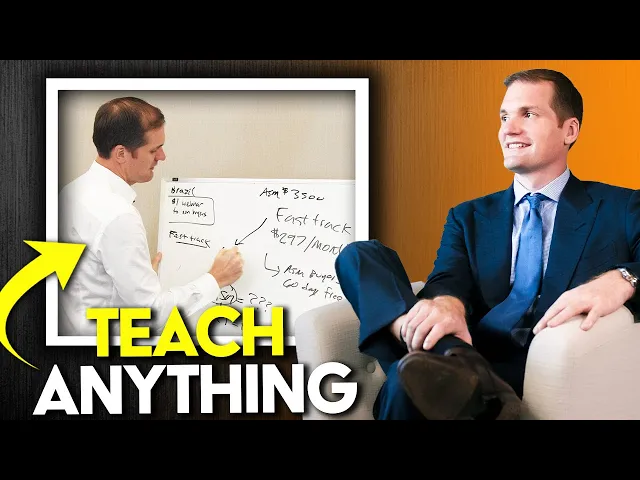
[Music] hey Jason flin here and today I want to give you a teaching framework it's the one I use more than any other when I'm educating and also in very often presentations where I am selling something at the end of it uh I will fall into this framework I like it because it's easy to understand I can map out whole curriculums and I can do the whole 16-hour training on this framework and I can get the framework out in a day maybe so the whole preparation for the thing will take a day at most probably
even less now obviously in areas where you need to research it and you're not necessarily an unconscious expert at the thing then it will take you longer but nonetheless you can hang all of your research on this framework and so you will create better content quicker and it will have better impact and it will lead to more sales more revenue for you so what is it all right the framework essentially starts with no matter what you're teaching the first thing that you do is you say here's what it is second thing you do is why
it matters third thing is what's involved fourth thing is how to use it Fifth thing is the good and bad of what can happen when you do use it so those are the five elements why do we pick these elements exactly so it's a good question a lot of this has has been rooted on some psychological research on how human beings respond to information that I've studied over the years or from certain cognitive uh scientists and psychologist and re Searchers where I've noticed how they've studied communication and what their models are and then tried and
applied what made sense and adjusted it to this modern business communication context uh that we are involved with so the first thing that I do so let me review it again with you no matter what you're teaching what the topic is you start off with what it is then you go into why it matters then you say what's involved how to use it what can happen so what is it a system for business owners to double their productivity in seven days or less let's pretend that I'm teaching you productivity I could teach you any and
everything on productivity so I have to give you a clearly defined outcome I always think about this is putting a puzzle together without looking at the Box the cover of what the end picture is going to look like that's how most people teach and instruct and educate is they don't give you the puzzle box the cover of it to say this is what we're putting together before giving you the pieces they just throw the pieces at you so if I were teaching a training on productivity specifically a system to double your business productivity in 7
days or less now you know what's at stake not just any productivity business productivity not just any open-ended amount of productivity doubling of productivity so we have a measurement and then we have a Time component so usually those are the three elements of what it is it's an outcome with this measurement objective to it in this amount of time it doesn't always have to be that way but regardless is I try to give them in one sentence and and if I don't even tell them the one sentence for me at least putting the curriculum together
I have that one key sentence by the end of this training here is what my audience will be able to do it as clearly and specifically defined as possible that's what I attempt to make that one sentence about otherwise you teach too General and the problem with the general type of teaching is people get all dressed up but they don't have anywhere to go or it feels good in the moment but it's hard to apply in real life so we always start with what it is and before we can teach it to other people we
have to have absolute Clarity ourselves on the specificness of what we're trying to attempt to teach Now we move on to why it matters now David mcellen but he was a scientist I believe at Harvard yell it's been many many years since I've studied this theory of motivation I believe it was called or motivation Theory where the premise is people are generally motivated by one of three things predominantly they're either motivated for achiev achievement they're motivated for power or they're motivated for affiliation I believe that those are the specific language that McKellen uses so as
an example if I was teaching you know how to double your business productivity in 7 days or less which by the way you tell them the result and you can even get a placebo effect if nothing else if people now know what the outcome is this is why people can take sugar pills and get better because they're so fixated on the outcome that they find a way to get there regardless if if the input is valid or not so I'll take the placebo if it gets you a good result at the end of the day
if that's all the teaching is but if we were saying to somebody I'm going to teach you a system on how to double your business productivity in seven days or less the the very first way that I would intro that or the frame that I would set to get people engaged is I would cover all three segments of motivation if I'm teaching in Mass right so I might say Hey listen once you're done with the system it will put you in a position where you might be able to break industry records and you might set
personal bests or even world first and that's an achievement based motivation this is where you do the thing to see how well you can do the thing by the way I'm achievement motivated more than power motivated or affiliation motivation I want to see how capable I am of something and I want to have a result that I can measure myself against and so that's a portion of your population so if I'm training on anything I say here's what it is and and then why does it matter one of the reasons it matters is because of
an achievement focused outcome but a second motivation is power more control over your schedule would be an example of power in the productivity example we're giv this video so I can say Hey listen I'm going to teach you the system to double your business productivity in seven days or less when you follow this system you'll be able to break records either personal best or even potentially industry best you'll put your yourself in a position to achieve more in less time and with less effort you'll also be able to have more control over your schedule when
you follow this system so you'll be able to set your hours more you'll have more free time which equals autonomy to have more control and influence and power over how you want to spend your time so that's the second one see how I did that there so we've had achievement we've H power and the last one is affiliation affiliation is just a $5 word for essentially connection and personal relationships being enhanced uh with other people so it's a social motivation and so the the final thing that I could say is like hey list I'm going
to teach you how to double your business productivity in 7 days or less as a result of this training you'll put yourself in a position to break records either personal records or perhaps even industry records you'll also now have more influence and control over your time and you'll have better impact on the people in your life that you serve in a business capacity and also you'll have more time to focus on people in a personal relationship that you're in with because you'll be able to be more present with them because when business is done business
will be done and you'll have more free time for the personal Pursuits in your life so what have we done here this is really important some of the population doesn't need the why at all most entrepreneurs are predicated on I don't care about the why I already know I want the outcome let's just focus on that we should still cover all of our bases it doesn't take much time and it's important anyway so we hit the Y so it's usually just three sentences so here's what it is here's what I'm going to teach you today
or here's what I'm going to teach you period here's why it matters three reasons one achievement based one power based one Affiliated and now here's what's involved when I teach things I generally will look for two to five components or factors that make the most difference in the thing that I'm teaching it's always the law of the vital the 8020 rule those all mean the same thing a few things will get a majority of the results and so when I'm teaching other people what I'm really doing a shanding don't focus on these hundred little things
that probably don't make any difference over here focus on these few things over here that make a difference so for your audience we have to say what's most important to the majority of audience that if we can focus on just these few things that matter it'll give them a majority of the results the outcomes and so it's typically two to five things so if I was teaching a system on doubling business productivity in seven days or less three things that I may decide to focus on uh usually I find it's whatever I'm kind of in
the mood because there's like there's always eight or nine components that are really important I'm like which three or four or five I think it's these and that's what I go with you train it and if it plays out great you know you're right if it doesn't nail it in the pocket like you want to you can go back and do the training again later and you can give it to people for free as a followup so saying hey I tried it again this way tell me your thoughts on it I mean whatever it doesn't
really matter at the end of the day cuz you're serving what you're giving people is focus towards an outcome and that in of itself is extremely valuable but for example I might say here's what's involved what's involved are the power of deadlines what's involved our systems how to build them how to use them how to manage them and how to automate them and then I say what's also involved would be knowing what the vital few things are and I might teach them on how to create those vital few things I know this is a little
Inception yet what's involved though is just two to five components and then you take each of those components those two to five components and you explain how to use them so for example we could talk about deadlines and how to use them so here's what should be set to a deadline and I would teach the philosophy of anything important should have a deadline attached to it so if it ain't important don't put a deadline on it but my question to you is why would you not be doing important stuff all the time in business so
the conclusion is everything you do should have a deadline attached to it in business if you care about its result and so now that helps somebody realize okay this is how I use deadlines I need them period and then I might talk about as an example to prove that point Parkinson's law task at hand expands to fill a lot of time available and so that's that would emphasize why deadlines are so important to them to get them to buy in and like okay I know how to use a deadline the answer is I will always
have a deadline the use case of it is 100% uh the second thing is I could explain to them how to set deadlines in realistic fashions to the so they're not too narrow and create too much stress so even when you win you lose but they're not too distant too far in the future so your productivity doesn't quite increase so I might teach them a baseline hey if we want to double your productivity we just cut your deadline in half and if you do everything else the same you will double your productivity so that is
how I could go about teaching that or a million other ways see this is the wonderful thing about educating people and teaching them and training and communication is there's a million ways to the top of the mountain the problem is when you're evaluating all of them from the bottom and you're never making a decision and so we help people parse it out when we say what's involved so we narrow their their focus on the few things that matter and for each of those things we give directions uh typically my directions and the way I say
it are either factors or steps I say okay so for deadlines here are the three to five factors involved that you need to be aware of or instead I might say Steps step one do this step two do this step three do this step four do this and you're done you can teach anything either in here's the criteria and how you make decisions or here are the steps involves that you must follow everything can be taught that way most things are not taught either way not formally not structurally so you should do one or the
other so for each of the components of what's involved when you break them down say here's the factors to consider to use these or here's the steps involved to apply these and then the last part of this framework is what can happen so here's what it is here's why it matters here's what's involved here's how to use each piece of what's involved and finally here's what can happen so like in the productivity example I can say here's what can happen the first few times you use it you'll fumble it you'll screw it up a little
bit it won't feel comfortable just yet yet but if you measure it I'm pretty sure you're going to see a massive increase in your productivity immediately so what does that mean it means even in a worst case scenario you see an uptick so what's going to happen when you use it over and over again so I might typically the model of what can happen is here's what happens the first time you use this here's what's likely to happen over time as you gain some control and experience with it and then here's what it looks like
when you achieve Mastery on it and the other part of what can happen is here's what to do when you run into obstacles and challenges so I try to think about what are the two to three things that when somebody attempts this might humble them might say I don't know what to do I'm lost or I knew it wouldn't work right so how can I give them an optimism that in the face of a challenge here are some adjustments you may make so I might know that certain portions of my audience May encounter certain issues
and if they do encounter those certain issues I can guess at what their response will be and the response always has to be here's how you can move forward the default of any audience is here's where I stop once I hit friction so we want to empower them to anticipate possible friction and then equip them with the ability to adjust from that friction to continue to move forward and then we hit every group that exists out there when it comes to the way that people take education in or people get insight from when they're learning
something we hit the people that need to know the why but we hit the why the people that need to understand the foundation of the thing before buying into the thing we also hit the the the the bigger picture people they need to see the whole thing before they can get excited about anything so if they feel fuzziness or incompleteness it's hard for them to move forward so we get the why people over here we get the what's involved people over here which is like I need to see kind of the bigger picture before I
can the forest before I can get into the trees then we get into how to use it so we pick up the people that are procedural focused or or bottom line focused I need I want to get this done I want to get this output we pick them up as well and then we also get to what can happen people that are more future orientated as opposed to past or present orientated where they kind of need to know what this looks like in the future and how it's run before they engage in it in the
present so those are the main ways in which a majority of the population they will they're prejudiced to process information from one of those lenses not only not only do we cover all those lenses with this model but there's an enhancement of understanding when you overlap them so a how user can benefit from why and what even if they're not necessarily inclined to seek it out anybody if they can see the outcome in the distant future become more clear in the present will be more motivated to move towards that outcome not just the people that
are predominantly positioned to look at the present through the future first the overlap creates a massive net positive effect it's a multiplication effort not an addition effort and I think though best of all is it gives you a framework in which you can manage information you can take this open-ended concept and put some structure around it and that will increase your productivity and your impact as well when you go and apply this so that's what can happen for you and the more you use this the better you'll get at it eventually you won't even have
to map it out um you put me in front of an audience on a subject that I know I can speak for 4 hours and people can understand it and get it and F excited about it because I have Frameworks this is one of them I have other Frameworks too in which I can draw from that I don't even have to write on paper anymore they're pretty automatic however generally for the bigger things when there's a lot of money on the line I'll break out the pen break out the paper lay it out just like
that so let me know how it works for you and I'll see you on the next video