right so last year this business made over four million dollars and in this video i want to show you the business model that creatorpreneurs like me and a bunch of my friends used to get those sorts of insane numbers so that hopefully you can learn from it and apply it to your own creator or entrepreneur business yourself hey friends welcome back to creatorpreneur club the ongoing series on this channel where we explore the tools the strategies the principles that we can use to level up or kick-start our creative entrepreneurial endeavors and in this video i
want to introduce you to three different models that you can think about you can follow when it comes to being a creator to get to the point where you're making content and you're making money and you're having fun and it's sustainable and you're living your best life the first model is what i call the bridge model now this tends to be how most creator businesses work essentially they're based on two pillars and a bridge between those two pillars the first big pillar is the pillar of content this is the free content that we as creators
are creating and the idea is that we start off small and over time we build up this pillar of free content brick by brick until it gets to a particular height and once our pillar of content is at a particular height we can create the second pillar which tends to be products or courses or something that's paid so we have free content on the one hand and then paid products on the other hand generally that particular pillar starts out pretty small but we can slowly build that up over time as well and then the bridge
in the middle essentially is how do we bridge people from our free content over to our paid content and in an ideal world what this creates is a sort of flywheel so you've got free content the free content then funnels people over to the paid content some of those people and the people that pay for the paid content then generate revenue and profit for the business which then helps fund the creation of free content and one of the things that i like to think about is the 9911 rule which i think applies to my business
and most other creative businesses as well which is that 99 of the content is completely free for 99 of the audience but one percent of the content is paid for the one percent of the audience that can afford it and that wants to buy that content in my case the free content is for example this youtube channel my second youtube channel my podcast my newsletter my website my social media stuff where i post like tons and tons and tons and tons and tons of free content and i also put free content in the form of
courses over at skillshare they're not sponsoring this video but people can broadly access my courses for free with a skillshare free trial so i count that as like my free content offering as well because it doesn't really cost anyone any money if they don't want to pay for it then we've got the pillar of paid content and so there's three main kind of courses that i sell as the main paid content the first one is part-time youtuber academy which is running at the moment it's a live cohort the second one is a course called part-time
creatorpreneur where i teach some of the stuff i'm talking about in this video the third one is of course about camera confidence with how to be more confident on camera you can check those out link in the video description and then in my case the bridge between these things is my email list so i tend not to plug my courses too hard on the youtube channel or in the free content but i do tend to mention them in my email list and that's kind of the bridge between these two pillars right so that's model number
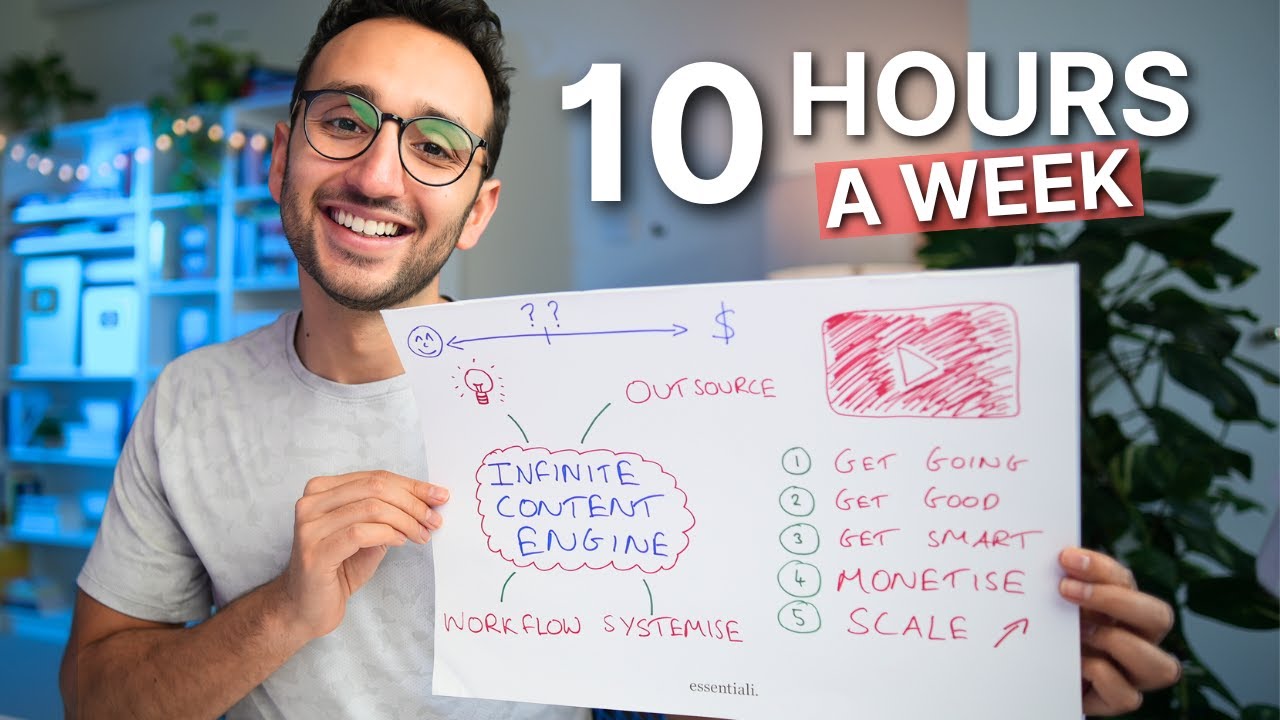
one you start off as a creator by building the pillars of free content at some point you have enough of an audience enough of a value add that you could potentially make paid content and then you create this flywheel of free content paid content and then it like goes around nicely and you're having fun and you're living your best life and your audience is happy as well all right that brings us on to model number two which is what i like to call the three levels of being a creator and that's level one get going
level two get good and level three get smart now i've made a video over here somewhere which explains levels one and two in depth but i'm just going to blitz through an overview and then we're going to focus on level three in this video because that's what's relevant to the creative printer business model level one is get going this is the first step of any kind of creator's life where the first thing you have to do is just actually get started making the thing if you're starting a youtube channel it's going to be in the
first few weeks to months as you learn the skills of speaking on camera and knowing what a camera is and knowing how to use one and maybe using your phone and knowing how to edit and knowing how to storytell and all the different skills like you can never get good at them until you at least get going first and i tend to find that people are often held back at this stage because they're worried what's my niche what's my target audience i don't know what i'm gonna make videos about but they fail to realize you
just need to make videos about anything so that you can get going with making videos and then you progress to level two which is where you get good and that's where you actually get good at making videos that's when you start looking at things like titles and thumbnails and hooks and storytelling and branding branding and like editing and production value and all of the different ways that you can make your videos better and then once your videos are beyond level two and that's generally when you stop cringing at them internally and externally when you start
getting some amount of traction people seem to like your videos you're getting engagement you're getting comments you're getting views you're getting subscribers or whatever the equivalent metrics of those are on whatever platform you're creating once you know that your videos are good enough at that point the gains come from level three which is getting smart and usually between level two and level three there's a question that i like to ask people which is that to what extent on the spectrum do you want to treat this as a complete hobby versus as a complete business you
can kind of treat it like both but like if you had to choose where would you lie on the spectrum if you're doing it as a hobby if you want to be a creator as a hobby then at that point you can stop there you're doing it for fun you're doing it for yourself you're doing it because you enjoy flexing your creative muscles and all that kind of stuff and there's absolutely nothing wrong with that but if you want to do it as a business and you want to make money then it stops becoming about
you and it starts becoming about serving other people then you start doing what any other business would do in terms of like target market analysis and figuring out how to stand out and figuring out how to best serve your audience because ultimately that's what a business is a business makes money when it serves people similarly a creative business makes money when it focuses on serving people rather than necessarily focusing on serving the interests of the creator themselves and yes there are always some people that are going to be there who who seem to just be
able to create the content that they want without any regard for the business side of things and their channels or their instagram pages or their tech talks or whatever managed to succeed and they manage to monetize it but that is that's an unusual case usually most of the creators that i know who have built sustainable profitable businesses off the back of their creative business have done it quite intentionally and that's kind of where level three get smart comes in and that takes us on to model number three which is what i call the creator printer
business model and that's basically what i want to spend the rest of this video talking about because that's where i think you know if you're a creator and you've got maybe more than a couple hundred subscribers or the equivalent at that point like you've already you've shown that you can make videos that are good enough to attract an audience of hundreds or thousands and if you want to get those numbers up or if you want to get your revenue numbers up now it's about in a way treating your thing more like a business again if
you want to if you don't want to that's totally fine you don't have to you can do what you like but if you want to treat it like a business then here is one way of approaching it that i find particularly helpful and that my students on the youtuber academy and in my creativepreneur course also find helpful so what is the creativener business model basically it's again three things i love a good list of three there's workflow cashflow and outflow and we're going to spend the rest of this video talking about those three the first
one is workflow now workflow has two main components and that's strategy and systems so when it comes to the strategy basically the vibe is that you want to be thinking about your creator business as if it's a business and so you want to figure out what is your niche you want to figure out who is your target market like who are the people you're actually trying to speak to you want to figure out your value proposition what is the value that you as a business are providing to your customers in a way and again like
most most creators don't think this way by default but it is it is absolutely the way that most businesses think and that's why you know i'm trying to get more people to use this term creatorpreneur because it's like a portmanteau as they say of creator and entrepreneur and i think a lot of creators are more on the artsy creative side but like applying a little bit of entrepreneurial thinking thinking a little bit more like a business actually helps you really level up your creative business again if you want to make money from it then we
might as well start using the tools that businesses have been using for decades if not hundreds of years so within strategy we want to figure out our niche and there's a concept called the hedgehog concept which was popularized by a chap called jim collins in the fantastic book good to great and basically he analyzed a bunch of businesses and looked at what is the difference between good businesses and great businesses and he found this sort of hedgehog concept thing which is basically what is the cross-section of the thing that you're really good at and you
could be the best in the world at the thing that the market will reward you for and the thing that you personally are passionate about and if you can find that intersection of those things that is where you find the niche that's truly profitable but if you're trying to go outside of that and if you're trying to make videos about stuff you don't give a about or if you're trying to make videos that there's no market for which is unlikely or if you're trying to make videos and you're just really bad at doing it then
you're unlikely to be able to succeed to the level that other creators potentially can next it's about identifying your target market and basically what are the demographics and the geographics and psychographics most importantly of the people that you want to watch your content the mistake that again creators make is trying to make content that appeals to everyone this is a pretty niche video it's a niche video where i talk about the business model behind creative preneurs i would have been half tempted to not make this video and just make oh i just need to make
it three productivity hacks because that's more general to a general audience but hopefully the fact that you're watching this at this point means that you're getting some kind of value from it and hopefully that means that you know you might think oh he knows what he's talking about and what i'm sort of hoping is that maybe some of you watching this video will think oh this sounds kind of interesting i might want to check out his course create a printer of course money-back guarantee by the way so it's literally risk-free but you can check it
out if you want and then you've got to figure out how do you want to stand out in your market now generally again the mistake creators make is that if you're a business you would of course do a competitor analysis you would do a market map you would see who else is in your space if i'm trying to make an italian restaurant in the street corner of course it makes perfect sense for me to see what other restaurants are there around that street corner who am i competing with what are they doing are there any
other italian restaurants in the space how am i gonna stand out how am i gonna convince people to come to my restaurant rather than the one that's next door and similarly creators can absolutely do this for their own niches as well like i know exactly who my competitors are i don't think of them as competitors because most of them are my friends but i know what they're doing i know what the channels are about i know what the business is about i know the business models i've tracked their growth over the last five years and
i know that okay i'm not trying to be better than they are i'm just trying to be different i'm trying to be my authentic self and i'm trying to figure out how i can stand out in this very crowded market of personal development youtube anyway in the course we talk about a bunch of other things like you know the six dials of authenticity the killer combinations the unfair advantages all that kind of stuff and you can check out the course if you want but this is more like a general broad overview and you know if
you guys want in if you leave a thing in the comments and if you want me to expand on any of these areas this creator printer club is a series i'm planning to do for the very long term so i've got tons and tons of ideas about this but i'm very keen to hear from you guys about what would you like to know about running a creative printer business running a creative business like this one and i'm happy to open source every single thing that i've learned over the last five years just be able to
help you guys out right so that was strategy though those are a few things that we want to think about in strategy there's a few more but like i said it's in the course the next bit of workflow is systems so once you've figured out a strategy the next part of getting smart is figuring out the systems so that you can leverage your own time appropriately and this idea of leverage is really interesting it's basically an idea of like how can you create the most output with kind of minimal input on your own part ie
leverage as a force multiplier between your own inputs and the outputs of those things and generally when it comes to leverage the way that you do that or the way businesses do that is by building systems if for example you can map the process behind like what is the process what is the system that you're using to create your content and to create the value for your audience or your customers as a business then you can tweak the different aspects of that production process and you can figure out what are the areas where you can
put in more effort what are the areas where you can put in less effort what are the areas in which you can use a template for example for example for all of our videos we use exactly the same assets in terms of editing we use similar things in terms of video scripting and stuff we have a similar system on notion where we think about like how the content gets produced and all of that stuff has been built up over time and that's all the stuff i share in the course if you want to know more
all that stuff is built up over time so that it feels like less of a heavy lift every time i'm making one of these videos a bunch of this stuff incidentally is what i learned when i hired a business coach this business coach was was charging i was at 500 pounds or like 800 an hour and i had dozens of hours of coaching with this chap and a bunch of the stuff that i'm teaching in this course and in this video and in this whole creator club series so subscribe if you aren't already that's going
to be stuff that i've learned from spending tens of thousands of dollars on business coaching but i'm making videos about it because i think it's kind of helpful it's kind of fun talking about this stuff and i hope it'll help you as well anyway the next part level two of this creative printer business model once we've gotten to get smart is cash flow and this is where we build that pillar of potentially paid content that can add to our content flywheel free content leading to paid content creating that flywheel overall and here's where i think
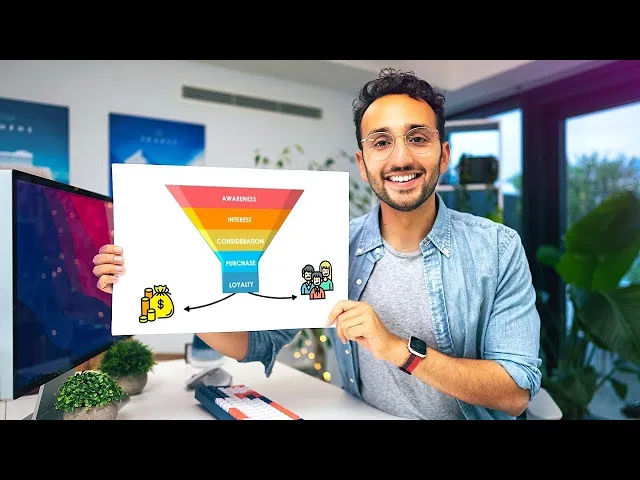
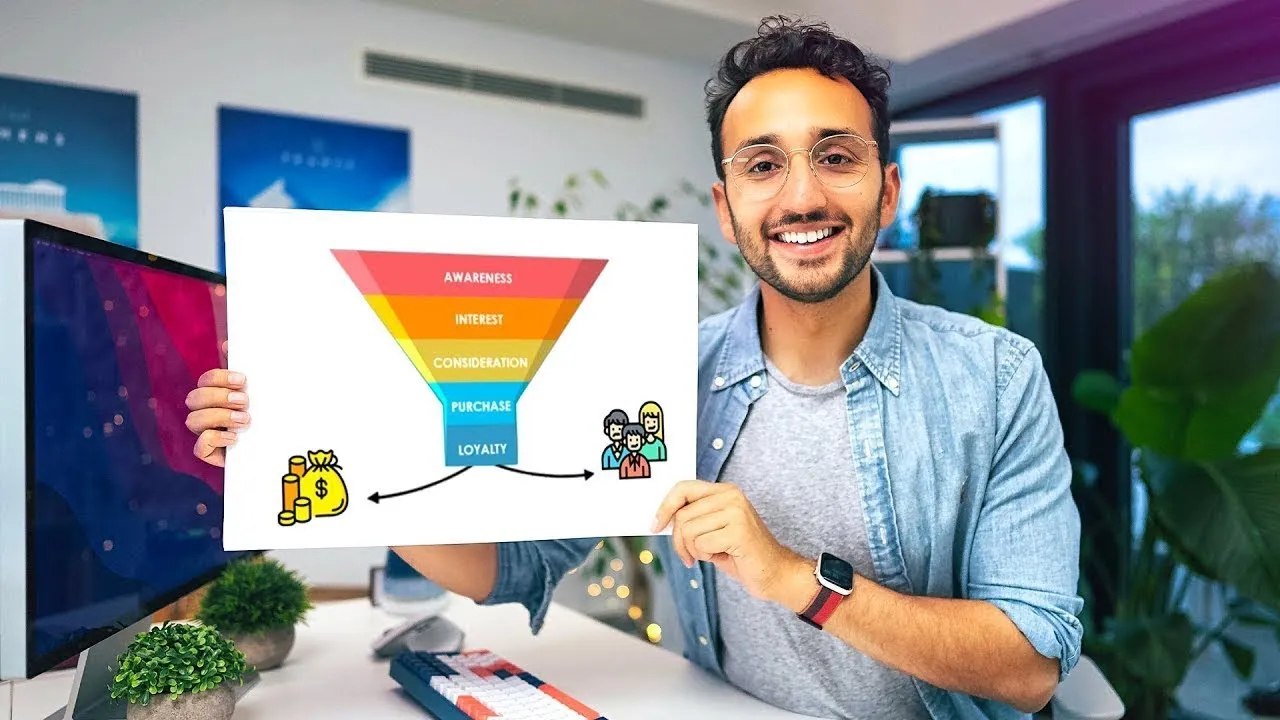
about it in the pentagram model i love it's all about models it's all about models how do we take someone from being a stranger to being a fan to being a friend to being a prospect to being a customer so firstly stranger to fan is basically free content like generally someone becomes a fan when they see enough of our content and there's something called the 7 11 4 rule which is basically where your audience needs seven hours of interaction with you across 11 different touch points and across four different platforms to be at the point
where they are ready to potentially buy from you and that's a concept from this book oversubscribed how to get people lining up to do business with you second edition by daniel priestley this is sick by the way it's one of the books i've most highlighted and we took a lot of inspiration from basically teaching some of the stuff in this book within our course anyway that's how you get people from stranger to fan and you kind of already know that because at this point you are pro at creating content once they're a fan we want
to make them a friend and the way i think of it is that the difference between a fan and a friend is a fan watches you on like a platform like youtube but a friend gives you their contact details and crucially that friend subscribes to your email list and this is where we talk about you know the bridge between the pillars of content the free content and the paid content and generally an email list is the way forward seth godin has a concept called permission marketing we don't want to oversell our products to our audience
because that's just a bit scammy and a bit like not nice but if they've given us permission to contact them via email and they've opted in and given us permission to tell them about our courses or or about our products at that point we are doing a service by telling them what we have on offer rather than kind of shoving it and mentioning in every single video and all of that kind of stuff that some people tend to do which tends to not go down so well with an audience one thing you can use to
convert someone from a fan to a friend is by using something called a lead magnet now we have a lead magnet that's set up for one of our courses so basically we have a five day completely free email course that teaches you how to be a creative printer and so if you sign up with a link in the video description you can put in your email address and every day for the next five days i will send you an email i won't actually send you the email email manually but i've written five days worth of
emails and the intention is that every single day i'm showing up in your inbox and providing value and hopefully by day five you might think you know what ali seems to really know his stuff i've gotten so much value out of these last five days of emails and maybe like i don't know one percent or five percent or 10 of people reading that last email might decide you know what i'm going to sign up for the course but what i'm hoping and what most creators are hoping is that the fact that we are giving you
more free value more content more stuff just you know completely for free that is what's going to encourage you to put your email address in and of course you can unsubscribe at any time so that tends to be how we convert a fan to a friend next we want to convert a friend into a prospect now a prospect is someone who might potentially buy from us and that's where opt-ins come in and we talk more about those on the course but you can also look at tons of videos on youtube that teach you completely for
free how to use email opt-ins in platforms like convertkit which is like a really powerful email marketing platform and then the final thing is how do we convert someone from a prospect to a customer and that involves a knowing what their problems are and figuring out how you can potentially fix those problems or solve those problems through some kind of product that they may want to pay you money for at this point it gets us into sales stuff and a lot of creators really struggle with selling i continue to really struggle with selling because in
a way as creators we want to be out there providing value to our audience completely for free and the thought of charging money for something fills a lot of people with dread and i was super scared to do that when i first did that about two years ago with my part-time youtuber academy but after speaking to a bunch of mentors and a bunch of friends and a bunch of creators who have managed to sell things they all basically said that yeah everyone struggles to sell initially but hey you're running a business you're providing value to
people you've got a money-back guarantee you're not forcing anyone to give you their money some people genuinely want to pay money for a good service or a good offering or a good thing you know like when peter mckinnon released his line of backpacks i felt delighted to fork over six hundred dollars to buy one is one of his camera bags i've used that bag like twice in the last like two or three years but i just felt such a profound need to pay him for something because i've just gotten so much value out of his
stuff over the last five years this is the law of reciprocity in action if you give enough free value to people they're going to almost feel some of them not everyone but there are some people watching this right now who are going to think who are going to feel that law of reciprocity and think huh i've gotten value from ali's content over the last x number of months or x number of years and i think i'm going to get even more value out of this course therefore i'm going to buy the course and that's sort
of like the arc of you know the pentagram model stranger to fan to friend to prospect to customer you can skip steps along this path and in the course we talk about a bunch of different ways in which that makes sense when it doesn't make sense but that's generally the model that most creators follow to get someone and convert them from being a complete stranger to someone who will give them money and the crucial insight here is that not everyone is going to be as someone who gives you money coming back to the 9911 rule
the way i think of it is only one percent of my audience is gonna buy one percent of my products everything else is free for the 99 of the audience that doesn't want to pay for anything and that's totally fine i love the fact that i'm spending hours and hours and hours and hours and hours of my life every single week trying my best to create free content that's valuable for people and the one percent of the audience or less ends up funding the whole business and for me the way i think of it is
that like if i didn't need to make money to sustain the business i would just make content for free if i won the lottery i wouldn't bother making any more courses i would just chuck all of those on youtube completely for free and just let everyone have them because in my mind the only point of the paid products is to be able to sustain the business to generate the free content because the free content is the thing that i would be doing otherwise even if i didn't need to make money anyway once we've gone through
this whole cycle we then get into the realms of product creation again this is something creators struggle with but like businesses have been solving this problem for generations there's a bunch of business books that you can read we talk about some of this stuff in the course but i will be doing more videos in this creatorpreneur club series talking about exactly how you can figure out what products to create for your audience how we've done it for our courses that have growth several million dollars how we've done it in like a nice way how you
can offer guarantees how you can really genuinely deliver a fantastic customer experience if you have any questions about that stuff please do leave a comment down below and i'll be sure to make more completely free videos on youtube about it like i said it's in the course but if you don't pay for the course totally fine i just want to try my best to kind of open source the knowledge i've got in my head over the last five years of doing this so that you guys can benefit from it and then finally the third part
of the model is what we call outflow and this is generally like once you've done your workflow you've figured out your strategy and your systems once you've done the cash flow you've figured out how to make money at that point you really want to leverage yourself and at that point you want to start hiring people this doesn't necessarily mean you need full-time employees but some but certainly if you're a youtuber outsourcing the editing of your videos can be a massive level up in freeing up your own time with the caveat that if your channel relies
on fancy editing like for example i don't know james johnny or like mandy bello or like a few other people if editing is one of your unfair advantages then maybe don't outsource it but for most of us for my channel at least i outsourced my editing about three years ago and i wish i'd done it sooner than that i spent two whole years basically doing 100 of the editing for my channel but now that i don't have to do the editing anymore and we've got christian our lovely editor to do the editing it means it
frees up my own time to be able to focus on writing more content or writing my book or just having fun or spending time with family and friends and again this is an area in which creators often don't have a lot of experience because usually people who are creators don't have any experience in hiring or firing or interviewing or management or leadership and i was like that as well i still am pretty bad at those things but i've learnt so much stuff over the last few years of reading books and spending tens of thousands of
dollars in business coaching and made so many mistakes along the way and again those are all the things that i want to talk about in this ongoing creative printer club series so again if you have any questions on that front on how to hire how to train etc etc some of that's in the course but like leave a comment down below and i'll be sure to make a video about it as well anyway if you've gotten to this point in the video you know you might actually like to check out the course we've had a
bunch of testimonials about how amazing it is it's super long it's super in-depth and we do have a 30-day money-back guarantee in it so if you watch the course and you don't get value from it you can just get your money back it's like very chill you just send us an email you tell us you didn't like the course and we'll literally just give you your money back because if you don't get value from the course we don't really want to keep your money but anyway that'll be linked down in the video in the video
description that is called the part-time creatorpreneur so you can potentially check that out if you like but either way thank you so much for watching if you'd like to learn more then check out this video over here which is my which is more in depth about level one and level two of the three part method get going and get good and this is more aimed at beginners whereas this video was a little bit more intermediate to advance so check out this video over here thank you so much for watching and i'll see you in the
next video bye