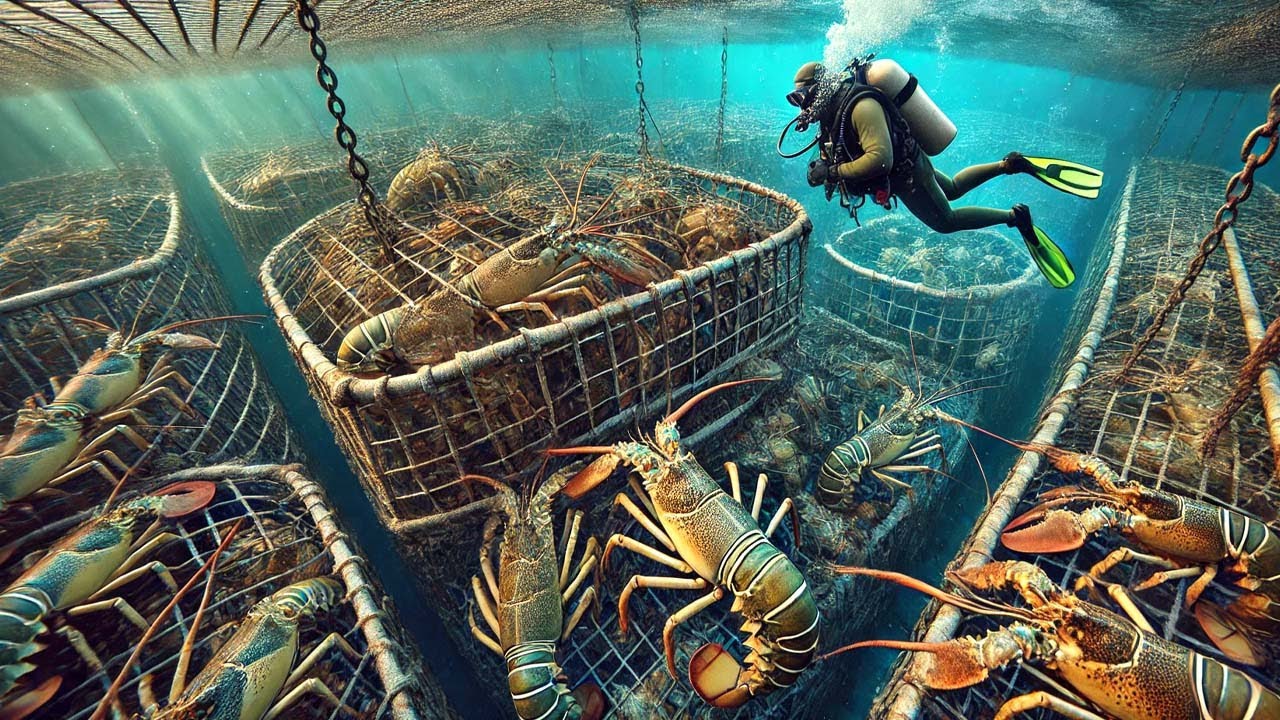
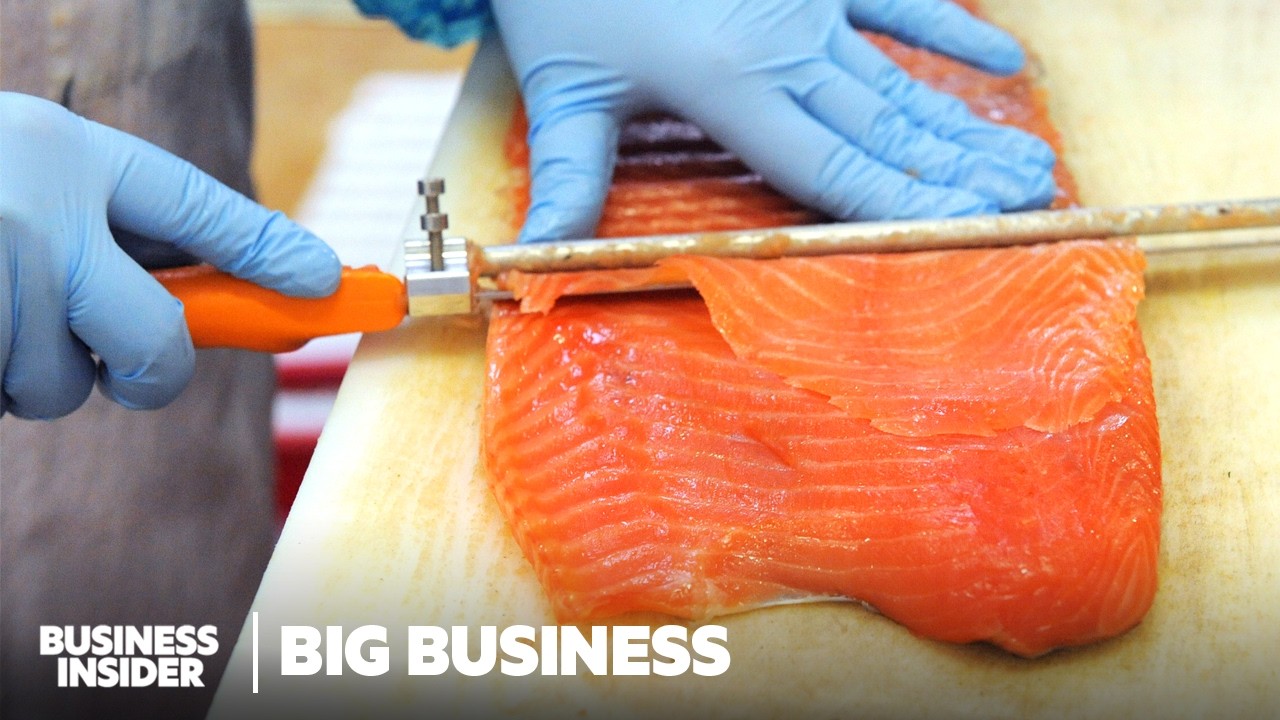
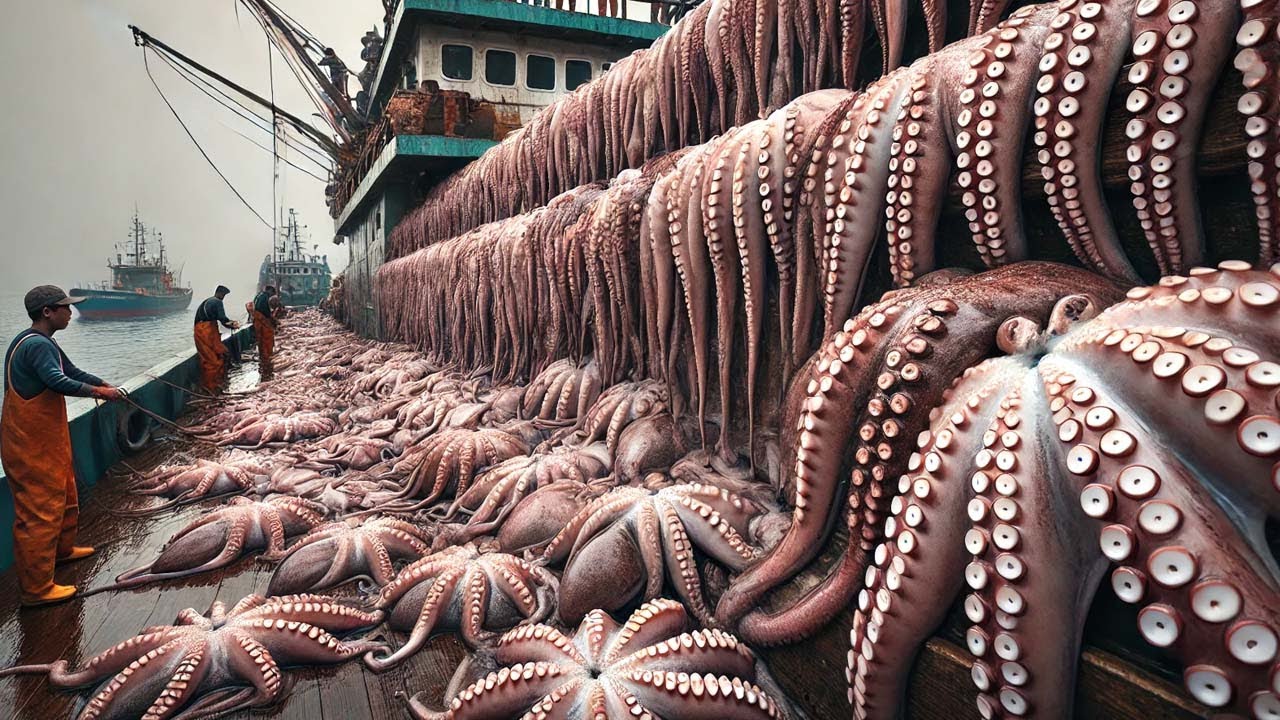
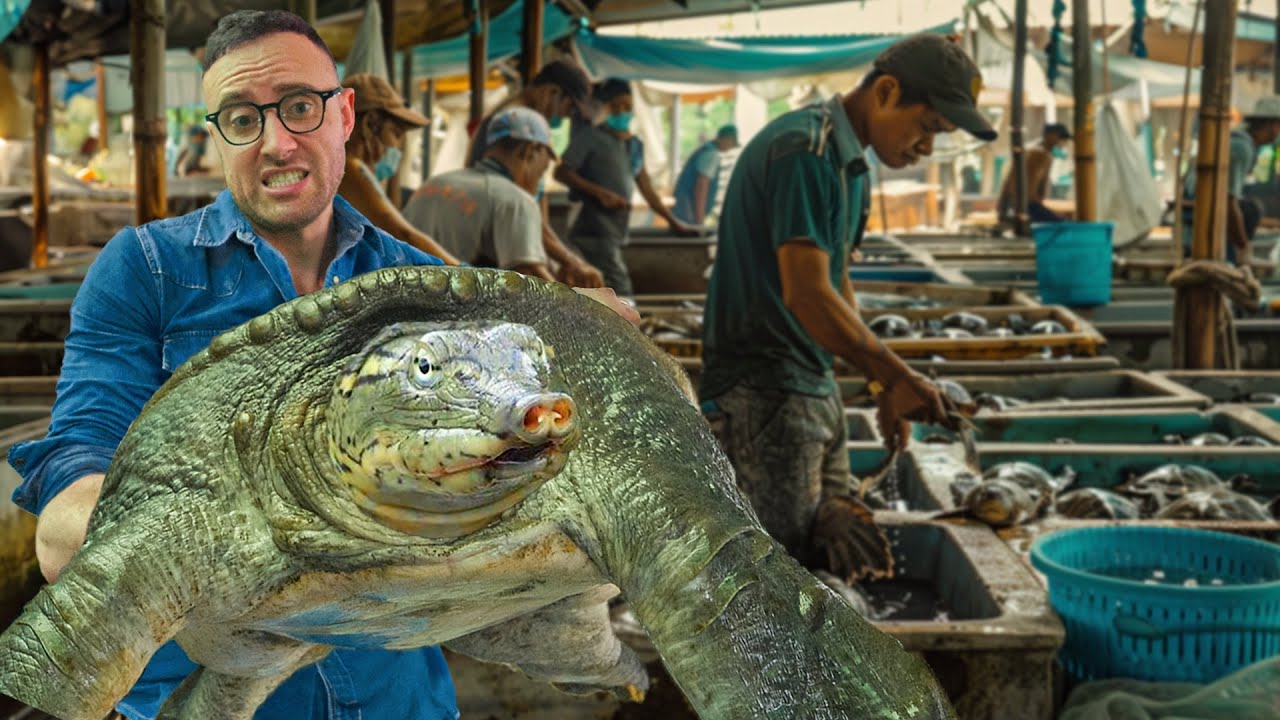
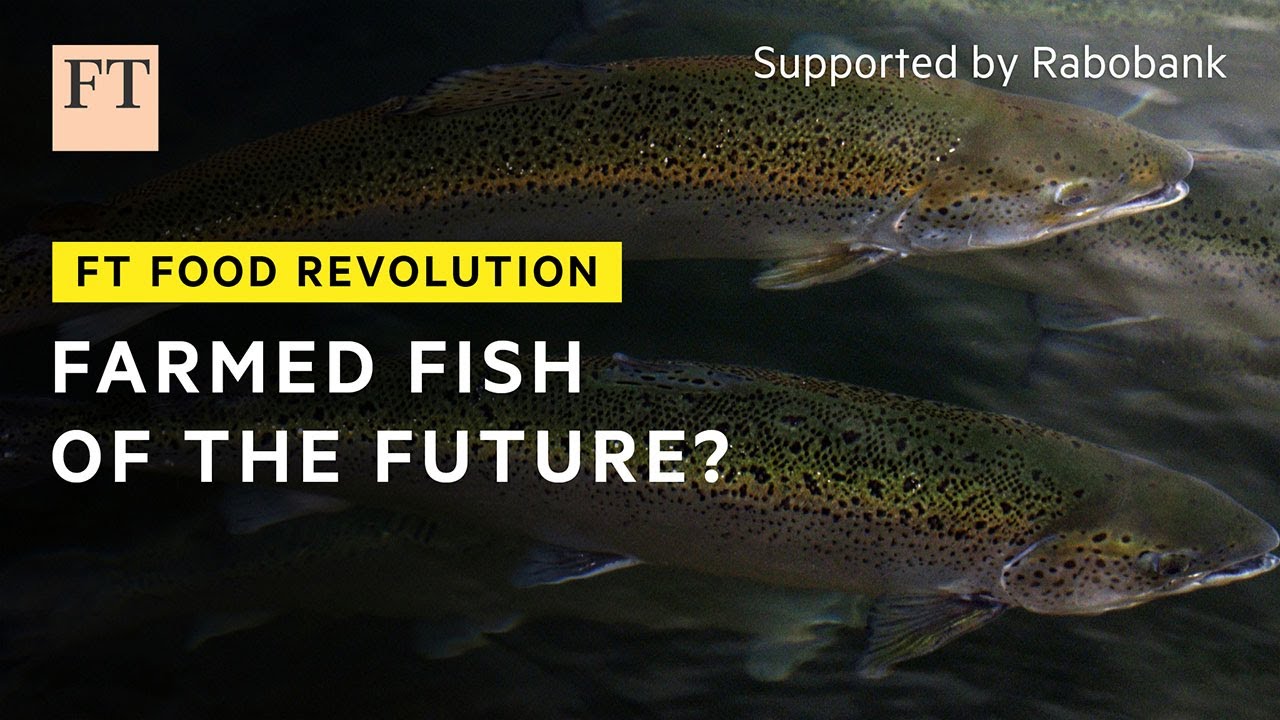
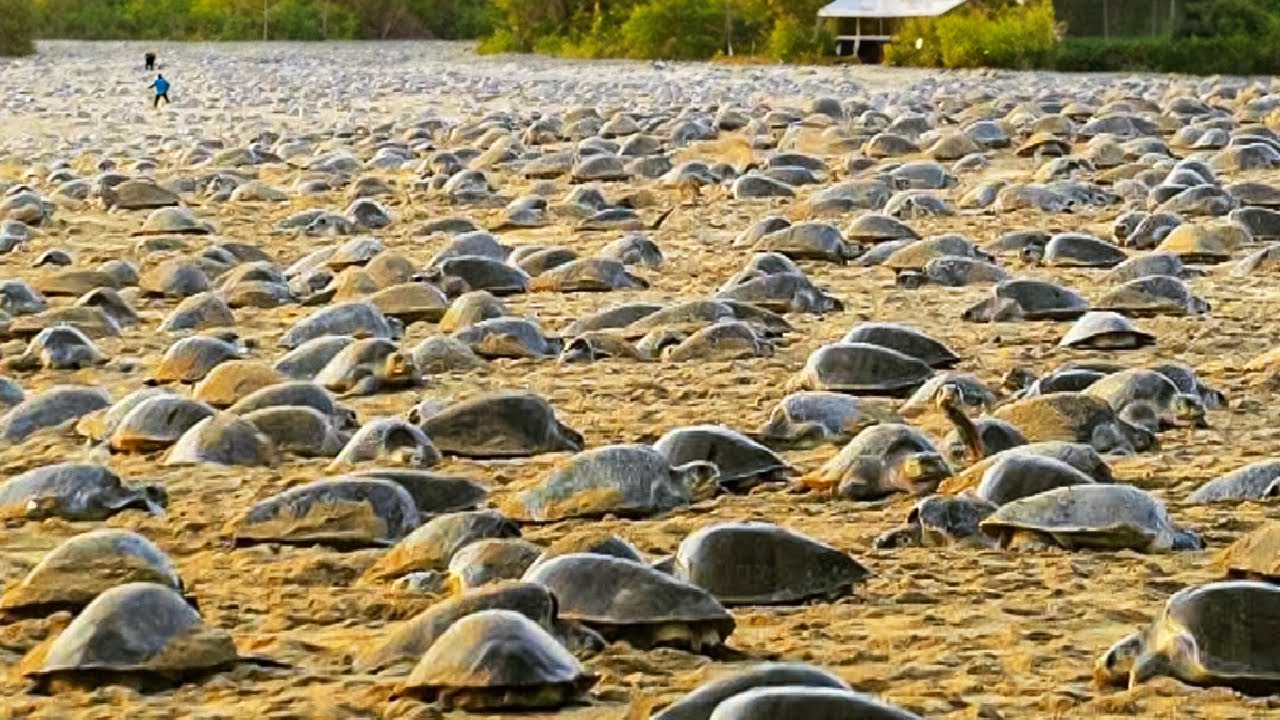
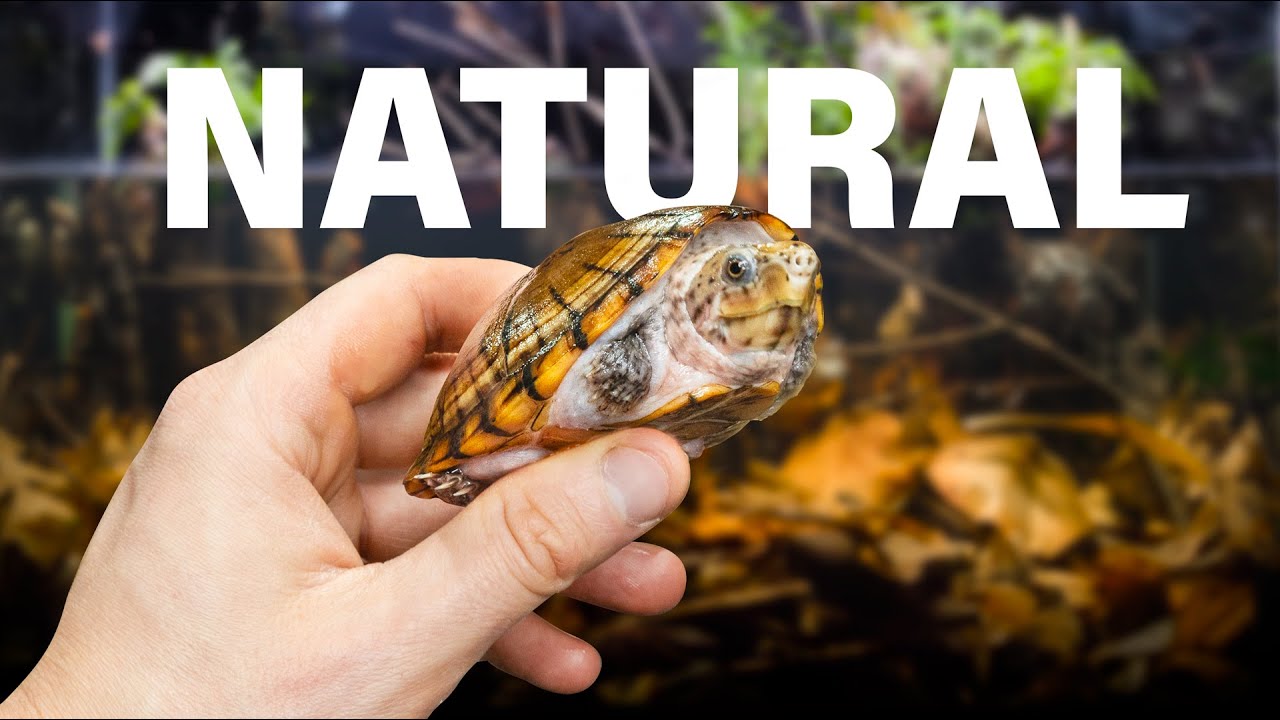
[Music] in the race to bring back animals from the brink of Extinction soft shell turtles have become one of the most economically important turtle species they are raised intensively in artificial ponds to achieve fast growth and high productivity these Turtles seem to thrive in the warm climates of farms in Asia intended primarily for meat processing China Japan and Korea a popular soft shell turtle producing countries the reason for this is that the turtles are very valuable because they contain High nutritional content and have many beneficial effects for Life the meat of soft shell turtles is considered a cure for fertility problems cancer and rheumatism they are seen as a particularly popular delicacy in southern China with strong consumer demand Chinese Farms raise 13 million turtles each year each Farm has an area of at least 500 square m this ensures spacious living space for the [Music] Turtles soft shell turtles have an interesting and unique reproductive cycle females lay eggs 2 to five times a year the number of eggs per laying can be up up to 40 or 50 eggs at this Farm there are around 7,000 baby turtles hatching every day this is a truly impressive number soft shell turtle eggs are placed in a tray there is a layer of soil underneath to remove CO2 release from the embryo's metabolism incubation periods last around 60 to 90 days however under the influence of human inter vention the hatching time is reduced to only 30 to 40 days after being harvested baby turtles are placed in water tanks this is an important process that helps protect their health and prevents injuries due to collisions or scratches during Transportation after hatching the baby turtles are released into the pond this is where they are allowed to grow naturally and healthily soft shell turtles selected from containers containing baby turtles after 2 months of age must be uniform in size healthy and free of pathogens the initial stocking density when the turtles are around 15 G is about 10 to 15 animals per square meter the density decreases as the turtles grow at 500 G in weight there will be around three Turtles per square meter they will mature after around 4 to 5 years depending on farming conditions and living environments baby turtles are raised in small tanks before being transferred to ponds grow out ponds are 1 to 1. 5 M deep and the mud layer on the pond bottom is maintained at around 10 to 20 cm farming ponds are often located near canals or Rivers so there is a continuous flow of fresh water into the pond this maintains a minimum water level the cage is built large enough for the soft shell turtles to operate and it has a slope that allows the turtles to crawl to the mainland to bask in the Sun and find a place to Nest each Farm has a fence with a minimum height of 50 cm surrounding the pond the legs of these walls are thly fixed in the ground farmers can plant trees to create shade for the turtles to rest and Nest soft shell turtles like to eat decomposing meat they often compete with each other for prey as well as this the diet of the turtles includes fish insects and aquatic plants found in ponds and lakes owners can also feed specially prepared pellets to soft shell turtles this type of food is convenient and nutritious soft shell turtles are fed two to four times a day depending on their age food is presented on trays placed near the pond surface and monitored daily to ensure there is adequate food Farmers avoid overfeeding turtles in order to minimize water pollution which makes them susceptible to disease after around 6 months soft shell turtles are sorted to avoid fighting males and females are separated when they reach around 500 G soft shell turtles are characterized by a slow growth rate usually their weight reaches 400 to 600 G after a year under conditions of low stocking density favorable food and good management their weight can reach 1 to 2 kg in just a year Farmers regularly check cages and fences to minimize Turtle escapes water changes are done weakly or when the watercolor becomes dark at the same time Farmers avoid making noise and excessive handling of the turtles this can scare them therefore the mortality rate of soft shell turtles raised in cement tanks is lower than that of turtles raised in Earth and ponds sof shell turtles will come ashore when the weather is favorable to sunbathe and lay eggs they breathe normally through their lungs but can also absorb oxygen when submerged via the skin or passing water through membranes in their throat or clacka soft shell turtles are aggressive like all carnivores however they do seem shy they often seek Refuge underwater when there is a noise or a shadow appears when soft shell turtles are hungry they can become cannibals if Turtles are injured they will be brutally attacked by other Turtles besides modern barns there are other methods that are popular in southern China rice fields can provide a suitable environment for many types of aquatic animals raising soft shell turtles in rice fields is a traditional practice in China and many Asian countries rice plants can absorb nutrients in waste water generated by Turtle farming and this helps to reduce potential sources of [Music] pollution soft shell turtles were once animals on the brink of Extinction somehow China has managed to turn this animal into a bright spot in the country's economic development after 12 to 6 16 months of stocking into ponds farmers can begin harvesting Farmers often use Nets or shovels to avoid injuring the soft shell turtles choosing the right time to harvest is also very important it is best to harvest in the dry season to avoid the impacts of weather conditions and ensure better Turtle quality at this stage they harvest the entire Pond by draining and catching by hand they are sorted and placed into mesh bags all handling operations by farmers are gentle to avoid damaging the turtle normally Turtle farmers will sell to restaurants serving diners who love this special type of turtle meat in addition soft shell turtles are also exported by Traders to Thailand and Taiwan the quality of turtle meat is preserved from the Harvest stage the price of soft shell turtles is determined based on size weight and age before processing cleaning and sorting Turtles is an important step with a delicious flavor soft shell turtle meat can be processed into many attractive dishes in Japan soft shell turtles are commonly raised in hamana Lake this is an area with a warm climate and abundant food in addition it is conveniently located between Tokyo and Osaka two major consumption areas from November to March sof shell turtles hibernate in pond mud during that time they do not eat food so they grow slowly usually it takes around 3 to 4 years for them to develop to harvesting size when they reach the weight of 600 G to 1 kg they are eligible for Harvest and distribution to the market haturi Nakamura turtle farm currently ships tens of thousands of soft shell turtles across the country each [Music] year the ravs on the sea are filled with seafood they are placed in natural Waters this is where fishermen can raise Seafood this method is becoming increasingly popular due to its cost Effectiveness ease of administration and potential for high yields in today's video we will learn how fishermen raise and harvest millions of tons of seafood in cages first we come to the salmon farm salmon are raised in water up to 25 M deep to maintain temperatures at 15 to 18° C it takes 20 months to grow salmon weighing 200 g into adult salmon weighing 5 kg equivalent to Salmon import healthy adult salmon are selected for breeding based on size growth rate and disease resistance the fertilized eggs are gently incubated into a controlled environment at the same time water temperature and oxygen levels are carefully monitored for salmon growth throughout the breeding process the focus is on disease prevention and environmental sustainability in addition salmon populations must be kept healthy and safe the egg incubation period is an important stage in the life cycle of salmon the eggs are carefully incubated to ensure a successful hatching and early development these trays provide a controlled environment oxygen levels are maintained during the egg incubation period which can last several weeks depending on environmental conditions water temperatures are typically within a specific range simulating the conditions of naturally spawning salmon temperature ranges may vary by species but for cold water salmon species temperatures are typically between 6 and 12° C in order to avoid fluctuations that can cause stress as baby salmon grow they change to prepare for their migration out to sea a process called molting juvenile salmon are transferred to cages in coastal Waters they continue to develop and mature until they are ready for Market fishermen equip a recirculating aquaculture system providing ample space for growth and movement of salmon salmon Health parameters such as oxygen levels temperature salinity and nutrients are regularly monitored and controlled in order to prevent disease outbreaks caused by environmental stress and degradation salmon are fed a specialized diet for optimal growth fishermen optimized environmental conditions in Salmon farming facilities such as water flow speed adjusting stocking density and sight selection can help minimize salmon stress and increase meat quality now let's go to the Lobster Farm fishermen will stock lobsters at a density of eight lobsters per square meter young lobsters have a survival rate of less than 50% if good good husbandry methods and nutrition are applied the survival rate when grow commercially will always be above 90% they are shrimp that can reach a weight of up to 1. 3 kg Farm Lobster are fed entirely with trash fish the bait must be fresh fishermen often feed the lobsters R after catching fish every morning besides you can combine the diet with other typ of fresh seafood and mineral mixtures the cage design allows optimal air circulation helping lobsters to grow better cages can also minimize disease and environmental pollution besides this the underwater cage model can prevent deforestation to build wooden cages and fisherman do not need to worry when encountering Heavy Rain or thunderstorms however the mesh surrounding the cage is relatively fine so a significant portion of uneaten food remains in the cage fisherman observed and inspected a cage from 10:00 a.
m. to 5:00 p. m.