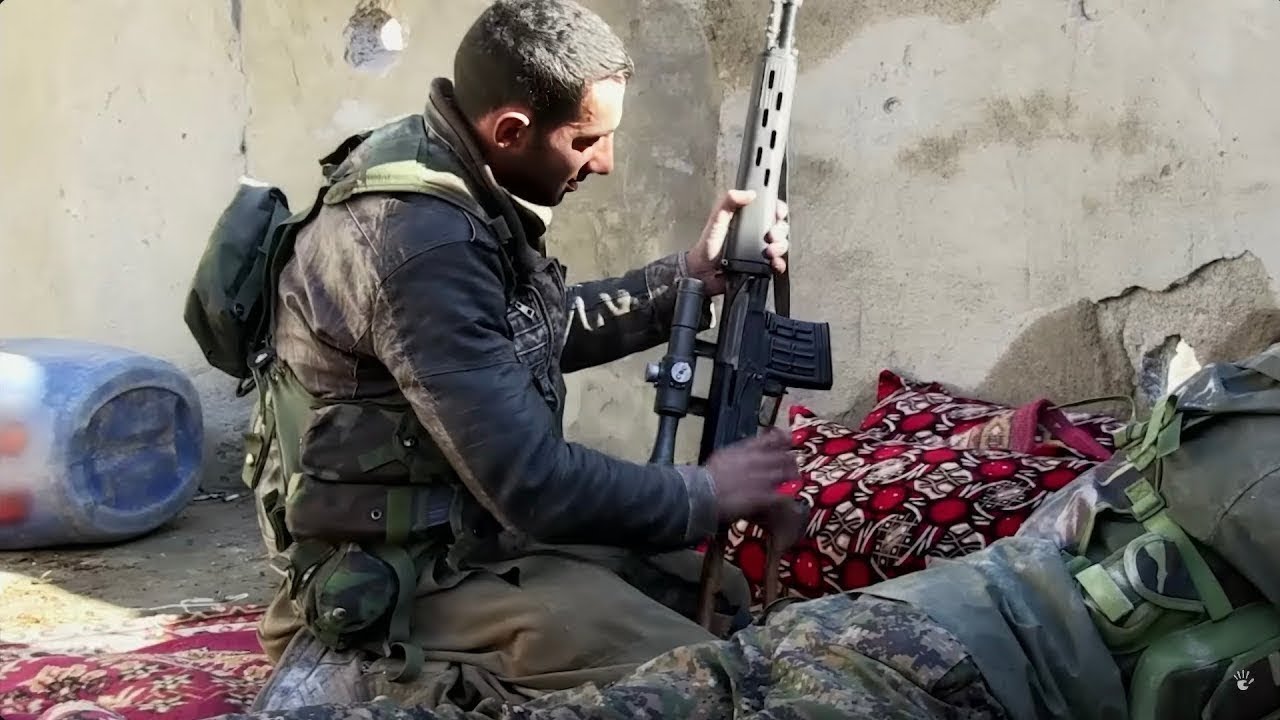
My name is Emmanuel Nyirimbuga. I woke up one day like usually to go to work. It was April 7, 1994.
On the way, I met a policeman who had a house not far from here. He told me : “There’s no work today. ” “Habyarimana is dead.
” “We’re going to get organized. ” I killed 9 Tutsis. The police told us to kill everyone the Tutsis who would pass through our roadblocks.
All you had to do was check their ethnicity on their identity card. I killed some here at the barrier, others in the countryside, and others fell at Murambi. We had all kinds of weapons to kill.
Many had machetes, spears or bows. You see this piece of wood. Imagine it being thicker.
I cut it like this, until the end is round to make a club. We took it like that and we hit hard on the head. 10,000 deaths every day.
After two months of massacres and under UN mandate, the French army intervenes. When I finished killing the Tutsis, the authorities here asked us to welcome the French who were arriving. We went to meet them at the prefecture.
We were a lot of militiamen welcome them. We sang for them. Later I passed by the turquoise zone to reach, the border at Cyangugu.
I left to flee to Zaire. This former Hutu militiaman, has been condemned by a people's court, to seven years in prison for crimes of genocide. Why for 25 years, is the name of France associated, to the Rwandan tragedy?
What role did she play in it? Well-kept secrets of the Republic, are only beginning to be revealed. - Throughout the years 90-94, the policy that is pursued, between France and Rwanda, it's a secret policy.
- The Rwandan genocide was done by Rwandans against Rwandans and mostly with machetes. So, explain to me what France has to have mainly, as responsibility? - There is a responsible man, I feel sorry for him, I have a lot of esteem and respect for him, I was his minister, it's François Mitterrand, he ordered this operation.
- The French officers made the strategy of collaborating, with the Hutu militiamen and then to protect them too. - We can not say that France is complicit, since it is the only country in the world for trying to prevent it. - We could have intervened to stop it, we could have taken it to the genocidaires.
What did we go to do to support them? The violence between Hutus and Tutsis, date back to the colonial period. At the time, the Belgian colonizer, had imposed domination of the country by the Tutsis.
In 1962, once the country was independent, the Hutus take power. Tutsis are pursued, hunted and massacred. Many will flee to neighboring countries.
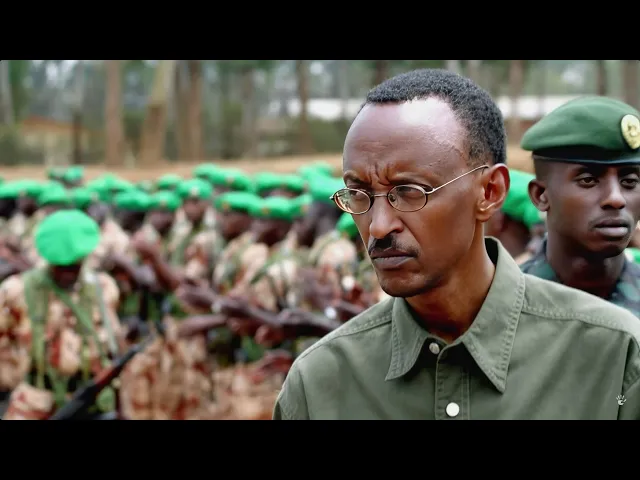
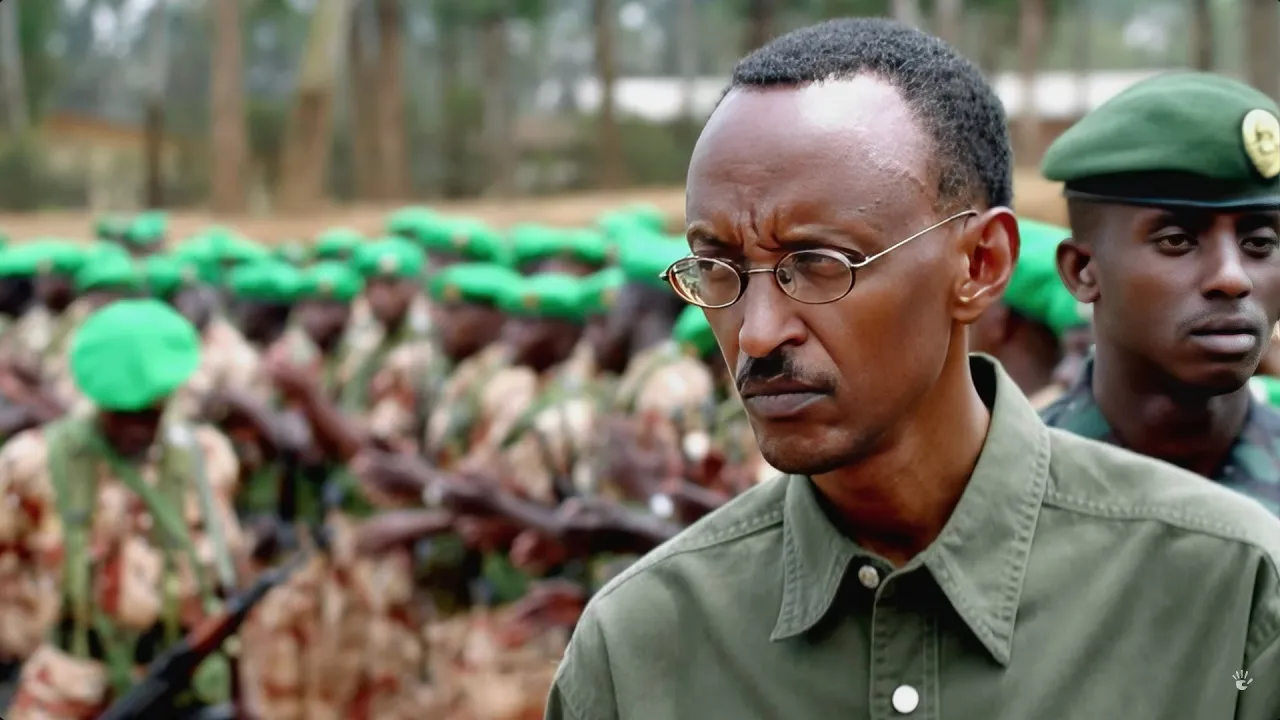
In exile in Uganda and composed of refugees, he created a rebel movement, the FPR, the Rwandan Patriotic Front, supported by the Anglo-Saxons. The rebellion is led by Paul Kagame, the current president. Refugee with his family in Uganda, he trained in the United States, before embodying the Tutsi rebellion, minority and English-speaking.
He will become the enemy of Paris. François Mitterrand therefore positions himself alongside French-speaking Hutus, majority in Rwanda. This will be its space of influence.
- France has set itself a program, whatever the presidents, De Gaulle, Pompidou, Giscard and Mitterrand, to bite on the old ones colonial empires. Already the formerly British Empire, and then the former Belgian colonies, with essentially the Congo and then, let's say, the two antechambers of the Congo, towards the Indian Ocean which are, Rwanda and Burundi. And the big argument was that these were supposedly French-speaking countries.
Now, in 1994, there must have been 5%. Rwandans who spoke French. So to say that it is a country French speaking, it's pretty crazy, an extremely important thing, all documents of the Rwandan army are written in French.
During his mandate, François Mitterrand provides unconditional support, to the Hutu dictator Juvénal Habyarimana. The Élysée continues its traditional French-African politics. - Kagame came from Uganda, that is to say from an English-speaking country.
We, we are in French-speaking Africa. That too, we were more legitimate, no doubt, in the eyes of some. This Kagame was trained in the United States.
So you put the others together conquerors of Africa, apart from the French, the English-speaking world and the Americans, the villains. - Rwanda, as the sequel showed, is the key to Zaire and Zaire since, the Belgian colonizer was no longer there, Zaire is obviously an immense territory, full of riches, and it is not at all impossible, that French politics, French foreign policy, also wanted to ensure, this front door, towards a territory which, if it was controlled in some way or another indirectly through France, was obviously a gain considerable geopolitics. From 1990, technical and military cooperation between French soldiers and the FAR, the Rwandan Armed Forces, are intensifying.
The first companies French paratroopers, disembark in Kigali. This commitment then goes unnoticed in the eyes of the world. The FPR troops, for their part, go on the attack and enter Rwanda.
France reacts by evacuating its nationals. If she does not intervene directly in the fights, it gradually strengthens its presence on Rwandan soil. - During the years 90-93, France, implemented its technical cooperation.
We sent technical advisors to train and advise people. There were links that were created, between French officers who were there, in technical assistance, with the Rwandan armed forces, as in all African countries, That's really not exceptional. - We will sometimes send to this country which is as big as a French region, there will be peaks at 1000 soldiers present at the same time, between 400 and 1000 soldiers during months and months, who will form the army, train it, there will be deliveries of ammunition, a whole program of military assistance.
There is a part French officers, who take command operational of the Rwandan army. We are really on a cooperation extremely strong. Thanks to the training provided by a detachment of the French army, the Rwandan army pushes back the FPR offensives and saves the Habyarimana regime.
Occasional massacres of Tutsis, are then organized by the government. - It was this detachment that collaborated, with the former Rwandan army who committed massacres, before the genocide, in 92 and 93, the French army trained his soldiers and after military training, they were going to kill people and civilians. - Regularly, kinds of pogroms against Tutsi communities, are perpetrated in Rwanda, pogrom in which we can clearly see a complicity of power, complicity of the militiamen, complicity of the gendarmerie, prefects.
. . A pogrom does not happen, in a country firmly held like Rwanda, without there being any part of complicity local and national authorities.
In 1991, a high-ranking soldier will denounce the risks of genocide and alert Paris. General Jean Varret, was at the time the head of the mission military cooperation in Rwanda. For the first time, this 4 star general, decided to speak out in front of a camera.
- I am asked to chair a meeting of gendarmes, who asked for help military cooperation. In this meeting, the head of the gendarmerie said to me: "I need machine guns, cannons. .
. " I am very surprised by this request. I said to him: “Listen, gendarmes, I want to equip you in grenades, tear gas, but not in machine guns.
So, I refuse. He tells me : "Now, we are among soldiers, I am a colonel, you are a general, we're going to say things in the first degree. I need this equipment for my police, because we are going to participate in the fight against the Tutsis.
"What does that mean ? " “You know, we’re going to liquidate them. There are not very many of them.
It’s going to go very quickly. ” " You realize what you say? " “Yes, but that’s how it is, that’s how it is in our country.
The Tutsis are a danger, We’re going to liquidate them. ” While General Jean Varret, expresses his concerns to his hierarchy, Paris continues to support the Hutu regime and does not take into account of his warnings. - There were in the meetings, colonels.
I don't remember any generals individuals, who took a stand saying: “We must help the Hutu army, to fight the Tutsis. " The Tutsis were the RPF or was it the entire Tutsi ethnic group? I don't know.
But very often we assimilated, the Tutsis and the RPF as the enemy. This confusion is found in the confidential documents of the Élysée. During a restricted defense council, on March 3, 1993, President François Mitterrand addressed in these terms, when he talks about the RPF.
"We have no interest in the Tutsis are advancing too quickly. We must save time and continue to support the Rwandan army. - I was content to say: "Attention !
" - And what did they say to you? - People listened to me politely, but we didn't take it into account. Finally, I had the impression that little by little, my thesis was not taken seriously.
I actually think that French politics, in this era, left to the Hutus, the idea that France closed its eyes, on a risk of massacres. This general realizes blindness, of France's African policy. He will end up being discarded and will resign.
Jean Varret was not mistaken. A secret document published in 1992 by the Rwandan army, clearly identifies the enemy. "The main enemy is the Tutsi from inside or outside, extremist and nostalgic for power.
For decades, Hutu power will therefore be built an enemy, the Tutsi. Paris knows it, he is informed of a risk of large-scale massacres, but continues to build friendly ties with the Habyarimana regime. - The genocidal machine, was built from, from the end of 1990 and it developed until 1994.
And I can say that it has been covered by France, by the French army, like a hen broods her chicks. And if France had not intervened, to save the Rwandan army, Habyarimana's regime and therefore the Rwandan army and its militias would have collapsed. In 1993 to avoid a civil war and the fall of the regime in power, France organizes agreements of fragile peace, between President Habyarimana and Paul Kagame’s FPR.
The Arusha Accords. - We worked so that there are the Arusha Accords. We hope that these agreements from Arusha emerge, on a transition democracy in Rwanda.
But the official French position, and that I am witness to, since I am the military executioner, instructions political authorities, and these are instructions of perfect neutrality. - France's policy was to put pressure on Habyarimana, who was not at the head of the most violent clan. So make sure that, gradually in the Hutu clan, in the Hutu government appears, people who played the game of Arusha politics.
The compromise is to prevent, that those who have intentions genocidal or massacres, on the Hutu side or intentions of absolute conquest on the Tutsi side, are overtaken. Maybe it's naive, we can think with hindsight, but we can say whatever we want, but not that France is complicit of what happened afterwards, since it is the only country in the world for trying to prevent it. These agreements are seen as a betrayal by Hutu extremists, numerous within of the Habyarimana regime.
They will never be applied and will shatter some months later. On the evening of April 6, 1994, Hutu President Habyarimana is murdered in an attack, against his plane. Rwanda is rocking.
In Paris, the FPR was quickly accused, to be the sponsor. Intelligence services French exteriors, lean towards an action by Hutu extremists. Machetes, they are already sharpened.
The last genocide of the 20th century begins. - When President Habyarimana is assassinated, on the evening of April 6, that is trained at the French embassy, so through a whole series of meetings, the interim government which sets up on April 8 and 9, France continues a support policy, therefore a government of which she does not see not or that she does not want to see, that it is now the extremists who took the hand, the Hutu Power extremists, absolutely determined to massacre. This interim government composed of Hutu extremists, gives orders to the population to kill the Tutsis and moderate Hutus.
For 100 days, between months April and July 1994, Rwanda will sink in unspeakable violence. - I was completely devastated. We come from a place where we have killed, I don't know how many, 800,000, 1 million people, including mainly children, we cut them by hand!
And I saw this. . .
I say it. And I am met with silence, how would I say, a little. .
. I look like a madman! I pass for an enlightened person!
In the country of what we call the country of human rights. Men, women and children are murdered. The genocidal machine is in motion.
Nearly a million people, will be methodically massacred. - A genocide is an attempt total extermination, of a population that it is a question of eradicating, from the surface of the earth. From the moment we massacre women, children, that we open women's bellies pregnant and the fetus is attacked, that houses are destroyed, all the signs of the presence, of a population, there, we sign, what we call genocide today.
After two months of massacres, on June 22, 1994, France obtains a mandate intervention at the UN, for a mission peacekeeping. It's the beginning of Operation Turquoise and the deployment of 2,500 men in Zaire and Rwanda. This operation is presented by Paris, as a humanitarian mission to stop the massacres.
- When we have a little military culture, we see that the units who are on site, are not there to distribute medication. We don't move the finest of the special operations command, in an operation that would be exclusively humanitarian. - We see the best units arriving from France, elite units, who are hyper trained, superbly equipped with weapons.
We see weapons that did not exist at the time, which are beginning to appear on the battlefield. These are troops who are ready for anything, the fight, the resistance, but except to do humanitarian work. - Why we put a substantial military device, with aviation resources, armored vehicles.
For what ? Because before, in Somalia, the Americans had deaths due to lack of means, to protect their soldiers in the Somali operation. There, in this case, given the hostility of the RPF, given the instability of the FAR, we don't want to get caught, by the hazards of a confrontation and so we take the means to avoid, to have to endure a confrontation and we had the means.
But it was for a purpose totally defensive. Because the FPR rebels led by Paul Kagame, continue their progress in the country. Under the cover of a humanitarian mission, France is therefore deploying its best elite units.
- We had no information, while all other operations, we had the situation briefings relatively in-depth. Usually with an overview from the diplomatic aspect, the geographical aspect, the political aspect. .
. In Rwanda, we left very quickly, in a form of precipitation. I have not been briefed than by my comrades, of the 68th African artillery regiment, the regiment in which I was at that moment, dedicated to the Foreign Legion and who, on several occasions, had participated to operations in Rwanda, in the early 90.
What was striking, it is that they had participated, to war operations under cover training in previous years. For them, it was obvious, it is that the enemy of France, they were the Tutsi soldiers of the RPF who fought against the government, which we have therefore supported since four years, since 90. During Operation Turquoise, officer Guillaume Ancel, is responsible for guiding the pilots for aerial fire.
He remembers receiving an order, to prepare for a strike aerial on the FPR. - The Legion Company in which I am integrated, is in turmoil because they were ordered, to get to the other side from the Nyungwe forest, which is a tropical forest 40 kilometers wide, to go and ambush upon the arrival of the RPF. We were informed that the column of the RPF in front of us, it's about 1500 soldiers, which we know are very well ordered, that they are well trained, they are real warriors and there are 150 of us.
The helicopters take off, we gain a little altitude and at that moment, an operations officer coming out of the special forces PC, who puts his arms crossed and who gives ordering the helicopters to land. The helicopters leave fall on the track. We are furious because we are gone to fight.
The operation is launched, so normally, we do not stop a started operation. The operations officer tells us that we are going to create a humanitarian zone. This is the first time we've heard speak of humanitarianism in this operation.
Legionnaires with meaning special humor, look at me and say: “Guillaume, you were responsible airstrikes, now, you will be loaded humanitarian strikes. Guillaume Ancel's version is today contested, by former military officials of Operation Turquoise. - I am completely aware, big decisions, taken by General Lafourcade or the Parisian staffs.
I am at the heart of the system, at my level of group commander, I am one of the 3 main subordinates of the general commanding the operation, I never knew of this order, this contradiction. - There was never any question, of an action of this type. At the start of Operation Turquoise, this is also the reason for which I had, deploys combat aircraft, it's that we didn't know, what would the action be from each other, and in particular the FPR, towards the French forces.
However, a French fighter pilot, deployed on a base in Zaire, gave us this disturbing testimony. Now a reservist, he prefers to remain anonymous. In a handwritten letter, this pilot also claims having waited, an order for air strikes.
"On the evening of June 30, 1994, on the Kisangani base in Zaire, the crews received the order coming from Goma, where the HQ was located of Operation Turquoise, to prepare fire support for the benefit army personnel. Fire support, that is to say a strike air force against the RPF. - To begin with, the army had prepared, let's roughly say the army, but a certain number, generals at the top, to an operation to counter penetration effort and the capture of the country by the RPF by Mr Paul Kagame.
And so they were ready to. . .
And the armament was substantial, they were ready to counter this offensive, that they judged politically unwelcome. They wanted to prevent Kagame to arrive. Preparing for a battle, military preparation, preparation for a confrontation, turned into a mission, more humanitarian, than me personally, I had always thought that we had to do it, in Kigali, this mission, that was where people were threatened.
For the soldiers of the operation Turquoise is confusion. The Hutu population and the Rwandan army, welcome the French with fervor. Their historic ally, the Rwandan Armed Forces, carry out the genocide with the help militiamen and gendarmes.
The militiaman Emmanuel Nyirimbuga, remembers his relationships, with French soldiers of Operation Turquoise. As soon as they arrived here, it became the Turquoise zone, and they came this far to Murambi. Yes until Murambi.
They hired us to dig trenches. The French soldiers paid us with biscuits and water. - Did they know you had killed Tutsis?
- Yes of course. When they arrived, they heard the testimonies Tutsi survivors. Did the French army then realize, that a genocide is taking place before his eyes?
- I arrived in Murambi, towards the end of July. And then in Murambi, it was. .
. We believed the camp of survivors, it was protected by the French, French soldiers. They welcomed everyone, the militiamen who were fleeing the RPF.
It was the end of the war. And then they retreated in the turquoise region. We started to worry of these militiamen.
There were even people who entered with grenades, hidden in cars. And we spoke with the soldiers French, if possible, to protect us more, since there are the militia who enter. But they weren't really, concerned about this story since they told us: “We are at war against the RPF.
” There, it was secondary to say, that there are militiamen entering. If the slogan of the intervention French is neutrality, Tutsi refugees are nevertheless perceived, as potential FPR fighters. For French soldiers, it is above all inter-ethnic clashes.
- There is obviously a reading, violence that is not unknown to French services, nor the international community Besides, who is worried. There is a vision of violence, in terms of massacres and massacres somewhat reciprocal. And so we are in a reading civil war, that it would be a question of interrupting, to pacify.
. . We do not see that there is killers on one side and victims of the other.
A major event will change the posture, soldiers of Operation Turquoise. On June 27, 1994, a French army patrol and journalists, discover hundreds Tutsi survivors, on the hills of Bisesero. It was a steep hill, very complicated to assemble, but at the top, that's where we banded together for resistance and there were many of us, there were more than 4000 of us.
All Tutsis in the region went up to the hill. And then we made the decision, to fight until the last. A whole organization of Hutus came, to kill us on the hill.
They started shooting from a distance, with firearms. At first, we started to bury the corpses, the dead. .
. At the end, by chance, you stay, without being hit by a bullet, or by machete. We felt death, every second, it's death, but we didn't know when It’s going to take us away.
That's it. . .
Samuel Musabyimana survived by hiding under corpses. - People are coming out of the aisles and they are in a state. .
. But it’s pitiful, it’s astonishing! They tell us: "Every day They're chasing us, they're coming to kill us.
" They bring us to this hill, raise a clod of earth and there, there are corpses, dead people. And in fact, this hill is riddled with deaths. It's everywhere !
The officer said: "In 3 days we will come back and we left, because there was no way, no possibility, no communication, we left. By order of their hierarchy, the French soldiers will leave Tutsi survivors, in the hands of Hutu militiamen. They will only come back three days later, June 30.
- I wasn't going to send two very lightly armed jeeps, in the hills as we heard the RPF bombings, about ten kilometers away. I wasn't going to send them without support, unsupported and safe. I could have, by going too fast, have an ambush and with ten French dead.
I'm sorry, but come in the death of ten French soldiers and Hutus through negligence on my part, of Tutsis, sorry! These three days without protection of the French army, will cost their lives to a thousand Tutsis. When they come back on the hills of Bisesero, the soldiers of the operation Turquoise bring help, around 800 survivors.
After these massacres, Operation Turquoise becomes strictly humanitarian. The French army then set up camps, to welcome and care for Tutsi refugees. To protect the victims clashes, between the Rwandan Armed Forces and the RPF, Paris sets up a humanitarian zone in the south of Rwanda, controlled by French soldiers.
- The safe humanitarian zone, I am at the initiative. It was I who proposed its creation, to Prime Minister Balladur and to the president. We considered, that there was a risk, let the fights take place between the FPR and the former army of Habyarimana, take place in the area where exactly we intervened, to stop the massacres.
But in this area, the only thing that we had the right to do, by the United Nations resolution, it is to stop the massacres. On July 15, 1994, members of the government Hutu genocidaires, also find refuge in this humanitarian zone. The RPF has just taken Kigali.
Obviously arrived in town, some slightly heavy black sedans, with a few loaded trucks Rwandan soldiers, which are probably of the presidential guard. I send immediately someone check a team, verify the information, who comes back saying to me: "There is the President of Parliament, Théodore Sindikubwabo, became President of the Republic interim, according to the Constitution of the time in Rwanda and the minister Foreign Affairs, Jean Bicamumpaka. In fact, there are two high personalities of this government.
Point bar. It is in fact almost ten ministers of the genocidal government, who arrive in the humanitarian zone, waiting to pass the border with Zaire. That day, in a telegram diplomatic sent to Paris, the French ambassador asks their immediate arrest.
"We know that the authorities are a heavy responsibility in the genocide. We have no other choice, whatever the difficulties than stop them. - Immediately, we asked for instructions.
They are passing. What do we do ? I'm meeting Admiral Lanxade.
What do we do ? Legally, I do not have the right, to arrest people I don't have no mandate to do so. Here is the response from Paris, at the request of the commander of Operation Turquoise.
A dispatch from Reuter, says Paris is ready to stop members of the government. The Secretary General of the Élysée, Hubert Védrine, annotate these few words. "Reading from the president, this is not what which was said by the Prime Minister.
" The Élysée therefore refuses the arrest, members of the genocidal government. The United Nations mandate would not have never been given, if we had said we are asking for a warrant to go and do justice. The mandate of the United Nations, he is humanitarian, it is not judicial, it's not the armed arm of a criminal court.
Dealing with those responsible for the genocide, It wasn't our problem. We had no right to do that. There is a legal framework that is set, by United Nations resolutions and we cannot cross this framework.
And in particular the military, them not to do it, because, afterward, are likely to find themselves in a difficult situation, with regard to international justice. Was France putting itself outlawed if she stopped, members of the government temporary worker at that time? There would have been no major problem, because everyone was still largely conscious, that this interim government was at the origin of the massacres.
And I don't imagine any protest strong legal, especially since all States of the United Nations are linked, by the 1948 Convention on the genocide, which obliges everyone to warn and to suppress the crime of genocide. So, France could have completely assert, that she participated in this Risk prevention for civilians and punishment of the crime of genocide, by stopping a certain number of managers. The soldiers of Operation Turquoise, supervise and organize the escape tens of thousands of Hutus, whose members of the genocidal government.
The army will not hide it, she will even promote it in the magazine of the Foreign Legion, White kepi. "The Turquoise General Staff provokes and organizes, government evacuation Rwandan transition to Zaire. On July 17, the government Rwandan passes into Zaire.
The ambassador relays it on the spot, we must stop them, puts maximum pressure on everyone the sides and is desperate. We see clearly when reading these telegrams that he is a little desperate. And no, we can't stop them, we provoke and organize their departure, their flight, we shelter them, we leave them to shelter.
. . What to say ?
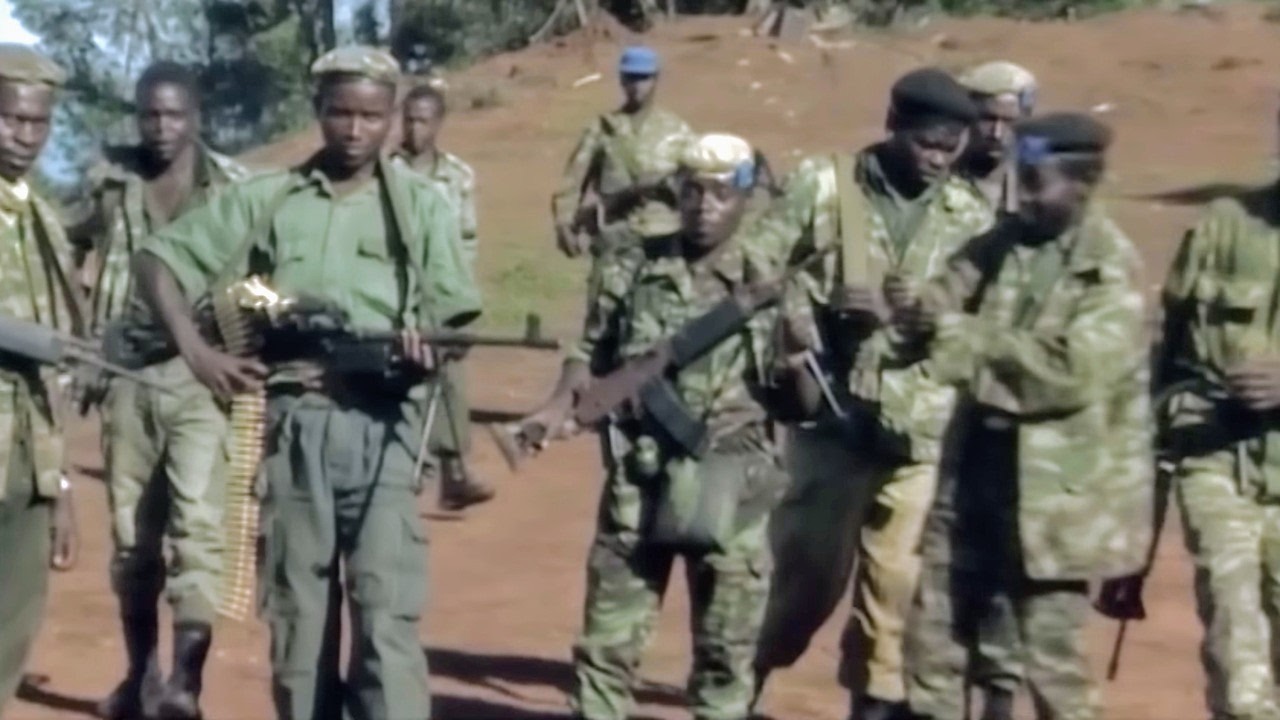
Members of the Forces Rwandan armies, militiamen and part of the genocidal government, end up in UN camps installed in North Kivu, Zaire. Walfroy Dauchy, the former volunteer of the Red Cross, was there at the time. There is an organization in the camps which is that the Rwandan power, interim government, power official before the genocide, is present through the fact, that there are soldiers, militias, that all these people are, I won't say in full activity, but they are there, they are armed, they are not heavily armed.
There are no cannons, planes, tanks. . .
But there are small arms pretty much everywhere. And so this induces a certain level of violence. Since the start of the operation, Turquoise staff took control, from Goma airport, Zaire.
So that his mission is operational, the French army subcontracts transporting your equipment. We are now in August 1994. I have a memory at the beginning of August, to see it happen, a good-looking guy, a bit of a showoff, walking around with a weapon, glasses sun, a little surfer.
. . I start the conversation.
The guy is very friendly. I said to him, “What are you doing? ” He said to me: “I work with my father, we have a box, we deliver things.
. . I said to him: “What are you delivering?
” He said to me: “Weapons. ” And I understand that indeed, there are a certain number of deliveries, which are made by Goma airport and which are intended for the Hutu powers. These weapons arrived by plane French, it came from Bangui.
I imagine, knowing the precision and the effectiveness of the French army, I do not see that these people accepted, to convey boxes quite impressive, without knowing what was inside. If there was actually arms deliveries, it is a parallel chain, but which is absolutely not covered by the authorities. That is to say by the government and by the president and the French military.
Reporting to the Chief of Staff of the Armed Forces, will not in any way be involved in an affair Of this genre. If it ever took place. I don't know until when arrived, delivery of contracts signed before the embargo.
- In any case, the weapons have arrived. - Furthermore, there is traffic in Africa of course, but I have no idea on traffic. Did France deliver weapons to the genocidaires, after the embargo decreed by the UN, in May 1994?
A judicial investigation is still in progress. The stakes are high, because it could establish complicity in genocide, blamed on politicians and to the French military. 25 years after the genocide, the army is also accused of having exfiltrated from the genocidaires, to other countries.
Once they have crossed the border, some of them, were transported by French military planes, towards the Central African Republic, for example. Then they were able to leave, they spread out. They left for a number, in Togo, Cameroon, where we could find them.
The sub-prefect of Gisagara, during the hearings, he himself admitted and I remember it, he himself admitted, that he left the Congo, on a French plane towards the Central African Republic. He said it himself. I think he is not the only one to have benefited, of this transport.
Some of the alleged culprits, found refuge on French soil. - There is still local officials, who had responsibilities undeniable, who are here and who are not absolutely not worried, at least before we even file Complaints, they were not worried. The International Criminal Court for Rwanda, condemned 17 of the 21 ministers, of the interim government.
At least ten of them have passed through the turquoise zone, like Prime Minister Jean Kambanda, arrested three years later and sentenced to life imprisonment. - Sentence to imprisonment for life. - I plead guilty.
In France, judicial instructions, were opened against several Rwandan officials, accused of crimes of genocide. Laurent Serubuga, former deputy chief of staff, of the Rwandan Armed Forces. Agathe Kanziga Habyarimana, the wife of President Habyarimana.
And Laurent Bucyibaruta, former provincial prefect of Gikongoro. Like them, there are almost forty of them, suspected genocide perpetrators to live in France, without being worried.