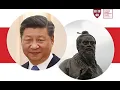
And so we're really excited to have today's conversation um it's going to be a fascinating talk about the struggle between Confucianism the philosophy that's defined Chinese culture for thousands of years and communism which is wax and weighing during the reform period of the last 40 years um as you all know during China's cultural revolution Mao's red guards Denounced Confucius for fostering bad elements rightists monsters and freaks but then after that turbulent decade uh the Communist Party embraced capitalist style reforms and oddly enough turn to Confucius fulfill a gaping ideological vacuum now General party General Secretary
Xi Jinping who seems determines both maintains stability and develop a more Equitable Society once again is promoting Stern communist rhetoric and Values so the question is will China eventually find a way to integrate these two uh traditions and what can the struggle between communism and Confucianism tell us about China's future path this afternoon we're really delighted to host confusion scholar Daniel Bell who is who as dean of the school of political science and public administration at Shandong university has an Insider's view of these Philosophical struggles Professor Bell's writings about Chinese meritocracy sometimes arguing that uh
the China's political system works better than ours here have been highly controversial no until many academic positions and his books include the dean of Shandong his newest newest uh newest book just hierarchy the China model the spirit of cities China's new Confucianism and Beyond liberal democracy Professor Bell is going to talk for about 20 minutes and then professors Peter bowl and when you will share their thoughts and convene a conversation and we'll have time for questions at the end of um of these these talks so please start thinking about what you'd like to ask Professor
bowl is the Charles H carlswell Carswell professor of East Asian languages and civilizations and one of the great experts on Ancient Chinese philosophy and Confucianism He's the author of this culture of ours intellectual transitions in Tong and song China neo-confucianism in history and a number of other books and Publications and when you is a visiting assistant professor at Boston College who received her PhD in history here at Harvard her research focuses on China's social and political thought and intellectual culture and she's currently writing a book about the search for a Chinese way Uh in the
modern world which grapples with many of the questions that we'll be talking about today so we're absolutely thrilled to have all three experts today and I just want to give one quick plug before I had the microphone over that next um Thursday at our critical issues confronting China series we're going to have Economist Yao Yang speaking about correcting some of the dire consequence what he calls the dire consequences of 40 Years of Reform so it's going to be a very very interesting talk please come to that as well so um with no further Ado I'm
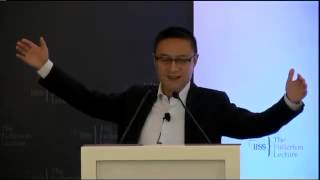
going to hand the mic over to Professor Belk thank you I'll set my alarm but feel free to use the legalism um so well uh thank you so much and in that for the invitation and thank you for my uh for the other panelists who will Provide much more frankly uh historically informed and academically in-depth analysis than I will um so this talk will draw mainly on on this book a couple of chapters in this book which is an account of my experience serving as thing but I only talked about my own experience if it
sheds light on Academia in China and the political system and today talk mainly about the Confucian and communist aspect because I was hired for this job by his Name is Kong Shoji he's a party Secretary of the campus at qingdao the new campus and he that he's a 76th generation descendant of onzer and and he's uh and he's very proud of the tradition and he thought that I could help to promote Confucian uh tradition um at Shandong University now as you probably know Shandong is basically the home ground of confusion um but it wasn't very
successful frankly so This record this book is more of a record of my uh not well not fear well okay failure um and but I think we draw since I'm an interesting lessons from failure as well one of the key aspects and here just because we I met some uh graduate students earlier talking about political meritocracy and I had an earlier book on Pluto meritopsy and I described in one of the chapters what are the key uh characteristics of successful public Officials and and I I said there were three one is above average analytical ability
because at higher levels of government is where the issues are very complex and two is um above average EQ because you have to deal with people and persuade people and know how to work with people and three is virtue meaning at least you have to be partly committed to serving other people as opposed to yourself or your family but what I discovered and I Didn't write this in this earlier book and this was my biggest failure is the most important characteristic of all to be successful public officials is not none of these three it's the
ability to work hard stamina and then I looked at some of the previous great Confucian officials in the past and that was really what they had almost more than anything else if you are a public official in China we can criticize them but what a work ethic They have constantly on call no weekends and during covet times the party secretaries and the vice teens lived on campus full-time dealing with his prom serving other people worrying about the unemployment of students um and it's very edible and the meetings would last hours like four hours sometimes to
deal with issues and it was very seriously liberations you know that's why songs are some form of collective leadership at the top in China I'm still a little bit hopeful or at least not that pessimistic I mean um but I didn't have that stamina I basically you know lost the ability to concentrate after about an hour um and that helps to explain why I wasn't successful frankly um as seen but let me move on to the um so the topic here um so you can go like this okay so the book here is actually written
I don't know Why it's very heavy matter of bureaucracy Confucianism communism but it's been in a very with a very light touch um and even the harshest critics like Gordon Chung you probably know him he wrote a book called The Coming collapse of China he wrote that about it I think 20 years ago we're still waiting um but he he wrote A A critique called infusions of a China apologist something like that but even He reckon Expressions it even said that the book is uh entertaining so this is a lovely um cover um with Emojis
and each Emoji represents a theme of the book and originally I had used a doll which is a to an AI type program and then but my editor at Princeton rejected it is saying luckily we still have human graphic designers and they came up with this beautiful uh cover so judging by the cover it's a brilliant book I'm not responsible for It and I won't comment on the content but at least I can be proud to say that by the way my father I'm so interesting final footnote he was a writer who turned a second-hand
Bookseller um at the end of his life and then he he said you know what I really learned is we have to judge a book by its cover so on those around I'm very proud okay now let me go into the subject material yeah so in the 1980s those of you I mean most of you are probably too young to Remember this um but um most Chinese intellectuals and political reformers had a view that China's future is basically liberal Democratic modernity meaning in its kind of economic form a kind of capitalist uh or form of
organization and politically a kind of democracy and the U.S was viewed as the model um typically by students and intellectuals and many of The Talented Students in those days they didn't want to join the Communist party because first of all they weren't inspired by communism anyway and secondly it wasn't viewed as as the road to success um and both Confucianism and communism were basically dead as motivating forces among the intellectuals and political reformers very few appealed to Confucianism and communism as as a kind of inspiration so now I'm really Thinking what are the political ideals
that inspire people I think it's a hugely important topic and that's why the language of China and authoritarianism I just it's I mean yes but what does that mean exactly many there's still many intellect tools and students who seek inspiration from political ideals and what are those political ideals well two of them have made a huge comeback in the 1990s I mean we can talk about why I will talk about Why in a second um but at least what's quite fascinating sometimes I thought you've been in China so long what has been the major change
and it's so complicated question but at least if I have to reduce it in one slogan it's the comeback of history and tradition and in the case of political ideals it's the comeback of the Confucian and markless traditions and both Traditions have not have have had huge and unexpected comebacks there's Almost a consensus now that whatever it turns out in the next few decades there's not going to be one modernity which looks like you know for example the United States capitalism and democracy we're going to have a multi-polar world and China For Better or Worse
will have a kind of something that is quite different from the economic and political system that you have in the United States China will not copy the West I mean hopefully China Will continue to be inspired by best practice this is abroad but at least there's not going to be this kind of model that sets the path for China's development the way that people thought in 1980 so people say oh the 1980s it was much more open it's true it was more open times in many ways much more academic freedom for example but at least
in terms of the motivating ideas arguably it was less open than now now you still have liberals we have a very Famous liberal here Professor Yoshi but we also have confusions and we have Communists in a way it's much it's more diverse at least in those terms than it was in the 1980s so what about this confusion comeback well I mean you know of course the historians know this but at least in the English language the term Confucianism is often misleading because it sounds like it's like Confucius is like too Confucianism just like Buddha is
to Buddhism or or Jesus is to Christianity but it's not right I mean Confucius himself he was a transmitter of an older tradition it's a it's a very diverse and complex tradition and that has been influenced by other traditions and including taoism and legalism and Buddhism uh and and more and more recently uh democracy and feminism I mean I mentioned already this the sentence of Kong who are very proud if they can be offered a plot in the Congling the Confucian Family Cemetery in in shufu um and now the women can be part of the
family tree for the first time you know it's a kind of feminist inspired reform um of course at the level of scholarly research there's also a lot of Engagement between feminism and confusion with them for example now I'm going to reduce confusion to very crude ways and the intentional historical hate this I apologize but two claims that no Matter what the diversity of the tradition these are kind of mainstream views the first is the good light I mean it sounds it's it might sound trivial but when I'm going to say it's not that true because
you have to compare it to what right the good life lies in the pursuit and nourishment of compassionate and harmonious social relations starting with a family and extending beyond that okay so again what in comparison to what well look at ancient Greek thinkers like Like Aristotle The Good Life lies outside the family right the family is a sphere of necessity but morality lies outside the family and serving the public that's not a confusion view at all the Confucian view is morality starts with the family that's what we learn about morality and that's where we experience
at least things go well which often they don't but that's where we experience care and compassion and love and we extend that love to others but in Diminishing degree as you extend outside the family and no matter how diverse the tradition there's hardly anything about the afterlife I mean it's a bit like Marx and communism if you Mark said you know has 40 volumes but there's only a few senses about communism it's similar about the concussion tradition again so this is quite a you know in conference like Christianity and other Traditions um it's quite fascinating
that you know these these debates that you know we we Need it we do can we have a social ethics without God I mean that's just not a big deal in the Confucian tradition and that's the good life and the best life lies in serving the community as a public official again in comparison to think of Plato's Republic where the best life lies in you know a life of philosophy or contemplating truth and you go into the cave as a kind of second choice um for the for the confusions typically The best life lies in
serving the public as a public official um so okay that's one reason why for example still today especially in Shandong Province where the Confucian tradition is I think most deeply influencing people's you know every day life and values if you're a public official it's so important for example the rest of China what's the lucky number we know right it's the lucky number eight but in Shadow it's seven Because um when you're 57 serving as a public official you can still have hope of being promoted but when you're 58 then and you and you have no
longer open being promoted and so this is very interesting so in the license place in Shadow you would see number seven as the lucky number I mean and again in comparison to the rest of China um So why the confusion come back well very briefly and again very briefly um it was obviously a political reason that Marxism cannot serve as a sole legitimate you know political ideal um inspiring people I mean it's still big part of story as we'll see but obviously the ruling organization views itself as a carrier of a much older political tradition
and the Confucian tradition has been at least in Imperial China the Main kind of legal tradition that inspires um uh people I guess um so the obviously the Chinese you know Communist party uh views itself as his career of a longer tradition and more and more the Confucian discourse is used as kind of let's call it values-based legitimacy again it's a fairly new development the past few decades obviously in comparison to the earlier uh in China economic reason well again Here too for most of the uh you know the 20th century confusion was it was
viewed as a kind of the part of the reason why China was you know backward economically but then all of a sudden you know other countries with a piece with a Confucian Heritage South Korea um uh Japan uh Singapore and so on modernized and relatively peaceful way at least partly in response to a release on the basis of Confucian values that can emit the hard work is Self-improvement to education and at this worldly Outlook and China's Chinese intellectuals often came the same realization that far from undermining economic organization uh confusion can help the promoted of
course assuming other conditions are in place as well and there's a psychological reason that capitalist style modernization also makes people very optimistic and individualistic so there's a need for an ethic that that that promotes social Responsibility and again Confucianism is the obvious uh resource for that kind of reason and there's an academic reason that many of the Contemporary or at least some of the Contemporary intellectuals in China who promote Confucianism they're first forced to read it in the cultural revolution or to denounce it like Zhang Ching is a famous case and then when he read
it you know he's a smart guy he said well it's not as bad as advertised and once there was More openness he could openly promote Confucianism so so now lots of problems with I mean the longest chapter in his book is on censorship and by the way um this English language book is no the Chinese translation has not been approved and unless things changed I don't think it will be approved except in Hong Kong by the way there's more academic freedoms but even this has been approved the English version took a while to be proof
it has an official Stamp saying that um basically saying that uh it's the it's an official time saying that the book is not officially approved it might be a collector's item but then we heard that it's quite common of our English language books that have this stamp on this video okay so okay notwithstanding all these constraints on academic freedom in China growing constraints the longest chapter in here is on censorship Um but the in terms of the uh resources academic resources and the based on confusion very wide-ranging and diverse um so but the Confucian tradition
has stole uh in lately for different reasons I'm not going to go into except into detail here because I'm running out of time um but the past there was a time when a few member uh president XI was handed to books when he went to truthful and he says I'm going to study this diligently About Confucianism um and that's that time many people were excited wow finally we're moving on to this kind of budget more or less uh the official kind of promotion infusion has stalled although there is a new confusion Academy in shrefu which
trains public officials in the Confucian classics there's a kind of partly because the anti-corruption campaign is moving from like heavy-handed legalist means to more kind of using confusion Means uh to to limit corruption and of course for that the public officials have to be educated in the confusion Classics and that's the task of this new confusion Academy now in the remaining few minutes let me talk about Marxism um so people say wow what happened is it present I mean no this the the current market theory of history is quite obvious that it you have to
there's a great book by G.A Cohen just called Karl Marx theory of History he was my professor at Oxford where I first learned about marketing uh you have to go through capitalism because only capitalism can develop the productive forces to because catalysts need to compete with each other in a way to become more productive make more products include the technology and at a certain point we move from capitalism to the next society which the political form of that is dictatorship the Proletariat so I think some of the leaders came to the you know we can
say recognition or realization or misunderstanding whatever you want you want to interpret it that it's time to move on to from a kind of capitalist Society to the post-capular society um and arguably uh very um crude means were yeah yeah very crude means we're used to do that uh such as I mean again um clamp Downs on on large companies and Reducing opportunities for tutors so that children could could improve but all for good reasons on the face of it right and if you really want to reduce the gap between rich and poor you have
to take sometimes measures I mean those measures argue are not as effective as they could have and should have been but that's that was the basic idea that motivated we have to understand why it happened so the idea is here as we move on to lower communism where people are From each according to ability people work hard and they're rewarded according to their contribution and for that we need equal opportunity so you shouldn't get rich or have more educate more opportunities for Education just because you're born to a rich family hard work determines material Rewards
that's problematic though as for uh the reason that Karl Marx said in that and that John Rawls elaborated in great detail Um that Talent is kind of arbitrary from a moral point of view So eventually we have to move to different kind of society where people are rewarded according to need so um so so arguably then there's this there's a there's work there's this kind of the you know it's a there's a stage now where it's partly confusion and partly moving beyond capitalist kind of form of Communism Um but one big difference and here it
man think of uh Mikhail bakuna and the anarchist 19th century who criticized Karl Marx he's saying dictatorship the part here that's not gonna happen you're gonna have dictatorship of the bureaucracy and Karl Marx wrote some notes in bakuna none of which were very convincing and more or less arguably that's part of what happened okay one more minute um And but so the question is the barracks is going to beat it states not going to the web with their way nor should it arguably because now the big problems that Marx couldn't anticipate climate change regulation nuclear
weapons Rogue Ai and so on you all need a strong state to deal with that so the question is and there's going to be some sort of synthesis between Confucianism and communism because you need the confusion ideas to say how to select and commode Public officials with above ability and virtue in Chinese is a scholarly way is the more political version of that idea um that's not going to go away um but that's not sufficient there's always a need for more democracy at lower levels of government especially and and more Reliance on on on on
on confusion self-powered and and more access on personal freedom and so on that said even if you have this mixture Of Confucianism and and communism that is that also has a kind of democratic aspect there's going to be tension between Communists and con and and and community and communist and Confucian ideals uh because at the end of the day they're different for Marx the ultimate idea is to have a society where Advanced Machinery does a socially necessary work and people are free to realize their creative Essences so it's through work life work becomes life's Prime
want You're not working because you have to but because you want to that's the kind of marxist ideal but for confusion it's a good lies in Social relations sometimes they they they have the attention right I mean when I'm presented this in Shanghai you know somebody said well that's what we do she's a younger woman and she says that's the way in my case should I pursue my career my family that's that's the sort of thing that's going to uh That's it's still going to be intentionally um so I race through this and this is
but you know our cat um because we have in the one of the chapters in here the culture of cuteness and again one of my failures as Dean is that I basically uh sometimes evaded responsibility by relying on on humor uh and and charm and I I think Michael um Boris Johnson is a beautiful example of what what not to do you know as a Political leader you should have a strong ethic of responsibility and and not rely on cuteness and charm and humor um so anyway I have a chapter on that in in this
course as well so thank you we'll keep the black cat white cat there because after all as long as it catches the mouse right um hi yeah okay um my name is Peter boy I teach Chinese history and I've known Daniel for a Number of years I'm interested in Chinese intellectual history in particular and I I you know when I began in college in the 1960s uh Confucius and Confucianism were purely historical subjects there is not they were not relevant to China today remember it was the 1960s and I I think the second year I
was in college the cultural revolution began so um and yet like Lazarus from today right keeps coming back uh I should say that you know Daniel Bell has made some important contributions uh to the study of Confucianism uh and the awareness of Confucianism in China today through the series he's done at Princeton University press which it combines both the introduction of some major Chinese thinkers who are not communist thinkers some of them are confusion Pickers but it's a particular kind of Confucianism it's not the spiritual Confucianism that we would Associate with Mojang San or Professor
DUI Ming who taught here for many years but it's much more I would say a political institutional Confucianism um and sometimes there's another thing that's happened although there have been these institutes for the study of Confucianism I think more common are the institutes for the study of goroshua National learning and one question we could ask is is there a connection between National learning Ideas about National learning and what's called The Rue or the Confucian tradition um often I think easy to start to think of Confucianism as a social political system in the same way that
we think of Communism in China or socialism in China as a social political system which has its own particular Chinese characteristics so it makes sense to Talk about that although we would say that communism is an ideology in fact is also always often treated as a social political system and I think we treat Confucianism the same way but I wonder whether that is what we should be doing um clearly confusions were concerned with practice and so to the degree that they have a political philosophy social political philosophy then they are Concerned with practice and realization
in actual life it is clearly a value system associated with the political Elite but remember the political lead in China was in the past but maybe five percent of the national educated Elite right so we should not be perhaps misled by thinking that politically active people Define uh the Confucian tradition um but still I mean there's understandable Why we would take a sort of a notion of Confucianism as a social political system and and see it in those terms the question then is is this social political system particularly Confucian or not and along the way
I think Daniel uh offered us an alternative we say well yes there's Confucius way back when but then you know there was uh centralized bureaucratic system of the Qin Dynasty uh there is uh there's Buddhism there's taoism all these other things and so That Confucianism then becomes what it becomes a kind of a value system strong on family belief in public responsibility State service and things like this um but I would like to suggest that Confucianism in fact from Confucius through the present almost through the present was all was really a mode of learning a
way of learning rather than a social political system um and it's a way of learning that Stressed self-cultivation personal practice but in many different ways that was not constant over time um that believed in the value of cultural Traditions but what those Traditions were had to be defined and redefined over time and believed in public responsibility to a point after I was Confucius who says you know at one point he says well that would say if my way Um isn't going to be practice or if I can't keep practicing on that on my way I'll
set the C on a raft right that refusal to serve is just as important as a willingness to serve um and the other part of Confucianism or or Confucian learning let me say from way back when into the present is the rejection of the notion that the ruler is a sage and so to make the claim that the ruler is a sage right is something that I Think by and large people who style themselves as Shredder in the confusion mode are going to reject yeah yeah and Xi Jinping may think he's a sage but I'm
not sure that well I'm sure if I'm not I don't know if he does I think of himself as a sage but rulers sometimes get into that habit I mean uh Kang XI was a good example of that and the others but there there is I think a way in which we can think about Confucianism in sort of either a top-down perspective or a Bottom-up the top-down perspective says it's very good for people to be docile to be quiet to think of themselves as parts of groups to think about the importance of ritual and ritually
correct behavior um and that's what we want right rulers do tend to like that um and yet there's learning for the individual and this we could bring this back to Confucius and I was influenced by my students in class today where We're talking about the con uh how a Confucius understood this very difficult term Ren sometimes translates humanist benevolence which ultimately says no it's not the group it's not the state it's the individual it's the individual and the cultivation of the individual that matters um and so question I would like to ask is Confucianism survive
in a meaningful way Can there be a Confucianism of the National Elite and of this state um sir can it survive without actual confusions and are there actual confusions in China um the uh in the sense not in terms of people who who buy into this notion we all should be good citizens we should love our family take care of our parents and so on and be responsibly socially responsible but actually who are committed to cultivating themselves even If it means going against the stator so I'm the I'm going to end my comments with this
story and my story is begins I guess in the 17th century when Huang Zoom Shi known to some people for his his great political Treatise the mingi daifong Liu the plan for the prince waiting for the dawn um uh wrote the The the studies of Ming confusions and he begins with an account of a man named fangsha Roo Feng Shu had been a high official an advisor to the emperor the grandson of the Ming founder Julian John who had been skipping over a generation had been made Emperor to succeed him his brother or his Uncle
Judy up in the north in Beijing would have none of that and he decided he would come South with his armies and usurp the throne which he proceeded to do and Feng Shu being the famous scholar he told fangsharu you're going to issue a statement saying that basically I'm like the Duke of Joe coming to Aid Prince Chung right that I'm here to save this state to save the Dynasty and function Refused and so he and all his relatives to the ninth degree were executed and that's how he begins and the but the first case
the first case of learning discussing is about somebody else it's about who you a man named will you be and will you be his father had been the number one graduate of the Civil Service examinations under the emperor that had been usurped and when Judy the usurper came to town Will you be from zhangshi was one of the people that came out to greet him and return for betraying his emperor he was made Chancellor of the National University um will you be refused to take the exams and refuse to serve and was absolutely quiet and
kept at home because he's a great embarrassment to his family he was not participating as he should son of the a Brilliant son of of the of his father the chancellor of the National University um and we'll be came a great scholar because the day younger died he began a diary which we now have in which he talked about his desire to cultivate himself and the difficulties of self-cultivation and he Began his diary with a dream of king one one Wong the founder of the Joe Dynasty and then a second dream of true she and
the third reflection of the way in which the second emperor of the sun Dynasty in the 10th Century probably murdered his brother the first emperor and then proceeded for the rest of the Diary to talk about his spiritual cultivation um so we see a state that's willing to murder the opposition We see a state that's anxious for cooperation we see confucians once in a while who are committed to integrity and authenticity and are willing to engage in martyrdom um I think that literary generally has nationality believe in a centralized bureaucratic system I think it's very
much part of it I don't think they necessarily believe in a strong State and the degree to Which we see a commitment to strong States among the literal oh to the state among Literati or to a strong state it could mean that they're looking for ways to bend the government to their interests not to pursue government so um this tension I think is a real tension not just between Confucianism and communism but between being a Confucian and the notion of a strong state thank you I'll stop there and ask a Professor you to continue and
you too will get your 10 minutes of Glory sorry again for being late the traffic that's fine continue okay I hope my my comment is worthwhile so uh good afternoon and I want to First attend Fairbank Center for inviting me to join this fascinating conversation with two professors and it's really a great honor so Professor Bell and thank you for the fascinating presentation I actually also really enjoyed reading our new book the Theme of shendong and uh it has a lot of fascinating details and Analysis that actually helped to humanize contemporary China as the book
intends to do uh especially this is important because we're in the context of escalation of confrontational ideologies so uh Professor Bell uh brought up a very important topic uh the direction that China is chatting in terms of its political values and identity so I'm sure many of us Are sitting here are concerned about this so to fully grasp uh Professor Baus a proposal about combining Confucianism with Communism I think it's useful to First Look at the context of the overall debates and the different ideas about the role of confusion tradition in shaping China's political ideologies
so indeed in the post-mile a period confusion learning has made a comeback but I want to emphasize that it is not one single uniform concept Right so as an intellectual historian I actually see various interpretations and forms of concentrations and these various conditions are attached to different intellectual groups with diverse ideologies and methodologies so for example there's a group we can call the cultural liberal and they see confusion learning as promoting a kind of Chinese humanism that tends towards Civic naturalism so what does it mean uh they are committed To the idea of nurturing people
in modern democracies by emphasizing civic duty and personal upcoming this view largely aligned with China's move toward market economy and the political changes in most of the 90s I think Peter just spoke to this traditions and then the second influential camp that emerged uh during this time and slightly later was associated with what we call the new lab movement and many of them aim to blend socialism With confusion ideas and many of them actually call it as an efficient socialism and different from the first can the second Camp actually leaned more toward populism and social
equality within the completion tradition so they pick on different things from the tradition so they believe that China's modern values should be rooted in Social equality and a strong Collective identity and they also supported a centralized state to achieve this social The goal of society policy and they were critical of western style representative democracy and Global capitals so they saw China's contemporary success um are connected to its historical State institutions and its communist heritage and this group gained prominence in the early 2000s and so at the same time there is a third that is more
utopian and therefore is more controversial which asks before reforming China into a constitutional Monarchy with confusion serving as a symbolic marital practical ruler that represents Universal values I think represents this circle so they are also critical of the Democracy right but but their criticism of liberal democracy were mainly from aspect of political meritocracy and it sometimes aligns with the second pen in terms of their interests in experimenting with a Unique China model So these decisions are not new right so they have a history that going back to debates about China's Modern Nation building started in
the late 19th century on the early 20th century if not earlier so Professor Bell point out that the Resurgence of communist ideas in China was understandable especially in the context of 2008 Global financial crisis and the increasing criticism of capitalism And he stressed that he stressed the importance of blending communism with fusionism because it could offer the Communist Party a way to choose officials based on Mary as well as developing Chinese so this is fascinating because it seems like a solution that combines the second position Confucian socialism and some elements of the third position and
this solution is in fact very similar to a Viewpoint from the early 20th century which actually played a crucial role in shaping China's 1911 nationalist Revolution and Constitution okay so one of the leading contributors for instance to this position was a man called I wish the center of a part of my research so he is a highly influential modern confusion thinker and the leading propagandists of China's nationalist Revolution and he argued for something that can be Summarized and what we call populist markets and this tournament sounds very unusual right because populism and America previously seem
like opposing ideas but this combination was actually very meaningful to many impactfuls as well as to the revolutionary leaders such as so for the public side this argument begins with the criticism of parliamentary representation as an impediment to social equality They argue that Western and Japanese representative system are essentially the modern extension of the pseudos which let Rich locally leads easily into those politics cumulative wealth and perpetuated their privileges at the expense of the ordinary people and informally it has to be the Central State based on Muslim punishment of corruption with power of redistributing land
to and helps control influence of this modern personal brand and equally Important they turn to China's long-centralized Democratic State as China's essential Legacy for this organization right so it has been around for 2000 years and has successfully removed energy ability so this for them this Legacy should not be quickly replaced by Western waves of course there is a strong element of the terrorism in this so at the same time there is a marital credit side to it so for John the Government's legislation and administration needs to be reserved for highly qualified Scholars who deeply understands
the nation's unique history and culture and devoted themselves to the nation's Collective interests imagine so and this should be the responsibility of the soap of true future learning tradition so what I want to say is that people who Embrace this idea in early 20th century They were often supported by supportive of socialist ideas entering China at the moment and this is understandable and even admirable it is because throughout the world at that moment newly Rising nations in the late 19th century and early 20th century were combating social problems caused by unregulated capitalism and European internalism
so at that time not many people were too concerned about the author carrying Aspect of it this makes sense because in the middle of the turbulent century when China was admired by Richards the problem of the states over expansion was probably the last thing to worry about this way of thinking made a combat in the early 2000s it was primarily associated with the confusion socialism of the neolithist but it also speaks through the concern of the institutional confusions who are interested in Americans So this position gained traction after 2008 and coincide with the political movement
for the Chinese Communist Party so when sitting pin took office the party was facing a major legitimacy crisis due to corruption issues that have been growing since the 90s the ideas which makes elements of populism and American currency inspired by China's historical centralized bureaucracy actually that helped she to address the Peace lifestimacy crisis because it is both sort of and it is rooted in Chinese traditions and these particular interpretation of Confucianism celebrate China's unique historical path and Views Chinese Marxism as a logical choice in line with China's historical values moreover the model gained prominence thanks
to China's rapid recovery from the 2008 financial crisis and its impressive infrastructure development Afterwards however so this is my Turning Point unlike the May 20th century many people today start to see the authority side of this approach as a genuine concern especially with the turkey has become so strong right so this concern becomes even more apparent when the government cracked down on Business Leaders inform strict coping measures and become entangled in an increasingly also International environment all in an Effort to build loverity among citizens but I think what's important to remember is that there have
been different approaches within China's Journey at nation building so take cultural liberals for instance they see the heart of confusion learning as more about individual responsibility in society than being tied to a particular State system and this view values the practice of self-governance so for them even though the centralized State was the primary model for the Chinese institution local leaders actually did have a significant role in into play in China's history during the late Imperial period and this should be drawn upon very fast this should be drawn upon as the basis for a genuine representative
system so many people who share this view see issues like overexpension of stay power decreasing job opportunities in the Private sectors and alienation of talents in central Administration and as well as China's uncertain Global positions as significant concerns and they consider this to be as consequential as social enveloping so I'm curious about Professor Bell's thought about how the model of blending perfusionism with Communism based on your particular interpretation of these two can respond to these challenges thank you very much No I was told I should moderate this discussion so the beginning is to ask you
whether you'd like to to respond to your discussions um okay it's not really a response because I basically agree with most of what was said um so let me just focus on the parts where maybe there might be slight disagreement um about well the the line of that the refusal to serve uh is just as important As a willingness to serve uh as a kind of Confucian view I I would I would modify that little bit because the First Choice is still to serve but it's only when things are really bad that you would want
to like exit and and do your own stuff to use colloquial language so it's still like almost the opposite of the platonic view where your first choice is you know contemplating the forms and so on and only then you reluctantly enter politics But for the confusion it's almost reversal the first choice is to serve as public official but if things are really bad then you you exit the system and sometimes even become a Taoist right um so uh that that now about whether there are confusions I mean I think that it was fully answered um
I think these are great distinctions by cultural liberals confusion socialists and constitutional monarchs um so I mean there are still just if we Conditions who pursue pure self-cultivation now and Zhang Ching is a good example he has a private Academy in guajo Province he's he has basically I don't think much hope of influencing the political system anymore so he just does his own thing cultivates himself and trains students and hopefully in the future in and it might have some impact um but then there's also confusions who think you can make it within this system make
some positive changes I agree they Owe their ultimate allegiance to the dial not to this state or not certainly not to the ruler and my the party secretary who you know was who hired me was one of them um several others now who are who I know I mean I won't name them here but they they think that through serving the public summons even as in Marxist institutes um you could you could enact positive change so I mean there but they're Confusions too but there's a trade-off just you know time between how much you can
do as a self-cultivation versus serving the public I mean if you are a public official you don't have much time to read right so you you can't do both that doesn't mean that those who pursue the public official track are less pure confusions I'm not sure that that that's a way and about confusions not favoring the strong state it depends what we mean by that so I didn't talk much about this But in this book I mean I have quite a bit on a legalist tradition I think that's a better way of framing it than
the word authoritarian which I to me it's so vague it's not really clear what it means um but the legalist tradition is is very influential today and that's really what justifies what we think as the worrisome part of the strong state which controls people's lives and limits of freedom and arbitrary well if it's a pure legalist Here here my colleague is good he's saying actually if you're pure legalist you it would be pretty clear and transparent rule of law you wouldn't like disappear into a black hole that's not legalism um but anyway so but even
the anti-corruption campaign I have some of the top leaders they would tell me I don't know a lot just one anyway sometimes this you know it's a fads yeah you know we're using legalist means but You can't openly say it but that's that's how they think of what they're doing not so much the authoritarian language and because in times of chaos if you really want to solve things quickly Confucian means are just not effective you know whether it's covet in the early days or or Warfare and Civil War in the 20th century or in the
Warring States period I mean you know you have to sometimes use these these legalist harsh measures for what but Only in the short term and it's not meant to be long-lasting the problem is once you put them in place try to take them away for cover the first two years China felt like the luckiest place in the world to be in you know we were there during covet and the rest of the world seemed to be poison and here we are completely free in a huge country travel and have lots of personal freedom but then
it would as you know last year things went sour very very quickly and It and and the bureaucracy was not quick to change and it might change it was much too quick so so that that that's the problem is when legalism outlasts it's kind of um it's kind of uh life so to speak but even then pure legalism won't work I mean the reason why covet was effective the first two years is that because almost you know everybody bought into the system it's but it's not like the US were or even Canada where I'm from
where People didn't want to wear masks sometimes you know there was this is what we need to do to to preserve our our you know relative well-being and some of these harsh measures may be justified but again only temporarily and the problem is that it it would lasted much too long um so that's fascinating by the way about Zhang tae-in as a populist murder crowd I would love to read more about that Thank you although I'm told is extremely difficult but anyway um so so thank you I really do want to to to to learn
more uh about that um and I'd like to know who you see you have these three labels cultural uh liberal confusions and confusion socialists and and the Confucian monarchs and you mentioned Jiang Ching as represented the third I'd like to know who you place into each category that would be very interesting as well Thank you okay well let's turn this open uh to questions we uh um all the way and back yes uh Miss Elliot how late do we go to car stop at six okay good and so in what sense you see the calmness
plus they plan on and with uh confusionism as a sort of uh infusions leading this thing or like Putting human mouths were like [Laughter] in the sense that it seems that is um I mean the second question is respond obviously okay okay hi so I didn't mean to imply it's a great great point I didn't mean to imply that fajita was always temporary I'm Saying that from a moral point of view it's only Justified as a temporary measure to deal with social chaos um and if it extends beyond that which it often does then it
loses its moral justification and become and becomes problematic um so the the that's what I meant I mean in the Chinese you know like today when I people say that what the Chinese Communist Party thinks I mean I don't what does that mean I mean it's a huge Organization you know as you know over 90 million people even within the bureaucracy that I work with almost all the leaders were Communist party members but so diverse views and and this tension plays itself out today I mean and I worry about this increasing legalism now um and
and it's and and that that's the part that we worry about not so much a strong State per se but this the the kind of the legalist meaning that There's a the use of harsh punishments and and fear to control people in almost totalitarian way obviously that's the worry and and in this book I mean I say that to the extent I have a political motivation I want to be demonize China show The Humane and humorous side um but where does the demonization come from I mean and this is It's You know the legalist Resurgence
so to speak it's also a reaction to external forces I mean if the Chinese leaders feel Encircled and feel that the world's dominant power wants to stop your contain its Economic Development or worse you know uh bring about the collapse of the political system it strengthens the kind of legalist forces you know paranoid forces in the security apparatus and and the more kind of confusion aspect becomes marginalized so to the extent that I have any hope in China I mean it does depend on an external environment which which does Less to to demonize China yeah
uh Professor Wu up in there thank you of your comment leads me exactly to the question is presentation which is um to what is sent internally as you were thinking about how to promote Confucianism and how develop which is the communism was their awareness in doing so you were changing the foreign policy narrative and exactly how the Rest of the bravery sees China in creating a more hostile environment that was in turn strengthening to be said that there is a struggle amongst the patients strengthening ahead of the legalists as you and suggested so in some
way sorry to put aside other disciples there is a struggle with a powerful say leader in struggles with inclusive confusionism that's affected the outside um was there awareness of that I asked This question specifically because some of you may recall or perseverance was here last year and he was surprised at um much this turn what was an internal discourse and affected the way the rest of the rule saw China in return created this type of verbal event so having had a seat at the table was this even a consideration at all that there would be
this form that the consequences um or does this economy is not just surprised to you as it it So the the so the surprise for Professor Yen sorry could you rephrase that I'm not 100 sure what it was yeah and the policy in specifically uh Shearer foreign policy reaction with traditional legal parts particularly um different forms of picking accomplishments people will have been in creating a Humane International Society but Solutions That language sparked various different reactions right yeah yeah good thank you yeah I mean so Professor Yen we translated when when his books for this
series and and it was called ancient Chinese thought modern Chinese power and when President Biden was vice president he came to Beijing and he was photographed holding his book as he boarded the plane you know so in those days it was it wasn't viewed as a problem it was uh so I'm not Sure so he he argues as you know that um there's there's the he that there should be a Humane government that inspires people both at home and abroad and he uses a Confucian language to express that um and he was he was before
that book was published he was viewed as a kind of hardliner in in a hawk but actually it turns out actually he's much more committed to you know what we would call or what what we call soft power or or Confucian Norms on the international level um but eventually that changed so not just his views but gel Ting Yang and others who who use the language of tians yeah that's viewed as a kind of you know nativist you know but it's not I mean it's for it's providing an alternative which is not meant to be
you know necessarily pro-china but one way of a morally Justified international Relations that draws upon Confucian ideas for example the Confucian idea that if you are a strong State um you you you shouldn't assume that you have equal responsibilities in fact you have more responsibilities um than weaker States and you should try to provide a political system that is in the interest of both the strong and the weak States I mean what's wrong with that but somehow this this the critics who who somehow think that's meant to Challenge the kind of liberal order portray this
as Sinister and pro-china that gets distorted um I think yeah but but maybe my my fellow panelists have more to say on this um we'll let the audience ask more questions I think okay all right here yeah and then the values the fact that it's rooted in a tradition locally in a kind of national Inspire is very useful I think That also opens up comparison to other large kind of aspiringly civilizational entries the appeal to enthusias simply because it's Chinese and beat the Nationalist narrative versus the unique content of I think everyone that's yeah I
mean it extracts me that this gets gets to a very interesting point which is when you use confusion sometimes I think what you just mean is When you use confusion sometimes I think that what you mean is just Chinese yeah right and uh yeah okay so I think what you're getting at in part right so I I think thank you I mean uh that's not my intention but I agree sometimes it's easy to view it that way but I mean there's a difference between the kind of philosophical confusion or the high Confucianism if you look
at the great text that typically it's not about being Chinese certainly not being ethnic Chinese it's being committed to certain ethical norms and if you're if you're from other places and you're committed to the same Norms then you can be confusion too it wasn't meant to be and Peter probably can think of many counter examples but typically speaking that wasn't the case and even now those who the intellectuals who Define confucianism it's not I mean maybe it's partly because it's for us fear especially from Shandong Province Especially or maybe if you're from the Kong family
yeah there's a kind of Pride and and sense of identity that those who are not from the Kung family or from Shandong or from China may not perhaps but still if you if if at the level of intellectual understanding it's it's a kind of universal ethic just as liberalism is or or Christianity and it's not meant to be exclusive and you know and when Vietnamese or uh Pride themselves on their Confucian Heritage That's that's great I mean they shouldn't be viewed as a distinctly um Chinese idea yeah yes I'm sure you see it's just that
um yes in each actions uh I wanted to step back a little bit because I feel like and as much as it is they all have a shared edition of something like a society of ammonia Society Chinese and that's with a slide in Ethiopia um is I think something that is sharing is to ideologies I can see how so this value uh is attractive over the ingredients is also something that is um so I'm wondering if our longer if it's representative um we see the Chinese apologize coming back to in 1700 a day we have
the borders in coming to China [Music] get to the question Um thank you I mean just one I mean that what they have in common at very basic is the idea that the first task government is to alleviate with poverty because for confusions if you're poor you know in the case of monks and many others it's very hard to be moral if you're fighting for Necessities all the time you had that in the early Confucian side and China was the first country I think large country anyway to to say the Government's task is to provide
for the basic material resources of people the Marxist had the same idea that you have you have to overcome material necessity for people to realize their creative Essences but in both cases the ultimate aim we can call it utopian but it's it's meant to benefit individuals it's not meant to benefit some abstract collectivity above individuals for Marxist it's it's to have the capacity to realize your creative talents that's Really and once Advanced Machinery does all the necessary work then we should be free to do that and for confusions once we have poverty uh taken care
of then people can be can commit cells to others and in a socially responsible way without worrying about fighting for Necessities um and and so that that's I I think that that's that's the kind of a commonality but the what you should do when you have free time that's where the difference is I mean for for Marxist it's really realizing your creative Essence through work and for and for confusions it's through your harmonious and compassionate social relations and they There's No Going to Be an ultimate melting of the two because they pull in different directions
often right I mean we can feel this tension as as mentioned in that case uh or that when I'm when I gave the talk they often pull in different directions so there's not Going to be this kind of you know this harmonious resolution of the tension did you want to interview yeah okay Mr Hankins just um that table knowledge uh the third committee that in the West in a very long marriage was very similar giving Christianity in the past position and they started In the fourth century ups and downs certain times and and they they
have certain resentments to treat Humanity as well he's had a lot of people coming uh worth classification being responsive sleep it has the insurance model itself on one of the figures in the past the Chinese traditions so there's a lot of analogies that I could um A marriage for Christianity losses and Parish but others which foreign [Music] [Music] I I note that um their ups and downs gallery and classical tradition and one of the low points of nutritious precisely through Christianity started by the sun Outside it brings up all of them and involved seeds so
that's interesting but there's also the other side which is the personality of the contribution starts to develop a much broader Hospital education very large part of society kind of breaks the power of reality of the footage [Music] what process do you think there are for A broader improvisation in China I I understand they're not seeing a lot of schools classes in the pastor of Life confusions um and you make it what was talking about five percent of the confusions are all the politics and 95 percent of the adjustment on Business forms of patients so what
Prospect would there be in Canada today and that simply doesn't really get ahead um thank you do you want to really good take that one yourself um I mean it so as Dean I think I mentioned already the big problem that I faced was hiring teachers who had sufficient knowledge of the tradition and who could teach it in interesting ways to students so until There's there's that critical mass I'm not that optimistic but I think it is changing I mean even in my faculty we had several teachers who who were well well trained in the
classics and and who could and and who could do it so um I I think I'm at the I mean and Depends to it at the primary school level the most common text that's taught is the D is okay which we can translate as the uh how would you Transit Um it says Qing Dynasty text it's taught to young children usually um to teach them about Philip piety and other confusion values but it's a really interesting text because it says for example if your parent does something morally wrong what should you do and then and
then say well first you should uh uh I thought this because my own kid was was learning it so I went through the course with him you know and so well first first you criticize them and what If that doesn't work well then you wait till your parent is in the right mood and then you try again and what if that doesn't work well then you cry and you work on their emotions and then if what if that doesn't work well then if the part that's not modern is if you if they hit you you
just touch it you know but anyway so those sorts of texts are being taught at primaries so at different levels of Education there's different sorts of texts that are taught and the More that happens um the more I'm I'm a bit optimistic about the Revival of confusion but it has to be tiny interesting ways I mean that's the thing sorry just one tiny last Point especially for University students it has to be taught in a way that that in that allows for for debate and engagement so um so it is what what this is not
just one I you know one thing that was commonly done was for example we was of Course on shrinza and and we had students read uh only a few uh few passages and and just send uh send comments before two parts that you'd agree with two parts you disagree with and two parts that you don't understand and then the teacher on the base of those comments would organize the debate you know that sort of thing um is is one way to teach the classics in interesting ways for students at University students and if you have
that Then you might have uh with my uh with my friend uh we went to the uh uh the the kind of the old Academy where you had these debates in the Warring States period and they they did they discovered recently that when we visited it was just a cornfield but now they discover the real location and and and I had uh some people visiting the University from united front they said what can we do to promote confusing I said re-establish this Academy and have debate there Anyway that hasn't happened yet thank you something awesome
um if we find that reasons of every phrase the family is a very cool thing okay save it in excuse me there's kind and selective Revival of Revolution because I mean that's very important thing is confirm it is Long as once now is any source of the independence uh self-conscious I think it's very selective so the one question is is it instrumental of tradition or video all right so there's always thank you um I mean yeah I agree with you and of course blindly obeying the leader that's not a confusion value I mean that Arguably
comes from the legalist Traditions so or from boism it sounds a lot more like towards thoughts than than anything else right right right so I mean all critical intellectuals you know have the obligation to expose the misuses of Confucianism and for that you need the freedom of speech and that's why I worry just as you do I'm sure about it decreasing opportunities for to freely Express criticism in China and so long as that happens it's hard to be Optimistic about the Revival of Confucianism um about the declining marriage rates I mean of course confusion isn't
the whole story and there's so many other sociological and and economic factors that that explain that and I would and I'm not sure using Confucianism as a way to counter that might help um but if it's presented in a problem about confusing them too is that again It's often viewed as a kind of patriarchal tradition that women reject and if you're going to use this Confucianism to try to persuade you know families to get or people to get married and have more children that's so long as there's this patriarchal view that this is the Confucian
view um that's not going to be effective so that's why there's a need for more feminist reinterpretations of confusion and for that too there's a need for more Freedom speech than it's currently available yes the blue shirt right yeah next to the red shirt s that is you know you've made a facility institutions patients where either the specific political institutions people of attacks are downrightly back to what will be extended they are taking into experience [Music] Um and so I'm wondering if you think that thinking of nutrition is some as a political Doctrine a non-starter
Starbucks or the extent unique it is productive I'm wondering like Dollar Tree for doing that should be but you think should be done rather be in any solid bodysuit um that that are very good questions and that require longer and in-depth answers but I think my the basic issue that I Have is I think that we need uh to separate out some notion of what we this word confusion from chineseness from Chinese tradition so that Confucianism becomes a category that seems to fill fill all the space right that's not communist and it's about presented as
an alternative to that although legalism comes in is another thing um I think confusion is a complicated subject but it's built certainly and I go back to what I said before I think It's confusion Confucianism as practice is a mode of learning it's not a political system uh Mr Schroeder Mr Schrader sorry uh green shirt s all the speakers history uh I have a question for well you said a little bit of source of texts that are that are being read but I'd like to ask more specifically what what tax return is to do if
you just reading Or date only that we've seen on the classical pre-classical texts created reading the new infusion commentaries and other completion attacks for the middle period um are they only reading later commentaries or secular resources only sex and how are their opinions or they'd be translations no thank you there's a huge question and I mean depends how good academics they are right I mean if they're good Academics they would read them in the original and many do and and some of them like the probably the most famous Confucian scholar now in in China's Chennai
at ching huan and he makes his students read them all in classical Chinese and because so many and and it's the whole tradition about I mean it's many aspects of the tradition and because he has so many students now it more and more they read that those who are more well from my perspective Obscure um so I mean it it's it's hard to answer but that's yeah it's interesting because his training is very much in song neo confucianism and that's where that's his identification is actually individualistic you know Confucian Confucianism versus political Theory well he's
the most political I mean he advises the top leaders and he goes to the Dancehall you know he's very much committed yeah So yeah well question last question I think yeah so the department uh it's been discussed there's in both interviews of individualistic Tendencies the abilities and once again we will see China this has been uh not a big expense so I'm very curious about any of you or not because it's being mentioned by uh Professor youth uh and is there possibilities for any Individualistic elements in a practice to compensate uh in future for this
tendency of USA the Revival of those partisan and um in China I think so you should have the last one I mean if there is a real time consumer there are different ways of how to use Confucianism to support political system so as I as I see it confusionism has this flexibility then you can attach it to different kind of political system especially that's the story of the whole 20th century so I think I mentioned Lucy particularly is associated with the kind of way of being in line with certain kind of funds that have its
deeper tradition and then I think it's important to pay attention to this aspect and then uh and in terms of the possibility of emphasizing the individual individualistic part I think that is particularly associated with that group of liberals and and then those people I think they they showed How to link uh the confusion ideas of learning with practice of self-governance uh in the complex and larger market economy and uh democracy I think this is this group of people has been marginalized but they are important they exist my one comment on that is I think that
there's no consensus about what the interpretation of Confucianism and confuses for today is or ought to be and I think that different things have been Tried out they floated the idea of institutional Confucianism and that was fraudulent enough as an idea that that it didn't fly very far but this sort of a self-cultivation neo confucianism is also problematic so I don't think we have a consent there is a consensus there but if it's going to emerge it will probably emerge at the school at universities because that's become the way in which learning takes place in
China by and large but yeah last word for you man no I mean I agree and nor should there be a consensus I mean it's such a diverse tradition and and with and we should and they're not it's always been a consensus at some point there have been periods of diversity but it ends up in some sort of consensus okay but I don't think it will in the future if there's freedom of speech and people are allowed to express their views and this kind of individualism That is good part is to have a critical spirit
and and for that we need more freedom of speech than we currently have in China thank you thank you thank you