Start small. I think if you set the bar low, 1 minute, 2 minutes, dailyish, is a great way to get things going. You know, we can all get 10% happier and then the interest will compound annually. And that's really good [Music] news. We're experiencing a wild moment in which the world feels irreparably divided and for many downright antagonistic. how we respond or react to All of this. That's a choice. And yet, most of us are just trying to survive it. Doing so without a core set of essential inner tools to actually thrive amidst the turbulence.
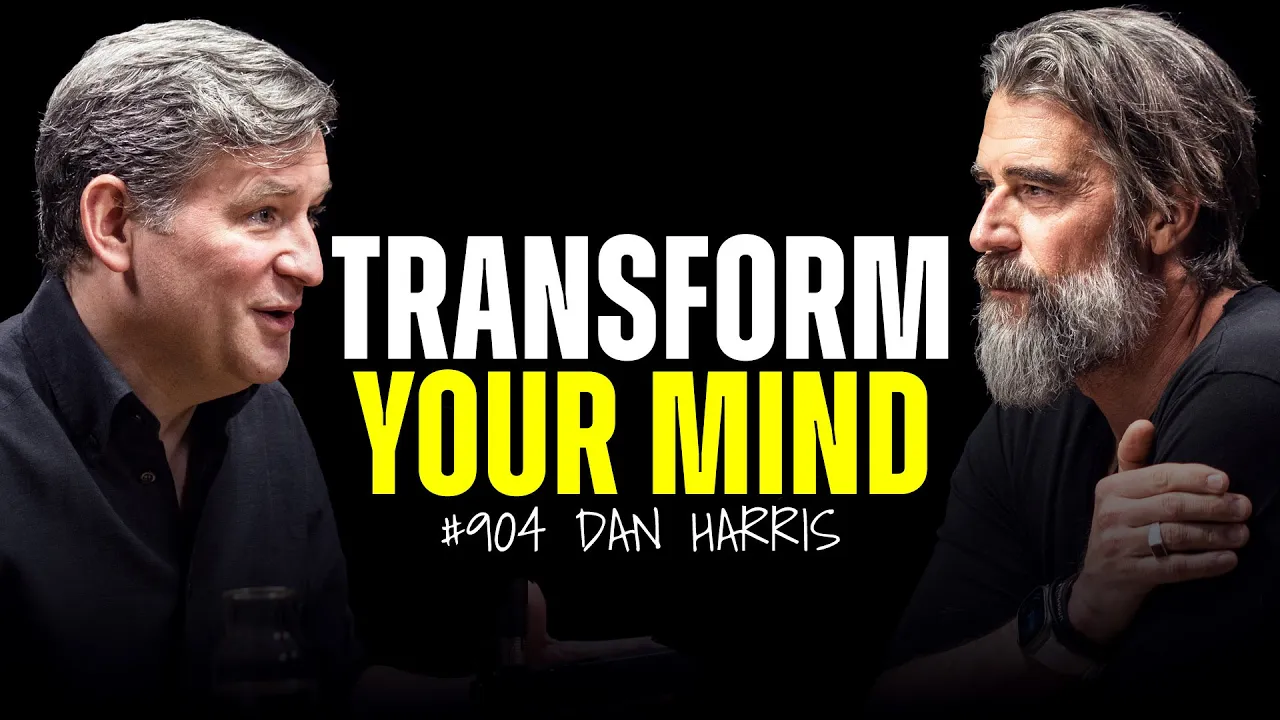
Here to elaborate on these tools is Dan Harris. Many of us labor under this delusion that we are somehow uniquely dysfunctional because we're having trouble starting a meditation habit or any other habit. But actually, just to know that it's hard for everybody is really useful. After a Panic attack on live television, Dan discovered the transformative power of meditation and along the way has helped countless skeptics realize that meditation isn't about clearing your mind. It's about developing a practical relationship with your thoughts so they don't run your life. There's so much more to this being alive
thing that we tend to overlook. Get familiar with how wild the mind is so that it doesn't own you as much. [Music] Today is about you, my friend. It's good to see you. Uh, we were just joking like how we're both losing our grip on like how time works and reflecting on the fact that like the first time you did the podcast was 2014 and then 2018. So, it's been seven 11 years ago and then 7 years ago was the last time we did this. It's crazy. you know, you're the 10% happier guy, you're the
meditation guy, you're sort of the happiness guy, too. Um, but I'm curious because it has been so long since we've done this formally, like there is an evolution that has taken place. Like you have matured, you know, as a human being. You've weathered some obstacles and some difficulties. Um, you've deepened your not only your your practice of meditation, but like your confidence as a teacher, as a public-f facing teacher. Um, and so I guess you know like the first question is Like are you more than 10% happier? Like does the 10% compound as interest or
is it or is it a static you know like where are you at with this and and kind of like walk me through maybe maybe even I'm Russian this right now but like maybe even like you know for people who don't know who you are like you know give us a thumbnail you know kind of sketch of how you arrived to this place. the I just want to appreciate that so many aspects of that question because Like it was it is pretty insightful in when you talk about the evolution and I and I'll say a
little bit more about that but the fact that you even notice it I really appreciate. Um, so just to step back and unst these dolls, um, the the first thing is uh that uh I had a panic attack on television in 2004. That's the probably the thing I'm best known for, which is so suboptimal in many ways, but uh if you Google panic attack, I just tested this the other Day. If you Google panic attack on TV, I am the first result and it's got like 20 million views and you can see me melting down
on Good Morning America. That panic attack led me to meditation and I wrote a book about meditation uh 10 years after the panic attack called 10% Happier which is now 11 years ago right or 10 plus years now 11 years ago and after the book came out you know I was I wasn't I was a network news anchor and and I didn't have any plans to stop Doing that um and I actually didn't think the book would amount to anything I um I mean Barbara Walters literally told me don't quit your day job. So, I
was like I was thinking this this would be an interesting little risk. It would probably go away quickly and I go back to anchoring Night Line and Good Morning America or whatever. Anyway, the book came out. It was way more successful than I thought it was going to be. I kind of caught meditation like at the Right point in the hype cycle, you know, just in the mid 2010s started to really take off. And so, my book came out at like just the right time. And so, I started a podcast and a meditation app and
all this other stuff. And to the extent that anybody knows who I am now, it's probably like I'm the meditation guy. Um, but as you pointed out, and I really appreciate you noticing this, I really have evolved as after I followed you into this weird space of podcasting, And I've done uh not as many episodes as you, but over eight years, 700 interviews. And I I really I'm still a really dedicated practitioner of meditation and of Buddhism, but I I've moved into and and this is similar to what you've done like into fitness and uh
the benefits of nature and the many many aspects of the skill of relationships including your relationship to yourself and our relationship to food. And so I really Now think of myself as in in very similar vein to what you do as investigating like every aspect of doing life better. Mhm. In that there is this evolution like I think you've always sort of seen yourself you're talking about your relationship to yourself like you've always seen yourself as this sort of skeptic right like I'm sort of begrudgingly like going into this world I'm going to tease out
some things and I'm going to share the share these Things with fellow skeptics. But you're not a you're not a skeptic anymore. You know what I mean? I think you still, you know, imagine your audience to be, you know, made up of many skeptics and you're you're you're very skilled at like translating challenging ideas in a digestible way. But the whole like kind of moniker of skepticism itself, that's that's sort of evaporated. Like you're you're all in here. I'm all in. You're absolutely correct about that. I'm all In. uh and in in many ways and
I do require evidence. So in that sense I'm skeptical and if somebody comes to me healthy skepticism. Yeah. I think it I'm not cynical and I think I was kind of cor I had a corrosive cynicism that somehow I got over enough to write this to write the book I wrote and whatever. But I I still have high journalistic standards for like rigor. If you're going to make a claim to me I need it to be backed up. You know, we can get into This at some point, but like I have a lot of problems
with manifestation and these claims that through the power of positive thinking, you can get or do anything you want. I just I think this that seems demonstratively false and dangerous. And so, yeah, I'm a skeptic about things about claims that lack evidence. How would you characterize your your evolution as a meditation practitioner from the early days of you know putting This book out to kind of your relationship to it now? I think when I when the book came out I was practicing like I don't know maybe 30 35 minutes a day and then for a
while I actually boosted that to two hours a day. Wow. Um now in one sitting or No no no I my rule was I can do it in whatever dose as many times over the course of the day and there was in a perverse way it kind of fit into my life because there were many years where I was continuing to be a News anchor while also and traveling and doing stories for the news while also traveling around to give speeches and um and writing more books and hosting a podcast. So I had a day
that was quite varied, involved a lot of time on airplanes and car and Ubers and so I would sneak the meditation into those sessions into those little interstases of the day. Now I'm more like um an hour a day and I kind of try I try to do like one big sit in the morning uh maybe 30 45 minutes and then I do quite a bit of walking meditation. We can talk about that if that if it's interesting to you before I go to bed. Mhm. So I I'm sometimes well north of an hour, but
roughly about an hour a day and it's a little it's much ser now because I've serially divested myself of all of my professional responsibilities. I I I I quit ABC and so I have more time to do that. And if Instagram is any evidence, like you don't live in Manhattan Anymore, right? Like you live upstate somewhere or somewhere else. Yeah. Yeah. So it looks like there's a lot of, you know, woods and things like that. Things have really changed. I mean, when we first met, I was full on in the news. I had written the
book and I really believed in meditation, but I was, you know, I I was anchoring Night Line and the weekend edition of Good Morning America. And I wanted to keep climbing that ladder. I Never saw myself stopping. I was also a very dedicated New Yorker. I married a woman who was raised in Manhattan and I that's that's what I thought our lives were would be. Um the 10% h happier part of my life got so big I couldn't do both things at the same time. The other thing that happened was the pandemic and we had
a a young child and he was not doing well in the city and actually remember the first day we we rented temporarily rented a house in the suburbs and I I Drove up a day after um my wife and son drove uh drove up and cuz I was bringing our cats and I arrived and I I I let the cats loose in the house and I went out into the backyard and our son was playing in the pool and he um got out of the pool to go get like a toy on the side of
the pool and I heard him say to himself under his breath, "This is the best day of my life." I was like, "Shit, man. We're never going back." And so now we live in the All the things I never Thought I would be a meditator and a suburban dad. Like that's what I am. Well, this gets at the heart of one of the, you know, myths of meditation. Like for the skeptical person out there, like if I start doing this, it's going to kill my ambition. It's I'm going to lose all my money. you know,
I'm just going to I'm going to sit around and become like a couch, you know, it's like like and so you're just igniting all of those fears in people like, you know, talk a Little bit about like truth versus fiction when it comes to kind of our relationship to, you know, the sort of expectations of modernity and kind of, you know, how we see ourselves in terms of, you know, success and failure. I wish the technology worked well enough that it it made you so happy that nothing mattered. Like I wish that it it it
it just made you so relaxed that it was, you know, an IV drip of clonopin, you know, for the rest of your life. Like it's just not how it it works, you know. Yes, I live in the suburbs and yes, I quit my job at ABC News, but I have a a very robust professional life where I'm engaged in writing more books and hosting a podcast and giving speeches and launching a Substack. I have my own little media company and I am, you know, I work probably seven days a week, not not full days every
day, but I'm incredibly ambitious and engaged. I think what has changed is first I'm Dedicating my life to something that I feel is inc incredibly constructive and two I think and I haven't totally conquered this demon but I think I'm in a better place in terms of like what is motivating me if you're listening to this and you desire success it's just interesting to check in with like what why and I'm not anti-success I'm very pro success but like what's driving you. And for me, a lot of it was filling an unfillable hole. Mhm. And
I think I'm a Little less caught up in um wanting to win and uh accumulate and achieve just because it will look good or feel good or um make me a ton of money that I don't even know what I would do with. And I'm a little bit more motivated by, you know, I have like a little tattoo right here that says FTB OAB, which is like a Buddhist phrase, uh, for the benefit of all beings. And it's a it's kind of off-brand in its sincerity, but um, like I I try to be Motivated by
that. And I think you can be motivated by that and still be really successful in worldly terms. It's just a difference of two motivations. extrinsic motivation like you know the approval of strangers and like status and all these sorts of things or you know maybe finally you know your dad is going to give you the pat on the back that you've always wanted all that kind of right versus the intrinsic motivation of like I want to feel like my life has Meaning how do I get that well service to other people like the benefit of
others of course is like the pathway to that so it's just it's not a lack of motivation it's just a qualitative in where that motivation is generated from. I think that's really well summed up and I think it can still end up with some of the trappings that many of us want. You know, I have a nice house and a nice car and and I can afford nice vacations, but I'm not like a, you know, and I I I like Nice stuff. I mean, I do. I mean, I was raised in a capitalist context and
and I, you know, have learned through making lots of mistakes to be a businessman. Um, it's just that I I've I recognize that when my when the when the engine is being fueled by extrinsic stuff, it just doesn't feel as good. It doesn't work as well. And it actually when I'm being motivated by, for lack of a less gauzy term, love, that's a cleaner burning fuel. Like I'm I wake up in the morning and I do this super cheesy thing of when I open my eyes like, "All right, my goal today." I say the same
thing to myself every day. My goal today is to make awesome that helps people do their lives better while working on the relationships in my life, including my relationship with myself. That is that is incredibly powerful fuel for doing the enormous amount of work that I do. And I don't think this is passivity or resignation Or never wearing leather again and moving to a monastery in upstate New York. Like I have no no beef with any of that. But if if the people if if if we're trying to address in this portion of the conversation
a skeptic who thinks that meditation is going to make you lose your edge, I just don't see that happening. You're a you know a cultural Jew, right? Correct me if I'm wrong. Um but you know kind of a secular guy. Uh you know that goes handinhand with Skepticism. Um, and and also correct me if I'm wrong, but there there has been, you know, kind of a gravitation more and more towards a Buddhist, you know, kind of lens on meditation. There's all different kinds of meditation traditions and practices. Why is it that you have kind of
selected this as your as your sort of um discipline of choice? And what have you learned from that tradition? I mean, it's kind of who I fell in with, right? When I first Started getting interested in meditation, I was reading books. I just happened to be reading books by Jewish Buddhists. In fact, the first book I read was my wife gave me a book by this guy, Dr. Mark Epstein, who's a psychiatrist in in New York City. There's a lot of Jewish Buddhists. Yes, there are. And we can talk about what the reasons are for
that. It I'd like to know because it is I've made that observation. It's super interesting. Anyway, go ahead. And I'm happy to talk about cuz I have I have a lot of thought. I mean I'm very close with these folks and and I am one now. So I I was reading Mark's books and then I called him up. It was like I basically asked will you be my friend and he said yes and so we're still I mean I was still very good friends. I met him and then I met Sam Harris who I know
you know and Sam who I knew at that time this was in like 2008 or nine he was not Out really as a med he didn't have a meditation app or anything like that at this time but he um had spent many of many years in his youth um as a an avid practitioner of meditation and during that time had become friends with teachers like Sharon Salsburg and Joseph Goldstein. You can tell from the last names that these are Jewish people. And Sam introduced me to Joseph and Sam got me into my first meditation retreat.
And so I I basically ended up knowing a lot Of these Jewish Buddhists and now I know a lot of non-Jewish Buddhists, too. But I fell in love with the tradition. Uh um somebody I'm going to a dinner party the other day and in a couple of nights and and in advance the organizer sent out a note. I think you were actually invited to this party, but you can't come. Um, Jeff Krano. Oh, that's right. Yeah. Yeah. Yeah. And Jeff sent out an email saying uh as a as a conversation prompt, "What's the best compliment
you've ever Received?" And the best I can think I can I know exactly the best compliment I ever received. I was on a 10-day meditation retreat during the pandemic. And it was not at a retreat center. It was like a friend of mine. We just used his summer home in Maine and we brought in a a teacher to teach us which is a very we were very lucky to be able to do this. The teacher's name is Alexis Santos. And at the end of the 10 days, the aforementioned Joseph Goldstein, Who's this legendary meditation teacher
and a very close friend of mine, showed up just to kind of hang out with us for a few days. And when he arrived, he asked Alexis, "How did Dan do? How was his meditation?" And Alexis said, "Dan loves the Dharma." And that is about the truest thing you can say about me. Tell me more about that. This tradition of that that can be practiced as a religion and and millions of people do and that's beautiful. I'm totally fine with that. But this tradition is really a science of the mind and many of its observations
and practices have been maybe validated is too strong a word. Well, in some cases the practices have been validated through modern neuroscience. And there's a lot of overlap between the way modern physicists view the universe and the way the Buddha did. And so there it's consonant with scientific the scientific worldview. I was raised by a scientist. I'm married to a Scientist. I'm not good at math. So I did not become a scientist myself. But this inherently sort of rational logical set of ethical precepts and mental exercises which is the way I practice Buddhism is incredibly
beautiful and helpful and um you know the Buddha himself was not a god or a prophet or anything like that. He was a mortal man who died of food poisoning in his 80s and literally said to people, "Do not take anything I say on face value. Come See for yourself. Test it out in the laboratory of your own mind." So there are some metaphysical claims in Buddhism and I have no evidence for any of them and therefore don't pound the table in their defense. I Okay, maybe we're reborn, but I don't know. However, what I
do know is that doing the practices of um training your mind through meditation and trying to behave um you know in ethical ways has transformed my life and I think at a time in human history where We appear to be on the precipice in many ways to the extent that I can muster any optimism about the future of the species it's not necessarily that I think everybody needs to perform to be a Buddhist but some you know some of these inner technologies that were developed in the dharma and in other spiritual traditions and that that
appears to be the route towards salvation if there is any for us. The popularity the mainstreaming of meditation is just you Know skyrocketed from the days in which you first launched your book. I mean the timing of that book was like perfect but you know in the interceding decade like it's just it's it's exploded like very few people are not familiar with what it is anymore nor are there kind of like weird hippie hang-ups around it anymore like and that's by dent of you know that your previous app and like we're going to get into
that but you know all the apps out there and it's just part of the Discourse right but I think within that there's still a lot of you know growth in education I think most people probably think about meditation as like a stress, you know, relieving hack or a way to like reduce your anxiety or perhaps be a little less reactive, a little more present in your life. And the inquiry kind of like stops there. So maybe talk a little bit, you know, about the more expansive, you know, kind of experiences that you had and take
it, You know, beyond those kind of base level benefits. You know, I want to be honest that there may be people in the dharma world or in the meditation world uh who disagree with what I'm about to say, but I have no problem if you're using meditation as a stress relieving hack. We're stressed and if you can relieve your stress through meditation, and there are plenty of other modalities for doing so, go for it. I think that's beautiful. And so if if you want to just Nibble around the edges of this thing, I that's whatever
works for you. I am dogmatically non-dogmatic. And I think if you're curious about what resides at the deep end of this pool, there's an enormous amount there. Um, look, we um, we live in a universe that is characterized by non-negotiable and ceaseless change. And when you can't adapt to the graying Of your beard as I look at you or the graying of my hair as I look at myself in the mirror, if you can't adapt to the change in culture and politics, if you can't adapt to the fact that everybody you know and everybody you
love is going to die, if you can't adapt to these very hard facts to say out loud and facts that we spend most of our lives trying to deny, you're going to suffer. And there are practices out there that can help you ease Into this reality of ceaseless change. And they can help you see that the the self, the inner rich, the inner Dan that we spend so much of our time trying to build up and defend actually isn't there on some important level. right now. That's a very hard to gro esoteric truth. Um uh
so let me see if I can put it in a in a way that would make it actionable for any you know anybody right now. Um and I'll take this from Joseph Goldstein. Um when you're in the grips of a very powerful emotion generally linguistically we say I'm pissed or I'm anxious. What if you just switch the terminology to there is anger or there is fear? Then you're not so identified with the emotion. You're not claiming it as your own, which as one great Buddhist monk said is a misappropriation of public Property. You're you can
then work with it. You can view your emotions as meteorological patterns, a storm that comes together because of a variety of atmospheric conditions and can be worked with and that is just hugely liberating. And so I'm just giving you a little bit of a taste of the way the Buddhists view the mind. And that's quite different from focus on your breath for a minute or two and then every time you get distracted you start again. That's basic Meditation and it can be really helpful. It can it can give you some distance from your inner chatter.
But that's just the first step in a in a really rich path that I personally have only taken a few steps down. You know there there are many many people out there like again I'll go back to Joseph Goldstein who've been practicing for 60 years. He does 3 months of silent meditation a year. He's on a silent meditation retreat at his House. He's the goat. He's the He's like the alltime goat, right? I mean, there are lots of goats out there right now because, you know, here right locally in in Los Angeles, Jack Hornfield, who's
an old old friend and confederate of Joseph lives here. Um Judy Goodman lives around here. Sharon Sber, she's the loving kindness person. There's the Daly Lama himself. And then there's these, you know, there's all there are all these um Tibetan llamas whose names we don't know Because they're not out there writing books who are, as a friend of mine um once said, it's like there are there are these Socrates living in the mountains of Nepal, you know, this incredible minds out there. So what has given me so much faith and by faith I don't mean
the blind adoption of views that I can't prove but confidence that's what I mean by faith confidence and that's the way it's generally translated in the dharma what's given me so much confidence in The value of this path is just meeting people who are different you know like you spend time with Joseph Goldstein he doesn't trail pixie dust out of his rear end it's not like he's he's you know and I've spent a bunch time with the dollar llama. These are, you know, they're flesh and blood human beings who have nights where they don't sleep
well or wake up in a bad mood or get bitten by a mosquito and they don't like it, but they are handling the vicissitudes and Vexations of daily life in a vastly different way. And that's really compelling. That's really compelling. There's a lot in what you just shared. I mean, I think to tease out a few ideas, the first being um this notion that you can be an observer of your own emotional state and not selfidentify with it is like a superpower, right? There's a dualism in that I think a little bit that you know
gets tricky, but that alone allows you to kind of Self-regulate in a really powerful way. And there's an immediiacy to that too. Like my introduction to that idea was like in in AA like you know feelings are not facts or emotion just like just be present with the emotions if there's one thing emotions do they always change and if you can just observe it and detach a little bit from how you feel about that which is you know like layering on more emotion on top of that emotion um and just allow it because I think
in our Lizard brain we think we're going to die right it's going to kill us and so we we tense up and we react But to be that observer and allow it to pass and and when you've had that experience of like, oh, it went away or it changed, it shifted. These are shapeshifting all the time, right? It's an amazing skill to that's worthy of like developing. You know, you can do it in just little ways in your life. I I'll just give you this is another thing from Joseph Goldstein. I was I was having
lunch with him a couple months ago and I was we were joking about how I I'm constantly like lifting uh ideas from him and using them in places like this and he's like hey I stole it from other people. We're we're part of a I use this phrase that I love. He's like who owns the IP? Exactly. He said we're part of a lineage of thieves and like and I love that we are part of line a lineage of thieves and like we you know great I'm not a great master But great masters have been
you know building upon the wisdom of the people before them for a long time. So, in that spirit, I'll give you just in case this sounds like impossibly ethereal to people, try this. The next time you have a desire to check your phone, to eat a sleeve of Oreos, to say something that's going to ruin the next 48 hours of your marriage, whatever. The next time you have a desire, see if you can stop and watch it For a second. You will notice that the desire will come and go. And on the other side of
that is immense freedom. It's like you've been released from the jaws of a shark. Oh yeah. This desire which felt like monolithic. It was oh it was coloring my view of reality. I need this Dorito. I need it. And then just just be cool with that for a second. You know see how it shows up in your body. Watch it come. It will go cuz everything goes. And then what's left? What's left is something new, but it is not going to be that desire anymore. And that is that's freedom. When people on the spiritual path
talk about freedom, I mean, this is, I think, a big part of what they're pointing toward that the fact that we spend so much of our lives enthralled and sourced by this inner dialogue and um these powerful emotions and we're just buffeted by it all the time. We we have no way of stepping outside of it. And that is what Meditation and I think on a deeper level, you know, moving into the dharma can do for you. And and honestly, I think that's just the beginning. I think we're pretty lucky to live in a time
when we're finally beginning to appreciate and honor the absolutely crucial role that sleep plays in every facet of well-being. And that conversation begins, there's no getting around it, people with the quality of the thing you're actually sleeping on, Your mattress. And I have yet to find one of higher quality than birch. All Birch mattresses are thoughtfully crafted with organic fair trade cotton, latex, and other responsibly sourced materials that are all consciously chosen because they work in harmony with your body's natural temperature regulation. Basically, Birch does things right. Everything is hypoallergenic, non-toxic, and therefore no harmful
offging, typical with most major brands. They even own their own manufacturing facility to ensure the highest quality standards. And the comfort transformed how I think about rest. I want all my listeners to enjoy a deep restful night's sleep with a new mattress from Birch. Go to birchliving.com/richroll for their Marchmus sale, which is 20% off sitewide. That's birchliving.com/richroll. You get 20% off sitewide. Birchliving.com/rich roll. We're brought to you today by Bond Charge. Now, it's fair to say that I have subjected my skin to a lifetime of harsh treatment, thousands of hours and overly chlorinated indoor pools,
and pretty much almost no concern for skinincare. And I would say it wasn't until I was about in my mid50s that I started doing what I should have done all along, which is taking care of my body's largest organ. This shift led me To the incredible product line from Bon Charge, most notably their red light face mask. Their red and near infrared light is designed to rejuvenate your skin at a cellular level. It's completely non-invasive. Just 10 minutes is all it requires a day. The design is incredibly thoughtful. There's no cord. It's comfortable and it's
slim enough for easy travel. There's just nothing elaborate about it. Just sciencebacked wellness made accessible at home. So Check it out. Go to bondcharge.com/rich roll and use coupon code rich roll to save 15%. [Music] to put the hat back on of the meditation averse or the newbie or the you know less informed um that person you know is the person who typically says something like I tried meditation you know my mind was attacking me I can't sit still like I'm I'm a bad meditator not realizing that that is the practice like to just Draw attention
and notice like how your mind is operating right it is about your relationship to your own mind. And the more that you can notice that, that's the beginning stages of being able to like exert some agency over that. So, you're actually very effectively meditating if your mind is going crazy, if you're simply noticing it. 100%. And I think one of my big jobs now on the planet is just to point this out to people. the there are millions of people Out there who are interested in meditation or aware of its benefits, but they're not doing
it. And one of the reasons they're not doing it is they have fallen prey to this pernitious misconception that in order to meditate, you need to clear your mind. You've probably heard me make this joke before, but clearing your mind is impossible unless you're enlightened or you're dead. That is not the goal of meditation. The goal of meditation is to Get familiar with how wild the mind is so that it doesn't own you as much. So in the moment where you sit and try to focus on your breath and then you inevitably notice that you're
planning a homicide or you know thinking about what for what's for lunch, many people tell themselves, "Oh, I'm failing at this. I can't do it." But actually that moment is proof that you're doing it right. What you want over and over and over again is to have a collision with the Voice in your head, your inner narrator, so that you don't act out all the shitty ideas that your narrator is serving up to you all day long. And that isn't that's a superpower. That's mindfulness. There are these practical, you know, realworld kind of impacts and
benefits that you can realize from this. But you said it yourself like the real the real purpose here is to develop a relationship with your own mind and then to even take that A step further to recognize the true nature of reality. Right? And now I'm going to thieve from Sam Harris and the waking up app like you know from his perspective and the way that he teaches it's a practice of learning how to wake up from this dream in which we perceive our surroundings as as real but in fact are not. And that includes
this whole notion that we are a self like and we can go down that rabbit hole. We don't have to. But the point being like the More adept you become at this practice, the more profound the questions and the answers become. Like there is no end point to this, but the more fascinating and revealing it becomes. And so I guess like where are you at with like the non-dualism aspect of this and you know sort of convening with reality as it actually is and disabusing yourself of this idea that you were actually Dan Harris to
begin with? Yes. Yeah. Yeah, I mean it it breaks your brain, right, to Think about it. It's hard to talk about it and I sometimes worry about talking about it too much because it can seem off-putting or frustrating to people. But I'm a I mean, I'm for Square in Sam's camp. I was listening to his app this morning. you know, he he's right about all of this that the the the notion of non-duality, which is we we think we're some there's some tiny little homunculus of rich behind your eyes in between your ears, peering Fretfully
out at the world, but it's all just nature, right? We I love this phrase. There's a Burmese master um Saiad Tania and he will have his students occasionally drop this phrase into their minds in their meditation. This is nature like you. We feel in our marrow like we're separate from the universe. It's me rich in here navigating this this hostile world. But every thought you have, every embarrassing Instinct is just an expression of the universe. It's all nature. You are not separate from the world. You are nature. And what Sam is pointing at in his
app, which is an incredible resource, the waking up app. What he's really trying to get people to get in touch with is this dualistic view of the world. Like I am noticing my breath. I'm talking to rich. It is true on one level, right? It's true. You and I are sitting here and I'm in my body and you're in your Body. But on some really deep and actually quite accessible level if you're doing the right practices, you can see that it's all part of nature. It's all part of consciousness. And I think Sam has designed
a really good app to kind of gently get people there because it's very frustrating to hear people talk about non-duality. And I we do it a lot on my show and it's those are the episodes I'm always the most worried about because it just takes a While to get it and if you don't get it it can be annoying. It's very difficult to get. Yes. Basically this idea that everything is happening in our head you know and disabusing people of the idea that you even have a head like just to even conjure that and wrap
your mind around that is almost impossible. But I think the way in and the way that Sam kind of gently tiptoes you towards this is the practice of noticing thoughts as they arise and getting people to Understand that this is happening on its own. Like you're not willing a thought to occur. These thoughts occur. So from whence do they come? You know what I mean? And that that I think gets you into this sense of connectedness and oneness. And then that you know then like what is free will? like all of these, you know, there's
a domino effect here that requires some understanding of quantum physics and neuroscience and the like, which means I mean to me I Interpret that it just gets more fascinating cuz this is like what is even happening you know like I mentioned to you Anukica Harris was here the other day and she's got this fantastic new audio documentary series um lights on and in that like she talks about like the trippy kids like the kids who are like when are the adults going to actually tell us what the is happening? You know, and we kind of
live our lives blly kind of ignorant and Unaware and incurious about like the nature of like all of it. Yeah. We live our lives I well, I'll speak for myself. So much of my life is just consumed by the mundane and we're shutting out the majesty of the universe and we're living, you know, sometimes it's described like we're living in mansions but we're spending our whole time under the stairs on the first floor. Like there's so much more to this being alive thing that we tend to overlook. and just Starting to play around with contemplative
practices like meditation um non-dual meditation which is part of the dharma but it's also part of other traditions it can be like mindblowing in a really nice way I just you know but it's intimidating for somebody who's like you know new to this or just trying to get their feet wet well let me so I'm glad you said that because I let me just throw a couple of little practices that might make it less intimidating because I always like to try to take it out of the clouds and put it here on planet Earth just
for for especially if you're new. One little exercise you can do, this also comes from Joseph, is just, you know, in the course of the day, every once in a while, notice that you're thinking, I've just had a thought. Um, and the thought is, uh, I need to go to the bathroom. Okay, that's I don't actually have to go to the bathroom, but hypothetically, you just Had that thought. Then just do this little move in your mind of like go look for that thought. Where is it now? Like what what happened to it? Where what
is a thought? Just exam like what what's a thought? Where is it located? Yeah. Where is it located? Where does it come from? Where does it go when it's done? That that gives you a sense of the mystery of consciousness that we know that the lights are on for ourselves. We know that we know stuff. In other words, I know I'm taking in the visual information of you across this table from me right now, but I don't know who's taking delivery of that package. like who's the knower? Mhm. So, just looking for thoughts is just
a nice way to like kind of knock on this door. Another another one is um and you kind of made an oblique reference to this is um just to imagine as you're walking around that you have no head. There's a book that I'm sure Harding's book Douglas Harding's book. It's called on having no head. And Sam and Joseph both recommended this to me early in my practice. And it's just a really cool just little thought experiment. What if you had no head? What's what's happening there? Because that can help just that. And again, don't push
too hard at this. Just play with it gently. But what it can do in a very interesting way imagining that you have no head is to dissolve the barrier between you and the World. And again, I I want to recognize, as you've said before, these can sound like big and to be a little cute, heady ideas. And so, the trick is to have just little contemplative exercises that help you get in touch with what is probably the greatest mystery, which is that we we know we're like, how do we on this planet go from um
I heard Jack Kornfield say this once, how do we go from rocks to singing opera? like how did we become conscious and like what is Consciousness? These are really interesting questions. They have a direct bearing on your understanding of your life and how you lead your life, but it's a lot and so it's helpful to start small. Yeah. Sam's way of entering into this is to uh you know first let you know that like everything is perception. Like you're over there, I'm here. I can feel the gravity you know kind of anchoring my butt in
this chair. or my foot feels one way, my hand and I And we locate these things in time. But these are all like neural signals, but what is the raw data? like can you kind of you know disconnect from like those this this pattern that we have in our mind that this means this and this means that and to just you know kind of transcend that and realize like I'm perceiving you as over there but like you know that's just a perception of reality through this filtering mechanism that we have in our mind that we
mistake For being you know kind of an authentic version of what is actually real. what it leads you to ultimately is humility. Um, and I think it leads you in many places, but one place where I think it leads you is a kind of humility about how confident you can be in anything, you know, and I know we live in in a time where um it's been described as a pandemic of certainty and everybody you put you shared a little quote the other day from Bur and Russell on that, didn't you? something like um the
the problem is right now the worst people are the most cockure and the the best of us are are are not and full of doubt. Yeah. And the worst tend to have the most power. And that's because we've created a world where the algorithms reward certainty and outrage and fear-mongering. And and if in fact, the best way to come to understand your life, to understand the universe, to understand the way the World's working is to have some intellectual humility, is to have some open-mindedness. And by the way, that correlates with lower anxiety, increased sense of
meaning and purpose. It's also Adam Adam Grant um has written a book called Think Again, which talks about how open-minded open-mindedness and the willingness to second guessess your reflexive conclusions can make you more successful. And and so again, whether you want to investigate the the nature Of consciousness, whether that's interesting or not, what all these questions lead us toward is something very practical, which is not being overly confident in every little thought that flips through your mind. Yeah. In other words, like the more you kind of dive into the the deep end of this, like
the more kind of astounding and, you know, difficult to grasp it becomes. Uh, and that's where you find the humility like, "Oh, I Thought I knew what was going on. I actually don't know anything basically." And I think the benefit of that is putting you in close contact with your relationship with uncertainty. Like you mentioned uncertainty earlier, like we're we're so hardwired to resist uncertainty, but the truth is like everything is uncertain. And I've had all these experts come on here and they just talk about uncertain. It's like if you can just accept uncertainty and
Develop a healthy relationship with that using humility, you're going to be able to comport yourself more, you know, more consciously and more positively. And I think right now also to your point like this is an incredibly uncertain time and I think the you know we're meeting it with tremendous amounts of anxiety and fear and that metastasizes into all kinds of like you know negative errant behaviors that are serving nobody right. So maybe talk a little bit more about Like our current moment. I mean, you've been, you know, kind of pretty forward- facing, public facing and
how to counsel people about how to, you know, conceptualize what's happening right now and conduct themselves, you know, in a way that's a little healthier and kinder. Do you think it would be helpful for me to give like I have two thoughts that are coming to mind, very practical ways to like manage uncertainty. Do you think that would be a helpful way to go? I think so. Okay. Well, so first one idea is is is going to involve meditation and the other won't. Um, basic mindfulness meditation really involves sitting comfortably, closing your eyes, picking one
thing to focus on, usually your breath, but it could also just be any sensation from your body or sounds in the environment. And then every time you get distracted, you start again and again and again. So, you're trying to concentrate on one Thing and then your your thoughts will invade. Eventually, you'll wake up from the distraction, blow a kiss, and gently escort your attention back to the breath or whatever you've chosen to focus on over and over and over again. This sometimes frustrating, sometimes um stupid feeling uh exercise can really help with uncertainty because you
start to be okay with whatever you're feeling. The goal of meditation is not to feel any kind of way. It's to feel whatever You're feeling right now and be cool with it. Uncertainty is really uncomfortable. It produces a lot of physical sensations in the body. It produces a lot of fear-based forward projecting thoughts. And what a basic grounding practice like mindfulness meditation can help you do is learn to be aquamist with whatever is happening. which is a great place from which to take action. Mhm. So, actually, I'm going to give you three. I mean, that's
A superpower. It's a superpower. So, I'm going to give you actually three. I said two, but I'm going to give you three. Three ways to handle uncertainty. So, the first is like just to learn to sit in the middle of chaos and be okay with it. The second is taking action. So, this is I'm not about passivity. There's a great expression. It's not mine. Action absorbs anxiety. So, yes, we should take action. Whatever your political beliefs are, whatever your Major concerns are, doing something about it is a great way to restore your sense of agency.
And what mind state do you want to be in as you're taking action? Do you want to be overwhelmed by fear or do you want to be in a more aquamist mode? Let me just say about taking action, it doesn't even have to be relevant. Like, if you're upset about politics in America right now, you don't even need to join a political campaign. volunteer at a soup kitchen, just Increase your utility quotient with the people in your life. Those things are incredibly helpful not only to the people around you, but to you. And so, it's
a great way to counteract the exquisite discomfort of uncertainty. And I'll just give you a third quickly. This is another phrase that I love, but it's not mine. Uh, never worry alone. like this this being alive thing is not a solo endeavor despite the individualistic messages we get from the Larger culture. It's a team sport. It's always been a team sport. That's how we're designed. The reason why we as an animal rose to the top of the food chain is not because we have wings or claws or fangs or anything like that. It's because we
have this, speaking of superpowers, this capacity to cooperate, collaborate, communicate. That's that is our superpower as a species. And yet we are encouraged by the culture to go it alone, to bootstrap, to keep your nose In your phone all day long. But if you want to make it through uncertain times, either like from a macro sociopolitical standpoint or just from your own life, which is going to be filled with all sorts of ups and downs, call your mom, you know, like call your friends, do it with people. And you know from the program like that
is the you know I'm not an expert in in uh the sobriety various sobriety communities but one of the superpowers Is doing it with other people and there's real brilliance in that. Yeah I really like that. I mean, I think with equinimity, you're able to identify the opportunity. Like everything that's happening is is actually neutral until we apply our perspective, right? And we label it as good or bad or whatnot. And equinimity gives you that distance to kind of detach from labeling or judging events as as as you see fit. And I think recognizing like
everything is an Opportunity for your growth and evolution, you know, and if you apply that perspective to it, then you can find like the next right action that is in service to yourself and in service to other people. And I think, you know, to your point of activism or getting involved or whatever, there is a I'm curious around how you think about motivations there because if you're doing it out of a place of anger or that certainty, right? if you're certain that You're right and you're out there fighting, like are you any different than the
people you're fighting against? Okay, so this is controversial. Um, and so I'll step gingerly, but I'm going to argue, and this kind of goes back to the beginning of our conversation, that it is important to be motivated by love, even for the people you think are doing a lot of harm. Okay, so that that some people might be recoiling at the sound of my Words. Who's going to recoil with that? Well, because many people when they hear me talk about having compassion uh in divid divided polarized times, they say how you and I there there's
some legitimacy to this push back. You're a wealthy straight white guy. You're not going to be as impacted by some of the things that are happening on a policy level in DC right now. You're recommending that I operate from a place of love. Well, that's that is, you know, I think this is an overused term, privilege, but this is that is privilege in its most extreme form. And I get that and all those things are true about me. And if you look at our contemplative traditions from Jesus to the Buddha to Gandhi to Martin Luther
King, if you look at science, it modern psychological research, it will show you time and again that hatred and anger are not clean burning fuels. You will burn out If you're motivated by love. It just keeps you it it is what is going to help you stay resilient in the face of the ups and downs. So what do I mean by love? Well, it's very clear when it comes to like loving the people you're trying to protect. I think it's semi clear when we talk about self- loveve like protecting yourself. But loving the quote unquote
bad guys like that that's a bridge too far for me for many people. And so I just want to be clear that Compassion or love for Donald Trump if you're on the left or Joe Biden if you're on the right doesn't mean you're inviting these people over for dinner. It doesn't mean you're co-signing on their behavior. It just means that you um are not you can you can define it in the negative. It's just non-hatred. Uh you can you can take all the same actions to counter the forces that you object to. You can say
you can take all the same actions, the same firm steps From a place of love as you would from a place of hatred, but the color of your mind will be different while you're doing it. Your resiliency will be stronger. And so I'll just end this little rant with a good story that Sharon Salsberg, a great meditation teacher and one of the premier purveyors of love and compassion and in western culture. She tells a story about being in India in the 60s and 70s when she, you know, she was just getting Interested in meditation and
and she was hearing all these teachers talk about love and compassion and whatever. She was like, "Well, what if I step outside and somebody tries to mug me?" And the teacher, whoever she was talking to at the time, said, "You can very compassionately smack them with your umbrella." And so, just to be clear, like you can be really tough. You can you can be fierce and uncompromising in your um in your actions at this dicey Moment, but it doesn't need to come from a place of hatred because that's not good for you. Mhm. If you're
fighting the good fight, you're still fighting is sort of a tangential idea to that on some level, I guess. Are you saying that like like uh but I guess it gets to motivation like if you're if you're fighting out of anger, if you if you are standing up for a cause and that's coming from compassion either towards the person who Is your opposition or the people that you're you know representing you know like you know in that campaign or whatever like it is it's hard to get your head around that. Like it's very anti-western. The
way I'm arguing it is just practical. I want you, whoever is listening to this, to be as effective and happy as possible, no matter what you're trying to do in your life. And I just don't see any evidence that anger and hatred, which are natural, and You're going to feel them. I feel them. So, I'm not saying you you got to be some sort of saint for whom this these emotions never arise. But if you're using that to fuel all of your actions, like you will burn out. And you see a lot of this in
the activist community. real burnout. So I think a kind of omnidirectional compassion which starts with yourself taking care I I don't think we should go straight to like generating loving kindness for our quote Unquote enemies. That's probably not the place to start. But start by you know wanting to take care of yourself and then broaden your circle of concern to the vulnerable people you're trying to protect. And then you can, and this is kind of the ninja move here, include the way the Daly Lama does with the Chinese, include your quote unquote enemies. Not because
you want them to succeed in whatever objectionable thing they're endeavoring to do, but because it's in Your best interest to it. It allows you to access the full creativity of your brain if you're not locked in the kind of hatred that literally there's a reason why we call it blind rage. High conflict, anger, hatred. It it this has been shown it reduces your peripheral vision. loving kindness, basic friendliness, again, not being a doormat, but just basic well-wishing, benevolence broadens your peripheral vision. This is uh some Of the work of Barbara Frederickson. That's fascinating and instructive.
Hard to do, but as a north star in these difficult times, notwithstanding my admitted privilege, I recommend it. Well, all you have to do is look back on, you know, the great leaders who faced great opposition who practiced this. It's like, you know, it's Gandhi, it's MLK, it's the Daly Lama, it's Jesus Christ. You know, these are these are the people that we most revere. And why? Because they were the embodiment of that that very thing that feel, you know, to connect with. But obviously these people who exemplify it like they they resonate you know
throughout history for that reason. Yes. Yeah. And the Dalai Lama was asked you know like what was it appropriate to kill Osama bin Laden. And I might be mangling this so my apologies to his holiness or anybody who's a Tibetan scholar. My understanding is that he Said, "Yeah, you know, there are moments where self-defense in the in the in the form of violence uh is necessary." So, it's not it's not always turned the other cheek, but um it doesn't your your mind does not need to be colored by hatred and rage, which is not going
to allow you to function at your highest and best. Well, I want to trade notes on the Daly Lama. you had this opportunity to go to Dharm Shala um and spend time with him. You're making like a Documentary out of this. Yeah. Uh I made I made a little um a free course. Oh, you did? Yeah. Like a the Daly Lama's like guide to happiness. Uhhuh. So, walk me through this whole experience. I'm fascinated. all the way from like arriving in Dharm Shala, your impressions, your preconceived ideas of of what your experience with his holiness
was going to be like and the reality of that and kind of like what you took away from it. Well, say the for Me I have been speaking of privilege now this is real privilege. I have interviewed him four times and so the time that I went to India a couple years ago was the fourth time I had interviewed him. I didn't realize I had met him before, but I had never been to India and seen him in his natural habitat. I had interviewed him twice in the States in person and then one time on
Zoom in the middle of the pandemic and then a fourth time in person. And What the the fourth time in person in India, what was unique about the fourth time I went is that I actually spent a lot of time in his orbit. And I I'll just pick out one detail that I think is interesting is I as we said before I mean I retain some skepticism and and Tibetan Buddhism you know there's a lot of metaphysical claims the incarnation yeah like the reincarnation of the Buddha and all all of that the 14th Dalai Lama
the 14th reincarnation of the highest lama in the in the in this in the Tibetan tradition. And so I don't know I don't know where I stand on rebirth cuz I have no direct evidence of any of this. And and and you know you go to Damala there's just lots of like religious activity people bowing to him and being blessed by him and um a a couple of a couple of things are interesting that are coming to mind as we're speaking. One is first of all he just does not Take himself very seriously which is
really interesting. You know, there's so much pomp around him, but when you spend time with the dude, you know, you ask him, "Do you ever get mad?" Absolutely. Uh, would you ever kill a mosquito? Yes. Um, uh, he makes fart jokes. Like, he's he's just a pretty embodied normal dude in some ways. And there's something going on with him. Like when you are seated across from him and you're getting his full Attention, when somebody has trained their mind toward compassion in that way and you're you're the object of their gaze, I know that's a little
dualistic, but when you are being um fully held by an individual's attention who has spent 80 years cultivating warmth, it's, you know, It's a that's a real experience and I don't know how to fully explain its power except I saw things that were very interesting in his presence. A friend of Mine who was with me on this trip, well, a couple of friends with me on this trip. One was a hard-bitten TV news uh cameraman who I brought to film my encounter, who I had covered mass shootings and war and um uh natural disasters with
Tommy Kay. And he had he had no idea who the Daly Lama was beyond like just knowing you know the name. And the first day in India the first thing he did was and this is an atheist too. The first thing he did was shoot two Hours of the Daly Lama greeting locals and giving them blessings. And when he was done, he put the camera down, wept, and hugged me and said, "This is the most meaningful thing that's ever happened to me. Thank you for bringing me to India." Wow. And just watching a guy hug
other people. Yes. And another guy who was on the trip who I I don't want to say his name because but but somebody who was in our crew after I interviewed the Dalai Lama was given a Chance to have a picture taken with him. And this is a guy who's practiced zero Buddhism. He'd done some Chiang, right? But not he's not a Buddhist. And he kneels next to the Dal Lama you because the Dal Lama is sitting and this guy kneels down to have his picture taken. And the dialama reaches over and grabs his hand.
And what ensued was 15 minutes of weeping and wailing and hurling himself onto the ground. And I guess what you Would call a psychic break, but this is a this is like a highly educated, buttoned up, professional dude with no religious background. And uh I'm still friends with this person and he doesn't even remember it. He got zapped and he does he just kind of remembers like me consoling him 15 minutes later. Um and it utterly upended his life but came home and made all these changes in his personal life has gone back and had
another audience for The Dal Lama very similar reaction where he like it was it just kind of upgraded the software of his brain. So long way of saying we've talked a lot about um having an open mind. I am a scientific materialist on on some pretty pretty basic levels and I do retain some openness to there being things that we don't understand and that he might be an embodiment of that. That is wild. That is really wild. I mean that would be that's what's called Daron, right? Basically a transmission of energy. I mean, what does
the, you know, rationalist, science, science-minded, fidgety, skeptic make of that? Like, does it just like sort of inform your humility or or give you a sense of awe and wonder that maybe something else is going on? Like, how do you make sense of that for yourself? Both. It definitely gives me a sense of awe and wonder that there may be more uh going on than than than science is aware of. It nudges me Into that space of not knowing. Here's a great little I'm always I'm always a fan of giving people things they can do
in their mind. Um little practices that that you could put to use in your own life. There was a great Zen master whose name I'm sure you know, Tiknadhan Zen master died a couple years ago. He would tell his students to just get in the habit of asking themselves one question all the time. And that question is, am I sure? And I love that question Because especially for me, I was an anchor man. We're supposed to be sure. My job is to like in tone from the thunder from the mountaintop about like what is true
because it's written in the teleprompter. Are you sure? Like are you sure? Um it's great, you know, like uh when you're looking at the political scene or the world scene like that guy's a bad guy. Am I sure? Yeah. Like is it worth just investigating that continuously like reconsideration as a Way of life? To be clear, there's a difference between your values and your opinions. So, I'm not saying you should question whether cruelty is okay. But, um, you know, to be in the habit of like where when it comes to your opinions, holding them much
more lightly, that's very healthy. Yeah. Gut health is health. A product I trust and have been using consistently for years. This is the truth. Is Seed's DSO1 daily Symbiotic. What sets it apart Is its formulation with 24 clinically and scientifically studied strains to support whole body benefits including gut health, skin health, heart health, and gut barrier integrity, all in just two capsules a day. I especially appreciate how it supports healthy regularity and promotes bloat ease during those active days. The trust factor is remarkable as well. 92% of members have recommended DS1 to friends and family.
And that, my friends, speaks Volumes in today's wellness landscape. Get into a routine that helps you now by going to seed.com/richroll and use code richoll 25 to get, you guessed it, 25% off your first month. Hey everybody, pay attention because this episode is sponsored by Squarespace. So Squarespace has been a longtime partner of the show and what I love about it is it just demystifies Everything about what's required to make a website. With Squarespace's new blueprint AI, it's actually like having a design partner who reads your mind. And you know, look, I know there's a
lot of hype out there, a lot of slinging when it comes to emerging AI tools, but Blueprint really delivers. For example, you can share a few goals and then it just automatically generates all this personalized content that actually feels authentically you. And for tech Challenge creators like myself, they've got this drag and drop editing feature that makes the whole process surprisingly intuitive. So check it out. Head to squarespace.com for a free trial. And when you're ready to launch, go to squarespace.com/richroll to save 10% off your first purchase of a website or domain. I'm still thinking
about like the wailing and the weeping, you know, That's like like we didn't I didn't witness anything like that when I had the, you know, privilege and opportunity to to to visit. Um but I do like when I reflect back on it, it's a weird um mishmash of like strange contrast because on the one hand like you're in Dharm Shala and it's like clearly this is a you know a magnet for seekers. You know people from all over the world like congregate to this place for a reason and there's a center of gravity to it.
Um, but it's also, you know, junky vendors selling you know, like this is like all the India craziness at the same time. And there's like power lines that are like, you know, basically draping, you know, you're afraid you're going to get electrocuted and all that, right? And I don't know where your experience took place specifically, but like we were in this kind of like a ballroom that was adjacent to his doicile, right? And we had to go Through incredibly intense pat downs. Like you think, you know, it's like TSA times a thousand like the most
intense, you know, security check, which I understand, you know, it's like this this, you know, perhaps the greatest the world's greatest living spiritual leader, right? Like, and then you go in and you're in this room and it's sort of cool, but it's sort of like a Marriott ballroom with like, you know, like the the like like maroon upholstered chairs And you're like, "Okay, like here we are, you know, like what?" And then, you know, his his monks bring him out and they put him in like this what looked like kind of like a beaten up
lazy boy chair. So, there's like all this humor. I'm like, "This is hilarious." You know, and I was with this group and I'm sitting next to Rain Wilson. I'm like I'm with Dwight Shroo from the office and I'm like there's a surreal aspect to the whole thing that maybe is you know Like allows me to like you know inhabit a little bit of that Daly Lama energy of like am I supposed to take this seriously? Am I allowed to like have fun with this? And then you see his joy and you're like oh I think
he's giving us permission to like you know laugh along with him. I think you're absolutely right. Side note, I'm feeling slightly guilty because I haven't. There are a million questions I want to ask you and I've dominated the Well, this is this is You're the we are. No one needs to hear from me, Dan. Trust me. Just the so the listeners know I'm going to interview Rich for my show immediately after this. First of all, your description of it was spot on. Um and I've been in that room and the vibes are exactly as you
describe. And second, my job, and I did not expect this is the way my life would go, is to interview the greatest spiritual practitioners alive. And what I can tell you as a common denominator Among pretty much all of them is a sense of humor, seeing the absurdity of life. The word that Joseph Goldstein, who I always come back to, the word that he uses the most when we're talking about the mind is ridiculous. give me an example of that. Well, just I'll come to him with some whole story about, you know, the way my
practice is going or what should be happening and he'll be like that's that's just one time actually we were talking about Work, my attitude about work and how I had this sense that, you know, in order to get anything done, I needed to be like in a clench all the time. And he was like, the good stuff doesn't come from the clench. and your idea that you need that in order to get anything done. He's like, that's just you being stupid. I ple I plead guilty to that. So, it be it's a you can't sit
and look at your mind for decades without developing a sense of humor because the mind is Ridiculous or there's one great expression that Joseph likes, the mind has no pride, you know, will do anything. The ego is just constantly coming up with stories and interpretations and excuses and justifications and ancient resentments. to to be able to kind of relax back into it and to out of it rather to relax to take a perspective sort of a warm non-judgmental removed perspective on All of this does requ sense of humor is just really helpful. I'm curious with
so many years of devoted practice like are you able like to pretty consistently like drop in like more quickly like does it get easier? Are you able to like progress is the wrong word but you know kind of inhabit that space of capaciousness and you know not zero thought but maybe less thought more quickly and effectively and reliably. It's not so much about, you know, clearing the mind of thoughts. It's more like, can I wake up to where I am right now? Can I just wake up out of the dream of thoughts and just like
feel my butt in the chair right now and look at your face and hear the my vocal cords uh vibrating like just Mhm. to drop out of this normal mode that we're in of projecting to the future or ruminating about the past and just arrive right now over and over and over. Yes. The hardest Part of personal growth or spiritual development for many of us, the hardest part is is to remember. To remember like we listen to a great podcast like yours and we hear amazing advice, but then our old habits reassert themselves. So the
hard thing is to remember to do stuff to remember to do this smart stuff we've heard from, you know, contemplative traditions or modern science. And and what meditation has allowed me to it's it's it's a practice in Remembering remembering to wake up. In fact, the word mindfulness in the ancient language of pi is s a ti sati. And one of the translations of that word is remembering or recollecting. And so I'm just better at remembering to wake up and to not take my thoughts so seriously. Deny me sleep. Put me under pressure. Bully me. Whatever.
Can I forget? Absolutely. Do I retain the capacity to be a schmuck? Absolutely. So, I'm not perfect at all. One of my Little jokes is some gurus teach from the mountain top and I teach from the fetal position. You know, like I'm definitely like a flawed dude who's making mistakes and trying to be open about all the I'm dealing with as a way to be useful to other people. I'm not enlightened, you know? Like, I don't have that to offer. All I have to offer is like I'm a guinea pig. I'll go deep on this
stuff and I'll learn as much as I can and I'll try to extract like very Practical nuggets for other people. That's my way of being useful. How old is your son now? He's 10. 10. How are your kids? Uh they range from 17 to 29. You're at different life stage. Is the 17-year-old still home? Boarding school. Okay. Yeah. Yeah. Yeah. But close by, not far away. And then 21-year-old who's in college. And then the 28 and 29 year old who are going to be moving out soon but still live at home. They they had moved
out co they Moved back. They're still they're still at home. That's actually kind of nice. It's been fantastic. Yeah, I really like having them. But yeah, different stage. But I'm curious around the parenting piece like is any of this like percolating down into his young mind or how is this how's this going to play out? Well, it's funny because so we only have one kid and we had a protracted infertility struggle and I am obsessed with this kid and um I really I take him with me every It's very rare that I'm here today without
him. So last year he missed a month of school because I I I I travel with him. We go everywhere together. So, we've been all over the world together and so he could probably deliver my speech because he's heard me deliver it so many times. That being said, he I I'm very careful not to like push meditation or anything else on him. The only thing I push on him is like you can't be an Mhm. You If I catch him being unkind, which you know, we're all unkind sometimes, then I'll bring the hammer down. But
I don't um I don't push meditation on them. Uh because children, as you know, are like wired to reject all the their parents say. Um that being said, I found out a couple years ago that he was teaching his classmates how to meditate and it's a big proud moment for Well, so he freely admits that he doesn't actually Do it himself. He just likes the attention. I Whatever gets you there. What I found out, the way I found out that he was teaching the other kids to meditate was that the principal of his elementary school
called me called my wife to say that the high school had heard that there was this kid who teaches meditation and would he come and teach the senior class 10? He was nine at the time or eight, I don't know. So I went with him And he taught he he guided them in loving kindness meditation. It was unbelievable. Um, and so I was obviously very proud. Um, and you know, I don't know what his practice is like. I don't know what my wife's practice is like cuz I've learned to not like if you invite if
you invite me here and put me in this beautiful studio, I love it. But I really try not to push it on people because that's very annoying. Yeah. Um, I want to talk about another Evolution that you've been on. I kind of opened this talk like the evolution of Dan Harris, you know, as a teacher, as a human, as a meditation practitioner, but the other piece is is professional. Like you've been through the ringer, brother, with your business. And it's this arc of of like kind of being under the umbrella of the behemoth MSM legacy
media, you know, all the way to, you know, you doing your own thing on Substack and having to reinvent Yourself. And it's been an arduous, you know, number of years that have, you know, really brought you to your knees and and and and made you kind of like put your what you've learned from meditation into actual practice. So, can you just, you know, give us a sense of, you know, what it was like, what happened, and what it's like now? Sure. Yes. If you if you like Shod and Freud, this is going to be a
fun story for you. Um, let me say that you you may notice My tone changing a little in this and I want to be totally candid about why that is. So, generally speaking, I am like a no guardrails type of person. Like I I have you can ask me anything and I will talk about it. You will hear me being slightly more careful um because I'm going to talk about uh a legal process in which I uncoupled from the co-founders of a company that I was in. And part of why I'm being careful is because
it involves the legal process, But also because there's some structural unfairness. They don't have a podcast. They're not invited on other people's podcasts. They have their own version of these events and don't really have a chance to say it as loudly as I do. And so I I like, you know, don't want to abuse that privilege. that caveat issue. Uh yes, I was with ABC News for 21 years and uh I have retired about three and a half years ago and um I retired in order to Keep doing my podcast and also keep working on
a meditation app called 10% Happier. You started the podcast when you were at ABC and so there was some IP stuff there, right? So there was a lot of ABC was very kind to let me go in the middle of my contract. I think it's very rare for somebody to go to I I can't think of an an incident where an a well- paid anchor has gone in the middle of the contract and said, "Hey, can you just let you don't have to pay me Anymore? Can you just let me stop working here?" But there
was this complication of the fact that they owned my podcast and they were willing to let me leave with it, but I did have to pay. in the process of my leaving uh the podcast um I tr I transferred the ownership of that podcast over to my company um and that company so the podcast was called 10% Happier the company was called 10% Happier and that company's primary mission was uh a Meditation app um that I was very proud of and it really poured so much of myself into and had brought a lot of my
meditation teacher friends into like Joseph Goldstein and Sharon Salsberg and so it was just like though, you know, I considered it like my baby. Truth of the matter is I had co-founders and investors and so it wasn't like just mine or me or anything like that. It was a group effort and there were creative and interpersonal and financial Differences among the co-founders that ultimately um resulted in my leaving. Mhm. And that was a three-year separation process that for me was agony. Not only because I was losing this company that I poured so much of myself
into, but also because it exposed many of like the less beautiful aspects of my own mind, anger, fear. Um, and I made, you know, so many dumb mistakes in the process. Um, but I, you know, I learned a lot Ultimately. um in we were able to consummate a deal where I I left the company. The company changed its name. It it they still have a meditation app, but it's just not called 10% Happier Anymore. I have my podcast back uh for the first time. I actually own the podcast or I will in a few days
from this recording. Um and um I'm starting again, you know. Um I start I as an experiment I launched a Substack and I don't know what that will grow into. Um I have my own little team now that I really get along with and so I feel after some very dark years I feel really optimistic about what's coming next and I have lots of thoughts and dreams and aspirations about like what I I can build. Mhm. And it was really brutal and um uh there were two little mantras that Joseph gave me during the process
that really helped. One was don't side with yourself. And I love that because I was really locked in the Story of being the victim. And it was really really helpful to just be like, "All right, now these guys who I know to be decent human beings have their reasons for what they're doing and can I I I would sometimes like talk to chat GBT to try like to try to really inhabit what was in their minds um and to try to get Chat GBT to make the case to me from their standoint. steel man there
their Pursuit. Yes. So that really helped and I also you know I I had this like primordial thing around bullies when I was a kid I was both a bully and and was bullied and I felt bullied. I don't think that was their intention, my counterparties at all, but I felt bullied. And so that made me like there's this great expression, um, if it's hysterical, it's historical. And so like I was hysterical at times for some historical reasons that I felt it was it Was kind of jabbing at some of my ancient vulnerabilities. And so
the other little expression that Joseph uses and this gets back to our compassion discussion is love no matter what. And now that does not mean give up the negotiation, hand over my IP or whatever, stop fighting. It just means can I try to conduct this negotiation from a standpoint of to the best of my ability goodwill. And so to this day when my mind kind of Enters the default mode of resentment or whatever, no, this is a dead end. Don't side with yourself. Love no matter what. Everybody Everybody's got this vapor trail of past causes
and conditions, past trauma, all their ancestral stuff. And if I came out of the womb of whoever I'm disagreeing with and lived that life, I would probably do exactly the same they're doing. And so, can I just view can I just view it everything through That lens? And that's been really helpful, especially as we've now entered this really tumultuous political period. Like there are people out there who hold beliefs that I find abominable. Can I just like it doesn't mean I have I can counter them to the best of my ability, but just seeing that
there's a reason why people arrived at that point of view, it just lowers the temperature and makes me less hysterical. Um, anyway, did I answer the question? No, I think It's perfect. Like it it it it's this gift actually as hard as it was like from a Joseph Campbell kind of hero's journey perspective like you're the reluctant Luke Skywalker who has to have a panic attack to get dragged into this meditation stuff to begin with. You build up this thing, you get knocked down, and you know, at the bottom of the second act, you you
go through this experience that brings you to your knees, and that's all for a reason to Like prepare you to be a more embodied, you know, vessel of this message that you carry. Like, is this guy for real? Like, well, let's test it. You know what I mean? Let's let's see what he does when we put him in this situation. And whatever happens, he will emerge from that like more fully formed and more capable to actually walk his talk, right? It makes you a better teacher. It makes you a better kind of ambassador of this
movement. Um my wife, you know, Always reminds me like every man is right from his own perspective. And I hate that, right? Like who wants to hear that? But it's true. Like people behave for a reason, you And if you go back through the course of their life, it all makes sense why they're behaving the way that they are. And for you to have to confront like those historical wounds that get inflamed is this opportunity for you to like confront that and heal it so that it doesn't Continue to do that. And whether you call
it God, the universe, just the design of consciousness, whatever label you put upon it, like the pattern making mind inside in between my ears, like can see like this logical thread here that helps me make sense of, you know, the whole thing. I love that. The only thing I would add is that, you know, from the Joseph Campbell hero's journey story is like to understand that everybody else is the hero of their own story, right? So like yeah this is my perspective but uh you know that's the beauty of it. We all get to have
our own thing, right? And that's what don't side with yourself kind of nudges you toward, you know, like I I feel right from my perspective, but I know the people I was negotiating against to be deeply decent human beings and they've got reasons for for believing they're doing the right thing. And the more I can inhabit that, you might worry that that's going to make You soft in some ways. It doesn't. I don't think it just switches you from rage and retribution as the engine to like, no, let me try to do the right thing
for me and for everybody else. Mhm. Yeah. I I don't know that I'd go so far as maybe that you're you're like you can look at it right now and be grateful. Can you say that or do you need a little bit more time cuz you're still kind of in it? I am still a little bit in it. You know, you and I are Recording a couple of days before like what is supposed to be the end end. So, I am a little bit in it and if I get, you know, if I get worked
up, I can I can uh I can spit hot fire as uh as they say on the Chappelle show. Um and yeah, I actually can now start to feel some gratitude. I was actually having a conversation with somebody who was involved with the company the other day, a very wise person who was involved with the company and is no longer Involved. And he was the first per many people had said this to me but he was the first person who said it and I believed it. He was like this is for the best. This is
for the best for you specifically for you Dan. This is for the best. And I was like h yeah it sucked but I actually think that's probably true. I think it's pretty clear like when I look back across your career like you had this amazing opportunity to be at ABC for 20 years. you built this Career and this skill set, right, that is portable, but you were, you know, living under this sort of protective womb of salaries and, you know, all of that kind of stuff, right? And it's a kind of growth um arc to
be able to be like, do I need that? What part of that is ego? Am I st you know, like what is it that I'm actually doing? and to you know maybe you were forced into some of these things but to also you know kind of have the courage to be like what Happens if I go over to Substack and like what does that register with my ego as somebody who you know used to host Night Line but also I get to like control my whole universe and like build it the way that I want
to and you know it's a reminder that this is about service and this tattoo that you have on your you know forearm like and in you know short shrift to be like the number one, you know, person on Substack in in your category, like in the health and Wellness category pretty quickly. It's a white space, you know, that you've kind of moved over to. So, this is my home. I'm going to build my thing here. People will come and they're coming. And that has to give you a sense of gratification that even, you know, being
at the highest level of ABC News probably didn't. It does because it's mine, you know, and and when you're at ABC News, it's like you're never really using your own voice. There's somebody in your ear All the time. Yeah. And and I mean, you your your whole career as a as a public figure, you've been able to just be yourself. Yeah. But like I would I would have happily gone to ABC News. I didn't have a choice. Right. Exactly. But there's some beauty in that. And there's some beauty in working at ABC News, too. And
it's all it's all fine. But the the demerit to being in the MSM is that there's a kind of you know you can hear watch the news there's a way we all talk And you know you have to pretend to not have any opinions and you can't use the word for sure and so the ability to like own my stuff and um truly be who I am like a little experiment I actually think you you just naturally do this but for me having come out of the news business which is kind performative and and has
a certain falsalseness baked into it because you know you're in a suit and tie and you know supposed to be very serious and I'm looking at the Camera you know really you know authoritative guy and um you know there's a certain amount of persona in that I've really tried to make it so that there is no difference between the way I am in this conversation in public and the way I will be when we have lunch together or the way I am with my son or my wife uh to really just collapse that so that
I am as holistically honest as I can be and I I fail at this but that's that's kind of My north star. What can you say about uh what's happening right now with respect to institutional legacy media brands? I mean, this is the center of the culture war, right? Like the decline in trust in legacy media and also the fracturing of the business models. All these anchors like yourself are trying to renegotiate their salaries right now and are getting a kind of heavy dose of reality. Like, you know, the good times are are no longer.
And when you think about what it Takes to run a new news bureau and like all the people involved like the sort of um you know revenue per employee like it doesn't balance out anymore and podcasting low overhead you know kind of you know you could do the same things you don't have the legal department there's a lot of you know kind of checks and balances and protections etc that don't exist but you know what is your you know kind of sense of what's happening where it's going and where Kind of things like Substack um
are headed. I think there are a couple of macro trends all kind of uh converging. One of them is as you said the the the business model for the mainstream media both you know print and radio and and and television is falling apart. Um and that's largely the result of it. um the the fact that we've had this communications revolution, new forms of media rising up, social media, podcasts, Um now things like Substack and Patreon, and so the advertising dollars are are just going elsewhere and and the eyeballs went elsewhere first and now the advertising
dollars are following them. And so the the the model is really falling apart. And then you look at the cable aspect of this too where you know I don't know how much you know about the cable business but if you were CNN for example you were getting paid not only by the advertisers who advertise on your Show but the cable companies were paying you for the right to carry your feed. And so that model is falling apart too because people are cutting the cord and leaving cable. And so it's a really brutal time in the
industry that I left behind. And I have a lot of compassion for the people who are kind of stuck stuck losing their jobs or don't know how to translate their skills to whatever is coming next. It's it's really sad and scary for many of my Former colleagues. I mean, it's a little interesting. I feel really lucky because when I left three and a half years ago, they were especially among the older generation like my mom and stuff. They were like, "So, wait a minute. You're you're leaving network news for a podcast, like what? Why would
you do that?" And now it actually kind of makes sense because we have there's a name for what we do now. It's called the creator Economy. And Mr. Beast is more famous than any news anchor. Um, especially with younger people and is making more money than any news anchor. Well, there's a lot of people more famous than the most famous news anchor. I mean, what are the what are the numbers like, you know, in terms of like, you know, how many people are watching nightly news broadcasts? They're quite a bit lower. I mean, David Mureer,
who and I'm I'm I'm going to name my bias here Because I'm a fan of his, but uh and he's got the number one newscast at ABC and I think it's like 7 to n million people a night. That's a huge number in this day and age to be able to That's higher than I would have thought. Much higher than CNN numbers. CNN numbers are Yeah. have taken a real hit. The morning shows, you know, like back in the day when I had, unluckily for me, when I had a panic attack on GMA, the audience
was between five and six. Now it's between Two and a little bit over 3 million. Um, so yeah, the the the audiences have gone down. It's just really hard. Um, and I think you're just going to see, we already are seeing it and we're going to see even more accelerated salary cuts, cutting of entire cuts to entire teams. It's a brutal time. And I can tell you, I mean, you and I, we're in the creator economy, which has so many amazing benefits to it and so much freedom, but it's also got like lots of Ups
and downs. And you and I are not business people by nature. We're creators by nature, but we're forced into like navigating relationships with, you know, large companies who sell our ads, although you don't you don't do that. I do. We're in relationship with Meta and our and our Facebook and Instagram feeds and uh you know, I'm in relationship with Substack. And so you you it was cozier when there was there were just a few employers and you got Paid a bunch of money to do that. Yeah. Well, what what goes around comes around, right? like
ultimately, you know, don't these things sort of mature and then start to look more and more like ABC News? I mean, on one level, like we need to be able to trust some form of institutional media that is robust enough to have, you know, teams of fact checkers and kind of uh, you know, ethical, you know, journalistic principles, etc. Like it can't all just Be Substackan, right? like we've kind of eroded our trust in those institutions. So either they need to figure out a way to you know re-engineer it or there needs to be new
institutions that have those things built into them. Um otherwise like it is this weird wild west situation and you know whereas if somebody you know defames somebody in the New York Times like there's repercussions for that if they do it on Substack well probably not right like so Where does that leave us in terms of getting our footing and you know it goes back to the uncertainty thing but on some level like to cohhere as a society we have to have some agreement about like what's actually real. I one million percent agree and you you
were kind of getting at this when you first asked the question and I kind of whiffed and didn't answer you. So that but you're totally right. I this is a huge problem. As amazing and exciting as this, you Know, let a thousand flowers bloom aspect of the creator economy is where the barriers to entry to becoming a media personality have have basically gone away. Anybody can start a Substack or a Instagram feed or a new podcast. That's amazing. And in my opinion, there are there were and continue to be real benefits to having institutions that
have journalistic norms, have standards and practices departments, have lawyers on staff who take the mission of Journalism, the calling of journalism seriously. And what we have now is an existential threat to the health of our democracy, which is we can't even agree on a basic set of facts from which to have a debate. And that is deeply problematic. If you're looking to me to figure out like what the answer is, I don't know. But I think you've correctly diagnosed a grave problem. I suspect that at some point the larger creators who are in the kind
of journalistic news Space will mature to the point where you know then there is some legal liability and they are going to have to have a legal department and they're going to realize like they can't print whatever they want because they're so large and um somebody will hold them to account and like I said earlier like then they then they start to look like what they were trying to you know kind of transcend in the first place maybe I think that's possible and I als Also, You know, as you're speaking, and I'm just kind of
extemporizing here, I just wonder whether market forces might dictate some of this in that right now there people seem to be moving away from the mainstream media and toward uh more partisan voices who I've sometimes heard referred to as conflict entrepreneurs who kind of who just inflame our differences. But I wonder over time whether there won't be a reassertion of a thirst for objective is such a hard Term because I think it's it's actually not a real not something we can achieve but yeah something closer to traditional purveyors of information. I wonder if cuz I
can feel it in myself. I I try to listen all across the spectrum. And I I just, you know, I I I I so often want a source that's going to succinctly sum up to me what everybody's saying about the outrage of the day so that I'm not just sucked into believing what the Mainstream media is saying, which I, you know, obviously have a lot of sympathy for them because I I was part of that. Matt Taibbe, who is a writer that I sometimes deeply disagree with, but is a very smart guy and I do
read him. Um, he once described the modern news media chaotic environment as like he compared it to whaling. Like you they you catch a whale, you bring it ashore, and then all and that's the story in this case, the story of the day. And Then all these people descend upon it and they take one part for burning lamps and another part for food and another part for um whale bone whatever you're just taking the various parts of the story. And so Ben Shapiro is talking about one aspect of it and Pod Saves America are talking
about another aspect of it but it's very hard to like get a holistic understanding of the whale of the story and I find a deep thirst. I really want To consume from many perspectives and it's very hard to find that and I can imagine people moving into that space and creating a really good business. I think that's inevitable. I think as um media and our attention becomes more and more atomized like we don't have a monoculture anymore. Like there is very few things other than like the Super Bowl or like maybe you know a gigantic
Marvel movie like kind of capture everyone's imagination and attention at The same time. Like even current events don't do that in the way that they used to. They tend to divide us more than they unite us these days. and our our sources our information silos are are so dispersed and bespoke and individual just to us that at some point I do feel like there's so much you know it's an infinite scroll right and the need that kind of comes up is like who's helping me curate this like who's who where is my compass in all
of this who who can I Trust that's going to guide me you know or watch this don't watch this pay attention to this everything else you don't need to pay attention to. Like I think those people are the ones that will kind of ascend, you know, will kind of like percolate out of this, you know, boiling pot of hot water to fill that need. Think you're starting to see some companies emerge doing this, like the 1440 newsletter is a good example of this. Pretty nonpartisan. Tangle is an Interesting newsletter where they really try to wrap
things up from all sides. And so I can see smart players starting to move into this space. The question is whether the market will reward them. Mhm. Meanwhile, we should uh all remind ourselves like like uh your meditation teacher said to like, you know, are you sure you're right? Like we're all reading stuff that, you know, lights us up because it's confirming our you know our our our bias or whatever. And the Responsibility is on our own shoulders to like break out of that, read other things, have some humility, entertain different perspectives. Do you remember
the phenomenally successful advertising campaign that ran in the late 90s and early 2000s against smoking? They were TV commercials aimed at young people trying to wake them up to the fact that cigarette companies were selling them something dangerous and trying to pretend it was cool. And So they appealed to this kind of revolutionary spirit that a lot of teenagers have. And I sometimes think about that as it pertains to this discussion like don't be suckered. Recognize that there are very powerful forces not only in the news media but among social media purveyors who are designing
their algorithms to piss you off and make you scared and to incite in you hatred of the other. So don't be suckered by that. Just the way we Shouldn't be suckered by Marorrow trying to tell us that the ultimate avatar of masculinity is a cigarette smoking dude riding through the, you know, high plains. I'm kind of making this up as I go, but I feel like there's something there. Does that Does any I think so. I think so. I think so. Um, well, let's let's like end this with perhaps some, you know, kind of takeaways
around meditation. Like this is supposed to be a conversation about meditation. Uh you know for that new person or for maybe that person who's had fits and starts can't make it stick like really sell it here. Yeah. Like what are some things that you know people can um take away keep in mind uh that might encourage them? So, I really I I went back recently and I listened to and I know you've been doing this on your podcast where you make master classes where you go back through like the the best people on any given
subject. And um I went back through and listened or I looked at the transcripts of all the um best experts we've had on habit change. And I know you've done a lot on this, too. And I was just trying to like sum up for myself what what do we know about how to make and break habits because they're it's really hard. And to say that it's really hard can sound discouraging because somebody listening to this might be thinking, well, I want to start a meditation habit and you're Telling me it's hard. That's that's not the
best place to start. But it actually is the best place to start because many of us labor under this delusion that uh we are somehow uniquely dysfunctional because we're having trouble starting a meditation habit or any other habit. But actually just to know that it's hard for everybody is really useful. So that's one piece of good news. You're not alone if it's hard. The second piece of good news is that there are these strategies That have been developed um in modern psychology and modern psychological research that are really helpful. And one of them is start
small. And so with meditation, as with any other habit, like setting your sights really low, making it so easy that it's like hard not to do. I I really recommend that. So, one of the things I recommend is like one minute counts. And I would add on to that, make it dailyish. So, if you tell yourself you're going to do Something 20 minutes every day or 30 minutes every day, it just you're going to miss a day. And you want some like a a steam release valve. You want some elasticity in the system. And so
I think if you set the bar low, 1 minute, 2 minutes dailyish, is a great way to get things going. Another thing is self-compassion, which is just the ability to talk to yourself the way you would talk to a good friend. So now I think most of us, if we say we're going To start meditating and then we do it for a couple days and fail, we berate ourselves. But actually there's a lot of evidence to show that if we can talk to ourselves the way we talk to our kid or a friend. Oh yeah
that's a fine you missed a couple days just start again that and actually if you use your own name while talking to yourself too there's some evidence from Ethan Cross who I think you know. Yeah he just came he just was just here recently. Fascinating guy from the University of Michigan who's pioneered the research into something called distant selft talk where you use your own name or I'll talk to myself using the word dude like dude yeah yeah you missed a couple days of meditation I know that seems hypocritical for somebody who's a meditation evangelist
but like just start again you're good learning how to talk to yourself that way in the process of habit formation ton of data to show That it's really helpful and then the third thing I' I'd say as it pertains to meditation and also to any other habit you're trying to If you can try to make it a team sport because there's all this research around social support for any habit like if you're in a run club you did a lot of iron man which is a group or ultramarathons which are group activities you may have
trained by yourself but maybe you didn't and I Think having people around you who are encouraging you and holding you accountable and making and creating a kind jetream that you can ride on is really helpful. Also, making it fun. Oh, totally. Totally. Making it fun is huge. And the best way in my experience to make something fun is to do it with other people. Yeah. You have guided meditations on your Substack. Yes. Yeah. So, people can find that there. That is The hub for everything that you're doing. Yes. Danharris.com or you can go to Substack
and search for my name. There are guided meditations there. I'm also We've We talked about Sam Harris. I've also been doing some partnership with him and I'm posting some content on the waking up app. And so actually there's another link uh wakingup.com/10%. Uh t n p e r c n t. If you sign up for waking up through that link, it supports me and my team. But It's a great app. Wherever you sign up, I'm for it. The cool thing that both Sam and I do is if you can't afford it, we'll give it to
you for free. And to me that just feels good. Um I I would love to have people with me on Substack or with me and Sam on Waking Up, but if you can't afford it, the most important thing is that you get the meditation. Awesome. And the podcast 10% Happier available wherever you enjoy your podcast. Exactly. Yeah. Awesome, man. Dan Harris, I think you're more than 10% Happier. I didn't answer that question. You asked You asked me that right at the percentage on it very quickly. I have no percentage to put on it but you
said does the 10% compound annually and absolutely it does and the amazing thing is and this is a through line in your work that like happiness physically psychologically it's like these are this is a skill that you can develop in many many ways Including meditation um and so you know we can all get 10% happier and then the interest will compound annually and that's really good news. That's awesome, man. Well, thank you, dude. That was uh that was great, man. You're a pro. I love it. You're a gift. Uh and I think your teachings are
really important. Uh there's a there's a need for it right now in a in a kind of a heightened way. So, I am here to support you and I appreciate the work that you Do. It really is meaningful and impactful for a lot of people. Thank you, brother. Right back at you. You're welcome here anytime. Come back. You don't have to wait seven years. All right. Cheers. [Applause] [Music] Peace. That's it for today. Thank you for listening. I truly hope you enjoyed the conversation. To learn more about today's guest, including links and Resources related to
everything discussed today. Visit the episode page at richwroll.com where you can find the entire podcast archive, my books, Finding Ultra, Voicing Change, and the Plant Power Way. as well as the Plantpower meal planner at meals.roll.com. If you'd like to support the podcast, the easiest and most impactful thing you can do is to subscribe to the show on Apple Podcasts, on Spotify, and on YouTube, and leave a Review and/or comment. This show just wouldn't be possible without the help of our amazing sponsors who keep this podcast running wild and free. To check out all their amazing
offers, head to richoll.com/sponsors. And sharing the show or your favorite episode with friends or on social media is of course awesome and very helpful. And finally, for podcast updates, special offers on books, the meal planner, and other subjects, please subscribe to our Newsletter, which you can find on the footer of any page at richoll.com. Today's show was produced and engineered by Jason Cameo. The video edition of the podcast was created by Blake Curtis with assistance by our creative director Dan Drake. Portraits by Davy Greenberg. Graphic and social media assets courtesy of Daniel Solis. And thank
you Georgia whe copywriting and website management. And of course our theme music was created by Tyler Pay Trapper Pay and Harry Matthysse. Appreciate the love. Love the support. See you back here soon. Peace. Plants. Namaste. [Music] Heat. Heat. [Music]