Japan 1945. War has ravaged the country. American air raids have been brutal and relentless.
And every major city barring Kyoto has been bombed beyond recognition. The city of Utsunomia is no different. Sometime in the middle of the night, a young boy of the age of 4 and a half is awoken by his family who tell him that they need to leave right now.
As he steps outside, what should have been a pitch black sky was burning bright orange with a hue of pink mixed in. The city was on fire. His uncle pulls up outside with a small truck and the family packs themselves inside it, draping a blanket over themselves to protect them from the raging fires they'd have to pass through.
Just as the truck sets off, a group of people arrive looking for shelter. One of the people, a neighbor, is a woman carrying something in her arms. A little girl, her daughter.
Please let us on, she cries out as she runs towards the truck. But the truck doesn't stop. It keeps going.
Please let us on, she implores again and again and again as her voice fades further and further away. Traumatized, the young boy on the truck etches this memory into his brain, citing it as the defining moment of his life. This little boy was Haya Miyazaki, co-creator and creative genius behind Studio Ghibli.
Reflecting on this incident as an adult, Miyazaki is still full of regret over what happened that night. It haunts him that his family had the privilege of money and a means to escape the bombings where others didn't. And that during the horrors of war, his family didn't stop to help other human beings in need.
If I had been a parent, he says, and been told by my child to stop, I think I would have stopped. [music] There are plenty of reasons why you couldn't do that, but I still think how much better it would have been if I had [music] told them to stop or if my older brother had said it. Having been in the truck with his older brother, Arata, Miyaki reflects on how they could have been the voice of responsibility.
I guess it doesn't seem realistic that a 4-year-old child would tell his parents to stop the car, but I felt that if such a child were to exist, this would have been a good time to tell them to stop. This central incident, one of Miyazaki's earliest memories, is also one of the most enlightening to understand not only his psychology, but also the psychology of his wonderful movies, so many of which feature children as protagonists. In this traumatic event, it's clear that Miyazaki longs for another kind of world, another timeline, one where either he or his brother might have spoken up or that a child should exist who would have had the courage and wherewithal to say something, to stir his parents into acting.
He reflects on how a child can act as a force of morality, a conscience that motivates adults into doing the right thing. Well, that is the kind of child we see Miyazaki create in his Studio Ghibli movies. Ponyo features Sosuke, a boy of four who shoulders enormous burden to help his mother Satski in My Neighbor Torto assumes the role of woman of the house.
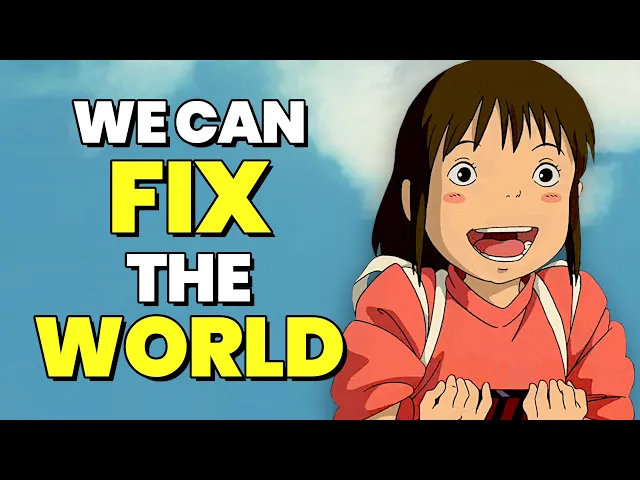
At the age of 10, Chihiro is tasked with saving her family and working her way to freedom in Spirited Away, also aged 10. Kiki and Kiki's Delivery Service, sets off from home at 13, and has to look after herself in a foreign town with no money. Most of the Miyazaki films that I hold dear feature child protagonists who are forced to deal with various challenges which they overcome through sheer strength of heart and character.
[music] And when we reflect on this theme, what we see is a beautiful message in Miyazaki's films because they show us examples of better, more kind, more beautiful worlds. Ones which we as audiences long for. One where children act as not just strong agents of their own, but also as inspirational figures who bring together the people around them and stir them into positive action to change their surroundings for the better.
In the fictional worlds he depicts, Miyazaki fixes this haunting mistake that he feels he and his brother made when they silently allowed their parents to neglect their moral duties to humanity. So, I want to talk to you about how Miyazaki presents children and childhood in his movies and the various ways in which he both inspires and stirs us into acting to create a better world. Before we talk about the adventures that the children in Ghibli films go on, I think it's actually really important context to talk about what their parents allow and enable them to do.
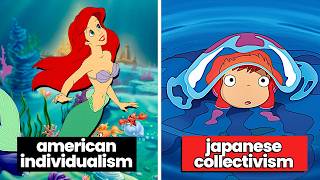
Remember that in Miyazaki's story, he doesn't just wish he was the kind of child who would have spoken up, but he also fantasizes that if he was a parent in that situation, then he would have listened to his child. So, a receptive adult is the foundation point to any of this. If you look at most Disney films, especially in the princess films, most of our protagonists are at odds with their parents, arguing with them over some big life dream that they have before they inevitably run away from home to pursue it.
Even in Pixar films like Koko, parents who fundamentally don't get their own children and impose an authoritarian rule over them is a major plot point. Now ultimately these films tend to end with a nice message which tells the parents that they should be more receptive to their children's needs. But it also often justifies the parents restrictive control as well-intentioned and understandable.
By contrast, Jibli parents are almost always very trusting and supportive of their children and give them lots of freedom. For example, Kiki's parents in Kiki's Delivery Service allow her to make the biggest decision of her life with full autonomy. In the lore of the film, witches like Kiki are supposed to go on a pilgrimage when they come of age and find a new town in which to settle and offer some sort of service to the local people.
Kiki's mother did this when she came to this town and became a potion maker. We learn about this from the sweet old lady for whom Kiki's mother makes much needed remedies. Kiki's decision to fly off at the start of the film is entirely impromptu on her part, made purely on the weather report, saying that it would be clear skies tonight.
Her parents both have doubts about it initially. Her mother feeling that the trip is too soon and her father had planned a camping trip for the family which is now not going to be possible. But importantly, neither of them stop her from going.
In fact, once their daughter expresses her desire, they do their utmost to support and fulfill her dream. Kiki's mother readies her dress for her while her father organizes a going away party with Kiki's friends and well-wishes from the neighborhood. If you think about how this dynamic might have been different in a Disney film, where a parent would likely have put their foot down and forbade their child from leaving, you realize that the freedom that Jibli protagonist display doesn't come in a vacuum.
It stems from a parental support system that usually enables our main character to go on the fantastical adventures they do. There is a tremendous amount of trust and mutual respect involved in Jibli films. And it's clear that Kiki's parents, for example, trust her ability to make the decisions that will be best for her.
That doesn't mean our protagonists are infallible. And ultimately, no one is. And even if they struggle and make mistakes, they usually do so on their own terms, not as a consequence of their parents making their life hard for them.
This trust also comes with responsibility though that the parents assign to their children. Saski's father in My Neighbor Toro, for example, trusts her with household responsibilities such as cooking and cleaning and also looking after May, at least while their mother is unwell and he has a full-time job. Some viewers might feel this is unrealistic, but Miyazaki himself rejects this claim.
When questioned about it, he defiantly remarked, "A 10-year-old can do kitchen chores. I did. I also cleaned house, fired up the bath, and cooked.
" In fact, Miyazaki has even said that Satski is a projection of himself into the film. The important distinction here is that this isn't just a lazy or uninvolved parent shunting the menial work to their child while they're off gallivanting at parties like a Cinderella stepsister situation. Tatsky's father may give her a lot of housework, but he's also very much present as a parental figure for the two girls, protecting and guiding them whenever he can.
For example, when the girls first arrive at the house, they encounter some s sprites that are scurrying around the attic. And you can see that May and Satski are a bit tentative about these strange creatures. As Saski yells through the window that there's something else living in the house, their father joy replies, "That's exciting.
Ever since I was a kid, I've always wanted to live in a haunted house. " This is his way of dispelling their fear to avoid the girls being scared of the new place they've made their home. And he actually turns the presence of something potentially scary into something exciting.
It also counters a subsequent accusation that K, the neighbor boy, makes when he fearfully refuses to enter the house because it's haunted. The father does a similar thing shortly after when the family are taking their first bath. There's a strong stormy wind outside that's threatening to blow over the old rickety house.
And you can see a spooky vibe as everything seems silent and empty all of a sudden, like something dangerous might be lurking around a corner and everything is shaking with the force of the wind to boot. The father responds by bursting out into laughter and then saying, "Let's all try laughing. Then whatever scares you will go away.
" And so from something potentially scary or traumatic, this bath becomes a wholesome playtime for the family and a potential cherished memory. So twice in one day, the father in the film provides a safe haven for his daughters, both protecting and inspiring them away from their fear and into cultivating a sense of excitement and adventure. His message to them is that this new house and new environment isn't something spooky and intimidating to fear.
It's an unknown frontier full of adventure where magic may lie around every corner. And so it's no coincidence then that that's exactly what it proves to be for the girls, especially May, who explores the back garden with wonder and finds their Torto, the magical spirit who acts as their friend and rescuer. And it's not just the parents who tend to bring this supportive and encouraging attitude to the young characters.
It's usually the entire community. We've already mentioned Kiki's neighborhood in her hometown, but then there's also the community she builds in her next town, Koriko, with Osuno, Tombbo, and Ursula, as well as the Madam and Bara. And in Toro, there's not only Granny and K, but the whole town who help look for May when she goes missing.
In Ponyo, Sasuke has not only the support of Lisa, who's a fiercely protective and supportive mother, but also residents of the flooded town and the old ladies at the nursing home. They encourage and engage with him at the start of the film and then at the end they're the ones who fight and root for him, especially Toki who protects him from the perceived threat of Fujioto, Pono's father. There's a saying in English that it takes a village to raise a child.
While these Japanese films embody that idea, and Miyazaki's films are characterized by wonderful, bold children, they're generally supported by a whole host of well-wishing characters. And I think that's a wonderful idea to aspire to in our real lives. Whether you're a parent who can strive to be more supportive of their child, or even if you never have offspring, you can still be the aunt or uncle, the neighbor, the friend that helps the children around you be better, happier, more fulfilled versions of themselves.
So, now that we know our Jibli protagonists are enabled by their whole communities and supportive parents, let's look at what characterizes them and makes them so aspirational. [music] Of course, our protagonists are the key movers of the story, but that's not by accident. Usually, what characterizes Ghibli children is that they see the world differently.
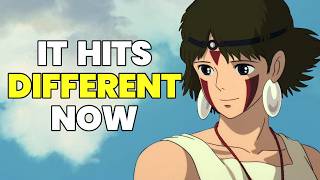
Sometimes metaphorically, sometimes literally. If we count the teenage ashitaka as part of our child protagonist cannon, and I do, then he is perhaps the best example of seeing the world metaphorically differently. The most famous and enduring quote from Princess Monoke is the instruction that the village oracle gives Ashitaka to see with eyes unclouded as he travels west to investigate the affliction that now curses him.
Of course, what this means in practice is learning to see the world without prejudice, bias, or preconceived notions. And unlike almost anyone else in the world he enters, he is the one person willing to see things without trying to judge or condemn others. The forest spirits view humanity only as evil threats that will destroy the forest and thus need to be eliminated.
Son, our wolf princess, shares this belief. The humans of the Iron Works, meanwhile, view the forest spirits as wild, dangerous beasts that are unreasonably denying them from the vital resources they need. It's only Ashitaka that can empathize with both of them and see that they're both justified in their grievances, but also denying themselves a peaceful coexistence.
In the end, Ashitaka is able to bring some semblance of harmony and order to the situation because he sees the world differently to everyone else. He brings the two sides together and restores balance. Thus, Miyazaki is showing that children with their fresh minds, lack of baggage, and lack of bias can provide us with a perspective that adults otherwise sometimes lack.
But sometimes our characters see the world literally differently. The best examples of this would be My Neighbor Torto and Spirited Away, both of which feature spirits which only the children and not the parents can see. As I mentioned, May and Sask's father encourages them to see the world with passion and wonder.
And in turn, May and then later Satski discover Toro in the nearby woodland area, a benevolent, powerful spirit who plays with and helps them. When May recounts the story of meeting Toro to her father, he doesn't meet it with skepticism. Instead, he's happy she's found him.
Even though he doesn't get to see Toto for himself and may feel sad that she'll be considered a liar for not being able to show proof, he says, "I don't think you're lying. You must have met the guardian spirit of this forest. You were very lucky.
" And then he follows this up by taking them on a jovial adventure through the forest. Once again, this shows the symbiotic relationship between supportive parenting and magical children. In contrast, Spirited Away features perhaps the most out of touch parents in the films we've discussed.
They seem unattuned to Chihiro's fears and anxieties and indulge in feasting for food they didn't have permission to eat. In this case, I think they're meant to be viewed as misguided for their greed and short-sightedness. They appears to be scorned, not emulated.
But when Chihiro enters the spirit world, which again only she sees and remembers by the end of the film, she is met with surrogate parental figures. Kamaji and Lynn act as Jihiro's makeshift protectors, guiding and encouraging her to become more independent and self- assured, which she does. But even in the bath house, Jihiro still shows an ashitaka-like ability to see with eyes unclouded, which sets her apart even amongst the spirits.
She is both able and willing to see the goodness in everyone, even those who everyone else has forsaken. She washes the river spirit which everyone else avoids. She's the only one who reaches out to no face.
She helps the otherwise feared Yubaba. And she even meets cordally with Zaniba, Yubaba's sister who is considered somewhat an enemy of the bath house. In seeing the world differently, Chihiro is an inspirational figure who betters the world around her through compassion.
I think the literal aspect of this seeing is Miyazaki's way of suggesting that there is something unique about childhood. That kids have the singular ability to see and think and love in a way that is robbed of us as we grow older. Describing why May is able to receive the supernatural without fear in Toro, Miyazaki says she has not had her childhood violated by adult common sense.
It is this ability more than any specific brave or heroism that makes the leads of the Ghiblly films stand out within their worlds. But the metaphorical aspect is also what really has Ghibli films sit in our hearts. That our child protagonists are fundamentally kind and empathetic figures who see with eyes unclouded.
They see the good in people. They love wholeheartedly and they're almost always very selfless. In many coming of age stories, you see characters with very personal goals.
They want to get something or be the best at doing something. This is where Jibli is definitely at odds with most Western storytelling, where one of the fundamental principles that I remember encountering a ton when I was studying screenwriting is to give a character an external driving goal. But in Jubilee films, our leads tend to not have such strict needs and are only really motivated by the desire to help the people around them, not themselves.
Kiki wants to find a way to serve her town. Sosuke wants to help Ponyo in the sea. Chihiro wants to save her parents and the bath house.
There's no sense before those points in these films that they're after anything specific in life. Even Ashitaka, who you could say has a clear personal desire of removing his curse, is largely motivated by the desire to help others. Remember, he only gets his curse because he's saving others in his village.
And then even when he comes looking for a cure, he ends up focusing more on helping the iron works and the forest than himself. And yet, despite this seeming lack of personal goals, our characters never feel aimless or boring because they represent such admirable figures determined to help better the world around them. Jibli children are very rarely motivated by selfish desires.
And I think that's Miyazaki's way of again showing us the value in childhood. The older we get, the more we begin to concern ourselves with worldly material possessions, and we often lose touch with each other. We become more focused on keeping the things we have rather than sharing in the experience of being human.
That's part of what makes me love Jibli films, because our characters are so determined to be the force for change in their own stories. They frequently encounter broken worlds, and rather than lament or be changed by them, they do their best to be the change that they want to see around them. And in their efforts to do so, they almost always inspire the communities around them.
Like Sosuke does with the old ladies in his town. Like Chihiro does with the bath house, Ashitaka does with the iron works, and Kiki does with the entire town of Korico. Our heroes are not just personally motivated to enact change.
They rouse the people around them into making the world a better place. Through small everyday acts, they make big differences. I think that's also why there's such a focus on household chores in Jibli films.
It really aligns with that Shinto belief of seeing kami or gods in everything and putting value on the daily work because everything the very world around us is worth protecting and taking care of. So it's no coincidence that we do spend time seeing the heroes of our films doing mundane sometimes menial tasks. Not because Miyazaki is advocating for child labor, but because we can all aspire to be like our heroes.
We can all emulate them, not through grand feats capable only through supernatural powers, but by doing the little things again and again, day by day, by helping the people around us, by being present and involved in the society we're a part of. And so, I think that's the note I'd like to end this video on. As much as the worlds presented in Jibli films seem magical and mystical and far away, and as much as most of us watching are not children, we can still learn so much from these films to apply to the world around us.
We may have been inflicted with the curse of adult common sense that prevents us from being the openeyed children who speak up in the critical moments like the one Miyazaki described in his childhood. But we can at least be the adult who listens. We can be the person who stops and reflects and who acts on what we're being shown.
Like the father in Toro or the communities in Kiki and Ponyo, we can be encouraging and supportive. We can help the next generation be better versions of themselves. And in turn, they can and will show us how to create the better world around us, just as long as we're willing to see it.
Thank you for watching this video. As you can see, this video contains no ads from sponsors because I try to keep my videos as authentic and adree as possible. So, if you'd like to help keep this channel free from scummy and shady sponsors, then please consider supporting in any way you can.
Of course, your view, your comments, your engagements are amazing in of themselves, but if you can support me financially, either through a onetime PayPal donation or through a recurring pledge via Patreon, then I would be so so grateful and can also give you rewards in turn. If everyone watching this video donated just $1, I'd be set to make videos for a whole year. If you like, you can also join my Discord community to talk to like-minded media lovers and stay up to date with channel news, or join me on my Twitch stream for some very chill, chatty gaming sessions.
The link to all these things is in the video description. Of course, I want to give a huge shout out to my current [music] patrons, without whom none of this would be possible and whose support is the reason I make the content I make. You're seeing their names on screen right now.
But that's it for now. Thank you for watching and hope to see you again very soon.