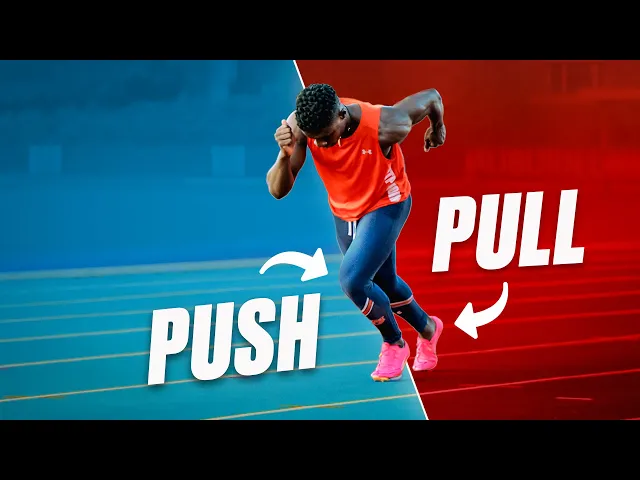
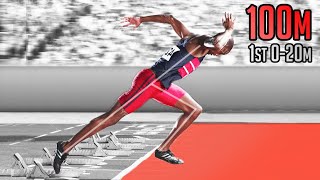
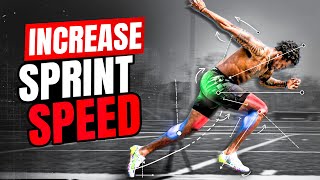
running fast is about maintaining acceleration as long as possible it's not about running as fast as I can as quick as I can for a short amount of time so we've had some questions about the initial setup in acceleration and how I Propel myself from a stationary start um whether that be a two-point or a three-point or a block start my personal feeling is that 90% of my power comes from my front foot and 10% comes from the back foot uh coaches coach a number of different ways my rationale for this is my front leg
is at 90° whether I'm in a two point I'm in a thre point or I'm in a four point I'm at 90° on the front leg so if we work our way back to the weight room when I squat down to 90 that's when I have the most power so my front foot is obviously going to do most of the work because it's at 90 the back leg is at 120° much harder to push from back there so first that's simple right we know that that's math 90° get the most power so my front leg
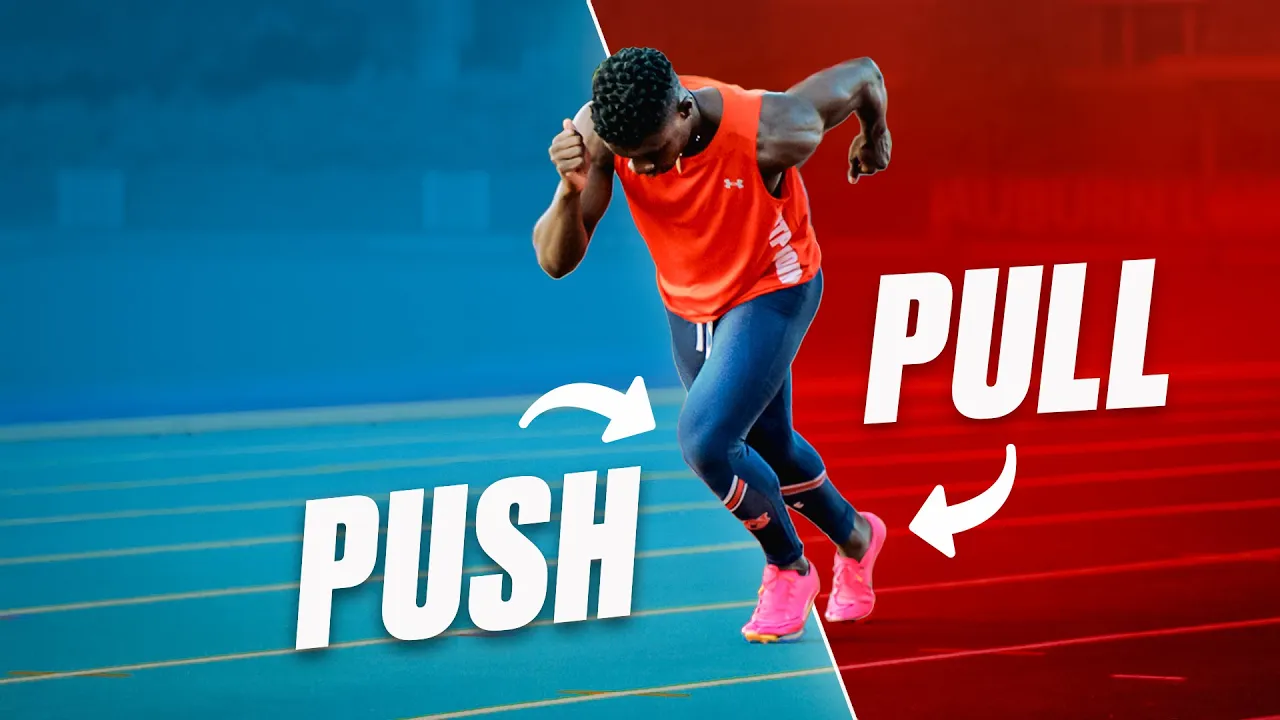
is going to do the most work what I'm looking for is I'm looking for the back leg to do less work for two reasons one I want it to be fast and able to pull through I want that step to be quick secondly if I push off the back foot I've now moved my weight onto the back foot and I push I can't run from this position so if I push off the back foot and it reaches and lands in front of the hip I've created negative energy when I want to create positive energy so
I want to be able to get here I want to push here create triple extension and pull that back foot off the ground and be able to push down the [Music] track [Music] I don't know that you can gauge 90% I think that's uh that's a number that I'm coming up with right uh I think as as a coach you're what you're gauging is not what the percentage separation is but more where is my a positioned when they come off that that next step right so for me everything is about positions so if I set
my athlete up and they push off here and I say I want 90% of my power here and they say Well it feels like I've only got 50% but on the first step that foot landed underneath the hip and they created triple extension off it hey I don't care what you feel like it is right so long as I'm hitting the right positions and the power is going down on the track I'm a happy camper as a coach experimentation with that particular athlete's important right um we've done a series here with four different athletes that
are built very differently they're all worldclass athletes none of them run the same as the next one right I can't coach favor the way I coach aim they're very different athletes favor can squat the house azim's never been in the weight room right favor weighs 180 pounds aim weighs 137 these are very different people so as a coach you're continuously working on that particular athlete and you're experimenting with it right so take the feet set it up and say tell your athlete okay I want you to push off both feet right and what you're going
to happen is they're going to do this and they're going to jump and land with their feet together all right now we want to create separation right so I want to be able to push off this one and drive and then pull that foot and put it on the ground so as a coach yes always be experimenting right take your athlete make simple adjustments put them in positions that they can be successful but understand that your timing for those adjustments is more important than what the adjustment is okay in other words don't show up at
the track meet warm up and tell your athlete we're going to change your block starts 5 minutes before the race right this should be done in the preseason when we have time and and we have the ability to make adjustments and then come back from them and talk about them [Music] he n