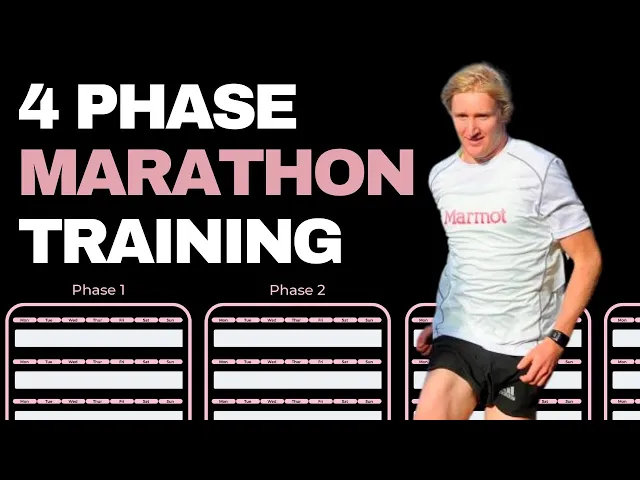
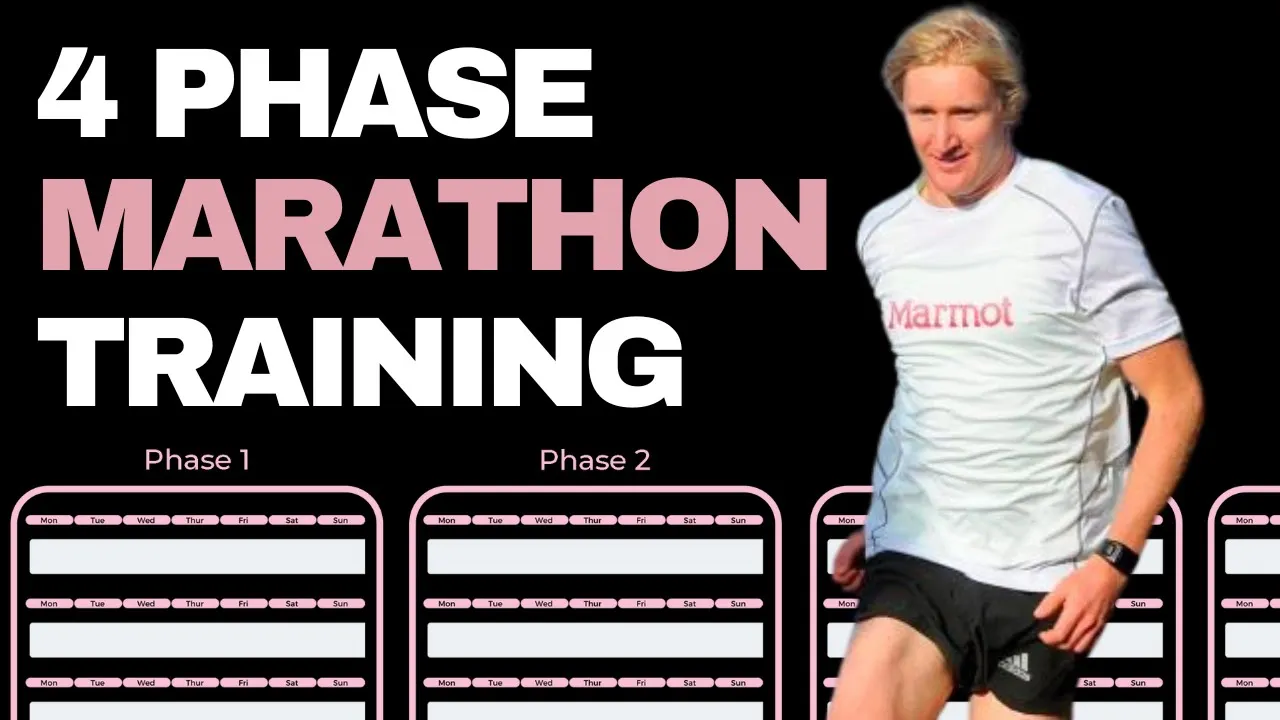
he Runners I want to help you plan the training for your next marathon my four-phase system solves a problem I consistently see where Runners are wasting their most crucial training time within the buildup towards the marathon by poor or non-existent Planning by implementing training phases you can break your training down into blocks and that makes planning so much easier when compared to just steering at a calendar with 20 weeks H to you having no idea what you should put where when you've got training blocks you can just plop them into the calendar and then you
can input the sessions that you know are specific to the focus of each of those blocks one of the biggest benefits I've experienced of phase-based training has to be the mental offload I know for 2 to three weeks I'm concentrating on this specific aspect of my training and I just need to push through to that and then it's the recovery because I differentiate each of my phases or training blocks with a recovery or d load week I don't feel so bad about pulling back knowing that I'm going to be pushing again and I'm now absorbing
the concentrated and specific training that I've just implemented and it saves me from feeling like I just need to keep pushing through until I can get to my taper and finally rid myself of this tiredness and drag of training which honestly from experience is never a good place to be in and generally doesn't result in very good race performances from here I'm going to break down my four marathon training phases where you should place them in your calendar and what training you should do within them and we're going to start in reverse order because you
should always start at your race and work backwards when planning your training let's get into it we're starting with the race phase which is the final four weeks of training I'm going to break down each of these four weeks which I'm not going to do for all the other phases because they are kind of repetitive in their weekly structure whereas each of these four weeks is going to be very unique in your taper and your final workout leading into your Marathon so we have the marathon week you've got your race of the weekend and really
I'm only looking at one key session during that week around 3 or 4 days out something you would have Tri or know instinctively when and where you should place that final workout I'm looking at about 2 times 10 minutes just above marathon pace so kind of like half marathon pace with some 302 to 1 minute strides just for priming that metabolic engine and some muscle activation the specifics of your training I mean at this stage it doesn't matter we're just trying to not do too much and stay metabolically and mechanically active everything else is just
going to be easy then we go into the week before race week remember that weekend is only going to be seven days before your Marathon so you don't want to do too much training or too an intense of a session which I often see a lot of people do in their Panic training they just want to double check they can still run marathon pace for 20 25ks no need to do that the hard work's being done what I like like to do is around 30 minutes or 10K depending on the individual at marathon pace we're
just trying to Prime that metabolic engine to get our fat and carbohydrate oxidation mix just right and just re familiarize ourself with what we're going to be doing on race day checking our heart rates nice and low checking out our shoes making sure everything's working appropriately 15 minute warmup 15- minute cool down you typically looking at an hour hour 20 for that then during the week you want to implement a farc run something where you're doing threshold Pace effort or above so you're stimulating more of a demand for the oxidative and anerobic metabolism and then
you've getting the biomechanical stimulus of faster running longer stride length shorter ground contact times all of those benefits you don't want to overdo it but something like a really cool session that I enjoy 10 times 1 minute on 1 minute off into 10 times 30 seconds on 30 seconds off that's the fun one that I don't specifically push outputs it's just a matter of going off of how I feel and then alongside that maybe if that was say a Wednesday or Thursday Monday I may throw in just 20 minutes of tempo or 3x10 at marathon
pace but everything else is far reduced so at this stage we're looking around 50% of a normal training load and that week before race week and then we're going to the week before the week before race week so that weekend end is going to be 2 weeks into your Marathon at that stage you can still push a relatively large session but typically I'm looking at around 20ks or say 13 miles as kind of the max distance that I'd want to be pushing in that session especially if you're around that 3our plus Mark if you're a
2 and 1 half hour Runner or faster sure then the time it takes to do 20 25ks is not going to be as long as a 3 and 1 half 4our runner so 20ks of total running and around 13 to 15ks worth of work so that' be around 8 mil worth of marathon or faster kind of half marathon work we still want to be dialing in that metabolic intensity and specificity around that first ventilatory threshold where you'll be competing and completing your Marathon ideally but we also want to keep the stimulus High while we're reducing
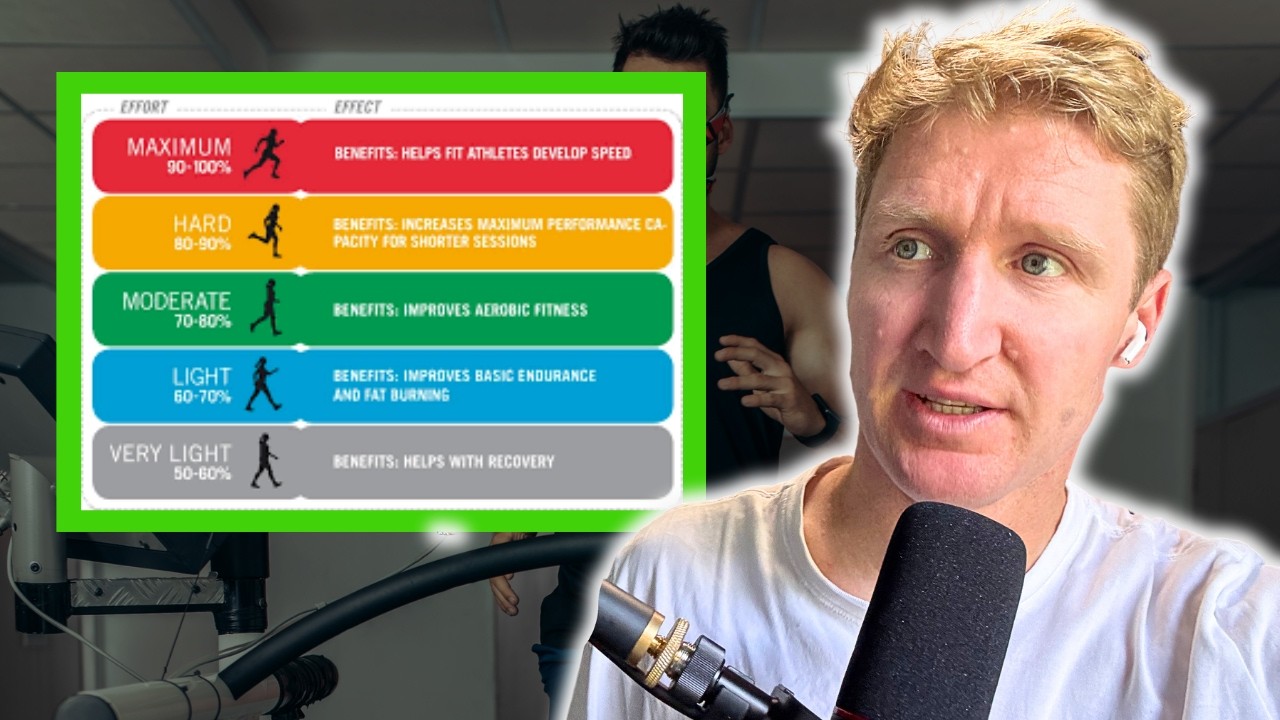
our overall training load this week that third week out from your event you're looking at 70% of the load then during the week you can definitely push it a little more to try and get an optimal stimulus across the metabolic profiles that's kind of zone two all the way up to zone 5 or seven depending on what system you're using but essentially we're going from the high anerobic load to low aerobic load so a progressive one farli run depending if you're running say five six days a week you can probably combine like I did the
week just before where you got some Tempo sessions then you got a flick run or if you're running three to five times a week you've got that weekend session then you're just G to have one more intense session during the week typically say a Wednesday and what you want to do there is just a mixed intensity so you do a couple of KS maybe a mile and a half worth of threshold works that's half marathon 10K and then you'll throwing some one minute at 5K efforts everything's got plenty of recovery because we're not forcing a
fitness adaptation we're just trying to maintain freshness and for War through this week because we've also just come off the fourth week of training so that is one month out and that weekend is going to be three weeks before your key marathon and that is going to be your Banger that's where I like to set the biggest baddest Marathon session on top of the biggest baddest week of your training so that is Peak 110% of training load and from there we're really stepping it down into our taper that works out is really going to be
specific to a lot of people depending on how you've built into your Marathon but it's going to be around 20 miles maybe 18 to 20 mil so 30 32ks worth of marathon effort or faster so a progressive is the classic you're going to start just below Marathon or go Marathon pce or power output keeping on heart rate and progressing to seeing what you have left at around that 18 Mile Mark pushing through to 20 so that'd be around 30ks pushing through to 33 and then shutting it down that is going to give us the best
indication of how we've tracked through our training and what we're going to be able to do on race day leading into that final big week of training is going to be your prep phase so for the prep phase we got the four weeks before race phase you could do three weeks you could do five weeks for the bell curve four weeks typically works the best where you got three weeks of training and then one week of an adaptation or de load week and that week that fourth adaptation week would be leading into that big banger
week of your final four race phase week so that you're absolutely optimally prepped and recovered to smash yourself for a week and then taper down the preparation phase in my system is designed exactly how the names suggest to prepare you for the marathon due to the high value of the training sessions you're going to do within the preparation phase it's important to take into account all your other time commitments when planning your training so you can ensure that these workouts get done the target for the preparation phase is going to be Marathon intensity specific workouts
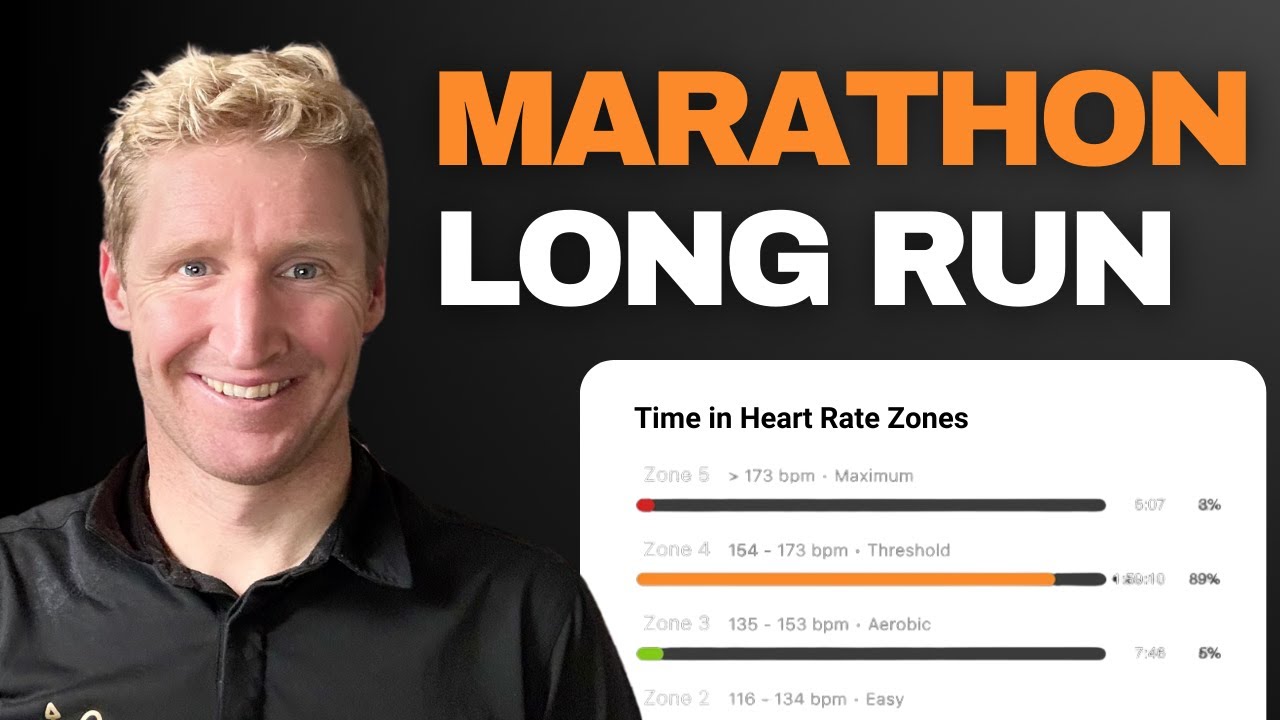
these going to be 20 to 30ks 12 to 18 miles worth of marathon work and they're going to be broken down in various formats Marathon intensity for most Runners is going to be 88% to 95% of your lactate threshold Pace or power heart rate is definitely going to be valuable for the first say 10 to 15ks around an hour or so but after that point especially in training when we're dealing with fatigue we're dealing with a lack of hydration because we don't have access to all the aid stations during our long runs then you may
find heart rate is 5 beats higher than you'd like after that initial 10 15K 1 hour mark heart rate something I like to use as a secondary metric to keep yourself in check in the early stages of these bigger workouts but Pace or power is going to be the primary metric during these workouts we're trying to build efficiency and conditioning at Marathon effort so slowing down because your heart rate went 5 beats too high isn't going to give us the best specificity and stimulus for these workouts and preparation for your Marathon now that's not to
say that your heart rate can just Skyrock it and you can just let it go off the boil it still needs to be stabilized but we just are going to allow it to creep up ever so slightly a couple of beats every 10 minutes or so over these larger workouts especially when we get over say a couple of hours because it is the mechanical and metabolic work that we're trying to elicit within the session specific to your marathon and having to run that intensity and effort for multiple hours in a row alongside these marathon pace
specific workouts the key is the fatigue balance fatigue is really valuable within this phase because we know soon after we're going to be tapering off and allowing ourselves a few weeks of recovery to keep that fatigue balance in check I like to use threshold workouts during the week threshold workouts are really good because they got the specificity of increasing our overall threshold and metabolic efficiency and being able to buffer and REM metabolize lactate and the associated acidity of lactate and anerobic production we also get a good mechanical work and Runners typically don't overdo these workouts
in the preparation for a marathon because the pace itself doesn't mean as much as it does if you're doing say 10K or 5K efforts so allowing us to get a relatively large volume of training within a session so if you were doing say three or four times 2 Mile at threshold pace you're going to be able to get quite a lot of running done within one session because we can minimize the recovery since the on workloads are not too bad at threshold around that zone 45 half marathon 10K intensity whereas if we were doing V2
Max 5K intensity the recoveries need to be 1: one if not 1 to2 or 1 to 1.5 and so we're not getting as much running done within the session because a lot of it is recovery and the work is maybe 15 20 minutes compared to 40 or 50 minutes to get more into the specifics of these workouts we're looking at 95 to 105% of your lactate threshold Pace or power again heart rate as a kind of of a reference but it's going to be too slow to monitor over shorter durations or these intensities from my
experience and we're looking around 30 to 60 minutes of total threshold work what about speed work should I do any speed work during this preparation phase uh for most Runners I see it's stamina and conditioning that's holding them back in a marathon and implementing speed work within this say 4 we to 8 we out window the preparation phase I find it increases too much risk of injury and burnout when you're doing these speed workouts alongside the very high mileage high volume work of the marathon specific session at the weekend and then these high volume threshold
sessions during the week if you're a high mileage Runner hitting 14060 K so around 900 m per week you might be able to implement a bit of a fartless speed session or some longer strides but overall I find it too risky and it's better to concentrate on the volume and intensity specificity of marathon workouts than it is trying to get faster we can finesse that like I said in the final four weeks and we can do a bit more in base phase and build phase which I'm going to get into the build phase is what
I like to consider the final layer of foundation it's a progression from the base phase which we'll touch on as the final phase and it's a step towards your Marathon specific workouts that you're going to do in the preparation phase the two most important components of my build phase are going to be a weakness targeted event specific midweek workout and then a long run where we're progressing the duration and distance of the long run as well as incorporating some Zone 3 Marathon specific intensity at the end what I'd like to do over this 4-we block
would be alternating a progressive run so 2 hours at Zone 2 just enjoyable Pace over a course that's pretty similar to what we're going to be racing on then getting into 30 minutes of marathon effort with that's Pace or power and then we can check heart rate to see how we're getting on in terms of our fitness and our ability to withstand marathon pace at the back end of a relatively long run the alternate week would then be focused purely on aerobic distance trying to get that 20 M or that 30 to 30 5Ks so
we're getting the muscular conditioning we need to be able to handle that type of duration and distance in the preparation phase but at intensity so while these long runs and Progressive runs are definitely going to be progressing your Fitness stamina metabolic conditioning and everything in between their main job really when we're thinking long term is preparing you to be able to handle the most intensive block of your training in the preparation phase and also that final Banger So within this Zone 2 needs to be chill relaxed you don't need to push the top of Zone
2 I have a video on top versus bottom of Zone 2 but it is the zone three parts that we need to be working on and we want to make sure what we're doing now has event specificity in mind what I mean by that is if you're going to be running a hilly race we need to be doing hilly runs because there's something very different about holding a consistent pace and stride Mechanics for an extended period of time compared to running up and down Hills and then during the week remember I said we got our
event specific weakness eliminating we're trying to figure out where is it that we can get the most bang for buck are you just not getting on top of your Marathon speed by 5 Seconds or so then speed is going to help you in terms of your overall running economy and it's going to be allow you to just increase your comfort at your Race speed even if the fitness and the threshold and the conditioning is all there some speed is going to help you overall in your running economy and Comfort at slower speeds but if speed's
not the issue it could be strength it could be threshold it could be stamina and so we need to design a session that's going to Target both the specifics of the event and how your weakness fits into that event alongside those two workouts it's pretty much all going to be aerobic running for the majority of people if you're doing six days plus you can probably throw in a Tempo or threshold session just to increase the stimulus of one of your runs but there's no specificity around trying to Target exact outputs and really push Fitness is
just overall increasing our stimulus across a week across the entire block to round out the build phase I want to highlight where I see a lot of Runners going wrong in this time frame of their training so that's 8 to 12 weeks out that kind of third month until the race this racy Runners starting with the 18 20 M 25 30k Marathon paced efforts the problem with that is you're either not doing them fast enough because you're not conditioned to be able to handle that type of workload or are doing them fast enough but you're
just going to end up burnt out because you're doing them way too early and you're not allowing yourself scope to recover and progress over the next 8 to 9 10 weeks of your training and that leads us on to the bass phase something you probably have some familiarization with so I won't spend too much time on it I'll just kind of tell you how I like to interpret the Bas phase but before that I should say that I really like to incorporate training races or B races and that transition from base phase to build phase
and maybe within the build phase itself so you're looking maybe 10 weeks out to 16 weeks out you might want to do a half marathon this is a great Fitness check and barometer as you lead into your preparation phase of where your Fitness and conditioning is and just a general simulation of the race environment and everything that goes along with turning up to a race making sure you get there on time finding Parks finding toilets making sure you're in the correct Pace group you pace yourself appropriately your watch is all set up your kits all
good you can handle the aid stations all of that's really good to do and then you can take that data and apply it to your current Fitness level you canjust your goals and outputs as you build through into the next weeks of your training if I'd ask you what's the focus of Base phase a lot of you would probably say zone two base phase equals zone two and I'd say unfortunately many people have been misinformed about the value of Zone 2 Bas phase yes Zone 2 is very important but the main focus is building aerobic
capacity and Zone 2 is not the only way to do that and it's probably not the most effective way to do that either within my system base phase is going to be your training 3 months and further out from your goal Marathon within my base phase I like to have two Focus points primary focus which is going to be our marathon so that is definitely going to be zone two long run so that we can progress towards the more intensive training that we need over the long term the secondary focus of the base phase can
almost be whatever you want and that's why I like to use those training races or B races in the transition from base phase to build phase because it gives us the opportunity to Target some specificity within our training keep ourselves engaged and also experiment with different loading profiles and training schedules so that by the time we get to that crack point of the build phase and Beyond we've got a pretty clear idea about what we can handle each week and what are our signs of where we need to pull back and win though it's important
to keep in mind that this is going to be the secondary Focus the primary focus is still going to be building aerobic capacity and muscular conditioning towards your Marathon so it's zone two running as the primary and then the secondary is going to be something that allows you to stay engaged in your training and just overall enjoy your running so that when we get to the build phase we're physically fit and conditioned and mentally ready for the next 12 weeks of hard work and those are my four marathon training phases only marathon training phases I
think you're going to need so that you can Implement and plan your Marathon to success alongside this I think you should check out the Marathon long run Pace video I have so that you can dial in the exact Pace power output and heart rate readings that you need in that preparation phase leading into your marathon and other than that you can check out what I get up to in my training on my straa and I'll see you guys on the next one e e