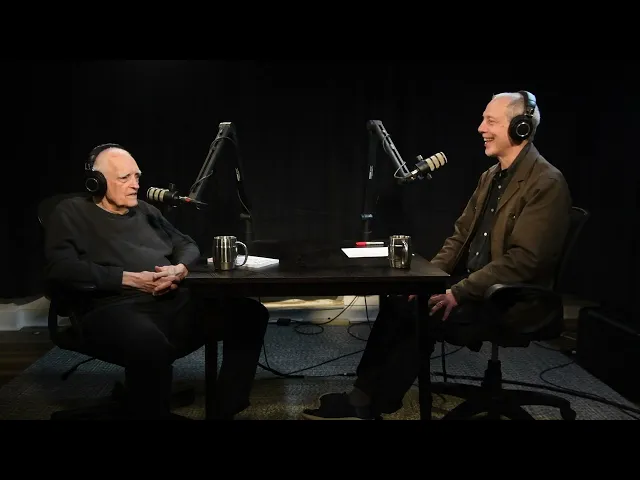
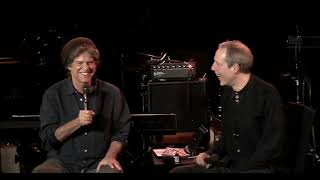
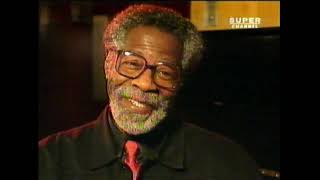
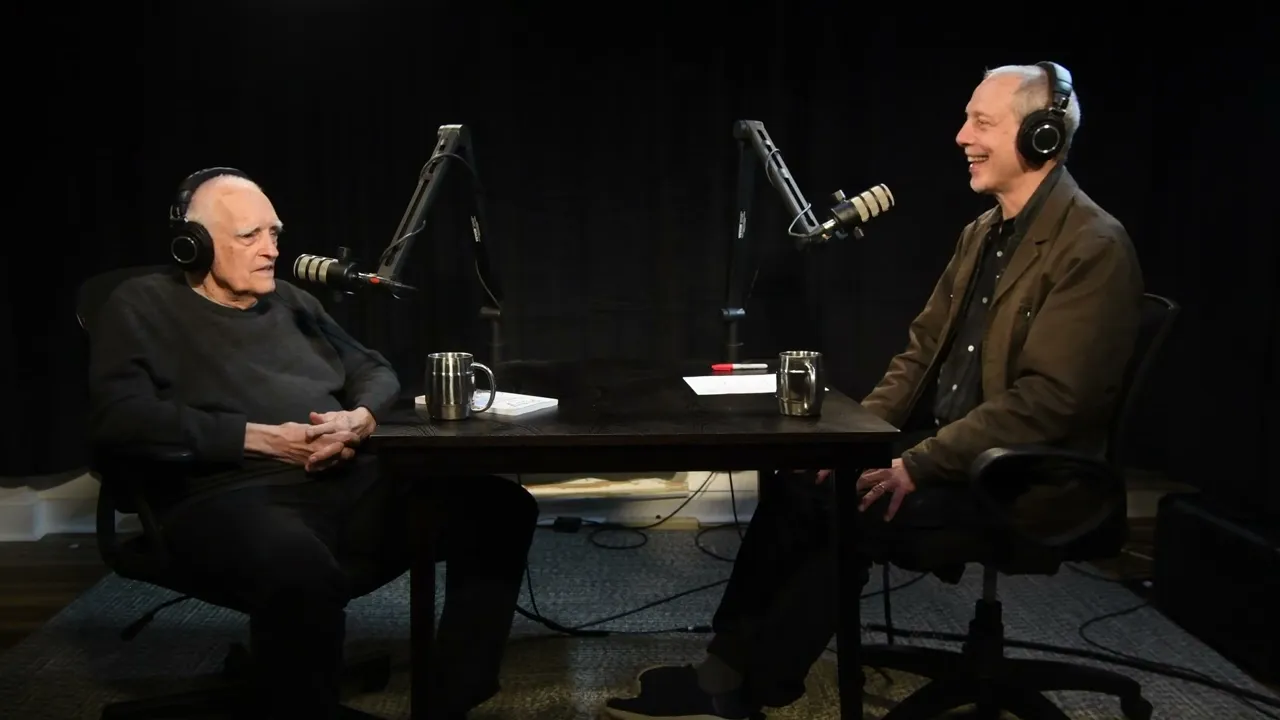
I'm here with basis composer Steve Swallow. It's a pleasure to be in your company. We're going to talk about your illustrious career.
Steve is one of the living repositories of jazz history that we have with us at this point. Um, and what we're going to do is, uh, I have a playlist that goes from approximately 1960 to the present. and we're going to play some cuts and have you talk about them and we're going to focus since this is the Alternative Guitar Summit channel on the guitarists that you've played with.
Sounds right. Welcome Steve Swallow. Thanks.
I'm I'm happy to be here. So, uh, before, uh, there was the guitar, there were some groups you played in that are incredibly formative for a lot of people, including me. And I'm going to start with a track from the Jimmy Jufrey 3, uh, which, uh, I can't remember if it's off the Fusion or Thesis record, but those were two records that were amongst the first that you did in your career.
I think you were only what 20 21 years old. Yeah. I'll play a second of that and then let's talk about these records.
Okay. Sounds good. This is the piece Scooting About.
[Music] Down. [Music] Hello. [Music] Wow.
Of [Music] course, we don't really want to cut any of these off, but for time's sake, we we'll have to. Let's do so. Yeah.
Now, there's a few things that strike me about this track that I'd love for you to talk about. The level of communal interplay in this enterprise is amazing to me. you you three sound as if uh you're one person and this is one of the rare groups back then that had no drums and what I hear is uh an incredible dialogue very much focused on the composition itself.
Talk a little bit about this time in your life. Well, I think you you've pretty pretty accurately uh summarized the our intentions uh with that with that trio and and they were uh the the terms of the group were uh well, the word is not negotiated. Uh but but but we're determined by by the lengthy rehearsals that that that that we did at that time in the uh in 1960.
Uh we rehearsed a lot because we didn't have many gigs. Uh but but I think the the the emphasis on rehearsing uh caused us to to to spend a lot of time examining the the the methodology of the music. Uh the very often the rehearsals were were were consumed by by talking more than by playing.
we'd we'd spend hours uh discussing our intentions. Um and Jimmy was insistent that it that it be a a dialogue among equals and uh and and he was equally insistent that that we try to extend what we were doing beyond the the the our expected roles. Uh, I think this applied particularly to to me because the bass had historically assumed a certain function in jazz music and and it had a lot to do with thumping away down there in 44.
Um, uh, he he was really um vehement and in in uh in his insistence that I that I put that behind me. And that's something that's terribly difficult to do. It's a It's kind of like asking a person to wear his clothes backwards all of a sudden and and to keep him that way for weeks on end.
Uh but but it but but it was a wonderful challenge and and had had the effect I think of of uh had had a signal effect on my on on on my approach to the to the instrument and my role in the in the music from from that point onward. I was very lucky to to have encountered him. Right.
Uh I I slid luckily into that trio on on Paul Blaze Code Tales. I had been playing with Paul uh for some time, not so long. It seemed like a long time, but it hadn't been been long at all.
um uh at a time when when Jimmy had hired Paul to be in the group and and they had another another bass player initially, Bule Nidinger in uh but when Bu left, Paul uh brought me into the into the band. Just ju just to to wrap that story up. I had met Paul in 1959 about a year previous uh at Bard College.
And that's your that that's your alma mater I believe. Yeah. Right.
Wait a minute. You met him how? Uh he had a gig and needed a a cheap bass player.
In fact, he needed a free bass player. uh and and and through a a chain of of uh associations I got I got the gig. Uh Paul's drummer at the time was Paul Cohen and Paul Cohen was good friends with Ian Underwood who became a mother of invention for a long time and an LA studio ace.
Uh, and Ian and I had had spent our teenage years uh working to become proficient at jazz together. Um, uh, Ian and Paul Cohen attended the the summer school at Lennox, Massachusetts. That was uh was a remarkable institution for its for its brief life.
And Jimmy was a was an instructor there in fact. and and George Russell and Gunther Schuler and that whole gang. Uh Ornett Coleman was a student at at at Lennox and Ian Underwood sat next to him in the saxophone section of the Lennox School big band.
If you can imagine Ornette playing lead alto, I'd like to imagine that. Yeah, it's a it's a wonderful thought and indeed. At any rate, uh Paul Cohen called Ian.
Ian suggested that I make the gig. Uh and I did blind. I I had no I just on Ian's word that it was something I ought to do.
Um I had no idea how Paul Blade played and what what I was getting myself into. The the the gig was a concert at at Bard and and it had been organized by Ran Blake who was a student at Bard at and a teacher of mine. I'll be darned.
Okay. Of course it was organized by Rand Blake. Of course it was.
It's a small mean world that we that we live in. What an amazing uh at any rate and I I I met Paul Blind. And I met Carla Blé on on on that ill- fated day as well.
Wow. Uh and had no idea what to what to expect. And Paul was no help whatsoever.
When when when I asked him what what we were going to play, his his response, I'll never forget, was I have no idea. Uh and and and that kind of uh uh that that that kind of shifted my whole universe right there. I was remarkable to me that I was going to get on the band stand with this guy and and he refused to give me any insight into what was going to happen whatsoever.
And in fact, he did his usual trick when we when we reached the band stand. He just sat there and waited for me to play something. Oh, that was his motus opera on that.
He often did that. Yeah. And and uh and and I was just panicked.
So I just kind of stood there as well. I I won the first round and then eventually he started playing. Uh and and then eventually I started playing too.
And it and it was one of those remarkable occasions when uh I couldn't play a a wrong note. Every every note I played just sounded like the the the the heavensent note that that that worked perfectly at the at the time. and and uh and and and this experience sustained throughout our our set and and uh and and really astonished me and and and and made me reconsider all of my ideas about about how to to make music.
Uh I was going to school in New Haven at the time. I went back to back to my room in New Haven and and fell uh desperately ill. Had a had a fever for several days.
When the when the fever broke, I marched across the campus and quit and it was a conversion experience. It really was. Wow.
It was the road to Damascus, you know, uh, and and moved to New York to to be a a jazz musician. Um, and I I I think Jimmy had had a a similar kind of road to Damascus experience with with Arnett, possibly at the Lennox School. Uh uh Jimmy had the the context is really remarkable because he had such a uh he had a couple of decades of of of of great success as a conventional big band musician, you know, four four brothers, all of that stuff, and as an LA studio musician and as a a a member of the the the circle of of Los Angeles players who were who were very adept at at at playing a certain kind of postbop music and and threw all of that aside when he heard Ornette and and uh started playing the kind of music that you just gave an an example of.
So, it's kind of remarkable that the three of us all came from a Paul had had a similar kind of experience with Ornette in Los Angeles. Yes. Um, famously Yeah.
Famously so at a club called the Hillrest. Uh uh so so we had all kind of arrived each in our way at at at playing the music on on on that record and and it was uh it was very important to to us at the time each of us personally as as music should be uh uh and and it's effect uh resonates on my approach to music to the to this day. And and uh uh remarkably that trio has has had an influence on on others like your like your self as as well.
At the time we were we were we were kind of uh singing in the wind, you know, there were this is what I heard. There weren't weren't gigs to speak of at all. And the and the the re it's very lucky that we made the the recordings that we that we did.
We made two records for for Verve simply because Jimmy had had a a contract that hadn't yet run out and and and was based on on the success of earlier Trio recordings he'd done with with Jim All and Ralph Pena, The Train in the River, that kind of stuff that that had a a a ready market. Uh was so different than this. Very different.
and and Verve was disconcerted by his by his change in direction to say the least. The the the a curious side aside to all of that was the ANR man who was assigned by Verve to kind of sit through the the the two recordings that that the trio with Paul and and I made uh was Creed Taylor. And if there was anybody ill equipped to to to do that to sit in that chair at that time, the creed would be amazing.
Would spring to Yeah. to mind you. Yeah.
Yeah. He he he made his mark in a far different place. Far far you guys were at far different.
I mean to to his credit, he he just kind of let the the the music unfold. He I think he saw clearly right from the drop that he had no no no choice but to do that because we were uh on a mission, you know, we were all determined. This is an incredible um story because first of all this formative experience extends through the rest of your life as a bass player who is known as an equal partner in in the the music that you make with everybody which of course not every bass player has that point of view.
So, so this this way way that you've developed from the very beginning of uh sort of being an equal member of the ensemble, not just a support uh mechanism was there from the beginning. And also you're at the crossroads here where something that we've later labeled chamber jazz which is kind of a weighty uh label but it it this is such a prime example of that of of music that sounds almost as much like a classical group playing as it does a jazz group. Well, you know, I I I think that's that that's a fruitful area of discussion that the the convergence of of you know, groups of improvisers with groups of classical musicians like string quartets and and uh chamber music, ensembles, but but I would argue that uh beginning probably before, but beginning in my mind with Lewis Armstrong's Hot Five, the essentially that's what's going on is is chamber music and and strongly uh strong interaction between all of the the members of the band.
In fact, I think uh some of the ideals of of of the music of the so-called Dixie Land era, you know, the 1920s into the into the 1930s, uh I I I think that the the the sense of equality among all of the players that that there was a a a strong emphasis on counterpoint in the music and and uh uh was was was perhaps lost a bit in the subsequently when the so-called big band era in the 30s going into the 40s uh came came to pass and and and for the first time some emphasis was was placed on on site reading and sitting there all night behind your music stand and and and dutifully playing the notes that were uh that were written there and in in a sense the Ju Trio was just doing stuff that had a great point been done that's a great point yeah uh and has been done since I want to ask you about that composition just briefly having played that how much of that baseline in the beginning is written out all of it that's what I thought because it sounds so contropundally organized and same thing with with the piano part uh yes He repeats sort of repeats that I think because I just wanted to make make sure that I had that. Yeah. And and you can see too that that that Jimmy was not only telling us that that that we needed to behave as equals and to and to uh transcend the traditional roles of our instruments.
He he he he was writing it to to to reinforce his his his point. Yeah. Uh all of his compositions of that of that time were were were pointedly uh uh uh meant to explain his his ideas.
Yes. I once cornered Paul Blé after a gig and I and I asked him about this trio uh for as long as the break lasted on a gig he was doing and he told me a story that I um want to run by you. I assume it's true.
Um that there was a time where you were playing in Italy with the trio and the wind came up and blew all the music off the stands and from that moment on the trio just free improvised without any music. Uh yes, that is indeed true. And what a wonderful story that is.
What are you gonna do? Well, I I saw you perform with this group, believe it or not, in uh Sweet Basil. Probably one of the last times Jimmy played live.
I don't mean literally the last time, but in the last year or two of his playing career. Yep. Early 90s, maybe.
Yep. And it was it it did strike me that it was all free improvised. I don't remember seeing any music on the stand at that point.
Uh Paul in particular was was uh vehemently opposed to to to playing any any form of written music at all. And I think Jimmy is seeded to that uh uh willingly, happily as as did I. Mhm.
Well, you've answered a question of mine regarding our our next track, which is by George Russell. It's a rather famous song of his aesthetic uh from the album of the same name. In my mind, George Russell is a a great composing hero of of music in general, not just jazz music.
One of the perhaps um not known enough and not uh talked about enough. And I want to play this track and have you talk about meeting and playing with the great composer George Russell. Great.
[Music] Heat. [Music] Heat. [Music] Well, first of all, the fact that Dave Baker could play trombone like that.
And we were missing his solo, which is astounding. Also, I had the bright idea, by the way, on George's 100th birthday year that I would try to play some of his music from the sex ted. I got some charts from his wife.
I looked at the charts. I looked for a longer period of time and then I looked again and I said, "This music is unbelievably hard. " It is hard.
I mean, do I really want to do this? And I'm listening to that track going, you know, how what an amazing uh melody that is. And you're playing at the speed of light.
Talk talk to us about this this amazing moment in jazz. I I value George as as as you do. He he was a remarkable remarkable musical mind and and I think had an enduring influence as a as a theor theoretician and teacher as well.
He was very uh uh he was doggedly purposeful uh and and doggedly methodical as well. They uh and and sought to uh im impose a sense of method and and uh and and and discipline on the on the community of improvisers. and and uh I think that was something we needed and and uh and it was timely and generous of him to to to provide that.
And I think what he was doing was kind of bucking the the the role of the composer in the in the jazz community which is always valued the the the improviser among among all all others. Uh uh my my partner Carla Blé was sim occupied a similar position and and and felt that way as well. Uh felt often that she was working on behalf of the community of improvisers whether they wanted to wanted her to or not.
And and I think George George was dealing with with this too with a degree of of of resistance even from the very players in his in his band who just wanted to take lengthy solos. Yes. Uh on the the on the chord changes the the that that tune aesthetics which is a remarkable tune is based on love for sale.
Well, I couldn't figure out which tune it was it was based on, but weird form. Yeah. And and you know, there there there were many players who played that tune who who were just kind of plowing through the head in order to get to Love for Sale.
Yeah. Uh and and the the the point George was trying to make was that there that that this this was a um a systematic analysis of the Bbop language. The song was a systematic analysis of the Bbop language and and and the possibilities that that sprang from the Bbop language that that that lay in the future.
That's so interesting. Very conscious. I wouldn't have known, of course, that there was that conscious decision on his part to bring the past in the into the future like that.
I I think there was and and and in fact, George led me to to to think that in the in the course of the many rehearsals that we also had together, u that band also had had a a der of gigs. There there there were almost no p public performances. We've got a great theme going here with your early working life.
It's remarkable that it that it persisted and did have an influence over time at the at the at the time all of this music was played there, you know, there was the idea among us that that we were just shouting to an audience that wasn't there at at all. But was the feeling did you did you have a sense of we're doing something important and right and it doesn't matter if the audience isn't there yet? We've got to pursue this.
Was there that sense that history was being made to some degree? I I don't I don't I don't want to sound self-important, but but but I I would answer yes. I I I and I can in the end that's who I can speak speak for uh felt that felt that there was great value to to the music I was playing with Jimmy Joffrey and and and also to the music that I was that I was playing with George.
And uh and I think both Jimmy and and George uh felt that they were uh that that they were lay laying down their their life's work uh in in the hope that it that that it would register over over time on the on the community of players and and it did. Yeah, what a band. By the way, you've got Eric Doly on alto, Joe Hunt on drums, Dave Baker, which which I mentioned, and uh Barry Galbra, I'm pretty sure.
No, no, Barry was not on the He was on the sex tat. Uh I guess he I guess he made an appearance. He and George were were good good friends.
I I I worked with both George and and Gary on on Sheila Jordan's first record. Uh so we should add that to the list of people guitarists you played with. Our first on our list is Barry Galy.
Barry come Barry deserves a a place there. Yeah. Uh Barry and George were close.
Barry was maybe the only guitar player who could play George's music with Yeah. with abandon and and and you know and enjoyed it immens enjoyed playing George's music immensely and and when we made uh Sheila Jordan's first record Denel Best was the drummer on on that record uh George wrote the lead sheets and and Barry and I and Denel interpreted them and on on Sheila's behalf uh But George, a as was the case with with Jimmy's band, mo most of the action happened out of the public eye that we rehearsed endlessly at George's apartment on Bank Street. Uh lovely, lovely apartment, tiny, tiny place.
The the Septat, the band with Eric Dolphie was a septet. uh bar barely fit in there to rehearse. But uh but we did we did so happily for for um for for months on end to to to play the very occasional occasional live gig and and to make the the recordings that we did.
Luckily, uh, George had a a couple of champions, one of one of whom was, uh, Orin Keep News at Riverside, and he he was responsible for for documenting that that period in in George's uh, history. I think it was an important one because it was kind of those were George's last days in in New York shortly at he disbanded the sex ted in order to move to Scandinavia, right? And and at that that point he began he he he began a a another phase of his career.
He began composing and performing uh largecale works, you know. Yeah. He he found in in Europe as as have many others that there was a a a structure there, a support structure for music that allowed him to to to find performances of of of more ambitious works than just a sex dad.
Yeah. And of course, we should mention Gunther Schuller as a a champion of of uh George early on too, if I'm not mistaken. It kind of was around that at that time.
Yeah, he was. and and and George eventually returned from from Scandinavia to teach at the New England Conservatory when when when Gunther was running the the third stream department and and the first jazz department if I'm not mistaken of any school private uh conservatory in the US. I wouldn't be surprised.
I'm I'm if it wasn't the the first it was near near to it. Um and and Gunther also hired Jimmy Juuth. So, yes, small mean world.
Yeah. Well, let's go on. Uh, we're now going to go to a track that, uh, you recorded with Jim Hall, Jim Rainey, Jimmy Rainey, I should say, and Zoot Sims.
This was kind of one I had to dig for. I'm sure you've done other things with Jim Hall that I I couldn't find and I'm sure you were uh friendly with him over many many years. But this is an interesting track because it's a standard but it's arranged with all that that lovely detailed counterpoint that was so much a hallmark of uh of that era in my mind.
And so we'll listen to a little bit of this. Great. It's uh How about you?
[Music] Now, here you're more back in the support role, but you're playing behind two of the great uh jazz guitarists of the time. Talk to us a little bit about especially Jim Hall, who's near and dear to me and so many of my contemporaries, to me as well. I I I remember Jim with with great fondness.
Uh and and he got me on that that that recording. He was the one who who uh who recommended me to Jimmy Rainey whose whose whose date it was. Although I thought it was Zoot Sims.
I stand corrected. I was playing with with Zoot and Al Cone at the half note at the at at the time. Uh so there there was that connection as well.
Uh Teddy Charles was the the producer of that of that recording and and he was also involved in selecting the the personnel vibroonist. Yes. For George Russell.
Yeah. Yeah. notably again small meanwhile uh and and Jimmy Rainey was was was kind of at the fringes of the music scene at at that point kind of coming coming in and out of it.
Um, and and the thought of doing a a a date with him struck fear in my heart, but but but also thrilled me. I was very happy to do that record. And uh you you're right, the the bass was back in into a a a much more traditionally defined role on on on that recording.
But I was happy to to do that because that's that's what the music wanted. Uh and it's a beautiful track. It's it's a lovely record.
It came out well and it was done, you know, without rehearsal. These were these were guys who were were incredibly skilled. OC Johnson was the drummer, and he was too.
He he wasn't uh wasn't intimidated by the presence of a sheet of music at at all. In fact, of of all of the guys in the studio, I was the one who was sweating bullets. Uh, luckily I was the bass player and the bass play the bass parts are always the easier ones.
So I I managed to to uh to swim in those perilous perilous waters. Uh Jim Hall was deferring to Jimmy Rainey during during the making of of of that record. Jimmy had had been around since the early 50s.
Mhm. U his his recordings in 1951-52 with Stan Gats are are are important guitar literature. This that's a great point.
Remarkable remarkable playing. uh a Tal Farlo is part of that that that gang of players and and Jim Hall kind of developed out of all of that and and when he came to New York um sought those players out and and uh uh that that that recording is a is an instance of of of Jim's remarkable sense of uh for one of them being a team player if you being a dame player deferring even a sense of difference uh it's just remarkable and and also you can hear the the the stylistic commonalities between between the two of them I uh and I was kind of absorbing all of this and at the time as I was also trying uh desperately to study my parts for the next tune between takes at any given time. The music was just kind of flying flying by.
Uh Zoot Sims was also uh uh uh despite his his his well-earned reputation as a as as a hell or leather freefor-all improviser ready at any time to play and and go to the corner bar between between sets. Uh it was an extraordinarily uh uh accomplished site reader, all of that stuff and and was kind of off-handedly playing these these these songs perfectly the first first time through. Yeah, we're gonna pause now.
Well, we were just having a laugh over how I almost got to take a lesson with Paul Blade um when I was at Bard College in in the late 1970s. But in uh in the meantime, you were going to tell a story about uh Carla Blé meeting George Russell. And I had remarked on what I sort of discovered in some of this rearch research was a commonality in uh not so much their styles of composing but their tendency to write tunes that leapt out of the box and and challenged the notion of what um improvisers might think about and do.
I I I think you're right to to draw those lines. U and Carla and George were saw each other as as as compatriots. The uh George was very important to Carla and and and at a at a key point in in in Carla's career.
Uh she was this this would have been around 1960. She was with Paul Paul Blake uh in New York. They were kind of scratching out a an an existence uh barely making the very cheap rents we were all paying at that time.
I had a loft on 6th Avenue, an entire floor of a building in 6th Avenue for $40 a month. But even two sandwiches, even that was Yeah. Right.
Even that was difficult to sometimes to uh to make. At at any rate, Carla was was trying to um was was aspiring to be taken seriously as a composer and and and running up against uh uh wall after wall. But Uh, of course there's the obvious uh obviously she was a woman and that created a whole set of of of barriers and and beyond that the improvising community was just kind of un unwilling to acknowledge that that they needed composers.
Uh uh people, the improvisers had begun to realize that copyright royalties were were a valuable source of revenue and and were starting to write their own makeshift heads to to the chord changes of standard tunes uh and and recording them in order to to uh establishing their own publishing companies. this was also something new in the in the history of the of the music and and and discovering that there was a stream of revenue and seeing no reason whatsoever to allow composers in on the in on the game. At any rate, Carla was was encountering headwinds at at every turn, trying to to establish herself as a as as a composer and and uh was was also being told by a psychoanalyst that that that she was perfectly fine except for this delusion she had that she was a composer and that if she if she just get a a real job and abandon that silliness.
Uh she'd be much happier and ser uh and and and Carla was taking all of this seriously and and had actually reached the point where she was um looking for work on in the garment district in New York as a seamstress. Uh uh and at that very point when she was when she was making the rounds of the uh uh sweat shops on in the garment district in in New York City, she got a a a call from George Russell uh saying that he had uh he had heard a few of her tunes Paul Blé had given George a a demo tape uh and wanted to record a couple of them uh and that served to punch Carla's ticket. Carla Carla felt at that moment that she had she had she had crossed a s a a significant threshold that she was in fact okay I am a composer uh uh George Russell thinks I'm a composer I'll I'll accept that as as sufficient validation and abandon the idea of becoming a seamstress in the sweat shops of of the of the garment district and and had and never looked back.
Uh uh am I right that Bent Eagle, am I getting the title right, was one of those first? That's exactly right. And that is in fact the the first um and Carla subsequently became George's copiest for a while as as well.
they they sustained a a a business relationship um going into the future and and and I think they they were distinctly different musical minds but they but but they were doing the same thing at the same time. They were they were en encountering the the improvising community in New York, which was a really vital uh community at the at at the same time and and evaluating uh what improvisers did and providing music for them that challenged their uh their abilities and their and their ideas about about what what could be could be done in in improvised music. It's a it's a very a highly specialized role that the the jazz composer occupies because improvisation is clear clearly uh key to the to the music but but improvisation pro profits greatly.
from from context, you know, and and one one could draw a list of obvious examples starting maybe with Duke Ellington, please more that come to mind because and Monk and so on down the down the line, you know, the and and the and the musician the improvisers have haven't been haven't been graceful always in accepting the the the the contexts they've been placed placed in. I mean, for instance, confronting Monk's music for the first time is is a daunting challenge. And when you listen to the records he made in the 40s and the 50s uh uh before he kind of settled into the quartet format with Charlie Rouse as the as the perennial player, you can hear the musicians struggling mightily with the no charts as I understand it.
I a lot of it he was yeah just requiring guys to come to his house and learn the the music by by by ear. There's there's a long there there's a long line of jazz composers who insisted on that. Mingus was was of that school as well.
guys had to show up and laboriously learn some very challenging and difficult heads by ear because Mingus in in insisted that uh the the the the printed page served to to uh uh to constrain the the kept you from internalizing. Yeah. and and and and could never accurately reproduce the the uh the music that he heard in his head that he was communicating orally to the the player.
Well, let's go now to Carla Blaze music. The first of a couple of stops we're going to make. This is a a record that um uh has a incredible title, Genuine Tong Funeral.
And this is a piece called Silent Spring, which starts out with you. As far as I can tell, well, you tell me. It It's not doesn't sound exactly like a free improvisation.
It's with Larry Coriel, the great guitarist, but but it sounds fairly free. Okay, let's hear. Let's see.
[Music] [Music] [Music] Don't miss that. [Applause] I do want to hear this melody. Okay.
[Applause] [Music] Is that have a similar? So that I should mention is a Gary Burton record which I think largely or completely involves Carla's compositions. Yeah.
First of two because it happens again on Dram So Real. That's right. Which is an extraordinary thing to do.
Uh so we need to talk about Gary who's an incredible part of your history. He is. I mean, I I don't know how many gigs and records you've done with him, but Gary is so central to jazz in general, but to the guitar, he's incredibly central also.
So, there's Larry Corel that I'd love for you to talk a bit about. And then um and then your association with Gary, not to mention this this stirring piece of music which I assume is based on the book that had come out around that time called Silent Spring. Or am I wrong?
Uh that that song was was titled with a as an acknowledgement to the Rachel Car Carson book. Yeah. uh uh and and there's a story lurking be behind it as as well.
Uh that entire record is a is a is is a suite of songs that Carla Carla wrote uh in response to to poetry by Paul Haynes who who subsequently wrote the the liretto opera Escalator Over the Yeah. over the hill. Uh the title Genuine Tong Funeral is is Paul's.
Ah um but Silent Spring was the was the was the was kind of brought into that suite of of music but was written independent of it. I commissioned that song from Carla. I I I I told her I'd give her 50 50 bucks if she wrote a bass solo for me.
Solo bass piece. Uh, and 50 bucks was a substantial piece of change. But wait a minute.
Are you saying that what you played was largely composed there or is that entirely to the to the very note and so was Larry Coriel's guitar part? Well, now how interesting that I completely um called that wrong because it it flows as if it's being made up on the spot, which I think tells you how successful it is that it blurs those lines. It sounds free, it sounds open, and yet it's very directed.
Exactly. And u I I think it's remarkable too that there's there there there isn't a single note in in what you just played that wasn't that wasn't composed by by Carla. It took a took a long time I might add for Cory and I to to to master that.
Uh was he playing a guitar that was tuned down a little? All of a sudden as I listened I that I don't recall but it does sound sound kind of low and that I wouldn't put it I wouldn't put it past Carla to have to to have done to have done that. Uh we rehearsed that album, the Gary's quartet at the time, which was uh Gary and Larry Coriel and uh Bob Moses, the drummer, and and myself uh at length in in Salelo, California.
The the Burton Quartet was playing at a club called the Trident in Salelo at that time. And th those were the days when one settled into a club for two or three weeks at a pop. I know.
so jealous and yeah, what a wonderful what a glorious time. It also meant that that that one went out on the road for for a couple of months at a at a pop. Uh we had played two or three weeks at Shell's Manhole and then moved up the coast to to Salelo outside of San Francisco for another two or three weeks at the Trident.
and Carla flew out and and and rehearsed us every day in a on a housebo in in Salelito. Oh, come on. Really?
Oh, yeah. Those were the days. Those were the Harry P.
He was around at that. Wow. At that time, as was the the the burgeonings of the psychedelic rock movement, but I don't know if you if that was quite in the mill.
It it was very definitely in the mill. In fact, the the Burton Quartet of that time played the the Fillmore on a few occasions, a couple of occasions. Now, were you a fan, by the way, of that burgeoning rock music or I I became so and and in fact this as now that I put it all together, at the very time Carla was was out there rehearsing us for Genuine Tong Funeral, uh we were playing at the at the Trident, but then with the with the uh with permission from the Trident.
We also opened for Cream and Electric Flag. I got to believe with Bob Moses and Larry Coral and the group, there were some substances ingested and they went right for the uh you know for the Fillmore, but that's amazing. That could never happen now.
We were thoroughly at home there. and and and that that was indeed the the the the moment at which rock and roll uh dawned on me. I I I loved Cream and and and began a a Did you know Jack Bruce at all?
Yeah, I and and and I retained a a relationship with with Jack from from that point on. I I met him at that time when we were opening for for that band. And I'm sure he was a fan of yours because he was a a well schooled in jazz.
We loved each other's uh playing and and and uh and sustained a a a relationship for decades to come. Carla was all interwoven in that too. That's right.
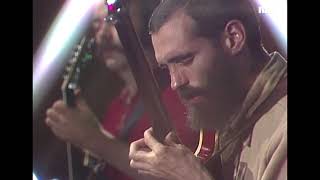
because he played he played on Escala Over the Hill and and and others other of her projects. Uh at at any rate, the that that song that we just listened to, uh Cory and I spent hours and hours and hours mastering the the the entirely written written materials of of Wow. of of that intro.
Uh, and it and it is a a good a a good doorway into to to Coriel's playing. Corielle was also the one who who who introduced me to to the the music of Jimmyi Hendris. Ah, and and I remember specifically uh driving across the Golden Gate Bridge uh and hearing Jimmyi Hendricks on the on the on the radio and and uh and just embracing it uh uh knowing that that nothing would be the same.
Nothing would be the same. It wasn't. Exact.
And indeed it wasn't. Uh and and I these were in the very first days when I was playing the electric bass as well. And I didn't know that that had uh Yes, of course.
So there's we're talking 6768 here. Yeah. 68 maybe even into 69 in that time.
And but Corel Okay. So Bob Moses told me about the group Free Spirits that was around at that time with Jim Pepper, Cory Alb, Bob and um I can't remember one other member. And to also it's perilous to say somebody was first at something, but Corell in a certain way was a jazz rock guitarist before that existed.
And am I right about that? that he really grew up and embraced both worlds. That that would seem to be the case.
Yeah. I he he certainly brought that to the that energy to the Burton quartet and and introduced me to a lot of the uh and Gary wanted that that vocabulary. Yeah.
Gary wanted it and so did I. Uh uh and and Corel was a a in addition to being a valuable resource in in that way was was a backed up backed up his talk with the with the walk. He was a wonderful his playing embodied the the the the possibilities for for those those musics colliding and profiting from each other.
Here.