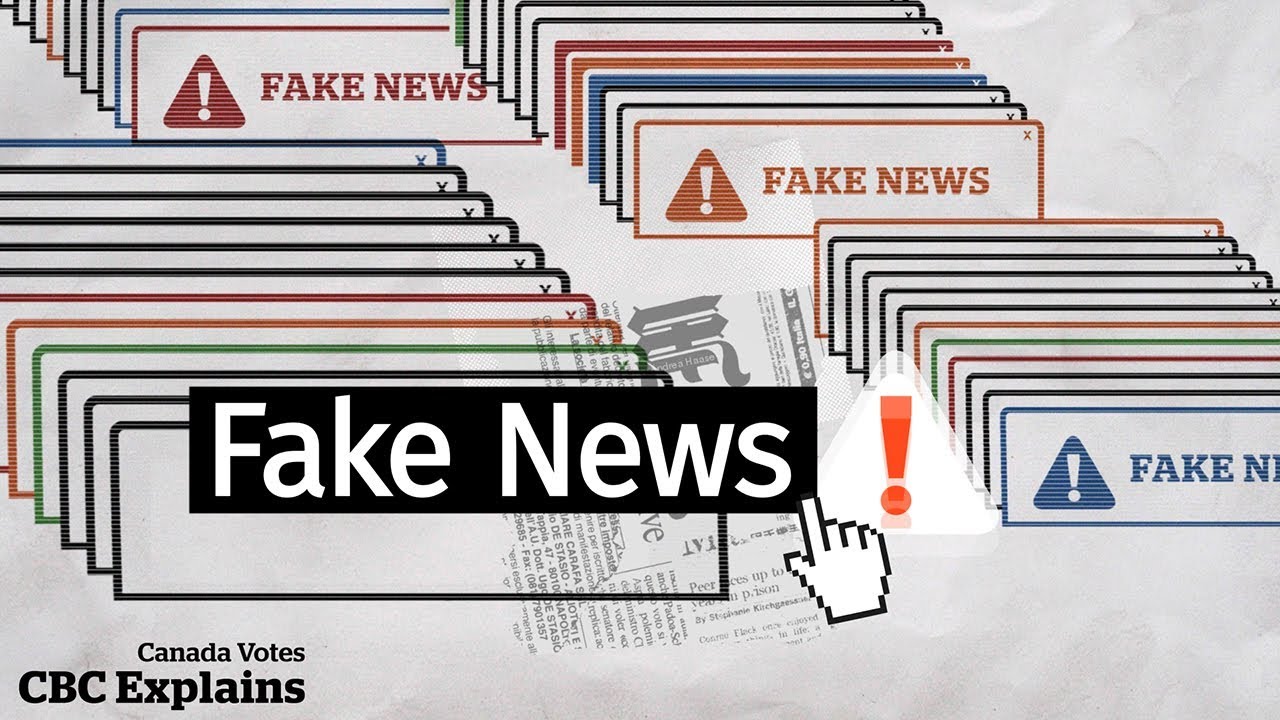
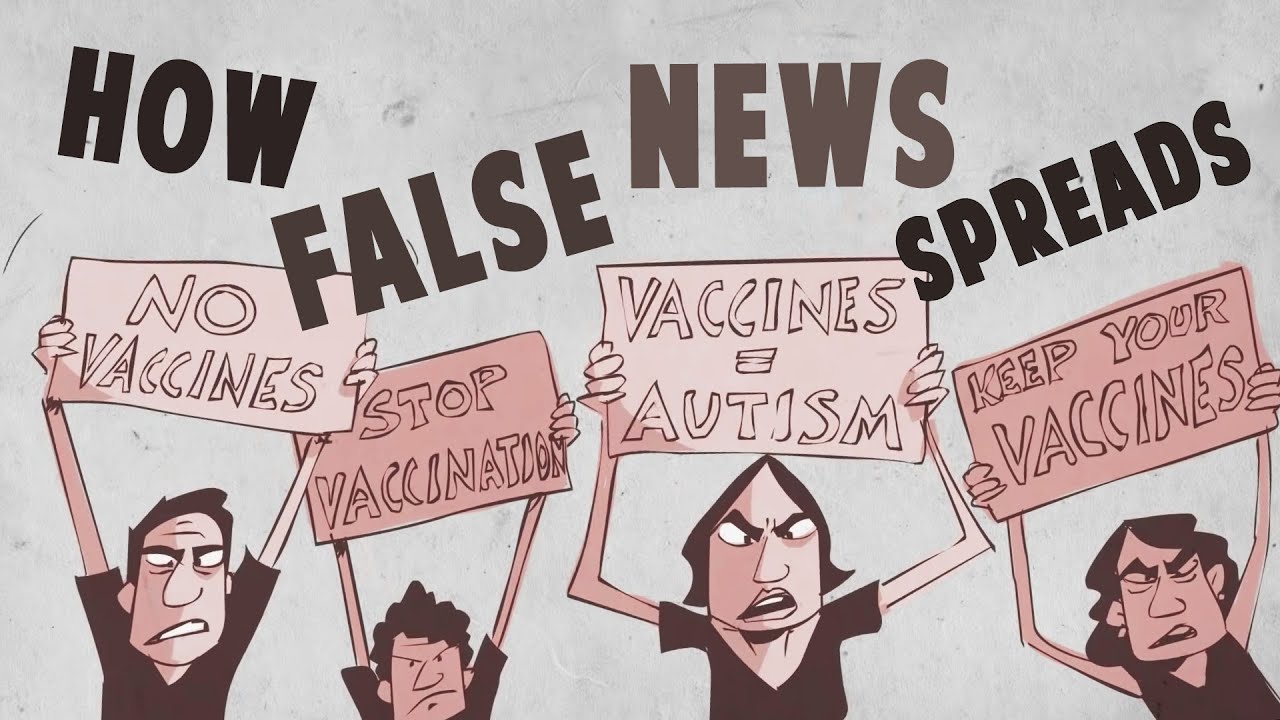
90% of Canadians have fallen for fake news that's according to a new poll for Canada center for international governance and innovation and most of that fake news is found on Facebook so who is behind this misinformation and why do we fall for it Sasha Havlicek is the CEO of a British think-tank that studies online hate and disinformation I sat down with her last week here's that conversation Sasha thank you so much for joining us today thank you for having me a poll out this week that has a lot of Canadians talking saying 90% of Canadians
have fallen for fake news which was defined as partially or wholly fake information a lot of that coming through Facebook does that statistic surprise you and we haven't even got to deep fake no not yet which is the technology that will really get us stumped on fake news it doesn't entirely surprise me news and information that's shared within peer groups tends to be more impactful we tend to believe it a little bit more it's worrying but what we see in relation to misinformation today is that the picture is more complex than that because it isn't
just about false information or indeed false means of distributing that information through obvious botnets who are the people that are behind this fake news and this disinformation and why are they doing it well this is a thing you know when everybody's been looking at this really since 2016 and everybody's been asking really the big question about Kremlin interference now there is that happening but what we're seeing is a much more complex set of actors we're seeing transnational non-state actors very active here the international all right has been as much of a player I would say
as Kremlin sources across Europe across a whole range of elections of late and we see an investment in long range campaigns around wedge issues why is it that social media companies aren't doing more to counter this is it beyond their control is it not in their interest what's the motivation so I think that there have been efforts by the companies to look at this sort of range of harms if you like from violent extremism through hate speech through the misinformation space most of the approach that's been seen now today but you know governments have been
basically looking at this from a Content moderation perspective and they've been saying to the companies you need to do more to moderate or to remove egregious and problematic content and while there is content that definitely needs to be removed and it's illegal so there's a lot of hate speech that's illegal there's harassment that's legal there's defamation that's illegal we need to do more to apply existing laws online more effectively that isn't happening very well right now there's a whole lot of course that isn't that that's falls into the sort of gray area of legal but
problematic content this is where we need a new tack we need a new approach we need to be looking at this from the perspective of the technological architecture of these platforms that essentially tilts in favor of extremist messaging and polarization how do you go about countering something that has become so ingrained in something that's so much a part of our lives in social media I think you need a three pronged approach to this you need to see policy coming into play and I do believe that regulation is absolutely necessary the self regulatory approach with the
companies I don't think is going to work and that regulation needs to focus beyond content moderation on that architecture that I just talked about the imbalances that we see online that tilt in favor of extremism the second piece is really competition we need to provide open data for civic actors to compete effectively for share of mind online in order to compete effectively with these extreme ideas and we we don't do that very effectively today civil society groups tend not to have the tools they tend not to have access to the data at scale it's in
a way I think something that both government and the companies could come around together to invest in that kind of machinery to upskill and upscale the civic response and then thirdly there is an investment that needs to be made in education and when we talk about education so digital citizenship education it shouldn't just be for kids this should be for everybody what about some of the immediacy that the technology allows and I think of the terrible attack in New Zealand in March this is somebody who had a GoPro attached to himself was live broadcasting his
attack how much of a challenge is it to deal with something like that and the propaganda value that that holds when you can now reach out to hundreds of thousands of people around the world in an instant well it's it's a huge potential of course and one of the things I would say is that that attack gave us an insight into the wider ecosystem of these extremist groups the manifesto the so-called manifesto that the attacker put out was put out on an alt tag back platform so you see a number of platforms either being co-opted
were being set up and created for the purposes of obviating some of the restrictions that we've seen on the mainstream platforms on Facebook on Twitter and you know on YouTube and and so you have this entire ecosystem now of alternative platforms that enable sort of rabid engagement and communications in sort of nether regions of the internet where a lot of the plotting and planning and deployment of information operations happens and then there needs to be a much better crisis response system in place so that governments and the tech companies when an attack like this happens
are able to respond in in much in you know in a much tighter timeframe we're in an election year what should Canadians be prepared for in this election and what's the possible fallout in consequences of this kind of disinformation being fed into the campaigns I think you know one has to be preferred for the fact that there is a whole plethora of actors that will be interested to sow the seeds of polarization potentially hate but also sort of tilt the system in perhaps favor one or another party it's not just foreign state actors it is
a combination of non-state transnational actors working often with domestic extreme actors we've seen in the European context that bleed into populist party actors and one of challenges is to distinguish between those and be able to develop a response I think we need to be watching much more closely the extent to which the social media companies commitments around for instance political ads transparency is being delivered on Sasha thank you so much thank you