hi I'm John Fredrickson and welcome back to the I HTTP Institute in our first video we showed you how to address a few the problems that can prevent you from establishing the first step and a therapeutic alliance declaring a problem in our second video we showed you how to address obstacles that can prevent the patient from offering a specific example of his problem to explore in those two steps we pointed out how his defenses and then we encouraged him to declare his problem and then a specific example as a result of all that defense work
the patient finally said well just last night I told her that I want to start looking for another job and she threw a glass of water in my face so I yelled at her now we have a specific example so we can go to stage 3 exploring that example to get a shared understanding of what causes his problems once the patient declares a specific example we asked him what's the feeling toward her for doing it now just because you asked him doesn't mean he'll immediately tell you what he feels in fact he can do one
of three things he may tell you was feeling he may become anxious or he may use a defense when you ask for his feeling the patient may keep responding with defenses so if he does just help him with his defenses this work is really important why the defenses he uses to ward off feelings cause his presenting problems and remember the patient doesn't use defenses on purpose he doesn't even see them so our first job is to help him see the defenses that have been creating his presenting problems otherwise he won't see them or turn against
them so let's take a look at some defenses which can prevent the formation of a therapeutic alliance for instance you say what's the feeling toward your wife for throwing that glass of water in your face the patient replies I wish she hadn't done that so let's think for mullet is that a feeling is he really anxious or is this response a defense I wish she hadn't done that exactly it's the defense and why well first of all it's a fantasy not a feeling he relates to the wife he wishes he had rather than the one
who threw water in his face we call it defense denial through fantasy because he relates to a fantasy wife rather than face the feelings towards the wife he has if you explore his wish for that fantasy wife you'll just help him engage in denial and avoid his feelings so block that defense and return to your focus invite the patient to say what he feels he said I wish he hadn't done that you could respond but she did throw the glass of water in your face so what is the feeling toward her for doing that remember
if we don't know what he feels we can't find out what triggering the defense's that causes presenting problems then we won't be able to help overcome those problems sometimes a patient will use a different defense to avoid declaring what he feels you asked what he feels then the patient responds by saying I wonder about whether we should have got married in the first place since we come from such different backgrounds and then there's the issue of religious differences I'm not saying I don't respect her religion it's just that it was probably a huge barrier is
that a feeling anxiety or defense right it's a defense he doesn't say what he feels and said he wonders thanks and speculates always block the rumination and return to your focus the feeling toward his wife you might say you've done a beautiful job describing your thoughts but the question I asked is what you feel if we don't go off to your thoughts what is the feeling toward your wife for throwing the water in your face remember we want to find out what he feels we don't want to help him cover his feelings with thoughts now
sometimes a patient will use another defense to avoid saying what he feels you asked for his feeling and the patient responds I don't know what I felt I got a phone call just afterwards for my secretary and I read her out over a stupid little mistake she made I was maybe a little too harsh but darn it I don't want her to make any mistakes now is that the feeling toward his wife anxiety or defense good it's a defense of displacement he displaces his anger toward his wife on whose poor secretary here you can identify
his defense and encourage him to declare the feeling toward his wife instead Wow your wife through the water but your secretary took the heat if you don't turn all this feeling under your secretary what's the feeling toward your wife let's suppose the patient responds maybe this job idea is not good I should probably just forget about it is that the feeling toward his wife anxiety or defense good it's a defense rather than describe the feeling toward her he dismisses and ignores his desire again we identify the defense and encourage the patient to describe as feeling
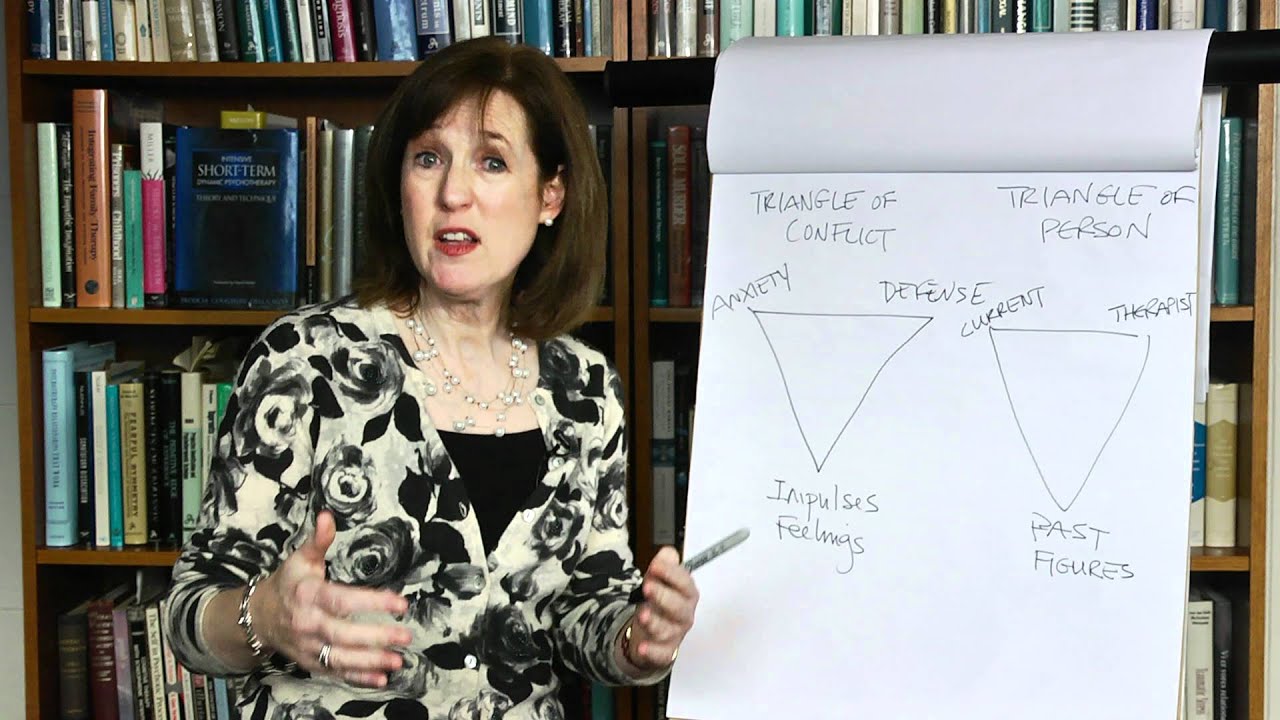
do you notice how you dismiss and abandon your desire here is this solution or could this be creating your problems if you don't dismiss your desires what is the feeling toward her for throwing this glass of water in your face let's suppose he responds I feel angry now we have his feeling so we could go to stage for asking how he experiences that feeling in his body as we do so we learn what defenses he uses and how they create his presenting problems by discovering the triangle of conflict of feelings anxiety and defense we develop
a shared understanding of what causes his difficulties so let's review what we did stage 1 we asked the patient what's the problem you like me to help you with then we addressed any defenses the patient used until he offered a problem for which he wanted help stage 2 we asked the patient can we take a look at a specific example where that problem comes up then we addressed any defenses the patient used until he offered us a specific example of his problem stage 3 we asked what is the feeling toward her then we addressed any
defense as the patient used until he could declare his feeling notice these first three stages helped a patient declare a problem declare a specific example of his problem and finally declare what he feels those are the first three stages in developing a therapeutic alliance at each stage we helped a patient see and turn against defenses that would otherwise prevent us from forming a therapeutic alliance now we notice problem is we've learned that is feeling his anger he deals with it by using defenses of denial through fantasy rumination and self dismissal so now we can begin
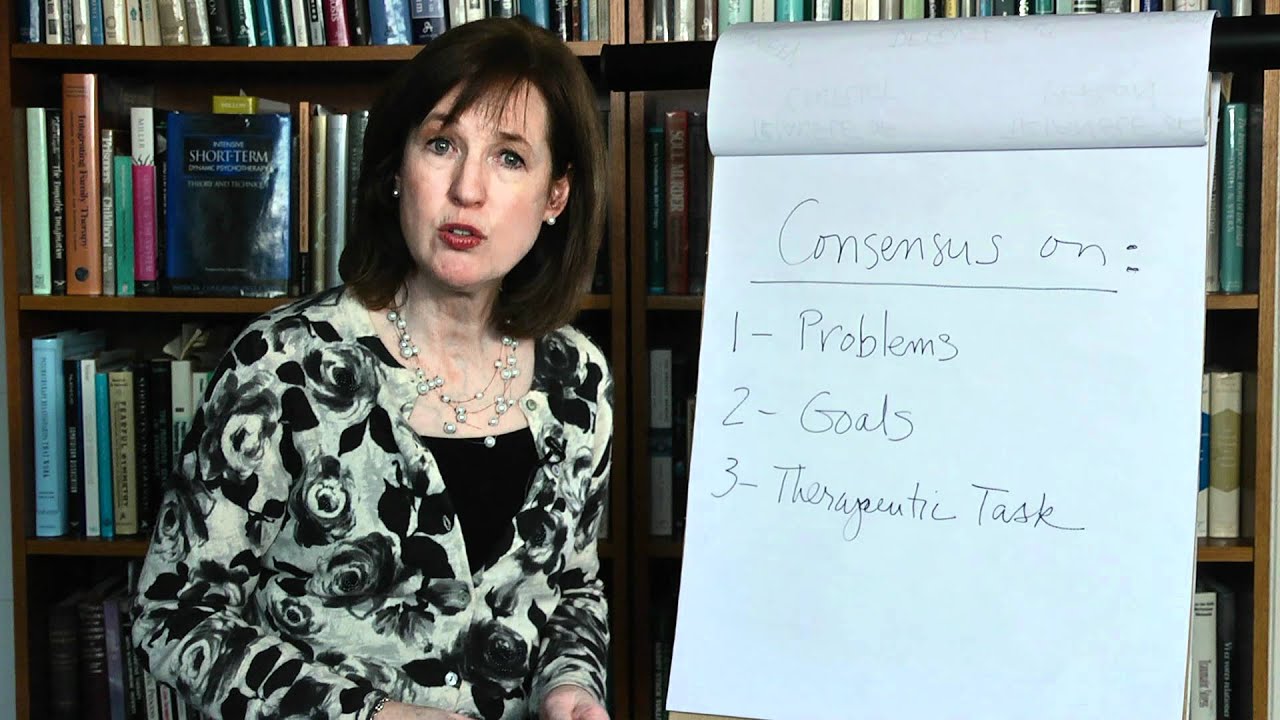
to see the triangle of conflict and we will help the patient see how his defences create his problems for instance denial through fantasy keeps him from dealing with his wife realistically self dismissal keeps him from pursuing his desires and from asserting himself within conflicts if he can see that we can help and turn against his defenses and face his feelings instead once we have consensus on is triangle a conflict what causes his problems we can get consensus on the therapeutic task what we do in therapy and why we do it in our next two videos
my colleague and friend Patricia Coughlin will show you how to develop a consensus on the triangle of conflict and a consensus on the therapeutic task after all if the patient doesn't know what to do in therapy or why he should do it we really won't have a therapeutic alliance if you want to learn more join our webinar series and courses or visit our clinical corner for case consultations with experts buy our books and DVDs we'll e-mail you anytime we post new videos or blogs our training materials are designed to help you become more skilled not
just more knowledgeable we want to do everything we can to help you help others more effectively in the meantime I'm John Frederickson from the eyes TV Institute thanks for joining us and I look forward to meeting you soon