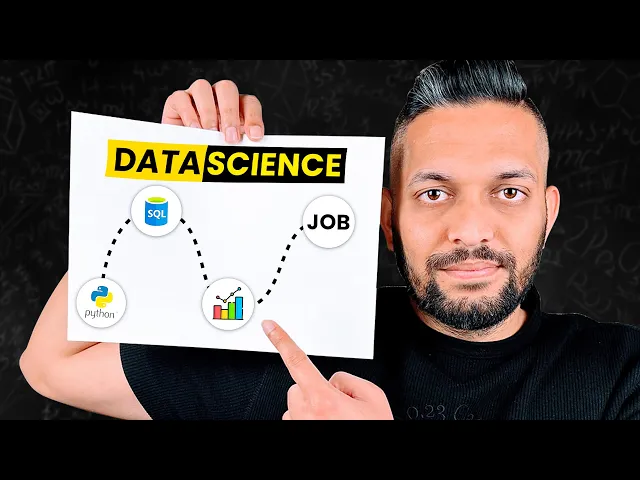
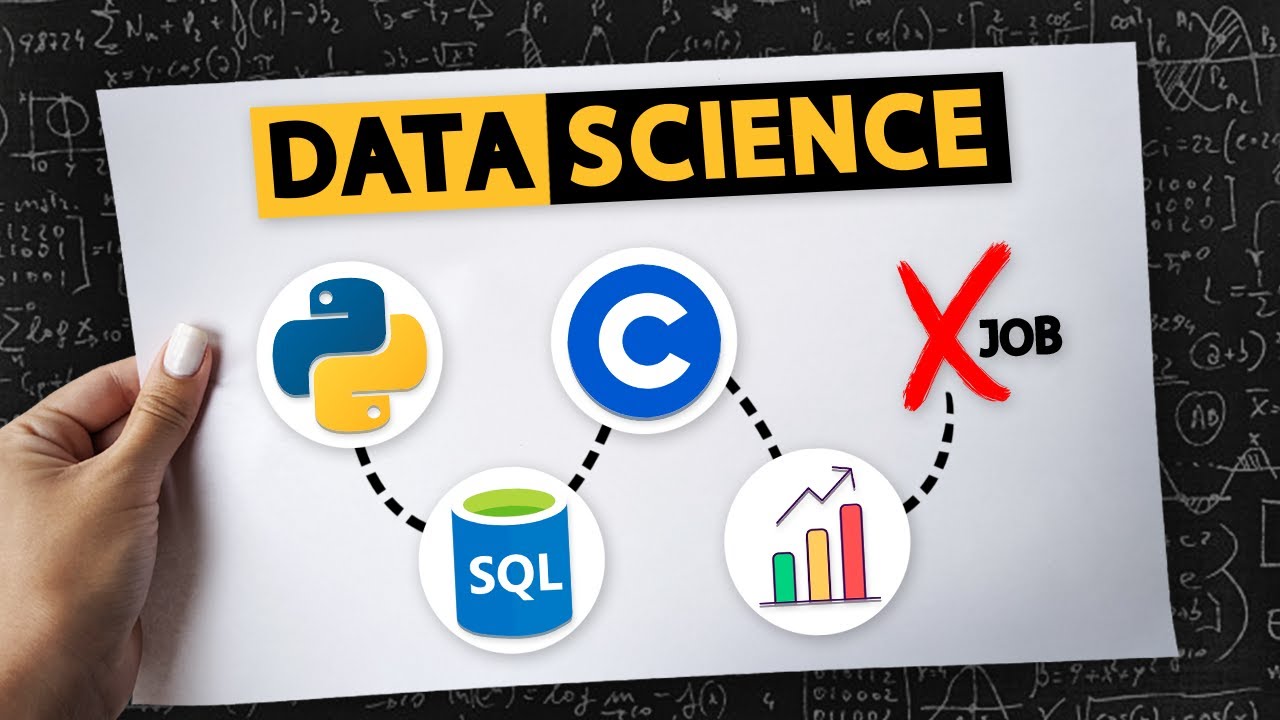
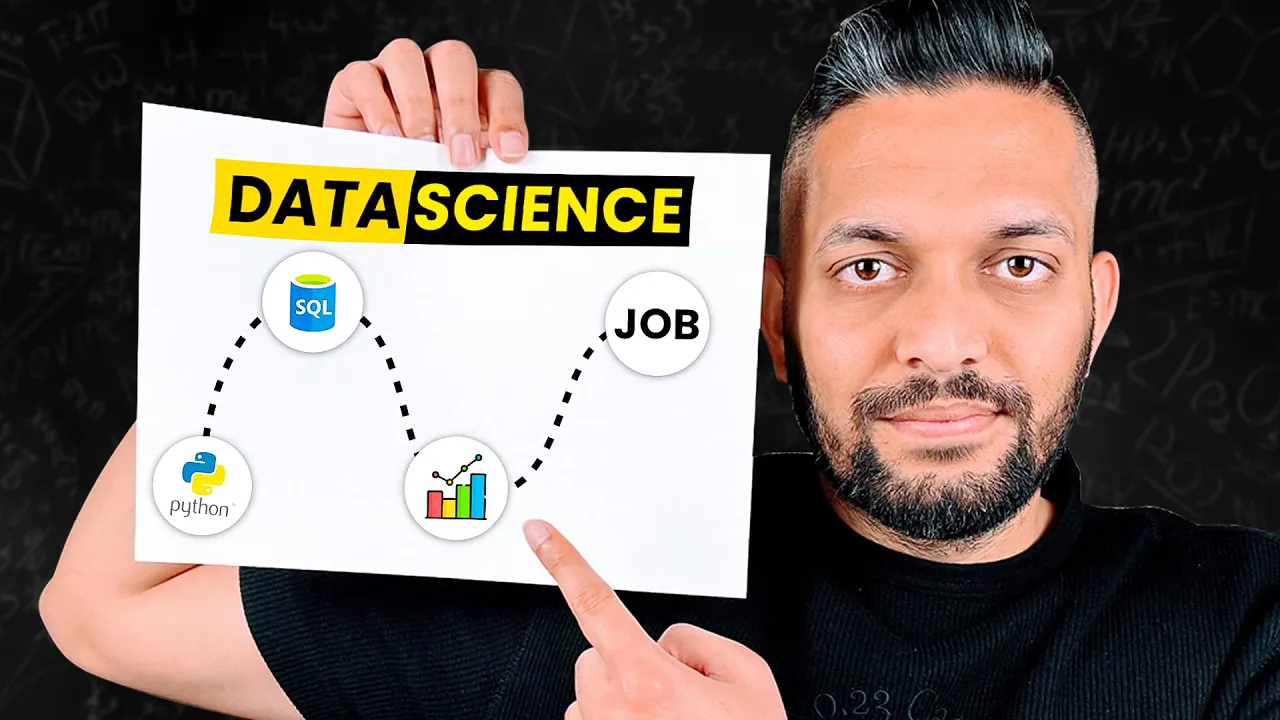
programming math and business data science is a combination of these three skills but that does not mean that these are the only skills you need to become a data scientist you also need machine learning software and data analysis skills but don't worry I will give you all the resources you need to become a data scientist in this video let's do this let's start with math at the very core there are three topics that you need to master In Math First topic is linear algebra linear algebra is important to understand how data is represented in machine
learning models when you are training a model you are actually performing some operations on matrices and vectors without linear algebra you won't be able to understand what's happening under the hood of these models even the basic operations like principal component analysis which is used to reduce the dimensions of your data require a solid understanding of linear algebra Concepts second topic that you need to cover is calculus calculus helps you understand how machine learning models learn learn from data when you are training a model and the model makes a wrong prediction calculus tells you how to
adjust the model to make better predictions next time this process is also called gradient descent which is at the heart of most machine learning algorithms without the understanding of calculus you will miss the heart of machine learning lastly you would also need to learn probability and statistics probability helps you understand uncertainity in your data and make predictions about the future events for example when you're building a Spam detection model you are actually calculating the probability of an email being spam based on its content statistics on the other hand help you draw meaningful conclusions from your
data and validate your findings within statistics you need to cover both descriptive and inferential statistics descriptive statistics help you summarize and visualize your data it covers topics like mean median mode and standard deviation these Concepts help you understand the basic properties of your data before you even start building models inferential statistics on the other hand help you make predictions Based on data available to you it includes hypothesis testing confidence intervals and regression analysis these Concepts become useful when you want to know whether your findings are statistically significant or just random chance now that you know
all the math that you need to learn let me show you how to learn it Khan Academy has actually made our life very easy they have a lecture series on all the three main topics that we discussed linear algebra calculus and probability and statistics all you need to do is go through all the three topics in order these series are beginner friendly and a great place to start but as you go through them I want you to keep one thing in mind these lectures are quite comprehensive and cover a lot of different concepts some people
might find it overwhelming to absorb all this information at once I want you to take your time but do not try to remember everything our goal is not to memorize things we want to understand some core ideas and later use them when we study machine learning but before we can get into machine learning we need to to do some programming when it comes to programming for data science we have two programming languages to choose from first we have R which is purely designed for statistics and data analysis second and more popular option is python python
can be used for applications Beyond data science I would recommend picking python as your programming language python has amazing libraries like pandas for data manipulation numpy for numerical computations and pyit learn for machine learning these Li make python a perfect choice for data science but how do we really Learn Python I recommend learning python by doing actual coding in Python you can use an interactive website like learnpython.org on this website complete the tutorials on learning the basics and data science tutorial as always play with the code and complete the exercise portion as I was making
this video I realized that it might be difficult for some people to follow my learning path with all these different resources so I I decided to add one solution that I particularly like because it covers everything you need in one place you see when it comes to data science Interactive Learning is very important that's why I recommend the learning path from data camp with data Camp you will learn by doing using short videos and Hands-On interactive exercises you can code and practice within their platform I'm really excited to tell you about their associate data scientist
in Python certificate this program not only teaches you all the skills that you need to become a data scientist it also includes a certification that you can attempt to become a certified data scientist with data Camp you can learn SQL python R machine learning and AI all in one place after learning these Technologies you can also get certified to prove to the employers that you've got all the skills needed for the job I will leave a link to data camp in the description other than python I also want you to learn SQL or SQL SQL
is the language of databases as a data scientist you will spend a lot of time querying data from different sources in many data science interviews they specifically test your SQL skills because it's such an important part of the job to learn SQL we'll write some SQL queries so go to this website called W3 schools and do some Hands-On tutorials make sure to go through at least the SQL tutorial portion at the top please note that I did not cover data structures and algorithms here because not all companies ask them for data science interviews but I
want you to know that there are some companies that have coding interviews which require a basic understanding of data structures and algorithms if you're planning to prepare for these coding interviews you can sign up for my free email newsletter on instab by. iio I will send you one popular interview problem and its solution in your inbox every week I will leave the link in the comments finally we are ready to do some machine learning for machine learning I recommend this machine learning specialization by Andrew NG on corsera if you don't already know Andrew NG is
the founder of corsera and works as a professor at at Stanford his original course on machine learning is probably the world's most wased machine learning course in the specialization he has made his original course even better the specialization contains three courses supervised learning unsupervised learning and advanced algorithms these courses will cover all the popular algorithms like linear regression logistic regression and random Forest it will also introduce you to neural networks and deep learning and the best part is that you can get this course for free if you audit it if you really want to have
a deep understanding of ml this is the best course out there once you are done with this course head over to kaggle and do some Hands-On practice on kaggle you can see the projects that others have built you can follow along in the beginning and build some confidence when you feel comfortable you can participate in one of their competitions this will help you in two ways one it will give you confidence that you can complete data science projects independently two you will build a portfolio of projects that you can mention in your resume these projects
will be crucial when you start applying for jobs because they show employers that you can actually apply what you have learned to solve real problems the last skill that we need to cover today is business I know this sounds vague and you must be thinking why a data scientist would need knowledge of business let me give you an example imagine that you work as a data scientist at YouTube you have decided to remove the like button from YouTube because let's face it many people don't like the video Even when they are clearly enjoying it but
you cannot just wake up one day and decide to remove a button you will design an AB experiment to do this in this experiment you will remove the like button for a small section of users and collect some metrics what metrics would you look at to decide if you can remove the like button and this is where the business knowledge comes in for example you might look at the watch time to see if removing the like button affects how long people stay on the platform or you might track the number of shares to see if
the engagement is affected these decisions require you to understand both the technical and business aspect aspect of the problem many people choose to go deeper into AI after learning data science if you want to know how to learn Ai and get certified by Nvidia watch this video my name is sahil and I'll see you in the next one