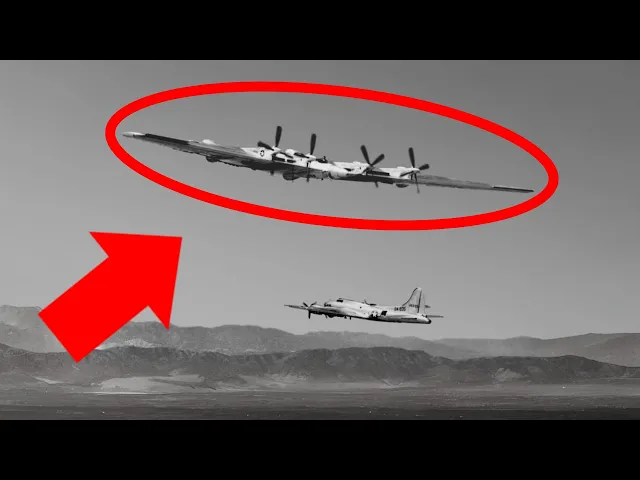
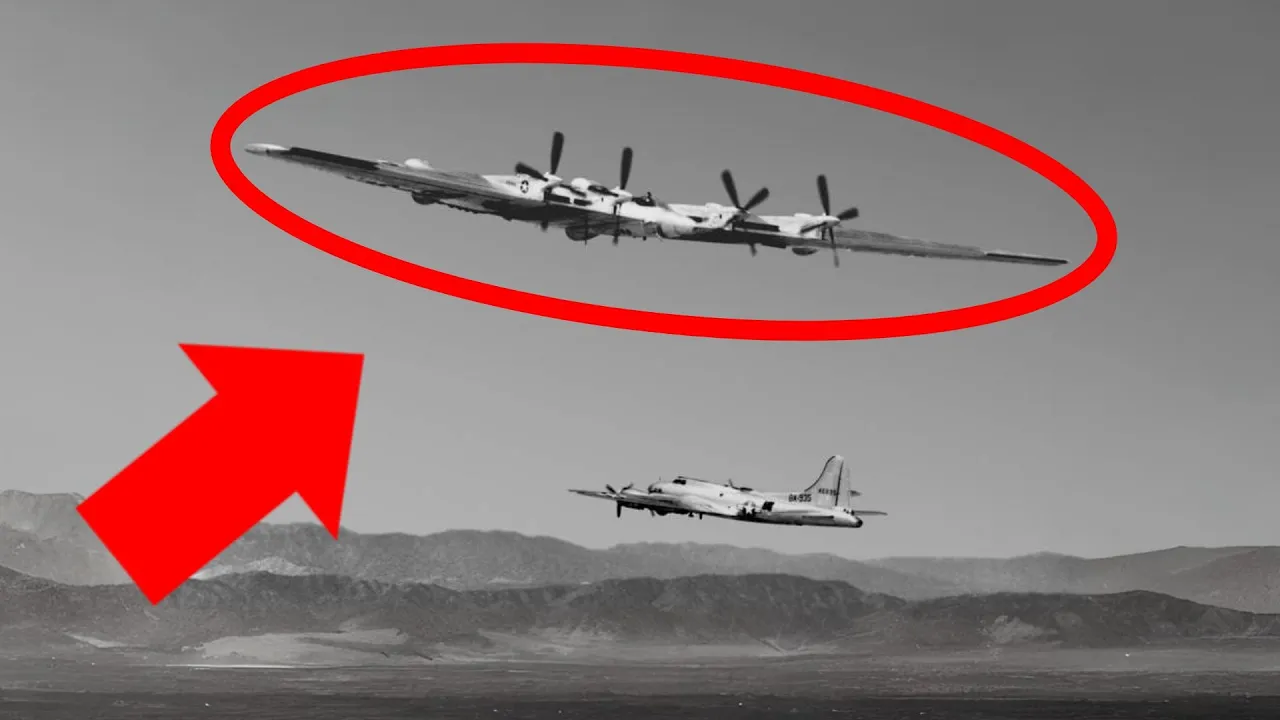
High above the Mojave Desert, California, a massive aircraft, unlike any other, cuts through the sky on June 5, 1948. Its sleek, boomerang-like silhouette defies aeronautical norms of the era. Its alien form - absent the familiar tube and stabilizers of traditional aircraft - hints at future stealth bombers like the B-2 Spirit and B-21 Raider.
This is the "Flying Wing," from the mind of aviation visionary Jack Northrop himself. Test pilots Major Daniel Forbes and Captain Glen Edwards push the revolutionary aircraft to its limits. The YB-49's smooth, tailless profile presents a striking contrast to conventional bombers, its 172-foot wingspan dwarfing the B-29 Superfortress by 30 feet.
With no fuselage or empennage, the entire 89,000-pound behemoth is a lifting surface, promising unparalleled efficiency as it reaches speeds over 390 miles per hour. Eight Allison J35 turbojets, four on each wing, hum with power, embodying the Flying Wing's potential to deliver a 5-ton payload over 10,000 miles without refueling. As Forbes and Edwards revel in its unconventional handling, the YB-49 suddenly pitches upward sharply.
The leading edge rises towards the sky, and in an instant, the vast expanse of desert vanishes from view. The massive wing plummets, tumbling end over end. The pilots strain against their harnesses, unable to reach the controls as the airspeed indicator climbs beyond recovery limits.
The YB-49's innovative design - once its greatest asset - now becomes its gravest threat. As the aircraft spirals downward, Forbes and Edwards grapple with a chilling realization: their revolutionary bomber, designed to outmaneuver enemy fighters, might prove impossible to recover from this perilous tumble. With each passing second, the promise of America's aeronautical future plummets closer to the unforgiving desert floor.
Bringing the stories of aviation history to life isn't just about knowing the facts. It's about creating compelling visuals that capture the power and majesty of these incredible machines. But let's be honest, creating high-quality videos can feel like you're flying a B-29 Superfortress solo - it's a lot to manage.
So, allow InVideo AI to be your trusted co-pilot in video creation. Much more than just a video editor, InVideo AI is the world's most used AI video creator, helping you with the painstaking tasks of scripting, editing, and finding relevant footage so you can bring your ideas to life using simple text prompts. Let us show you how it works.
We typed in a prompt to create a video about the Cold War's most secretive spy plane, the SR-71 Blackbird. Watch what InVideo AI came up with in just minutes. Impressive, right?
And that's just scratching the surface. With more detailed prompts, you can create even more tailored content. You can input your own script, and InVideo AI will produce a finished video by itself.
Not convinced by the result? Simply hit regenerate, and you'll get a fresh take. The edit command box is where InVideo AI really shines.
Need to change the intro? Done. Want better footage of a P-51 Mustang dogfighting?
Just ask. Want to translate your video about the Battle of Britain into German? It's as easy as flipping a switch in a Spitfire's cockpit.
With InVideo AI, you can make up to four videos for free, but if you plan to create truly top-gun content, we highly recommend the paid plan. Starting at just 20 dollars a month, it removes the watermark, gives you access to the groundbreaking voice cloning feature, and unlocks millions of royalty-free high-quality stock footage clips which would undoubtedly cost hundreds of dollars if sourced individually. Go to the link in the description and use our code DARKSKIES50 to get twice the number of video generation credits in your first month.
Try InVideo AI today and start creating your own captivating visual stories of aviation history. Jack Northrop, a visionary engineer and aircraft designer, played a pivotal role in the development of the YB-35. His unique aircraft design, conceived in the early 1930s after almost two decades of working in the aircraft industry since the beginning of World War 1, was a testament to his innovative spirit.
He founded his own company and set to work on an aircraft based around the flying wing design, which aimed to eliminate all non-lifting components of an aircraft, such as the fuselage and tail, to reduce drag and increase fuel efficiency. Northrop was committed to eliminating all the traditional features of an airplane and replacing them solely with the wing, which would significantly contribute to lift and forward thrust. For Northrop, his project was aeronautical design in its purest form that, besides its aerodynamic performance, would be cheaper to produce and faster to deliver.
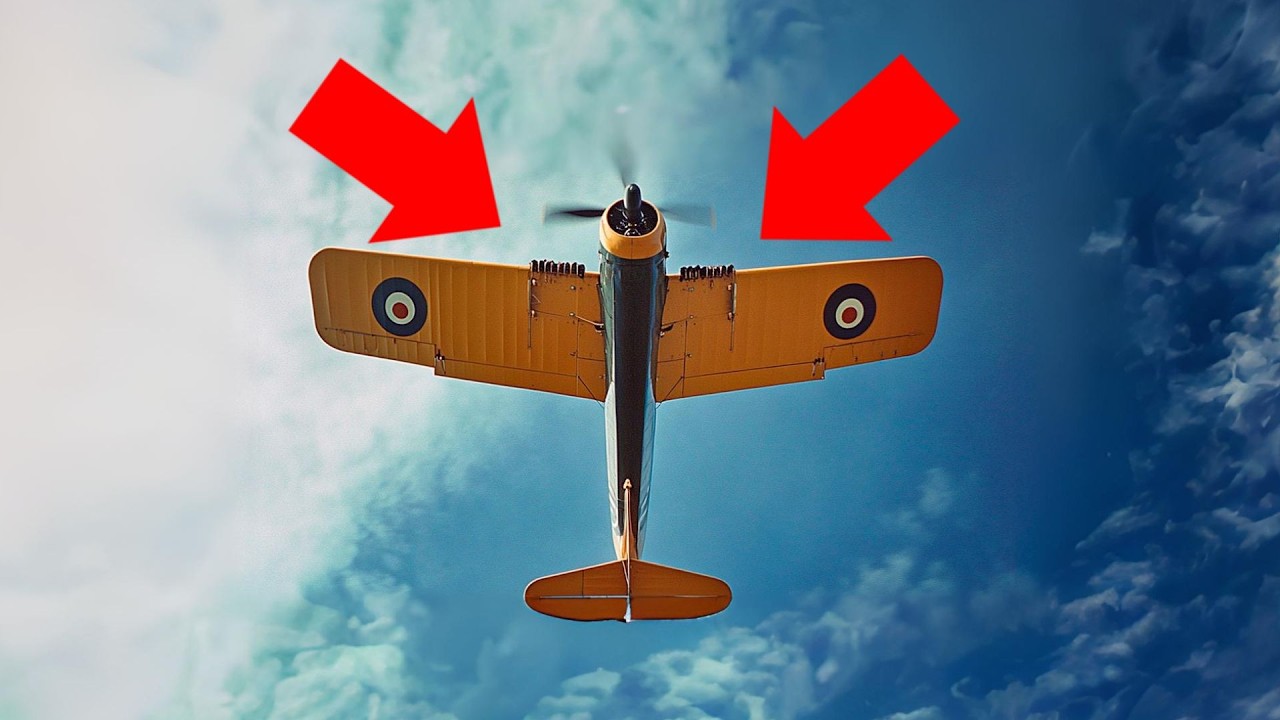
In 1938, while tensions rose in Europe between Germany, France, and the United Kingdom, Northrop drew the first sketches of his design, which comprised combined elevator and aileron controls or elevons for better longitudinal and lateral control. Two years later, in 1940, with Europe already at war and the German Reich taking over the continent, Northrop produced his first flying wing, the laminated wooden wing N-1M Jeep. These unique-looking yellow aircraft took to the skies some 200 times to test the feasibility of the design.
Under the control of aviator Vance Breese, Northrop made the necessary adjustments to validate his theory: the flying wing was faster than conventional aircraft designs. Despite its innovative design, the N-1M exhibited stability issues. This led Northrop to develop an enhanced model: the N-9M.
This upgraded aircraft boasted a 60-foot wingspan and featured a pair of rear-mounted propellers. These were powered by dual Menasco powerplants, each sporting six cylinders. The improved configuration enabled the N-9M to achieve impressive velocities, surpassing 200 knots with ease.
The design succeeded due to the airfoil configuration the N ational Advisory Committee for Aeronautics recommended. Northrop was now sure that an all-metal wing was feasible. And his confidence paid off when the military approached him with an exciting proposal as conflict with Germany and Japan loomed over the horizon.
As 1941 came to an end and Germany dominated Western Europe, its forces marching across the vast Soviet Union and the Empire of Japan took over the Pacific, the US Army Air Corps issued aircraft specifications that appeared to be tailored for Northrop’s innovative design. The Fear of Great Britain falling into the dominance of the Third Reich led the Army Air Corps to envision a long-range heavy bomber that could fly from the United States to the Third Reich and back. Such aircraft had to traverse the Atlantic Ocean at over 450 miles per hour with a range of over 10,000 miles while carrying five tons of bombs.
Renowned General Henry H. Arnold approached Northrop and asked if his N1-M design could be repurposed as a long-range bomber for the intercontinental objective. The aeronautical engineer affirmed without hesitation.
As far as he was concerned, his design was made for those specifications, and he was delighted to have the vast funds of the Army Air Forces to continue pursuing his flying wing design. Thus, the XB-35 project was born in January 1942, calling for the creation of two prototypes. Pearl Harbor had already been bombed, and Adolf Hitler declared war against the United States.
The American war machine had awakened from its slumber and was preparing for total war. Northrop and the Army hammered out a schedule for the aircraft's development. They aimed to finish the first prototype by late 1943, with the second one following in the spring of 1944.
When the initial XB-35 was finally revealed, it turned heads and dropped jaws. With a length of 53 feet, a wingspan of 171 feet, and a height of 20 feet, the YB-35 was a formidable aircraft. It weighed over 89,000 empty and could take off with over 50,000 pounds, including an armament of 20 fixed .
50-caliber Browning M3 heavy machine guns. The nine-man crew cabin was embedded inside the giant boomerang-shaped aircraft. The midsection featured folding bunks for off-duty crewmen during operations and comprised a pilot, copilot, bombardier, navigator, radio operator, engineer, and three gunners.
The impressive bombload was distributed in six small bomb bays across the wing section, each with roll-away doors. Most of the aircraft was primarily made of polished aluminum, providing the already unique-looking aircraft with a sleek and futuristic appearance. Furthermore, the XB-35 was powered by four Pratt & Whitney R-4360 Wasp Major radial engines, each driving contra-rotating propellers in a pusher configuration that allowed the aircraft to reach a top speed of over 390 miles per hour, with a cruising speed of 240 miles per hour.
Despite the promising capabilities of Northrop’s aircraft, development turned to be slower than expected to have it ready before Operation Overlord, the Allied Invasion of Normandy in June 1944. At this point, the urgent necessity of a transcontinental bomber h ad all but faded away. The United States had already established its foothold in France, Italy, and Africa, with dozens of airbases at its disposal.
However, the military was still interested in the capabilities of the prototypes for a future conflict and continued funding Northrop to experiment with its unique aircraft. On June 25, 1946, Northrop's XB-35 debuted its first flight under the test pilot Max Stanley, departing from California's Hawthorne Airport to Muroc. Its flight was exemplary, propelled by the harmonious drone of its four Pratt & Whitney engines with contrarotating propellers, resembling the intense buzz of a massive bee swarm.
The aircraft hit speeds exceeding 300 knots and showcased a promising range of up to 8,000 miles, aligning closely with the Army Air Force's specifications. Yet, the initial success faced problems with its control drive and propeller mechanisms, leading to a downgrade to standard single propellers. This adjustment reduced the XB-35's speed and ascent capabilities, forcing Northrop to innovate, especially as the AAF preferred the more traditional Convair B-36 bomber.
The challenges were significant, but Northrop and his team were determined to overcome them. What followed was a series of more tests to see the feasibility of the aircraft and analyze if it could carry atomic bombs. During the first months of 1947, Colonel Albert Boyd, chief of the bomber test section at Wright Field, dispatched Major Bob Cardenas to evaluate Northrop’s Boomerang aircraft.
Cardenas was the right man for the job. He was a skilled aviator and engineer and was well-received by Mister Northrop and his team. The skilled Cardenas immediately suggested that the XB-35 Flying Wing should be flown with jet engines, not propellers, and he stated that any engineer who opted for propellers in such a unique design did not deserve his diploma.
During an interview with Mark Carlson from History Net, he recalled: (QUOTE) “I made one flight in it, and in addition to my report, I said, ‘As to flight characteristics, you have good vertical stability on takeoff, but frankly speaking, it’s a dog. It needs more power for its size than the propellers can provide. If you put jets in it, it will improve its capability.
’” The team equipped both test aircraft with a total of eight Allison J35 jet engines. They nestled these powerful units into the wings, evenly split with four on each side. In addition to upgrading to jet propulsion, the aircraft saw significant aerodynamic enhancements, including integrating four vertical stabilizers, two per wing, positioned around the jet engine exhausts.
To further refine the YB-49's flight capabilities, air dams were added along the wings, extending forward from the stabilizers. These air dams were designed to redirect airflow across the wing surfaces, effectively managing lift and drag. Furthermore, the crew was reduced from nine men to six: pilot, copilot, flight engineer, bombardier, and two gunners.
The YB-49 Boomerang was a sight when it flew on October 21, 1947. It shadowed America’s most potent bomber, the B-29, with its 172 feet wingspan 30 feet wider than its peer. During its maiden flight, the YB-49 performed well but experienced stability problems during simulated bomb runs.
Cardenas flew the Flying Wing in January 1948, recalling it was a beautiful plane with incredible capabilities and its fair share of setbacks. For instance, the aircraft accelerated too quickly, blowing off the gear doors one occasion. This was understandable, as the plane had been designed with propeller engines in mind.
Furthermore, the jet engines reduced range in half that, coupled with fuel sloshing in a giant rubber bag without baffles, highlighted the YB-49's impracticality as a bomber. Cardenas also noted the YB-49 was marginally stable about all three axes and could become unstable at aft-center-of-gravity loadings. Nonetheless, testing continued to refine the futuristic aircraft until disaster struck.
On June 5, 1948, Major Daniel Forbes and Captain Glen Edwards, among three other crewmen, took to the skies aboard the second YB-49. The men were climbing steadily when, suddenly, the flying wing plunged into a violent tumble. In a heart-stopping moment, the horizon before them vanished as the wing's leading edge rose sharply, pointing towards the sky.
Then, just as quickly, the massive wing fell back, pointing straight down. The aircraft flipped over and over, spinning wildly. Forbes and Edwards were practically glued to their seats, unable to reach the throttle controls.
As they hurtled downwards, the airspeed increased beyond their control, and the airframe began to overstress, particularly outboard of the engine nacelles. With a loud crack, the wing tore apart, the steel frames snapping, and the aluminum skin folding in upon itself. Moments later, what remained of the aircraft hit the ground and exploded.
The five men lost their lives. Cardenas was called to finish the testing, but the final sentence was already written on the wall: the YB-49 was an unstable platform as a bomber. Several tests employing a Norden bombsight revealed that it was difficult to stabilize the aircraft during a bombing run.
In November 1948, Cardenas was called by the Air Force to brief generals about the state of the Flying Wing. He voiced his concerns about stability and control and praised its unique configuration and potential capabilities. After he spoke, Jack Northrop rose and said: (QUOTE) “I have the highest regard for Major Cardenas and his abilities as a test pilot.
I have not been kept informed. It looks like Northrop has a lot of work to do,” An engineer in attendance replied: (QUOTE) “You have an impossible task. ” Northrop quipped: (QUOTE) “General, I’m surprised you have people in your employ who think the impossible is impossible.
” Cardenas knew the Flying Wing was ahead of its time, requiring computer technology that was unavailable to manage its dynamic behavior. Not one to back down from a challenge, Northrop would keep on trying to make it work. Chapter 6 Fathers of the B-2 Spirit Despite the shortcomings, the YB-49 was kept in the air, and Cardenas flew it to Andrews Air Force Base near Washington, D.
C. , for President Harry Truman to see it in all its grandeur during an air power demonstration show. The seasoned aviator flew the Flying Wing for over four and a half hours, setting a transcontinental speed record.
President Truman, who had already seen the incredible bombers that dropped the bombs over Japan, was left in awe when he inspected the aircraft. The man climbed into the cockpit and was shown the interior of the Flying Wing. He grinned and looked at Cardenas, saying: (QUOTE) “Looks pretty good to me, son.
I think I’m going to buy some. ” Truman then turned to the chief of the Air Force and stated: (QUOTE) “Why don’t you have this young whippersnapper fly this down Pennsylvania Avenue at treetop level? I want the people to see what I’m going to buy.
” Cardenas did not believe his boss would let him fly the unreliable Boomerang at treetop level in the nation’s capital, but, to his surprise, he did. Truman was delighted with the aircraft, but another shortcoming brought the aircraft’s history to an abrupt end. During a flight test with Major Russ Schleeh aboard the Flying Wing, the nose gear abruptly collapsed and fell on a Muroc lakebed, destroying the second prototype.
Russ survived, but the project came to an end in 1953. The Flying Wing and its innovative design remained dormant for over 40 years until the Northrop B-2 Spirit Stealth Bomber was brought to life. Today, the legacy of the YB-49 lives on with the B-2 and its new successor, the B-21 Raider.
Dark Skies would like to thank InVideo AI for its sponsorship. Remember, you can double your amount of video generation credits in your first month by following the link in the description and using the code DARKSKIES50. Take your videos to new heights with InVideo AI.