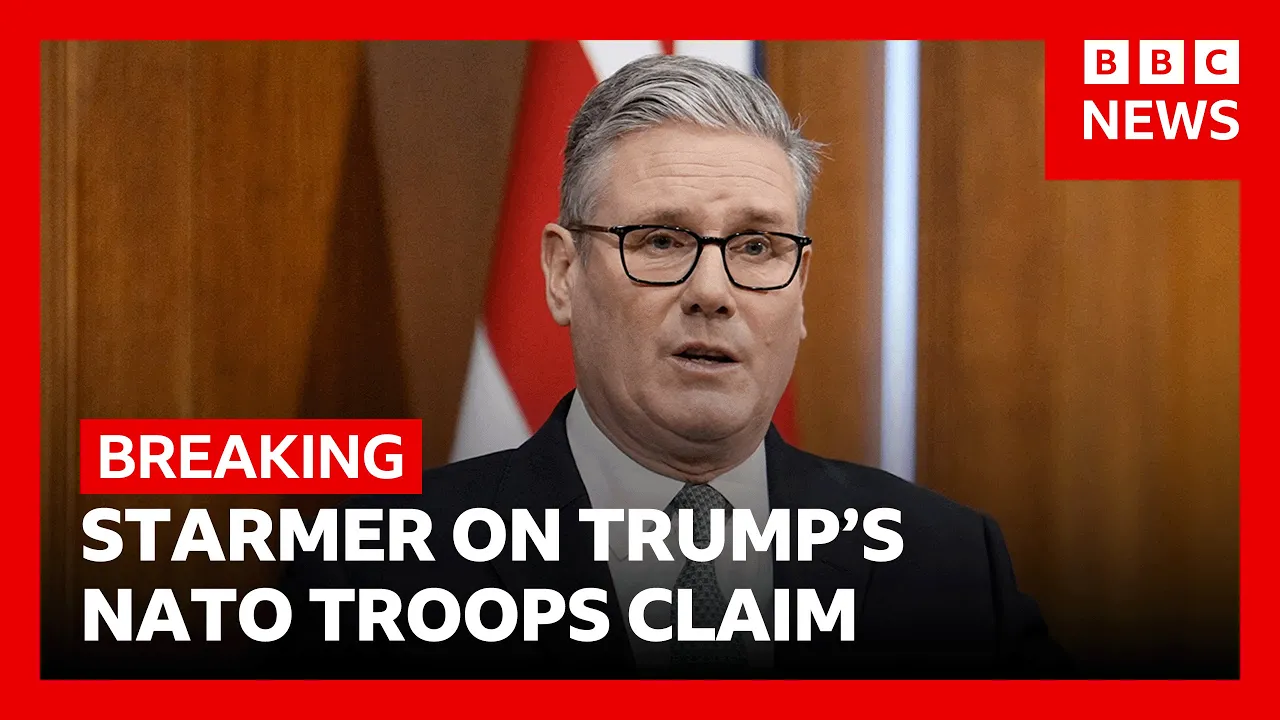
Let me start by paying tribute to the 457 of our armed services who lost their lives in Afghanistan. I will never forget their courage, their bravery, and the sacrifice that they made for their country. There are many also who were injured, some with lifechanging injuries.
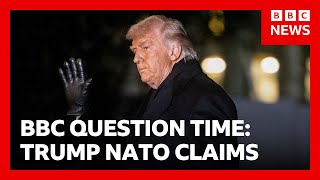
And so I consider President Trump's remarks to be insulting and frankly appalling. and I'm not surprised they've caused such hurt to the loved ones of those who were killed or injured and in fact across the country um as well as politicians expressing a view a lot of the relatives some berieved others whose uh sons in particular suffered dreadful injuries one is Diane Durnney mother of uh a man called Ben Parkinson dreadful injuries um she has said that you need to be tougher with President Trump and demand an apology from him. Will you call for an apology from the president?
>> Well, I've made my position clear and what I say to Diane is if I had misspoken in that way or said those words, I would certainly apologize and I'd apologize to her. >> This is becoming a bit of a habit now. You're having to distance yourself and criticize the president.
It's about third or fourth time in this week. Um, are you getting a bit exasperated by some of the things President Trump says? >> We have a very close relationship with the US.
Um, and that is important for our security, for our defense and our intelligence. And it's very important we maintain uh that relationship. But is it because of that relationship that we fought alongside the Americans for our values in Afghanistan?
And it was in that context that people lost their lives or suffered terrible injuries. fighting for freedom, fighting with our allies for what we believe in. >> So kissa issuing that statement following uh those words from President Trump when he spoke to Fox News.
Uh something that has caused an awful lot of upset. We've been seeing that across the day here on BBC News when he said that we've never needed them. Uh talking about NATO, NATO allied forces saying they'll say that they sent some troops to Afghanistan and they did.
they stayed a little back, a little off the front line. Something that uh as we've been hearing, it's caused a lot of offense and an awful lot of upset as well. Well, we can speak to somebody who actually uh served in Helmand Province, somebody who has firthand experience, Dr Patrick Buri, a former NATO analyst and defense expert at the University of Bath.
Like I was saying, you're a former infantry captain who served in Helmand Province. Just your reaction to the president of the United States talking about NATO allied troops staying back from the front line. >> Good afternoon.
Yeah, and um thanks for having us on. I mean, it's wrong on so many levels, isn't it? And uh he keeps dropping to new levels over the last few weeks.
It's unfortunate. I think it's wrong. Uh factually, as you know, we've lost um 457 service members in this this country.
Another over 2,000 badly injured. So, that's the the cost there. And then you've got the the other nations that really did fight, the Danes, the Dutch, the Canadians, the Norwegians, uh, and even with smaller contingents, the checks, the Baltic states, you know, who who went to the high-risk areas and fought hard alongside their American allies.
That's the thing that that that that really bites. So, it's uninformed. It's incorrect.
Um and it and it is insulting because you know at the basis of this I I had the honor and the privilege to lead US Marine Corps soldiers in in Sangin as well as as well as British. Um and we fought together as brothers. We were integrated platoon.
We kazacted our wounded and are dead together often. Um and the the level and so there's that brotherhood. You know, you've been in combat and that brotherhood and that's important.
And for a man who frankly deferred the draft five times for uh bone spurs, you know, in Vietnam to come around and then question that kind of brotherhood, that's deeply insulting. >> And when you talk about that kind of brotherhood, what do you think your American brothers who you fought alongside, what must they be thinking about their commander-in-chief? >> Well, I don't know.
I can't speak for them. But what I can say is that um certainly those kind of sentiments were not uh made at all to those of us on the front line fighting together. Um my I do think about the people currently serving in the US military stationed all through Europe who some of which will be pretty embarrassed about this uh I would have thought and a little ashamed.
I mean there is another point that was happened in Afghanistan and it does need to be noted that some of the NATO states went to lower risk areas and put their own national caveats on it and that is the truth that did happen. Some states didn't fight as hard as other states because of their national politics and their appetite for risk but some did and uh and that's why it's deeply upsetting and you'd wonder who h who last had his ear uh Donald Trump because it is always about who last had his ear telling him these things. Oh well NATO didn't really fight.
I mean, some of NATO did fight. That's very clear. Other bits didn't.
But the way he went about it is just disrespectful. I think >> you talk about how he's uninformed when it comes to the figures. Of course, we do know that the highest number of u casualties were from US soldiers, 2,461 uh 547 when it comes to the UK, 43 for Denmark.
But when you look at the figures, when you look at the losses relative to the size of the population of each country, then like you say, yes, the United States at the lead, but Denmark suffering incredibly high losses in relation to their population figures, the UK as well. I just wonder your reflections given your firsthand experience that we're talking about body counts in order to to talk about what was done in Afghanistan and who has more clout. It must be so demoralizing for you.
>> Well, it's triggering, isn't it? And you don't when you I didn't sign up to serve Donald Trump by any means. You know, I I signed up to serve the country um and my my regiment and my comrades in arms.
Uh and I was happy and honored to serve with great people from America throughout that career as well. Um so and if you know with my kind of analyst academic head on you start talking about those numbers that you have up on your website um about about population you know it's not about the size of population it's about the size of the military. Yeah.
First of all which is much smaller in some of these countries and then it's the size of that that military that deployed to the front lines. So for example my platoon my company we took 10% casualties. You know it was in fact 25% casualties.
It's like the Normandy breakouts. um the US Marine Corps who served with us took terrible casualties. That wasn't the worst.
The guys who came up to after us and three rifles way worse. So um and and the same with the Marines the you know so we we shared that that that risk together. Um so yeah I I just don't think it's presidential is it?
And that's what that's what causes so much fury. Um but I think expecting Donald Trump to be presidential is is probably you know a bit of an ask um in this regard. You know, uh, presidential is about shared embodying and an understanding if you look at the the shared sacrifices of all our countries whether they're big or small and whether and the and the basically as I said understanding that brotherhood um which is gathered and the interoperational uh experience which is gathered on the front lines behind the front lines you know we haven't even talked about the special forces of a lot of these countries operating together.
So, um, yeah, it's just it's just the the positive of of alliances and what's hold us together is is really bounded in the shared history and the shared sacrifice. And when you forget that or you don't honor it, um, I think the world is a worse place. So, so on that point, because of course you also you're you're you're a former NATO analyst, a defense expert at the University of Bath, when you've got the president being so dismissive of the facts, so dismissive of the shared history that you're speaking about, what future is there for NATO if he doesn't even acknowledge what happened on the ground?
>> Well, we'll see. I mean, we don't want to transpose sort of flippant comments to Fox News out to the to to to the implications for NATO. What I can say is the difference is that the Americans when I worked in NATO knew that they were the most powerful nation.
Um and they knew that ultimately the decision rested with them about what NATO did. Uh and they knew that they funded it the most. Uh they also knew there was bad imbalances about how that funded would have quietly tried to get and you know to to get that those addressed and it was right that Europe has stepped up and we all can see that now and is stepping up.
Um but they wore it well you know that was it. They were they were the most powerful nation in the well in the world, but they wore it well and they were dipl diplomatic about how things went. And I remember, you know, seeing how they worked like at at the interpersonal level and being like had a lot of respect for how how they wore that power.
Um, I think we've moved clearly moved into a different situation uh with that. I would still say about the future of NATO though, the US needs a lot of the bases. This is not like Venezuela where they can just to kind of do what they want.
They need it needs a lot of the bases. It needs the sensors in the listening stations. Uh look at the the seizure of the Russian tanker off Scotland just last week and the way that went through different bases in the UK.
So uh there'd be much more costs and risk involved if the US was to decide it didn't want to be a part of NATO anymore and the corollery of that would then be the the people leaving um the bases, wouldn't it? >> Dr Patrick Buri, former NATO analyst, defense expert at Bath University and also thank you for sharing your experience of having served in Afghanistan. Thank you.