hey guys welcome back to coach all rights in today's video we're going to be going over one of the most frequently asked questions for ap lang and that is what exactly is a line of reasoning a line of reasoning is a logical sequence of claims that supports the writer's thesis it's also a logical progression of ideas and this includes having effective transitions within a paragraph and between paragraphs in order to help the writer convey their message achieve their purpose or develop their argument you might have heard the term thesis statement in reference to some of
the essays that you've written for school and it's important to remember that writers have a thesis they have an overarching claim that they're trying to prove and so even if you're reading a speech or a letter there's still going to be a central argument and also remember that the thesis does not have to occur at the beginning of the passage just like your essay needs a thesis statement what you're reading in class is going to have some sort of thesis as well so when we speak about line of reasoning we need to recognize two things
first you're going to need to understand the author's line of reasoning and then as you write about a passage or you construct your own argument you're going to need to have a line of reasoning as well so how exactly does a writer create an effective line of reasoning well first of all they need to tailor their rhetorical choices to the audience and the occasion because that's going to help them be more convincing the other thing that writers need to do is they need to make specific rhetorical choices and put them in a logical order so
the organization and the structure of the passage also comes into play you'll notice that i included some phrasing on this slide that you're going to see as you approach rhetorical analysis essays because this is going to be the stable wording that the college board uses so you need to be familiar with these phrases develop an argument convey a message and achieve a purpose now sometimes students want to know well why is it an argument and not a message when you're looking at a prompt well honestly at least in my opinion that depends on the type
of passage for instance if you're reading a eulogy there's probably going to be a clear message or maybe a clear purpose but the person's probably not making an argument because that wouldn't really be appropriate for the occasion so as you're looking at a passage there are some questions that you can ask yourself in order to determine the writer's line of reasoning so one question that i often ask my students is what major choice or choices does the writer make in the beginning the middle and the end because remember a line of reasoning is a logical
progression and so often times writers make specific choices at the beginning of a passage the middle of the passage and the end of the passage so you want to ask yourself what are these choices and then you want to ask yourself why is the writer making this choice at this particular part of the passage in addition to looking at the order of the major choices it can be very helpful to divide the passage into sections and then ask yourself how does this particular section help the writer prove his or her thesis you also want to
ask yourself why did the writer choose this particular choice for this audience on this occasion you want to examine that rhetorical situation as well so just like the writers that you study in class have to create a line of reasoning you as a student also have to create a line of reasoning when you write an essay so it doesn't really matter which type of essay we're talking about here but you as a student need to create a line of reasoning so how exactly do you do that well first of all you need to recognize that
you need to find evidence that proves your thesis and then you need to explain how that evidence proves your thesis don't just assume that the person reading your essay is going to know so that explanation is actually going to be your analysis or your commentary so something else that you need to be aware of is that you want to create layers of evidence and commentary and so one thing that i have my students do when they're writing an essay is i actually have them highlight their evidence in one color and their commentary in another color
keep in mind that not every single sentence is going to be highlighted because sometimes the sentence is just a claim it's neither evidence nor commentary but the reason why i have them do this is because i want them to see if they've created layers so in a perfect world your paragraph is going to have layers of evidence and commentary so let's say that your evidence is green and your commentary is pink then if i look at your paragraph and you've highlighted it correctly you should have some green some pink some green some pink and maybe
that pattern would continue what we don't want to see is this huge block of green and then this huge block of pink we want it to be differentiated throughout and that's going to help your flow and your development as well one thing to keep in mind is that this does take practice but you want to aim to have more commentary than evidence and that's because evidence is coming directly from the passage whether it's a direct quote or a paraphrase it's not your own original idea you're just telling your reader what the passage said now the
commentary that is your own original thought because you're examining the significance so you want to have more of your own original thought as opposed to more evidence so if you're doing this highlighting scenario you want to actually have more commentary highlighted as opposed to evidence something else that's going to help your line of reasoning is your transitions so you can transition within a paragraph so between your layers of evidence and commentary and also between paragraphs so from one paragraph to the next and to transition from one paragraph to the next it's usually helpful to have
an effective topic sentence so what i recommend is to avoid using sentences like one reason is or one choice is because these are really simple and it makes it seem like your paragraphs aren't actually related so something that has helped my students is actually referring back to the main idea of the previous paragraph so this would be for body paragraph two and then body paragraph three if you choose to write three body paragraphs that's creating a bridge or a connection between your paragraphs so they don't seem like little islands but rather they have a bridge
that connects them so you want to make sure that you have a line of reasoning and that is a logical progression of ideas and connections within and between your paragraphs so now let's talk about how to create a line of reasoning for each of the different essay types that you will encounter in ap line so for the synthesis essay it's kind of like a dbq but there are some different rules so basically you are given anywhere from six to eight sources at least one of them will be a visual text like a comic a graph
something like that and you have to assert a position meaning that you have to take a stance or pick a side on the topic at hand and you need to include evidence from three of these sources so what you want to do is you want to think of this as a conversation of sources you're not summarizing the arguments that the other authors have made you are using their arguments to support your own so this could mean that you find some sources that you agree with and you pull evidence from that to support your position or
it could be that you disagree with that source and you want to refute it in your argument so it's very helpful at times to include at least two different sources in one paragraph now this is not a rule by any means but sometimes when students write a paragraph and they only include one source it reads like a summary and then it's hard to connect the ideas within a paragraph so if you can put two sources or maybe three depending on what you're writing about in conversation with one another either because they offer a similar perspective
or a contrasting perspective or maybe it's some kind of cause and effect thing going on that can actually really help your writing so don't think of it as one source per paragraph if possible try to find two sources that somehow relate and include that as your evidence and then examine the significance for your commentary that's going to help you create a stronger line of reasoning so just like we said previously you want to have effective transitions between and within your paragraphs and if appropriate you might want to consider a concession and refutation now again it's
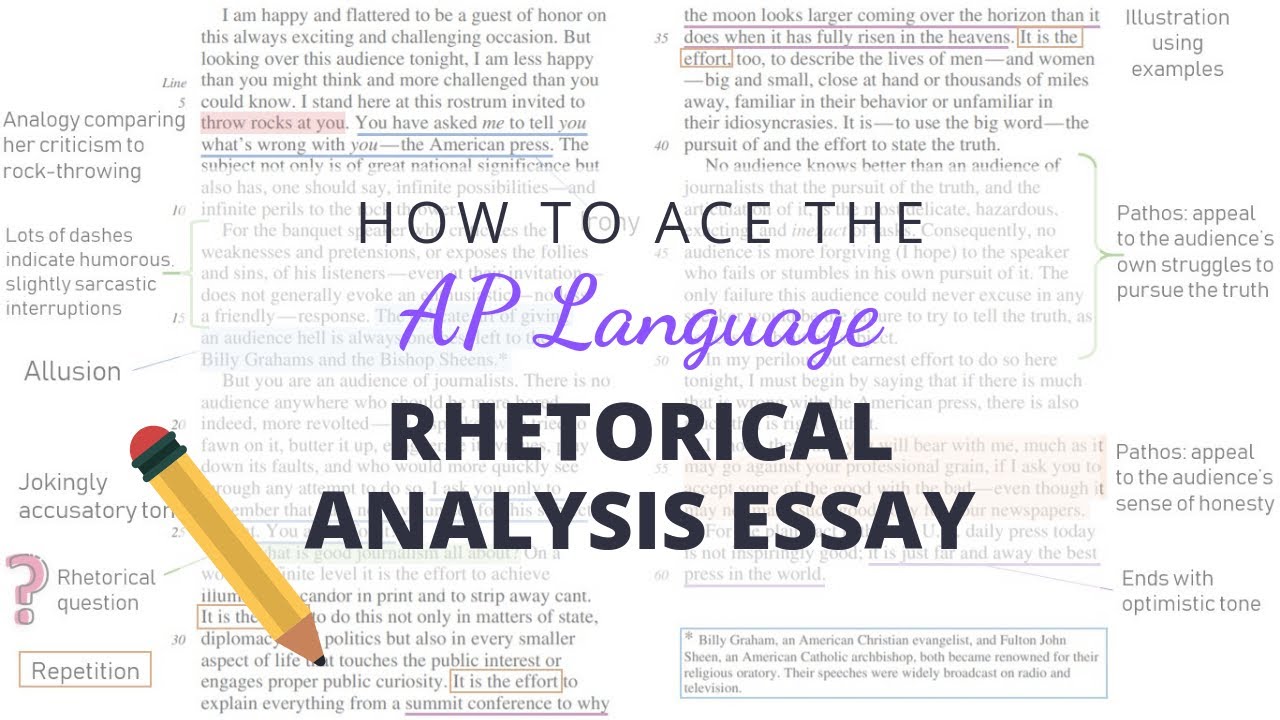
not mandatory but that could be a choice that you make in order to strengthen your argument now let's talk about question 2 rhetorical analysis now a couple of the bullet points on this slide are things that i've already mentioned but it's important to recognize that as you are reading a passage you want to determine the author's line of reasoning especially for q2 because you need to understand their argument before you can actually analyze it so you want to perhaps divide the passage into sections you want to avoid those topic sentences where you say something like
another choice the writer uses is because those are just a little bit too simplistic and there's a better way to do it something else to consider is that you want to use what we call rhetorically accurate verbs so it's kind of a confusing name but basically it just means stronger verbs that actually convey what the writer is doing we want to avoid weaker verbs like uses because those are kind of ambiguous you also might want to ask yourself what is the call to action of this piece and if there is one how does the writer
build to that call to action because that's examining how they develop their argument and also you want to be sure to analyze the rhetorical situation i'm actually going to be doing a separate video all about that so make sure that you guys are subscribed with your notifications turned on so you don't miss that video in some sense the argument essay question three is similar to a synthesis except for the fact that for this one you have to provide your own evidence from your own knowledge you don't get any sources and so for this one you
want to make sure to use specific evidence that's going to help your line of reasoning if you use vague examples or generalizations it's going to create a faulty line of reasoning and that's going to impact your score and then again like with the synthesis if it's appropriate you might consider making the choice of including a concession and refutation thank you guys so much for watching if you are an ap lang student or teacher make sure that you guys are subscribed with your notifications turned on so that you don't miss any more of the videos in
this faq series and if you're an ap lit student i want to know what questions you have about the class so i could do a similar series until next time guys happy writing