Hello dear listeners. Welcome to the English Globe. The place where we explore important world topics and learn English together in a clear, calm and simple way. My name is Adam and I am very happy to be here with my wonderful co-host Julia. Today we are beginning a new educational podcast that is specially designed for English learners who want to improve their listening skills while also understanding how the Modern world works. Before we begin, we gently invite you to support our channel by liking this episode, subscribing to the English Globe, and leaving a comment to tell
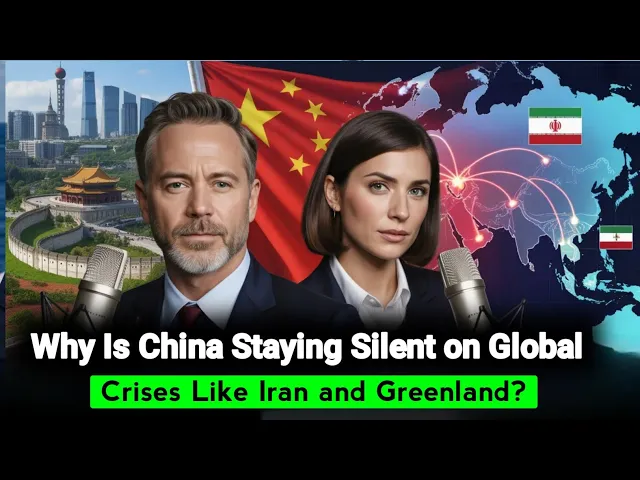
us where you are listening from because your support helps us continue creating long, careful, and useful English learning content for learners around the world. >> Hello dear listeners. I am Julia and I am very glad to be with you today. We Are excited to explore a topic that is often discussed in international news but not always explained in a slow and learner friendly way. Today's topic is why is China staying silent on global crises like Iran and Greenland. This episode is designed to help you learn English through real global issues using neutral language, clear explanations,
and a calm tone so you can focus on understanding both the English and the ideas without feeling confused or Overwhelmed by difficult vocabulary or emotional arguments. >> Yes, Julia. And to begin today's discussion, we want to start with an idea that may sound simple, but is actually very powerful. And that idea is silence. In global politics, we often pay attention to loud voices, strong speeches, warnings, and public statements. But sometimes silence can be just as meaningful as words, especially When it comes from a country that plays a major role in the global economy, global trade,
and international diplomacy. Around the world, people notice when a powerful country speaks, but they also notice when that country chooses not to speak. And this choice can raise important questions that deserve calm and careful explanation. >> That is an important point, Adam. Many English learners are used to hearing Strong statements from governments, especially during crises involving conflict, energy or security. So when a country appears quiet or cautious, it can feel confusing. This is why today's topic is very useful for learners because it helps you understand not only global news but also how English is used
to discuss ideas like diplomacy, strategy, balance, and long-term planning. These words appear often in international discussions, and Learning them through real examples can help you feel more confident when listening to news or reading articles in English. >> Exactly, Julia. In recent years, the world has faced many serious challenges, including tensions related to Iran, concerns about energy security, and growing global interest in places like Greenland because of climate change, natural resources, and geography. During many of these discussions, people Notice that China often uses very careful language or chooses not to make strong public statements. This does
not mean that China is not involved or does not have interests. But it does raise an important educational question. Why would a global power choose quiet diplomacy instead of loud public messaging? And what does this choice tell us about how international relations really work? >> And this is where English learners can Gain a lot. When we talk about silence in global politics, we are not talking about absence or ignorance, but about choice. countries carefully decide when to speak, how to speak, and sometimes when not to speak at all. Understanding this idea helps learners move beyond
simple headlines and begin to understand deeper meanings. It also helps you learn how English expresses careful thinking, uncertainty, and neutrality, which are very important skills for advanced Listening and comprehension. Another reason this topic matters is because China is deeply connected to the global system through trade, manufacturing, energy consumption, and international investment. Even when China does not make strong public comments, its actions, partnerships, and long-term planning still influence global outcomes. For this reason, silence should not be understood as weakness or absence, but as one possible approach to Diplomacy. For English learners, this is a great opportunity
to learn expressions such as strategic decision, long-term interest, and global stability, which are commonly used in serious discussions about world affairs. >> Yes. And we also want to be very clear with our listeners that this podcast is purely educational. Our goal is not to criticize, support or oppose any country or government. Instead, we want to explain global behavior in a balanced And neutral way so you can understand how different countries think and act. This approach follows educational standards and helps create a safe learning environment where English learners can focus on language understanding and critical thinking
rather than emotional debate. As we move forward in this episode, we will slowly explore China's position in the world, its general approach to foreign policy, and why silence can Sometimes be seen as a tool rather than a mistake. We will talk about Iran and Greenland as examples, not as judgments. And we will explain why global reactions are often shaped by history, economics, and long-term planning rather than by quick emotional responses. Everything will be explained step by step using simple English so that learners at different levels can follow comfortably. Dear listeners, as you listen to this
episode, try to notice how ideas are Connected using calm and neutral language. Words like balance, approach, strategy, interest, and context are very important in global discussions and you will hear them often today. You do not need to understand every word perfectly. The goal is to follow the main ideas and slowly build your confidence. Learning English through world topics helps you understand how language is used in real serious conversations. >> So to begin our journey today, remember This central question. When the world is loud and full of tension, what does it mean when a powerful country
chooses to speak softly or remain silent? And how should we understand that silence in a global context? This question will guide our discussion as we move forward, helping you improve your English while also gaining a clearer understanding of how international relations work in today's complex world. Thank you for listening carefully and Staying focused with us. In the next part of this podcast, we will explore China's position in the global system and explain why expectations around its behavior have grown in recent years. Stay with us. Keep listening and continue learning English stepby step with the English
globe. >> To understand why China's silence attracts so much attention today, we must first clearly understand China's position in the modern world. Because China is no longer a distant or minor player in global affairs, but one of the most influential countries shaping the global economy, international trade, and diplomatic relationships across many regions. Over the past few decades, China has grown from a developing economy into the world's second largest economy measured by total economic output. And it is now deeply connected to almost every country through manufacturing, exports, imports, Investment, and global supply chains that affect everyday
products people use such as phones, clothes, electronics, and household items. That is a very important starting point, Adam, because when we talk about China as a global power, we are not only talking about military strength or political speeches, but about how closely China is connected to daily life around the world. For English learners, the word power does not only mean force Or control. It also means the ability to influence situations, decisions, and outcomes. China's economic size gives it power because many countries trade with China, depend on Chinese factories, or rely on Chinese investment. And this
economic connection naturally increases China's importance in global discussions. Exactly, Julia. Another key reason China is seen as a global power is its role in International trade. China is one of the world's largest exporters and importers, meaning it sells goods to many countries and also buys raw materials, energy, and food from around the world. Because of this, changes in China's economy can affect global prices, shipping routes, and even employment in other countries. When China grows quickly, many economies benefit. And when China slows down, global markets often react, which shows how closely connected China is to the
Global system. For learners, this is a good moment to understand the word economy, which refers to how a country produces, buys, sells, and uses goods and services. China's economy matters because it is large and deeply connected to others. When news reports say that China's economy is strong or weak, they are often talking about global effects, not only domestic ones. Understanding this vocabulary helps English learners follow international news more easily and feel less lost when economic topics appear in discussions. China's global position is also shaped by its active role in diplomacy, which means how countries communicate,
negotiate, and cooperate with each other peacefully. China maintains diplomatic relationships with most countries in the world and often emphasizes dialogue, development, and long-term cooperation. Instead of relying heavily on public Statements, China frequently prefers behindthe-scenes discussions, official visits, economic agreements, and multilateral meetings to manage relationships. This diplomatic style is different from some other countries, but it is an important part of how China operates globally. >> The word diplomacy is very useful for English learners because it appears often in news and academic discussions. Diplomacy means solving problems through Discussion. rather than force. And China often presents itself
as a country that supports dialogue and negotiation. This does not mean that diplomacy is simple or always successful, but it explains why China sometimes appears quiet in public while still being active in private discussions and international forums. >> Speaking of international forums, China also plays an important role in major international organizations, which are Groups of countries that work together on global issues. China is a permanent member of the United Nations Security Council, meaning it has a special position in discussions about international peace and security. China is also active in organizations such as the World Trade
Organization, the International Monetary Fund, and various development banks. Through these institutions, China participates in rulemaking, funding, and cooperation That affect the global system. For English learners, the phrase international organization simply means a group created by many countries to solve shared problems such as trade rules, development, health or security. China's presence in these organizations shows that it is not isolated but deeply involved in global governance. Even when China does not make strong public statements, its votes, policies, and financial contributions inside these Organizations can still influence global outcomes in meaningful ways. >> At this point, it is
important to explain the difference between influence and intervention because these two words are often confused. Influence means the ability to affect decisions, opinions, or outcomes indirectly through economic ties, diplomacy, or example. Intervention, on the other hand, usually means direct action, such as military involvement, strong public pressure, or Direct control over events in another country. China often prefers influence rather than intervention, which helps explain its cautious and sometimes silent public approach. This distinction is very helpful for learners. When we say a country has influence, we mean it can shape events without using force. China's influence comes
from trade, investment, infrastructure projects, and long-term partnerships. intervention is much more visible and often Controversial. Understanding this difference allows English learners to see that silence does not always mean inaction. Sometimes it means choosing a quieter form of involvement. >> Another reason global expectations from China are increasing is because China's size and global reach have grown faster than many people expected. As China became wealthier and more powerful, many countries began to expect it to take on Greater responsibility in addressing global challenges such as conflicts, climate change, energy security, and economic stability. When crises occur, people naturally
look toward major powers, and China is now clearly one of them, which explains why its silence often feels noticeable. From a learning perspective, this helps explain the word expectation, which means what people believe should happen or what they hope someone will do. Global expectations Toward China are rising because China benefits from the global system and plays a large role within it. Whether these expectations are realistic or fair is a complex question, but understanding why they exist helps learners understand global debates without taking sides. It is also important to remember that China's historical experience shapes how
it sees its role today. China often emphasizes sovereignty, non-inference, and gradual development because of its Own past experiences with foreign pressure and internal challenges. These historical lessons influence how China responds to crisis and why it may choose careful language or silence instead of loud public involvement. This approach does not mean China is unaware of global problems. It reflects a different understanding of responsibility and stability. For English learners, history provides context, which means background Information that helps explain current behavior. When you understand context, new stories make more sense. Words like sovereignty, which means a country's right
to control its own affairs, are key terms in international discussions. China often uses these words to explain its approach and learning them helps you understand global news more clearly. So when we look at China's position in the world today, we see a country with enormous economic strength, deep trade Connections, active participation in international organizations, and a diplomatic style that values influence over direct intervention. These factors together explain why China's actions and even its silence receive global attention. As China's role continues to grow, people will likely continue watching not only what China says, but also what
it chooses not to say. >> That is a very clear summary, Adam. Dear Listeners, in this section you have learned important vocabulary such as power, economy, trade, diplomacy, influence, intervention and expectations. These words are essential for understanding international news and discussions. Try to listen for them again as we continue. In the next section, we will explore the idea of strategic silence more deeply and explain why silence itself can be a Deliberate and meaningful choice in global politics. Stay with us and keep learning English with the English globe. >> In this section, we are going to
focus on one of the most important ideas in today's discussion and that idea is something called strategic silence. This term may sound unusual at first, especially for English learners, but it is actually a very common concept in international relations and diplomacy. Strategic silence means a situation Where a country consciously chooses not to speak publicly, not to issue strong statements and not to react loudly even when a major global event or crisis is taking place. This silence is not accidental and it is not caused by confusion or lack of information. Instead, it is a deliberate choice
that is made after careful thinking and long-term planning. >> That explanation is very helpful, Adam. Dear listeners, in simple words, Strategic silence means staying quiet on purpose. It does not mean ignoring a problem or not caring about what is happening. It means choosing silence because speaking may cause problems, misunderstandings, or unwanted pressure. For English learners, this is a good example of how English sometimes uses indirect expressions to describe careful behavior. And learning these expressions helps you understand serious conversations more clearly. >> To understand this idea better, we should remember that in international relations, every public
statement can have consequences. When a powerful country speaks, its words can influence markets, affect diplomatic relationships, increase tensions, or even change how other countries behave. Because of this, governments often think very carefully before speaking, especially during sensitive situations involving conflict, security, or Competing interests. Strategic silence is one way to avoid making a situation worse while still protecting national interests. Yes. And we can compare this to everyday life. Imagine you're in a workplace or a family discussion where emotions are high. Sometimes speaking immediately can make things worse. While staying quiet for a moment can help calm
the situation. This does not mean you agree or disagree. It simply means you are Giving yourself time and space. Strategic silence in global politics works in a similar way, but on a much larger and more complex level. >> Another important reason countries choose strategic silence is uncertainty. In the early stages of a crisis, information is often incomplete or unclear. Governments may not yet know all the facts, the intentions of other actors, or the possible outcomes. Speaking too early can lead to incorrect Statements that later need to be corrected which can damage credibility. By remaining silent,
a country allows time to gather information, observe developments, and decide on the most appropriate response. >> For learners, the word uncertainty is very important here. It means not being sure about what will happen or what the truth is. In news and global affairs, uncertainty is common, especially at the beginning of major events. Strategic Silence can be a way to manage uncertainty without creating confusion or panic. Understanding this helps English learners see why silence can sometimes be more responsible than quick reactions. >> Silence can also be used as a diplomatic signal. In diplomacy, not everything is
communicated through words. Sometimes silence sends a message that a country does not want to escalate tensions, take sides publicly, or become directly Involved. This kind of silence can suggest neutrality, caution, or a preference for behindthe-scenes communication. In many cases, quiet diplomacy continues through private meetings, official channels, or international organizations, even when public statements are limited. >> This is a very important point, Adam. Dear listeners, when you hear the word diplomacy, remember that it does not always happen in front of cameras. Much Diplomacy happens quietly through meetings, letters, phone calls, and negotiations that the public never
sees. Strategic silence often works together with this quiet diplomacy, allowing countries to stay engaged without increasing public pressure or emotional reactions. Historically, strategic silence has been used by many countries, not just China. During major global events in the past, some governments chose to wait before Making official statements, especially when situations involved powerful allies, sensitive negotiations, or unclear outcomes. In some cases, silence helped avoid misunderstandings, while in others, it allowed time for peaceful solutions to develop. These examples show that strategic silence is a common tool in international relations, not a sign of weakness or indifference. >>
To make this even clearer, think about a referee in a sports match. Sometimes the Referee stops the game immediately and sometimes the referee allows the game to continue to see how the situation develops. Both choices are part of managing the match fairly. In global politics, silence can be similar to allowing time before making a final decision or public judgment. This comparison can help learners understand the concept more easily. >> Another key aspect of strategic silence is balance. Countries often try to Balance relationships with different partners who may have opposing interests. Speaking strongly in favor of
one side can damage relations with another. By remaining silent, a country may preserve its ability to communicate with all sides and possibly act as a mediator later. This balanced approach is often valued in diplomacy, especially for countries that prioritize stability and long-term cooperation. >> The word balance is very useful for English learners. It means keeping things steady and not moving too far in one direction. In international affairs, balance helps countries avoid conflict and maintain relationships. Strategic silence can be one way to maintain balance when situations are sensitive or emotionally charged. >> It is also important
to understand that strategic silence does not last forever. Silence is often temporary and changes as situations evolve. A country may Remain quiet at first, then speak later when conditions are clearer or when a statement can have a positive effect. This timing is part of strategy. Knowing when to speak and when to remain silent is considered an important skill in diplomacy and leadership. >> For learners, this teaches an interesting lesson about communication in English and in life. Good communication is not only about speaking well. It is also about knowing when to Listen and when to wait.
Strategic silence shows that communication includes both words and pauses and both can carry meaning depending on the situation. >> So when we hear that a country is silent during a global crisis, it is important not to assume that nothing is happening. Silence can mean observation, careful thinking, private discussion or long-term planning. Strategic silence is a tool that has been used throughout History by many countries to protect interests, reduce risks, and keep options open during uncertain times. That is a great summary, Adam. Dear listeners, in this section, you learned the meaning of strategic silence and why
it exists in international relations. You also learned useful words like uncertainty, diplomacy, balance, and strategy. Try to remember that silence is not always empty. Sometimes it is full of Meaning. In the next section, we will apply this idea to realworld examples and begin exploring how China's strategic silence appears in specific global situations. Stay with us and continue improving your English with the English globe. >> In this section, we will carefully look at China's relationship with Iran as a real world example. while keeping our discussion neutral, factual, and educational. Our goal is not to judge Any
country or predict future events, but to help English learners understand how diplomatic relationships work and why some countries choose careful language or limited public statements during sensitive situations. China and Iran have maintained diplomatic relations for many decades and their connection is mainly based on economic cooperation, energy trade and long-term planning rather than public political alignment or military Involvement. >> That is a very good way to begin. Adam, dear listeners, when we talk about relationships between countries, it is important to understand that these relationships are often complex and practical. Countries usually focus on cooperation that supports
their own stability and development. For English learners, this is a good moment to learn the word relationship in an international Context, which means ongoing cooperation, communication, and mutual interests, not personal feelings or friendships. >> China's relationship with Iran is largely centered on trade and energy. Iran is an important energy producer and China is one of the world's largest energy consumers. Because of this, energy cooperation has been a key part of their connection. China imports energy from many countries To support its economy and maintaining stable energy supplies is a major priority. For this reason, China generally
prefers calm and predictable relationships with energy producing countries. And this preference often influences how it speaks publicly during periods of tension. >> For learners, the word energy is very important here. Energy includes resources like oil and gas that are used to produce electricity, fuel, Transportation, and support industry. When a country depends on energy imports, it usually wants stability, not conflict. This helps explain why countries often use careful and respectful language when talking about regions connected to energy supply. Another important aspect of China's approach to Iran is diplomacy. China officially supports dialogue, negotiation, and peaceful solutions
to disagreements. Rather than making strong public statements or taking visible sides, China often encourages communication through international frameworks and diplomatic channels. This approach reflects China's broader foreign policy principles which emphasize non-inference and respect for national sovereignty. As a result, China's public language tends to be measured and cautious, especially during complex international situations. This is where English learners can Notice useful diplomatic expressions. Phrases like calling for dialogue, urging restraint, and supporting peaceful solutions are common in official statements. These expressions sound calm and neutral, and they are designed to reduce tension rather than increase it. Learning these
phrases helps listeners understand how English is used in serious and sensitive discussions without strong emotional language. China also avoids strong Public statements because public words can limit future options. When a country speaks very strongly, it can become difficult to adjust its position later without losing credibility. By keeping statements general and neutral, China preserves flexibility and keeps communication channels open with all sides. This approach allows China to continue engaging diplomatically while avoiding public confrontation or escalation. >> For learners, the word flexibility is important here. Flexibility means the ability to change or adapt when conditions change. In
international relations, flexibility is valuable because situations can develop quickly. Strategic and careful language allows countries to respond later in a way that best supports stability and long-term interests. China's focus on stability is another key reason for its cautious approach. Instability in regions connected to energy production or major trade routes can affect global markets and economic growth. China's economy depends on steady trade flows and predictable international conditions. Therefore, China often emphasizes calm responses, balanced language, and continued dialogue when addressing situations involving Iran and the wider region. >> This helps English learners understand the word stability, which
means a Situation that is steady and not changing suddenly in a dangerous way. Many countries value stability because it supports economic growth and social order. When listening to global news, learners will often hear leaders talk about stability as a key goal, especially during international crisis. It is also important to note that China participates in international discussions related to Iran through multilateral frameworks rather than Acting alone. Working through international organizations allows China to share responsibility, reduce direct pressure, and support collective decision-making. This multilateral approach align with China's preference for cooperation over confrontation and helps explain why
its role may appear quieter than that of some other countries. >> The word multilateral means involving many countries instead of just one or Two. For English learners, understanding this word is very useful because it appears frequently in international reports. Multilateral cooperation allows countries to discuss problems together and find shared solutions which often feels safer and more balanced than acting alone. >> So when we look at China's behavior regarding the Iran situation, we see a consistent pattern. China focuses on trade, energy security, stability, and Diplomacy. It avoids strong public statements not because it is inactive but
because it prefers careful communication, private dialogue and cooperation through international frameworks. This approach helps China protect its interests while also supporting broader goals of peace and stability. >> That is a clear and balanced explanation, Adam. Dear listeners, in this section you learned how China's Relationship with Iran is shaped by energy needs, diplomatic principles, and a desire for stability. You also learned important expressions such as dialogue, restraint, flexibility, stability, and multilateral cooperation. These words are very useful for understanding international news in English. In the next section, we will move to another example and explore why China's
approach to Greenland also reflects careful and quiet diplomacy. Stay with us and continue learning English with the English Globe. >> In this section, we turn our attention to Greenland, a place that does not often appear in daily news headlines, but has quietly become very important in global discussions. Greenland is the world's largest island located between the Arctic Ocean and the North Atlantic. And while its population is small, its geographic position and natural resources give it global significance. For many English learners, Greenland may seem distant or unrelated to everyday life, but understanding why powerful countries pay
attention to it helps explain how geography and long-term planning shape global behavior. That is true, Adam. Dear listeners, when we talk about geography, we are talking about where a place is located and how that location affects trade, security, and access to resources. Greenland sits in the Arctic region, an Area that is becoming more important because of climate change, new shipping routes, and interest in natural resources. Even though Greenland is not a country with a large economy or military, its location makes it important to many global players. >> One major reason Greenland matters globally is its
natural resources. Greenland is believed to have significant deposits of minerals that Are important for modern industries including renewable energy technology, electronics, and manufacturing. As the world moves toward cleaner energy and advanced technology, these resources are becoming more valuable. Countries that think long-term often pay attention to where these resources are located, even if development takes many years or decades. >> For English learners, the word resources means natural materials that people use To produce goods or energy, such as minerals, oil, or gas. Greenland's resources are important not because they are fully developed today, but because they may
become more important in the future. This idea of planning for the future helps explain why global interest in Greenland has increased in recent years. >> Another key factor is Greenland's strategic location in the Arctic. As ice levels change, new shipping routes may Become more accessible, potentially reducing travel time between major markets. This has drawn the attention of countries involved in global trade, including China. China has described itself as a near Arctic stakeholder and has shown interest in Arctic research, scientific cooperation, and infrastructure projects related to the region's development. This is a good moment to explain
the word Arctic. The Arctic is the region Around the North Pole known for extreme cold, ice, and unique environmental conditions. When we say Arctic development, we mean activities like research, transportation planning, and economic projects in this region. China's interest here is often explained in economic and scientific terms rather than political or military ones. China's involvement in Arctic related activities has mostly focused on economic cooperation, research, and long-term Trade possibilities. For example, China has invested in scientific research stations, shipping studies, and partnerships related to Arctic infrastructure. These activities are generally presented as cooperative and developmental rather
than political. Because of this, China often avoids loud political statements about Greenland, choosing instead to focus on practical engagement and future oriented planning. For learners, this helps explain the Difference between economic presence and political statements. Economic presence means participating through business, research, or investment, while political statements involve public opinions, demands or pressure. China's approach in Greenland tends to emphasize economic presence, which feels quieter and less confrontational, especially compared to more vocal political discussions by other countries. >> Another reason China avoids loud Political involvement in Greenland is sensitivity. The Arctic region involves many countries with long-standing
interests, legal frameworks, and security concerns. Making strong political statements could create misunderstandings or unnecessary tension. By remaining cautious and quiet, China reduces the risk of conflict and shows respect for existing regional arrangements. This silence helps protect China's long-term Interests by keeping cooperation possible. >> The word sensitivity is useful here. It means a situation where careful behavior is required because mistakes can cause problems. Greenland and the Arctic are sensitive because they involve environmental protection, indigenous communities, and international agreements. Silence and careful language help countries show respect for these complexities. China's approach to Greenland also reflects its
broader foreign policy style, which often prioritizes gradual involvement over sudden action. Instead of seeking immediate influence, China tends to invest time, resources, and partnerships slowly. This long-term approach aligns well with strategic silence, where limited public statements allow actions to speak more clearly than words over time. >> For beginners, think of this like Planning a long journey. Instead of rushing and making noise at every step, a traveler plans carefully, prepares quietly, and moves steadily toward a goal. China's quiet approach in Greenland can be understood in a similar way, focusing on preparation and patience rather than public
attention. >> It is also important to note that China's silence on Greenland does not mean a lack of interest. On the contrary, interest can exist without Loud communication. In international relations, actions such as investment, research, cooperation, and participation in regional discussions often matter more than public speeches. By keeping political language limited, China leaves room for cooperation and avoids being seen as challenging existing arrangements. This helps learners understand that silence can sometimes reduce fear and misunderstanding. When countries avoid strong language, they give others space to interpret intentions calmly. Learning this idea helps English learners understand why
global news sometimes focuses not only on what is said, but also on what is not said. >> So when we ask why China's silence feels different in the case of Greenland, the answer lies in geography, resources, and long-term planning. Greenland represents future possibilities rather than Immediate crisis. And China's quiet approach helps protect those possibilities while maintaining stability and cooperation. Silence in this case supports patience, balance, and respect for complex regional dynamics. >> That is a clear explanation, Adam. Dear listeners, in this section you learned why Greenland matters globally, how geography and resources shape international interest,
and why China Prefers quiet economic engagement over loud political involvement. You also learned useful words like resources, Arctic, economic presence, sensitivity, and long-term planning. In the next section, we will connect these ideas to China's overall foreign policy philosophy and explain how silence fits into a broader strategic approach. In this section, we will discuss the ideas behind China's foreign policy, which help explain why the country often Chooses silence or cautious language in international situations. China's approach to foreign relations is shaped by principles that emphasize careful planning, long-term thinking, and respect for the rules that guide interactions
between countries. One of the most important principles is called the non-inference principle, which means that China generally avoids intervening directly in the domestic affairs of other countries. Instead of Trying to influence internal politics, China focuses on cooperation in trade, development, and peaceful dialogue. That is very important, Adam. For learners, the word non-inference may sound complicated, but it simply means not getting involved in other countries internal problems. Imagine if your neighbor was having a personal disagreement at home. Instead of stepping in and giving advice or taking sides, you watch carefully, support if Asked, but mostly respect
their privacy. That is similar to how China approaches many situations with other countries. >> Another key idea in China's foreign policy is respect for sovereignty. Sovereignty means that every country has the right to make its own decisions and control its own territory without outside interference. China often emphasizes this principle in statements about international events. This respect for sovereignty is one Reason why China avoids loud public criticism or pressure during crisis in other countries. Speaking loudly or taking a public position could be seen as interfering which would conflict with China's stated philosophy. >> For English learners,
the word sovereignty is very useful. It means that a country has control over its own land and government. In simple terms, it is like saying, "You decide how to run your house, and I respect that choice." When leaders talk about sovereignty, they are showing respect for other countries independence and choices. Understanding this word helps learners follow international news more easily. >> China's foreign policy also values long-term planning over quick reactions. In international relations, events often happen suddenly, and some countries respond immediately with statements, pressure, or public actions. China, however, tends to focus on slow, careful
Observation. Its leaders consider how current events might affect relationships, trade, and stability over many years. By thinking ahead, China can make decisions that support its long-term goals rather than reacting impulsively to every crisis. A simple way to understand this for learners is to think about saving money. Instead of spending all your money immediately when you feel like it, you plan carefully, save and Make decisions that will benefit you in the future. China's long-term planning works in a similar way, but instead of money, it focuses on diplomacy, trade, and global relationships. This kind of planning can
make silence a strategic choice. >> This brings us to how philosophy shapes behavior. Because China prioritizes non-inference, respect for sovereignty, and long-term planning, public silence, Or careful statements are often preferred. Silence is not a lack of opinion or inaction. It is a deliberate choice that allows China to observe, maintain flexibility, and protect future opportunities. By not speaking loudly or making strong statements, China avoids unnecessary tension while still engaging diplomatically behind the scenes. >> That is an excellent point, Adam. For learners, silence here is not the same As ignoring a problem. Think of it like listening
carefully before giving advice. In daily life, you might notice a friend struggling, but you do not immediately give instructions or react loudly. Instead, you observe, understand, and then respond in a helpful way. Strategic silence in international affairs works similarly, just on a much larger and more complex scale. >> Another way to look at this philosophy Is through balance. China often tries to maintain balanced relationships with multiple countries, especially in regions where conflicts or tensions exist. Speaking strongly in favor of one side could damage relationships with others. Silence, therefore, helps China maintain equilibrium, showing that it
is willing to engage but not escalate or take sides unnecessarily. The word balance is very useful for English learners. It means keeping things steady, fair, or equal. For example, when you try to balance school, work, and hobbies, you make sure no part takes over completely. In diplomacy, balance helps countries avoid conflicts and keep communication open with everyone. Strategic silence is one tool to maintain this balance. >> Finally, this philosophy also affects China's public messaging. When China issues statements, the language is Usually calm, neutral, and focused on cooperation. Phrases like calling for dialogue, supporting peaceful solutions,
and emphasizing stability are often used. This careful wording aligns with long-term goals, respects sovereignty, and avoids sudden confrontation or criticism. For learners, this section introduces several important words. Non-inference, sovereignty, long-term planning, Balance, and stability. These words are very common in news reports, academic discussions, and international forums. Understanding them will help you follow global events more clearly and improve your English vocabulary in real world contexts. So to summarize this section, China's foreign policy philosophy is built around careful principles, respecting other countries independence, avoiding direct intervention, and planning for the long term rather than Reacting immediately. This
philosophy naturally encourages strategic silence as it allows China to maintain flexibility, preserve relationships, and protect long-term interests. >> Exactly, Adam. Dear listeners, in this section you have learned why China's silence is not random or passive, but connected to deliberate policy ideas. Understanding these concepts helps learners see the reasoning behind global behavior and also improves vocabulary For serious discussions. In the next section, we will explore how this philosophy is applied to specific global crises and how it shapes China's approach in situations like Iran and Greenland. >> In this section, we will explore a fascinating aspect of
international relations. How countries including China can communicate and exert influence without making loud public statements. This approach is sometimes called Indirect diplomacy or quiet influence. Instead of using words in the media or public speeches, countries often rely on economic actions, private discussions, or long-term engagement to signal their positions, priorities, and intentions. For learners, this is an important concept because it shows that communication in global affairs is not always verbal. It can also be demonstrated through actions and presence. Yes, Adam. Dear listeners, this means that communication does not always happen through talking or announcements. Sometimes actions
speak louder than words. For example, if a country invests in infrastructure in another region, offers loans or builds partnerships, it is sending a message without speaking publicly. This is a key idea in international relations and it also helps English learners understand phrases like indirect diplomacy or soft Influence. >> One way China communicates quietly is through economic actions such as trade agreements, investments, and infrastructure projects. For instance, China invests in ports, railways, energy projects, and technology partnerships in many regions. These actions signal China's interest, support, and engagement without requiring public statements or political speeches. Economic presence
can shape Relationships, encourage cooperation, and maintain influence while remaining neutral in public discussions. >> For learners, the word investment means giving money or resources to support a project or business, expecting benefits in the future. Trade agreements mean deals between countries to buy and sell goods in a fair or regulated way. These are practical ways countries communicate their intentions. Even if China does not Speak loudly in the media, it can show interest and cooperation through economic activities. >> Another method is behindthe-scenes diplomacy, which happens quietly through private meetings, official correspondence or international forums. These discussions allow
countries to negotiate, resolve disagreements, and coordinate actions without public pressure or attention. China often uses these channels to communicate with Multiple countries simultaneously, maintaining flexibility and neutrality while advancing its interests. >> For English learners, think of behindthe-scenes diplomacy like talking quietly with a teacher or a manager before a big meeting. You can explain your ideas, ask questions, and negotiate solutions without everyone hearing. Similarly, China communicates with other countries privately, which allows for careful negotiation and understanding. China also uses trade and investment as a form of communication. By investing in projects, offering partnerships, and creating economic
opportunities, China can signal priorities and intentions. For example, infrastructure development, technology partnerships, or energy cooperation can all indicate a country's willingness to work together, share resources, and support stability without issuing public statements. These actions demonstrate commitment, Influence, and engagement indirectly. >> This is related to a concept called soft power, which learners may find interesting. Soft power is influence achieved through attraction, cooperation or economic support rather than force or public threats. When China supports projects, builds relationships or provides resources, it is using soft power. Words are not the main tool. Actions are. >> Another important point
is the Distinction between quiet influence and public pressure. Public pressure happens when a country issues statements, criticizes others, or takes aggressive actions that attract attention. Quiet influence, on the other hand, is subtle and usually behind the scenes. China often prefers quiet influence because it preserves relationships, reduces tension, and keeps options open for future cooperation. This approach aligns with China's Broader foreign policy philosophy of long-term planning, non-inference, and respect for sovereignty. For learners, it is useful to notice the difference between influence and pressure. Influence means affecting outcomes indirectly, often through cooperation or example. Pressure means trying
to force action, often publicly or aggressively. Quiet influence is like helping someone succeed by giving support and guidance without making demands or raising your Voice. China's quiet communication also appears in mediation roles. In some international situations, China participates in talks, supports dialogue, or helps coordinate discussions between different parties. These efforts are usually conducted with discretion, meaning the process is not widely publicized. By doing this, China maintains credibility with multiple countries and positions itself as a reliable partner, all without making Public statements that could be interpreted as taking sides. In easier words, discretion means being careful
and private. Imagine helping two friends solve a problem without telling everyone else. You are showing support and influence quietly. This is what China does in some diplomatic situations. It works behind the scenes to help find solutions without making loud public comments. >> So, in summary, China communicates Without speaking through economic presence, behindthe-scenes diplomacy, investment, trade, and mediation. These methods allow China to maintain influence, support cooperation, and protect long-term interests while avoiding public confrontation or criticism. Strategic silence and quiet actions often work together to create a stable, flexible approach in complex global situations. >> Exactly, Adam.
Dear listeners, in this Section, you learned how China uses soft power, quiet influence, and discretion to communicate without public statements. Understanding these methods helps you see how international relations work beyond speeches and headlines. You also learned useful words like investment, behindthe-scenes diplomacy, soft power, quiet influence, and discretion. In the next section, we will explore the balance between public expectation and China's cautious approach, showing why global observers sometimes wish for more visible statements. >> In this section, we will explore how China's approach to international events differs from that of the United States and Europe. But we
will do this carefully in a neutral and educational way. The goal is to compare diplomatic styles, not to judge them as right or wrong. Understanding these differences helps English learners see how culture, History, and national priorities influence the way countries communicate and act in global affairs. One clear difference is how public statements are used. In the United States and Europe, leaders often make strong public comments during global events to clarify positions, signal priorities, or reassure allies. Yes, Adam. Dear listeners, when we say public statements, we mean speeches, press conferences, or official messages that Everyone can
read or hear. In the US and Europe, making public statements is often seen as a way to demonstrate leadership, show transparency, and influence both domestic and international audiences. For English learners, noticing words like clarify, signal, and reassure can help you understand how diplomats explain intentions clearly to the public. By contrast, China often prefers quiet negotiation and indirect communication. Instead of speaking publicly about sensitive issues, China tends to engage through private meetings, multilateral forums, and long-term cooperation projects. This style allows China to observe situations carefully, maintain flexibility, and protect long-term interests without generating unnecessary tension or
public pressure. The difference is not better or worse. It is simply a different approach shaped by history, culture, and strategic Priorities. For learners, it is important to notice the difference between quiet negotiation and public statements. Quiet negotiation is like having a calm conversation with someone to solve a problem without telling everyone else. Public statements are like explaining your decision loudly in front of a group. Both methods can be effective depending on the situation and cultural expectations. >> Another aspect to consider is the Cultural background that influences communication styles. In many western countries, leadership and decision-m
often emphasize transparency and quick responses. Public speeches and media coverage are used to manage perception, reassure citizens, and demonstrate accountability. In contrast, Chinese diplomatic culture places high value on patience, harmony, and long-term relationships. Statements are often carefully worded, and silence can be a strategic choice rather than avoidance. That's very useful for English learners. Words like transparency and accountability may seem complex, but they are common in news and formal reports. Transparency means being open and clear about actions or decisions. Accountability means taking responsibility and being answerable for Decisions. In some countries, leaders speak publicly to show
these qualities. In other countries, such as China, these qualities are shown more through actions and careful planning than loud statements. It is also interesting to note that differences in diplomatic style can influence how global audiences perceive events. Countries that make public statements are often seen as assertive or proactive, while countries that remain quiet may be viewed as Cautious or strategic. These perceptions are not inherently positive or negative. They simply reflect different priorities and methods of communication. Understanding these differences is an important skill for following international news. >> Yes, Adam. For learners, this helps explain why
media coverage varies depending on the country. Words like assertive and Proactive describe active, visible approaches, while cautious and strategic describe careful, thoughtful approaches. Recognizing these nuances improves comprehension and helps learners follow complex discussions in English more effectively. >> In addition, public statements are often intended for multiple audiences, domestic citizens, international partners, and global media. Quiet negotiation and indirect communication, On the other hand, are usually targeted at specific partners or stakeholders. This allows a country like China to maintain influence and relationships without causing public friction or misunderstanding. By keeping dialogue targeted and discreet, China can act
strategically while staying engaged globally. >> In simpler words, Adam, think of it like two ways to solve a problem at work or school. One person explains their plan Loudly in front of everyone to get support. Another person quietly talks to each key person individually to find agreement. Both can succeed, but the approach depends on culture, priorities, and timing. This is very similar to differences in diplomacy between China, the US and Europe. >> Finally, it is important for learners to understand that there is no right or wrong in these approaches. Different countries have different historical Experiences,
cultural norms, and strategic objectives. Public statements may be important for some countries while quiet negotiation may be better for others. The key is to recognize patterns and learn the language and expressions associated with each style which can help learners follow news reports and discussions about international affairs. >> Exactly, Adam. Dear listeners, in this section you learned how China's Diplomatic style compares with the US and Europe and why differences exist in public statements, quiet negotiation, and cultural communication. You also learned useful vocabulary, public statements, quiet negotiation, transparency, accountability, assertive, proactive, cautious, and strategic. In the next
section, we will discuss the global expectations of China and why observers sometimes wish for more visible statements, helping you connect These ideas to current events while improving your English with the English globe. >> In this section, we will explore what China's careful, quiet approach might mean for global events and how countries around the world observe and respond to this style of diplomacy. It is important to remember that we are not making predictions or taking sides. Instead, we want to encourage thoughtful discussion and help English learners understand the Reasoning behind strategic silence. Let's start by asking
a simple question. When a major country chooses not to make public statements, what message does that send to other countries, businesses, or international organizations? Could silence indicate patience, confidence, or caution? >> That is an excellent point, Adam. Dear listeners, think about silence in your own life. Sometimes staying quiet can help you avoid conflict, observe Carefully, or plan your next step. In international relations, strategic silence can work in a similar way. It can prevent unnecessary tension, keep options open, and allow a country to respond thoughtfully when the time is right. This idea helps English learners see
how words and actions work together in global affairs. >> Another question to consider is how the world reacts when silence is chosen. Countries, international organizations, And media often pay close attention, trying to interpret intentions, predict future moves, or understand priorities. While public statements are clear and immediate, silence invites careful observation and analysis. Observers must rely on patterns of behavior, economic actions, and diplomatic engagement to understand what is happening behind the scenes. For learners, notice the words observe patterns and engagement. Observe means to watch carefully. Patterns are Repeated behaviors or trends that help us understand actions.
Engagement means participating or being involved in an activity. Together, these words describe how countries watch each other when silence is used strategically. >> Silence in international affairs carries both potential benefits and risks. On the benefit side, strategic silence can help a country maintain flexibility, protect long-term interests, and reduce public conflict. By not making immediate Statements, a country can respond to multiple scenarios without being forced into a fixed position. On the risk side, silence can sometimes be misunderstood by others, interpreted as indecision, or create uncertainty in global markets and diplomatic circles. Exactly, Adam. For English learners,
the word uncertainty is useful. It means not knowing what will happen next in global affairs. Uncertainty can make countries or businesses cautious, but it can also Encourage careful observation and dialogue. Understanding this word helps learners follow discussions about economic, political, and international news. Another way to think about strategic silence is as a learning opportunity for other countries. Observers often study patterns, investment, trade behavior, and private diplomacy to understand priorities and possible future moves. This is similar to how students or Researchers gather data, analyze trends, and make careful conclusions. Strategic silence invites deeper analysis rather than
immediate reactions. For learners, this is also a great chance to practice critical thinking. Ask yourself questions like, "Why might China choose silence instead of public statements?" "How does this affect other count's decisions?" "What words or actions signal intentions quietly?" Practicing these questions in English Can help you understand news more effectively and improve your analytical skills. It is also important to recognize why the world watches China closely. As one of the largest economies and global powers, China's decisions and behavior can influence trade, markets, energy, and international stability. Even when China remains quiet publicly, other countries, analysts,
and organizations pay attention to its investments, diplomatic efforts, and Actions behind the scenes. This shows that influence does not always require loud statements. Quiet actions can also shape the world. >> Yes, Adam. For learners, this is an excellent lesson in language and observation. You can learn words like influence, behind the scenes, and strategic silence, which appear often in news, research articles, and academic discussions. By following these concepts, you also Improve your English listening and comprehension skills while understanding global events. Finally, we encourage all our listeners to think independently when following international news. Ask questions, compare
sources, and consider multiple perspectives. Strategic silence is not a failure or a lack of interest. It is a deliberate approach that invites careful observation, patience, and analysis. By thinking critically, learners can Connect vocabulary, concepts, and real world examples to improve both English and global awareness. >> Exactly, Adam. Dear listeners, in this section you learned how strategic silence can influence the world, the benefits and risks of quiet diplomacy, and why observers pay close attention to China. You also practice vocabulary like observe patterns, engagement, uncertainty, and influence. In the next and final section, we will summarize all
The key points of our podcast, reinforce the most important English terms, and provide a calm, motivating closing message. >> Hello, dear listeners. As we reach the final section of our podcast, it is time to summarize the key ideas we have explored today. In this episode, we examined why China often remains silent in certain global crises such as developments in Iran and Greenland. We discussed how strategic Silence is not a lack of interest or action, but rather a deliberate choice influenced by China's foreign policy philosophy, which emphasizes non-inference, respect for sovereignty, and long-term planning. We also
explored how China communicates through economic actions, behindthe-scenes diplomacy, and quiet influence instead of making loud public statements. >> Exactly, Adam. Dear listeners, we also explained how China's approach differs from the styles often seen in the United States or Europe. While some countries make strong public statements to show leadership or reassure others, China often prefers quiet negotiation, careful observation, and indirect communication. This does not mean one approach is better than the other. It is simply a different method shaped by history, culture, and long-term strategy. Understanding these differences can help Learners follow international news and improve English
comprehension at the same time. Finally, it is important for learners to understand that there is no right or wrong in these approaches. Different countries have different historical experiences, cultural norms, and strategic objectives. Public statements may be important for some countries, while quiet negotiation may be better for others. The key is to recognize patterns and Learn the language and expressions associated with each style which can help learners follow news reports and discussions about international affairs. >> Exactly. Adam, dear listeners, in this section you learned how China's diplomatic style compares with the US and Europe and why
differences exist in public statements, quiet negotiation, and cultural communication. You also learned useful vocabulary. Public statements, quiet negotiation, Transparency, accountability, assertive, proactive, cautious, and strategic. In the next section, we will discuss the global expectations of China and why observers sometimes wish for more visible statements, helping you connect these ideas to current events while improving your English with the English globe. In this section, we will explore what China's careful, quiet approach might mean for global events and how countries Around the world observe and respond to this style of diplomacy. It is important to remember that we
are not making predictions or taking sides. Instead, we want to encourage thoughtful discussion and help English learners understand the reasoning behind strategic silence. Let's start by asking a simple question. When a major country chooses not to make public statements, what message does that send to other countries, businesses, or international Organizations? Could silence indicate patience, confidence, or caution? >> That is an excellent point, Adam. Dear listeners, think about silence in your own life. Sometimes staying quiet can help you avoid conflict, observe carefully, or plan your next step. In international relations, strategic silence can work in a
similar way. It can prevent unnecessary tension, keep options open, and allow a country to Respond thoughtfully when the time is right. This idea helps English learners see how words and actions work together in global affairs. >> Another question to consider is how the world reacts when silence is chosen. Countries, international organizations, and media often pay close attention, trying to interpret intentions, predict future moves, or understand priorities. While public statements are clear and immediate, silence invites careful Observation and analysis. Observers must rely on patterns of behavior, economic actions, and diplomatic engagement to understand what is happening
behind the scenes. For learners, notice the words observe patterns and engagement. Observe means to watch carefully. Patterns are repeated behaviors or trends that help us understand actions. Engagement means participating or being involved in an activity. Together, these words describe how countries watch each other when Silence is used strategically. >> Silence in international affairs carries both potential benefits and risks. On the benefit side, strategic silence can help a country maintain flexibility, protect long-term interests, and reduce public conflict. By not making immediate statements, a country can respond to multiple scenarios without being forced into a fixed position.
On the risk side, silence can sometimes be misunderstood by others, interpreted as indecision, or Create uncertainty in global markets and diplomatic circles. Exactly, Adam. For English learners, the word uncertainty is useful. It means not knowing what will happen next in global affairs. Uncertainty can make countries or businesses cautious, but it can also encourage careful observation and dialogue. Understanding this word helps learners follow discussions about economic, political, and international news. Another way to think about strategic silence is as a learning opportunity for other countries. Observers often study patterns, investment, trade behavior, and private diplomacy to understand
priorities and possible future moves. This is similar to how students or researchers gather data, analyze trends, and make careful conclusions. Strategic silence invites deeper analysis rather than immediate reactions. For learners, this is also a great Chance to practice critical thinking. Ask yourself questions like, "Why might China choose silence instead of public statements?" "How does this affect other count's decisions?" "What words or actions signal intentions quietly?" Practicing these questions in English can help you understand news more effectively and improve your analytical skills. It is also important to recognize why the world watches China closely. As one
of the largest economies And global powers, China's decisions and behavior can influence trade, markets, energy, and international stability. Even when China remains quiet publicly, other countries, analysts, and organizations pay attention to its investments, diplomatic efforts, and actions behind the scenes. This shows that influence does not always require loud statements. Quiet actions can also shape the world. >> Yes, Adam. For learners, this is an Excellent lesson in language and observation. You can learn words like influence, behind the scenes, and strategic silence, which appear often in news, research articles, and academic discussions. By following these concepts, you
also improve your English listening and comprehension skills while understanding global events. Finally, we encourage all our listeners to think independently when following international news. Ask Questions, compare sources, and consider multiple perspectives. Strategic silence is not a failure or a lack of interest. It is a deliberate approach that invites careful observation, patience, and analysis. By thinking critically, learners can connect vocabulary, concepts, and real world examples to improve both English and global awareness. >> Exactly, Adam. Dear listeners, in this section you learned how strategic Silence can influence the world, the benefits and risks of quiet diplomacy, and
why observers pay close attention to China. You also practice vocabulary like observe, patterns, engagement, uncertainty, and influence. In the next and final section, we will summarize all the key points of our podcast, reinforce the most important English terms, and provide a calm, motivating closing message. >> Hello, dear listeners. As we reach the Final section of our podcast, it is time to summarize the key ideas we have explored today. In this episode, we examined why China often remains silent in certain global crises such as developments in Iran and Greenland. We discussed how strategic silence is not
a lack of interest or action, but rather a deliberate choice influenced by China's foreign policy philosophy, which emphasizes non-inference, respect for sovereignty, and long-term planning. We Also explored how China communicates through economic actions, behindthe-scenes diplomacy, and quiet influence instead of making loud public statements. >> Exactly, Adam. Dear listeners, we also explained how China's approach differs from the styles often seen in the United States or Europe. While some countries make strong public statements to show leadership or reassure others, China often prefers Quiet negotiation, careful observation, and indirect communication. This does not mean one approach is better
than the other. It is simply a different method shaped by history, culture, and long-term strategy. Understanding these differences can help learners follow international news and improve English comprehension at the same time. We also introduced important vocabulary and concepts that are commonly used in international Relations. Words like sovereignty, non-inference, strategic silence, soft power, economic presence, behind-the-scenes diplomacy, and balance are used frequently in global news and academic discussions. By listening to how these terms are explained in context, you can strengthen your English vocabulary and listening skills while learning about world events. Yes, Adam, for English learners, it
is very helpful to connect language with Real world examples. Today, we showed how words and actions work together in global diplomacy. We encouraged you to think critically, ask questions, and observe patterns in international behavior. By doing this, you not only improve your English, but also develop a deeper understanding of global affairs, which can be very useful for studies, work or personal knowledge. >> We want to remind all listeners that this podcast is purely educational. Our Aim is to explain international relations in a neutral YouTube safe way. We are not taking sides, making predictions or criticizing
any country. Instead, we are focusing on facts, careful explanations and accessible English that anyone can follow. Listening to these discussions is meant to build both global awareness and language skills step by step. >> Exactly, Adam. And dear listeners, we hope this podcast motivates you to Continue practicing English daily. You can listen actively, take notes, review vocabulary, and even discuss topics with friends or online communities. Learning English through real world topics makes the language easier to remember and more practical for daily use. Remember, improvement comes gradually and consistency is key. To summarize once more, we covered
China's strategic silence, the philosophy behind its foreign policy, methods of indirect Communication like economic engagement and diplomacy, differences with the US and Europe, and what this silence could mean for the future. Each of these ideas shows how complex international relations are while also providing excellent opportunities to learn English vocabulary and comprehension in context. >> Yes, Adam. Dear listeners, thank you for joining us on this educational journey. Keep listening, stay curious, and continue improving your English while Exploring world events with calm and focus. Every time you practice, your skills grow stronger. Remember, learning English is not
just about words. It's about understanding ideas, connecting concepts, and thinking critically. >> Thank you for being with us on the English Globe. We hope you found this episode useful, educational, and enjoyable. By paying attention to both language and global events, you are developing skills that will benefit you In many areas of life. Exactly, Adam. Keep practicing, stay curious about the world, and enjoy your English learning journey. We look forward to having you with us in the next episode where we will explore another fascinating topic and continue building knowledge together. Stay motivated and remember that every
small step in learning English brings you closer to your goals. >> Thank you again, dear listeners, and Goodbye for now. Keep learning. Stay informed and enjoy your journey with English and the world. >> Goodbye everyone. Keep listening, keep learning and have a wonderful day with new knowledge and English practice.