The Earth's atmosphere is the gaseous layer that surrounds the planet from the Earth's surface to a diffuse limit at approximately 10,000 kilometers of altitude. This layer is held around the planet due to Earth's gravity and is made up of a mixture of gases that we call air. The most abundant component of the Earth's atmosphere is nitrogen (78%), followed by oxygen (21%) and argon (0.
9%), as well as others in minute quantities, such as water vapor and carbon dioxide. . This gaseous mass is arranged in 5 fundamental layers around the planet and fulfills important functions, such as protecting the planet from the impact of small meteorites, filtering ultraviolet radiation, retaining heat and allowing the existence of liquid water.
Likewise, the Earth's climates are formed in the atmosphere and allow the flight of various species, including the flight of airplanes. But the atmosphere was not always as it is today, since it originated with the formation of the planet and has since evolved. In this video we will explain the composition, layers, functions and the formation of the atmosphere.
Also, if you want to learn more about this and other topics, you can visit the description link on lifeder. com Composition of the Earth's atmosphere The Earth's atmosphere is made up of a combination of gases called air. The composition of air varies along the concentration gradient from the Earth's surface to the edge of outer space.
When speaking of the composition of the atmosphere, reference is made to the composition of the air in the troposphere, which is in contact with the surface of the planet. This layer contains the highest concentration of air, in whose mixture of gases it is Nitrogen and oxygen dominate. Nitrogen represents 78% of the total, while oxygen occupies 21%, subtracting approximately 1% from various other gases.
Among these, in the first place, argon, which almost completes the missing 1%, leaving the other gases in extremely small quantities. Among these other gases, carbon dioxide stands out , although it reaches only approximately 0. 041%, it is increasing due to human activity.
Water vapor has a variable concentration, reaching up to 0. 25%. These gases have oxidizing properties, so the earth's atmosphere has this quality.
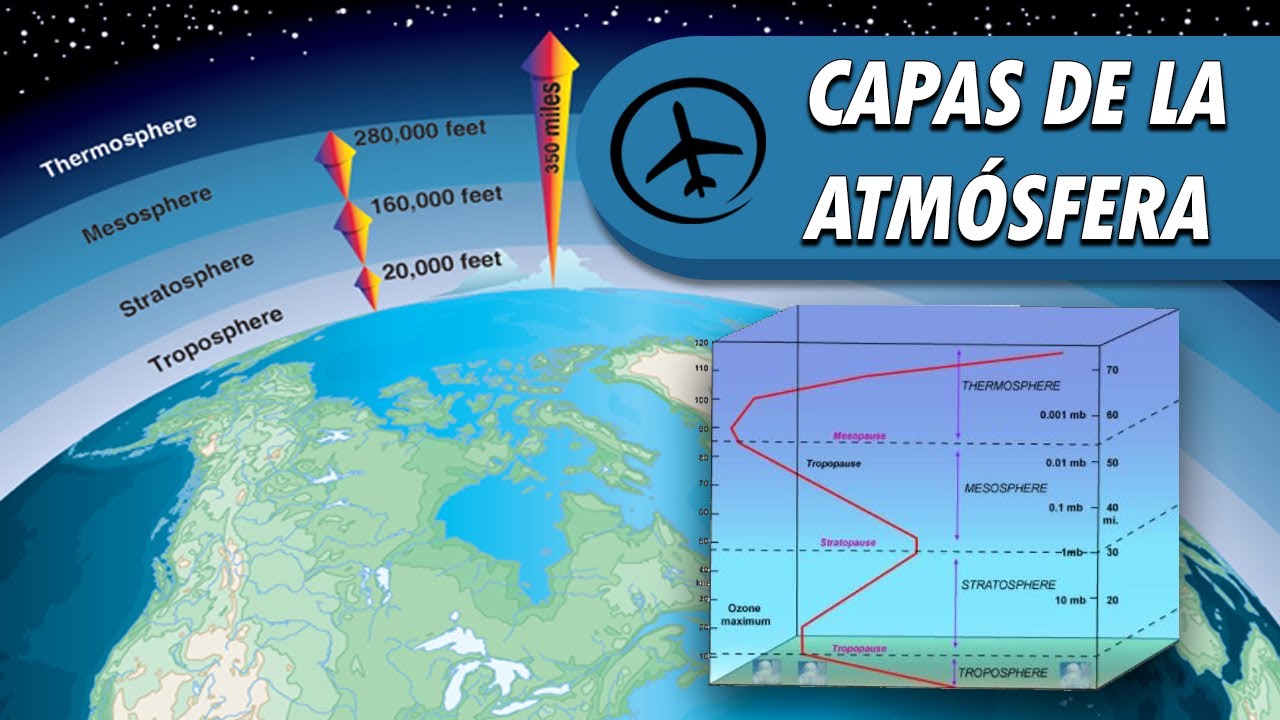
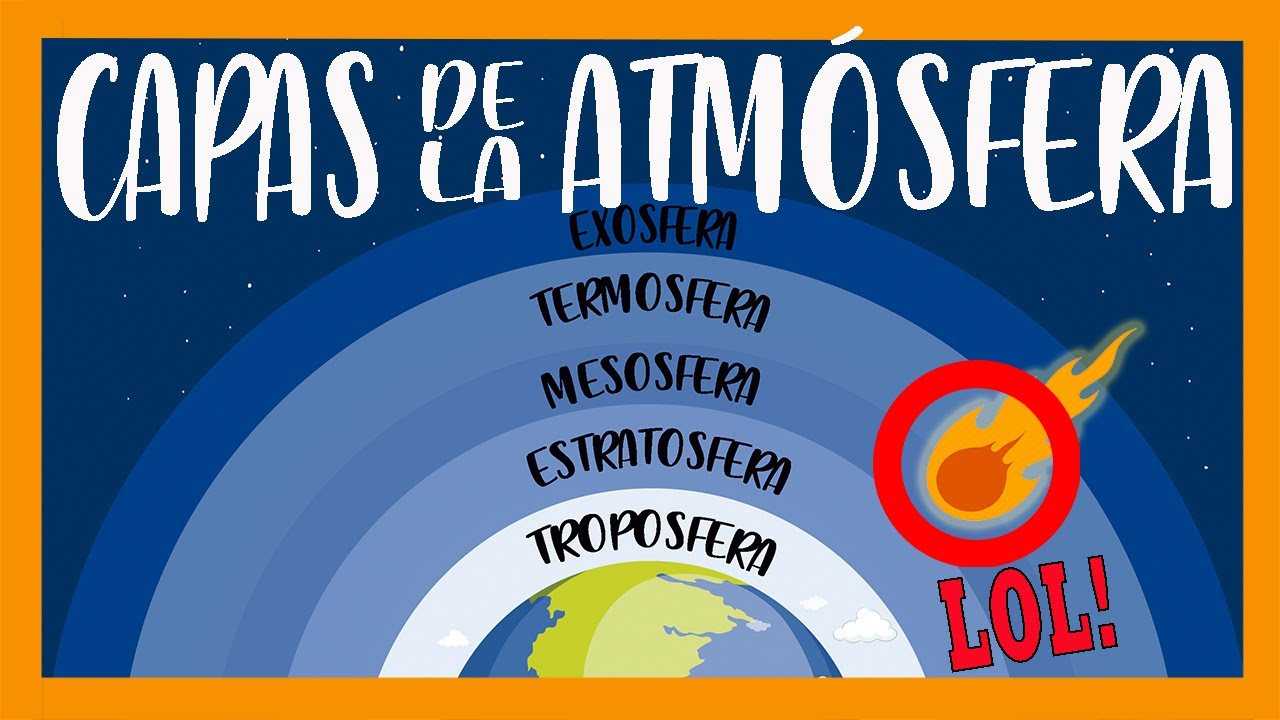
Layers of the atmosphere Here you can visualize the layers of the atmosphere; troposphere, stratosphere, mesosphere, thermosphere, and exosphere. We are going to explain each one and its characteristics: Troposphere The troposphere extends from ground level to about 12 to 20 km altitude and its name derives from the prefix tropos = change, due to its changing nature. It is thinnest at the poles and widest at the equator.
Three quarters of the mass of gases in the atmosphere is concentrated in the troposphere, due to the attraction exerted by Earth's gravity. In this layer, life on Earth is possible and meteorological phenomena and commercial aircraft flights occur. Atmospheric biogeochemical cycles also occur in the troposphere , such as the cycle of oxygen, water, CO2 and nitrogen.
In this layer the temperature decreases with altitude, and the boundary between it and the next layer is called the tropopause. Stratosphere It is located between 12 and 20 kilometers above the earth's surface up to approximately 50 kilometers and is separated into two layers by the density of the air. The lower one is where the heavier cold air accumulates, and the upper one is where the lighter hot air is.
Hence its name derived from the prefix strata = layers. The boundary between this layer and the next is called the stratopause. In it, in turn, is a fundamental layer for life on Earth, such as the ozone layer.
Because this layer absorbs heat, the stratosphere increases in temperature with altitude, unlike the troposphere. Ozone layer (ozonosphere) It is a layer composed of ozone (O3), which is formed due to the biochemical dissociation of oxygen (O2) by solar ultraviolet radiation. Thus, when this radiation hits the oxygen molecule, it breaks into two oxygen atoms.
Then, taking into account that atomic oxygen (O) is very reactive, it joins with oxygen molecules (O2) and forms ozone (O3). Mesosphere Its name comes from meso = medium, because it is located between the stratosphere and the thermosphere, approximately between 50 and 80 kilometers of altitude. It is the layer where meteors burn creating shooting stars.
In this zone there is still enough gas to produce friction and generate heat, which no longer occurs in the upper layers. The boundary between this layer and the next is called the mesopause. Thermosphere The name of this layer comes from thermo = heat, since the temperature is 4,500 degrees Fahrenheit (about 2,482 degrees Celsius).
However, since there are not enough gas molecules, this heat is not transmitted, nor is sound. This layer extends between 80 and 700 kilometers in altitude, and there is the International Space Station and many low-orbiting satellites. The boundary between the thermosphere and the next layer of the atmosphere is called a thermopause.
Exosphere It takes the name derived from the prefix exo = outside, since it is the outermost layer of the earth's atmosphere; behind it is outer space. It is located between 700 and 10,000 kilometers in altitude, being the most extensive layer of the atmosphere. Lighter gases such as hydrogen and helium predominate there, but in very low density.
Therefore, its molecules are far apart from each other, being a very cold area without oxygen. The exosphere is where the weather and high orbit satellites are located. Functions of the Earth's atmosphere The atmosphere has a series of functions that make possible the conditions for the existence of life as we know it.
Vital gases The atmosphere contains the essential gases for life as it exists today, which are mainly oxygen and CO2. Atmospheric ablation Thanks to the existence of a layer such as the mesosphere, the earth's surface is protected from the impact of large numbers of small meteors. In this layer the air, although it is scarce, is enough for friction to exist and the meteors to burn and mostly disintegrate.
Ultraviolet radiation filter The existence of the ozone layer in the stratosphere filters most of the ultraviolet radiation, preventing it from reaching the earth's surface. This is of great importance for various terrestrial processes, including life, since this type of radiation causes mutations and produces cancer. Greenhouse effect Several of the atmospheric gases allow the entry of radiation that warms the Earth and provides energy for photosynthesis and other processes.
While the heat generated (long wave radiation) is partially retained and reflected back to Earth. This makes it possible to maintain a temperature range favorable to life on the planet, with an average temperature of 15 degrees Celsius. In the absence of the atmosphere, the average temperature of the planet would be minus 18 degrees Celsius.
Diurnal variation of temperature The variation during the day of temperature is determined by the diurnal heating of the air layer directly above the ground by solar radiation and its nocturnal cooling. Although this variation is also influenced by other parameters such as altitude, cloud cover present, humidity and atmospheric instability. Atmospheric pressure It is the force of attraction that gravity has on the mass of air on Earth (air weight), which varies according to temperature, since the hotter the lighter the air.
The combination of these factors contributes to the formation of the climate, by producing the winds and these, in turn, the marine currents. But additionally, the atmospheric pressure exerted by the air on the Earth's surface is adequate for liquid water to exist on Earth. Density and flight The atmosphere concentrates the largest proportion of the air in its lower layer, the troposphere, which determines a certain density.
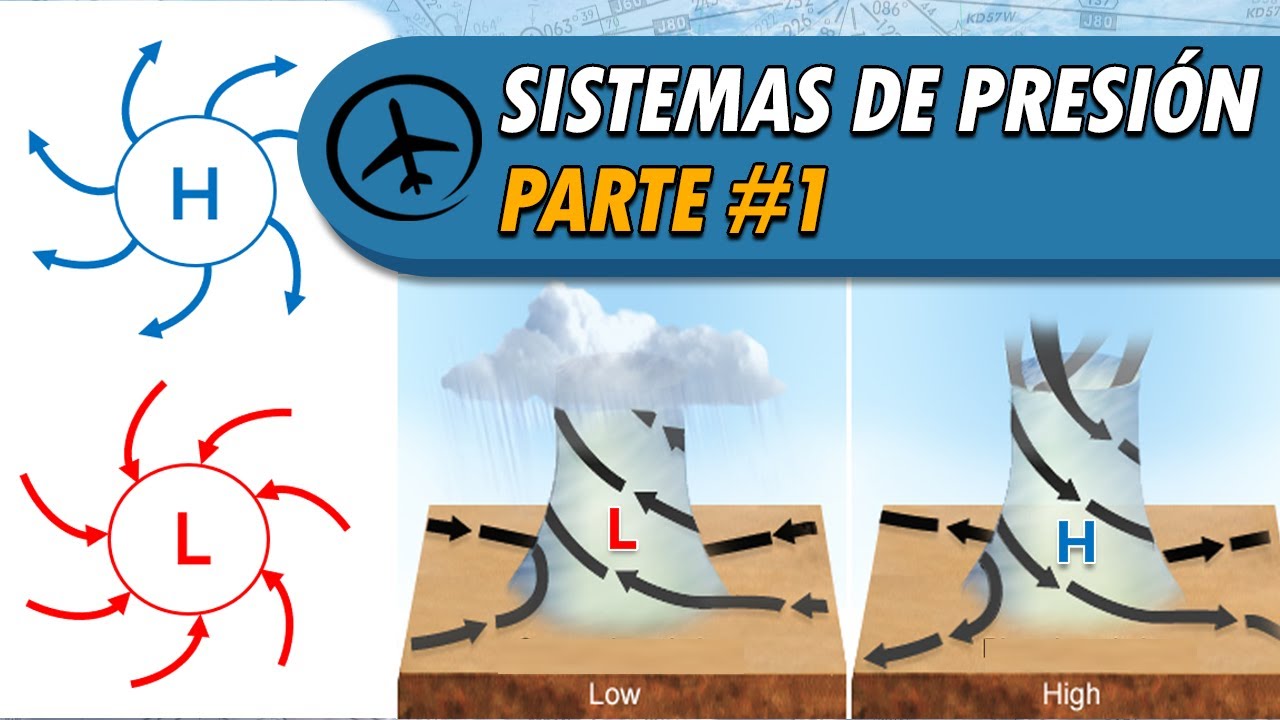
This air density is what allows the flight of birds, insects, flying mammals and the mechanized flight of humans. Atmospheric circulation Winds are caused by differences in temperature generated in the atmosphere at the level of the troposphere, causing differences in atmospheric pressure. This occurs thanks to the absorption of heat by some of the gases that make it up, such as oxygen, CO2₂ and water vapour.
When heated, these gases decrease their density, that is, their molecules move away from each other, becoming lighter and beginning to rise. This lowers the atmospheric pressure in that area, creating a vacuum into which nearby air masses flow, forming winds. These in turn cause surface sea currents that help distribute heat on Earth.
On the other hand, the winds distribute the water vapor formed when the water evaporates, which cools and condenses as it rises, causing rain. Formation and evolution The formation and evolution of the Earth's atmosphere is part of the formation and evolution of the solar system from the Big Bang. Formation of the solar system It is argued that our system was formed due to a random concentration of matter moving and rotating in space.
It came together in what would later be the center of the solar system due to the force of gravity. Subsequently, the matter farthest from the center cooled differentially and thus the coldest planets are those furthest from the sun, which occupies the central position. Then, the planets were formed by the aggregation of particles at different distances from the center and, depending on their position, they present different characteristics.
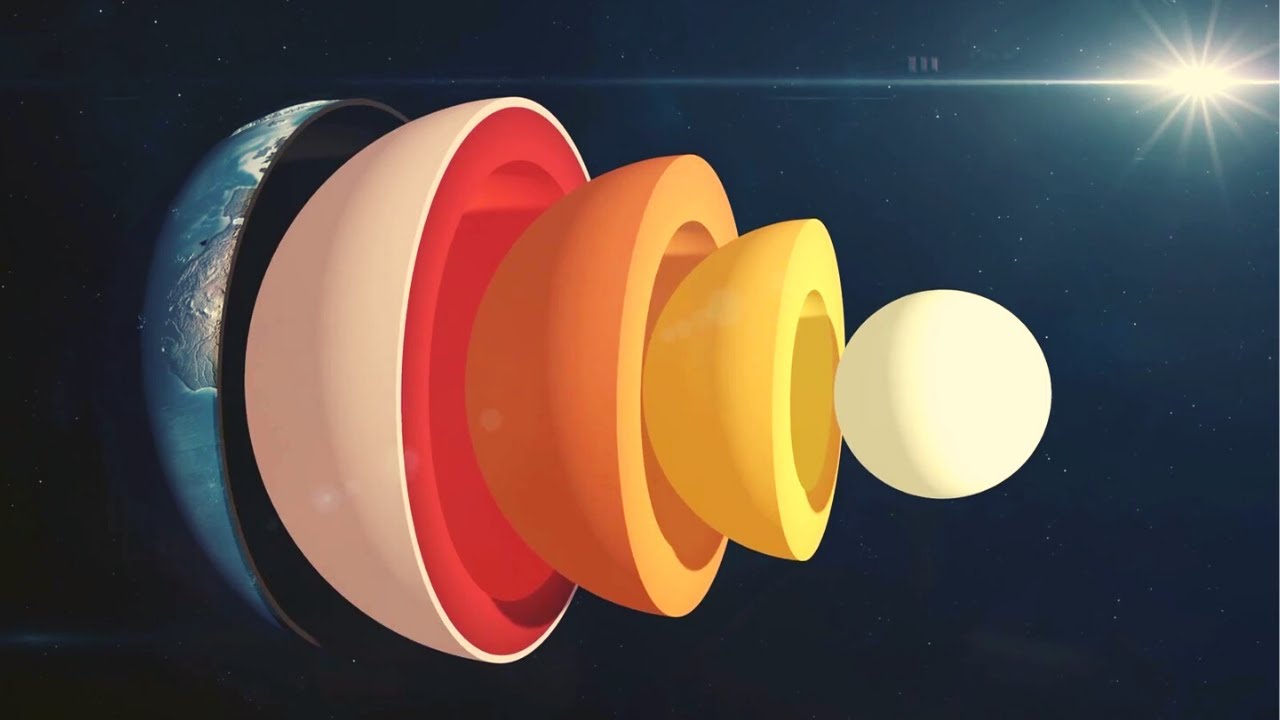
The Earth The so-called Proto-Earth was formed by the aggregation of small rocky celestial bodies (called planetesimals), about 4. 5 billion years ago. In this case, these planetesimals were made up of oxides, metals, and silicates.
Later, due to the smaller mass of the Earth, our planet failed to retain most of the hydrogen and other light gases. The loss of gases cooled the planet, consolidating a core where the heaviest elements, iron and nickel, were concentrated. While the lighter ones such as the silicates formed the mantle and crust, while the gases were concentrated as the final layer.
In this zone, those gases that were so light that they escaped the gravity force of the planet in formation were located. The Earth's Atmosphere The atmosphere is considered to have passed through three basic stages in this evolution, encompassing the primordial atmosphere, the secondary atmosphere, and the biotic atmosphere. Primitive atmosphere It is estimated that the planet formed its first atmosphere 4,450 million years ago, after the impact that released the piece that formed the Moon.
From there, the planetary differentiation in core, mantle, crust and atmosphere occurred. The atmosphere was still very unstable due to the loss of light gases to space during the Earth's cooling process. These light gases such as neon, argon and others were lost in large proportions because they are very light.
In this phase the dominant gases were those coming from the solar nebula, of a reducing nature such as hydrogen. Like others from volcanic activity such as carbon dioxide, nitrogen and water vapor, this atmosphere was strongly reducing. Secondary atmosphere In a period of 100 to 500 million years the atmosphere evolved towards a weak reducing condition, about 4,000 million years ago.
This was due, among other things, to the so-called great late bombardment, in which asteroids rich in carbon and water hit the planet. It is proven that meteorites and comets contain high contents of water, CO2, methane and ammonia. On the other hand, volcanic activity expelled large amounts of carbon monoxide and nitrogen into the atmosphere.
In this period, the incidence of life on the atmosphere appears, with the activity of methanogenic protobacteria about 4,000 years ago. These organisms consumed CO22 and produced methane, so the former was reduced and the latter of these gases increased. Biotic or current atmosphere It is estimated that the oxidizing biotic atmosphere began to form no more than 3,100 million years ago .
This is due to the appearance of the first photosynthesizing organisms, that is, capable of producing chemical energy (food) from solar energy. Originally they were cyanobacteria, which when carrying out their photosynthesis process produced oxygen as waste. This was incorporating large amounts of oxygen into the atmosphere, causing a qualitative change about 2,400 million years ago known as the Great Oxidative Event.
In turn, the increase in oxygen caused the decrease in methane by photochemical recombination. Likewise, ultraviolet radiation caused the dissociation of 02, forming atomic oxygen (O), which combined with molecular oxygen (O2) forming ozone (O3). Thus, an ozone layer was generated in the extratosphere, in addition to the nitrogen expelled by volcanoes, which became the dominant gas, because it is not very reactive and does not easily form minerals, therefore it accumulated in the atmosphere.


![Earth tilt and seasons [eng subs]](https://img.youtube.com/vi/RETy2e5ZrJ0/maxresdefault.jpg)