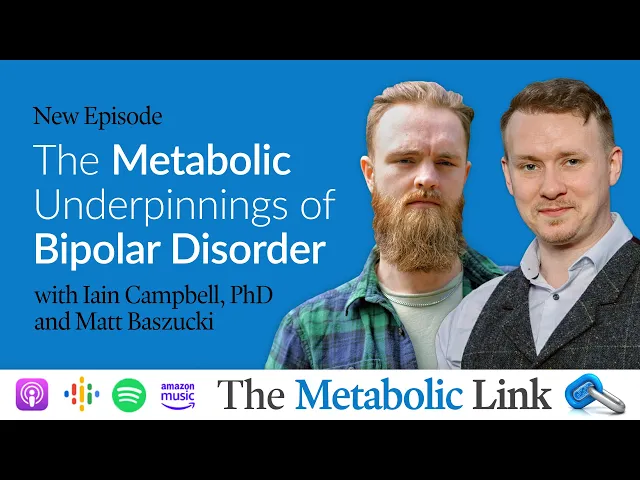
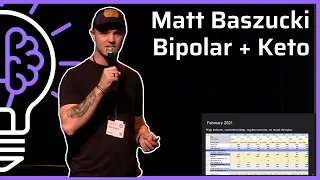
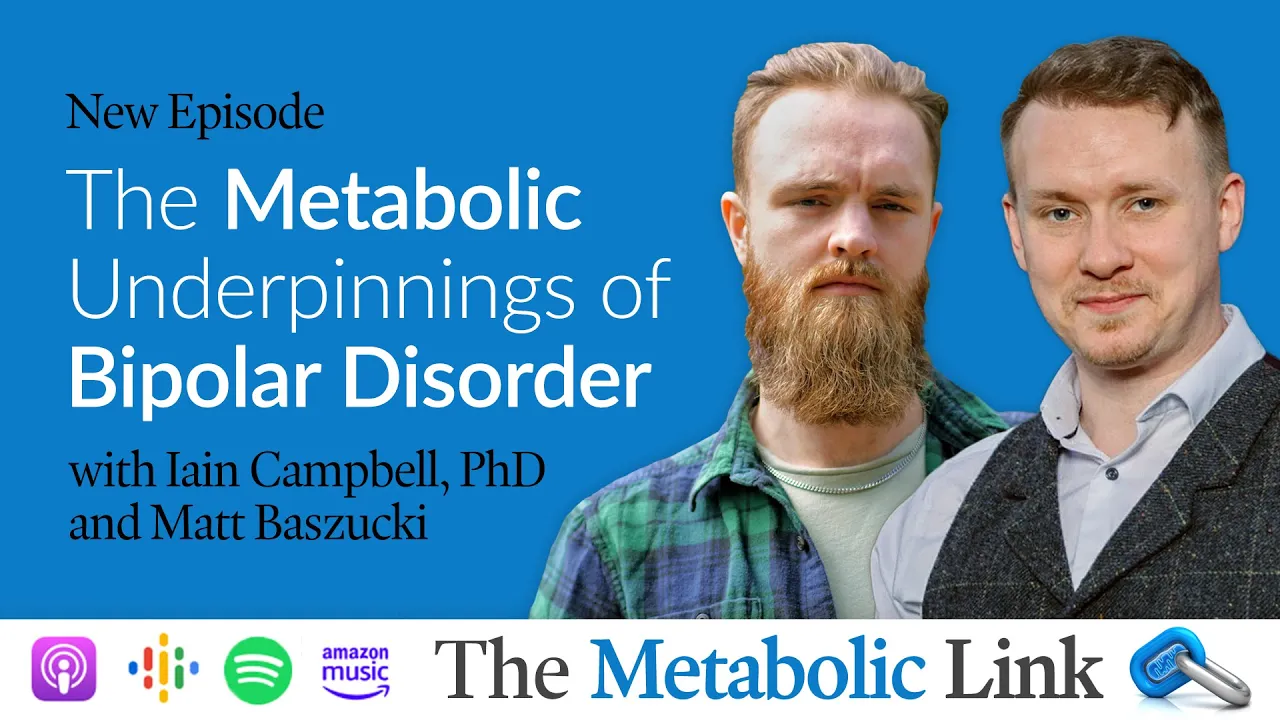
Welcome to the metabolic link a medical and science-focused podcast that explores the common thread of metabolism in health and disease this is where science meets Society welcome to another episode of the metabolic link I'm your host Victoria field and today I have not one but two incredible guests on the podcast who are going to be discussing their battle with bipolar disorder but also how they've Been able to thrive using ketogenic metabolic therapy and now how they're helping others through the process so my first guest is Matt bazuki Now Matt bazooki was diagnosed with bipolar disorder
type 1 when he was only 19 years of age and says he's achieved full recovery in using the ketogenic diet since then his family has been speaking openly about their experience and success in using ketogenic metabolic therapy and they've really now dedicated Their lives to helping other families do the same and they're doing that through a variety of ways so they've got the bazuki brain research fund that's supporting mental health research involving metabolism involving ketogenic metabolic therapy which is so exciting and they've also started a non-profit called metabolic mind which is dedicated entirely to providing
education and resources all around the emerging and exciting field of metabolic psychiatry My other guest is Dr Ian Campbell now Ian Campbell has a PHD in global Health from the University of Edinburgh in Scotland and is a principal investigator on a pilot trial that's actually being supported by the bazuki brain research fund all involving a ketogenic diet for bipolar disorder at the division of Psychiatry within the Center for Clinical brain Sciences now Dr Campbell has actually been suffering from bipolar disorder type 2 Himself however he's experienced great benefits in using ketogenic metabolic therapy over the
last seven years and is now thriving both of these incredible human beings are also going to be speakers at metabolic Health Summit 2024 in Clearwater Beach Florida January 25th through the 28th you will not want to miss uh them speaking and what they have to share because both of them really provide incredible Insight in their Unique experiences from being a patient all the way to Dr Campbell's research and what he's doing in the mental health field to really make some big changes happen through his work in bipolar disorder so it's my absolute pleasure to be
able to introduce Matt and Dr Campbell to you today and I hope you enjoy this interview as much as I did Matt bazooki Dr Ann Campbell thank you so much for joining me today uh for this discussion uh really really excited to Not only be sitting here with you right now but to also have you both as speakers for metabolic Health Summit 2024. thank you guys so much for joining me sure thank you very much yeah so uh you know you both have uh really interesting stories and and the fact that you're you've been sharing
now for I want to say it's been like a year or two you've been sharing publicly about your own struggles with bipolar but your journey through in finding Ketogenic metabolic therapy and now helping people in your own ways in the world which is pretty and together as well you've got this incredible uh podcast called bipolar cast that you actually have together and Ian Dr Campbell you're doing research and you've also got some incredible work happening with your family Matt with metabolic mind and I I would love to dive in from sort of start to finish
kind of like reel it back a little bit Because it starts from a very personal place um just the the good work that you guys are doing in the world today so maybe we start with from your own perspective let's talk a little bit about bipolar and let's talk about from your perspective what it is Maybe what you know type you've been dealing with over the years and how it all started for you both I don't know if one of you wants to go first maybe Matthew Matt we'll start with you and you can kind
of Lead us into then your story um from there Ian sure thing so for me what bipolar disorder is is psychiatric well metabolic dysfunction manifesting as psychiatric symptoms and I can talk a little about a bit about my story from the start um and what happened to me so when I was 19 in 2016 I was a freshman in college I had my first psychotic break I was a second semester freshman And my life had been pretty crazy the last year I had pledged a fraternity I was drinking a lot using marijuana and not sleeping
well eating carbs um so it was like a perfect storm as it were I was stressed I was taking a hard curriculum at Berkeley um doing some engineering stuff and I went into manic episode psychosis was hospitalized um delusions a lot of my psychosis related was around spirituality and Enlightenment and different things like that and so I was hospitalized for a week and a half at Stanford and I was put on an antipsychotic and I was taken off it a bit too quickly and I had another break that fall and so the next the short
version of the story is for the next two years I would be in and out of psychosis never truly well um you know I tried dozens of medications dozens of Doctors Treatment Centers all over the country could hardly function couldn't go to school couldn't work um I was homeless at one point for a couple weeks just running away from my family it was really difficult and at in 2019 so this would have been excuse me 2018 this would have been a couple years after I had a bit of insight when I realized something was very
wrong with Um how I was living the last couple years and I had been hospitalized four times at this point over the you know 2016 to 2018 each for a period of about two weeks in each for psychosis hardcore psychosis and Mania and I was heavily medicated but I realized something was wrong and I was at a treatment center at the time and I started to put together some healthy habits started to get a little bit better And it got to the point where I was doing frequent exercise sleeping pretty well um you know doing
everything you know as I should in 2020 but I wasn't well and I was still constantly battling the manic episodes that would come on and the pattern was and I'll try to be brief so we can get to more stop but the pattern was I'd get manic I would start to sleep less start to sleep less I would have to take extra Zyprexa Antipsychotic medication I was constantly tracking my sleep tracking my mood pretty meticulously trying to figure this out but I just couldn't manage it I would always just get manic especially March when the
days are getting longer very rapidly lucky break mom stumbled upon um Dr Chris Palmer's work in ketogenic therapies for mental illness in 2020 late 2020. I went on the ketogenic diet January 4th of 2021. And I went on at hardcore and I tracked my ketones and by March when I went through the month I call it March Madness everyone gets mannequin March what I went through the month with no symptoms no psychotic symptoms and no symptoms of mania on five milligrams of zyprex so where previously I would have to take up to 20 to even
just stay stable I knew something miraculous was happening my mom more or less Stopped writing in her log that summer because I didn't have any symptoms and it was almost like the illness had disappeared and I didn't have to I didn't have to manage um my mood by taking extra medication for the first time I could just take the same dose daily and I was fine I didn't have these manic episodes and it's really like it's the closest thing to a Panacea that I've ever encountered I mean keto was the solution For me specifically getting
into ketosis and getting the ketones up in the 1.5 and above range for those first few months and so like I literally went from not being able to function to everything just fell into place when I went and I was in ketosis you know job I had a girlfriend for a while I was able to live normally I stopped drinking stopped doing drugs and now it's like I don't I don't really experience the illness like Bipolar disorder per se it's just a normal life and I just I do a lot of other things exercise watch
my sleep but really you know keto's been a miracle for me and that's the short version of the story wow that's a pretty incredible um you know what I guess what was going through your mind uh at the time of this like massive shift that I'm sure you felt within you know your I mean your Whole outlook on life what was I can't even imagine what that was like yeah it was um it was like I was able to see clearly for the first time almost I mean I had I had concrete metrics of especially
watching my cognition come back I'm roaring back when I went into keto like my chess rating my chess rating came worrying back and I was able to work and my executive functioning came back where I was able to manage my life and handle things normally and these are these are things that a lot of people with severe mental illness can't manage so handling the normal necessities of daily life and planning things and attending appointments and working and you know all these different things and so for the first time I was able to do it all
and it really felt like just that you know the ketones in my system Just cured me wow I even went I can even dip out of ketosis now which I do sometimes Tuesday through Thursday when I'm in the office and then I come back in the weekends and it's not a problem and I have suspicions that those few months of being in ketosis hardcore might have even like cured all of the metabolic dysfunction I was having but compared to the meds I mean be heavily medicated What a nightmare and even the metabolic side effects that
can come from a lot of these medications right what could have been potentially doing more harm than good to me and I'm grateful for the antipsychotics Zyprexa in particular which I needed in those acute States so I think there's tremendous value in medication I wouldn't advise anyone come off their meds in three weeks doing keto I'm coming off my meds very slowly on a Ketogenic diet but yeah I mean it was like a whole new experience of life for me yeah wow that's pretty incredible to go through and I can't imagine and life I mean
as you probably know it from 2021 to now has completely changed it sounds like and you've essentially gone into remission if if you'd call it that um since then which is amazing I mean even today I know you were mentioning is It kind of a big milestone day for you in terms of kind of weaning off and you know feeling back to your yourself and thank you for sharing that because it's it takes a lot of guts and I want to get into that whole side of things as well um but Dr Campbell you know
you've experienced this yourself as well and also have been through I believe with type 2 bipolar is sort of you've also had your own journey through this and you've now kind of branched out into Researching about this uh specifically as it relates to metabolism so I'd love to start with you for you know in terms of how it kind of began and how you kind of shift have shifted gears yourself um you know with your story yeah so um type 2 bipolar disorders is like the really bad sequel to type one it's like the one
they shouldn't have made it's like you're 80 of the time depressed you're 20 of the time up and Able to function uh but then during much that time you're kind of manic or in hospital and so it's really kind of like a more depressive version of the illness um so and both are equally challenging in in different ways um it's my my challenge with it was formerly the depressive side of it um being unable to function for very long periods of time when I was growing up and this um it kind of but the kind
of bipolar depression is not like normal Depression it becomes like catatonic depression where you can't move you can't leave the house your whole body feels like it's on fire it's a very painful thing to experience and actually take stamina to survive the depressive episodes so it's not like a kind of you can really just rest through them it's like your body's really struggling in the same way that you would feel if you were finishing a marathon or if you were exhausted from a long workout and They've actually measured lactate levels in the blood of people
with bipolar disorder that when they're going through these depressions the body is really struggling to survive so when you're in these very deep states of depression the suicidal thinking is very rapid and it comes quickly because the body is in this physiological crisis day and it doesn't know what to do about it and they kind of um you can be you can have the most wonderful life in the world With everything going well for you and a wonderful family which I'm fortunate to have but you still think constantly about suicide because your your body is
struggling to to live and unfortunately I lost a family member to suicide because of this your young children and it was this very difficult to witness this happening and with all the modern treatments we have for bipolar disorder is still a quarter to almost two-thirds of us 25 to 60 of us attempt uh suicide So even with the best medications in the world there's still um a quarter to almost two-thirds of us don't want to live so there's something very um wrong with how we're managing this illness and I experienced that firsthand through falling into
very deep catastrophic depressions and the kind of trigger for me was I really wanted to start a family with my wife and we were talking about this and I really realized This is not going to happen for me like there's no way that I can look after children and my wife kind of understood this my family understood this um because I'd always fall into these episodes and it was just extremely depressing and I was kind of very suicidal at the time because I felt uh you know just like useless as a person in lots of
ways not because just because I couldn't work I couldn't have children I couldn't function as a Family member I couldn't um you know all the things that were personal to me that were important to me that that I couldn't fulfill them so there was no future for me so I just I just decided I'm just going to try everything I can to to to do everything I possibly can like I'm gonna try and turn every dial that I have available to me and one of those was losing weight I was about 60 pounds overweight I
did the Atkins diet very strictly and I I I didn't know what Was happening at the time but within the first week of doing this very strict Atkins diet there was essentially a ketogenic diet I thought I was sitting on the bus and I felt it was like I felt like it was like I was on this black and white TV that was all fuzzy and out of focus and suddenly I was seeing like color like on the screen for the first time and the way I was experiencing that was looking at nature of the
window I was I was experiencing like just Contentment looking at nature and positive feelings and I thought like I wonder if this is what people normally feel like I've never like for years and years I hadn't experienced this and gradually I started feeling better and better throughout the coming days and just small things were making me feel happy like interacting with people and I thought I bet this is what it's like uh for for normal people and it's something actually someone on our pilot trial said Is like oh I bet this is what it's like
uh to feel normal and it was really like the lights in my brain were completely off and they were like it was like they were just like clicking back online and this is what convinced me of the energy component to this was it really felt like a city grid that had no lights on and they were clicking back on and my brain was just starting to function again so I was I didn't realize it was ketosis at the time uh it took me a few Weeks to figure out that this was what was causing it
because I started to take mctos and track my Ketone levels and then my wife was saying I would take like an mctr supplement when I was out of ketosis and within you know I take like two or three tablespoons and much like people have experienced with Alzheimer's or mild cognitive impairment she would say like you seem like a different person like to what you were 45 minutes ago like you really seemed Different like you're interacting more like you seem happier like you're not ruminating so that was what got me like and from that point I
was just completely sold I was like I've you know lost people to this and I've I felt like I wasn't going to survive it so I was like I'm gonna spend the rest of my life 100 just just focused on whatever this is and how we can communicate to other people and that was what led to me going back to University and eventually doing my PhD and then spending about five years trying to apply for funding to um uh get this nobody was interested and that was how I met Matt and John and the bazookies
and they were the first people that had applied to every like traditional funder and no one was interested and they funded our pilot trial Edinburgh University which is leading to I think it's fair to say like a massive shift in our University and How we view uh bipolar disorder and I'd love to share more about the uh during this interview absolutely well I definitely want to get done you know dive into that for sure it's a really really exciting research that's going to be underway and the fact that you know you uh were recognized by
the bazooki brain research fund and now you know four-year fellowship at the University of Edinburgh is really exciting so we we I certainly want to Dive um deep into your research and what you're doing now because I think it's going to make a huge impact as well as you know the the research the other research that metabolic mind and uh the bizuki brain research fund is supporting uh that it's it's incredible where the field has the potential to go I think and it's just really starting to explode which is exciting so when you guys first
started just to kind of keep keep things On the thank you by the way for sharing that personal story I I can imagine it's never becomes easier probably to to share that out I mean you guys can speak to that um in terms of what at what point you sort of decided you know what I I need to share this with the world I'm sure when you've been suffering for so long and you find something that completely shifts your life you might want to share it with the world but it doesn't come along with I'm
sure a lot Of nervous feelings and all kinds of stuff because as a society there's unfortunately stigma around this right which we need to break so hence why we're doing this interview to talk more and more about it um but what for you both uh was sort of that that turning point where you're like okay we've got to do something we gotta shout this from the rooftops um and did you make sort of this big like okay I'm Going to share this publicly now because that that had to be a big decision I'm sure somewhere
along the way I'm not sure um Matt if you want to maybe start sure yeah yeah so this is a good question unfortunately a lot of my episodes were very public I was making YouTube videos um documenting My Expedition homeless expedition across California um a lot of people saw these um at one point I videotaped myself Flushing my lithium down the toilet of a Greyhound bus and posted it I think on Snapchat it was kind of like a micro uh Kanye West breakdown if you will so it really sucked and then when I met Ian
and I think we had the idea to just film my story we had the idea to try a podcast and we said well for the first episode why don't we have Ian film me uh interview me and we could film it and see how it Goes and so I felt confident doing this because at the time I was in keto keto this would have been 2021 the recovery was so robust I didn't feel like coming forward about my illness was going to impact me negatively in terms of the opportunities I would have going forward um
in work or otherwise and because the recovery was so robust so I was I felt so good and I felt confident that if I Just continued to adhere to this diet I would be able to accomplish things that any like Normie as it were would be able to any person without a diagnosis I think in some ways being so strict with my health protocol has like catapulted me into almost like better health than some of my peers um just because I had to be so strict and then I blasted through it But to answer your
question yeah you know for for kids who are Really suffering with this illness I think it's important to share the nitty-gritty details of the story so that they can relate to this and understand that yeah I went through a lot of the things that these kids are going through like horrific life altering mental illness and then I recovered with the ketogenic therapy among other things circadian rhythm management and exercise and a good community and things like that I'm recovered and I'm living a normal life happy and fulfilled and content now it's just beyond me I
mean I can't believe it sometimes um what this diet is on for me so it's but it's important for me to share the story so that people can understand that oh yeah wow we actually went through this and so I when I decided to share the story initially it felt like um my own feelings were Irrelevant because what really mattered was there are so many people who are going through this stuff for whom sharing the story could help them tremendously and so if I had any reservations myself personally I put them aside immediately and I
just said look this is something this is such a remarkable thing I just have to share it um and so that's why I decided to come forward I don't know if you have anything to add in Yeah it was the same like bipolars you're kind of told that it's just gonna probably get worse throughout your life and then you know it's very like um bad prognosis for most people with bipolar disorder unfortunately and I'd seen it in my family like where um mental health can go down that road and you know to to be functional
and to be able to you know do normal things and to enjoy life and like it's just completely very very few people with Bipolar ever ever get to that so to experience that I just felt like I absolutely have to tell people about this so so initially I did this anonymously I set up a Reddit account and um um with a Reddit like subform called bipolar keto and I just post like and I'd write like just there's everyone that I could possibly tell about this and try and like you know spread awareness and Um and
occasionally some people would like reply positively and I would recommend them to shibani's travel at Stanford I think we're the only person that's recruiting like trying to get people into other people's studies because um I just wanted everyone to experience this and so some people joined Giovanni's trial and and actually we were at ispd the bipolar disorders conference in Chicago last week and we were sharing some results including one Of the people who ended up joining a trial but the um but yeah I just felt a responsibility like I have to and the first time
I shared about it was on the podcast with Matt because I felt like you know I was basically on my own with my father my father was a huge help and support to me and he was the one that kind of kept me alive through all these episodes and and he also is involved in our research and like um he's been incredible like um a person he's uh he's A professor of medicine and so he's been like really really someone that helped me survive this and so he was the only person I really told uh
my wife and a few other people and then when I met Matt and John I felt like oh here's like like amazing people that are willing to be open about this and it was I was kind of taken aback I was like oh wow like you just guys just talk about this and then it made it just gave me confidence to think like maybe I could be okay if I Did that as well and it turned out to be really positive like it's there are some people who don't understand that there's some people who just
kind of like don't get it and that's fine and and you can't do anything about it but for the majority I've just found really great people who do understand it and want to engage with it and that's been wonderful that's great and it what a what an amazing thing you're doing for so many other people suffering out there Probably in silence who don't feel like they can share but then they see the two of you you know maybe they they've been along with you Matt since the beginning right and they're now seeing you on camera
and how incredible and amazing you're you're doing you know thriving at this point that's a huge deal just in you guys sharing your personal stories um and now also of course the work uh that you're doing which I'd love to get into Um you know you know I know you've got some great research going on right now you're working with your dad on this as well as some other incredible researchers and it's specific to bipolar as well as the threat of metabolism within mental health which is going to be incredible and of course supported by
uh you know bazooki uh brain research fund and metabolic Minds so um please share a little bit more about where things are at with that I know it Sounded like you've got some maybe initial results so far would love to hear more and I'm I'm sure you're going to share even more Summit 2024 but maybe we give folks just a little bit of insight into what you're doing yeah so we completed a pilot study um and this was 20 patients going on a ketogenic diet and this was um like I said we've been trying to
get this funded for a very long time and nobody would even look at it because There was no pilot data there's no case studies so um the baziki's made this possible like from the start we weren't this is why we're able to do this um which I'm incredibly grateful for because nobody else would even take a look at it we went to every traditional uh place and so this is like it's accelerated learning about bipolar disorder in a way that I don't think any of us could have expected at the time we had 20 patients
going ketogenic diet and I presented the preliminary findings uh International Society of bipolar disorders uh two weeks ago in a panel with Shivani seti and Georgia eats and Danny Smith who's our chair of psychiatry and I think it's fair to say without giving away all the results to study uh the the the reception was really warm and open and excited about this field because For the First time we're showing uh Real Results in real people of what This uh can do for people and I shared like what I will share um and I'll share at
metabolic Health about our full results to study but I can share some of the patient testimonials with permission um and I shared a video of uh a person who was on a trial who was describing that this is completely transformed the quality of my life that I'm able to do things I never was before that this um that this has made such a big impact on Me I want to spend the rest of my life training as a dietitian to tell other people about this and I showed another which was a letter from the daughter
of one of our participants and she was and she was sharing that she her mom is back for the first time that she hasn't had a mother because she's been so unwell and she has a mother again and these are obviously like why you do these studies to get these kinds of results and it's quite um and it is Quite remarkable um you know what this can do for uh people because you don't see these kinds of responses in Trials typically and not everyone will respond like that with any drug or therapy or you know
there'll be people who respond very strongly like this and there'll be people who respond somewhat and people who don't like an epilepsy but for the people who do respond is quite remarkable and we also saw across-the-board metabolic Improvement in our subjects so we saw the weight reduction the BMI and cardiovascular risk is a huge uh problem for people with bipolar disorder there's massively increased risk of two to three times the risk of type 2 diabetes and heart disease and and cancer is also much more prevalent in the bipolar population so the first question that we
answered was can people stick to this diet and we took their Ketone levels every single day and we asked them about Their mood and their energy and so forth and we have published some basic findings on the adherence rates which are the 91 of the time they were in ketosis so people 91 of the time were hearing this diet and they were finding it manageable and they enjoyed being on this diet which is something that we didn't know with bipolar would they even be able to do this um and then we showed um and I
again I I have to not give away The full findings but we find basically that this was having an effect on their mood symptoms and on their anxiety symptoms impulsivity so forth but we also did in-depth their brain Imaging we did MRIs brain Imaging and we scanned three different regions of the brain and what we found that I found to be one of the most interesting findings in bipolar research today and I've just published a preprint that's not our findings but it's my thoughts about this general area It's called um you can find it if
you Google metabolic overdrive hyperglycolysis and glutamanolysis and bipolar disorder and I think we're actually starting the thing I'm possibly the most excited about from this research is that we have this treatment for epilepsy that is now showing Effectiveness for bipolar and we treat bipolar with epileptic medications anticonvulsants and so to me this is too much of a coincidence that we're seeing The effectiveness of ketosis which is a therapy for epilepsy in a condition that we manage with epilepsy medications but I think what we're starting to see actually is the underlying some very early indications of
the underlying mechanisms that work here and so we'll be publishing our findings in the next month or so and I think people are very interested to see this because it's not just that people are reporting they're getting better we're seeing it in our Psychometric measures but we're also seeing some mechanistic insights into why this might be happening and so we presented this isbd alongside Shivani in Georgia and they also were finding similar results in their patients substantial benefits across psychiatric measures metabolic improvements so this this was really wonderful to present this at the main conference
for bipolar disorders and see this be recognized as a really serious and substantial therapy For bipolar disorder in this early research that's incredible I mean it's a great step direction for sure sure I find I'm really excited to people fledged findings but what you're sharing so far is really uh encouraging in so many ways and like you've said this has been used as a metabolic therapy for 100 years for epilepsy and you know we treat uh bipolar disorder With epileptic drugs it makes a lot of sense so you're kind of touching on some of the
mechanisms um but I'd love to maybe dive a little bit deeper um with you guys in terms of the mechanisms at play with the ketogenic diet um specifically and how they may be relevant to uh bipolar disorder because you know I think the common thought is sort of um you know the cause you know while they say they're not sure for sure what the cause is it may be a balance of Neurotransmitters or an imbalance of neurotransmitters but it's there's so much more to it so let's speak to some of those mechanisms that might be
at play that is kind of tying the diet and the metabolic effects to bipolar if you if you can I don't know if you ever bought this this like neurotransmitter thing man I was always like very skeptical about this what was you I'd love to hear your thoughts on that yes Experiencing it yourself yes I don't know what are your thoughts yeah I mean because the the um you know like ssris were gonna give I was given an SSRI as my first line of treatment for bipolar which I'm not sure if you're the same but
like it obviously it's affecting neurotransmitter systems and it's actually one of the it could be really bad for bipolar disorder it can cause you to go into mania but Um my my feelings from what we're finding and this is this paper that I mentioned I've just published a preprint about is that um the bipolar is being conceptualized as a kind of neurotransmitter imbalance for quite a long time and this can seem to happen in the 1980s when there was the development of ssris and it's very it was a very pragmatic approach of like here's a
tool we have to affect something so let's really double down on This focus on neurotransmission because there's something we can do about it and I think research can become quite pragmatic like that where if we have a you know if we have a hammer everything becomes a nil and so but uh what I've sort of mentioned is that there's a metabolic aspect uh to bipolar disorder that has been overlooked and this is what this recent paper I published was about was looking at the rules of things like glutamate in the brain that have a Metabolic
aspect to them so that so in this paper I was highlighting the the original research of Hans Krebs uh in the sort of 1960s was talking about glutamate as a meta fuel source in the brain and so I was proposing in this paper that actually we need to revisit the original rule of glutamate in the brain that was highlighted early on in research but it's always been in most of the literature throughout the 1980s 1990s it was conceptualized in its Neurotransmitter rule which is correct but it also has a very fundamental metabolic role in the
brain and I think that some of the results we're seeing from our MRI studies are are speaking to this alternate role of glutamine in the brain and I think there's a number of aspects of bipolar disorder that have been misunderstood like that or conceptualized in a different way to what the patient experience is like if you look at the early descriptions of Bible the earliest description of bipolar disorder was by a male kreplin who was categorizing psychiatric illnesses according to different subtypes and he said his exact quote was that the the lack of energy and
bipolar disorder is very specially conspicuous he was noticing in his patients that they were just not moving for long periods of time and there's a real um psychomotor activity aspect to bipolar disorder that's not being There's no kind of very much overlooked um and he also said that in menia they work all night you know they have endless productivity they're able to function at a very high level you know some sometimes obviously it ends in uh dysfunction but but they're able to to exert energy into exercise so he recognized this as an energy um imbalance
and an energy dysregulation very early on from the earliest days of bipolar disorder and then mitochondrial Research and circadian rhythm researchers substantiated this over the past hundred years so I think that um on every level from the earliest clinical observations to the molecular research and mitochondrial dysfunction research leading up to the recent pre-imaging I think it speaks to bipolar being an energy dysregulation disorder rather than than a neurotransmitter imbalance disorder yeah absolutely and um it's Exciting to to see that you you guys are going to be contributing in a big way to further supporting um
what we're seeing in terms of energy imbalance and uh what you're seeing with patients specifically the question for you because one of the biggest things I think one of the biggest barriers within the research or what you've what you hear since what you've heard since the beginning of of um even ketogenic therapy within the Epilepsy field is it the diet is so difficult to follow I mean so so much so to to the extent where the diet is not offered as a first line of defense for somebody with epilepsy right because oh it might be
a little too difficult for the patient to do so let's try drugs drugs first then we'll then we'll maybe keto is the last resort I you know I I would maybe argue that's not the case and the two of you being able to follow the the diet not only That but you um you know Ian being able to implement it with a variety of patients what would you what would you say to that in terms of uh how challenging the diet has been to adopt and for other people and patients out there who might be
suffering who don't even know it exists but if they they had they might be empowered to be a part of their treatment in that in that powerful way so maybe Matt if you want to speak to that process for you in following the Diet um I'm not sure sort of what ratio or what type of ketogenic diet you're following I know you're testing ketones and blood glucose but what that process was like and how challenging it's been and just any words to other folks thinking about it or maybe who don't know about it um and
considering giving it a try sure so I can speak briefly to this I mean the unfortunate truth is that a lot of Clinicians will discredit this as a viable treatment because they'll just say oh well no one's going to adhere to this diet and I think what they don't understand is that the suffering can be so tremendous and so terrible with this illness that people will literally do anything like if there's a chance that they're going to get well and especially if people see evidence that they're getting better and feeling better and they can Actually
um point to the diet as the reason people will adhere yeah like if it means getting out of depression and it's not an easy diet to adhere to because the carbs are so the carbs are everywhere right you go into 7-Eleven I'm like looking for something I can eat it's difficult to find something but at the same time um it's not that restrictive there's tons of you know I could eat meat fish Avocados all these fatty foods um I ate a lot of protein and I eat a lot of food and I eat a lot
of fat and um I guess the only the only thing I can say is that in those moments of difficulty where I watch my friends drinking alcohol or eating a lot of carbs and I want to the rewards are so insane from doing this diet that it's worth any discomfort I have or any feeling of missing out one of the most Difficult things for me having to adhere to a diet like this is actually been not so much the taste of the food itself or missing that but the um cultural the experience of experience of
having food with other people so going out and experiencing the same food and having home-cooked carbs and everyone's tasting the same thing and so there's there is an element of like fomo that people probably have to go through well Starting the diet and continuing to adhere to it and I can only really speak for myself but that has been a part of it I make sure to always have a bunch of fatty food in the house so that if there's ever a situation I can just go and eat that um but really it's still a
joy I mean there's something about eating well too that is just a joy and feeling good And fat mix does make food taste good right so there is that and it sounds like you've kind of adapted over the over time and like you said the reward sort of outweighs any sort of amount of fomo through the process and I feel like you can kind of create things that you know the sort of bad stuff in a ketogenic format um you know at least for the most part right so you feel like you're participating but um
Dr Campbell I'd love to hear from Your perspective because you've got a very unique Insight from both sides in not just you know starting it or Atkins and then maybe transitioning into a more you know ketogenic Focus yourself to helping um you know and researching with patients implementing this approach as well yeah I mean um yeah I totally agree with what man said about the suffering aspect of it because it's like if you You know if you've I don't know the analogy is but if you've fallen off the Titanic and you find a life raft
you're going to really hold on to that life raft no matter what it might not be like you know the the best you know you know the most uh pleasing diet you could ever eat but you're gonna hold on to that because it's saving you from a much worse circumstance so I personally find it to be really enjoyable and satisfying and sustainable and and I see I think There's kind of good evolutionary reasons that the humans probably ate a lot more like this maybe not everyone was completely eugenic but but I think it was a
lot more like this before the agricultural year and so forth and so I feel like it is a sustainable diet and it's a natural kind of human deity um loss of um animal fat and to eat low carbohydrate vegetables and not eat masses for amounts of sugar and and Wheat so I I feel um it is very sustainable and I think we've seen that in epilepsy that if people if the choice is to have seizures or to eat this way people will invariably choose to eat this way and and even very so the people you
think that might be the least disciplined like um certainly you know having kids that can relate to that feeling but like they might you'd assume the children might be the most uh undisciplined about this but Actually in every hospital in the UK there's a children's epilepsy Clinic that delivers ketogenic diet to thousands of children and I think it's the same in America and they stick to this over long periods of time you know years at a time up to you know decades and what's really interesting is some of them go into complete remission if they
stick on it very strictly for one or two years and I think when you're in younger that can happen and I think it can Potentially happen in bipolar the same as epilepsy if you do it strictly you can heal this metabolic damage whereas if you're a bit older I have to stay on all the time but I think it's because I've sort of sustained more damage over time to having episodes but I think people that are younger could potentially there might be a possibility they could benefit in this way where they do it very strictly
for a couple of years and be able to go back to uh um Eating what they like yeah I know that's a really really great point that you've seen with somebody like you know Charlie from the Charlie Foundation right he went on a diet for a few years and then was able to eventually come off and not experience seizures like he was um for all those years um so how has it been going since then for you both you've been now been on um Dr Campbell how long have you been on The diet now seven
years now seven years now okay and you've been on it since 2021 so how has it changed how are you guys managing now it sounds like Matt you have some a little bit more of a relaxed time during the week potentially um I'd love to hear in from you how that's changed over time and how it's kind of fit in in as a way of life really at this point or I'll go so uh I have noticed that the one place I can get into trouble is if I'm out of ketosis for an extended period
of time and then I come back in and then the ketones go up very rapidly and that can trigger some mood stuff and so one of the things that Dr Palmer recommends is that people watch for those first couple weeks when they're entering ketosis for the first time because there can be some mood stuff for Bipolar having said that what I do now is I am in strict ketosis from Friday to Monday I have only prepared food where I know that it's low carb and I know how much protein is in there and how much
fat and I only eat that from Friday to Monday and I track my ketones over those few days at least a couple times and I'm typically in the 0.6 to 1.4 range for those few days so it's pretty great But then if something comes up like I'm in the office Tuesday through Thursday for example and I want to have something with a little a couple carbs so like almond butter for example I never have ice cream or rice or anything like that but I found something with a little bit more I can have it and
I think I typically drift out of ketosis for those couple days or if I'm on vacation for a few days I never stop I never eat real carbs in Bulk but if there's a few carbs in salad dressing or something else like that I don't worry about it but then what I make sure to do is I always come back to ketosis at least once a week every couple weeks make sure I get the ketones up make sure I'm still in it and I've actually spent pretty extended periods of time out of ketosis since I
did this I never really ate uh carbs in bulk but just having a ton Of food a ton of protein carbs slip in once in a while and I have this weird suspicion that I might be able to just go off it if I really wanted to and I would be fine but I just don't do it I mean it's just a lifestyle at this point the metabolic um benefits are amazing and just feeling good and the cognition and keto and so there's no reason to um so I'm a little bit more relaxed but I'm
still pretty strict you know finding What works for you I think that's right and I think for everyone it can be different so I know I really don't think there's a one-size-fits-all solution to using a metabolic therapy to treat mental illness and we we found this talking to all the different people who come on our podcast is that people do keto very very differently and have great success with it and we just unfortunately don't know enough at this point to Prescribe a real one size fits-all solution or even a set of specific Solutions based on
what symptomology a person has we just don't know so unfortunately it comes down to like trial and error a lot of the time and it has been for me but people do it very differently and do great with it people absolutely yeah and respond very differently too so I just want to mention the you know if you're listening and maybe suffering from a mental Illness super important to get started with something like this with a provider who understands metabolic-based therapies specific to mental illness because as you mentioned Matt like there can be some big shifts
that happen um as you know Dr Christopher Palmer has has discussed in his work in his book Brain energy uh you really have to be very cautious about how you transition somebody onto a ketogenic diet or even off so uh it sounds like you've gotten To such a great place Matt with like fitting this into your lifestyle and finding what works um and feeling good in the process I think I think that's like got to be the biggest motivator to want to stay stick with it I'm I'm on a ketogenic diet just because it makes
me feel so so great cognitively and you know you don't really want to stray off um from it just feeling that good so uh Dr Campbell I'd love to hear from your perspective Um you know where things are out for you how you've kind of Managed IT with within your life and how things have changed over last seven years I would I would love to be able to come off it from time to time and be well and obviously um we know from Decades of epilepsy research that especially with young people they can have this
remission that means they can come off it for a time or extended periods because I think it Speaks to those that was our presentation recently by um David Unwin and he was showing that in diabetes the biggest predictor they had of remission of diabetes was how early they intervened so if someone came in you know with just as their blood sugar was going too high they were able to reliably achieve remission in a significant percentage of those people but if they came later a few years down the line it was much harder to get Remission
they could get their blood glucose down and their insulin normalized but it was much harder and and I wonder if this is the same with mental health where if you and and with epilepsy like we've seen many children go into remission and very few adults going through like complete remission where they then go off the diet and are well so I'm unfortunately in the later I'm an old person and I I'm to stay on the diet constantly and if I I can come Off it for a couple of days and as long as I have
ketones in my bloodstream I feel well but I I do experience depressions again if I stay off the diet so I have to remain on it um permanently but to me this is the best deal ever it's like it's absolutely wonderful to be well and there's nothing um that would um you know prevent me from wanting to be well for the rest of my life so I feel confident about doing the diet for The rest of my life and I have a great life whilst I'm in ketosis so I think it just shows there's a
different response maybe and like Matt you're quite I I don't know if how old are you no man I'm 36 now I'm 26. yeah so like after 10 years more of like episodes and and potentially that means I have to stay in it much more strictly and be in deeper ketosis just like people with epilepsy are older and have to do it and people who are younger and I think it's a Really helpful message it's it's that if we could deliver this to young people it might be a very very effective preventative measure just like
it is with epilepsy and I think that's the best thing you could hope for is a measure that you could deliver to young people that would prevent them having the illness for the rest of their life and people who are already had it for a while we can manage it through ketosis and metabolic therapy Um to a point where we can live well so yeah I think there are a lot of like there are a lot of myths about keto too unfortunately and it has a bit of a bad reputation in the health and fitness
sphere or it has historically and I think that's changing as we learn more about metabolism and and metabolic Health but a lot of people like think like oh you can't uh gain muscle for example or um you know your athletic endurance is Going to suffer or you're gonna get diabetes you're eating all this fat or your whole problems with cholesterol and LDL and like we're slowly learning that there are just a plethora of myths about metabolic Health in general that have resulted in keto having a bad reputation and it's actually like one of like an
amazing thing you can do I mean for a lot of people to go on this diet um but yeah for me I mean in terms of my experience of life and just being Functional and having a clear thinking being functional in a gym working out um it's been amazing like in addition to just like during my bipolar disorder basically just the quality of life that comes with eating this way it's worth being strict for me at least like at least like spending extended periods of time in ketosis making sure I'm getting in it making sure
I'm getting the MCT oil the Fats all the things that you know that Ian talked about as well that can boost the ketones and bump them up um the sleep is great and the last thing I want to mention is that I I did not go on the diet and then come off the meds in three weeks so that coming up the process of coming off the bats has been a long journey with a psychiatrist doing this very carefully and even though keto did amazing things for me this it's not like I was able to
Come off my meds in three weeks so you know this is um this can be helpful but it's not just like it's not gonna immediately or at least for me it didn't immediately fix everything yeah it's not an overnight fix sort of thing you gotta get a patient with it I think you guys mentioned you started to feel the shift cognitively maybe but the process to get to where you both are now is take some time take some patience and takes finding what's right for you and your Body because everybody's metabolism is so different um
everybody's you know situation is so different so again that's why it's so important to work with somebody who knows what they're doing a dietitian or psychiatrist or what have you uh in the process for sure but you guys are just inspiring examples of just what can happen with ketogenic metabolic therapies and thank you guys for for sharing because it takes a lot of Courage to do both things to go into unmarked territory with a nutritional therapy thinking like maybe this will help not really having too much information around mental health conditions and ketogenic metabolic therapy
but then also being courageous enough to share that experience so I have to say thank you I'm probably going to say thank you multiple times in this interview but thank you for doing the work that you are doing Um and just being vulnerable enough to share um and Matt I want to just touch on I do want to talk a little bit more about your upcoming endeavors um Dr Campbell with research and where you're headed and where you want to go but Matt I want to talk more about what happened after you sort of shifted
into remission found such great success with the diet your family created this incredible you know research fund uh bazooki brain Research fund as well as this nonprofit called metabolic mind if you want to speak to the mission of what you're all doing there and where you want to go in terms of elevating the field of metabolic Psychiatry and this important research that's really happening all over the world hence out in Scotland here and and everywhere so if you want to yeah totally so I wish I had my mom here because she would actually be the
better person to answer this question And I'm not really involved directly in the work of metabolic mind though I do help them out when they ask but my family you know was by my side throughout my illness especially my mom just researching every single treatment every single medication trying everything from TMS to sauna just you know everything with me and my Mom finally found keto and we were so lucky but the way we look at it Now is just and this is how my dad described it um in Santa Barbara we had all the first
metabolic Health Summit a couple years ago it's like a philanthropic Green Field like this is the kind of opportunity that is rare and just such an amazing place to deploy philanthropic effort in a specific place in a specific way so the bazuki brain research fund is My mom funding research in and the whole group funding research in um metabolism and metabolic health and mental illness so it's just been amazing and watching like there's this really fun like cohort of it's like a squad of researchers and clinicians and psychiatrists who are doing work in this field
uh related to metabolism and mental health if Ian and his dad among you know Dr Sethi Chris a Bunch of others Georgia eat and my family fortunately was has been able to bring this group together people who are doing this work in isolation bring everyone together and form this group to take on this challenge of battling the pharmaceutical Industries and Food Industries and um the ethos about using diets to treat mental illness that you know a lot of clinicians don't want to do this So it's just been amazing so yeah they're just I mean just
funding the research you know I mean no one wants to give money to do studies about a diet with mental health they want to do drugs they want to do other things like that so the fact that we're able to do this research now and hopefully Ian study among a bunch of others are going to come out and we'll have a little bit of backbone to support this along with all The anecdotal evidence and stories that Ian and I have encountered as well um it's just been phenomenal and it's kind of Lucky in a sense
that this is the Silver Lining that this happened to me is that my mom knows the illness and the process of being a mother so intimately um and she's just such an amazing person but she's just you know getting after it with doing this funding so I think really good things are going to happen Not just for um metabolism and mental health but metabolic health research in general this is just going to be like a tsunami in mitochondria this is going to be a tsunami of information and um you know epiphanies over the next 10
20 years so it's really exciting to be a part of well your family is certainly accelerating this field which it needs Uh what you are saying in terms of getting funding for this kind of work is can be very challenging and also researchers working in sort of silos and not you know of course when you're just so zoned in on your work it's easy to not sort of collaborate and talk and share and that's how metabolic Health Summit was born really to bring people together and you guys are really doing this at an accelerated rate
that I think is going to push the field forward in Such a such a profound way and just turning something that I'm sure I can't even imagine what your family's been through through all of this and to take something so difficult um so just hard and turn it into something that's now going to help so many people is just nothing short of inspiring to watch and and we're so thankful for the support um you know of metabolic mind as well And so thank you guys for what you're doing and and thank you for being courageous
enough to share and talk to people and bring the right people in the room so um it's really exciting to see and so yeah Dr Campbell I want to hear what's next uh what's next for you what's what's big picture I know you've got um I'm sure some places you want to go with this work um so I'd love to hear more Yeah so I I just wanted to Echo what I was saying but that this is I think like it's a why is this happening in bipolar disorder why are we seeing this kind of
progress with the research and I think that um it's because bipolar is such an energy specific disorder it is that you go from depression to Mania and if you if you go on any form for bipolar disorder you can see the pictures people post and when they're depressed their house falls into disarray they can't Move they can't get the room and when they're manic they become hyperactive in their cleaning and they're you know organizing their lives and it's this is what a male kreplin was trying to describe in his very early clinical observations is this
is an energy dysregulation that they have no energy and then they have an abundance of energy so when you're talking about metabolic therapies ketosis and energy it's really you're answering the Question that bipolar is posing and this is the first time we've ever done this we've always asked the wrong we've always answered the wrong question about Neutron neurotransmission or some very specific dopamine receptor or serotonin receptor and all that is very valid and valuable research but we weren't answering the core question of why are people not having energy and then having lots so I think
in this research we've actually got the cat by the tail with Bipolar a little bit where we've seen an initial indication that this is really an energy disorder that responds to metabolic and therapies that affect energy and energy Supply in the body so what I'm excited about is from what we've seen in this early pilot research we're seeing patients respond across psychiatric measures across metabolic measures and they're not having the side effects of the traditional treatments and you can use this alongside the Traditional treatments so instead of the typical thing with bipolar is you go
in olanzapine or one of the antipsychotics and they can be very helpful if you're in hospital and bring you down but you also put on 40 pounds of weight and your cardiovascular risk profile increases across the rest of your life whereas when we're doing this weird for example people that were taking olanzapine and alongside that doing ketogenic diet and reducing the weight by you know 20 Pounds and register their BMI and their blood pressure and so I think this therapy speaks to both the cardiovascular risk of bipolar disorder and the energy dysfunction part of bipolar
disorder and that's a really um that's the therapy we want for this condition is things that can address both those aspects so I would really like this to progress to an RCT and this is what we're focused on now is doing a randomized control trial and bipolar Disorder and this is because it will Leverage The Healthcare Systems to provide this and this might take some time but it's a really worthy task because at the moment the vast majority of people that live with bipolar disorder are in developing countries low and middle income countries where they
have very limited access to treatment we had normally who was a lady from a Nigeria on our podcast and she was I was talking to you the other week we were Just catching up and she was describing that when she goes to for mental Healthcare treatment they tell her to go on a bus and to find someone that they can do for two hours because no one is going to listen to her by her problems this is the way like the majority of people with bipolar experience illness and I was describing my word mommy like
the homeless situation a lot of these people are people with mental illness so I feel That we have to Leverage The Healthcare Systems uh to get them to provide proper therapy to people with bipolar and this is done through randomized controlled trials but that's only 50 of the battle in epilepsy this has been done very effectively but very few people are prescribed ketogenic therapy so we also at the same time need this huge patient movement to demand this from Healthcare Providers Insurance companies so so I feel the combination of moving forward Rcts plus a huge
patient movement will will bring this about in a way that was much quicker than happened in epilepsy and on a broader scale so I'd love to see rcts and I'd love to see a massive patient movement and we're trying to work on both those things that's great yeah no I I agree on 100 you've got this movement happening from obviously the research side is so critically important especially randomized control trials but also this patient movement too like like Making it known to their providers like hey we've not tried this you know I used to be
involved in brain cancer research and it was actually a patient who came to their neuro oncologist and said hey why haven't we tried the ketogenic diet and that's where we all got linked up and started right so that's where there's magic happens I think from both sides where educating across the entire population as hard and as daunting as that sounds really doing the work and The necessary research but all the way to educating the public and the providers is going to help us make some changes so I couldn't agree more with that perspective um I'd
love to kind of close out with some thoughts that you might maybe want to share with others who might be suffering because you both have such unique insights into what you've experienced along the way with suffering from bipolar but now thriving with Ketogenic metabolic therapy and you know Dr Campbell of course with your perspective on both sides of the spectrum what would you say to others who might feel maybe where you've been in the past and that that feeling of hopelessness and not finding control in the situation but knowing what you know now with this
therapy that's worked for you now this is anecdotal but what would you say to other folks who might be dealing with The same thing that you guys have been struggling struggling with in the past Matt you want to go first yeah um I have a little bit of a hot take and I can only share my own experience but for me the most powerful things I've done in terms of recovering from this illness have been video log things that impact my physiology So the main three and the big three that have really like cured me
have been keto which is has been the answer but physical exercise as well as circadian rhythm management which means getting sunlight in the morning and wearing blue light blockers and adhering to a sleep schedule and sometimes I think we get caught up in the meds and the talk therapy and we lose sight of those three things that I described earlier the Sleep diet And exercise and for me like the answer has been those three things and you know there's this thing called the Pareto Principle which talks about how sometimes in an Endeavor generally the 80
of the success comes from the 20 of the most essential or most impactful actions so for me and for people going through this the way I think about it is For myself is that if I can just nail the sleep diet and exercise and then take the meds as prescribed by my doctor um and then maybe you could throw in like having a little bit of a community on top of that I'm gonna be okay like everything's gonna be fine so most of my focus even now like even to this day is just on nailing
those three components of my recovery and I don't worry too much About other Superfluous things that I've been exposed to like art therapy or even traditional therapy that I think I've done it and I think it can be incredibly valuable obviously um but really it's like you know sleep diet exercise I just try to nail those three things and it's done wonders for me its own wonders for me just doing that and I suspect that there are a lot of people suffering from this illness bipolar disorder who if if they could do the you know
the exercise and the Sleep management the Circadian rhythm management could have incredible results however I will add that in a catatonic depression it can be kind of hard to get up and exercise because there's literally energy dysregulation in your body so telling these people like uh bro you Just gotta exercise like you're depressed you gotta like it's kind of ridiculous obviously so I think that for that reason the keto can be the first component the keto can come first and then as the energy balance in this in the body in the system restores itself uh
sometimes exercise just becomes a natural consequence so people have more energy I'm on keto and have ketones then I want to get out and move I want to get in the Sun and I sleep better Um but for and for the people struggling just hold on and give this a shot you know if it ideally under the supervision of a clinician a dietitian and a psychiatrist on in a cohesive unit and a team but please just this you know this can really work wonders okay and though you made such a great point there and just
kind of first sticking to the basics but also taking your time and kind of slowly getting Into a rhythm with these things because it doesn't happen overnight and you know maybe starting with food first might be a great way and then you start to feel better and then kind of trying to get your sleep schedule on track and you know it's kind of a ripple effect from there but that was a thank you for sharing those those thoughts and um yeah I would love to hear from you and just you know from you know others
who might be suffering but also maybe other Researchers who are interested in this field that you know from your perspective on that side of the spectrum as well yeah I I just think this is one of the most interesting times to be involved in bipolar research and treatment because we're learning really new things about the condition and so I just recommend following the work of the scientists in this field in this metabolic Psychiatry Community people like Chris Palmer Georgia each of anisetti um Daniel Smith who's her head of Psychiatry my father Harry Campbell um we
publish papers on this and we're trying to understand my fascination with bipolar is I I want to be better from it and keto has helped me to get there but I also want to understand what it is I really it's it's in my own neurons it's in my own genetics and I really want to understand what is this condition and why does it happen and it's one of the Odd things about bipolar is it's preserved very strongly in human genetics and there's a consensus among geneticists that there's something that the there's something that the human
genome is trying to do with bipolar and we need to understand what that experiment is trying to do is and that will help us to also treat it and manage it better for people so I think if you're researching this try to be open-minded to these New Perspectives and if you're suffering from it please hang in there because I've been there in the worst possible states of this and if you can just hang in there I do think we're going to develop much more and better and effective treatments for this over the next 10 to
15 20 years so please hang in there and reach out for support from your family and try to always have like one close friend or family member and if you don't have that reach out to bipolar Support organizations because there's always someone there waiting for you yeah that's a great point for sure um reaching out to community I'm sure is so important in this process and if you either of you have any resources specific I mean you just kind of briefly touched on it but anything any place in particular or anything else you'd like to
say um for the end of this chat of where people can go or any thoughts um you Have in closing metabolic Mind YouTube channel Brett has just been crushing it and the videos are amazing so that I would say would be the first stop as well as our podcast if you want to check that out of course we'll link all of those yes we're not self-promoting but it is good as we got lots of patient interviews but um yeah I just want to say thanks for bringing attention to this through metabolic Health Summit and through
this Podcast I really appreciate your support and thank you for having us on to talk about our experience thank you well thank you both it's been such a pleasure to speak with you and again you're a huge source of inspiration to us at metabolic Health Summit metabolic health initiative so um thank you for just your work in spreading the word in education and in research truly appreciate your work and very excited to see you both at metabolic Health Summit 2024 which if You don't have tickets you can still get registration metabolicalsummit.com that's going to be
coming up January 25th through the 28th in Clearwater Beach Florida so unfortunate it's all right on the beach right on the white sandy beaches but we you know we tried to put it in a decent spot so it'll be a lot of fun and I'm looking forward to seeing you both and thank you again uh for the great chat today Sure thanks for having us on thank you for listening to this episode of the metabolic link if you like this episode please subscribe share it comment all the things listen to it on all of your
major podcast players um please just help us spread the message of metabolic Psychiatry by sharing this with others and also leaving us a review that really helps us get into more ears and more eyes uh when you do that And I just want to mention if you've not got your registration yet for metabolics health Summit 2024 make sure you go snag it right now so you can see Matt and Dr Campbell speak and also share some of those exciting findings within research Dr Campbell should have some really exciting things to share come 2024 and um
you can head on over to metabolic healthsummit.com for tickets but make sure you grab them soon because we do sell out every year I also want to Mention that we have a medical education platform that's open to the public but designed for the medical professional offering CMEs for all of the content that we put out in the world so from your video lectures at our conferences to one-on-one interviews to podcast episodes like this even premium episodes that are not publicly available you'll want to head on over there as well as a ketogenic metabolic therapy ebook
that summarizes sort of a year in review We've got so many great resources over there um and we offer continuing medical education on that platform just like our conference so go to metabolicinitiative.com if you want more information on that and until next time thanks so much for watching and listening and I'll see you soon