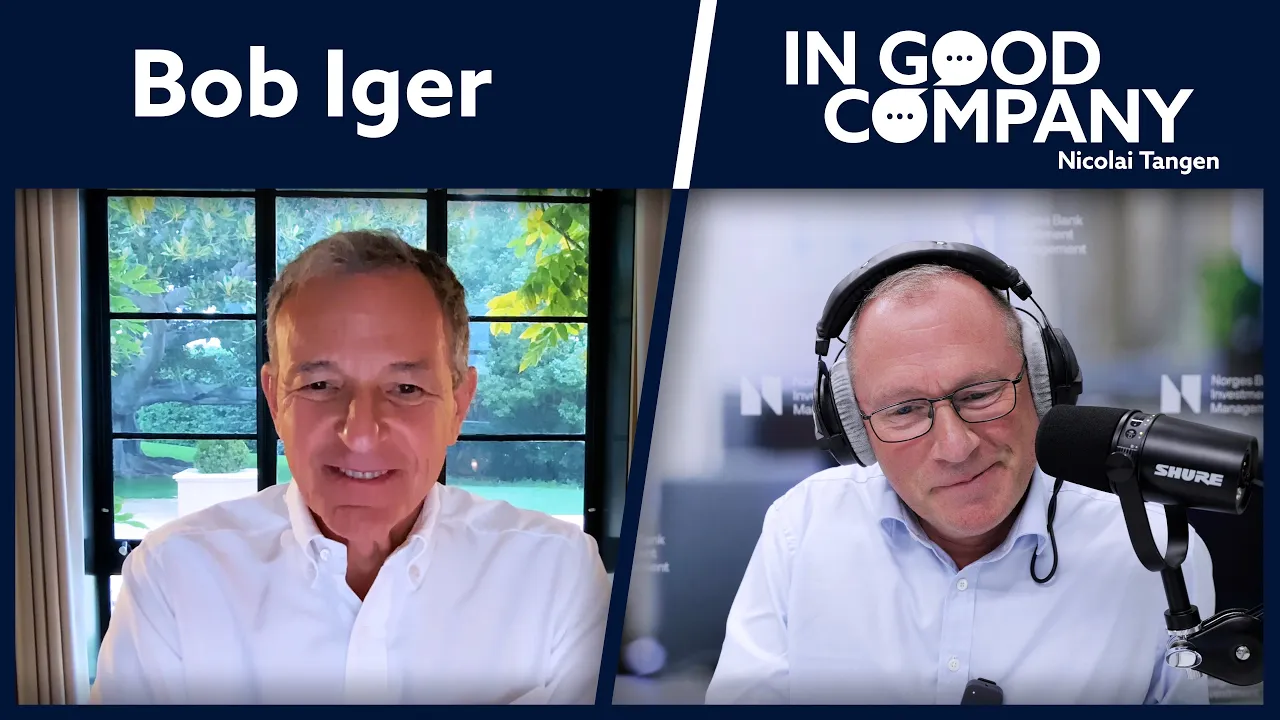
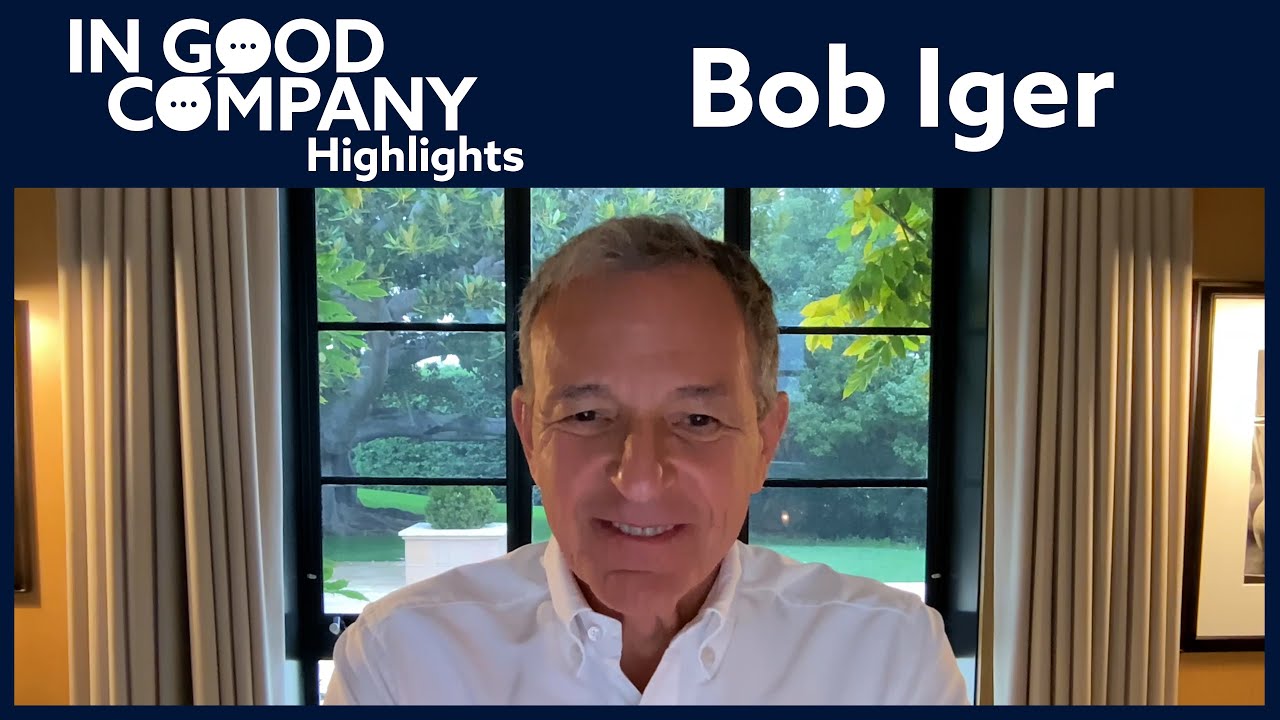
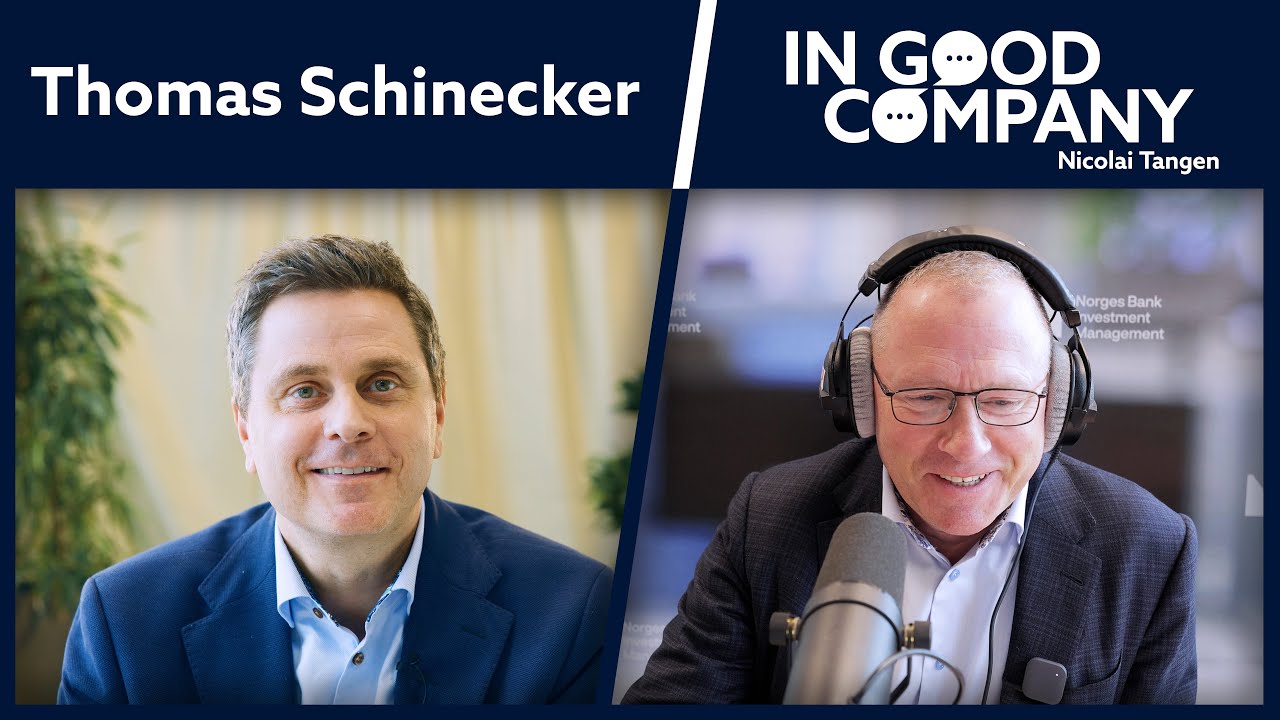
[Music] hi everyone I'm Nicola tangan the CEO of noras Bank investment management and today we're diving into the Magical World of Disney a company where we are the lucky owner or more than 1% and I'm here with Bob Iger the Visionary leader who transformed Disney into a global entertainment Powerhouse leading Bold Acquisitions like Pixar marel and 21st century FKS Bob warm welcome thank you very much nice to be here no I think no other company has made so many people love and cry over more than a hundred years so in your mind what is it
that makes Disney so special well I think first of all the fact that we've touched people's hearts for as you cited over a hundred years uh is Meaningful because when you tell stories that have the kind of effect that our stories have on people uh they become memorable they become you know part of the fabric of people's lives uh and there are also stories that are frequently shared with other people so you have a basically a number of people enjoying our stories together and that also I think compounds the impact of our storytelling uh We've
also you know managed to um stick to our core values and I think that's really important you know what you're going to get when you see the name Disney on a product and I think that goes a long way to enabling us to be relevant for over a century so how does he feel to run a company which is kind of part of the fabric of human history well it is certainly something that I'm aware of because with it comes a responsibility not just to uh maintain and to continue to strengthen the legacy of the
company but also to entertain at the highest level of quality there's such an expectation from our consumers around the world that you have to live up to and at times even work to exceed expectations and I think with that again comes I wouldn't call it a burden because it's it's a responsibility that we all eagerly accept but we're certainly well aware of our uh need to serve consumers expectations why do you think we're still so drawn to these imaginary worlds well as Walt Disney used to say you know people often uh like to uh e
either experience things or or or or hear stories told that enables them to essentially distance themselves from kind of their daily lives and their daily responsibilities there's a there's an Escapist quality but I think in many other respects with Disney stories you know there are there are things like uh relatability uh common experiences that are reflected in our storytelling uh there's the whole notion of fantasy and igniting people's imagination and creating magic um there's also I think something that's very very unique to Disney and that is that we make things that can be uh enjoyed
by multiple Generations all at once if you go to our theme parks you see that grandparents and parents and and their children for instance uh time and time again and I think that is very very unique in terms of the uh way in which people engage with the product that we create is that something you have to do more and more to build in appealing things for several Generations It just strikes me when I watch you know things like Finding Nemo you have built in so many uh so many layers of complexity that appeals to
so many different type of people you know we we try to essentially uh tell stories that are as accessible as possible and that best reflect the world that uh we are telling stories to I think that's that's really quite critical and why do you think so a common denominator here is like you know the underdog who wants to become a hero yes I think that you know many aspects of our storytelling that resonates one of is what I basically multigenerational experience another is just the fact that we try to tell stories where we show respect
for elders as a for instance you certainly saw that in like a movie like up by Pixar or coco which was also a Pixar movie we like Heroes Journeys we know that people love to both root for the underdog but also cheer on the hero as the hero is you know basically going on some Adventure or seeking to conquer evil you name it I think the hero's journey is a very very important part of it we also like to infuse in our stories the importance not just a family but a friendship really important uh and
also elements of of great surprise but I think more than anything else stories that create a sense of wonder that make people people uh smile feel happy uh and feel good about the world that they live in do you feel that you have a responsibility to promote positive values as a firm very much so yes I think and I I don't view it as a burden but I do view it as critical in terms of you know maintaining the strength and the legacy of of Disney um and and that is basically to be really responsible
in how we tell stories how we you know depict situations or characters uh or or just general circumstances very very important yes there's a lot of responsibility that comes with just putting the Disney name on something that we've created so so um you created these incredible um characters which are so important for for our culture and in a way it's a bit like you know the music history where some people control you know the back cataloges is it do you think it's right that one company should own it or should it belong to humankind or
just what do you think well that's an interesting question well obviously we have to serve both our customers and our shareholders uh and when we put our shareholders add-on owning is critical because that gives us the ability to obviously um monetize or or capitalize financially on great creativity um I don't think we have a monopoly on it by the way there are many in particularly in today's world thanks to technology um almost everyone's a Creator but there's more that is being created so there's more competition than ever before so I don't feel feel that we
in any way you know have cornered the market on this I think we are leader in terms of Storytelling in the world but I don't think we've cornered the market if we um touch on the culture at Disney how much is left of uh Walt in the Disney Company well that's a very very good question uh by the way his office still exists you never met him right he died in the no he died in in the mid-60s in 1966 I joined uh the company in well was ABC then 1974 uh became Disney we were
acquired by by Disney in the 90s now I never met Walt uh by the way I meet people occasionally that did uh just by the way last week I was at Disneyland and I met an employee that had been with a company for 62 years wow and when I asked him what the highlight of his career was he said having lunch with Walt Disney of course then I sat down with him and wanted to know all about it because I'm always very curious about Walt I think Walt you know obviously is responsible for creating you
know what Disney was and in many respects what Disney is which is this fondness for storytelling telling and the knowledge of how valuable and how important it can be in the world I think he was aware as I am aware that uh the world needs great storytelling it could argue that maybe today that need is greater than ever before and serving a World's need to be entertained at the highest level and to be to hear and experience stories at the highest level I think is a is a worthy cause and we still adhere to that
principle of high value infused in our storytelling of the knowledge that you know we our sole purpose really our main purpose is to tell great stories that touch people's hearts and Inspire them uh all over the world um so in many respects it hasn't Walt's Legacy still exists the other thing that still exists is Walt was I know you want to talk about this as it relates to technology but Walt loved the use of Technology uh in in terms of enabling him to tell better stories and embrace technology um readily to do that and that
to serve the purpose of the Storyteller that Spirit still very much exists at the company as well he also was a great risk taker and uh the in in today's world but maybe you could argue in in Walt's world too you know taking risks becomes a critical part of of of a business particularly in a world that's changing so fast and being so disrupted what do you think he would have made of today's technology as as far as I have been told by people who knew him and from everything that I have read and I've
certainly read just about every history book on Walton on the Disney Company he just loved technology it he was he had a first of all he had a a wonderfully curious mind which is also very critical by the way and I think with that he wanted to learn experiment practice discover particularly how technology ultimately can enable him to tell better stories uh it just excited him greatly and I always exhort people to basically follow the similar path so I think he would be really I think motivated in many respects by technology today and not daunted
by it I think he was one who believed when he saw or heard about technology he immediately saw opportunity instead of threat and um he view technology as an asset not a liability and I've tried really hard for that to be an element of the Disney culture the Embrace of Technology uh and the ability to try and experiment with the application of technology in all of our businesses now you say things like dream big anything can happen now uh these are uh in a way uh quite American values do you think the company could ever
have been founded in Europe what was inspired is some of his earliest greatest stories were inspired by the great European storytellers of the brothers grim and H Christian Anderson for instance so I I think he had a respect he he also he liked to travel and he traveled around Europe and in many respects some things that he built at Disneyland came from his inspiration the inspiration that he got through traveling um and learning about cultures and learning about places and and wanting the world to feel like a one world instead of a basically a a
world that was you know completely completely broken up what's the key to managing creative genuses empathy is the biggest key um you have to understand that uh when a Creator um has has pitched you a great story and and you've given them the ability to go out and tell that story you've given them the resources the the the money the tools the place to tell that story um that story is often coming from within them it's a passion of theirs it is the invention of their own mind and their own heart and you have to
understand then just how delicate it is to to manage someone who is essentially um creating something that comes from within them that is inherently theirs uh and while we have a responsibility on behalf of the company to make sure that they're telling their stories right and and and and they're pursuing the extent possible perfection in terms of Storytelling and that sometimes requires us to lean on them more in order to get the results that we want you have to always do so by putting yourself in their shoes that's the most critical and then also understanding
that creativity is not something that's reduced to math or science it's extremely unpredictable there's an inherent risk involved in all creativity and therefore you have to know not just how to un under not just how to appreciate success that great creativity can generate but also to process basically the failures and not point fingers and not second yes um and not be ultra critical when a creative idea fails so um creative people go through these creative Spurs right and they can last for some time and then you go through a slower period what do you do
when people kind of go through periods where there is no creativity coming out how long time do you give them before you expect to see more it's a good that's a good question you know I'm a big believer in in uh in in giving people second chances for what I'll call Honest mistakes and not giving people Second Chances when you know there's a transgression a complete lapse of judgment or in some form or another a breakdown of Integrity when it comes to creativity I think you you know everyone's had a failure at some point in
their lives if they're a Creator I don't care who they are and um and then you know that includes you know great composers and and great artists and you name it great singers have had bad songs and Painters have had bad pictures and I could go on and on uh but sometimes that just right after a big failure comes a huge hit and I so I try to be patient with people that are creating that that deliver something that is less than we we had hoped for or expected now if it persists obviously U if
if someone has essentially completely lost their creative way then obviously you you tend not to not to allow them to create again on your behalf who's the most creative person you ever met oh I've been really fortunate in my life to have met uh some wonderfully creative people from artist to animators to performers um I don't know if I could I don't know if I could name just one um but I've met many and I'm lucky in that regard you i' including you know I could argue you know Paul McCartney for instance is one of
the most creative people I've ever met as for instance Steven Spielberg would would would easily you know be another one great people that work at Disney I don't want to single any one of those out because I have so many of them but I've been lucky in my life particularly in this job to have not only met but have actually done business with or been engaged with some of the great creators of our time I mean you're Wily considered um one of the most successful cosos but are you are you yourself creative uh I don't
consider myself a Creator I consider myself someone that uh loves creativity that appreciates it that for the most part I think I I know good from bad I know when I see something and it's really good or great and I know when I see something that isn't I think I put myself more in an editor's category than in a Creator category where I can uh you know lend a an eye uh hopefully an objective eye to some piece of creativity and and give input um as more an editor than anything else uh to the Creator
to help them um improve the quality of their creation but I'm not a Creator now um there is a lot of money going into new production they're very expensive right they are complex uh big expectations and so on uh big committees uh these um processes and projects are they producing the same type of excitement and creativity as before is the whole thing just becoming more committee based predictable dollar what do you think well I certain would object to to that um first of all uh we try not to approach creativity on a committee basis there
there are often you know different voices that that weigh in on it but in the end it's a it's typically one Creator's voice that has to basically rule the day I don't think you can create by committee at all nor can you create by checking boxes meaning for someone's creativity does it meet all these standards because then you get surprised by something or or or does it meet all this criteria you get surprised by something that may not but is equally good um so I don't like committee approach to it at all I think in
this world where so much is being created uh I don't one while one could argue it kind of duded the quality of creativity um I think could also argue that today's technology mostly to produce and distribute creativity is you know so much more um uh powerful than yesterday's that it's enabling much more creativity and not less now maybe the quality is is diluted a bit because so much more is being made but I I still see examples constantly of of wonderful creativity and just you thinking about our company uh inside out too would be a
great example of that and by the way that's a sequel to a movie that was made you know nine or 10 years ago um fantastically creative and very successful commercially as well a film a Shogun a TV series uh that we produced as a for instance incredibly creative uh Deadpool and Wolverine a Marvel movie extremely creative um and I could go on and on so um I don't worry about uh a world in which creativity is more dull or or U more diluted there's still so many creative geniuses in this world and I don't think
in any way the world today is is reducing the number of creative Geniuses I might argue that is it is is bringing out uh their their genius because technology has enabled more people to create than ever before and to put their creativity into other people's hands now you've been first at ABC but then in the whole kind of Disney company for 50 years are you able to predict going to be good or bad and and and then when was the last time you were really surprised either that something failed that you thought was going to
be fantastic or the opposite occasionally I see something that's really good that ends up surprising me on the upside because it resonates a lot more than even I thought it might for some reason um that happens more often than the opposite than seeing something that failed where I didn't think it would fail but as we get as we get older Are we more are we Less in tune with with the general public well one of the things that we get paid to do in these jobs is to stay in tune I guess you could argue
that the older you get the harder it is but I tried so I don't I don't I mean a good a good executive meaning good at managing creativity and good at enabling creators um H has done a a lot of work to keep their finger on kind of the pulse of the world and while I don't consider myself the world's greatest expert on today's culture I certainly have a number of touch points into the culture that enable me to understand and appreciate it more by the way some of it is personal I have five grandchildren
where the oldest is eight and the the youngest is eight and the oldest is 16 as if for instance just spending time with them uh we also have Generations people working for the company I'm 73 years old and been around 50 years I engage with people at the company that are 50 years younger than I am that are closer to today's culture than I am but I also make it a part of my daily routine really to access I'll call it new culture um you know and I whether it's watching um you know short form
videos or user generated content or engaging in Social platforms trying to m contain relevance or we're trying to understand really what is what resonates to in today's world um you know I think it's critical that that that our product resonates as well and sometimes it obviously or often it requires us to be you know really aware of um consumer Trends consumer interests and uh and and disruption in terms of people's tastes and uh how people are spending their time being entertained Bob um what makes a great leader well I think there are a number of
things that um you know that that go into becoming or being a great leader one I talked about a little bit and that's having the ability to ba to balance Heritage and Innovation um and and I think that's critical it's knowing basically um how to innovate uh even though you know you're you're surrounded in a way by by Legacy um that's really important um similar in nature you have to have a foot in the present and a foot in the future at all times you have to obviously spend time managing your business for today make
sure that it's Peak quality uh efficiency Etc but you also have to be looking around the corner at what uh business opportunities or where your business might go tomorrow if you have two feet in the future then you're not managing your business enough in the present you have two feet in the present then you're not preparing your your company or yourself for the future so that balance is really important and we talked about having empathy I think I try not just for create with creators but for many people to put myself in their shoes to
understand you know what they're experiencing U I also feel certainly at Disney a great leader has to have a deep appreciation and respect for creators in the creative process you know that's critical um I also and I talk about this a lot um you have to be an optimist people don't want to follow pessimists a dose of realism is often critical uh to get people um motivated and to to energize them a bit but always by maintaining a sense of hope you mentioned it's important to be an optimist I've heard you say uh that you
have absolutely no fear I guess I was kind of lucky I'm I'm not an overly anxious person and I I don't know I used to joke every once in a while say I wasn't born with a fear Gene look any human being has some element of fear within them but I'm not I'm not fear does not is doesn't guide me at all I'm I'm guided more by opportunity uh by um a desire to discover and to um and to experiment uh and I think actually when I describe great leaders I think it's having someone who's
really curious who wants to innovate who wants to discover who wants to know what's around the corner and is not just looking at what the past or even the present but is kind of looking at all of those things also it's clear a Leader's got to have a lot of an ability to really focus to set priorities and stick to them and to be decisive no one wants a leader that is not is not capable of making decisions on a timely basis that creates so so much destruction when it comes to productivity yeah I've heard
you say the ability to act is um is important but how how important is energy uh because um you you are up uh is it right you're up just off 4:00 CL every every day yes that's correct that's correct that's uh I mean that's that's the type of uh time only Bakers have uh use on their alarm clo you know well um we can talk about that there's a reason that I get up early not just how I'm wired but it it serves a a great purpose but you know before I get to that I
think you know you mentioned the word energy I don't talk about it that much I'm it's great that you brought that up um because a great leader has to be an energetic leader too uh look I I'm a human being so if I'm really tired from Global Travel and long hours and who knows what I'm not afraid to uh to show that to my people because I think that's sort of a way of being relatable they feel this that too it's human nature sometimes you to be feel overworked and tired um but I think you
have to bring Mo for the most part you got to bring your energy to your job every every moment of the the day meaning every waking hour um because it's motivate energy energy is motivating where does energy come from it's a very underresearched phenomena in leadership what is it I think it's a lot of things I think some of it is how you're wired as jeans some of it is how you have um you're prepared so I I staying in shape having having stamina is critical for me and that's eating well and exercising and just
taking care of my body and my mind is is really important I could not do this job if I were not in some form of physical and and and and and even U mental health do you drink wine I do I drink I do I like wine I like a good glass of wine uh I'm drinking less these days maybe it has to do maybe with my age but um yeah my good glass of wine relaxes me but I'm I'm I'm moderate when it comes I'm moderate when it comes to most things I think but
go I think it's important in terms of the the routine because one could argue that I'm not getting enough sleep but that morning time for me is rejuvenating actually it's first of all it's it's meditative it's quiet um the stimulation that exists in my life when it's still dark out and no one else is up is is toned down and so I get a chance to be alone with my thoughts and that gives me an opportunity to be to order things meaning to to figure out an order and a a set of priorities it gives
me an opportunity to to think more creatively I'm again I'm not Ser say I'm a Creator but just in terms of speeches I'm going to give discussions I'm going to have with my people it it just is a it's a way that I begin the day with more purpose uh instead of waking up and suddenly being bombarded by all the incoming that comes my way I can I I can attack the world and the day just with a a little bit more organization so what do you do you wake up you put on your dressing
go you go down to the kitchen make a cup of coffee or what do you what do you do I usually I it's funny I I I've reversed this since I I came back to Disney I have a cup of coffee first yes I go down to the kitchen set the coffee maker the night before so there's a timer I have my coffee and then I put on my workout clothes and I work out at the house um almost every day or and I do the same thing when I'm in a hotel anywhere in the
world how long do you how long do you work out for I work out for about an hour every morning wow um sometimes less but but rarely less than 45 minutes um and it's again I I I like to say that it's for sanity and vanity purposes um it enables me as I said to clear my head but I also you know enables and and better prepair my mind and my body for the for the job at hand but you know there's a van there's a vanity side to it too sure when you go to
bed I go to bed between 10 and 11 most nights moving on to um uh technology we talked a bit about it and you know you've been around for 100 years the company that is um I I read that only 45 companies out of 1 million survive 100 years so it's it's pretty amazing right so what do you think is the key to surviving for 100 years I've thought about this a lot and like you I've studied basically great Brands and and companies and Longevity and tried to understand why did some fail and and why
did some succeed for years and years uh including studying the great brands of the world going all the way back to the 1920s and 30s uh and certainly in my lifetime the 50s and 60s and 70s you know I there were great Brands and you were born in the 60s you probably could name a bunch in the 70s or maybe even the 60s although you were young what happened to them why did they not maintain their relevance and their both their economic success as well and why did others succeed and what I've concluded is and
it's it's it's quite interesting the world is changing so fast and I'm sure that's been the case for decades and in such profound ways that there's a tendency in order to maintain relevance in in a world that may not look anything like the world that existed when a company or a brand was created there companies have a tendency to maintain relevance to abandon core values and that becomes the death of the company um so what I've tried to do is understand what are the core values of Disney most of it we've talked about which is
basically what do we put into our storytelling uh the value of creativity the fact that it drives everything at Disney um but then it's critical to present those core values in more relevant ways so sometimes it's not about the story you tell it's how does it look on screen are you using and Pixar is a great example computer generated animation versus handdrawn animation handdrawn animation looked old it looked less relevant computer generation particularly to new generations of people looked newer more modern Le more of today or of their lives when they were consuming it uh
that's just a an application of technology to tell sometimes the same story but in a visually more relevant way another thing that creates relevance is how you distribute your product how is your customer getting access to it and then how is the customer consuming it so in our case great example would be streaming which is a a modern way of Distributing a story um the same story by the way it's interesting if you go to Disney plus today you'll see Snow White from 1937 or a Mickey Mouse short from 1928 um same story but distributed
in modern technology and then ultimately consumed on a modern device how do you think how do you think AI will change what you're doing well I we think about this a lot and I think it's really really important for companies to act responsibly in this regard because I think there's more that we don't know than we know and I think proceeding with caution is critical when it comes to AI we view technology as enabling us to really do three things we've just talked about make our stories better second become uh make them more relevant to
consumers in terms of how they're distributed and consumed so that's a basically improving the relationship with the consumer and the last part is just making company more efficient I believe AI will enable all of that they it will be a a powerful tool to enable in the hands of a great Storyteller to enable that Storyteller to tell better stories in addition more efficiency and I think ultimately enable us to gain more access to and have a closer maybe more intimate relationship with our customers what I what I don't want to accept is that Ely will
destroy human creativity and I think as a company we're going to try very hard uh to prevent that from happening meaning I just think that the the human mind is capable of telling a great original story in ways that no machine will be able to replace uh hopefully for many many decades to come if ever that's my hope um that the Storyteller is in fact the one who tells the story uh meaning their story that creates the story particularly the original story I think it's fine as we've done over the years as Walt Disney did
to use technology to as a powerful tool for that Storyteller you Steve Jobs likened the laptop computer as a bicycle of the mind he he studied the locomotive capabilities of species and discover that human beings didn't Propel themselves through space very fast very effectively uh until you gave them a bicycle and and then they were the fastest species there was um and that's what he looked at he he viewed the computer that way it might sound trite it might sound naive of me to hope that that's what AI will become because I know that there
are many and maybe for legitimate reasons that worry uh that it's much more than the bicycle of the mind that it is a powerful tool that would be so disruptive and so destructive uh that ultimately will be have a negative effect effect on humankind and I think we have to we have a responsibility as human beings to see that that doesn't happen now um some listeners may not know but um you were uh a CEO for 15 years uh you stepped down in 2020 came back after two years um now when you came back and
looked at Disney again what were your priorities then well Disney had been through a really difficult time uh obviously uh the board making a decision to remove the the former CEO you know created not just uncertainty but real concern so I I had to calm the first thing I had to do was really calm things down and and reassure people um that that that the future was bright again and that there were steps we were going to take that I would was going to be very transparent about to get Disney back on track uh I
I believe at company's culture is everything in any respects and uh a culture that uh respects and and fosters great creativity particularly at Disney is is critical I had to return creativity to the center of the company it had the company had been restructured in a way that took some of the accountability and responsibility away from the creative side of the company I had to restore that I did that on day one really right away um I had to instill optimism again in the company being a realist and how many things we need to accomplish
but being an optimist in terms of my confidence that we would be able to accomplish those things um I also had to streamline the organization make it much more clear who was responsible for for what uh there was there there was a lot of fixing that had to be done what was the toughest part of it the toughest part for me was to be patient I had to get used to the fact that um The Climb upwards wasn't as certain wasn't as easy uh and that we were starting from a very low point and I
had to be patient in terms of how long it would take to get where I felt the company needed to be I actually feel quite good now about where we are we have a lot more work to do and Heavens even if we've fixed everything there still will be work to do but I feel really good about not only the recent successes um and what we've managed to accomplish as a company to date but I feel great about Thea trajectory of our company going forward is it difficult for a perfectionist to be patient it's almost
impossible for a professionist to be patient that is one of my that is one of my personal struggles I think um but I think over time you teach yourself to be patient because well by the way I think expressing impatience is good too because creating a sense of urgency and motivating people not just to do great things but to do them faster is a good thing but you have to be realistic about it too it doesn't do anybody any good to demand things that that happen on a timeline that is impossible ultimately to achieve so
I it's it's trying to understand trying to get people moving as fast as possible in the right direction but understanding that results positive results may take some time last question we have um tens of thousands of young listeners um what is your advice to young people well I I happen to believe to the extent you can either teach yourself to be curious or to the extent that you can lean into the Curiosity that exists within you that's really important a curious person is someone that wants to learn someone that wants to uh experience new things
someone that wants to someone that ultimately is capable of innovating so find that Curiosity Gene within you and do whatever you can to make sure that it is healthy and and vibrant that's critical we talked about patients that's important in managing careers Find Your Passion by the way way but be patient about discovering what your passion is and then be patient about your career unfolding uh in terms of its timing in a n in a more natural way it's it's rare that I usually opportunities come to people that are prepared for them as opposed to
people creating opportunities completely on their own there are too many outside factors in that regard I I benefited greatly from having um bosses retired just when I was ready to take their job for instance now that's not me creating the opportunity other than I made sure I was prepared for it when it came up U but it could been could have been a couple of cases that they decided to retire a couple of years later I might still would have gotten their jobs but I would had to be more patient about it so I think
patience is important don't create an artificial timetable for yourself that in many respects is out of your control so be curious be patient find your passion um and uh and and apply everything you're capable of doing and then some to whatever that is well that's a that's a a great uh place to uh to end Bob um big thanks for being on here today and a big thanks for making the world you know a better and much more fun place to live well thank you very much nice to spend time with you likewise thank you
so much good luck



![Gotye - Somebody That I Used To Know (feat. Kimbra) [Official Music Video]](https://img.youtube.com/vi/8UVNT4wvIGY/maxresdefault.jpg)