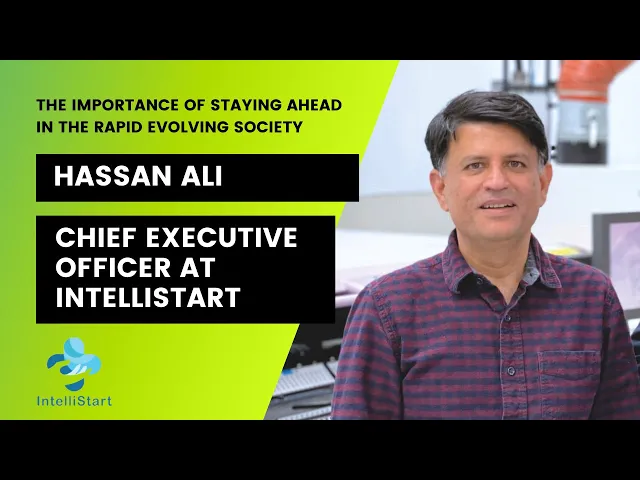
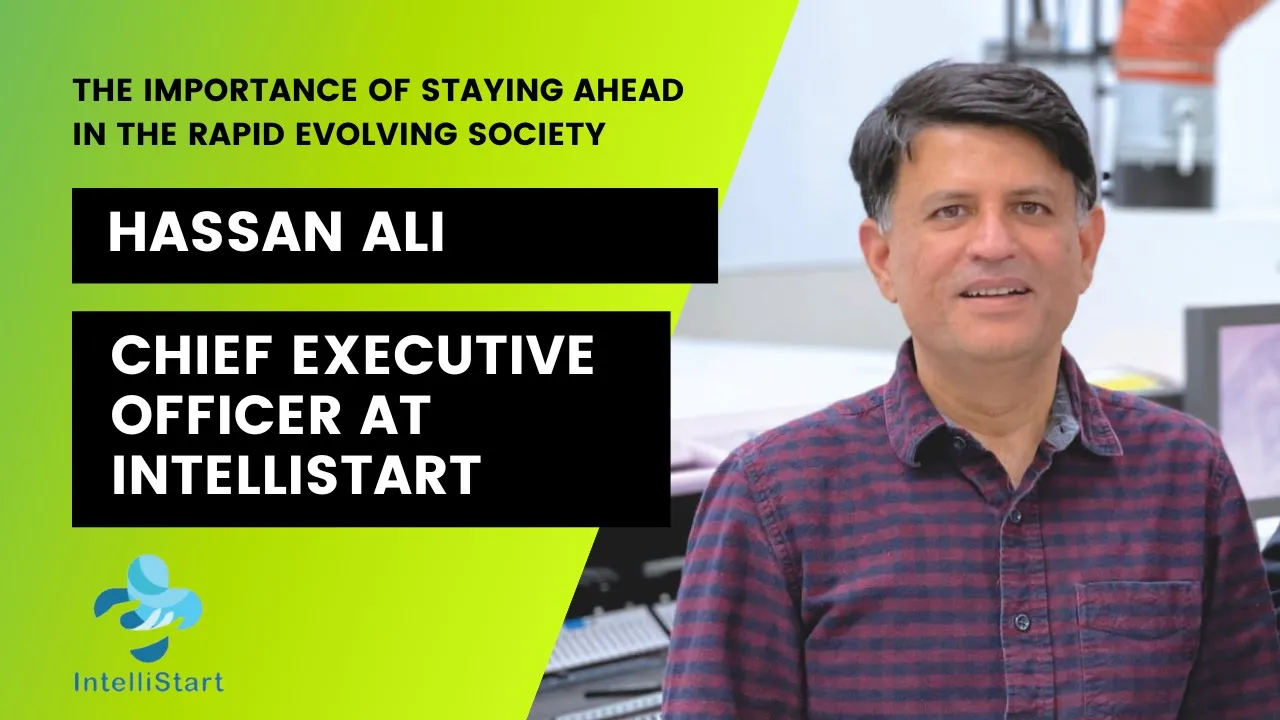
foreign we're so excited to have you on today's episode and to learn more about your career Journey so thank you so much for being here it's lovely to meet you I'll just get right into the first question then so Hassan what motivated you to pursue a postgraduate degree in advanced management from Duke University and how did this education contribute to your career progression and leadership development so I had already been working for six years and I had a technical degree in Bachelor's of Engineering in electrical and computer science and as after six years I wanted
to get into more business management I had exposure to that through through some of the colleagues that I was close to and I got into Six Sigma training which was very popular then for business improvements and got hired by Siemens and Siemens recognized my performance and actually paid for my Advanced degree and it really helped me understand how to run a business how to make it profitable which is the economics of a business and also how a company wins against competition how you should compare it and all of that will basically form the basis for
my professional work since then it was very very valuable I don't think I could have changed the direction without that yeah yeah amazing it's really important to emphasize that postgraduate degrees do set you on the right path most times and they can be very beneficial for leading you in the right direction I'm going to pass it off to in to ask the next few questions so the next question as a general manager and director of marketing at Landis plus gear or some of the challenges you face in the electrical manufacturing industry and how do you
navigate those challenges to drive success for the company the part that I was specifically focused on was metering so a meter outside your house that measure electricity you use they used to be Mechanicals in those days in year 2000 and a disc would be spinning and it would just say how much electricity you used but the electricity production because it has to be real time you can't store electricity that easily so at different times the cost of production is different and that was the main imbalance between and the utility economics and and the consumer so
the industry needed to implement what's called smart metering that allows them to bill you for time of use now that's very common if you look at your bill your cost of electric is different at different hours but to enable that you need to have communication embedded into the meter so that you can read them every day and you can read them discreetly every 15 minutes really advanced technology so I was working for Landis and gear that was a 100 year old meter company but expertise in mechanical meters and no real expertise on the technology side
so the challenge was how do we find our footing in this changing World there were other companies that were starting to dominate coming from Telecom industry into the metering industry and so the meter players were getting commoditized being the players without any real technology and so the challenge was how do I um bring in some of the talent that can help us with the technology bring in some of the Partnerships and then help change the perception in front of the customers of who landed singer was so those were some of the challenges that we work
through and interestingly this transition took about 10 years span and that's how long I worked for Linus singer and those were some of the real challenges through that period so go on to the next question uh what led you to return to Landis in gear as the senior vice president and how did your previous experiences contribute to your role and what changes are improved to bring to the company in that position so with Landis and gear 10 years was witnessing the industry go from mechanical meter with a spinning disc to Smart metering and in that
I also learned how to work with private Equity during a period of time Lana singer got bought by KKR then another private Equity company bought it and as we went through we customer needs evolved and we also realized how what product features would really differentiate us from the competition and allow us to win so for example in the electric industry apart from time of use the Lana singer introduced a meter that could disconnect power remotely so you don't have to send someone to connect or disconnect you can disconnect power remotely and then help differentiate the
meter there were other metrics that were important for power quality that we could measure that others could not so I I felt like I saw this whole transition from mechanical to Smart metering to some of the advanced features and really how to win atlantising gear in this time frame went from number five player to number one then I left and worked for Mueller water products for another 10 years Mueller Water Products was a water meter manufacturer and I was able to see that when I joined them in 2009 that industry would as at a stage
where they were starting to adopt but very early adoption of smart metering otherwise they were at a stage where electric industry was in 2000. so I worked for them for 10-year period and that market ended up going completely to Smart metering too but it took a different path what was important like a remote disconnect in electric the customers didn't value that on the water side um saving water was a bigger value for in the water industry so Leak Detection pressure management and those things were of more value so you you could see how it evolved
and and it really helped me understand how these needs evolve and how to really step back and be able to say okay this is where the industry will have in the next three four years and what they would want what would sell how can I position against the competition during that period electric industry had gone the full circle where ninety percent of the utilities in U.S had already adopted smart metering and they were ready for a refresh so then it was sort of like starting the cycle again and saying where would the industry had in
the next 10 years so if you already have Smart metering deployed but now your Fleet of meters are old so after 15 years or so or 12 years or so they're going to want to replace so what would customers want and because I was very key in the beginning with Lana singer they brought me this opportunity to look at the global requirements and do the same strategy development work on where the industry would head and develop Global platforms that would take advantage of that so that that is what got me back thank you for that
wonderful Insight now I'll move on to the next question so can you tell us about your current role as the CEO of intellistart and now how does your company fight covid-19 exactly and uh what inspired you to pursue this particular initiative so this particular initiative as it was the inspiration was that we were all sent home can't come into the office anymore and had a two-week shutdown completely and if you went out you couldn't find any hand sanitizer everything was already sold and at the same time what we saw in our Factory we had a
really large Factory of about a thousand people and atlantising air where we were checking temperature because the temperature was an indicator of you may have covet so we were being cautious and checking pills temperature before they would come into work and a lot of businesses did that and the nurse was doing that so there were specific nurses hired for this specific purpose so that we get accurate temperature of people and we could send people home that had temperature well the nurse was infected with covet and there were three nurses and one of them was and
so then that created a huge chain that she could have passed on to a number of other people and so we had to shut the factory down for a week we had to rescreen everyone and it was a big hassle so all of that gave this idea that what if we could check temperatures very accurately hand sanitize people's hands just as a practice before they come to work and it had to be seamless it had to be quick so that's what God in telestart start started this was my second Venture on my own but was
interesting for the times and really successful for the couple years now it's sort of like a beach head to bring more ideas and and move towards other things that really show us how no matter the situation to be faced there's always some viable solution around the corner so I'm moving on to the next question throughout your career you've held various leadership positions what are some key lessons you've learned about effective leadership especially in the context of managing teams and driving success success in different Industries number one is that you have to always challenge yourself and
the way to do that is take on things that you're very uncomfortable with and if you do that then you work at it then you get better so without that you will just stagnate it at one place so I was actually working for GE in the first six years as software engineer and I was very successful in software Engineers because at that point we wrote a Erp system for GE to manage from proposal to shipping a power plant which is very complex and big so it was a huge team that worked on it so I
quickly learned a lot and got really good but it was very scary to jump into management and want to move towards learning how to run businesses and the management side of it and that also meant that I would lose my software engineering skills because the technology developed so often you get outdated very quickly taught a lot about it spoke with a lot of people and then jumped into it all all in and that led to other things in the electric industry after the 10 year of really working hard another opportunity where I could have coasted
and enjoyed the success for the last 10 years I decided no I'm going to jump into water and then back to electrical so that that's one fundamental thing that if you are going to progress it's never going to be through a smooth process it's always going to be uh jumping into scary situations and having the trust that you'll make it through uh businesses are a competition just because you can do something doesn't mean you can be successful you have to be able to find a set of customers that have a unique need where you can
provide it better than the others if you can't provide it better than the others then it's just a taking uh time clock where you are just going to go out of business very quickly so just understanding the industry structure at high level executive positions that is the key because otherwise you're going to be responsible to directing a lot of people's effort towards a mission and if that mission is not going to be successful because the fundamental choices made in the business um were not correct then you're wasting a whole lot of effort and money and
people want to be successful and if there's no success inevitably you'll be judged as a bad leader so naturally key and as far as leading a team it has to be authentic you have to be authentic all the time so if you're not authentic people won't follow you they can smell that your emotions are fake and then they might do things for you but they're not going to give a hundred percent so you have to be very authentic you have to let them see what you see so not like oh you're working in The Silo
and I just want you to concentrate on doing your job they have to be able to see the whole picture and you you have to help them see all the picture and spend your time and communicate to let everybody see the whole picture and that drives collaboration without which um you won't form a team so that's really important one of the things I'm weak at is also being tough on results but that's also very important because if someone is not being successful in the current role and they're just not gonna be then you have to
give them a different role or let them find a role somewhere else but somehow you have to create a way to make tough decision and create a winning team if you don't do that what happens is other people that are giving their 100 percent they will lose interest and or feel that they're carrying most of the burden and it's unfair to them they feel and so the team will start getting fractured so all these things are really key I think it can be very difficult at times to identify lessons that you've been learning throughout your
career but it's also very important so that that Learning Journey continues so our last question for you today how do you approach Career Development and continuous learning and what strategies have you found effective in advancing your own career and staying ahead in the rapidly evolving business landscape so keeping up with the technology in business is important and it's sort of uh getting all 360 degree information so you listen to news you read news you listen business news you read technology news you go expose yourself in seminars and other places to other people that are experts
in their field and are talking about it and then you pick a direction and you take risk and you try to make it successful during the time that I was with Mueller Water Products I understood that leaked detection was very key for water in North America so Canada and U.S included 30 percent of clean water is lost before it gets to home so the pipes are old and have leaks and the water leaks out so if I said hey if Amazon shipped your product and leaked 30 percent of those before they got to your place
they would be out of business what is a key resource but in our cultures we don't charge for water so water is that right you charge for the delivery charge to get the water to you but the water is free it makes hard economics for utilities to concentrate and invest and lower that risk so the solution has to be simple and so I founded the company with three other friends that use artificial intelligence to solve this problem and it's called voda.ai and we started that a while ago six years ago and at that point when
I went to my management team and I said I want to do this they said we'd have no problem with you making your personal Investments to do this but it's crazy we as a business will never invest in now seven years later they all want to pay us really good money to buy it and the lesson here is how do you evolve and do things it's keep yourself open to a lot of information try to connect dots with these multiple set of information that you have but don't get stuck do something with it because unless
you apply and you do something you won't learn and evolve all of this I've learned our past experiences are going to try to make us biased oh I can only learn about this because my education in this or I can only do this I should be an engineer and work hard and do my job or I need to do this or get focused in it but the value in modern life is more about keeping yourself open to everything consume a lot of multiple information and connect the dots that's the human Edge that we have and
we just need to keep cultivating that all the rest is going to be taken by AI I definitely agree that it's one thing to learn all of that information and to continue learning and then it's another thing to also apply that into your life which is equally as important if not more and I definitely agree that The Learning Journey never ends so I really appreciate your Insight on that question so that was the last question that we have for you today I just want to thank you so much for your time today on the cast
and I'm sure our listeners will really benefit from all of that interesting and insightful knowledge that you've shared